


كونك مهندس كهربائي مكلف بترقية منشأة صناعية بسعة 15 ميغاوات، وإخبارك بوقف بدء تركيب الآلات حتى يتسبب تغيير جهد الإمداد من 33 كيلو فولت إلى 400 فولت في عدد من الإزعاجات. مع وجود مواصفات المحولات في متناول اليد وامتلاكك لعروض الأسعار المقدمة من الموردين للنطاق بين $42,000 و $86,000، ليس لديك وقت لتضيعه، حيث يطالبك مديرك بالنتائج بحلول يوم الجمعة. في مجال هندسة الطاقة، تحديد النوع الصحيح من المحول لا يعني البحث عن الحل الأرخص. ما يعنيه هو مطابقة جميع المعايير، بما في ذلك التصنيفات الاسمية، والخسائر، وطرق التبريد، والمعايير، وملفات الحمل.
باختصار، عند اتخاذ قرار بشأن المحول الكهربائي لأعمال الهندسة، الخطوة الأولى هي العثور على تصميم kVA الذي يعتمد على الحمل الكلي المتعلق بعوامل التنوع والنمو. تتطلب الخطوة التالية اختيار فئة التبريد (ONAN أو ONAF للوحدات المملوءة بالزيت و AN أو AF للمحولات الجافة) وتحديد المنتجات التي تتوافق مع معيار IEC 60076.
طريقة الاختيار في ست خطوات
يجب أن يتبع كل شراء لمحول، من نموذج توزيع 250 kVA إلى محول محطة فرعية 60 MVA، هذه الإجراءات. من خلال اتباع هذه الخطوات، لن تنتهي بوحدة كبيرة الحجم ومبالغ فيها أو وحدة صغيرة الحجم ستفشل خلال الصيف:
- تحديد ملف الحمل. تحليل كل حمل مع معامل القدرة وجدول التشغيل الخاص به. حساب الحمل الأقصى بالكيلووات وتحويله إلى kVA بمساعدة معامل القدرة.
- توقع النمو والاحتياطي. ضرب الحمل الأقصى في 1.1-1.25 لضمان وجود هامش للنمو المستقبلي في الحمل وتحويله إلى تصنيف kVA القياسي المتاح في السوق.
- العثور على واجهة الجهد. تأكد من التحقق من الجهود، ومجموعة المتجهات، وما إذا كانت هناك حاجة للتحكم في الجهد.
- اختيار نوع البناء. اختر بين التصميم المغمور بالزيت والتصميم الجاف مع مراعاة السلامة من الحرائق، والموقع، وعامل الحمل.
- فحص الخسائر. قارن عروض خسائر الأسلاك بعروض خسائر عدم الحمل من خلال تقييم صيغ الخسارة المرسملة.
- تحقق من المعايير والاختبارات. تحقق من توافق هذه المحولات مع معايير IEC 60076 أو IEEE C57.12 قبل طلبها.
ماذا يعني “المحول الصحيح” في هندسة الطاقة
يمكن اعتبار المحول فعالاً إذا كان يلبي أربعة معايير في وقت واحد: يوفر الكمية المطلوبة من الطاقة، يعمل دون تجاوز حدود درجة الحرارة القصوى، يوفر تنظيم الجهد اللازم لشبكة الطاقة وعملائها، لديه أقل خسائر للطاقة، ويلبي المتطلبات والمعايير الإقليمية للمحولات.
في هندسة الطاقة، يعتبر المحول غالبًا أغلى آلة في أي منشأة، ويؤدي تشغيله الخاطئ إلى خسائر كبيرة لمالكه. من حيث الموثوقية، تشير البيانات من مصادر مختلفة مثل CIGRÉ ومجموعة العمل IEEE إلى أن مستوى عطل المحولات التوزيعية العادي يتراوح حوالي 0.5 – 2 في المئة سنويًا، مع أن المشاكل الأكثر شيوعًا تتعلق بالعزل وأنظمة الربط.
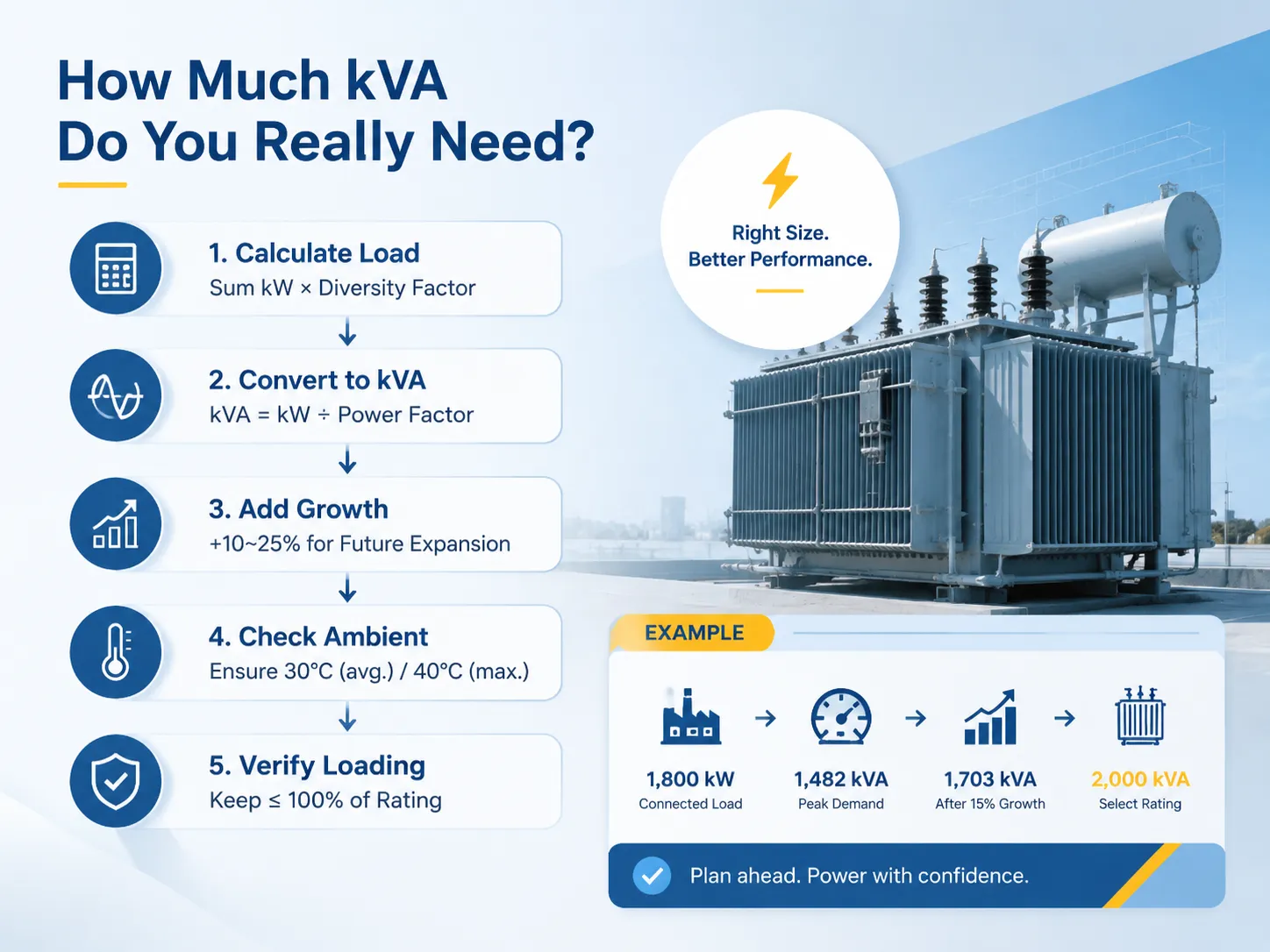
حساب الحمل: كم من kVA تحتاج حقًا؟
الخطأ في الاختيار الذي يحدث في كثير من الأحيان هو تقدير الحمل بشكل غير صحيح. استخدم الطريقة أدناه بدلاً من ذلك:
- اجمع بين kW الموجود على لوحة الاسم للأحمال على المغذي في الأسفل، ثم طبق عامل التنوع. عادةً ما تعمل المواقع الصناعية عند 60 إلى 85 في المئة من مجموع القيم الموجودة على لوحة الاسم، حيث أن المحركات والمعدات عادةً لا تعمل عند الحمل الأقصى في نفس الوقت.
- للعثور على kVA، قم ببساطة بتحويل kW إلى kVA: kVA = kW ÷ عامل القدرة. عامل القدرة النموذجي يتراوح بين 0.8 و 0.9، إذا كان عامل القدرة أقل من 0.7، فهذا يشير إلى أن المحول يعمل مع الطاقة التفاعلية بينما يجب أن يعمل مع الطاقة النشطة.
- لأخذ التوسع في الاعتبار، استخدم عامل نمو يتراوح بين 10-25 في المئة وقم بتقريب الرقم إلى أقرب تصنيف (أي 630، 800، 1,000، 1,250، و 1,600 kVA).
- لأخذ درجة الحرارة في الاعتبار، قم بقياس درجة الحرارة المحيطة. وفقًا لمعايير IEC 60076-2، يُفترض أن تكون درجة الحرارة السنوية المتوسطة حوالي 30℃ بينما لا تتجاوز درجة الحرارة القصوى 40℃. في الأماكن الاستوائية، يجب استخدام تخفيض أو تصنيف أعلى لأن ارتفاع درجة الحرارة بمقدار 10 درجات يؤدي إلى انخفاض كبير في عمر العزل.
- دراسة عامل التحميل وفقًا لدورة العمل. إذا كان المحول يعمل باستمرار بتحميل 80 في المئة من سعته، ستكون الخسائر الإجمالية ودرجات حرارة النقاط الساخنة مقبولة. في نفس الوقت، إذا كان المحول محملاً حتى 100 في المئة، فمن الضروري التحقق من منحنيات التحميل الزائد من IEC 60076-7.
كمثال، تحتوي مصنع على 1,800 kW من الحمل المتصل بالمحرك. عامل التنوع الخاص به هو 0.7 وعامل القدرة هو 0.85. يمكن حساب الطلب الأقصى كما يلي: 1,260 kW / 0.85 = 1,482 kVA. مع الأخذ في الاعتبار عامل النمو بنسبة 15 في المئة، سيكون الطلب 1,703 kVA. لذلك، سيؤدي التقريب إلى تصنيف المحول 2,000 kVA.
فهم الخسائر وتصنيفات الكفاءة
تتكون الخسائر في المحولات من مكونين يتم توفيرهما في IEC 60076-1 ويتم اختباره في المصنع.
| نوع الخسارة | التعريف | يعمل | القيم النموذجية | القيمة الرأسمالية |
|---|---|---|---|---|
| خسارة عدم الحمل (الحديد) | خسارة النواة الناتجة عن المغنطة؛ موجودة 24/7 | دائمًا، حتى عند عدم وجود حمل | 5–4 kW لكل MVA (على سبيل المثال 10 MVA: 15–40 kW) | $2,000–$6,000 لكل kW |
| خسارة الحمل (النحاس) | خسارة اللف الناتجة عن تيار الحمل | متناسبة مع الحمل المربع | 6–13 kW لكل MVA عند الحمل الكامل | $400–$1,200 لكل kW |
| إجمالي الخسارة والكفاءة | الكفاءة = الناتج / المدخلات | — | 5–99.8% لوحدات التوزيع / الطاقة | — |
تبدو أرقام الكفاءة مثيرة للإعجاب حتى تقوم بإجراء الحسابات. محول بقدرة 1,000 kVA بكفاءة 98.8 في المئة يفقد 12 kW بشكل مستمر. عند $0.12/kWh وحمل متوسط يبلغ 80 في المئة، فإن ذلك يعادل تقريبًا 12 × 0.8² × 8,760 ساعة × $0.12 ≈ $10,700 سنويًا في الخسائر. على مدى 25 عامًا، يمكن أن تصل خسائر الطاقة إلى 60–90 في المئة من سعر شراء المحول، وهذا هو السبب في أن تقييم خسائر المحول هو ممارسة قياسية لمشتري المرافق. تقلل النوى المصنوعة من سبائك غير متبلورة من خسائر عدم الحمل بنسبة 60–70 في المئة مقارنة بالفولاذ السيليكوني التقليدي الموجه للحبوب، مع زيادة في سعر الشراء تبلغ حوالي 10–25 في المئة.
المحولات المغمورة بالزيت مقابل النوع الجاف: جدول قرار
القرار الأكبر في البناء هو بين المحولات المغمورة بالسوائل والنوع الجاف. يلخص الجدول أدناه المزايا والعيوب لمشاريع الهندسة الكهربائية النموذجية:
| المعايير | مغمورة بالزيت (زيت معدني) | نوع جاف (راتنج مصبوب / VPI) |
|---|---|---|
| نطاق التصنيف النموذجي | 25 كيلو فولت أمبير – 300+ ميغا فولت أمبير | 50 كيلو فولت أمبير – 20 ميغا فولت أمبير |
| الكفاءة / الخسائر | الأفضل للوحدات الكبيرة | جيد؛ خسائر أعلى قليلاً في الأحجام الكبيرة |
| خطر الحريق | زيت قابل للاشتعال؛ يتطلب احتواء | ذاتية الإطفاء (فئة F1)، حمل حريق منخفض |
| داخلي / خارجي | خارجي نموذجي؛ داخلي يحتاج إلى قبو | داخلي مفضل؛ خارجي يحتاج إلى غلاف معتمد من IP |
| الصيانة | اختبار الزيت، أجهزة التنفس، DGA | الحد الأدنى؛ لفات نظيفة |
| السعر النموذجي (1,000 kVA) | $6,000–$14,000 | $10,000–$24,000 |
| أفضل تطبيق | المحطات الفرعية، المرافق، الصناعة الكبيرة | المباني، مراكز البيانات، الأنفاق، البحرية |
عادةً ما تؤثر معايير السلامة من الحرائق ومتطلبات التأمين على هذا الاختيار. على سبيل المثال، تتطلب رموز السلامة من الحرائق واللوائح المحلية عادةً محولات جافة أو محولات سائلة مقاومة للاشتعال (إستر) في المباني والمستشفيات والأنفاق والمصانع الصناعية. في المقابل، تستخدم أنظمة المحطات الفرعية والمرافق الخارجية عادةً زيت معدني بسبب تكلفته المنخفضة وكفاءته العالية. في حالة كانت الاستدامة أولوية، يمكن أن تكون محولات الإستر الطبيعي (زيت نباتي) حلاً مناسبًا مع نقطة وميض عالية، بينما تكلفتها أعلى بحوالي 5-15 في المئة من تكلفة محولات الزيت المعدني التقليدية.
تصنيفات المحولات حسب التطبيق
يواجه المشترون في هندسة الطاقة عدة عائلات من المحولات. معرفة أي منها يحتاج مشروعك يمنع ارتباك المواصفات:
| التصنيف | التقييم النموذجي | الاستخدام الأساسي | ملاحظات |
|---|---|---|---|
| محول توزيع | ٢٥–٢,٥٠٠ كيلو فولت أمبير | خطوة الجهد النهائي لمستهلكي LV | أقل خسائر لكل kVA ممكنة؛ ملحقات بسيطة |
| محول طاقة | 5–300 MVA | المحطات الفرعية، النقل، التوليد | OLTC، تبريد معقد، مختبر نوعه |
| وحدة / مولد رفع الجهد | 100–1,200 MVA | الربط بين محطات الطاقة | أعلى متطلبات الموثوقية |
| محول فرن / مقوم | مخصص | أفران القوس الكهربائي، التحليل الكهربائي، HVDC | تيار عالي، لفات خاصة |
| محول تأريض | 100–2,000 ك.ف.أ | تأريض محايد، زيج زاج | واجب قصير المدة |
| نوع جاف / راتنج مصبوب | 100–10,000 kVA | تجاري، صناعي، بحري | آمن من الحرائق، صيانة منخفضة |
المواصفات الرئيسية التي يجب على المشترين التحقق منها
ضع المعلمات التالية في وثيقة استفسارك واطلب من جميع الموردين تقديم عروض أسعار لها. نقص المعلمات هو السبب الأكثر شيوعًا لعدم قابلية مقارنات عروض أسعار الموردين.
| المعامل | المتطلب | لماذا هو مهم |
|---|---|---|
| القدرة المقدرة | kVA المحسوبة مقربة إلى الحجم القياسي | تحدد الحجم والسعر والخسائر |
| الفولتية ومجموعة المتجهات | على سبيل المثال 33/11 kV، Dyn11، 50 Hz | واجهة الشبكة والتشغيل المتوازي |
| جهد المقاومة | 4–12.5% | مستويات العطل، انخفاض الجهد، التشغيل المتوازي |
| فئة التبريد | ONAN، ONAF، OFAF / AN، AF | السعة المستمرة مقابل السعة الدورية |
| خسائر عدم التحميل / التحميل | القيم القصوى المذكورة | تكلفة الطاقة وفئة الكفاءة |
| مستوى العزل | BIL على سبيل المثال 170 ك ف لفئة 33 ك ف | مقاومة الصواعق والتبديل |
| محول التغيير | DETC ±2×2.5% أو OLTC ±8×1.25% | متطلبات تنظيم الجهد |
| مستوى الضوضاء | 55–85 ديسيبل (A) | تصاريح بيئية |
| المعايير | سلسلة IEC 60076 أو IEEE C57.12 | أساس القبول والضمان |
الامتثال للمعايير: IEC، IEEE، وأكواد الشبكة المحلية
اختر عائلتك المعتادة قبل أن تبدأ في النظر إلى الاقتباسات. تهيمن IEC 60076 خارج أمريكا الشمالية، بينما تحدد IEEE C57.12.00 وIEEE C57.12.90 في الولايات المتحدة وكندا. من بين مستندات IEC، تعتبر IEC 60076-1 (عام)، IEC 60076-2 (ارتفاع درجة الحرارة)، IEC 60076-3 (مستويات العزل)، IEC 60076-5 (مقاومة الدائرة القصيرة)، وIEC 60076-11 (نوع جاف) مهمة.
يفرض مشغلو الشبكات المحليون أيضًا معاييرهم الخاصة، أي إرشادات الاتصال الوطنية لتوليد الطاقة الموزعة التي تحدد نطاقات الجهد الصحيحة ومحتوى التوافقيات الذي سيحدد اختيار محول الجهد والمقاومة. اطلب الوثيقة التي تصف الشروط الفنية المطلوبة من مشغل الشبكة الخاص بك قبل اتخاذ قرار بشأن المواصفات وتقارير الاختبار النوعية التي تثبت الامتثال. أصبح المحول الذي فشل في فحص الاتصال بالشبكة وزنًا ورقيًا مكلفًا جدًا.
خيارات العلامة التجارية ومعايير الأسعار الواقعية
يشمل السوق كل من اللاعبين الدوليين والموردين المحليين ذوي الأسعار الفعالة. الأرقام المذكورة أدناه تظهر نطاقات FOB الإرشادية لمحول توزيع بقدرة 1,000 ك ف أ ومحول طاقة بقدرة 10 م ف أ 33/11 ك ف؛ تعتمد الأرقام على المواصفات وتكاليف المواد الخام.
| العلامة التجارية | الأصل | 1,000 ك ف أ توزيع | 10 م ف أ 33/11 ك ف | القوة |
|---|---|---|---|---|
| ABB | سويسرا | $15,000–$28,000 | $180,000–$320,000 | خدمة عالمية، مراجع من الشبكة |
| سيمنز للطاقة | ألمانيا | $16,000–$30,000 | $200,000–$350,000 | محول رقمي، عمق هندسي |
| شنايدر إلكتريك | فرنسا | $14,000–$26,000 | $170,000–$310,000 | حلول حزمة ومحفظة MV |
| هيتاشي للطاقة | سويسرا/اليابان | $15,000–$27,000 | $190,000–$340,000 | خبرة في محولات الطاقة الكبيرة |
| الشركات الكبرى الكورية (هيونداي، ILJIN) | كوريا الجنوبية | $12,000–$22,000 | $150,000–$280,000 | جودة متسقة، مختبرات اختبار قوية |
| الشركات المصنعة الصينية (TBEA، إلخ.) | الصين | $7,000–$14,000 | $90,000–$180,000 | القيادة في السعة والتكلفة |
| المصدرون الصينيون من الطبقة المتوسطة (مثل Jiangsu Subian Electric Power) | الصين | $6,000–$12,000 | $80,000–$150,000 | الهندسة المخصصة، أوقات تسليم سريعة |
يمكن أن تتقاضى الشركات المصنعة الدولية أسعارًا أعلى بناءً على تاريخها، وشبكات الخدمة المعتمدة، والاستثمارات في البحث والتطوير، وهو أمر بالغ الأهمية في حالة الأصول الطاقية ذات القيمة العالية. من ناحية أخرى، تمثل الشركات المصنعة الصينية تقريبًا جميع الإنتاج العالمي، وتعمل وفقًا لمعايير IEC 60076 باستخدام البنية التحتية لشهادات الصادرات. شركة جيانغسو سوبين للطاقة الكهربائية هي شركة صينية مقرها في مقاطعة جيانغسو، تقدم حلولًا متوافقة مع لوائح IEC للمحولات المصنفة حتى 110 كيلوفولت في مناطق مختلفة. المزايا الرئيسية لمنتجات سوبين هي المرونة في الهندسة، وفترات التسليم القصيرة، والانفتاح في الاختبار. تجعل الصين من الممكن توفير 20-40% مقارنة بسعر الشركات المصنعة الأوروبية، حيث إن جودة المنتجات الصينية ليست أقل.
الأخطاء الشائعة في الاختيار وكيفية تجنبها
- الحجم الزائد من أجل الأمان. نطاق التشغيل الأكثر فعالية للمحول هو من 40-80 في المئة من الحمل. المحول الكبير جدًا يعني فقدان الاستثمار وتقليل الكفاءة؛ وبالتالي، من الضروري قياس بيانات الحمل وحساب حجم المحول.
- عدم أخذ التوافقيات في الاعتبار. تؤدي محركات السرعة القابلة للتعديل إلى إنشاء تيار توافقي، مما يؤدي إلى فقد إضافي وسخونة (حمل عامل k). بالنسبة لمختلف التركيبات الثقيلة، يجب اختيار تصنيف عامل k أو تقليل تصنيف المحول.
- مقارنة الاقتباسات مع نطاقات مختلفة. إذا كانت إحدى الاقتباسات تتضمن محول التغيير، فقد لا تتضمن الأخرى ذلك. من الضروري مقارنة النطاق الفعلي للاقتباس.
- تجاهل الارتفاع والبيئة. بعد تثبيت المحول على ارتفاع أعلى من 1000 متر، يجب إجراء تقليل مناسب وفقًا لمعيار IEC 60076-1.
- الشراء قبل تقييم الخسائر. قد تختلف الأجهزة المتشابهة ظاهريًا بمقدار $10000 في الخسائر.
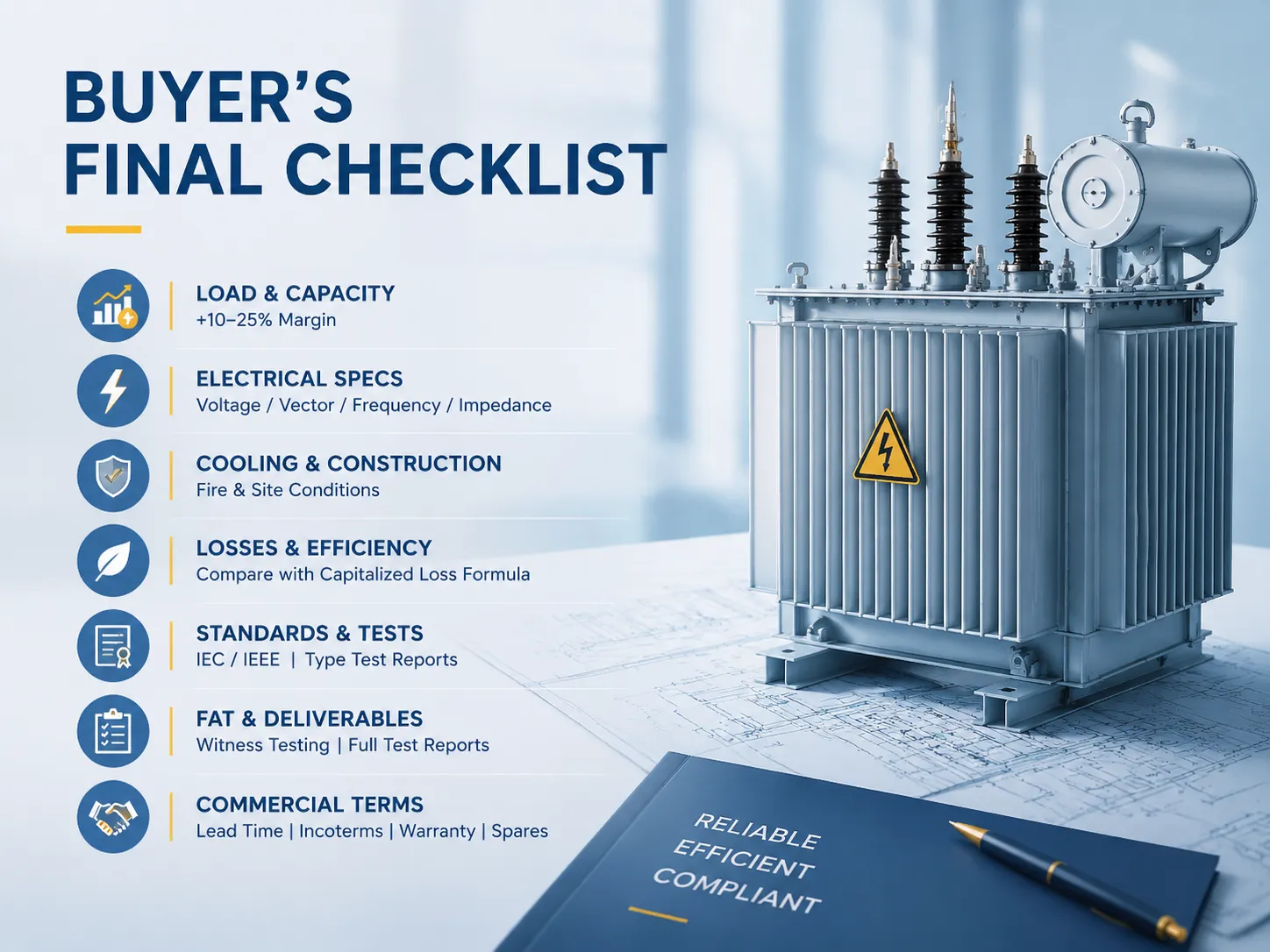
قائمة التحقق النهائية للمشتري
- تم إجراء حساب ملف الحمل وتم تعديل kVA بإضافة هامش من 10-25 في المئة.
- تم تحديد الجهد، ومجموعة المتجهات، والتردد، والمقاومة.
- تم اختيار نوع التبريد ونوع البناء بناءً على ظروف الحريق وظروف الموقع.
- تم تقدير الخسائر وفقًا لصيغة الخسارة الرأسمالية.
- تم التحقق من عائلة المعايير (IEC 60076 أو IEEE C57.12)، وتم طلب تقرير اختبار النوع.
- تم الاتفاق على نطاق FAT، والذي شمل إجراء الاختبار وتسليم التقرير الكامل للاختبار.
- تم تأكيد وقت التسليم، وشروط إنكوتيرمز، والضمان (12 -60 شهرًا).
الأسئلة المتكررة
كيف يمكنني حساب تصنيف kVA الذي يحتاجه مشروعي؟
لحساب سعة المحول المطلوبة، ببساطة أضف إجمالي الحمل المتصل بالكيلووات، وطبق عامل التنوع (عادةً 0.6-0.85 للأحمال الصناعية)، ثم قسم هذا الرقم على عامل القدرة لتحويل الكيلووات إلى كيلو فولت أمبير، ثم أضف 10-25% للنمو وقم بالتقريب لأعلى. على سبيل المثال، 800 كيلووات مع عامل قدرة 0.85 باستخدام عامل تنوع 0.8 ينتج عنه حوالي 753 كيلو فولت أمبير، والذي يمكن تقريبه إلى 1,000 كيلو فولت أمبير مع النمو.
ما هي الكفاءة النموذجية لمحول الطاقة الحديث؟
عادةً، تصل كفاءة المحولات التوزيعية إلى حوالي 98 بالمئة إلى 99.5 بالمئة، بينما يمكن أن تحقق المحولات الكبيرة كفاءات تصل إلى حوالي 99.5 بالمئة إلى 99.8 بالمئة. ومع ذلك، ليست الأرقام النسبية للكفاءة هي المهمة، بل القيم المطلقة. على سبيل المثال، لمحول بقدرة 10 م.ف.أ، ستكون الخسارة من 30 كيلووات (عند الحمل الكامل) إلى 70 كيلووات. بالنظر إلى سعر الكهرباء ($0.12/kWh)، يمكن أن تتراكم الخسائر كل عام إلى مبلغ كبير من المال.
كم يكلف محول بقدرة 1,000 كيلو فولت أمبير في 2025-2026؟
عادةً، سيكلفك محول بقدرة 1,000 كيلو فولت أمبير ما بين $6,000 إلى $14,000 من مورد في الصين وحوالي $15,000 إلى $28,000 إذا كان المحول من مصنع أوروبي. ستشمل التكلفة النهائية للمحول أيضًا رسوم التسليم والتأمين واللوجستيات والتي ستكلفك إضافيًا من 8% إلى 15%. يجب عليك أيضًا التحقق من كيفية تأثير أسعار النحاس والنفط الحالية على الأسعار، لذا لا تنسَ الحصول على عروض أسعار رسمية صالحة لمدة 60-90 يومًا.
هل يجب أن أختار النوع المغمور بالزيت أو النوع الجاف لمشروعي؟
اختر النوع المغمور بالزيت للتثبيتات التي تتم في الهواء الطلق أو حيث تسود أحمال المرافق والصناعات الكبيرة، بشرط أن يتوافق ذلك مع رموز السلامة من الحرائق. اختر النوع الجاف للتثبيتات التي تتم داخل المباني، أو في الأنفاق، أو مراكز البيانات أو المناطق الأخرى حيث توجد قيود ناتجة عن مخاطر الحرائق أو مشاكل الصيانة. تميل تكلفة المحولات الجافة إلى أن تكون أعلى بنسبة 40-80 بالمئة من تلك الخاصة بالمحولات المغمورة بالزيت بنفس تصنيف السعة، لكنها تتجنب عملية التعامل مع الزيت بالكامل.
كم يجب أن أدفع إضافيًا لتقليل الخسائر؟
ينتج تقييم خسارة رأس المال فوائد تجنب خسارة عدم الحمل تقدر بحوالي $2,000–6,000 لكل كيلووات، و$400–1,200 لكل كيلووات تم تجنبها في خسائر الحمل. إذا تم دفع علاوة تتراوح بين 5-15 بالمئة من سعر الشراء، فعادةً ما يكون ذلك مبررًا إذا أدى إلى تقليل خسائر عدم الحمل بنسبة 15-20 بالمئة أو أكثر.
المراجع
- IEC 60076-1: المحولات الكهربائية — عام — المعيار الأساسي للتصنيف، والخسائر، والمتطلبات العامة.
- IEC 60076-2: ارتفاع درجة الحرارة — يحدد حدود ارتفاع درجة الحرارة وقواعد فئة التبريد لقدرة التحميل.
- IEC 60076-7: دليل التحميل للمحولات المغمورة بالزيت — المرجع للتحميل الدوري والطوارئ بما يتجاوز لوحة الاسم.
- IEC 60076-5: القدرة على تحمل الدائرة القصيرة — متطلبات التحقق من التصميم والاختبار لصلابة الدائرة القصيرة.
- IEEE — تنشر بيانات سلسلة C57.12 ومجموعة العمل الخاصة بالموثوقية المستخدمة في شراء المحولات وتقييم الفقد.
- NEMA — جمعية تجارية في أمريكا الشمالية تقدم إرشادات حول كفاءة المحولات وتطبيقاتها.
- شركة جيانغسو سوبين للطاقة الكهربائية — مصنع محولات متوافق مع IEC 60076 يدعم المشترين الهندسيين في جميع أنحاء العالم.
الخاتمة
تعتمد عملية اختيار المحولات في هندسة الطاقة على قرارات محسوبة بدلاً من التخمينات العشوائية. لهذا، يجب تحديد الحمل الصافي ثم إضافة نسبة مناسبة للنمو المحتمل. من خلال حساب الخسائر الاقتصادية الناتجة عن تشغيل المحول، واختيار نوع تصميم مناسب يتوافق مع متطلبات الموقع والسلامة من الحرائق، بالإضافة إلى تأكيد توافق المعدات مع المعايير المقابلة، يمكن اعتبار حسابات التصميم صالحة.
- قم بتقدير الحجم وفقًا للقياسات التي تم الحصول عليها بالإضافة إلى هامش الحجم المطلوب من عشرة إلى خمسة وعشرين في المئة.
- تقييم الخسائر التي قد تتراوح من $2,000 إلى $6,000/kW بدون حمل ومن $400 إلى $1,200/kW مع حمل.
- اختر نوع التصميم وفقًا لظروف التركيب ولوائح السلامة من الحرائق.
- تحقق من أن المحول يتوافق مع المعايير IEC 60076 أو IEEE C57.12 بمساعدة تقارير اختبار النوع.
- قارن الاقتباسات التي تم الحصول عليها للمحولات وفقًا للقواعد المعمول بها مع الأخذ في الاعتبار التفاصيل واختبار القبول النهائي (FAT).