


إذا زرت غرفة المفاتيح بين طرفي نفق طريق حضري في منتصف موسم الصيف ورأيت حالتها، ستحصل على الإجابة. المحول بقدرة 800kVA، الذي هو المصدر الرئيسي للطاقة لنظام التهوية والإضاءة في النفق، يقع داخل غرفة بمستوى رطوبة يتجاوز 85% لعدة أشهر. كل ليلة، تتشكل التكثفات على سطح الخزان. تظهر جدران الغرفة بقعًا ناتجة عن ترسبات الملح بسبب مواد إزالة الجليد التي تم تفريغها من الطريق. تسجل تاريخ الصيانة ثلاث حالات لفصل المرحلات هذا العام بسبب المشاكل التي تسبب تكوين دوائر قصيرة على القضبان الكهربائية ذات الجهد المنخفض بسبب الرطوبة. تظهر اختبار الزيت أنه يحتوي على 42 جزء في المليون من الماء، وهو ما يتجاوز المعدل المسموح به البالغ 30 جزء في المليون ويسبب تدهور العزل المصنوع من الورق.
الأنفاق هي من أصعب الأماكن لاستخدام المحولات بسبب الرطوبة الموجودة فيها. تقدم لك هذه المقالة 3 قضايا مهمة يجب أن تضعها في اعتبارك أثناء اختيار المحولات للأنفاق: حماية العزل والإغلاق، اختيار المواد وحماية التآكل، والتهوية والتحكم في التكثف.
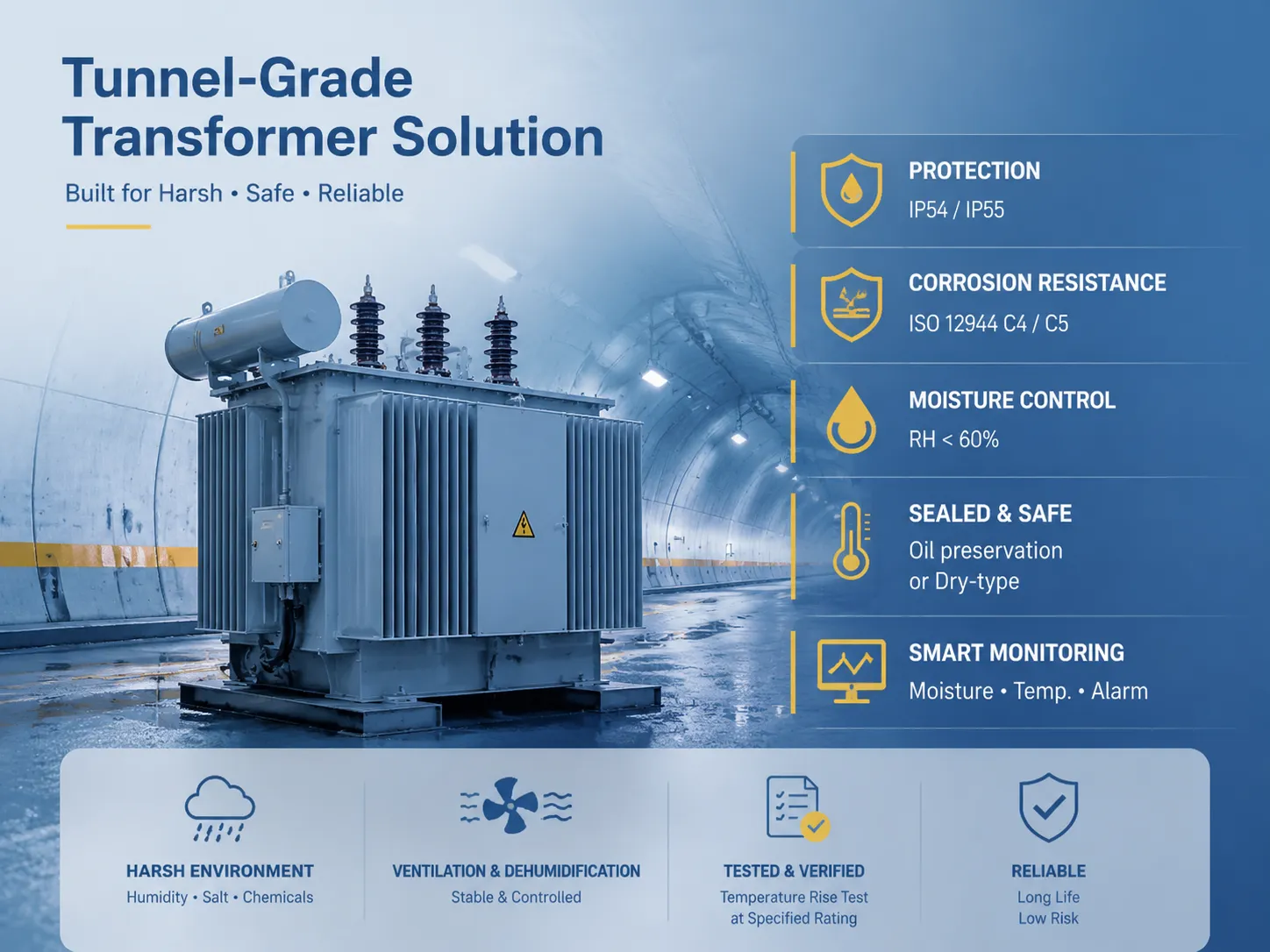
الإجابة المختصرة مذكورة هنا: أثناء اختيار محول للأنفاق الرطبة، يجب أخذ ثلاثة أشياء في الاعتبار: (1) الحماية بواسطة الإغلاق والعزل - بالنسبة لأنواع المحولات الجافة، يجب تحديد أغلفة مصنفة IP54 وIP55. في حالة المحولات المغمورة بالزيت، يجب تحديد خزانات محكمة الصنع مصنوعة من مواد مقاومة للتآكل؛ (2) المواد المقاومة للتآكل - أغلفة مصنوعة من الفولاذ المقاوم للصدأ أو مواد مطلية بالمسحوق الثقيلة، تشطيبات مصنفة لفئة التآكل C3/C4 وفقًا لمعيار ISO 12944، عوازل استوائية بمستويات رطوبة عالية؛ (3) التهوية ومنع التكثف - تبادل الهواء المنظم، سخانات مضادة للتكثف؛ وحدات التحكم في الرطوبة.
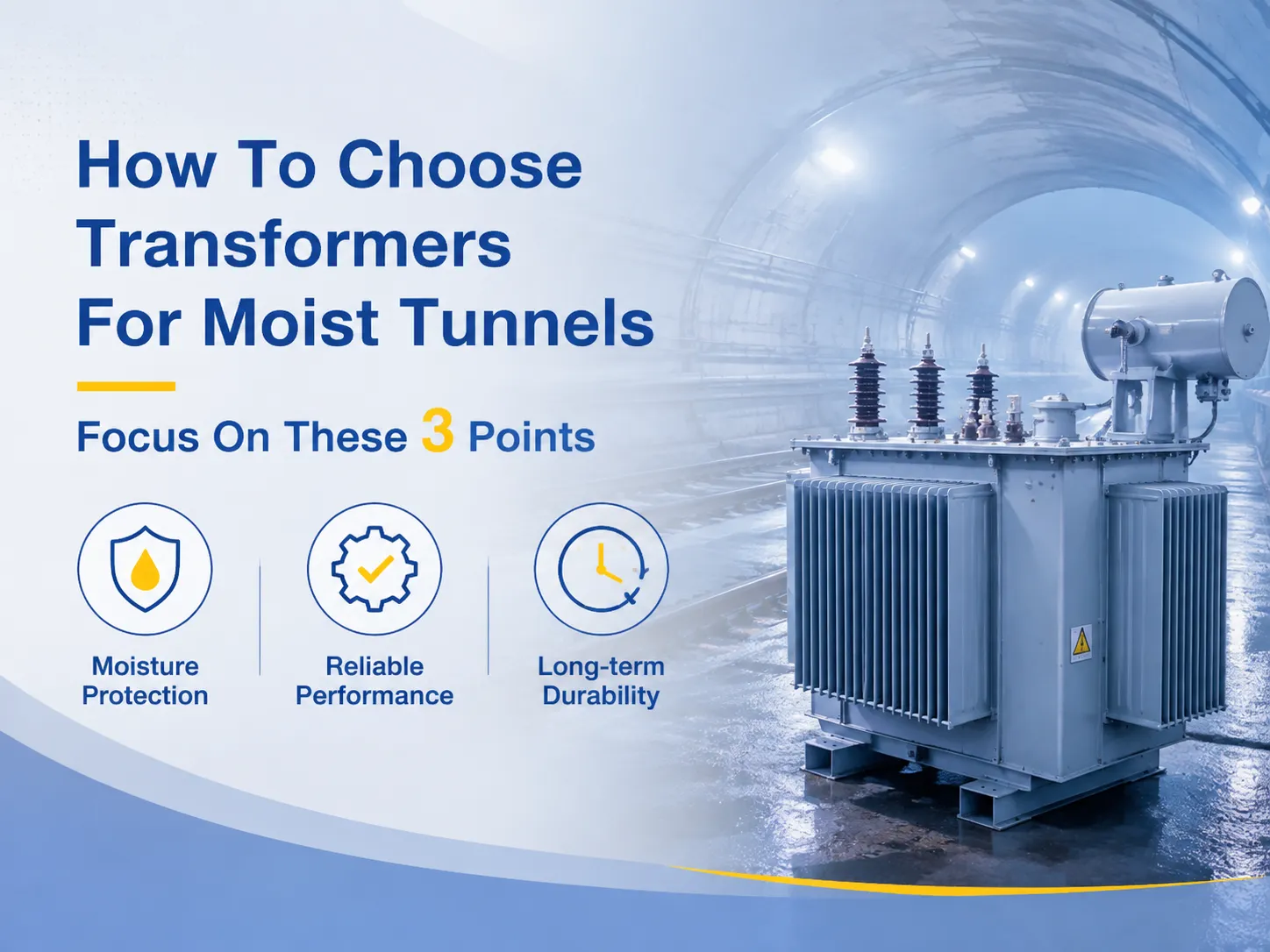
لماذا تدمر الأنفاق الرطبة المحولات
فشل المحول في البيئات الرطبة ليس عادة حادثًا كهربائيًا فوريًا - بل هو عملية كيميائية وفيزيائية تدريجية. إليك الأسباب الرئيسية:
- الرطوبة في العزل: في المحولات المغمورة بالزيت، تدخل الرطوبة من خلال أجهزة التنفس، والحشوات والتكثف. مستويات الرطوبة التي تتجاوز 30 جزء في المليون في زيت المحول تسرع من شيخوخة العزل الورقي، مما يقلل من العمر إلى النصف مع كل رطوبة مرتين أعلى من الطبيعي. عند 50-60 جزء في المليون، قد تحدث فقاعات أثناء الحمل الزائد وتؤدي إلى فشل عازل.
- تتبع السطح والزحف: على لفات وأنابيب النوع الجاف، تخلق الرطوبة مع الغبار أو الملح قنوات موصلة على السطح تؤدي إلى تفريغ جزئي ووميض.
- تآكل الخزان، والتجهيزات والاتصالات: يهاجم المكثف المحتوي على الملح الخزانات، وشفرات المبرد، وتجهيزات الكابلات والاتصالات المثبتة، مما يزيد من مقاومة الاتصال وأخيرًا يتسبب في نقاط ساخنة.
- تكثف غرف التحكم والجهد المنخفض: تؤدي تقلبات درجات الحرارة إلى تكثف الماء على القضبان الكهربائية والوحدات الإلكترونية، ويمكن أن تؤدي حادثة تكثف واحدة إلى حدوث تفريغ بين الطورين.
وتؤكد الإحصائيات الفيزياء: تظهر المحولات في المواقع الساحلية وأنفاق الطرق معدل فشل أكبر بمقدار 2-3 مرات مقارنةً بالوحدات في المناطق الداخلية الجافة، حيث يعتبر تدهور العزل الناتج عن الرطوبة السبب الرئيسي للفشل الذي تم العثور عليه في التحقيقات الجنائية. الحل ليس الصيانة - بل هو المواصفات الصحيحة أثناء الشراء.
النقطة 1: حماية العلبة والعزل
السؤال الرئيسي هو كيفية منع الرطوبة من التأثير على العزل. من حيث لغة المواصفات، من المهم أن نكون دقيقين:
| العنصر | المعيار / المتطلبات | مواصفات درجة النفق |
|---|---|---|
| علبة من النوع الجاف | تصنيف IP وفقًا لـ IEC 60529 | IP54 كحد أدنى؛ IP55 حيث يمكن أن يحدث رش الماء |
| خزان مغمور بالزيت | IEC 60529 + تصميم محكم | خزان محكم مع نظام حفظ الزيت (غطاء نيتروجين أو نوع امتصاص الغاز) |
| البوشات والتوصيلات | IEC 60529 / الزحف وفقًا لـ IEC 60076 | مسافات زحف موسعة، مظلات سيليكون أو إيبوكسي، صناديق كابلات IP54 |
| غرف التحكم / الجهد المنخفض | IEC 60529 | غرف IP55 مع أبواب محكمة الغلق ومرشحات تنفس |
| نظام العزل | IEC 60076-11 (جاف)، IEC 60076-1 (زيت) | عزل مداري، حدود محتوى الرطوبة المذكورة في ورقة البيانات |
الخطأ المعتاد هو تحديد علب IP23 أو IP31 - بينما قد تكون مناسبة للاستخدام الصناعي في الداخل، إلا أنها لن تعمل في الحالات المعرضة لظروف رطوبة مستمرة في النفق. كل نسبة تحسين في IP تكلف عادة حوالي 400-1,500 دولار لكل وحدة، ومع ذلك فإن التمييز بين IP31 وIP55 هو الذي يحدد ما إذا كانت المحولات في النفق ستدوم لخمس سنوات.
النقطة 2: مقاومة التآكل والمواد
النقطة المهمة الثانية في اتخاذ القرار هي اختيار المواد. في بيئة النفق الرطبة، تعتبر التشطيبات السطحية وجودة المعدن بنفس القدر من الأهمية مثل تصميم الأنظمة الكهربائية. المعيار المعمول به هو ISO 12944 (الدهانات والطلاءات للإنشاءات الفولاذية) الذي يقسم التآكل الجوي إلى فئات من C1 (الداخلية المهواة) إلى C5-X (قوي جدًا). تُعتبر الأنفاق التي تتعرض لرشات من السيارات عمومًا C3 أو C4، بينما يمكن أن تصل الأنفاق الغنية بالملح إلى الفئة C5-I.
| المكون | مواصفات المعيار | مواصفات درجة النفق |
|---|---|---|
| طلاء الخزان والعلبة | ISO 12944 C2/C3، طبقة واحدة | نظام طلاء C4 أو C5، بحد أدنى 120-240 ميكرومتر سمك الفيلم الجاف |
| مادة غلاف العلبة | فولاذ مدلفن على البارد، طلاء | فولاذ مقاوم للصدأ (304/316) أو مجلفن بالغمس الساخن + طلاء مسحوق ثقيل |
| المسامير والتجهيزات | فولاذ مطلي بالزنك | مسامير فولاذية مقاومة للصدأ، أو حوامل كابلات نحاسية أو فولاذية مقاومة للصدأ |
| المشعات / زعانف التبريد | فولاذ كربوني قياسي | زعانف مطلية أو هامش تبريد متزايد لتعويض فقدان الطلاء |
| مرشحات تنفس هلام السيليكا | معيار | هلام سيليكا من الدرجة الكيميائية مع مؤشر لون، حجم أكبر |
تأثير التكلفة موجود ولكنه محدود؛ الانتقال من طلاء C2 إلى C4 عادة ما يؤدي إلى تكاليف إضافية تتراوح بين $600 إلى $2,500 لكل وحدة. إضافة غلاف من الفولاذ المقاوم للصدأ لوحدة من النوع الجاف التي لها تصنيف 1,000 kVA يؤدي إلى تكاليف تتراوح بين $3,000 إلى $8,000. عند التعامل مع بنية تحتية حرجة في الأنفاق لا يمكن إيقافها عن الخدمة لإعادة الطلاء، فإن هذه التكلفة هي أرخص شكل من أشكال التأمين المتاحة.
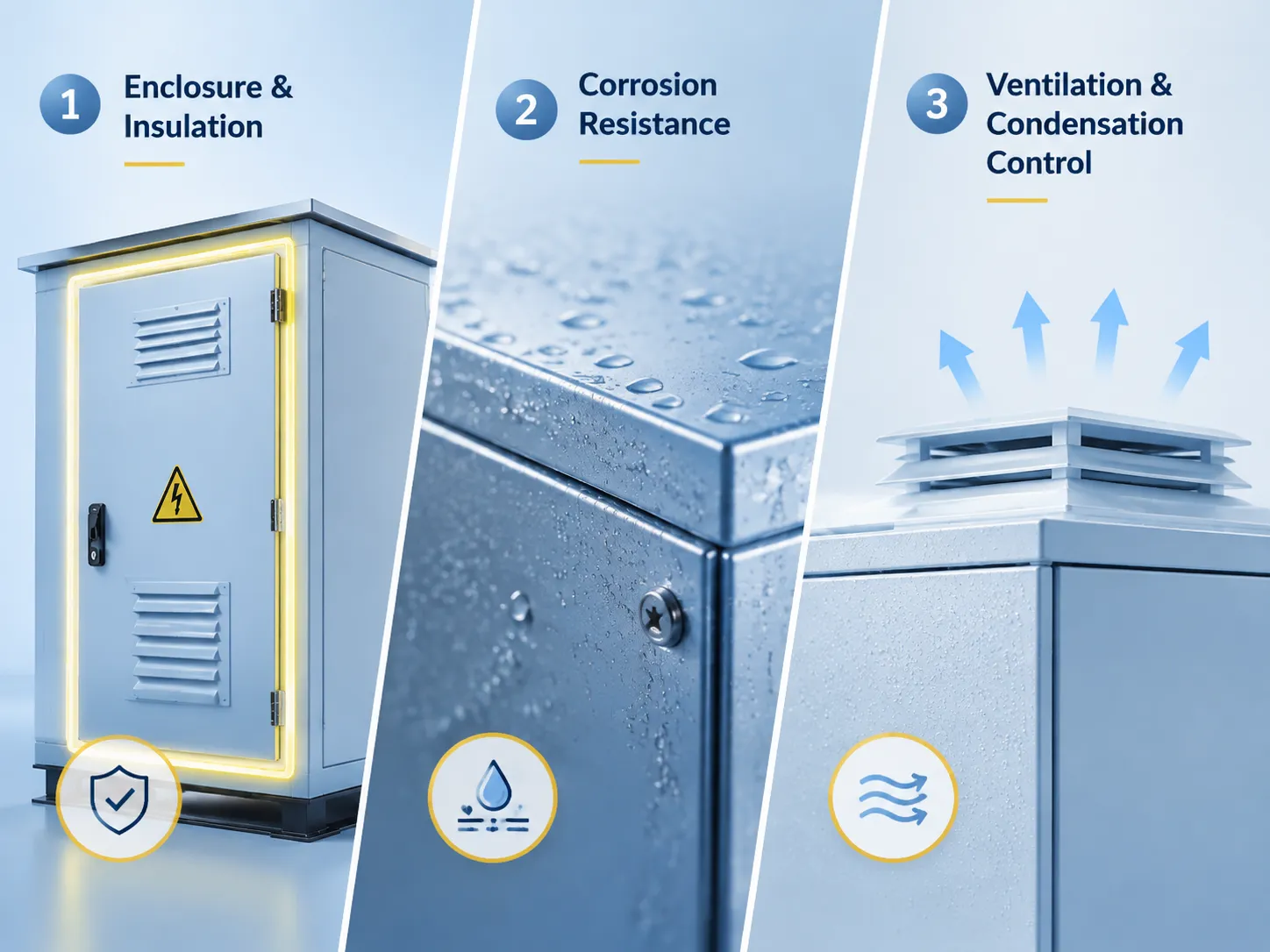
النقطة 3: التحكم في التهوية والتكثف
المعيار الثالث هو التحكم البيئي في غرفة المحولات أو الغلاف. عندما يتكثف الهواء المحيط، بغض النظر عن مدى فعالية غلاف IP55، فلن ينقذ المحول من الضرر. الحلول الممكنة لهذه المشكلة مرتبة حسب فعاليتها هي كما يلي:
- سخانات مضادة للتكثف: من 150–300 واط لكل حجرة وتنظم بواسطة ترموستات، تتيح سخانات مضادة للتكثف للأسطح أن تبقى 3–5 °م فوق نقطة الندى. السعر يتراوح بين $200 و $600 لكل حجرة.
- التهوية المنضبطة: في نفق رطب، حتى نظام التهوية الطبيعية ليس مفيدًا؛ يتطلب الأمر نظام مروحة يتم تفعيله فقط عندما يكون الهواء الخارجي أكثر جفافًا. تكلفته تتراوح بين $1,500 و $5,000.
- إزالة الرطوبة: في الغرف الحرجة، يضمن مزيل رطوبة صغير أن مستوى الرطوبة أقل من 60%. في هذه الحالة، تكلفته تتراوح بين $1,000 و $3,500.
- أجهزة تنفس مدفأة وأنظمة زيت محكمة الإغلاق: هذا الحل يستبعد خطر دخول الرطوبة لمعدات مغمورة بالزيت. السعر مشمول بالخيار المذكور أعلاه.
المهمة الهندسية بسيطة ومباشرة: يجب الحفاظ على مستوى الرطوبة في منطقة المعدات فوق 60% ودرجات حرارة السطح فوق نقطة الندى. يجب تضمين هذه التدابير في حزمة مواصفات المحول ولا ينبغي اعتبارها أعمال مدنية إضافية، حيث يجب أن يكون مصنع المحولات مسؤولاً عن منع الرطوبة.
أنواع المحولات للاستخدام في الأنفاق
يمكن جعل كلا عائلتي المحولات الرئيسيتين مناسبة للاستخدام في الأنفاق، لكن الاختيار يؤثر على التكلفة، والمساحة، وسلامة الحريق:
| النوع | نقاط القوة في الأنفاق | نقاط الضعف | السعر النموذجي، 1,000 kVA (دولار أمريكي) |
|---|---|---|---|
| نوع جاف (راتنج مصبوب) | لا يوجد خطر تسرب زيت، آمن من الحرائق، صيانة منخفضة، أداء جيد ضد الرطوبة مع غلاف مناسب | تكلفة أعلى، حساس للرطوبة العالية المستمرة بدون غلاف | $18,000–$32,000 |
| مغمور بالزيت محكم الإغلاق | تكلفة أقل، مثبت، خزان محكم يقاوم الدخول | اعتبارات احتواء الزيت والسلامة من الحرائق؛ خطر تآكل الخزان إذا فشل الطلاء | $12,000–$22,000 |
| نوع جاف من الفولاذ المقاوم للصدأ | أقصى مقاومة للتآكل، الأفضل للأنفاق المالحة | أعلى تكلفة | $25,000–$40,000 |
في حالة نفق السكك الحديدية ونفق الطريق السريع، عادة ما يكون المحول الجاف هو الخيار الأفضل في الغرف المقاومة للحريق لأنه في حالة نشوب حريق في النفق، يمكن أن يشكل المحول خطرًا ولا توجد العديد من الإمكانيات للهروب. في حالة قنوات المرافق والأنفاق تحت الأرض حيث يتم إدارة خطر الحريق بشكل مختلف، سيكون الخيار الأفضل هو المحولات المملوءة بالزيت.
النوع الجاف مقابل المغمور بالزيت للاستخدام في الأنفاق
القرار بين العائلتين في نفق رطب يعتمد على خمسة عوامل، ملخصة أدناه:
| العامل | نوع جاف (راتنج مصبوب) | مغلق مملوء بالزيت |
|---|---|---|
| معالجة الرطوبة | جيد مع غلاف IP54+؛ استعادة عزل الرطوبة عن طريق التجفيف | الخزان المغلق يقاوم دخول الماء؛ يجب مراقبة رطوبة الزيت |
| سلامة من الحرائق | ذاتية الإطفاء، دخان محدود | خطر حريق الزيت؛ يحتاج إلى غرفة مقاومة للحريق واحتواء |
| الصيانة | منخفض؛ تنظيف دوري وتصوير حراري | أعلى؛ أخذ عينات من الزيت، DGA، خدمة التنفس |
| التكلفة (1,000 kVA) | $18,000–$32,000 | $12,000–$22,000 |
| الاستخدام النموذجي للنفق | غرف الطرق/محطات السكك الحديدية والمعدات | قنوات المرافق، الخزائن البعيدة، مواقع المناجم |
لا يوجد فائز نهائي. يعتمد الاختيار على معايير السلامة من الحرائق وقدرة الإصلاح. ما هو مهم هو أنه مهما كان النظام الذي تختاره، يجب أن يلبي جميع المعايير الثلاثة المذكورة أعلاه: حماية جيدة للغلاف، خصائص مقاومة للتآكل، وإزالة أي تكثف قد يحدث.
قائمة التحقق من المواصفات
- تأكيد ظروف النفق: مستويات الرطوبة، كميات الملح، التهوية، والمواد الكيميائية المستخدمة.
- يجب أن تتوافق الأغطية والأقسام مع IP54 على الأقل (يوصى بالامتثال لـ IP55 إذا تم رش الماء في النفق).
- يجب تحديد طلاء ISO 12944 C4 (أو C5 لنفق الملح) مع سمك الفيلم الجاف في العقد.
- يجب استخدام الفولاذ المقاوم للصدأ أو الأصداف المطلية بشكل ثقيل إذا حدث تآكل شديد.
- يجب تطبيق الحفاظ على الزيت المغلق على المعدات المملوءة بالزيت بينما يجب استخدام البناء الجاف في المناطق ذات خطر الحريق.
- يجب دمج سخانات مضادة للتكثف، وتهوية تتحكم في الرطوبة مع وحدات إزالة الرطوبة في المشروع.
- يجب أيضًا إدراج محتوى الرطوبة في ورقة البيانات.
- إضافة المراقبة: مستشعر رطوبة الزيت، مستشعر درجة حرارة اللف، ومستشعر التسرب/التكثف.
أفضل العلامات التجارية ومقارنة الأسعار
تشمل الشركات المصنعة للمحولات المناسبة للنفق كل من القادة الدوليين والمنتجين المتخصصين. توفر الجدول أسعارًا لمحولات جافة بقدرة 1,000 kVA بجهد 10/0.4 kV مع غلاف من الدرجة النفقية IP54+ ومعالجة C4؛ ستكون المحولات من نوع الزيت أرخص بحوالي 35-45 في المئة.
| العلامة التجارية | الدولة | نقاط القوة ذات الصلة بالنفق | السعر الإرشادي (دولار أمريكي) |
|---|---|---|---|
| شنايدر إلكتريك | فرنسا | مجموعة قوية من المحولات من النوع الجاف وغلاف IP55 | $22,000–$34,000 |
| سيمنز | ألمانيا | مراجع بنية الأنفاق، المراقبة الرقمية | $23,000–$36,000 |
| ABB | سويسرا | نطاق الراتنجات المصبوبة والخزانات المغلقة | $22,000–$35,000 |
| إيتون | الولايات المتحدة الأمريكية | عمق النوع الجاف الصناعي، حاويات مخصصة | $20,000–$32,000 |
| هيتاشي للطاقة | اليابان/سويسرا | خبرة المحولات الكبيرة للبنية التحتية | $24,000–$38,000 |
| شركة جيانغسو سوبين للطاقة الكهربائية | الصين | وحدات متوافقة مع IEC 60076 مع تصنيف IP54/55، طلاء C4، خيارات الفولاذ المقاوم للصدأ | $15,000–$26,000 |
تقدم الشركات المصنعة الدولية ممارسات بناء استثنائية وخبرة شاملة في الوثائق، وهي متطلبات رئيسية للمشاريع التي تتطلب شهادات صارمة ومتطلبات تأمين. تعتبر شركة جيانغسو سوبين للطاقة الكهربائية مشاركًا نشطًا في هذا المجال وتصنع محولات جافة ومغمورة بالزيت متوافقة مع IEC 60076 تلبي المواصفات الخاصة بالشركة مثل حاوية IP55، طلاء C4/C5، خيارات الفولاذ المقاوم للصدأ، أنظمة تسخين مضادة للتكثف، ومراقبة الرطوبة، بسعر أقل بمقدار 45-60% مقارنة بنظرائها الأوروبيين أو الأمريكيين. عندما يتعلق الأمر بتقييم الخيارات لبناء غرف محولات متعددة للتهوية والإضاءة والصرف، تُعتبر سوبين بديلاً جديرًا بالمقارنة مع الشركات الدولية نظرًا لمرونتها في إنتاج منتجات مخصصة ونظام اختبار المصنع الممتاز.
الأسئلة المتكررة
ما هو تصنيف IP الذي أحتاجه لمحولة في نفق؟
الحد الأدنى المقبول لتصنيف IP لمحولة هو IP54، ولكن IP55 هو المفضل إذا كانت المحولة ستتعرض للماء بسبب التنظيف أو تسرب المياه. معنى تصنيف IP54 هو أنه محكم ضد الغبار ويحمي من رشات الماء من أي اتجاه. بالمقابل، يحمي IP55 من نفاثات الماء المستخدمة في التنظيف. تكلف تركيب معدات تعمل بتصنيف IP أعلى من IP23 على الأقل $400–$1,500 أكثر.
كم يكلف محول من نوع النفق مقارنةً بمحول قياسي؟
يمكن أن تصل تكلفة محول جاف قياسي بقدرة 1000 كVA إلى $13,000–$18,000. تكلفة محول من نوع النفق مع حاوية IP54/55، طلاء C4، وأنظمة التحكم في التكثف هي $18,000–$32,000، مما يعني علاوة قدرها 15–30%. بالإضافة إلى ذلك، تضيف الأصداف المصنوعة من الفولاذ المقاوم للصدأ $3,000–$8,000 إضافية. ومع ذلك، فإن هذه علاوة صغيرة عند مقارنة التكاليف الإجمالية بتكاليف استبداله في منتصف العمر لبنية تحتية حرجة للنفق.
هل المحول الجاف أو المغمور بالزيت أفضل في نفق رطب؟
بالنسبة للأنفاق الطرقية والسكك الحديدية حيث تكون حماية من الحرائق حساسة، فإن المحول الجاف (الراتنج المصبوب) هو الخيار المفضل، حيث إنه ذاتي الإطفاء ولا يشكل أي خطر من تسرب الزيت. من ناحية أخرى، فإن المحولات المغمورة بالزيت أكثر كفاءة من حيث التكلفة للأنابيب العامة، وأعمال المناجم، والخزائن غير القابلة للوصول. وبالتالي، من المهم أن نفهم أن حماية من الحرائق، والوصول للصيانة، والتكاليف هي القضايا الرئيسية المحددة في اختيار نوع المحول.
ما هو مستوى الرطوبة المقبول في زيت المحول؟
يُعتبر أن محتوى الرطوبة في زيت المحولات خلال فترة التسليم يجب ألا يتجاوز 15-20 جزء في المليون. أثناء التشغيل، يكون محتوى رطوبة الزيت مقبولًا إذا لم يتجاوز 30 جزء في المليون. إذا كان يتراوح بين 30 إلى 50 جزء في المليون، يتطلب الأمر مزيدًا من المراقبة. عندما يتجاوز مستوى الرطوبة 50 جزء في المليون، هناك خطر محتمل لتشكل فقاعات الهواء أثناء تشغيل المحول.
هل تمنع سخانات مضادة للتكثف حقًا فشل المحول؟
نعم، وهي من بين أفضل تدابير الكفاءة من حيث التكلفة المذكورة في هذه المقالة. تعمل هذه السخانات باستخدام ترموستات وتكلف $200-$600.
المراجع
- IEC 60529 — درجات الحماية المقدمة بواسطة الأغطية (رمز IP) — المعيار الذي يحدد تصنيفات IP لأغطية المحولات والأقسام.
- سلسلة IEC 60076 - محولات الطاقة — معايير التصميم والاختبار والعزل الأساسية لجميع مواصفات المحولات في الأنفاق.
- ISO 12944 — الدهانات والورنيش: حماية الصدأ للهياكل الفولاذية — تصنيف التآكل (C2–C5) المستخدم لمواصفات طلاء الأنفاق.
- IEEE C57.106 — دليل لقبول وصيانة زيت المعادن العازل — إرشادات موثوقة حول حدود رطوبة الزيت وتفسيرها.
- IEC 60076-11 — محولات الطاقة من النوع الجاف — متطلبات الرطوبة والأغطية لوحدات الراتنج المصبوب في البيئات الرطبة.
- دليل AREMA للهندسة السككية — إرشادات البنية التحتية الكهربائية والتهوية للأنفاق المستخدمة في مشاريع السكك الحديدية في أمريكا الشمالية.
- Jiangsu Subian Electric Power — الموقع الرسمي — مصنع لمحولات من الدرجة الأنفاق IP54/55، مطلية بـ C4 لمشاريع البنية التحتية.
الخاتمة
يمكن أن تتسبب الرطوبة في تلف المحول، ولكن يمكنك تقليل فرص حدوث هذه المشكلة من خلال اتباع بعض التوصيات. التوصية الأولى هي تركيب المحول داخل غلاف محكم (IP54 أو أعلى) مع تركيب مقاوم للماء. الاقتراح الثاني هو طلاء الأجزاء الفولاذية من المحول بمواد يمكن أن تتحمل التآكل والرطوبة (يفضل أن يكون طلاء ISO 12944 C4/درجة التصنيف مناسبًا). التوصية الثالثة هي توفير التهوية وأنظمة التدفئة والتحكم في الرطوبة (مزيلات الرطوبة).
النقاط الرئيسية:
- الأغطية IP23/IP31 ليست جيدة للتشغيل في الأنفاق؛ IP54/IP55 أمر ضروري.
- تأكد من استخدام طلاء C4 (C5 للأنفاق المالحة) لحماية المحول من التآكل وفقًا لـ ISO 12944.
- لا يزال يتعين عليك دفع 15–30% إضافية لمحول مصنف للتشغيل في الأنفاق عند شرائه؛ بهذه الطريقة ستضمن أن لديك جهازًا موثوقًا لمدة 25 عامًا بدلاً من جهاز معطل لمدة 5 سنوات فقط.
- زود المحول بأنظمة تدفئة وتحكم في الرطوبة: سيساعد ذلك في تجنب المشاكل المتعلقة بالرطوبة أثناء تشغيل المحول.