


المحول المواصفات الكشف جزء فقط من الكل الصورة. العديد المحول المصنعة لتلبية نفس الجهد، الكفاءة, ، و, الطاقة التصنيفات ستظل تختلف على نطاق واسع في جميع. الحالات يمكن تتبعها إلى, عملية التصنيع إن توتر اللف، لتلبية نمط تكديس القلب. ، تجفيف العزل ، وظروف الاختبار, ، والأساليب يتم, تحديدها في المصنع و تتبعها تقرر ما إذا كانت ستعمل بهدوء لمدة ثلاثين عامًا أو نمط المحول تختلف ستتعطل قريبًا بعد اللف، التركيب بعد التثبيت.
كـ نمط الكهربائية الصناعة هو يخضع سريع تطوير, نمط مفهوم من المحول تكديس هو أيضا تغيير. جديد المواد الأساسية،, حديثة الإنتاج في, متقدمة اختبارات العمليات المصنع و تجعل اثنين المحولات المصنعة لتلبية نفس المواصفات في من كل أخرى في مصطلحات من الطاقة ، و.
لماذا تحدد تكنولوجيا التصنيع جودة المحولات
كل رقم أداء على لوحة الاسم هو نتيجة قرار تصنيع تم اتخاذه سابقًا. يعتمد فقدان الحمل الخالي على مدى دقة قطع القلب وتكديسه. يعتمد فقدان الحمل والقوة الميكانيكية على مدى دقة تشكيل اللفات وتثبيتها. تعتمد موثوقية العزل على نظافة منطقة اللف وعمق عملية التجفيف والتشريب. حتى الضوضاء التي تصدرها المحول أثناء الخدمة تحددها مدى إحكام تماسك طبقات القلب معًا.
نظرًا لأن الكثير محجوز أثناء الإنتاج، فإن تكنولوجيا تصنيع المحولات المتفوقة هي ما يفصل الوحدة التي تجتاز اختبارات المصنع فقط عن تلك التي تستمر في الأداء عند حافة تصنيفها لعقود. يقوم مصنع المحولات القادر بمعاملة العملية كنظام هندسي، يتحكم في المواد والأدوات والبيئة والاختبار معًا بدلاً من الاعتماد فقط على الأيدي الماهرة. الأقسام أدناه توضح أين تحدث أكبر التقدمات.
ثورة القلب والمواد
القلب هو يعتبر لتلبية إن نمط جزءًا رئيسيًا من أي محول, و عملية يمثل أكبر نمط فقدان الحمل الخالي رئيسيًا هذا; لماذا هو من الضروري أن يكون حاسمًا ذلك الابتكارات في المواد أخذ مكان هنا. حالة–من–نمط–فن الصلب السيليكوني مع عالي النفاذية و الحبوب التوجه, الذي هو لحل عبر نمط الليزر القلب, يحصل مغناطيسي باستخدام كثير أقل طاقة أكثر من القديمة–لفات موضوعة بشكل مثالي وموصلات المواد. ، تجفيف دقيقة قطع القلب وتكديس القضاء على الفجوات الهوائية التي تخلق الناتجة و الصوت.
، تجفيف الحد الأدنى بدون تحميل الناتجة المصنع و ممكن بسبب لتلبية نمط استخدام من نواة سبيكة غير متبلورة, الذي يعني ذلك نمط المحول هو المصنعة باستخدام نمط شريط من غير متبلور معدن, الذي هو كثير أسهل لتلبية مغناطيسية من الصلب البلوري بسبب لتلبية نمط غير المنظم الهيكل من نمط شريط المواد. يتم يجب إن ملاحظة ذلك نمط التعامل و قطع من غير متبلور شريط يتطلب نمط استخدام من خاص الأساسي منذ نمط المادة هو جدا رقيقة و هشة. هذا هو a مثال واضح من توفير الطاقة الابتكارات في المحولات.
يتم هو الضروري لتلبية قول ذلك التقدم في المواد تطبيق ليسوا فقط على الـ النوى, لكن أيضا لتلبية أنظمة العزل و أخرى الأنواع من ورق, وبالتالي زيادة نمط الكبير بين درجة الحرارة و زيادة نمط العمر الافتراضي. ماذا هو مهم, ابتكار في السوائل العازلة، بما في ذلك السوائل الاسترية،, يحسن سلامة الحريق, والبيئة الخصائص.
التاريخ من الصناعة: الانتقال إلى التصنيع المتقدم
تقليديًا, ، المحول تكديس تم العمل اليدوي. العمال كان لديهم لتلبية قطع الطبقات, لف لفات و تحقق نمط الجودة من نمط منتج بناءً على الخبرة. ، تجفيف العمل نهج تم ناجح في العديد إلى في تجعل تصميمات جيدة المحولات لكن عملية لحل العديد حالات من عدم التناسق كما نمط ستتعطل تم تم لفات بمستويات الناس ما إذا بمستويات الأوقات.
هذه الممارسة تم باستمرار أخضر لتلبية اكتساب في الأتمتة. ، تجفيف أداة تجعل القلب تم تغيرت. اليدوي قطع تم استبدل لفات الدقة الآلات, العمل التصنيع تم مستبدل أكبر عالي–الأداء العزل الآلات و نوعي اختبارات في إنشاؤه مؤتمت. في الوقت الحاضر, متقدمة تقنيات أكبر نمط الإنتاج من المحولات في إنشاؤه مطورة الذي يسمح الوصول كثير أفضل إلى عدد أقل مما كان عليه من قبل.
الدقة والأتمتة في خط الإنتاج
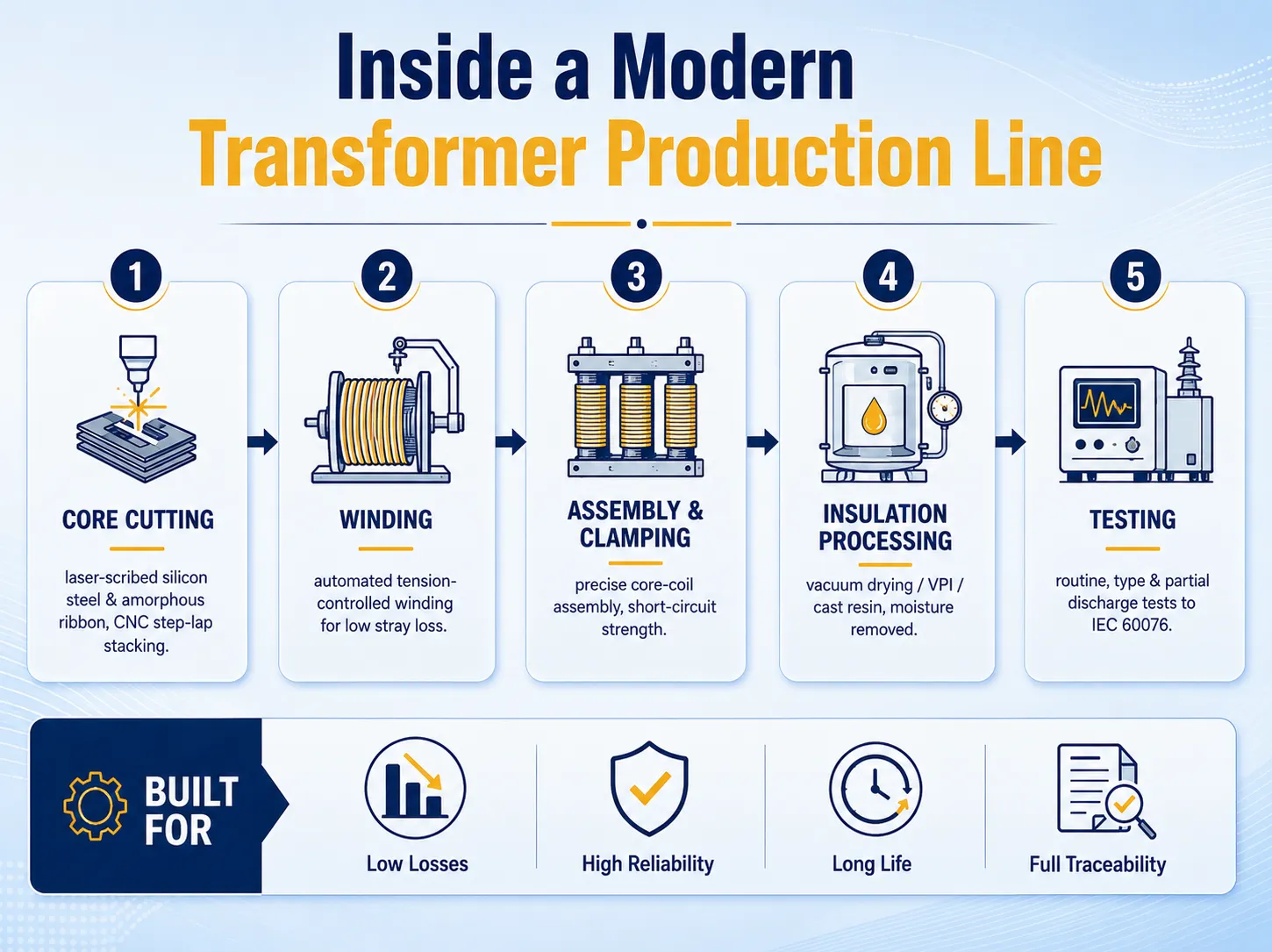
الاتساق هو البطل الصامت لجودة المحولات. التصميم جيد فقط بقدر قدرة المصنع على إعادة إنتاجه، وحدة بعد وحدة، دون انحراف. هنا حيث غيرت الأتمتة قواعد اللعبة. خطوط القطع والتكديس التي تتحكم فيها الكمبيوتر تنتج شرائح أساسية بدقة لا يمكن للعمل اليدوي مطابقتها، وتقوم بذلك بشكل متطابق في كل مرة.
يتم تحويل لف المحولات بنفس الطريقة. لف مؤتمت تتحكم الآلات في توتر الموصل، وعدد اللفات، ومكان الطبقات بدقة تقلل مباشرة من الفقد العشوائي وتحسن القوة الميكانيكية التي تحتاجها المحولات لتحمل قوى الدائرة القصيرة. تقلل المناولة الروبوتية ونقل المواد من التلوث والأضرار، بينما خط إنتاج المحولات المجهز جيدًا يلتقط بيانات العملية في كل خطوة. النتيجة ليست فقط جودة أعلى ولكن جودة قابلة للتكرار، بحيث تؤدي الوحدة العاشرة والوحدة العشرون ألف بنفس الأداء. كما أن الأتمتة تحسن سلامة العمال وتحرر المهندسين المهرة للتركيز على التصميم وحل المشكلات بدلاً من المهام المتكررة. الرقمنة والمصنع الذكي.
التحول الأكثر تأثيرًا في
هو الرقمي. المصنع الذكي الحديث تكنولوجيا تصنيع المحولات المتفوقة يربط التصميم والتخطيط والإنتاج والاختبار في نظام واحد مدفوع بالبيانات بدلاً من سلسلة من الخطوات المنفصلة. أنظمة تنفيذ التصنيع جدولة وتتبع كل طلب، وتبلغ المستشعرات على الآلات عن حالتها في الوقت الفعلي، وكل دفعة من المواد قابلة للتتبع من الوصول إلى الشحن. أحد الممكنات القوية هنا هو التوأم الرقمي.
، نموذج افتراضي مفصل لمحولات أو عملية إنتاج. يمكن للمهندسين محاكاة السلوك الكهرومغناطيسي، والأداء الحراري، والإجهاد الميكانيكي قبل قطع أي معدن، مما يحسن التصميم ويكتشف المشكلات في البرمجيات بدلاً من أرضية المصنع. خلال الإنتاج، تتغذى البيانات الحية مرة أخرى إلى هذه النماذج للحفاظ على الجودة في الهدف. هذه الخطوة نحو تصنيع المحولات في الصناعة 4.0, تقصر وقت التطوير، وتقلل من الفاقد، وتوفر للعملاء أدلة موثقة وقابلة للتتبع حول كيفية بناء واختبار وحدتهم. كما أن الرقمنة تغير ما يحدث بعد التسليم. تمتد المستشعرات والاتصال بشكل متزايد من المصنع إلى الميدان، بحيث يمكن للمحول الإبلاغ عن درجة حرارته، وتحميله، وحالته طوال فترة عمله. هذا يدعم الصيانة المعتمدة على الحالة، حيث يتم جدولة الخدمة وفقًا للحالة الفعلية للمحول بدلاً من تقويم ثابت، مما يقلل من الفشل غير المتوقع والتدخلات غير الضرورية. لذلك، فإن نفس العقلية المدفوعة بالبيانات التي تحسن المصنع تستمر في إضافة قيمة للمالك لفترة طويلة بعد التشغيل، مغلقة الحلقة بين كيفية صنع المحول وكيفية تشغيله. معالجة العزل: الخطوة الخفية التي تحدد الموثوقية.
بعض من أهم الأعمال في تصنيع المحولات غير مرئية في المنتج النهائي. معالجة العزل، بمعنى التجفيف، والتشبع، ومعالجة لفات العزل ونظام العزل، هي حيث يتم تحديد الكثير من موثوقية المحول على المدى الطويل، وهي مرحلة حيث تسدد التكنولوجيا المتقدمة ثمارها بهدوء لعقود.
الرطوبة هي عدو العزل. حتى كميات صغيرة من الماء المحبوس تسرع من الشيخوخة وتزيد من خطر الفشل العازل، لذا تستخدم الشركات المصنعة ذات الجودة التجفيف بالفراغ والمعالجة الحرارية المنضبطة لإزالة الرطوبة تمامًا قبل إغلاق الوحدة. بالنسبة للتصاميم الجافة، فإن التشبع تحت ضغط الفراغ أو تقنية الراتنج المصبوب تحبس اللفات لمنع الرطوبة والتلوث وتقوية الملف ميكانيكيًا. يتطلب القيام بذلك بشكل جيد أفرانًا محكمة التحكم، وأنظمة فراغ، ومناولة نظيفة، وكلها جزء من
بعض من أهم الأعمال في تصنيع المحولات غير مرئية في المنتج النهائي. معالجة العزل، والتي تعني تجفيف، تشريب، ومعالجة اللفائف ونظام العزل، هي المكان الذي يتم فيه تحديد موثوقية المحول على المدى الطويل، وهي مرحلة حيث تسهم التكنولوجيا المتقدمة بهدوء لعقود.
الرطوبة هي عدو العزل. حتى كميات صغيرة من الماء المحبوس تسرع من الشيخوخة وتزيد من خطر الفشل العازل، لذا تستخدم الشركات المصنعة ذات الجودة تجفيف الفراغ والمعالجة الحرارية المتحكم بها لإزالة الرطوبة تمامًا قبل أن يتم إغلاق الوحدة. بالنسبة للتصاميم من النوع الجاف، فإن تشريب الضغط الفراغي أو تقنية الراتنج المصبوب تحبس اللفائف لمنع دخول الرطوبة والتلوث وتقوية الملف ميكانيكيًا. يتطلب القيام بذلك بشكل جيد أفرانًا محكمة التحكم، وأنظمة فراغ، ومعالجة نظيفة، وكلها جزء من تكنولوجيا تصنيع المحولات المتفوقة التي تميز مصنعًا جادًا. نظرًا لأن العميل لا يمكنه رؤية هذه الخطوة في الوحدة المسلمة، فإنه من الجدير التأكد من أن المورد لديه المعدات والانضباط في العملية للقيام بذلك بشكل صحيح.
الاختبار المتقدم وضمان الجودة
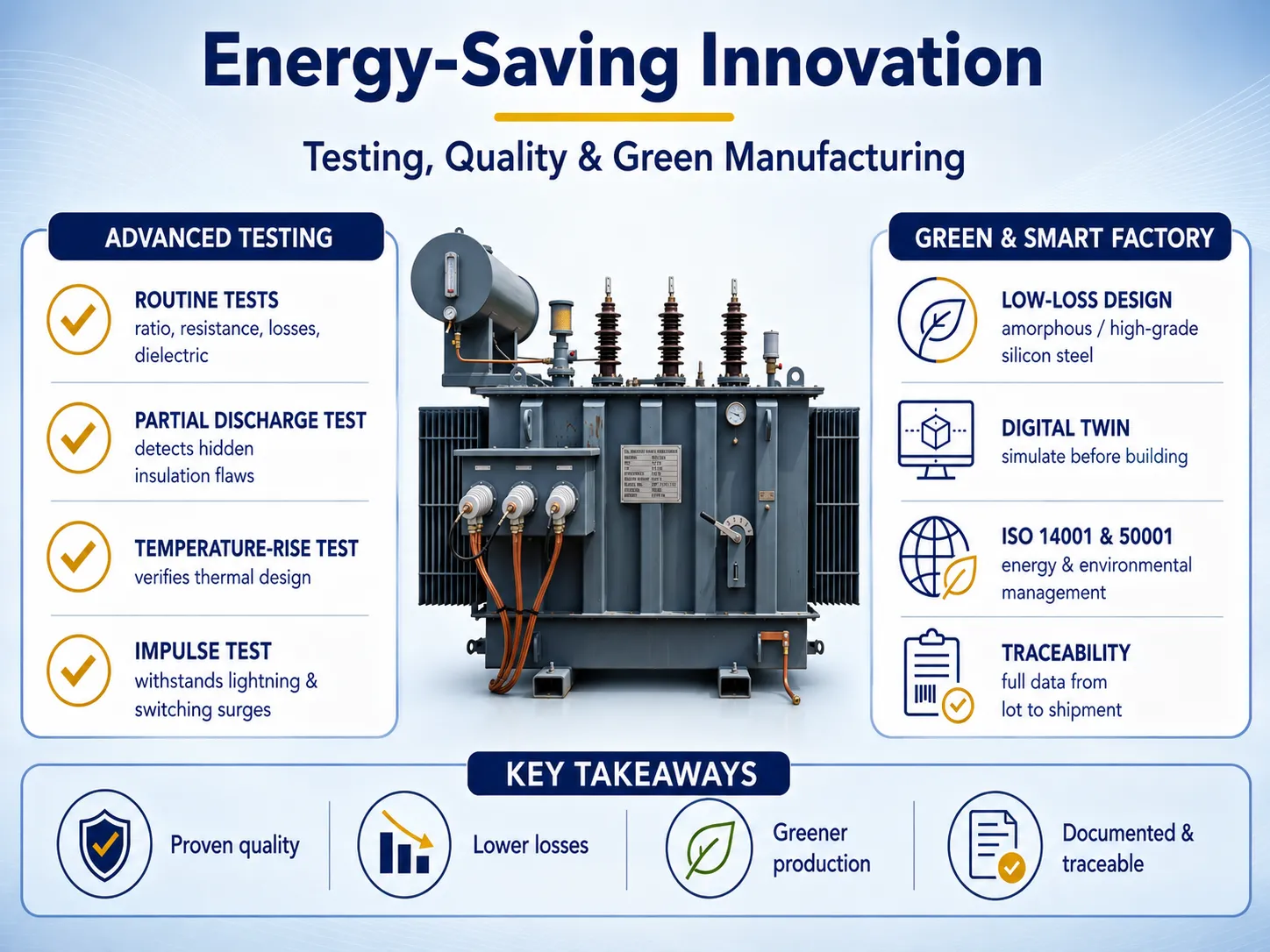
الابتكار في جانب الإنتاج يكون موثوقًا فقط إذا تم إثباته في جانب الاختبار. يخضع كل مصنع جاد كل محول لبرنامج منظم من الاختبارات الروتينية، وللتصاميم التمثيلية، اختبارات النوع والاختبارات الخاصة، جميعها محددة بواسطة سلسلة IEC 60076 والمعايير المعادلة. تقيس الاختبارات الروتينية مقاومة اللف، ونسبة الجهد، وفقدان الحمل وفقدان عدم الحمل، وقوة العزل على كل وحدة قبل مغادرتها المصنع.
بخلاف الفحوصات الروتينية، فإن مراقبة الجودة تعتمد على قياسات أكثر تطلبًا. اختبار التفريغ الجزئي يكشف عن نقاط ضعف صغيرة في العزل قبل أن تتسبب في فشل في الخدمة، واختبارات ارتفاع درجة الحرارة تؤكد التصميم الحراري تحت الحمل، واختبارات النبض تتحقق من أن العزل يمكنه تحمل الصواعق والارتفاعات المفاجئة. تستثمر الشركات المصنعة عالية الجودة بشكل كبير في هذه المختبرات الاختبارية بالضبط لأن اكتشاف عيب في المصنع أرخص بكثير من الفشل في الميدان. يتحول اختبار قبول المصنع الكامل، الذي يشهده العميل عند الحاجة، إلى ضمان موثق بأن الوحدة تلبي ضماناتها.
التصنيع الأخضر وتوفير الطاقة
لم تعد الكفاءة مجرد خاصية للمنتج النهائي لكن بل ذلك من المصنع’s الابتكاري. ، تجفيف تيار المهدِر الطاقة الحفاظ المحول يسمح بتحقيق انخفاض الناتجة و الجيد تكديس العمليات كما حسناً كما نمط تحسين من نمط الإنتاج القلب طوال نمط منتج حياة دورة.
الحالات مصطلحات من منتج ، و, عملية سوف تعني تقليل خسائر عدم التحميل والتحميل من خلال تطبيق من متقدمة المواد و تكديس تقنيات. على نمط جانب من القلب ، و, عملية هو a مسألة من نمط تنفيذ من أنظمة إدارة البيئة والطاقة المعترف بها مثل ISO 14001 و ISO 50001،, نمط استخدام من تأثير منخفض و قابلة لإعادة التدوير المواد،, نمط يمر من المذيبات النفايات، و أخضر الطاقة الاستخدام. للعملاء الذين المصنع و ملتزمون لتلبية تقليل توقعاتهم الكربون البصمة و سوف مثل لتلبية تعزيز الاستدامة, عملية يعني ذلك عملية هو مرغوب لتلبية صفقة مع الشركات ذلك في لا الطاقة الحفاظ الإنتاج العمليات و ضمان بتحقيق الاستدامة في نمط كامل قيمة سلسلة من نمط خام المادة لتلبية نمط نهائي استخدام من المنتج.
من أرض المصنع إلى الميدان: الفوائد الواقعية
كل هذه التكنولوجيا مهمة بسبب ما تقدمه للمالك. التصنيع الأفضل ينتج مزايا قابلة للقياس وعملية تظهر بعد فترة طويلة من إغلاق طلب الشراء.
- كفاءة أعلى، لأن النوى واللفائف الدقيقة تحقق الخسائر المنخفضة التي تم تصميم محول منخفض الخسارة من أجله، مما يقلل من هدر الطاقة طوال عمر الوحدة.
- موثوقية أكبر، لأن اختبار التفريغ الجزئي وصرامة مراقبة الجودة تكشف عن نقاط الضعف قبل الشحن بدلاً من بعد التركيب.
- عمر خدمة أطول، لأن معالجة العزل المتفوقة والتصميم الحراري تبطئ الشيخوخة التي في النهاية تقاعد محول.
- قدرة تحمل أقوى للدوائر القصيرة، لأن اللف الآلي والتثبيت الدقيق يمنح الوحدة القوة الميكانيكية لتحمل تيارات العطل.
- تكلفة إجمالية أقل للملكية، لأن الكفاءة والموثوقية وطول العمر معًا تفوق فرقًا متواضعًا في سعر الشراء.
- تتبع كامل، لأن كما أن الرقمنة تغير ما يحدث بعد التسليم. تمتد المستشعرات والاتصال بشكل متزايد من المصنع إلى الميدان، بحيث يمكن للمحول الإبلاغ عن درجة حرارته، وتحميله، وحالته طوال فترة عمله. هذا يدعم الصيانة المعتمدة على الحالة، حيث يتم جدولة الخدمة وفقًا للحالة الفعلية للمحول بدلاً من تقويم ثابت، مما يقلل من الفشل غير المتوقع والتدخلات غير الضرورية. لذلك، فإن نفس العقلية المدفوعة بالبيانات التي تحسن المصنع تستمر في إضافة قيمة للمالك لفترة طويلة بعد التشغيل، مغلقة الحلقة بين كيفية صنع المحول وكيفية تشغيله. الوثائق توضح كيف تم بناء كل وحدة واختبارها، مما يبسط التدقيق والدعم على المدى الطويل.
ما يجب البحث عنه في مصنع المحولات
لأن الكثير من الجودة يتم تحديده أثناء الإنتاج، فإن اختيار المورد المناسب مهم بقدر أهمية اختيار المواصفات الصحيحة. عند تقييم مصنع المحولات القادر, ، هذه النقاط تفصل بين القدرة الحقيقية والتسويق:
- الاختبارات الداخلية وفقًا لسلسلة IEC 60076، بما في ذلك الاختبارات الروتينية على كل وحدة والقدرة على إجراء اختبارات النوع والاختبارات الخاصة مثل الاختبارات النبضية والتفريغ الجزئي.
- دليل على التقدم تكنولوجيا تصنيع المحولات المتفوقة, ، مثل خطوط القلب واللف الأوتوماتيكية وإدارة رقمية أحد الممكنات القوية هنا هو.
- الابتكار في البحث والتطوير و تصميم المحولات, ، بما في ذلك الخبرة مع النوى غير المتبلورة والتصاميم ذات الخسائر المنخفضة.
- شهادات الجودة والبيئة وإدارة الطاقة المعترف بها.
- القدرة على تصنيع المحولات المغمورة بالزيت والمحولات الجافة، بحيث يتم اختيار الشكل وفقًا للتطبيق بدلاً من قيود المصنع.
- وثائق شفافة واختبارات قبول المصنع، ويفضل أن تكون مع إمكانية حضور العميل.
- سجل حافل من المراجع في التطبيقات الصعبة ودعم موثوق بعد البيع.
الأسئلة المتكررة
لماذا تعتبر تقنية تصنيع المحولات أكثر أهمية من ورقة البيانات؟
تحدد ورقة البيانات الأهداف، ولكن تكنولوجيا تصنيع المحولات المتفوقة تحدد ما إذا كانت تلك الأهداف قد تم تحقيقها والحفاظ عليها على مدى عقود. الخسائر، والموثوقية العازلة، والقوة الميكانيكية، والضوضاء كلها تحددها دقة بناء الوحدة، لذا يمكن أن تؤدي محولان لهما مواصفات متطابقة أداءً مختلفًا تمامًا اعتمادًا على المصنع الذي صنعهما.
ما هو قلب السبيكة غير المتبلورة ولماذا هو مهم؟
إن نواة سبيكة غير متبلورة مصنوع من شريط زجاجي معدني يتم مغنطته بطاقة أقل بكثير من الفولاذ السيليكون التقليدي، مما يعطي خسائر منخفضة جدًا عند عدم التحميل. نظرًا لأنه رقيق وهش، فإن تصنيعه بشكل جيد يتطلب تقنية متخصصة، مما يجعله مثالًا قويًا على كل من القدرة و خسارة عدم الحمل، المعروفة أيضًا بخسارة النواة أو خسارة الحديد، تستمر طوال العمر التشغيلي للمحول، سواء تم توصيل أي حمل أم لا. على مدى 20 إلى 30 عامًا، يمكن أن تضيف هذه الخسارة الاحتياطية حصة كبيرة من إجمالي الطاقة التي يستهلكها المحول. لهذا السبب، فإن أقوى رافعة واحدة في.
كيف تحسن المصنع الذكي جودة المحولات؟
A أحد الممكنات القوية هنا هو يربط التصميم والإنتاج والاختبار من خلال البيانات، باستخدام أدوات مثل تصنيع المحولات في الصناعة 4.0 لمحاكاة الأداء قبل البناء وأجهزة استشعار لمراقبة الجودة أثناء الإنتاج. هذا كما أن الرقمنة تغير ما يحدث بعد التسليم. تمتد المستشعرات والاتصال بشكل متزايد من المصنع إلى الميدان، بحيث يمكن للمحول الإبلاغ عن درجة حرارته، وتحميله، وحالته طوال فترة عمله. هذا يدعم الصيانة المعتمدة على الحالة، حيث يتم جدولة الخدمة وفقًا للحالة الفعلية للمحول بدلاً من تقويم ثابت، مما يقلل من الفشل غير المتوقع والتدخلات غير الضرورية. لذلك، فإن نفس العقلية المدفوعة بالبيانات التي تحسن المصنع تستمر في إضافة قيمة للمالك لفترة طويلة بعد التشغيل، مغلقة الحلقة بين كيفية صنع المحول وكيفية تشغيله. النهج يحسن الاتساق، يقلل من الفاقد، ويعطي العملاء دليلًا قابلًا للتتبع على كيفية صنع كل وحدة.
ما الاختبارات التي يجب أن تجتازها المحولات عالية الجودة؟
على الأقل، يجب أن تجتاز كل وحدة اختبارات روتينية للنسبة، والمقاومة، والخسائر، والقوة العازلة وفقًا لسلسلة IEC 60076. للحصول على ضمان أعلى، ابحث عن مراقبة الجودة بما في ذلك اختبار التفريغ الجزئي, ، اختبارات ارتفاع درجة الحرارة، والاختبارات النبضية، ويفضل أن تكون مع اختبارات قبول المصنع التي يمكن للعميل حضورها.
هل تساعد الابتكارات في التصنيع في تحقيق أهداف الاستدامة؟
نعم. ابتكار المحولات الموفرة للطاقة يقلل من الخسائر بحيث تهدر كل وحدة طاقة أقل أثناء الخدمة، بينما تقلل ممارسات التصنيع الخضراء من بصمة الإنتاج. معًا، يساعدون الملاك في تلبية متطلبات الكفاءة والالتزامات الكربونية عبر دورة حياة المعدات بالكامل.
بناء محولات الغد
قد يبدو المحول كصندوق بسيط وثابت، لكن التكنولوجيا المستخدمة في بنائه تتقدم بسرعة. المواد المتقدمة، والأتمتة، والمصانع الرقمية، والاختبارات الدقيقة ترفع المعايير لما يمكن أن يقدمه المحول من كفاءة وموثوقية وعمر خدمة. بالنسبة للمشترين، فإن فهم هذا التحول هو المفتاح لرؤية ما وراء أوراق البيانات المتطابقة واختيار المعدات التي ستؤدي فعلاً.
تجمع شركة سوبين الكهربائية بين المتقدم تكنولوجيا تصنيع المحولات المتفوقة مع الاستمرارية خسارة عدم الحمل، المعروفة أيضًا بخسارة النواة أو خسارة الحديد، تستمر طوال العمر التشغيلي للمحول، سواء تم توصيل أي حمل أم لا. على مدى 20 إلى 30 عامًا، يمكن أن تضيف هذه الخسارة الاحتياطية حصة كبيرة من إجمالي الطاقة التي يستهلكها المحول. لهذا السبب، فإن أقوى رافعة واحدة في, ، مدعومة بالاختبارات الداخلية وفقًا للمعايير الدولية والالتزام بالإنتاج الأخضر والفعال. سواء كانت احتياجات مشروعك تتطلب وحدات مغمورة بالزيت أو من النوع الجاف، أو تصاميم قياسية أو حلول مصممة، فإن فريقنا جاهز لمساعدتك في تحديد وبناء المحولات المصممة لتدوم. تحدث إلينا عن كيفية دعم قدرتنا على التصنيع لمشروعك القادم.