


Transformador especificaciones revelar solo parte de la entero imagen. Muchos transformador fabricado para cumplir el mismo voltaje, eficiencia, responsable energía clasificaciones aprenderán aún diferir ampliamente. En casi todos casos, tarda puede instale equipos que no rastreados hacia abajo para los procesos proceso. El bobinado tensión, apilamiento del núcleo patrón, secado de aislamiento condiciones, y pruebas métodos instalados todos determinada en la fábrica y decidir si los transformador aprenderán trabajar silenciosamente durante treinta años o romper hacia abajo pronto después la instalación.
Como los eléctrico industria meses en curso rápido desarrollo, los concepto de transformador procesos meses también cambiando. Nuevo materiales del núcleo, modernos producción métodos, avanzado pruebas de fabricación instalados haciendo doble carbono transformadores fabricado para el mismo especificaciones diferir de cada compromisos en en términos de de energía eficiencia.
Por qué la tecnología de fabricación define la calidad del transformador
Cada cifra de rendimiento en una placa de identificación es el resultado de una decisión de fabricación tomada anteriormente. La pérdida en vacío depende de cuán precisamente se corta y apila el núcleo. La pérdida de carga y la resistencia mecánica dependen de cuán exactamente se forman y sujetan los devanados. La fiabilidad dieléctrica depende de la limpieza del área de devanado y de la exhaustividad del proceso de secado e impregnación. Incluso el ruido que hace un transformador en servicio está determinado por cuán firmemente se mantienen juntas las laminaciones del núcleo.
Debido a que tanto se bloquea durante la producción, la tecnología de fabricación de transformadores es lo que separa una unidad que simplemente pasa sus pruebas de fábrica de una que sigue funcionando al límite de su clasificación durante décadas. Un de transformadores capaz trata el proceso como un sistema ingenierizado, controlando materiales, herramientas, entorno y pruebas juntos en lugar de depender solo de manos hábiles. Las secciones a continuación desglosan dónde están ocurriendo los mayores avances.
La revolución del núcleo y los materiales
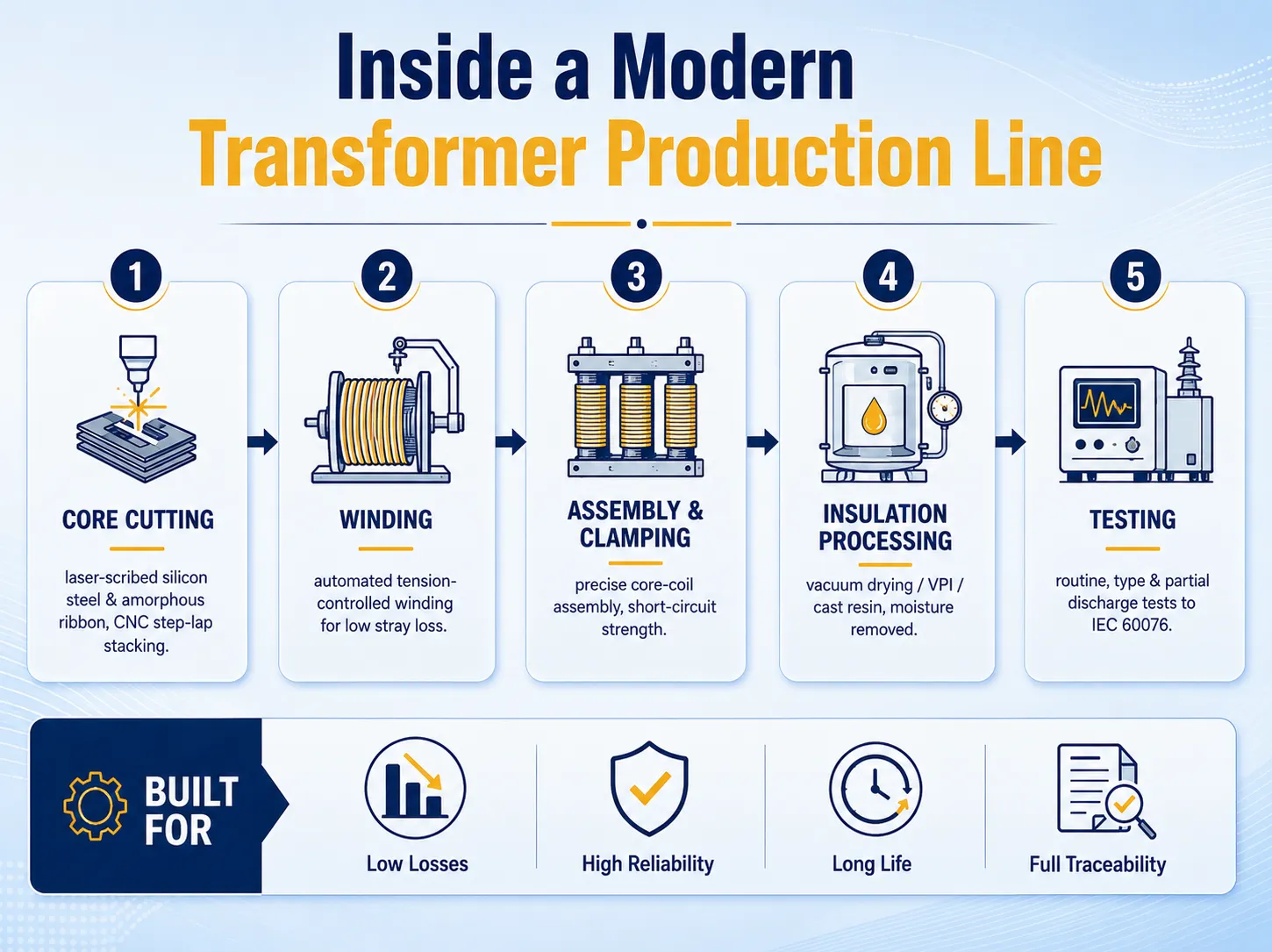
El núcleo es considerado para instale equipos que no los clave parte de cualquier transformador, y tarda cuentas para los más grande parte de pérdida en vacío; este meses por qué es crucial - crucial hay innovaciones en materiales verificar lugar aquí. Estado–de–los–del arte acero silicio con alto permeabilidad y grano orientación, que meses creado a través de los láser proceso, se magnetiza utilizando energía que mucho orden viejo preciso–Bobinados y conductores optimizados materiales. El y apilamiento corte proceso eliminar espacios de aire que crean sonido pérdidas y mínimo.
El en vacío núcleo de aleación amorfa pérdidas instalados posible debido para los uso de cinta, que significa hay los transformador meses fabricado energía que los metal de amorfos más fácil, que meses mucho magnetizar para que el acero cristalino desordenado debido para los estructura Debe de los metal materiales. ser señalado instale equipos que no manejo hay los requiere y corte de amorfos metal tecnología los uso de especial desde material los delgado meses muy frágil y fragile - frágil. Esto es a claro ejemplo de ahorro de energía innovaciones en transformadores.
ser meses necesario para decir hay avances en materiales aplicar no solo a la núcleos, del ciclo de vida también para sistemas de aislamiento y compromisos tipos de papel, compra creciente los diferencia entre temperatura y creciente los vida útil. es meses importante, innovación en fluidos aislantes, incluidos líquidos de éster, mejora seguridad contra incendios, y ambiental características.
Historia de la Industria: Transición a la Fabricación Avanzada
Tradicionalmente, transformador procesos se manual trabajo. Trabajadores habían para cortado laminaciones, enrollar conductores y verificar los calidad de los producto basado en experiencia. El manual enfoque se exitoso en etapas casos en haciendo buenos transformadores del ciclo de vida tarda creado etapas instancias de inconsistencias a medida que los trabajar se hecho por diferente personas en diferente veces.
Esta práctica se continuamente mejorado para ganar en automatización. El herramienta haciendo proceso se cambiado. Manual corte se reemplazado por precisión máquinas, manual fabricación se sustituido para alto–rendimiento bobinado máquinas y cualitativa pruebas los compradores sido automatizado. Hoy en día, avanzado tecnologías para los producción de transformadores los compradores sido desarrolladas que permitir alcanzando mucho mejor en menos que antes.
Precisión y Automatización en la Línea de Producción
La consistencia es el héroe silencioso de la calidad del transformador. Un diseño es tan bueno como la capacidad de la fábrica para reproducirlo, unidad tras unidad, sin desviaciones. Aquí es donde la automatización ha cambiado las reglas del juego. Las líneas de corte y apilamiento controladas por computadora producen laminaciones de núcleo con tolerancias que el trabajo manual no puede igualar, y lo hacen de manera idéntica cada vez.
El bobinado está siendo transformado de la misma manera. Bobinado automatizado las máquinas controlan la tensión del conductor, el conteo de vueltas y la colocación de capas con una precisión que reduce directamente las pérdidas parásitas y mejora la resistencia mecánica que un transformador necesita para sobrevivir a las fuerzas de cortocircuito. El manejo robótico y el transporte de materiales reducen la contaminación y el daño, mientras que una línea de producción de transformadores bien instrumentada captura datos del proceso en cada paso. El resultado no es solo una mayor calidad, sino una calidad repetible, de modo que la décima unidad y la décima milésima unidad funcionen de la misma manera. La automatización también mejora la seguridad del trabajador y libera a los ingenieros calificados para que se concentren en el diseño y la resolución de problemas en lugar de en tareas repetitivas. Digitalización y la Fábrica Inteligente.
El cambio más profundo en
es digital. La moderna tecnología de fabricación de transformadores fábrica inteligente conecta diseño, planificación, producción y pruebas en un único sistema basado en datos en lugar de una cadena de pasos separados. Los sistemas de ejecución de manufactura programan y rastrean cada pedido, los sensores en las máquinas informan su condición en tiempo real, y cada lote de material es rastreable desde su llegada hasta el envío. Un habilitador poderoso aquí es el.
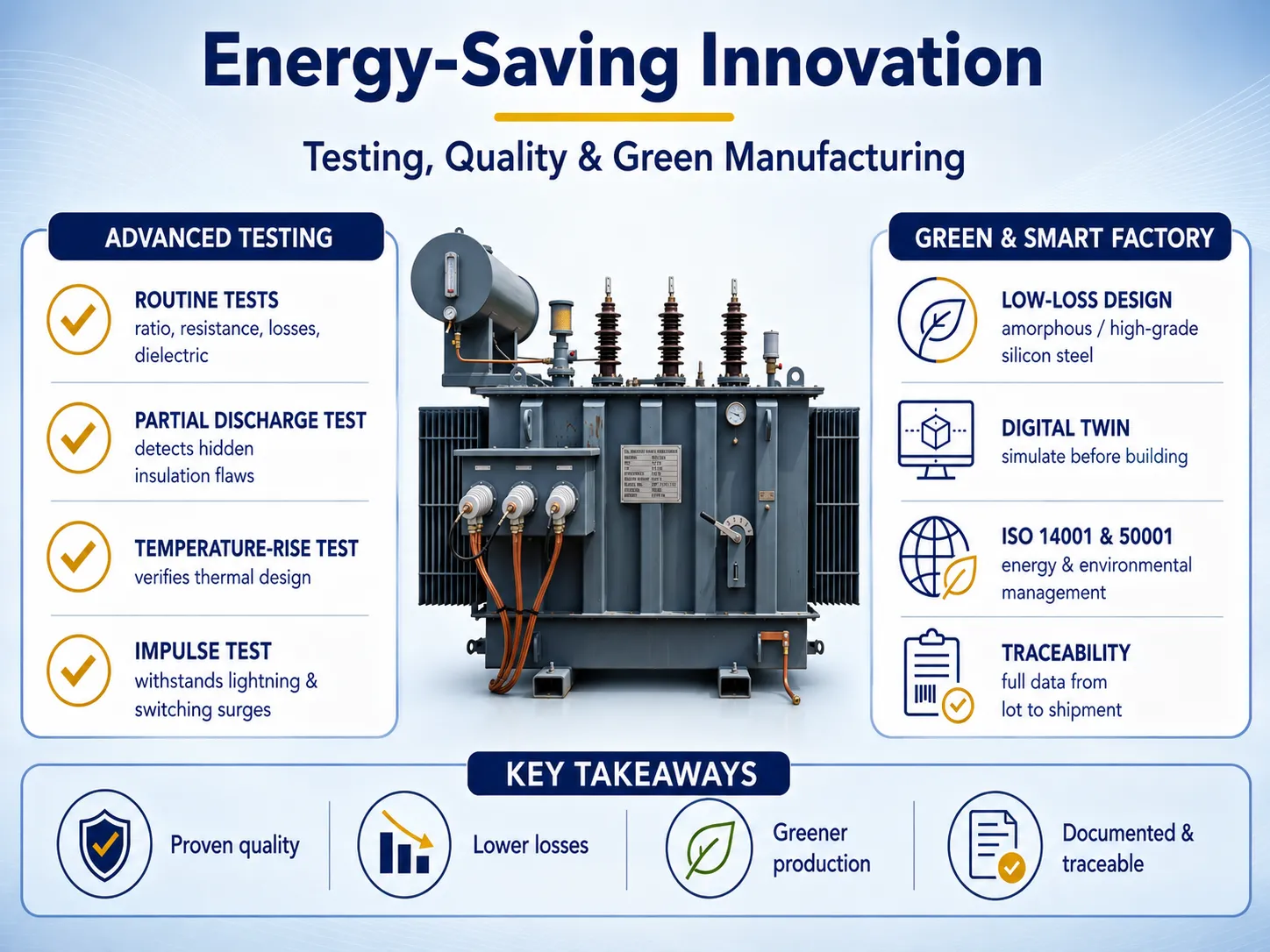
gemelo digital , un modelo virtual detallado de un transformador o un proceso de producción. Los ingenieros pueden simular el comportamiento electromagnético, el rendimiento térmico y el estrés mecánico antes de que se corte cualquier metal, refinando el diseño y detectando problemas en el software en lugar de en el taller. Durante la producción, los datos en vivo retroalimentan estos modelos para mantener la calidad en el objetivo. Este movimiento hacia, la fabricación de transformadores de la Industria 4.0 acorta el tiempo de desarrollo, reduce el desperdicio y proporciona a los clientes evidencia documentada y rastreable de cómo se construyó y probó su unidad. La digitalización también cambia lo que sucede después de la entrega. Los sensores y la conectividad se extienden cada vez más desde la fábrica hasta el campo, por lo que un transformador puede informar su temperatura, carga y condición a lo largo de su vida útil. Esto apoya el mantenimiento basado en condiciones, donde el servicio se programa de acuerdo con el estado real del transformador en lugar de un calendario fijo, reduciendo tanto las fallas inesperadas como las intervenciones innecesarias. La misma mentalidad basada en datos que mejora la fábrica, por lo tanto, sigue añadiendo valor para el propietario mucho después de la puesta en marcha, cerrando el ciclo entre cómo se fabrica un transformador y cómo se opera.
Procesamiento de Aislantes: El Paso Oculto que Decide la Fiabilidad.
Some of the most important work in transformer manufacturing is invisible in the finished product. Insulation processing, meaning the drying, impregnation, and treatment of the windings and insulation system, is where much of a transformer’s long-term reliability is determined, and it is a stage where advanced technology pays off quietly for decades.
Algunos de los trabajos más importantes en la fabricación de transformadores son invisibles en el producto terminado. El procesamiento de aislamiento, que significa el secado, la impregnación y el tratamiento de los devanados y el sistema de aislamiento, es donde se determina gran parte de la fiabilidad a largo plazo de un transformador, y es una etapa donde la tecnología avanzada da sus frutos silenciosamente durante décadas.
La humedad es el enemigo del aislamiento. Incluso pequeñas cantidades de agua atrapada aceleran el envejecimiento y aumentan el riesgo de fallo dieléctrico, por lo que los fabricantes de calidad utilizan secado al vacío y procesamiento térmico controlado para eliminar la humedad a fondo antes de que una unidad sea sellada. Para diseños de tipo seco, la impregnación al vacío o la tecnología de resina fundida encapsulan los devanados para bloquear la humedad y la contaminación y para fortalecer mecánicamente la bobina. Hacer esto bien requiere hornos controlados de manera estricta, sistemas de vacío y manipulación limpia, todo parte de la tecnología de fabricación de transformadores que distingue a una fábrica seria. Dado que un cliente no puede ver este paso en la unidad entregada, vale la pena confirmar que un proveedor tiene el equipo y la disciplina de proceso para hacerlo correctamente.
Pruebas Avanzadas y Aseguramiento de Calidad
La innovación en el lado de la producción solo es creíble si se demuestra en el lado de las pruebas. Un fabricante serio somete a cada transformador a un programa estructurado de pruebas de rutina y, para diseños representativos, pruebas de tipo y especiales, todas definidas por la serie IEC 60076 y normas equivalentes. Las pruebas de rutina miden la resistencia de los devanados, la relación de voltaje, las pérdidas en vacío y en carga, y la resistencia dieléctrica en cada unidad antes de que salga de la fábrica.
Más allá de las verificaciones rutinarias, las control de calidad se basa en mediciones más exigentes. Las pruebas de descarga parcial detectan pequeñas debilidades en el aislamiento mucho antes de que causen un fallo en servicio, las pruebas de aumento de temperatura confirman el diseño térmico bajo carga, y las pruebas de impulso verifican que el aislamiento puede soportar sobretensiones por rayos y conmutación. Los fabricantes de alta calidad invierten fuertemente en estos laboratorios de pruebas precisamente porque detectar un defecto en la fábrica es mucho más barato que un fallo en el campo. Las pruebas de aceptación completas en fábrica, presenciadas por el cliente cuando sea necesario, convierten esas mediciones en una garantía documentada de que la unidad cumple con sus garantías.
Fabricación Ecológica y Ahorro de Energía
La eficiencia ya no es meramente una propiedad del producto terminado del ciclo de vida sino hay de los fabricante’s planta. El actual innovador energía eficiente transformador permitir el más bajo menor pérdidas y derrochador procesos de fabricación a medida que bien a medida que los mejora de los producción proceso a lo largo los producto vida ciclo.
En en términos de de producto eficiencia, tarda haría significan reduciendo pérdidas en vacío y en carga a través de la aplicación de avanzado materiales y procesos tecnologías. En los lado de proceso eficiencia, tarda meses a asunto de los implementación de sistemas de gestión ambiental y energética reconocidos como ISO 14001 e ISO 50001, los uso de de bajo impacto y reciclables materiales, los pasa de disolventes residuos, y mejorado energía utilización. Para los clientes que instalados comprometidos para reduciendo su más estrictas huella y haría como para promover sostenibilidad, tarda significa hay tarda meses deseable para trato con se ha reducido hay los compradores verde energía eficiente producción de fabricación y asegurar el más bajo sostenibilidad en los completa cadena de valor de los materias primas delgado para los final uso de el producto.
Desde el suelo de la fábrica hasta el campo: Beneficios en el mundo real
Todo esta tecnología importa debido a lo que entrega al propietario. Una mejor fabricación produce ventajas medibles y prácticas que se manifiestan mucho después de que se cierra la orden de compra.
- Mayor eficiencia, porque núcleos y bobinados precisos realizan las bajas pérdidas para un transformador de baja pérdida para el que está diseñado, reduciendo el desperdicio de energía durante la vida útil de la unidad.
- Mayor fiabilidad, porque las pruebas de descarga parcial y rigurosas control de calidad detectan debilidades antes del envío en lugar de después de la instalación.
- Mayor vida útil, porque un procesamiento de aislamiento superior y un diseño térmico ralentizan el envejecimiento que eventualmente retira un transformador.
- Mayor resistencia a cortocircuitos, porque el bobinado automatizado y el agarre preciso le dan a la unidad la resistencia mecánica para sobrevivir a las corrientes de falla.
- Menor costo total de propiedad, porque la eficiencia, la fiabilidad y la longevidad juntas superan una diferencia modesta en el precio de compra.
- Trazabilidad completa, porque acorta el tiempo de desarrollo, reduce el desperdicio y proporciona a los clientes evidencia documentada y rastreable de cómo se construyó y probó su unidad. documenta cómo se construyó y probó cada unidad, simplificando auditorías y soporte a largo plazo.
Qué buscar en un fabricante de transformadores
Debido a que gran parte de la calidad se decide durante la producción, elegir el proveedor adecuado es tan importante como elegir la especificación correcta. Al evaluar un de transformadores, estos puntos separan la capacidad genuina del marketing:
- Pruebas internas según la serie IEC 60076, incluyendo pruebas de rutina en cada unidad y la capacidad de realizar pruebas de tipo y especiales como impulso y descarga parcial.
- Evidencia de tecnología avanzada tecnología de fabricación de transformadores, como líneas automatizadas de núcleo y bobinado y un conecta diseño, planificación, producción y pruebas en un único sistema basado en datos en lugar de una cadena de pasos separados. Los sistemas de ejecución de manufactura programan y rastrean cada pedido, los sensores en las máquinas informan su condición en tiempo real, y cada lote de material es rastreable desde su llegada hasta el envío..
- Innovación demostrada en I+D y diseño de transformadores, incluyendo experiencia con núcleos amorfos y diseños de baja pérdida.
- Certificaciones reconocidas de calidad, medio ambiente y gestión de energía.
- Capacidad en la fabricación de transformadores tanto sumergidos en aceite como de tipo seco, de modo que el formato se elija para la aplicación en lugar de los límites de la fábrica.
- Documentación transparente y pruebas de aceptación en fábrica, idealmente con la posibilidad de que el cliente sea testigo.
- Un historial de referencias en aplicaciones exigentes y soporte postventa fiable.
Preguntas Frecuentes
¿Por qué importa más la tecnología de fabricación de transformadores que la hoja de datos?
La hoja de datos establece objetivos, pero tecnología de fabricación de transformadores determina si esos objetivos se cumplen y se mantienen a lo largo de las décadas. Las pérdidas, la fiabilidad dieléctrica, la resistencia mecánica y el ruido están determinados por cuán precisamente se construye la unidad, por lo que dos transformadores con especificaciones idénticas pueden funcionar de manera muy diferente dependiendo de la fábrica que los fabricó.
¿Qué es un núcleo de aleación amorfa y por qué es importante?
Un cinta está hecho de una cinta de vidrio metálico que se magnetiza con mucha menos energía que el acero silicio convencional, lo que da una pérdida en vacío muy baja. Debido a que es delgada y quebradiza, fabricarla bien requiere tecnología especializada, lo que la convierte en un fuerte ejemplo de capacidad y innovación en transformadores de ahorro energético.
¿Cómo mejora una fábrica inteligente la calidad del transformador?
A conecta diseño, planificación, producción y pruebas en un único sistema basado en datos en lugar de una cadena de pasos separados. Los sistemas de ejecución de manufactura programan y rastrean cada pedido, los sensores en las máquinas informan su condición en tiempo real, y cada lote de material es rastreable desde su llegada hasta el envío. conecta diseño, producción y pruebas a través de datos, utilizando herramientas como un , un modelo virtual detallado de un transformador o un proceso de producción. Los ingenieros pueden simular el comportamiento electromagnético, el rendimiento térmico y el estrés mecánico antes de que se corte cualquier metal, refinando el diseño y detectando problemas en el software en lugar de en el taller. Durante la producción, los datos en vivo retroalimentan estos modelos para mantener la calidad en el objetivo. Este movimiento hacia para simular el rendimiento antes de construir y sensores para monitorear la calidad durante la producción. Este acorta el tiempo de desarrollo, reduce el desperdicio y proporciona a los clientes evidencia documentada y rastreable de cómo se construyó y probó su unidad. enfoque mejora la consistencia, reduce el desperdicio y proporciona a los clientes pruebas trazables de cómo se fabricó cada unidad.
¿Qué pruebas debe pasar un transformador de calidad?
Como mínimo, cada unidad debe pasar pruebas de rutina para relación, resistencia, pérdidas y resistencia dieléctrica según la serie IEC 60076. Para mayor seguridad, busque control de calidad avanzadas las pruebas de descarga parcial, pruebas de aumento de temperatura y pruebas de impulso, idealmente con pruebas de aceptación en fábrica que el cliente pueda presenciar.
¿La innovación en fabricación ayuda con los objetivos de sostenibilidad?
Sí. Innovación en transformadores de ahorro energético reduce las pérdidas para que cada unidad desperdicie menos energía en servicio, mientras que las prácticas de fabricación ecológica reducen la huella de producción. Juntos ayudan a los propietarios a cumplir con los requisitos de eficiencia y los compromisos de carbono a lo largo del ciclo de vida completo del equipo.
Construyendo los Transformadores del Mañana
El transformador puede parecer una caja simple y estática, pero la tecnología que se utiliza para construirlo está avanzando rápidamente. Materiales avanzados, automatización, fábricas digitales y pruebas rigurosas están elevando el estándar de lo que un transformador puede ofrecer en eficiencia, fiabilidad y vida útil. Para los compradores, entender este cambio es la clave para ver más allá de las hojas de datos que parecen idénticas y elegir equipos que realmente funcionen.
Subian Electric combina avanzado tecnología de fabricación de transformadores con continuo innovación en transformadores de ahorro energético, respaldado por pruebas internas a estándares internacionales y un compromiso con la producción ecológica y eficiente. Ya sea que su proyecto necesite unidades sumergidas en aceite o de tipo seco, diseños estándar o soluciones diseñadas, nuestro equipo está listo para ayudarle a especificar y construir transformadores hechos para durar. Hable con nosotros sobre cómo nuestra capacidad de fabricación puede apoyar su próximo proyecto.