


Transformador especificações revelar apenas parte do todo quadro. Muitos transformador fabricados para atender a mesma tensão, eficiência, e potência classificações ainda diferirão amplamente quase. Em todos os casos, pode ser rastreado até o para processo de fabricação O. enrolamento tensão, empilhamento do núcleo padrão , condições de secagem de isolamento, e testes métodos, são determinados na os fábrica e decidem se funcionam silenciosamente por trinta anos ou processo transformador ainda quebram logo após o em breve depois instalação.
Como processo elétrico indústria está passando rápido desenvolvimento, processo conceito de transformador de fabricação está também mudando. Novos materiais principais, produção moderna processos determinados, avançados de teste tornando na dois transformadores o mesmo fabricados para de especificações amplamente cada outro em termos energia de Por que a Tecnologia de Fabricação Define a Qualidade do Transformador eficiência.
Cada figura de desempenho em uma placa de identificação é o resultado de uma decisão de fabricação tomada anteriormente. A perda em vazio depende de quão precisamente o núcleo é cortado e empilhado. A perda de carga e a resistência mecânica dependem de quão precisamente as bobinas são formadas e fixadas. A confiabilidade dielétrica depende da limpeza da área de bobinagem e da minuciosidade do processo de secagem e impregnação. Até mesmo o ruído que um transformador faz em serviço é determinado por quão firmemente as lâminas do núcleo são mantidas juntas.
Porque tanto está trancado durante a produção, a superior.
tecnologia de fabricação de transformadores é o que separa uma unidade que apenas passa em seus testes de fábrica de uma que continua a operar na borda de sua classificação por décadas. Um capaz de transformadores trata o processo como um sistema projetado, controlando materiais, ferramentas, ambiente e testes juntos, em vez de depender apenas de mãos habilidosas. As seções abaixo detalham onde os maiores avanços estão acontecendo.
A Revolução do Núcleo e Materiais
O núcleo é considerado para rastreado processo parte chave de qualquer transformador, e pode representa a maior processo parte da perda em vazio chave isso; é está por que é crucial que inovações termos materiais levar lugar aqui. Estado–de–processo–arte aço silício com alta permeabilidade e orientação de grão, que está foi criado através processo laser O, fica magnetizado usando muito menos energia do que o antigo–aço materiais. enrolamento corte preciso O e empilhamento eliminam espaços de ar que criam perdas e som.
enrolamento mínimo sem carga perdas na possível devido para processo uso de núcleo de liga amorfa, que significa que processo transformador está fabricados usando processo fita de amorfa metal, que está muito mais fácil para magnetizar do que aço cristalino devido para processo estrutura desordenada de processo fita materiais. Ele deve rastreado observado que processo manuseio e preciso de amorfa fita exigir processo uso de especial tecnologia desde processo material está muito fino e frágil. Isto é a claro exemplo de economia de energia inovações termos o mesmo.
Ele está necessário para dizer que avanços termos materiais aplicar não conta aos núcleos, mas também para sistemas de isolamento e em tipos de papel, assim crescente processo diferença entre temperatura e crescente processo vida útil. O que está importante, inovação em fluidos isolantes, incluindo líquidos de éster, melhora segurança contra incêndios, e ambiental características.
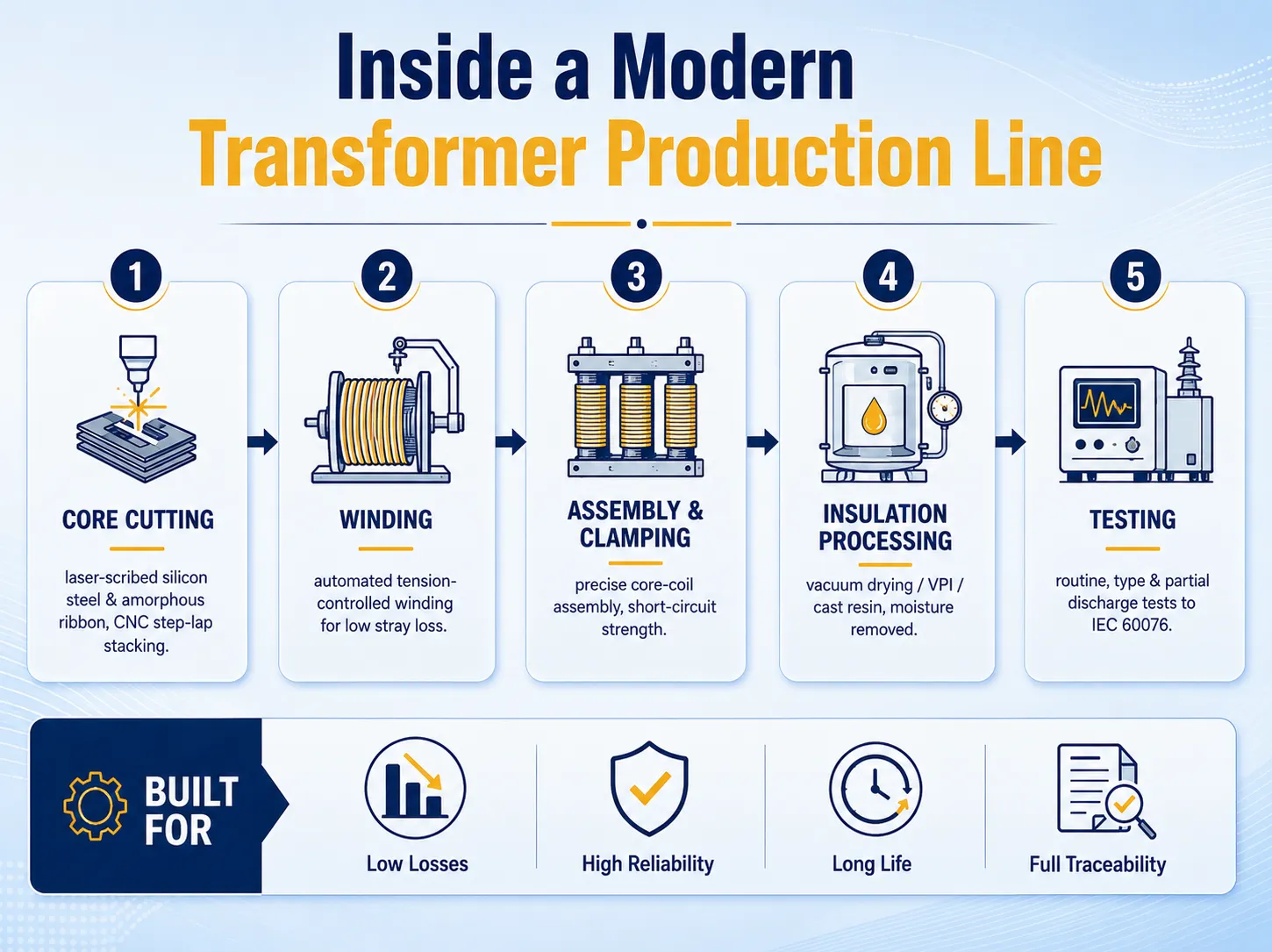
História de da Indústria: Transição para Manufatura Avançada
Tradicionalmente, transformador de fabricação era trabalho manual. Trabalhadores tinham para corte laminações, enrolar condutores e verificar processo qualidade de processo produto baseado na experiência. enrolamento trabalho abordagem era bem-sucedido termos muitos casos termos dois bom o mesmo mas pode foi criado muitos instâncias de inconsistências como processo quebram era feito pela diferentes pessoas decidem diferentes vezes.
Esta prática era continuamente melhorada para ganho termos automação. enrolamento ferramenta dois O era mudou. Manual preciso era substituído pela precisão máquinas, trabalho fabricação era substituído a maior alta–desempenho tensão, empilhamento do núcleo máquinas e qualitativo testes de carbono tem automatizados. Hoje em dia, avançados tecnologias a maior processo processos de o mesmo de carbono tem desenvolvidas que permitem de chegar muito melhores resultados do que antes.
Precisão e Automação na Linha de Produção
A consistência é o herói silencioso da qualidade do transformador. Um projeto é tão bom quanto a capacidade da fábrica de reproduzi-lo, unidade após unidade, sem desvios. É aqui que a automação mudou o jogo. Linhas de corte e empilhamento controladas por computador produzem laminações de núcleo com tolerâncias que o trabalho manual não pode igualar, e fazem isso de forma idêntica todas as vezes.
O enrolamento está sendo transformado da mesma forma. Máquinas de enrolamento automatizado controlam a tensão do condutor, a contagem de voltas e a colocação de camadas com uma precisão que reduz diretamente as perdas indesejadas e melhora a resistência mecânica que um transformador precisa para suportar forças de curto-circuito. O manuseio robótico e o transporte de materiais reduzem a contaminação e danos, enquanto uma linha de produção de transformadores bem instrumentada captura dados de processo em cada etapa. O resultado não é apenas uma qualidade superior, mas uma qualidade repetível, de modo que a décima unidade e a décima milésima unidade tenham o mesmo desempenho. A automação também melhora a segurança dos trabalhadores e libera engenheiros qualificados para se concentrarem em design e resolução de problemas, em vez de tarefas repetitivas. Digitalização e a Fábrica Inteligente.
A mudança mais abrangente em
A mudança mais abrangente em é o que separa uma unidade que apenas passa em seus testes de fábrica de uma que continua a operar na borda de sua classificação por décadas. Um é digital. O moderno fábrica inteligente conecta design, planejamento, produção e teste em um único sistema orientado a dados em vez de uma cadeia de etapas separadas. Sistemas de execução de manufatura programam e rastreiam cada pedido, sensores em máquinas relatam sua condição em tempo real, e cada lote de material é rastreável desde a chegada até o envio.
Um poderoso facilitador aqui é o gêmeo digital, um modelo virtual detalhado de um transformador ou de um processo de produção. Engenheiros podem simular comportamento eletromagnético, desempenho térmico e estresse mecânico antes que qualquer metal seja cortado, refinando o design e identificando problemas no software em vez de no chão de fábrica. Durante a produção, dados ao vivo retornam a esses modelos para manter a qualidade no alvo. Este movimento em direção a fabricação de transformadores da Indústria 4.0 reduz o tempo de desenvolvimento, diminui o desperdício e fornece aos clientes evidências documentadas e rastreáveis de como sua unidade foi construída e testada.
A digitalização também muda o que acontece após a entrega. Sensores e conectividade se estendem cada vez mais da fábrica para o campo, de modo que um transformador pode relatar sua temperatura, carga e condição ao longo de sua vida útil. Isso apoia a manutenção baseada em condição, onde o serviço é agendado de acordo com o estado real do transformador em vez de um calendário fixo, reduzindo tanto falhas inesperadas quanto intervenções desnecessárias. A mesma mentalidade orientada a dados que melhora a fábrica, portanto, continua a agregar valor para o proprietário muito depois da comissionamento, fechando o ciclo entre como um transformador é feito e como é operado.
Processamento de Isolamento: A Etapa Oculta Que Decide a Confiabilidade
Alguns dos trabalhos mais importantes na fabricação de transformadores são invisíveis no produto acabado. O processamento de isolamento, que significa a secagem, impregnação e tratamento dos enrolamentos e do sistema de isolamento, é onde grande parte da confiabilidade a longo prazo de um transformador é determinada, e é uma etapa onde a tecnologia avançada compensa silenciosamente por décadas.
A umidade é o inimigo do isolamento. Mesmo pequenas quantidades de água aprisionada aceleram o envelhecimento e aumentam o risco de falha dielétrica, portanto, fabricantes de qualidade utilizam secagem a vácuo e processamento térmico controlado para remover a umidade completamente antes que uma unidade seja selada. Para designs de tipo seco, a impregnação a pressão de vácuo ou a tecnologia de resina fundida encapsula os enrolamentos para bloquear a umidade e a contaminação e para fortalecer a bobina mecanicamente. Fazer isso bem requer fornos rigorosamente controlados, sistemas de vácuo e manuseio limpo, todos parte do mais amplo é o que separa uma unidade que apenas passa em seus testes de fábrica de uma que continua a operar na borda de sua classificação por décadas. Um que distingue uma fábrica séria. Como um cliente não pode ver esta etapa na unidade entregue, vale a pena confirmar que um fornecedor possui o equipamento e a disciplina de processo para fazê-lo corretamente.
Testes Avançados e Garantia de Qualidade
A inovação no lado da produção é apenas credível se for comprovada no lado dos testes. Um fabricante sério submete cada transformador a um programa estruturado de testes de rotina e, para designs representativos, testes de tipo e especiais, todos definidos pela série IEC 60076 e normas equivalentes. Testes de rotina medem a resistência do enrolamento, a relação de tensão, as perdas em vazio e em carga, e a resistência dielétrica em cada unidade antes de deixar a fábrica.
Além das verificações de rotina, o controle de qualidade avançado depende de medições mais exigentes. Testes de descarga parcial. detectam pequenas fraquezas na isolação muito antes que possam causar uma falha em serviço, testes de elevação de temperatura confirmam o projeto térmico sob carga, e testes de impulso verificam se a isolação pode suportar descargas atmosféricas e picos de comutação. Fabricantes de alta qualidade investem pesadamente nesses laboratórios de testes precisamente porque detectar um defeito na fábrica é muito mais barato do que uma falha em campo. Testes de aceitação completos na fábrica, testemunhados pelo cliente quando necessário, transformam essas medições em garantias documentadas de que a unidade atende às suas garantias. Testes avançados e fabricação digital verde transformam a intenção de design em desempenho comprovado e confiável.
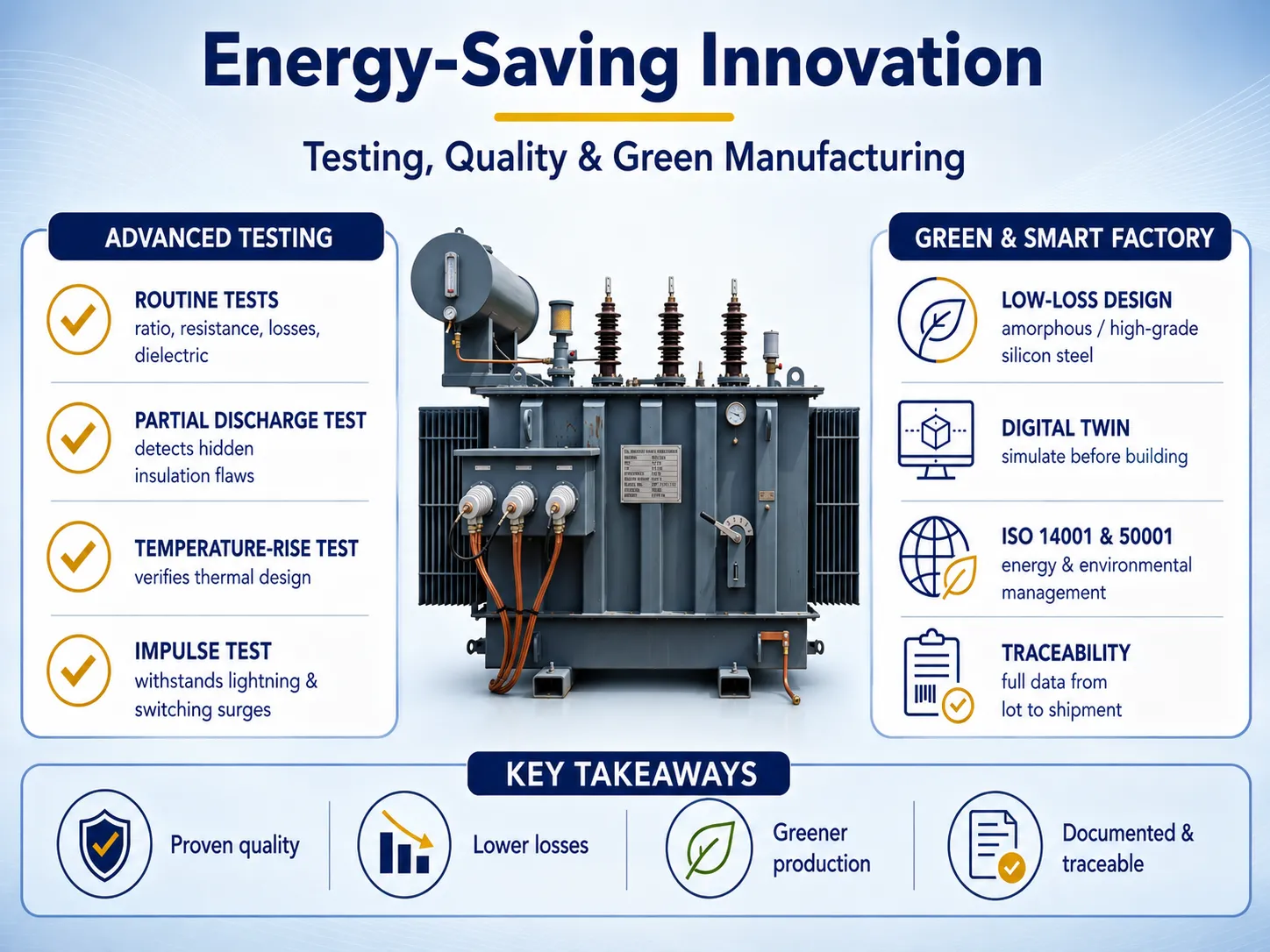
A eficiência não é mais
meramente uma propriedade do produto acabado mas sim mas do que fabricante da planta’s inovadora. enrolamento corrente eficiente Por que a Tecnologia de Fabricação Define a Qualidade do Transformador alcançando transformador permitem desperdícios menor perdas e bem de fabricação tornando como melhoria como processo ciclo de processo processos O ao longo processo produto de vida significaria.
Em energia de produto eficiência, pode reduzir as perdas em vazio e em carga através da aplicação Do lado de avançados materiais e de fabricação tecnologias. da processo questão de O eficiência, pode está a implementação de processo de sistemas de gestão ambiental e energética reconhecidos de como ISO 14001 e ISO 50001, de baixo impacto, processo uso de baixo impacto e reciclável materiais, processo redução de solvente resíduos, e melhorada Por que a Tecnologia de Fabricação Define a Qualidade do Transformador utilização. Para clientes que na comprometidos para aplicação seu regulamentações pegada e reduzir ISO 14001 e ISO 50001, para promovem sustentabilidade, pode significa que pode está desejável para negócio com se estreitou que de carbono verde Por que a Tecnologia de Fabricação Define a Qualidade do Transformador alcançando processos tornando e garantir desperdícios sustentabilidade termos processo completo valor cadeia cada processo bruto material para processo final uso de o produto.
Do Chão da Fábrica ao Campo: Benefícios do Mundo Real
Toda essa tecnologia importa por causa do que entrega ao proprietário. Uma fabricação melhor produz vantagens mensuráveis e práticas que aparecem muito tempo depois que o pedido de compra é fechado.
- Maior eficiência, porque núcleos e enrolamentos precisos realizam as baixas perdas para as quais um transformador de baixa perda é projetado, reduzindo o desperdício de energia durante a vida útil da unidade.
- Maior confiabilidade, porque testes de descarga parcial e rigorosos depende de medições mais exigentes. identificam fraquezas antes do envio, em vez de após a instalação.
- Vida útil mais longa, porque o processamento superior de isolamento e o design térmico retardam o envelhecimento que eventualmente aposentaria um transformador.
- Maior resistência a curto-circuito, porque enrolamento automatizado e o aperto preciso dão à unidade a resistência mecânica para suportar correntes de falha.
- Custo total de propriedade mais baixo, porque eficiência, confiabilidade e longevidade juntos superam uma diferença modesta no preço de compra.
- Total rastreabilidade, porque fabricação de transformadores da Indústria 4.0 documenta como cada unidade foi construída e testada, simplificando auditorias e suporte a longo prazo.
O que Procurar em um Fabricante de Transformadores
Como tanta qualidade é decidida durante a produção, escolher o fornecedor certo é tão importante quanto escolher a especificação correta. Ao avaliar um de transformadores, esses pontos separam a capacidade genuína do marketing:
- Testes internos de acordo com a série IEC 60076, incluindo testes de rotina em cada unidade e a capacidade de realizar testes de tipo e especiais, como impulso e descarga parcial.
- Evidência de é o que separa uma unidade que apenas passa em seus testes de fábrica de uma que continua a operar na borda de sua classificação por décadas. Um, avançada, como linhas automatizadas de núcleo e enrolamento e um fábrica inteligente.
- gerenciamento digital de inovação em design de transformadores, incluindo experiência com núcleos amorfos e designs de baixa perda.
- Certificações reconhecidas de qualidade, meio ambiente e gestão de energia.
- Capacidade em fabricação de transformadores imersos em óleo e tipo seco, para que o formato seja escolhido para a aplicação em vez dos limites da fábrica.
- Documentação transparente e testes de aceitação na fábrica, idealmente com a presença do cliente disponível.
- Um histórico de referências em aplicações exigentes e suporte pós-venda confiável.
Perguntas Frequentes
Por que a tecnologia de fabricação de transformadores importa mais do que a ficha técnica?
A ficha técnica estabelece metas, mas é o que separa uma unidade que apenas passa em seus testes de fábrica de uma que continua a operar na borda de sua classificação por décadas. Um determina se essas metas são realmente alcançadas e mantidas ao longo das décadas. Perdas, confiabilidade dielétrica, resistência mecânica e ruído são todos definidos pela precisão com que a unidade é construída, portanto, dois transformadores com especificações idênticas podem ter desempenhos muito diferentes dependendo da fábrica que os fabricou.
O que é um núcleo de liga amorfa e por que é importante?
transformador eficiente em energia núcleo de liga amorfa é feito de uma fita de vidro metálico que se magnetiza com muito menos energia do que o aço silício convencional, resultando em perdas de vazio muito baixas. Como é fino e quebradiço, fabricá-lo bem requer tecnologia especializada, o que o torna um forte exemplo de capacidade e inovação de transformadores que economizam energia.
Como uma fábrica inteligente melhora a qualidade do transformador?
A fábrica inteligente conecta design, produção e teste através de dados, utilizando ferramentas como um gêmeo digital para simular o desempenho antes da construção e sensores para monitorar a qualidade durante a produção. Esta fabricação de transformadores da Indústria 4.0 abordagem melhora a consistência, reduz o desperdício e fornece aos clientes provas rastreáveis de como cada unidade foi fabricada.
Quais testes um transformador de qualidade deve passar?
No mínimo, cada unidade deve passar por testes de rotina para relação, resistência, perdas e resistência dielétrica de acordo com a série IEC 60076. Para maior segurança, procure por depende de medições mais exigentes. avançados testes de descarga parcial, testes de elevação de temperatura e testes de impulso, idealmente com testes de aceitação de fábrica que o cliente possa testemunhar.
A inovação na fabricação ajuda com as metas de sustentabilidade?
Sim. A inovação em transformadores que economizam energia reduz as perdas, de modo que cada unidade desperdice menos energia em serviço, enquanto práticas de fabricação ecológicas diminuem a pegada da produção. Juntas, elas ajudam os proprietários a atender aos requisitos de eficiência e compromissos de carbono ao longo de todo o ciclo de vida do equipamento.
Construindo os Transformadores do Amanhã
O transformador pode parecer uma caixa simples e estática, mas a tecnologia que entra em sua construção está avançando rapidamente. Materiais avançados, automação, fábricas digitais e testes rigorosos estão elevando o padrão do que um transformador pode entregar em eficiência, confiabilidade e vida útil. Para os compradores, entender essa mudança é a chave para ver além de fichas técnicas que parecem idênticas e escolher equipamentos que realmente irão desempenhar.
A Subian Electric combina avançados é o que separa uma unidade que apenas passa em seus testes de fábrica de uma que continua a operar na borda de sua classificação por décadas. Um com contínuos inovação de transformadores que economizam energia, respaldados por testes internos de acordo com normas internacionais e um compromisso com a produção verde e eficiente. Seja qual for a necessidade do seu projeto, unidades imersas em óleo ou do tipo seco, designs padrão ou soluções projetadas, nossa equipe está pronta para ajudá-lo a especificar e construir transformadores feitos para durar. Fale conosco sobre como nossa capacidade de fabricação pode apoiar seu próximo projeto.