


مهندس مرافق يقع في شمال كندا يقوم بتصميم مواصفات لمحول بقدرة 25 MVA سيعمل في محطة تحويل مع مستويات حرارة تنخفض إلى أقل من -40°C خلال شهر يناير. تحتوي المحولات على أجهزة تبريد كبيرة، وخزانها مصمم خصيصًا لتحمل الأحمال الثقيلة من الرياح والثلوج، لذا فإن الشيء الوحيد الذي يزعج المهندس هو نوع الزيت المستخدم للخزان. الشخص يعرف ماذا يعني اختيار الزيت الخاطئ زيت المحولات للعمل في المناخ البارد. سيتكاثف الزيت عندما تنخفض درجات الحرارة، ستبدأ المضخة في التآكل وسيتوقف الزيت عن التدفق عبر أجهزة التبريد، لذا ستسخن الملفات حتى لو كانت درجة الحرارة الخارجية -30°C. المحول الذي اجتاز اختباره بنجاح سيعمل كمولد إنذار في أول موسم شتاء.
تناقش هذه المقالة كل ما يجب أن يعرفه المشتري أو مهندس المواصفات حول اختيار زيت المحولات في المحولات المملوءة بالزيت لمناطق المناخ البارد بما في ذلك الخصائص الرئيسية، والمعايير، والمزايا، والعيوب لاستخدام الزيوت البارافينية والنفثينية، والفروقات السعرية، وخوارزمية اختيار الزيت.
لماذا يصبح الزيت للمحولات مشكلة
زيت المحولات له غرضان رئيسيان - يقوم بتبريد ملفات المحول من خلال إزالة الحرارة إلى جدران الخزان ويعزل الملفات من الضغط الكهربائي. على الرغم من أن كلا الوظيفتين تعتمد على قدرة الزيت على التدفق، في المناخات الباردة ستزداد لزوجة الزيت وسيتباطأ الدوران مما يؤدي إلى تسخين ملفات المحول بينما تكون درجة الحرارة الخارجية منخفضة. خلال درجات الحرارة المنخفضة جدًا، يمكن أن يصل الزيت المعدني إلى نقطة التصلب - درجة الحرارة التي يتوقف عندها الزيت عن التدفق تمامًا مما يعني أن التبريد يتوقف.
هناك تحدٍ آخر يتعلق بالزيت في الشتاء: تكثف الرطوبة. يتحرك الزيت في المحول مع الخزان خلال تشغيله، وعندما يدخل الهواء الأكثر دفئًا ورطوبة من خلال الخزان البارد، ستبرد المياه وتنضم إلى الزيت. المياه في زيت المحولات تدمر الخصائص العازلة للزيت؛ عدة مئات من أجزاء الماء ستقلل من جهد الانهيار للزيت من 60 kV إلى أقل من 30 kV، لذا فإن تحديات اختيار زيت المحولات للمناخ البارد تتكون من فهم كل من السيولة وإدارة الرطوبة.
السمة الأخيرة المميزة للتشغيل في الشتاء هي بدء التشغيل. يجب أن يتم تنشيط الزيت المستخدم في المحول عند نقطة تجمد الزيت دون تسخينه أولاً، لأنه مباشرة بعد تنشيط الزيت يجب أن يتدفق ويخلق الظروف الحرارية اللازمة في كل جزء من المحول.
الخصائص الرئيسية في درجات الحرارة المنخفضة
| الخاصية | ما تقيسه | الهدف في المناطق الباردة | الدرجة القياسية (المعتدلة) |
|---|---|---|---|
| نقطة التصلب | أدنى درجة حرارة يتدفق عندها الزيت | -40°C إلى -60°C | -30 درجة مئوية |
| اللزوجة الحركية @ 40°C | السيولة الأساسية عند درجة حرارة التشغيل | 8-12 مم²/ث | 9-12 مم²/ث |
| اللزوجة الحركية @ -30°C | سيولة باردة؛ الرقم الرئيسي لدرجات الحرارة المنخفضة | أقل من 1,500 مم²/ث (الحد النموذجي) | غير محدد |
| نقطة الوميض | سلامة الحريق؛ كلما كانت أعلى كان أفضل | > 135°C (معدني)، > 250°C (إستر) | > 135°م |
| جهد الانهيار (BDV) | قوة العزل بعد المعالجة | > 70 kV (جديد، IEC 60156) | > 70 كف |
| محتوى الماء | مستوى الرطوبة؛ يجب أن يكون الحد الأدنى | < 30 جزء في المليون (زيت جديد) | < 30 جزء في المليون |
عندما يتعلق الأمر بمناطق المناخ البارد، تلعب نقطة الصب ولزوجة درجات الحرارة المنخفضة دورًا مهمًا. قيمة -30 درجة مئوية مناسبة للمناخات التي تتراوح درجات حرارتها حول -10 درجات مئوية؛ ومع ذلك، فهي غير فعالة تمامًا عند درجات حرارة -40 درجة مئوية. يجب أن يبقى الزيت المعني فوق نقطة صبه، حتى عند أدنى درجة حرارة مسجلة.
أنواع الزيوت للمناطق الباردة
| نوع الزيت | نقطة الصب | نقطة الوميض | السعر لكل لتر | أفضل استخدام |
|---|---|---|---|---|
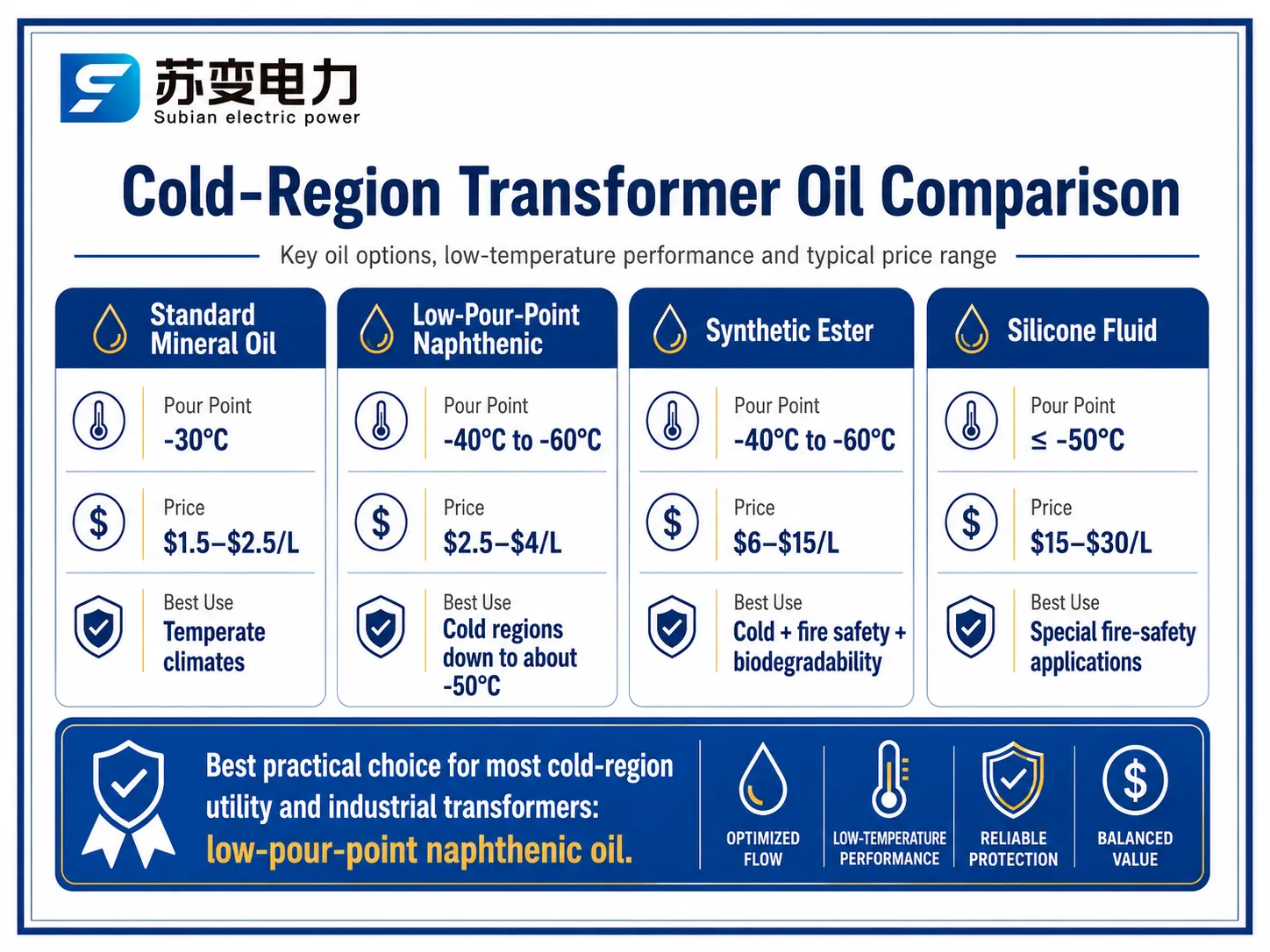
| زيت معدني قياسي (IEC 60296) | -30 درجة مئوية | > 135°م | $1.5-$2.5 | المناخات المعتدلة |
| زيت معدني نافثيني ذو نقطة صب منخفضة | -40°C إلى -60°C | > 135°م | $2.5-$4 | المناطق الباردة حتى -50°C |
| هيدروكربون عالي الوزن الجزيئي | يختلف | > 250°م | $4-$8 | مواقع معرضة للحريق بالإضافة إلى المواقع الباردة |
| استر صناعي (IEC 61099) | -40°C إلى -60°C | > 250°م | $6-$15 | برودة + سلامة من الحرائق + قابلية للتحلل البيولوجي |
| سائل سيليكون | -50°C أو أقل | > 300°م | $15-$30 | تطبيقات خاصة لسلامة الحرائق |
في معظم العمليات الصناعية والمرافق في المناطق الباردة، تمثل الزيوت المعدنية النفتينية ذات نقطة الانصهار المنخفضة العمود الفقري. إنها توفر السيولة المطلوبة تقريبًا بنصف سعر الاسترات الصناعية. تُستخدم الاسترات الصناعية عند الضرورة استجابةً لقوانين الحرائق والتشريعات البيئية التي تحكم الأداء في البرد وتوفر نقطة وميض تزيد عن 300°C. يمثل سائل السيليكون الخيار الذي يقدم أداءً عاليًا بتكلفة مرتفعة جدًا.
زيت نفتيني مقابل زيت بارافيني
| الخصائص | زيت نفتيني | زيت بارافيني |
|---|---|---|
| محتوى الشمع | منخفض جدًا | أعلى؛ يشكل بلورات شمعية في البرد |
| نقطة التصلب | منخفض بشكل طبيعي (-40°C إلى -60°C قابل للتحقيق) | أعلى؛ يحتاج إلى إزالة الشمع الثقيلة |
| تدفق عند درجات حرارة منخفضة | ممتاز | يتدهور بشكل حاد بالقرب من نقطة الانصهار |
| استقرار الأكسدة | جيد | جيد (أفضل قليلاً من الأساس) |
| سلوك امتصاص الغاز | امتصاص غاز أفضل | بشكل عام جيد ولكن الشمع هو المشكلة |
| التوفر في درجات الحرارة الباردة | معيار لمواصفات المناطق الباردة | نادرًا ما يُستخدم للمناطق الباردة |
هناك اتفاق بارز بين المهندسين بشأن استخدام الزيوت النفتينية في المناطق الباردة. إن حقيقة أن الزيوت البارافينية تحتوي على شمع تسبب مشكلة كبيرة في الشتاء، حيث يتجمد الشمع عندما يكون الجو باردًا، مما يؤدي إلى زيادة اللزوجة وفشل الزيت في التدفق — وهو بالضبط المشكلة التي تجعل تبريد المحولات غير فعال في الشتاء. إن درجة حرارة الانصهار المنخفضة لزيت النفتين وقدرته الجيدة على العمل في الظروف الباردة تجعله مقبولًا رسميًا لكل مواصفة جدية في المناطق الباردة، حيث يحدد العديد من مصنعي المحولات فعليًا درجة النفتين المفضلة في رسم نظام الزيت.
معايير ومحددات المواصفات
من الضروري تضمين القيم التالية:
المعايير: IEC 60296 للزيوت المعدنية؛ IEC 61099 للاسترات الصناعية؛ ASTM D3487 لأمريكا الشمالية.
نقطة الانصهار: الحد الأدنى -40°C لدرجات حرارة حوالي -30°C؛ الحد الأدنى -60°C لدرجات حرارة أقل من -35°C.
اللزوجة الحركية عند 40°C: 8 إلى 12 mm²/s والتحقق من اللزوجة عند -30 °C للتأكد من أنها أقل من الحد الأقصى للدوران الذي تحدده الشركات المصنعة؛ هذا الحد عادة ما يكون حوالي 1,500 mm²/s.
نقطة الوميض: أعلى من 135 °C للزيوت المعدنية؛ يرجى الرجوع إلى القيمة الدقيقة المذكورة في الشهادة.
قوة الانهيار العازل: أعلى من 70 kV للزيت الجديد وفقًا لمعايير IEC 60156.
محتوى الماء: 30 جزء في المليون كحد أقصى؛ يجب أن يتوافق تصريف الزيت مع هذا الشرط.
القوة العازلة وتركيز الحمض: الالتزام بالخصائص المذكورة في IEC 60296 للزيوت الجديدة.
لا تنسَ ذكر نقطة الانصهار في العقود. “زيت منطقة باردة” ليس واضحًا بما فيه الكفاية. يُشار أحيانًا إلى زيت منطقة الباردة باسم زيت درجة الحرارة المنخفضة، وقد ينتهي بك الأمر بشراء زيت من الدرجة القياسية -30°C دون أن تذكر العقد نقطة الانصهار.
يمكن أن تساعدك المصفوفة التالية في اتخاذ قرار بشأن الحد الأدنى من درجة الحرارة للموقع المحدد:
| الموقع الحد الأدنى المتطرف | نقطة الانصهار المطلوبة | عائلة الزيت | السعر التقريبي لكل لتر | ملاحظات |
|---|---|---|---|---|
| فوق -20°C | -30 درجة مئوية | المعدني القياسي (IEC 60296) | $1.5-$2.5 | الدرجة القياسية كافية |
| -20°C إلى -35°C | -40°م | نفط نافثيني منخفض الانصهار | $2.5-$3.5 | المواصفة الأكثر شيوعًا في المناطق الباردة |
| -35°C إلى -50°C | -50°C إلى -60°C | استر نافثيني أو اصطناعي | $3.5-$15 | تحقق من لزوجة الزيت عند درجات الحرارة المنخفضة |
| أقل من -50°C | -60°C أو أقل | استر اصطناعي أو سيليكون | $8-$30 | تأكيد تقييمات المضخة والحشيات |
عملية الاختيار
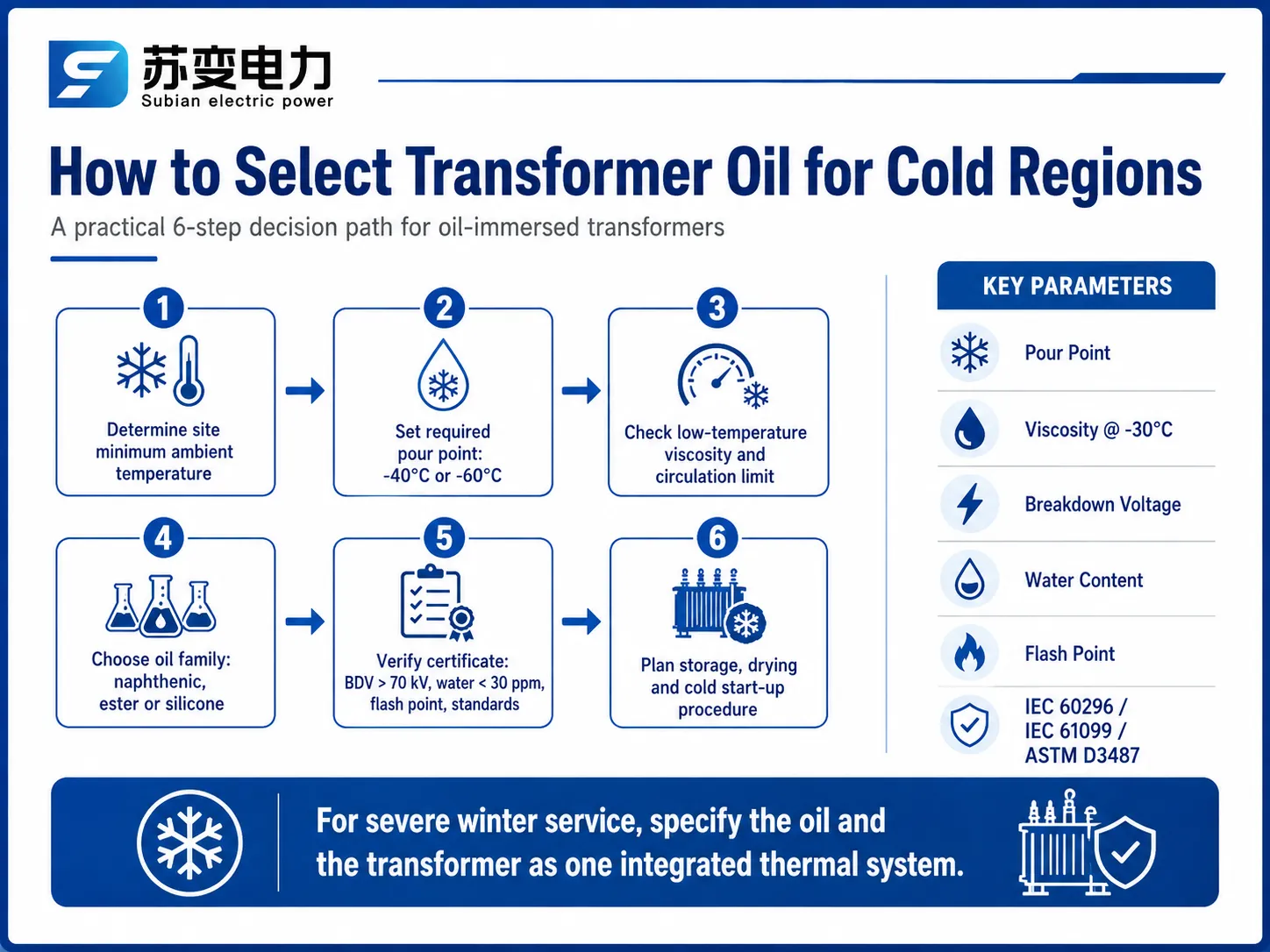
تحديد أدنى درجة حرارة في الموقع. يجب أخذ أدنى درجة حرارة قصوى في الاعتبار بدلاً من متوسط درجة حرارة الشتاء، بالإضافة إلى إضافة هامش أمان قدره 10 أو 15 كلفن.
تحديد نقطة الصب المطلوبة. في حالة درجة حرارة الموقع -40°C على سبيل المثال، حدد زيتًا بنقطة صب -55°C أو -60°C حتى يبقى الزيت سائلًا.
تحقق من لزوجة الزيت عند درجات الحرارة المنخفضة. استشر الشركة المصنعة للمحول حول لزوجة الزيت في حالة -30°C حيث أن هذه هي المعلومات التي ستضمن فعالية نظام التبريد.
اختر نوع الزيت. إذا كانت الاقتصاد هو الهدف، استخدم زيت معدني نافثيني؛ استر اصطناعي في حالة الحرائق واللوائح البيئية؛ والسيليكون فقط عند الضرورة.
تحقق من توافق المحول. تأكد من أن الحشيات والمضخات وأجهزة التنفس متوافقة مع الزيت وتدعم درجات الحرارة القصوى؛ بالنسبة لموقع -40°C، قد يكون من الضروري اختيار حشيات خاصة مصممة لمثل هذه الدرجات المنخفضة.
تأكد من الحصول على الشهادة. يجب أن تغطي نقطة الصب، اللزوجة، BDV، محتوى الماء، ونقطة الوميض وفقًا لمتطلباتك.
التطبيق حسب المنطقة والمناخ
- شمال الصين، منغوليا، مناطق في شمال الولايات المتحدة (-30°C إلى -40°C): زيت نافثيني منخفض نقطة الصب مع نقطة صب -40°C.
كندا، سيبيريا، شمال اسكندنافيا (أقل من -40°C): زيوت بنقاط صب -55°C إلى -60°C مستخدمة، غالبًا ما تكون استرات اصطناعية لأبرد المواقع.
المواقع عالية الارتفاع (الأنديز، التبت، جبال الألب): مزيج من البيئة الباردة وقلة التبريد في الارتفاعات، مما يتطلب تقليل القدرة واستخدام زيت من فئة البرد.
الظروف البحرية الباردة: استخدام زيوت نافثينية واسترات مع تحكم صارم في الرطوبة.الارتفاعات تضيف إلى صعوبات البرد: عند 3000 متر، تكون كثافة الهواء أقل بحوالي 30 في المئة، مما يجعل من غير الفعال تبريد المحولات بشكل طبيعي، والتي يجب تقليل قدرتها أو تعيين مرحلة تبريد أعلى قبل البدء في معالجة درجة الحرارة.
مقارنة العلامات التجارية والأسعار
| العلامة التجارية | الأصل | العروض في المناطق الباردة | السعر التقريبي لكل لتر |
|---|---|---|---|
| شل | هولندا/المملكة المتحدة | Diala S4 ZX-I، Diala AX (نافثيني منخفض الصب) | $2-$4 |
| إكسون موبيل | الولايات المتحدة الأمريكية | Mobil 3910-60 (بارافيني، صب -60°C)، Unvolt | $2.5-$4.5 |
| نيناس | السويد | Nytro Libra، Nytex 620 (متخصصون في النافثيني) | $2-$4 |
| إيرغون | الولايات المتحدة الأمريكية | Hyvolt III، زيوت نافثينية من فئة البرد | $2-$3.5 |
| MIDEL (مواد M&I) | المملكة المتحدة | MIDEL 7131 استر اصطناعي (صب -56°C) | $8-$15 |
| شركة جيانغسو سوبين للطاقة الكهربائية (مع زيت يحمل علامة تجارية) | الصين | المحولات المزودة مملوءة بالزيت المحدد من فئة البرد | الزيت مجمع؛ الوحدات مسعرة بشكل تنافسي |
تهيمن صناعة النفط على الشركات العالمية المتخصصة في الزيوت والشحوم، بما في ذلك شل، إكسون موبيل، نيناس، إيرغون، وMIDEL، التي تم استخدام منتجاتها الباردة في جميع أنحاء العالم. في حالة المحول، يتم عادةً تحديد نوع الزيت في العقد، وتقدم شركات مثل Jiangsu Subian Electric Power المحول مع الزيت البارد المحدد وفقًا للعقد وتوضح تعبئة الزيت في الشهادة. في الواقع، هذا أمر حاسم للأماكن الباردة لأن الزيت ليس عنصرًا استهلاكيًا ولا يمكن استبداله؛ إنه جزء من التصميم الحراري للمحول. يتم تزويد محولات Subian في المناطق الباردة بالشهادة التي تشير إلى نقطة الصب ولزوجة الزيت، وعادةً ما تكون أسعار المحول المعبأ أقل بـ 40-60% من الأسعار المقتبسة لوحدات مماثلة تنتجها الشركات المصنعة الأوروبية.
كيفية اختيار الزيت المناسب
تطبيق الحد الأدنى من درجة الحرارة في أسوأ الحالات للموقع بالإضافة إلى التسامح لاختيار متطلبات نقطة الصب.
اختر الزيوت النفتينية للبيئات الباردة وتجنب المنتجات البارافينية ما لم يتم إزالة الشمع منها لتلبية معايير نقطة الصب.
تحديد حد اللزوجة عند درجات الحرارة المنخفضة لضمان تشغيل نظام التبريد.
ابحث عن عائلة الزيت المتوافقة مع رموز الحريق والبيئة، وليس فقط مع مقياس الحرارة.
تحقق مما إذا كانت مواد الحشيات والمضخات مناسبة لظروف درجات الحرارة القصوى.
اطلب من الشهادة إظهار نقطة الصب، اللزوجة، BDV، محتوى الماء ونقطة الوميض.
المناولة، التخزين، وبدء التشغيل في البرد
تتطلب مناولة زيت المناطق الباردة انضباطًا خاصًا بها. يجب أن تكون البراميل، والخزانات، وأنابيب نقل الحرارة موجودة فوق نقطة صب الزيت حتى يظل الزيت قابلًا للتضخيم؛ تلجأ العديد من المواقع إلى التخزين المدفأ وخطوط النقل. قبل التعبئة، يجب أن يتم تفريغ الزيت من الهواء وتجفيفه إلى أقل من 30 جزء في المليون من محتوى الماء نظرًا لأن الهواء البارد يحتوي على رطوبة قليلة جدًا بينما الزيت الدافئ القادم من التخزين سيتكثف. عادةً، يتم تركيب فلاتر بحجم 1-5 ميكرون ومجفف فراغ أثناء تعبئة المحولات بالزيت في المناطق الباردة.
عند بدء تشغيل المعدات في ظروف باردة، من المهم جدًا اتباع التسلسل - قم بتشغيل المحول ودع الزيت يتداول لمدة 10-30 دقيقة قبل وضع حمل كبير لتجنب تكوين نقاط ساخنة في الزيت البارد الراكد. يحتفظ بعض المشغلين بالمضخات قيد التشغيل خلال أبرد الليالي بدلاً من ضبط نظام التحكم على درجة حرارة الزيت المضخ. يجب أن تتضمن قواعد التشغيل في دليل الصيانة للموقع وليس فقط في مواصفاته.
الأسئلة المتكررة
أي زيت محولات مناسب للأماكن الباردة؟
للاستخدام في التطبيقات في المناطق الباردة، فإن استخدام زيت معدني نافثيني ذو نقطة سكب منخفضة معتمد من IEC 60296 هو الخيار الأفضل: يبقى الزيت سائلًا عند درجات حرارة تتراوح من -40°C إلى -60°C ويكلف حوالي $2.5-$4 لكل لتر. توفر الاسترات الاصطناعية، التي تتراوح أسعارها حوالي $8-$15 لكل لتر، تحسينًا في السلامة من الحرائق وقابلية التحلل البيولوجي، ولكن بنفس مستويات الأداء في البرد. الزيت القياسي، الذي لديه نقطة سكب تبلغ -30°C، غير كافٍ للمواقع التي تعاني من درجات حرارة تقل عن حوالي -25°C.
ماذا يعني نقطة سكب زيت المحولات؟
تُعرف نقطة السكب بأنها درجة الحرارة التي لا يزال فيها الزيت يتدفق. عند هذه الدرجة، يتوقف الدوران، وبالتالي، لا تبرد المحول، مما يؤدي إلى ارتفاع درجة حرارة اللف بغض النظر عن الطقس المتجمد. الزيت القياسي للمحول لديه نقطة سكب تبلغ -30°C؛ الزيت للمناطق الباردة مصنف عند -40°C، -45°C، أو -60°C حسب الموقع.
هل زيت المحولات النافثيني أم البارافيني أفضل لفصل الشتاء؟
بالتأكيد النافثيني. تحتوي الزيوت البارافينية على بارافين يتبلور عند درجات الحرارة الباردة، مما يزيد من اللزوجة إلى درجة تمنع الزيت من التدفق تمامًا، مما يعني أن المحول لا يمكن تبريده عند هذه الدرجات. زيت النافثين طبيعي ذو نقطة سكب منخفضة ويتدفق جيدًا في البرد، ولهذا السبب فإن مواصفات الزيت للمناطق الباردة تتطلب تقريبًا دائمًا زيتًا من درجة نافثيني.
كم يكلف زيت المحولات للمناطق الباردة؟
الزيت المعدني القياسي يكلف $1.5-$2.5 لكل لتر، زيت نافثيني ذو نقطة سكب منخفضة يكلف $2.5-$4 لكل لتر، الاسترات الاصطناعية تكلف $6-$15 لكل لتر، وزيت السيليكون يكلف $15-$30 لكل لتر. الفرق في سعر الزيت حوالي $10,000–$20,000 لمحول بسعة 10,000 لتر، وهو ليس كبيرًا مقارنة بتكلفة الفشل في الشتاء.
هل يمكنني استخدام زيت المحولات القياسي إذا قمت فقط بتقليل تصنيف المحول؟
تقليل التصنيف يساعد في الحرارة، وليس في سيولة السائل البارد. إذا كانت نقطة سكب الزيت أعلى من الحد الأدنى للموقع، سيتوقف الزيت عن التدفق بغض النظر عن مدى قلة الحمل الذي يحمله المحول. يجب أن تكون المواصفة مدفوعة بدرجة حرارة الموقع، ويجب اختيار المحول والزيت كنظام حراري واحد. زيت الدرجة الباردة ليس خيارًا للمواقع الباردة حقًا.
المراجع
- IEC 60296 — السوائل للتطبيقات الكهربائية، زيوت العزل المعدنية غير المستخدمة — المعيار الرئيسي لدرجات زيت المحولات المعدنية ونقاط السكب.
- IEC 61099 — الاسترات العضوية الاصطناعية للأغراض الكهربائية — المعيار لزيوت العزل من الاسترات الاصطناعية.
- ASTM D3487 — المواصفة القياسية لزيت العزل المعدني المستخدم في الأجهزة الكهربائية — مواصفة زيت المعدن في أمريكا الشمالية.
- IEC 60156 — السوائل العازلة، تحديد جهد الانهيار — طريقة الاختبار العازل لجهد الانهيار.
- IEEE C57.106 — دليل لقبول وصيانة زيت المعادن العازل — معايير قبول الزيت وحدود الرطوبة.
- نيناس — حلول زيت المحولات — درجات زيت نافثيني متخصص وإرشادات التطبيق.
- M&I Materials — سوائل استر MIDEL — منتجات الإستر الاصطناعية مع بيانات درجة الحرارة المنخفضة المنشورة.
الخاتمة
هذا يعني أنه عند شراء زيت المحولات للظروف الباردة، لا يتعلق الأمر فقط بالزيت نفسه، بل يتعلق أيضًا بالتصميم الحراري. تحدد نقطة الصب، لزوجة درجة الحرارة المنخفضة ومحتوى الماء ما إذا كان نظام التبريد سيعمل خلال أبرد ليلة، بينما يحدد نوع الزيت خطر الحريق والبيئة. مع المعلومات الصحيحة على الورق، ستخدم المحولات لسنوات؛ خلاف ذلك، سيتكبد المرء تكاليف باهظة في الشتاء.
- حدد نقطة الصب من الحد الأدنى المتطرف لموقعك بالإضافة إلى هامش، وليس من افتراض الكتالوج.
- اختر زيت النفتين للمناطق الباردة؛ استخدم الإستر فقط حيث تتطلب النار أو البيئة ذلك.
- تحقق من لزوجة درجة الحرارة المنخفضة مقابل حد دوران الشركة المصنعة.
- اشترِ الزيت والمحولات كنظام واحد، وضع الشهادة في العقد.
بالنسبة للمحولات المغمورة بالزيت المملوءة بزيت الدرجة الباردة الصحيح والمعتمدة وفقًا لـ IEC 60296، اتصل بـ شركة جيانغسو سوبين للطاقة الكهربائية ما إذا www.subian-electric.com — حدد الحد الأدنى لدرجة الحرارة في موقعك ومتطلبات نقطة الصب، وسيتقدمون بعرض للوحدة المملوءة مع الشهادة المضمنة.