


Инженер-энергетик, расположенный на севере Канады, разрабатывает спецификацию для трансформатора мощностью 25 МВА, который будет работать в подстанции с температурными уровнями ниже -40°C в январе. Трансформаторы имеют большие устройства охлаждения, их бак специально сконструирован для того, чтобы выдерживать сильные ветровые и снежные нагрузки, поэтому единственное, что беспокоит инженера, это тип масла, используемого для бака. Человек знает, что значит выбрать неправильное трансформаторное масло для работы в холодном климате. Масло загустеет, когда температура упадет, насос начнет кавитацию, и масло перестанет течь через устройства охлаждения, поэтому обмотки нагреваются, даже если температура на улице -30°C. Трансформатор, который успешно прошел испытания, будет работать как генератор сигнализации в первый зимний сезон.
Эта статья обсуждает все, что должен знать покупатель или инженер по спецификациям о выборе трансформаторного масла в масляных трансформаторах для холодного климатического региона, включая основные характеристики, нормы, преимущества и недостатки использования парафинических и нафтеновых масел, ценовые различия и алгоритм выбора масла.
Почему масло для трансформаторов становится проблематичным
Трансформаторное масло имеет две основные функции — оно охлаждает обмотки трансформатора за счет удаления тепла к стенкам бака и изолирует обмотки от электрического напряжения. Хотя обе функции зависят от способности масла течь, в холодном климате вязкость масла увеличивается, и циркуляция замедляется, что приводит к нагреву обмоток трансформатора при низкой температуре на улице. При очень низких температурах минеральное масло может достичь своей точки застывания — температуры, при которой масло полностью перестает течь, что означает, что охлаждение останавливается.
Есть еще одна проблема, связанная с маслом зимой: конденсация влаги. Масло в трансформаторе с консерватором перемещается во время его работы, и когда воздух, который теплее и более влажный, попадает через холодный бак, вода остывает и соединяется с маслом. Вода в трансформаторном масле разрушает диэлектрические свойства масла; несколько сотен частей воды снизят пробивное напряжение масла с 60 кВ до менее 30 кВ, поэтому проблемы выбора трансформаторного масла для холодного климата заключаются в понимании как текучести, так и управления влагой.
Последняя особенность работы зимой — это запуск. Масло, используемое в трансформаторе, должно быть под напряжением при температуре замерзания масла без предварительного подогрева, потому что сразу после подачи напряжения масло должно циркулировать и создавать необходимые температурные условия в каждой части трансформатора.
Ключевые свойства при низких температурах
| Свойство | Что это измеряет | Целевой холодный регион | Стандартный класс (умеренный) |
|---|---|---|---|
| Точка застывания | Наименьшая температура, при которой масло течет | -40°C до -60°C | -30°C |
| Кинематическая вязкость при 40°C | Базовая текучесть при рабочей температуре | 8-12 мм²/с | 9-12 мм²/с |
| Кинематическая вязкость при -30°C | Холодная текучесть; ключевое значение при низких температурах | Ниже 1,500 mm²/s (типичный предел) | Не указано |
| Температура вспышки | Пожарная безопасность; чем выше, тем лучше | > 135°C (минеральное), > 250°C (эфир) | > 135°C |
| Напряжение пробоя (BDV) | Диэлектрическая прочность после кондиционирования | > 70 kV (новое, IEC 60156) | > 70 кВ |
| Содержание воды | Уровень влажности; должен быть минимальным | < 30 ppm (новое масло) | < 30 ppm |
Когда речь идет о зонах холодного климата, температура застывания и вязкость при низких температурах играют важную роль. Значение -30 градусов Цельсия подходит для климатов с температурами -10 градусов Цельсия; однако оно совершенно неэффективно при температурах -40 градусов Цельсия. Рассматриваемое масло должно оставаться выше своей температуры застывания, даже при минимально зафиксированной температуре.
Типы масел для холодных регионов
| Тип масла | Температура застывания | Температура вспышки | Цена за литр | Лучшее применение |
|---|---|---|---|---|
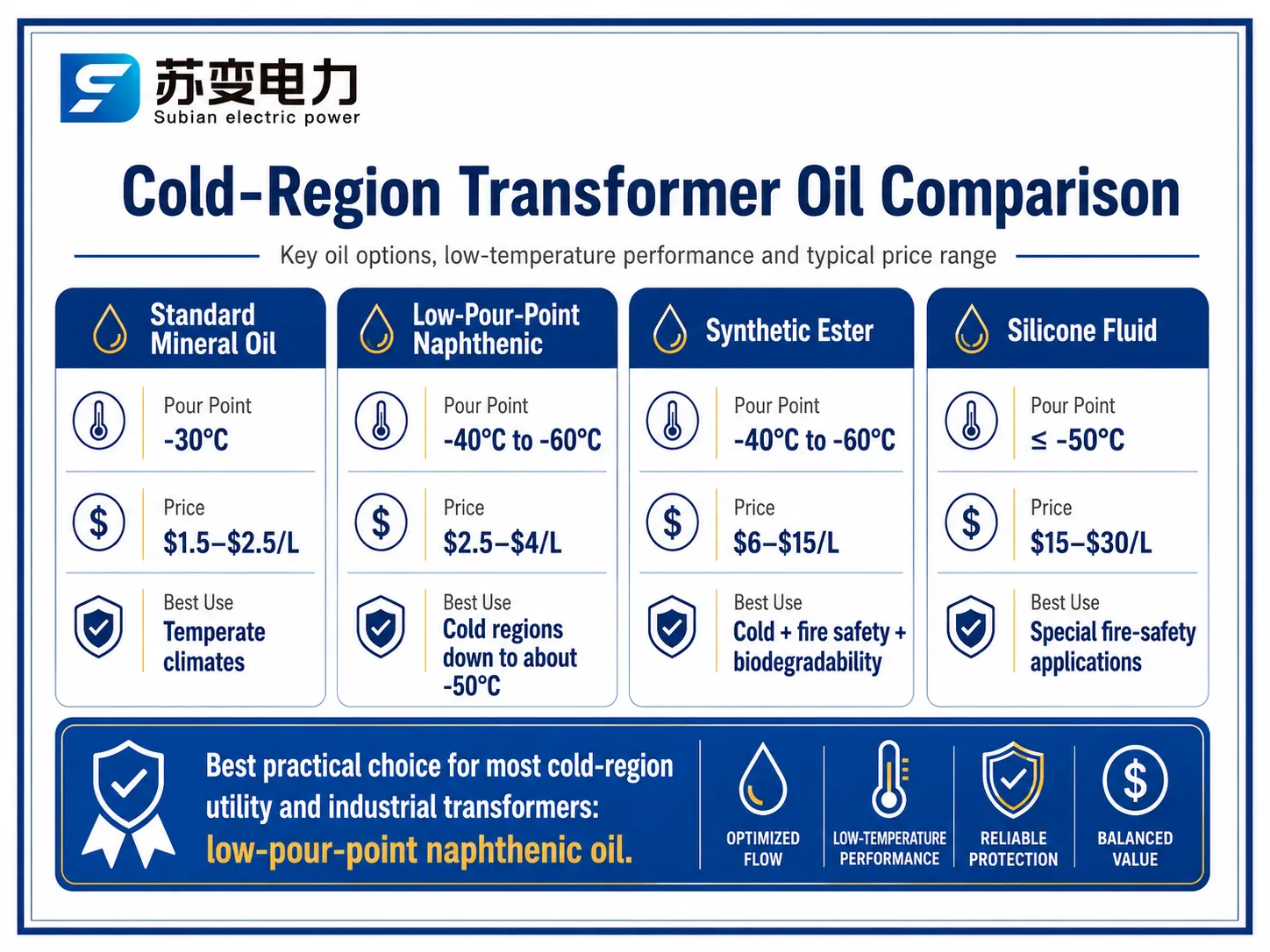
| Стандартное минеральное масло (IEC 60296) | -30°C | > 135°C | $1.5-$2.5 | Умеренные климатические условия |
| Минеральное масло с низкой температурой застывания нафтенового типа | -40°C до -60°C | > 135°C | $2.5-$4 | Холодные регионы до -50°C |
| Высокомолекулярный углеводород | Варируется | > 250°C | $4-$8 | Участки, подверженные пожарам, и холодные участки |
| Синтетический эфир (IEC 61099) | -40°C до -60°C | > 250°C | $6-$15 | Холод + пожарная безопасность + биодеградируемость |
| Силиконовая жидкость | -50°C или ниже | > 300°C | $15-$30 | Специальные приложения по пожарной безопасности |
В большинстве промышленных и коммунальных процессов в холодных регионах нафтеновые минеральные масла с низкой температурой застывания являются основным рабочим материалом. Они обеспечивают необходимую текучесть примерно за половину цены синтетических эфиров. Синтетические эфиры используются при необходимости в соответствии с нормами пожарной безопасности и экологическим законодательством, регулирующим холодную производительность и обеспечивающим температуру вспышки выше 300°C. Силиконовая жидкость представляет собой выбор, предлагающий высокую производительность по очень высокой цене.
Нафтеновое против парафинистого масла
| Характеристика | Нафтеновое масло | Парафинистое масло |
|---|---|---|
| Содержание воска | Очень низкое | Более высокое; образует кристаллы воска на холоде |
| Точка застывания | Естественно низкое (-40°C до -60°C достижимо) | Более высокое; требует сильной девакации |
| Текучесть при низкой температуре | Отлично | Резко ухудшается около температуры застывания |
| Окислительная стабильность | Хорошая | Хорошая (немного лучше базового) |
| Поведение при поглощении газа | Лучше поглощение газа | В целом нормально, но проблема с воском |
| Доступность в холодных марках | Стандарт для спецификаций холодных регионов | Редко используется для холодных регионов |
Существует явное согласие среди инженеров относительно использования нафтеновых масел в холодных зонах. Тот факт, что парафинистые масла содержат воск, вызывает серьезные проблемы зимой, так как воск затвердевает при холоде, что приводит к увеличению вязкости и последующему отказу масла течь — именно это и делает охлаждение трансформаторов неэффективным зимой. Низкая температура застывания нафтенового масла и его хорошая способность работать в холодных условиях делают его формально приемлемым для каждой серьезной спецификации в холодных регионах, при этом многие производители трансформаторов фактически указывают предпочтительную нафтеновую марку в чертеже масляной системы.
Параметры и ограничения спецификации
необходимо включить следующие значения:
Стандарты: IEC 60296 для минеральных масел; IEC 61099 для синтетических эфиров; ASTM D3487 для Северной Америки.
Температура застывания: минимум -40°C для температур около -30°C; минимум -60°C для температур ниже -35°C.
Кинематическая вязкость при 40°C: 8 до 12 мм²/с и проверьте вязкость при -30 °C, чтобы убедиться, что она ниже максимального предела циркуляции, установленного производителями; этот предел обычно составляет около 1,500 мм²/с.
Температура вспышки: выше 135 °C для минеральных масел; обратитесь к точному значению, указанному в сертификате.
Прочность на диэлектрический пробой: выше 70 кВ для нового масла в соответствии со стандартами IEC 60156.
Содержание воды: максимум 30 ppm; сброс масла должен соответствовать этому требованию.
Диэлектрическая прочность и концентрация кислоты: соответствовать свойствам, указанным в IEC 60296 для новых масел.
Не забудьте упомянуть температуру застывания в контрактах. “Масло для холодных регионов” недостаточно ясно. Масло для холодных регионов иногда называют маслом низкой температуры, и вы можете в конечном итоге купить масло стандартной марки -30°C, не упомянув температуру застывания в контракте.
Следующая матрица может помочь вам определить минимальную температуру для конкретного участка:
| Участок Экстремально минимальный | Требуемая температура застывания | Семейство масел | Приблизительная цена за литр | Примечания |
|---|---|---|---|---|
| Выше -20°C | -30°C | Стандартное минеральное (IEC 60296) | $1.5-$2.5 | Стандартный класс достаточен |
| -20°C до -35°C | -40°C | Низкоплавкий нафтеновый | $2.5-$3.5 | Наиболее распространенная спецификация для холодных регионов |
| -35°C до -50°C | -50°C до -60°C | Нафтеновый или синтетический эфир | $3.5-$15 | Проверьте вязкость при низкой температуре |
| Ниже -50°C | -60°C или ниже | Синтетический эфир или силикон | $8-$30 | Подтвердите характеристики насоса и прокладок |
Процесс выбора
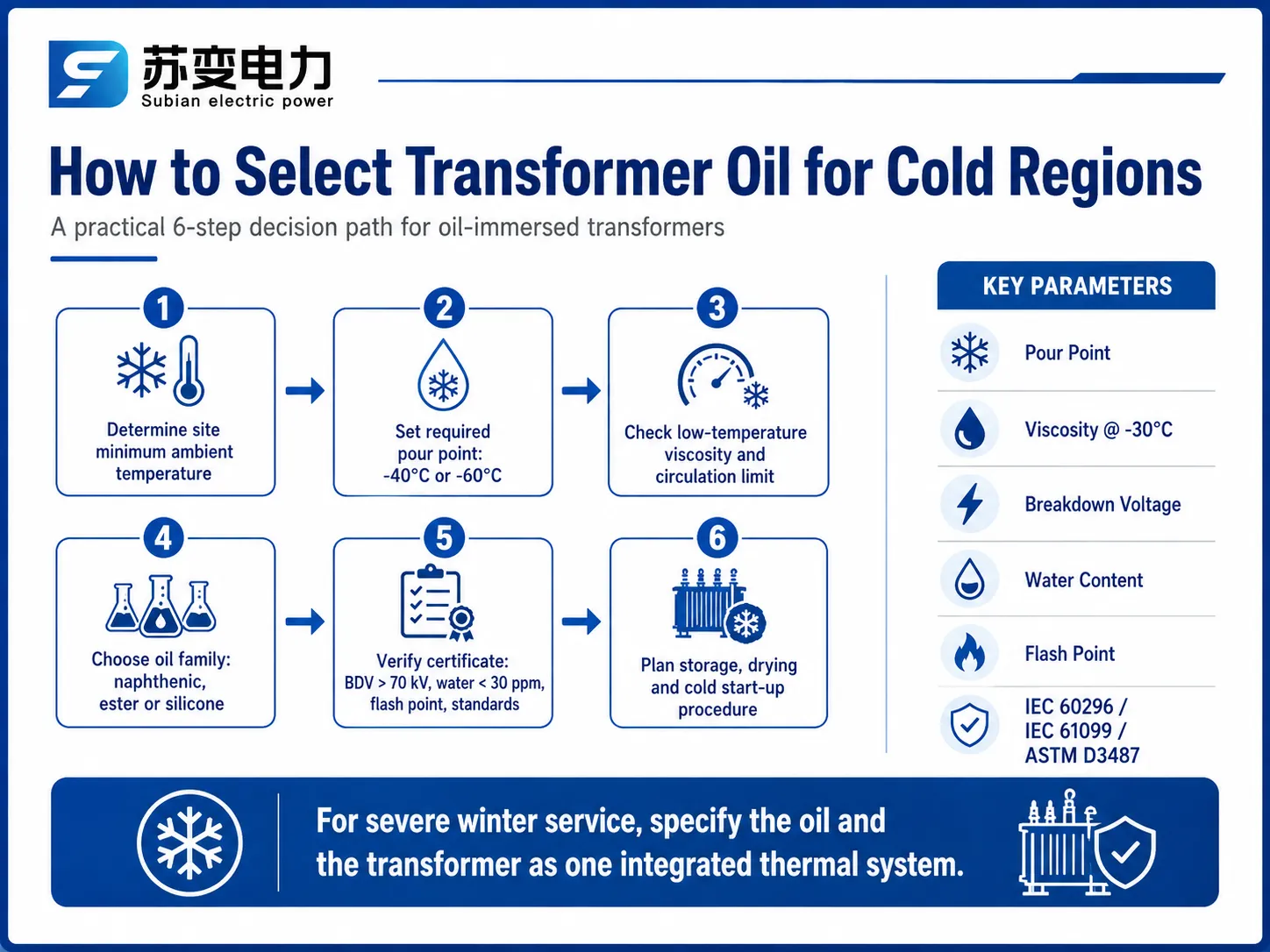
Определите минимальную температуру на объекте. Учитывайте экстремально низкую температуру, а не среднюю зимнюю температуру, также добавьте запас безопасности 10 или 15 K.
Определите необходимую температуру застывания. В случае температуры на объекте -40°C, укажите масло с температурой застывания -55°C или -60°C, чтобы масло оставалось жидким.
Проверьте вязкость при низкой температуре. Проконсультируйтесь с производителем трансформатора о вязкости масла при -30°C, так как эта информация обеспечит эффективность системы охлаждения.
Выберите тип масла. Если цель - экономия, используйте нафтеновое минеральное масло; синтетический эфир в случае требований по пожарной безопасности и охране окружающей среды; и силикон только на обязательной основе.
Проверьте совместимость трансформатора. Убедитесь, что прокладки, насосы и воздухоотводчики совместимы с маслом и выдерживают экстремальные температуры; для объекта при -40°C может потребоваться выбрать специальные прокладки, разработанные для таких низких температур.
Убедитесь, что получили сертификат. Он должен охватывать температуру застывания, вязкость, BDV, содержание воды и температуру вспышки в соответствии с вашими требованиями.
Применение по регионам и климату
- Северный Китай, Монголия, районы северных США (-30°C до -40°C): низкоплавкое нафтеновое масло с температурой застывания -40°C.
Канада, Сибирь, северная Скандинавия (ниже -40°C): используются масла с температурами застывания -55°C до -60°C, часто синтетические эфиры для самых холодных мест.
Высокогорные районы (Анды, Тибет, Альпы): сочетание холодной среды и меньшего охлаждения на высоте, требующее снижения мощности и использования масла холодного класса.
Морские условия и холодные условия: использование нафтеновых и эфирных масел с строгим контролем влажности.Высота добавляет сложности к холодным условиям: на высоте 3000 метров плотность воздуха примерно на 30 процентов ниже, что делает менее эффективным естественное охлаждение трансформаторов, которые должны быть снижены по мощности или назначены на более высокий класс охлаждения до начала решения температурных проблем.
Сравнение брендов и цен
| Бренд | Происхождение | Предложения для холодных регионов | Приблизительная цена за литр |
|---|---|---|---|
| Шелл | Нидерланды/Великобритания | Diala S4 ZX-I, Diala AX (низкоплавкий нафтеновый) | $2-$4 |
| ЭксонМобил | США | Mobil 3910-60 (парафиновое, температура застывания -60°C), Unvolt | $2.5-$4.5 |
| Нинас | Швеция | Nytro Libra, Nytex 620 (специалисты по нафтеновым) | $2-$4 |
| Эргон | США | Hyvolt III, масла холодного класса нафтеновые | $2-$3.5 |
| МИДЕЛ (M&I Materials) | Великобритания | MIDEL 7131 синтетический эфир (температура застывания -56°C) | $8-$15 |
| Jiangsu Subian Electric Power (с маслом под брендом) | Китай | Трансформаторы поставляются, заполненные указанным маслом холодного класса | Масло в комплекте; единицы по конкурентоспособным ценам |
Нефтяная промышленность контролируется глобальными компаниями, специализирующимися на смазочных материалах и эфирах, включая Shell, ExxonMobil, Nynas, Ergon и MIDEL, чьи холодные продукты использовались по всему миру. В случае трансформатора тип масла обычно указывается в контракте, и такие компании, как Jiangsu Subian Electric Power, предоставляют трансформатор с холодным маслом, указанным в контракте, и указывают заполнение масла в сертификате. Действительно, это критически важно для холодных мест, поскольку масло не является расходным материалом и не может быть заменено; оно является частью теплового дизайна трансформатора. Трансформаторы Subian для холодных регионов поставляются с сертификатом, указывающим температуру застывания и вязкость масла, а цены на заполненные трансформаторы обычно на 40-60% ниже, чем цены, указанные для аналогичных единиц, произведенных европейскими производителями.
Как выбрать правильное масло
Примените минимальную температуру, предполагаемую на сайте в худшем случае, плюс допустимое отклонение, чтобы выбрать требование к температуре застывания.
Выбирайте нафтеновые масла для холодных условий и избегайте парафинистых продуктов, если они не были депарафинизированы для соответствия параметру температуры застывания.
Укажите предел вязкости при низких температурах, чтобы обеспечить работоспособность системы охлаждения.
Найдите семейство масел, соответствующее пожарным и экологическим нормам, а не только термометру.
Проверьте, подходят ли материалы прокладок и насосов для экстремальных температурных условий.
Требуйте сертификат, показывающий температуру застывания, вязкость, BDV, содержание воды и температуру вспышки.
Обработка, хранение и холодный запуск
Обработка масла для холодных регионов имеет свою особую дисциплину. Бочки, резервуары и трубы для теплообмена должны находиться выше температуры застывания масла, чтобы масло оставалось перекачиваемым; многие объекты прибегают к подогреву хранилищ и линий передачи. Перед заполнением масло должно быть вакуумно-деаэрировано и высушено до содержания воды ниже 30 ppm, поскольку холодный воздух содержит очень мало влаги, в то время как теплое масло, поступающее из хранилища, будет конденсироваться. Обычно устанавливаются фильтры с размером пор 1-5 микрон и вакуумный сушильный аппарат при заполнении трансформаторов маслом в холодных регионах.
При запуске оборудования в холодных условиях очень важно следовать последовательности – включить трансформатор и дать маслу циркулировать в течение 10-30 минут перед тем, как нагружать его, чтобы избежать образования горячих точек в застоявшемся холодном масле. Некоторые операторы предпочитают держать насосы в работе в самые холодные ночи, вместо того чтобы настраивать систему управления на температуру перекачиваемого масла. Правила эксплуатации должны быть включены в руководство по обслуживанию объекта, а не только в его спецификации.
Часто задаваемые вопросы
Какое трансформаторное масло подходит для холодных мест?
Для использования в приложениях в холодных регионах лучше всего подходит низкопарафиновое нафтовое минеральное масло, одобренное IEC 60296: масло остается жидким при температурах от -40°C до -60°C и стоит примерно $2.5-$4 за литр. Синтетические эфиры, цена которых составляет около $8-$15 за литр, обеспечивают как улучшенную пожарную безопасность, так и биодеградируемость, но при этом сохраняют такие же уровни производительности в холоде. Стандартное масло с температурой застывания -30°C недостаточно для объектов, испытывающих температуры ниже примерно -25°C.
Что означает температура застывания трансформаторного масла?
Температура застывания определяется как температура, при которой масло все еще течет. При этой температуре циркуляция останавливается, и, следовательно, трансформатор не охлаждается, что приводит к перегреву обмотки независимо от морозной погоды. Стандартное масло трансформатора имеет температуру застывания -30°C; масло для холодных регионов имеет рейтинг -40°C, -45°C или -60°C в зависимости от объекта.
Какое масло лучше для зимы: нафтовое или парафиновое?
Определенно нафтовое. Парафиновое масло содержит парафин, который кристаллизуется при низких температурах, увеличивая вязкость до такой степени, что масло перестает течь, что означает, что трансформатор не может охлаждаться при этих температурах. Нафтовое масло имеет естественно низкую температуру застывания и хорошо течет в холоде, поэтому спецификации масла для холодных регионов почти всегда требуют нафтовое масло.
Сколько стоит трансформаторное масло для холодных регионов?
Стандартное минеральное масло стоит $1.5-$2.5 за литр, низкопарафиновое нафтовое масло стоит $2.5-$4 за литр, синтетические эфиры стоят $6-$15 за литр, а силиконовое масло стоит $15-$30 за литр. Разница в цене масла составляет около $10,000–$20,000 за трансформатор объемом 10,000 литров, что не так много по сравнению с затратами на зимние поломки.
Могу ли я использовать стандартное трансформаторное масло, если просто уменьшить мощность трансформатора?
Уменьшение мощности помогает с теплом, но не с холодной текучестью. Если температура застывания масла выше минимальной для объекта, масло перестанет течь независимо от того, какую небольшую нагрузку несет трансформатор. Спецификация должна определяться температурой на объекте, а трансформатор и масло должны быть выбраны как одна тепловая система. Масло холодного класса не является опциональным для действительно холодных объектов.
Ссылки
- IEC 60296 — Жидкости для электротехнических приложений, неиспользуемые минеральные изоляционные масла — Основной стандарт для минеральных трансформаторных масел и температур застывания.
- IEC 61099 — Синтетические органические эфиры для электрических целей — Стандарт для синтетических эфирных изоляционных масел.
- ASTM D3487 — Стандартная спецификация для минерального изоляционного масла, используемого в электрических аппаратах — Спецификация минерального масла для Северной Америки.
- IEC 60156 — Изоляционные жидкости, определение пробивного напряжения — Метод диэлектрического испытания для BDV.
- IEEE C57.106 — Руководство по приемке и обслуживанию изолирующего минерального масла — Критерии приемки масла и пределы влажности.
- Nynas — Решения по трансформаторному маслу — Специализированные сорта нафтового масла и рекомендации по применению.
- M&I Materials — MIDEL Эфирные жидкости — Продукты на основе синтетических эфиров с опубликованными данными по низким температурам.
Заключение
Это означает, что покупка трансформаторного масла для холодных условий — это не только вопрос самого смазочного материала, но и теплового проектирования. Температура застывания, вязкость при низкой температуре и содержание воды определяют, будет ли система охлаждения работать в самую холодную ночь, в то время как тип масла определяет риск пожара и воздействия на окружающую среду. С правильной информацией на бумаге трансформатор будет служить годами; в противном случае придется дорого заплатить зимой.
- Указывайте температуру застывания от экстремально низкой температуры на месте плюс запас, а не от стандартного значения в каталоге.
- Выбирайте нафтовое масло для холодных регионов; используйте эфиры только там, где это требует пожарная безопасность или охрана окружающей среды.
- Проверьте вязкость при низкой температуре в соответствии с лимитом циркуляции производителя.
- Покупайте масло и трансформатор как одну систему и включайте сертификат в контракт.
Для трансформаторов с масляным погружением, заполненных правильным холодным маслом и сертифицированных по IEC 60296, свяжитесь с Jiangsu Subian Electric Power на www.subian-electric.com — укажите минимальную температуру на вашем объекте и требования к температуре застывания, и они предложат заполненное устройство с включенным сертификатом.