


In Lagos, in einem Küstenproduktionsgebiet, benötigte eine neue Zementfabrik innerhalb von sechs Wochen 2 MVA Verteilungskapazität an einem Standort, der während der Regenzeit ein Überschwemmungsproblem hat. Die technische Lösung ist kein Gebäude, sondern eine freistehende, vorgefertigte Umspannstation, eine Edelstahl-Einheit mit IP55-Gehäuse, die 800 mm über dem Boden erhöht ist, auf einem feuerverzinkten Fundament ruht, im Werk mit Transformator und Schaltanlagen getestet, in einem Container transportiert und innerhalb von vier Tagen in Betrieb genommen wurde. Fünf Jahre nach dem Bau der Anlage hatte die Einheit während zweier Regenzeiten zuverlässig ohne Ausfälle aufgrund von Feuchtigkeit betrieben.
Der Artikel gibt einen Überblick über freistehende, vorgefertigte Umspannstationen, erklärt ihre Rolle in der modernen Elektrotechnik und im Bauwesen und bietet Informationen zu ihrem Design, Preis und den Spezifikationen, die beim Kauf benötigt werden.
Kurze Antwort: Eine externe modulare Umspannstation (auch als kompakte oder boxförmige Umspannstation bezeichnet) ist eine freistehende elektrische Baugruppe, die in der Fabrik hergestellt wird und aus einem Transformator sowie den Einheiten der MV/LV-Schaltanlagen, Messgeräten und Schutzvorrichtungen besteht, die alle in einem IP54/IP55-Gehäuse untergebracht sind, das gemäß IEC 62271-202 gefertigt wurde. Sie kann im Freien installiert werden, da das Gehäuse auf Widerstand gegen Regen und Staub, ultraviolette Strahlen getestet wurde und eine komplette Einheit ist, bei der bereits einige Tests wie Wärmeprüfung, Stoßprüfung und elektrische Tests durchgeführt wurden.
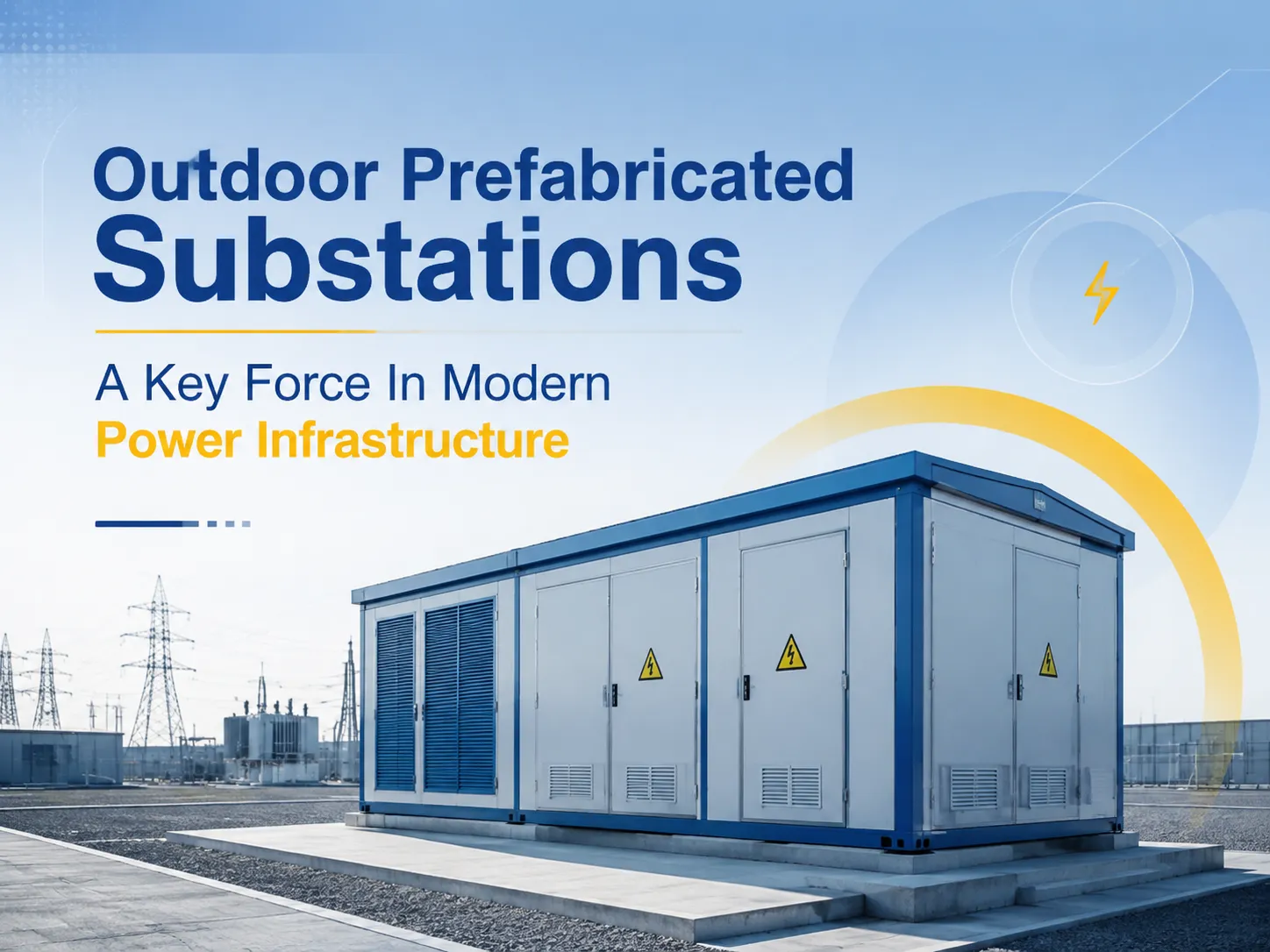
Was ist eine freistehende, vorgefertigte Umspannstation?
Eine vorgefertigte freistehende Umspannstation ist bekannt als MV/LV-Verteilungsumspannstation, die eine ganze Einheit und wetterbeständig ist, transportabel und dafür ausgelegt ist, im Freien installiert zu werden, ohne dass ein Gebäude, eine Umgebung oder eine andere Umhüllung erforderlich ist. Der Transformator und andere wichtige Komponenten bestehen aus Stahl- oder Edelstahlmaterialien und werden gemäß IEC 60529 betrieben, was bedeutet, dass sie ein gutes Maß an Haltbarkeit gemäß den IP54- und IP55-Standards bieten. Die technischen Aspekte der Ausrüstung sind durch IEC 62271-202 festgelegt, die die Entwurfs- und Sicherheitsanforderungen angibt. Die Tatsache, dass der Begriff “freistehend” für diese Konstruktion verwendet wird, ist entscheidend, da dies bedeutet, dass das Gehäuse verschiedenen Elementen widerstehen muss: von direkter Sonneneinstrahlung bis hin zu extremen Temperaturen und potenziell schädlichen Wettereinflüssen. Die freistehenden, vorgefertigten Umspannstationen sind der am schnellsten wachsende Teil der Verteilungsinfrastruktur, da sie innerhalb weniger Tage betriebsbereite Stationen bieten, was mit in Fabriken gebauten Stationen, die viel Zeit in Anspruch nehmen können, nicht vergleichbar ist.
Warum es eine Schlüsselrolle in der Energieinfrastruktur spielt
Die folgenden vier strukturellen Veränderungen haben zur Entstehung und Verbreitung von freistehenden, vorgefertigten Umspannstationen als wichtiger Kraft in der aktuellen Energieinfrastruktur geführt.
- Geschwindigkeit der Elektrifizierung: Versorgungsunternehmen und Regierungen verlangen, dass neue Kapazitäten schneller installiert werden als es bei ortsgebauten Umspannwerken möglich ist. Tatsächlich wird eine vorgefertigte elektrische Einheit in nur 2–5 Tagen betriebsbereit, während ortsgebaute Stationen bis zu 12 Wochen benötigen.
- Kostendruck: Die Eliminierung von Bauarbeiten und Gebäuden sowie die Koordination der Bauarbeiten ermöglicht eine Senkung der Gesamtkosten für die Installation um bis zu 40%.
- Dezentralisierung des Netzes: Das Aufkommen von erneuerbaren Energien, dezentraler Energie und Ladestationen für Elektrofahrzeuge hat zur Einführung von Tausenden neuen mittelgroßen Anschlüssen und Umspannwerken mit standardisierten Parametern geführt.
- Verfügbarkeit und Kosten von Fachkräften: Es mangelt an Fachkräften, und die Fabrikproduktion ermöglicht die Durchführung der Qualitätskontrolle in einer kontrollierten Umgebung.
Diese Kräfte zeigen, warum vorgefertigte Umspannwerke in der Mehrheit der neu gebauten MV/LV-Verteilungspunkte in Europa, Asien, dem Nahen Osten und Afrika verwendet werden, was zu einem schrittweisen Ersatz von ortsgebauten Umspannwerken selbst an Orten führt, wo Land günstig ist.
Außenengineering: Gehäuse und Schutz
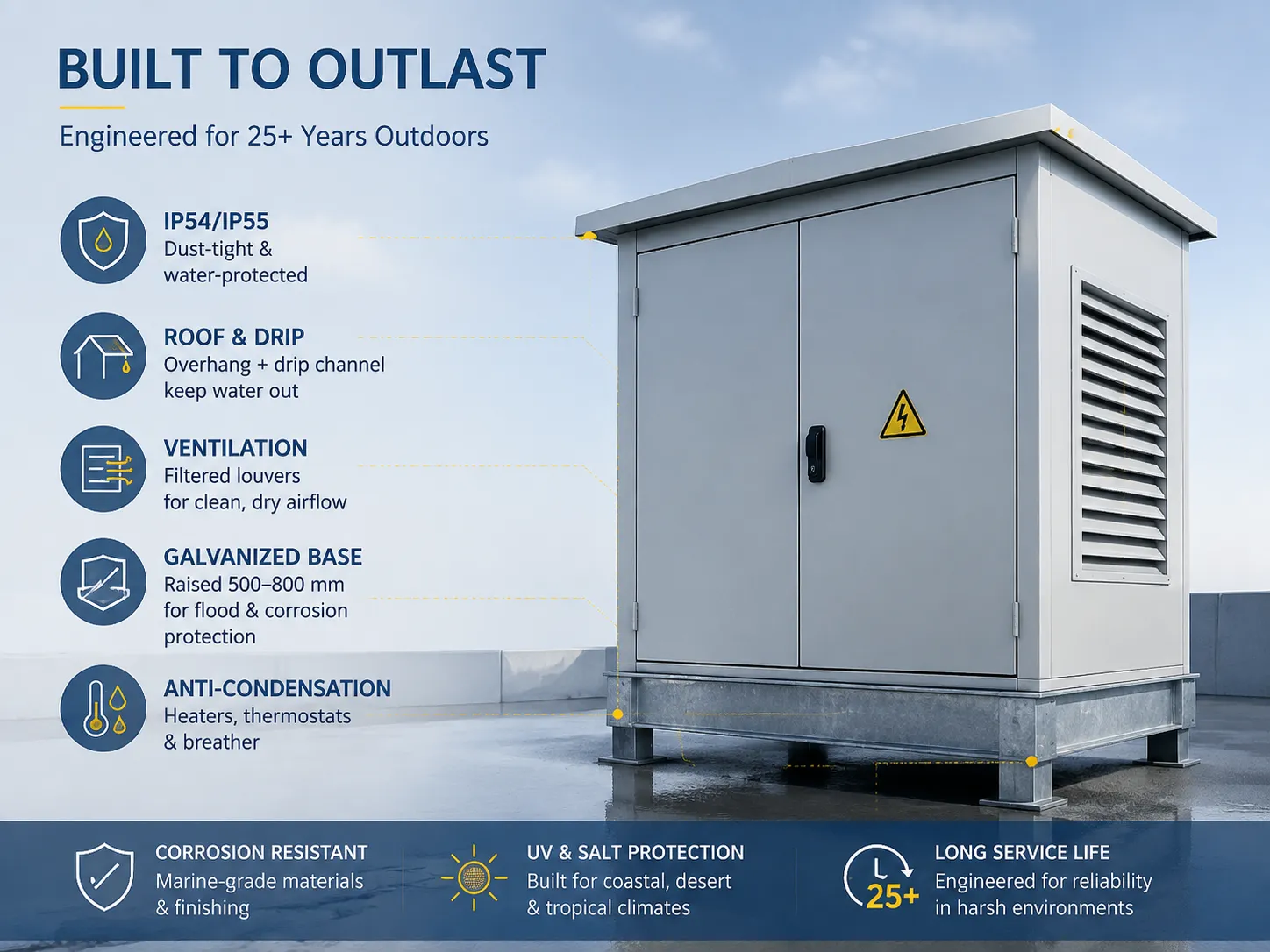
Mehr als fünfundzwanzig Jahre in der natürlichen Umgebung zu überstehen, ist eine technische Herausforderung für sich. Das Design des Gehäuses unterscheidet gute Hersteller von anderen:
| Designelement | Anforderung | Warum es wichtig ist |
|---|---|---|
| IP-Bewertung | IP54 minimum; IP55 bei hohem Spritzwasser-Risiko | Hält Regen und Staub aus spannungsführenden Fächern fern |
| Dach und Tropf | Überstehendes Dach, Tropfkanal, versiegelte Dichtungen | Verhindert das Eindringen von Wasser durch Tür- und Dachnähte |
| Basis | Feuerverzinkt, 500–800 mm erhöht | Übersteht Überschwemmungen, Korrosion und Bodenfeuchtigkeit |
| Belüftung | Abgefilterte, baffled Lamellen; IP-zertifizierter Luftstrom | Kühlt den Transformator, ohne Regen oder Insekten hereinzulassen |
| Materialien | Lackierter Kohlenstoffstahl, Edelstahl oder GRP/Verbundwerkstoff | Edelstahl/Verbundwerkstoff für Küsten- und korrosive Standorte |
| UV- und salzbeständig | Marine-Qualität Lacksysteme, anodisierte Teile | Verhindert Verblassen, Rost und Salzsprühkorrosion |
| Anti-Kondensation | Heizungen, Thermostate, Entlüfter | Verhindert interne Kondensation in feuchten Klimazonen |
Solche Details wie Dachüberstand, Tropfkanäle, gefilterte Lamellen und verzinkte Basen sind die entscheidenden Aspekte, die bestimmen, ob die Einheit bis zu fünfzehn Jahre trocken bleibt oder nach zwei Jahren Nutzung zu lecken beginnt. Käufer, die in Küsten- oder Wüstengebieten oder in den Tropen leben, sollten diese als obligatorische Anforderungen akzeptieren.
Interne Anordnung und Komponenten
Ein klassisches vorgefertigtes Freiluft-Umspannwerk besteht aus drei oder vier Fächern, die durch Trennwände unterteilt sind und durch separate Türen geöffnet werden.
- Das MV-Fach hat den RMU oder Vakuumschalter mit den Kabelkästen, die die vorderen Verriegelungen und Indikatoren mit einfacher Zugänglichkeit bilden.
- Das Transformatorfach hat entweder den ölgetauchten oder trockenen Transformator mit Ölreservoirs und einem Zwangslüftungssystem mit Alarmen.
- Das LV-Fach enthält die LV-Schaltanlage, Messgeräte, ausgehende Zuleitungen und manchmal einen Kondensatorbank.
- Der Hilfsbereich enthält die Heizung, Beleuchtung und Steuerverkabelung, die in den Fächern verteilt ist.
Das Verteilungssystem des Fachs ist so konzipiert, dass die heißesten Geräte (Transformator) in einem belüfteten Fach positioniert sind, während die Schaltanlagenfächer bei ihrer Nennbetriebstemperatur arbeiten und interne Fehler isolieren. Die Verriegelung der Türen macht es unmöglich, dass ein Bediener das Transformatorfach erreicht, während die MV eingeschaltet ist.
Typen und Konfigurationen
| Klassifizierung | Varianten | Typische Anwendung |
|---|---|---|
| Gehäusematerial | Lackierter Stahl, Edelstahl, GRP/Verbundmaterial | Küsten-/korrosive Standorte verwenden Edelstahl oder Verbundmaterial |
| MV-Schaltanlagen | RMU (SF6 oder festisoliert), Lasttrennschalter, Vakuumschalter | RMU für Ring-/Schleifen-Netzwerke; Schalter für große industrielle Zuleitungen |
| Transformator | Öl-untergetaucht oder trocken | Trocken für Innenräume/feuerempfindlich; Öl für allgemeine Außenanwendungen |
| Konfiguration | Einzelgerät, Tandem (geteilte Schaltanlage/Transformator), Mini-Umspannwerk | Entspricht dem Standortfußabdruck und der Lastanordnung |
| Montage | Bodenmontiert, auf einem Gestell montiert, erhöhtes Fundament | Erhöht/Skid für Überschwemmungsgebiete und Umsetzungen |
Im Falle von Solar- und Windkraftanlagen werden im Freien vorgefertigte Umspannwerke in Form von vormontierten Einheiten unter den Wechselrichterstationen angeboten, und für standortbedingte Überschwemmungen bieten die Firmen erhöhte Unterstützungstyp-Anordnungen an, bei denen die gesamte Einheit über dem maximalen Wasserspiegel platziert ist.
Standards und Prüfungen
| Norm | Umfang | Wichtige Käuferprüfung |
|---|---|---|
| IEC 62271-202 | Vorgefertigte Transformator-Umspannwerke | Komplettgerätetests: Temperaturanstieg, Kurzschluss, Dielektrikum |
| IEC 60076 | Leistungstransformatoren | Transformatorbewertung, Verluste, Routine-/Typprüfungen |
| IEC 60529 | IP-Gehäuseschutz | IP54/IP55 Mindestanforderung für Außeneinheiten |
| IEC 62271-200 | MV metallumhüllte Schaltanlagen | RMU-Sicherheits- und Innenbogenanforderungen |
| IEEE C57.12.27 (Nordamerika) | Integrität der Pad-Montagegeräte | Totfrontkonstruktion und Manipulationssicherheit |
Der bedeutendste Test ist der Temperaturanstiegstest gemäß IEC 62271-202 mit dem Gehäuse montiert, da dieser zeigt, dass die Einheit in der Lage ist, ihre Nennleistung unter realen Außenbedingungen zu erreichen. Einige Hersteller testen Transformatoren nur als Einheit; dieser Unterschied wird sich in heißen Klimazonen durch beschleunigte Alterung, Auslösungen usw. bemerkbar machen.
Außen vorgefertigtes vs. vor Ort gebautes Umspannwerk
| Faktor | Außen vorgefertigt | Vor Ort gebautes Umspannwerk |
|---|---|---|
| Gebäude | Werkseitig hergestelltes Gehäuse | Vor Ort gebaut aus Ziegeln/Beton |
| Installationszeit | 2–5 Tage | 4–12 Wochen |
| Testen | Werkseitig typgeprüfte komplette Einheit | Vor Ort montiert, teilweise ungetestet |
| Gesamte Installationskosten | 20–40% niedriger typisch | Höhere Bauarbeiten und Arbeitskosten |
| Umzug | Ja — anheben und bewegen | Nein |
| Flächenbedarf | 10–40 m² | 100+ m² mit Zugang |
| Überschwemmungsbeständigkeit | Erhöhte Sockeloptionen | Standortabhängig |
| Am besten für | Neue MV/LV-Verteilungspunkte | Übertragungsniveau und sehr große Stationen |
Die vor Ort gebauten Stationen bleiben über 40,5 kV und für große Verteilungszentren geeignet; jedoch dominiert unter diesem Wert die vorgefertigte Alternative die neue Kapazität, da sie schneller, kostengünstiger und von höherer Qualität ist als der Bau vor Ort.
Anwendungsbereiche
- Verteilung in städtischen und geschäftlichen Umgebungen: Wohngebiete, Einkaufszentren und Gewerbeimmobilien haben geringe Flächenanforderungen und können schnell an das Stromnetz angeschlossen werden.
- Produktionsbereiche: Eine Einheit für jede Fabrik oder Gruppe; Einheiten können in 400–1600 kVA-Schritten verwendet werden.
- Erneuerbare Quellen: Solarfarmen und Windfarmen verwenden viele modulare Einheiten als Schnittstellen zwischen dem Wechselrichter und dem Stromnetz.
- Elektrifizierung ländlicher Gebiete: Kleine Leistungseinheiten versorgen Dörfer mit Strom zu viel niedrigeren Kosten als traditionelle Quellen.
- Bergbau und abgelegene Gebiete: Hochwertige tragbare Einheiten, wenn die Installationskapazität in der Region gering ist.
- Notfallwiederherstellung und mobile Energie: Leicht transportierbare tragbare Einheiten kompensieren Verluste in der Kapazität von Stromsystemen.
Kosten und Preisspannen
Die folgenden sind Referenzpreise für außen vorgefertigte Umspannwerke (RMU, öltypischer Transformator, Niederspannungstafel, Stahlgehäuse mit IP54):
| Nennleistung | Spannungsklasse | Typischer Preis (USD) | Vorlaufzeit |
|---|---|---|---|
| 100–315 kVA | 10–35 kV | $4.000–$12.000 | 6–12 Wochen |
| 400–630 kVA | 10–35 kV | $7.000–$20.000 | 6–12 Wochen |
| 800–1.250 kVA | 10–35 kV | $11.000–$33.000 | 8–14 Wochen |
| 600–2.500 kVA | 10–35 kV | $24.000–$60.000 | 10–18 Wochen |
Es gibt einen Anstieg von 15–30% für Gehäuse aus Edelstahl oder Verbundstoffen, 10–20% für trockene Transformatoren und $800–$3.000 für SCADA-Upgrades. Die angegebenen Preise sind FOB-Preise, die je nach Spezifikationen, Marke und Beschaffungsort variieren können; daher empfehlen wir dringend, die Verluste über den gesamten Lebenszyklus des Vermögenswerts zu analysieren, bevor Entscheidungen getroffen werden.
Top-Marken & Preisvergleich
| Marke | Land | Stärken des kompakten Umspannwerks | Richtpreis — 1.000 kVA (USD) |
|---|---|---|---|
| Schneider Electric | Optimierungsmaßnahmen in der Praxis | RMU-Integration, globales kompaktes Transformatorstationen-Sortiment | $22.000–$38.000 |
| Siemens | Deutschland | Digitale Optionen, integrierte Schutzsysteme | $23.000–$40.000 |
| ABB / Hitachi Energy | Schweiz | Breites Portfolio, starke Referenzen im Versorgungsbereich | $22.000–$39.000 |
| Eaton | USA | Pad-Montage und Stärke des nordamerikanischen Marktes | $20.000–$36.000 |
| ZPUE / AUSY (Spezialisten) | Europa | Dedizierte Planung für vorgefertigte Umspannwerke | $22.000–$45.000 |
| Jiangsu Subian Electric Power | China | IEC 62271-202 Einheiten, Öl-/Trockenoptionen, OEM | $11.000–$33.000 |
Globale Marktführer bieten Markenverlässlichkeit, entwickelte Produktlinien und globale Servicenetzwerke. Jiangsu Subian Electric Power erfüllt die Nachfrage nach kostengünstigen Lösungen. Das Unternehmen bietet im Freien vorgefertigte Umspannwerke gemäß den IEC 62271-202 Standards mit öl- oder trockentransformatoren und der Schaltanlage in IP54 Gehäuse für 40–55% der europäischen Preise an. Ein solches Angebot macht Jiangsu Subian Electric Power zu einem würdigen Kandidaten für EPC-Unternehmen, Versorgungsunternehmen und Entwickler, die nach kompakten Umspannwerken suchen, um sie an einer großen Anzahl von Projektstandorten zu implementieren.
So wählen und spezifizieren Sie
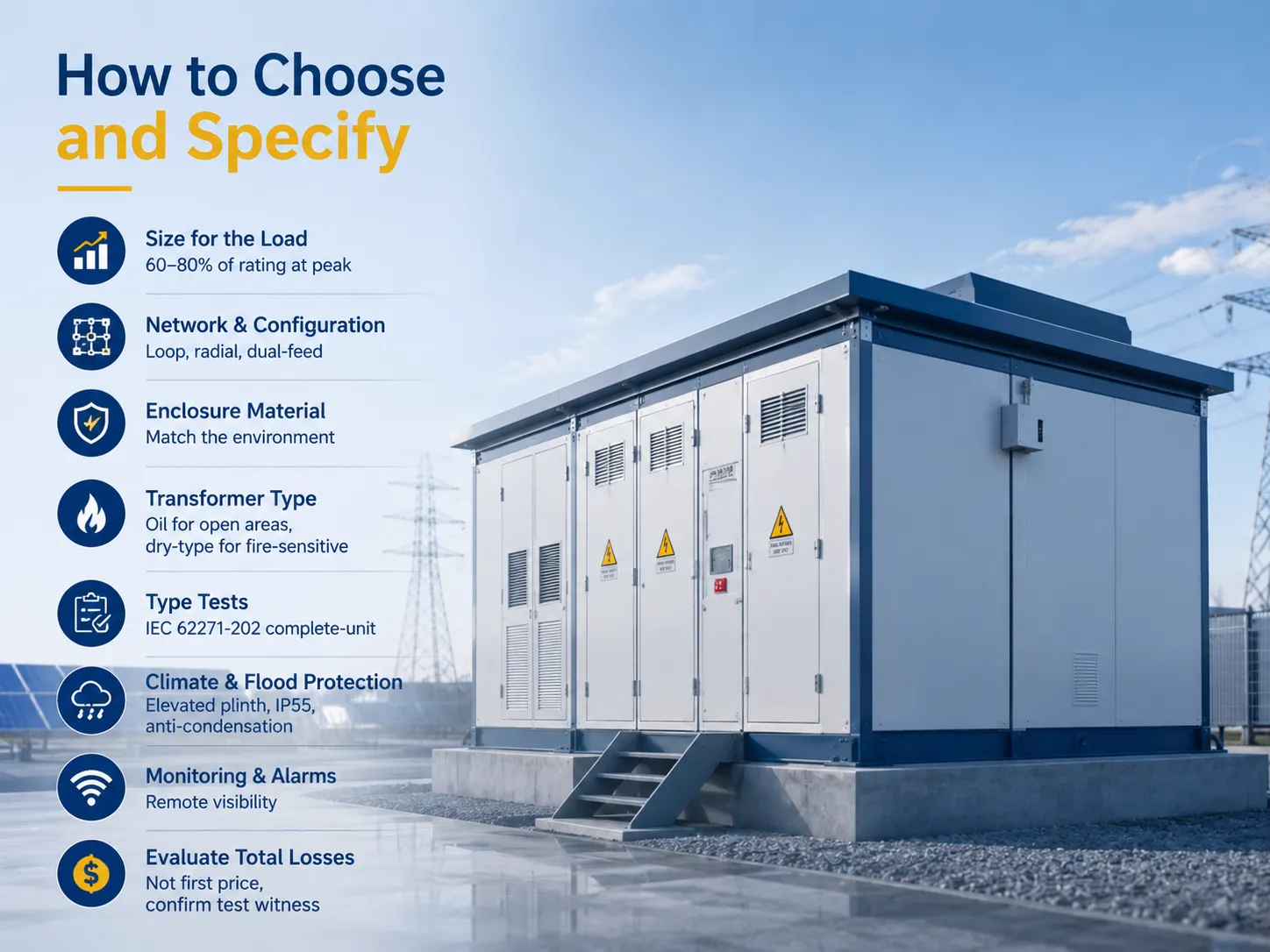
- Beginnen Sie mit der Bestimmung der Last in kVA unter Berücksichtigung des Wachstumsplans; stellen Sie sicher, dass die Spitzenlast bei 60–80% der Transformatorfähigkeit arbeitet.
- Erkundigen Sie sich nach der Netzspannung und dem Layouttyp (Ring, radial, dual-feed), um zu bestimmen, ob RMU oder Schaltanlagen ausgewählt werden sollten.
- Wählen Sie das Gehäuse basierend auf der Art der Umgebung: lackierter Stahl sollte für freundliche Orte verwendet werden, während Edelstahl oder Verbundmaterial für Küsten- oder korrosive Umgebungen in Betracht gezogen werden sollten.
- Wählen Sie Transformatoren basierend auf der Brandsicherheit: Öltransformatoren sind für offene Standorte geeignet, während trockentransformatoren für Orte nützlich sind, die Brandgefahren ausgesetzt sind.
- Stellen Sie sicher, dass Sie IEC 62271-202 Einheitstests wie den Temperaturanstiegstest mit montiertem Gehäuse durchführen.
- Bestätigen Sie die Hochwasserschutz- und Klimabedingungsmechanismen (erhöhter Sockel, IP55-Bewertung, Verwendung von Antikondensationsheizungen).
- Wenden Sie Überwachungs- und Alarmsysteme in Fällen an, in denen der Standort unbeaufsichtigt ist.
- Vergleichen Sie basierend auf den entstandenen Verlusten und erhalten Sie den Zeitplan für die Werkszeugnisprüfung im Werk.
Häufig gestellte Fragen
Wie viel kostet ein im Freien vorgefertigtes Umspannwerk?
Eine Einheit mit einer Nennleistung von 400-1000 kVA kann je nach erforderlicher Schaltanlage und Gehäusematerial sowie Verlustniveau zwischen $7000 und $33000 kosten. Eine Einheit mit einer Nennleistung von 1600-2500 kVA kostet etwa $24000-$60000. Beachten Sie, dass es etwa 15-30% zusätzlich für Edelstahl und etwa 10-20% zusätzlich für trockentransformatoren kosten wird. Darüber hinaus wird die Überwachung die Kosten um etwa $800-$3000 erhöhen. Stellen Sie sicher, dass Sie die Gesamtkosten einschließlich der Verluste vergleichen.
Wie lange dauert die Installation?
Typischerweise kann die Installation des vorbereiteten Fundaments 2 bis 5 Tage in Anspruch nehmen, einschließlich des Hebens der Struktur mit dem Kran, des Befestigens, der Kabelabschlüsse und der Inbetriebnahme. Zum Vergleich kann die Installation eines regulären Umspannwerks 4 bis 12 Wochen dauern. Der Vorteil der Werksprüfung ist die relative Seltenheit von Inbetriebnahmeproblemen, solange die Kabel und das Fundament am Standort mit den Zeichnungen übereinstimmen.
Kann ein im Freien vorgefertigtes Umspannwerk Hochwasser und Küstensalz standhalten?
Ja, vorausgesetzt, es ist richtig spezifiziert. Eine Einheit, die für den Einsatz in Überschwemmungsgebieten konzipiert ist, ist mit erhöhten Sockeln oder einer Skid-Montage in einer Höhe von 500-800 mm über dem Boden ausgestattet. Für Küstengebiete und Gebiete mit korrosiver Umgebung wird ein Gehäuse aus Edelstahl oder Verbundmaterial mit maritimen Beschichtungen verwendet. Außerdem ist es wichtig, eine IP55-Bewertung festzulegen, wenn die Möglichkeit einer hohen Wasserbesprühung besteht.
Was ist der Unterschied zwischen einer im Freien vorgefertigten Umspannstation und einem bodenmontierten Transformator?
Beide Arten von Installationen können als regionale Geschwister klassifiziert werden. IEC 62271-202 definiert eine im Freien vorgefertigte Umspannstation als ein System, das MV-Schaltanlagen, Transformator und LV-Schaltanlagen in einem Gerät kombiniert und in Europa, Asien und Afrika weit verbreitet ist. IEEE C57.12.27 definiert einen bodenmontierten Transformator, der rein ein Transformator ohne Schaltanlagen ist. Die Entscheidung sollte auf lokalen Standards und Schaltanforderungen basieren.
Welche Tests sollte ich vor der Abnahme einer Einheit verlangen?
Ich würde empfehlen, die Routineprüfungen zu bestellen, die in IEC 60076 festgelegt sind, und die Schaltanlagen sowie die Typprüfungen nach IEC 62271-202 zu testen, die eine Reihe von Tests wie Temperaturanstieg und dielektrische Prüfungen umfassen. Wenn es sich um eine Exportbestellung handelt, würde ich verlangen, dass ein Zeuge für die Werkstests und eine Vorversandinspektion arrangiert werden.
Referenzen
- IEC 62271-202 — Hochspannungs-Schaltanlagen: Vorgefertigte Transformator-Umspannstationen — der maßgebliche Standard für das Design, die Sicherheit und die Typprüfung von im Freien vorgefertigten Umspannstationen.
- IEC 60076-Serie — Leistungstransformatoren — der Basisstandard für die Transformatoren, die innerhalb der Einheit installiert sind.
- IEC 62271-200 — MV metallumhüllte Schaltanlagen — Anforderungen für RMU- und Schalterkompartimente.
- IEC 60529 — IP-Code — definiert die IP54/IP55 Gehäusebewertungen für den Außeneinsatz.
- IEEE C57.12.27 — Integrität von Gehäusen für Fundamentmontierte Geräte — nordamerikanische Anforderungen an die tote Front und die Manipulationssicherheit.
- NEMA — Leitfaden für Verteilungsanlagen — Anwendungs- und Bewertungsleitfaden für kompakte Umstationenausrüstung.
- Jiangsu Subian Electric Power — offizielle Seite — Hersteller und Exporteur von IEC 62271-202 im Freien vorgefertigten Umspannstationen.
Fazit
Im Freien vorgefertigte Umspannstationen werden in der heutigen Energieinfrastruktur unerlässlich, da sie alles bieten, was die moderne Industrie in Bezug auf hohe Geschwindigkeit, Kosteneinsparungen, Fabrikqualität und Langlebigkeit erwartet. Eine voll ausgestattete Umspannstation (Transformator, MV- und LV-Schaltanlagen, Schutz- und Messeinrichtungen) wird vorab getestet geliefert und kann in nur wenigen Tagen anstelle von Monaten installiert werden.
Wichtige Tipps:
- Stellen Sie sicher, dass die Dimensionierung der Station für die maximale Last unter Berücksichtigung der Transformatorleistung von etwa 60-80% erfolgt.
- Wählen Sie RMU oder Unterbrecher gemäß dem Netzdesign aus.
- Wählen Sie das Material und die IP-Klassifizierung des Transformators entsprechend der Standortumgebung (Verwendung von Edelstahl/Verbundmaterial und IP55 für Küsten- und feuchte Regionen).
- Fordern Sie die vollständigen Einheitstests gemäß IEC 62271-202 an, insbesondere die mit dem Gehäuse.
- Vergleichen Sie die Verluste in Maschinen und verlangen Sie bestätigte Tests im Werk für den Export.