


Als die Prüferin zum Hersteller von 35kV-Transformatoren kam, war sie vorbereitet. Mit einem Klemmbrett und dem Wissen um die Versprechen in der Broschüre des Lieferanten fragte sie sich, wie der Lieferant, der IEC 60076 Typprüfberichte und GB 20052 Verlustgrade verspricht, auch behaupten konnte, umweltfreundlich zu sein, indem er angibt, seinen Stromverbrauch pro produziertem MVA über drei Jahre um 22% reduziert zu haben. Die Prüferin begann ihre Beobachtung in der Wickelwerkstatt, wo sie sah, wie eine automatische Maschine Kupferdraht bei konstantem Zug unter Papierisolierung wickelte, während das elektronische Messgerät den Feuchtigkeitsgehalt des Kraftpapiers maß, bevor es den Leiter berührte. Für die zweite Beobachtung ging sie in den Trockenschrank, wo das Protokoll einen Vakuumwert unter 100 Pa und eine Temperatur von 120 °C, die 48 Stunden lang gehalten wurde, anzeigte. Nachdem sie ihre Beobachtungen abgeschlossen hatte, kam die Prüferin zu dem Schluss, dass die Fabrik sowohl effektiv als auch ökologisch arbeitete und damit bewies, dass ihre Versprechen real waren.
Dieses Papier gibt eine detaillierte Beschreibung des Herstellungsprozesses, der beim Hersteller von 35kV-Transformatoren auf der Grundlage des umweltfreundlichen Produktionsansatzes verwendet wird – die Prozesse, Standards, Energie- und Abfallzahlen, die Sie benötigen, um eine Fabrik dieses Typs zu prüfen.
Kurze Antwort: Eine Transformatorenfabrik mit 35kV-Transformatorenausgängen beschäftigt die Arbeitskräfte in der Verarbeitung von kornorientiertem Siliziumstahl, Kupfer oder Aluminium, Kraftpapier und Isolieröl bei der Herstellung von Leistungstransformatoren, deren Nennwerte zwischen 3,15 und 31,5 MVA gemäß IEC 60076 Standards im Produktionsprozess liegen. Im Allgemeinen bedeutet umweltfreundliche Produktion, weniger Energie pro produziertem MVA zu verbrauchen und umfasst das Recycling von Stahl und Kupfer, die Rückgewinnung von Öl, die Nutzung erneuerbarer Elektrizität und die Anerkennung als umweltfreundliche Fabrik.
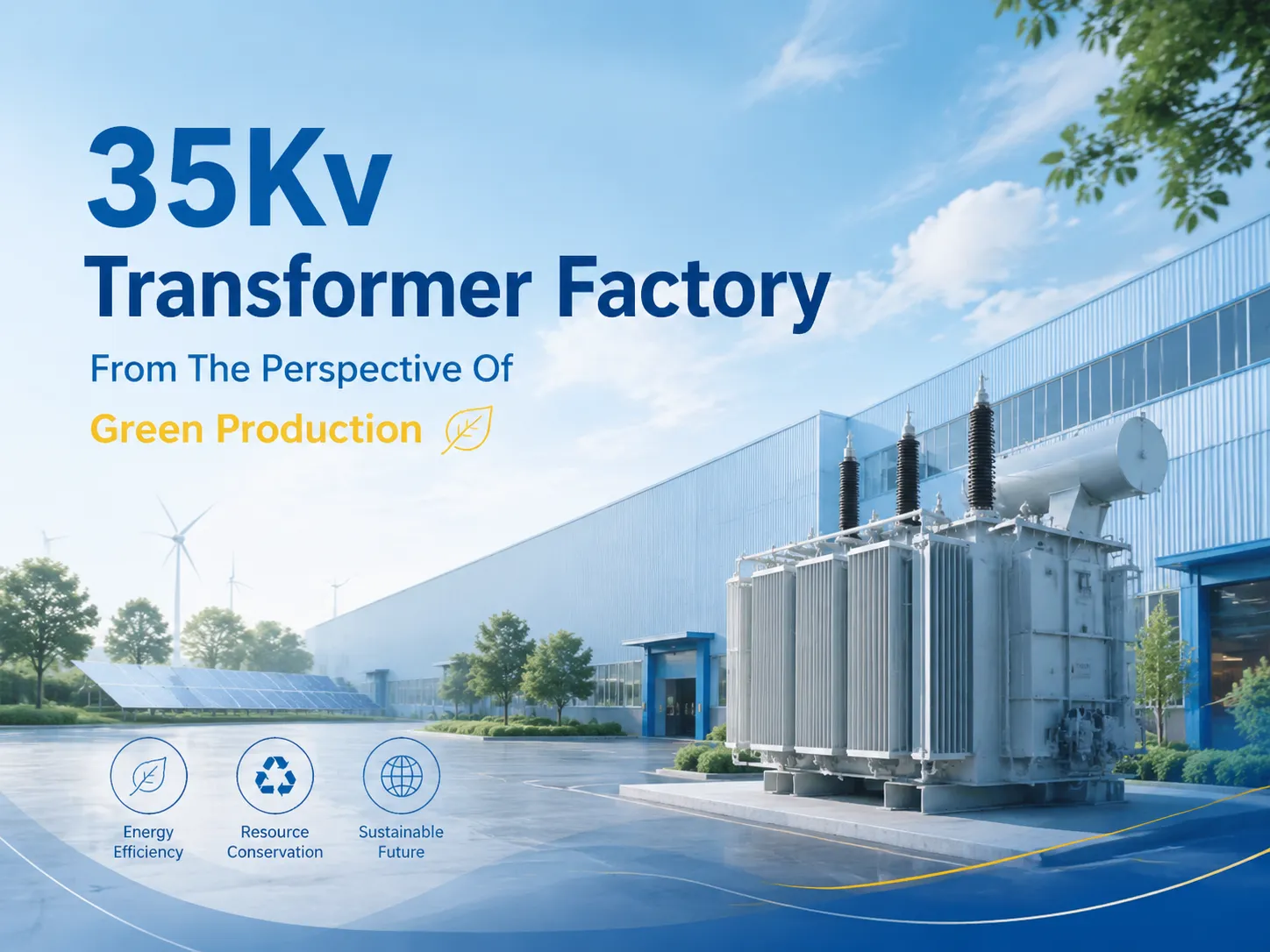
Die Anatomie einer 35kV-Transformatorenfabrik
Eine Fabrik, die 35kV-Transformatoren produziert, arbeitet nach einem geradlinigen Herstellungsverfahren, bei dem Rohstahl und Kupfer an einem Ende eintreten, während getestete Transformatoren am anderen Ende herausgenommen werden. Die Hauptprozesse, die an der Herstellung eines Transformators beteiligt sind, sind Kernschneiden und -stapeln, Wickeln, Kern- und Spulenmontage, Trocknen unter Vakuum, Tankherstellung und -montage, Lackierung, Befüllung mit Öl und Testen. Zwei Dinge, die für einen qualitativ hochwertigen Prozess verantwortlich sind, sind Prozesskontrolle und Rückverfolgbarkeit.
In einer wirklich guten Fabrik hat jede Spule ihre eigene Produktionsgeschichte, die Informationen über Stahlgüte und -charge, Leitercharge, Feuchtigkeitsgehalt, Wickelspannung, Trocknungsprogramm und Testergebnisse enthält. Dies verwandelt eine Garantiebeschwerde in eine Ursachenuntersuchung anstelle eines Streits. Somit basiert der Unterschied zwischen einer 35kV-Transformatorenfabrik und einer Montagewerkstatt auf Papiernachweisen, und dies ist sofort in den ersten zehn Minuten eines Werksbesuchs zu erkennen.
Kernproduktionsprozesse und Kontrollpunkte
Die Produktionssequenz für einen 35kV-Leistungstransformator, mit den relevanten Qualitätskontrollpunkten:
| Schritt | Prozess | Kritischer Kontrollpunkt |
|---|---|---|
| Kernschneiden und Stapeln | GOES geschnitten, zugeschnitten und mit schrägen (45°) Verbindungen gestapelt | Verbindungsanpassung, Grat-Höhe, Klemmdruck |
| Wickeln | LV- und HV-Spulen unter konstantem Zug mit Papierisolierung gewickelt | Wickelspannung, Papierfeuchtigkeit, Schichtanzahl |
| Kern-Spule-Montage | Wicklungen auf Kernbeinen platziert; Anschlüsse gelötet und isoliert | Abstände, Lötqualität, Anschlussisolierung |
| Vakuumtrocknung | Aktives Teil unter Vakuum erhitzt und getrocknet | Restdruck <100 Pa, Temperatur 110–130°C, Dauer |
| Tank und Armaturen | Aktives Teil in den Tank abgesenkt; Durchführungen, Lastumschalter, Kühler montiert | Öldichte Schweißnähte, Dichtungsplatzierung, Drehmoment |
| Ölfüllung | Entgasetes, gefiltertes Öl eingeführt; Sättigungszeit | Öl-Durchschlagspannung, Gasgehalt, Sättigungszeit |
| Routinetests | Verhältnis, Verluste, Impedanz, dielektrische Tests | Ergebnisse innerhalb der IEC 60076 Toleranzen |
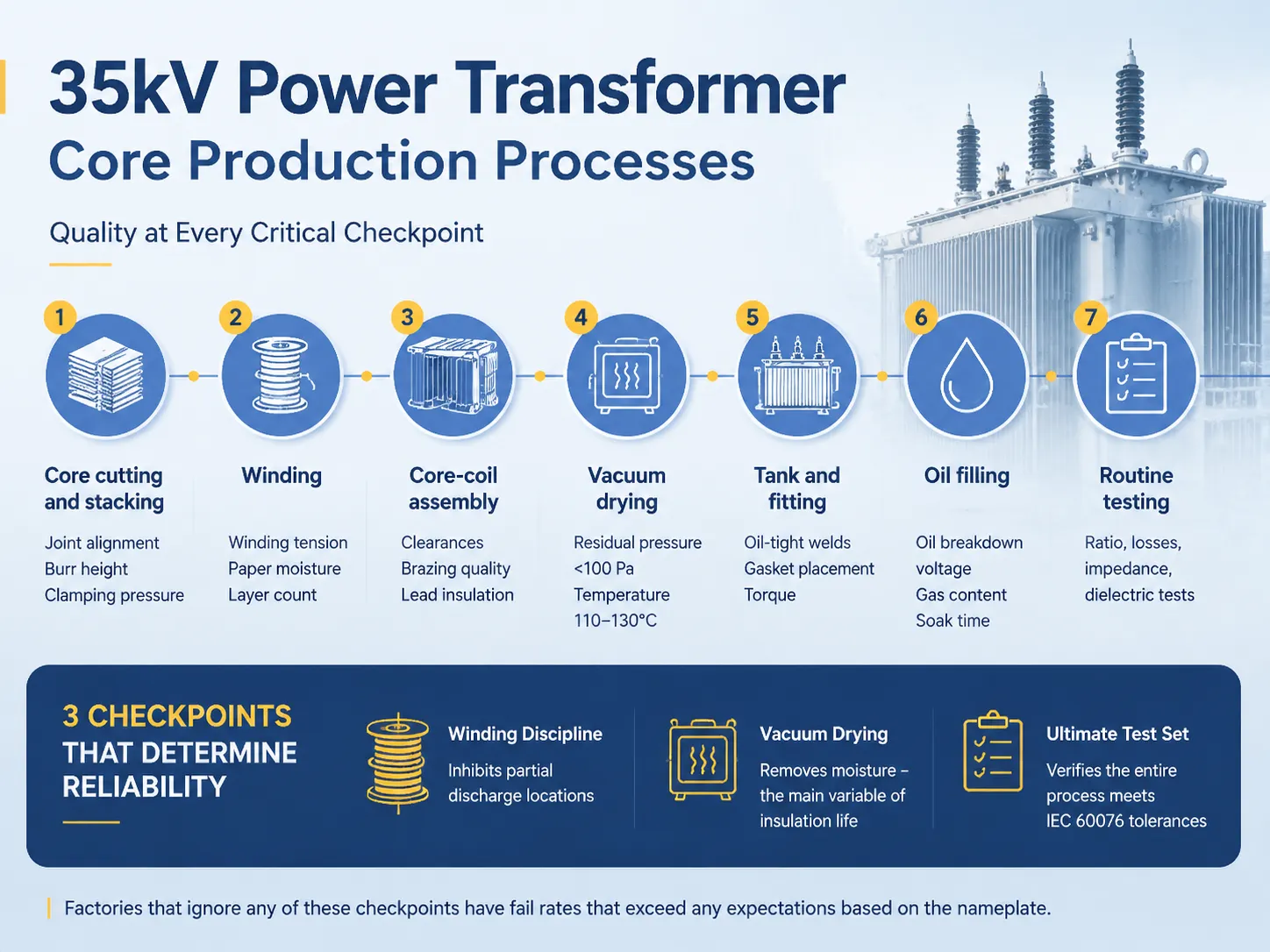
Drei dieser Kontrollpunkte bestimmen die Mehrheit der Geschichte der Zuverlässigkeit. Wickeldisziplin hemmt Teilentladungspunkte, Vakuumtrocknung kümmert sich um Feuchtigkeit, die die Hauptvariable der Isolationslebensdauer ist, und der ultimative Testsatz überprüft den gesamten Prozess. Fabriken, die einen dieser Kontrollpunkte ignorieren, haben Ausfallraten, die alle Erwartungen basierend auf dem Typenschild übersteigen.
Was grüne Produktion in einem Transformatorenwerk bedeutet
“Grüne” Produktion in einem 35kV Transformatorenherstellungswerk entspricht der energieeffizienten Transformatorenproduktion: weniger Ressourcenverbrauch. Konkrete Maßnahmen umfassen:
- Energieeffizienz: Austausch alter Trockenschränke und Prüfbelastungen durch energieeffiziente, technologisch perfektionierte Apparate, Messung des Stromverbrauchs durch einzelne Produktionslinien und Umstellung auf erneuerbare Energien, wo verfügbar.
- Materialrückgewinnung: Recycling von geschnittenen Stahlplatten, Kupfer und Öl aus Tests und Tankreinigungen.
- Abfallmanagement: Trennung gefährlicher Materialien (Öle) von Abfallmaterialien, die recycelt werden können; hygienische Entsorgung von Isolieröl.
- Wasser- und Emissionskontrolle: Behandlung von Mal- und Waschabwasser und Kontrolle über Emissionen von Staubpartikeln beim Kernschneiden.
- Niedrigkohlenstoff-Produktoptionen: Bereitstellung von amorphen Stahlkernen und natürlichen Esterölen, die die Übertragung grüner Technologien mit den Produkten ermöglichen.
Aus betrieblicher Sicht wird die Kompatibilität von grünen Aktivitäten und Qualitätskontrolle festgestellt: Die Messung des Energieverbrauchs zeigt Leerlaufzeiten von Maschinen, Recycling inspiriert Sauberkeit auf dem Fertigungsboden, und die effiziente Bedienung des Ofens verbessert sowohl die Energieeffizienz als auch die Qualität des Endprodukts.
Energie und Abfall: Die gemessenen Zahlen
Repräsentative Umweltzahlen für ein gut geführtes 35kV Transformatorenwerk:
| Maß | Typischer Bereich | Anmerkungen |
|---|---|---|
| Energieintensität der Fabrik | 30–60 kWh pro MVA der versandten Kapazität | Variiert je nach Produktmix und Auslastung |
| Stahlausbeute beim Kernschneiden | 85–92% | Abfälle und Randstücke werden recycelt |
| Kupfer-Rückgewinnung | >95% von Wickelschrott | Recycelt, nicht deponiert |
| Anteil erneuerbarer Elektrizität | 0–60% abhängig von Standort und Beschaffung | Zertifizierung der grünen Fabrik belohnt höheren Anteil |
| Ölgewinnung aus Tests | >90% | Gefiltert und wiederverwendet, wo die Spezifikation es erlaubt |
Während dies ist, was Sie theoretisch erwarten sollten, unterscheidet sich die tatsächliche Situation je nach Faktoren wie dem Alter einer Fabrik, ob sie elektrische Waren produziert oder nicht, und anderen lokalen Parametern. Dennoch geben solche Zahlen Ihnen einige Werkzeuge an die Hand, um einen Anbieter zu bewerten – Sie können sie immer nach ihren Energieverbrauchsstatistiken und dem Recyclingverhältnis fragen, um zu sehen, ob man ihren Aussagen vertrauen kann.
Zertifizierung und Standards für grüne Fabriken
Grüne Produktion wird zunehmend zertifiziert, und die Zertifizierungen haben Gewicht bei der Beschaffung. Die Hauptrahmen:
| Rahmen | Region | Was es bewertet |
|---|---|---|
| MIIT Grüne Fabrik (绿色工厂) | China | Energieintensität, Anteil erneuerbarer Energien, Wasser, Abfall, Recycling, Emissionen |
| ISO 14001 | International | Umweltmanagementsystem |
| ISO 50001 | International | Energiemanagementsystem |
| ISO 9001 + IEC 60076 Prüfung | International | Qualitätsmanagement und Produktprüfnachweise |
Der praktische Rahmen für Exportkäufer umfasst ISO 9001, das sich auf das Qualitätsmanagement bezieht, ISO 14001 für das Umweltmanagement, IEC 60076 für das Produkt selbst und – wo es von Ausschreibungen gefordert wird – den nationalen Status als grüne Fabrik. Ein Hersteller, der alle vier hat, zeigt, dass die grüne Produktion ein ganzheitliches System ist, das seine Abläufe unterstützt, anstatt nur ein Marketinggag zu sein.
Prüfung: Wo Zuverlässigkeit bewiesen wird
Prüfstände sind das Herzstück von Transformatorenherstellern auf 35kV-Spannungsebenen, da die Ausrüstung, die sie haben, oft definiert, welche Art von Hersteller sie sind. Ein renommierter Hersteller von 35kV-Transformatoren verfügt über folgende Prüfstandsausrüstung:
- Ein Prüfstand für Netzfrequenztests, der alle notwendigen angelegten und induzierten Spannungstests bei 70 kV und darüber für 35kV-Geräte durchführen kann.
- Ein Blitzimpuls-Generator, der Vollwellen- und Teilwellentests bei 170 kVp durchführen kann.
- Gerätemessgeräte zur Messung von Leerlauf- und Lastverlusten gemäß den Toleranzen von IEC 60076-1.
- Teilentladungsmessgeräte, wo erforderlich.
Es muss jedoch angemerkt werden, dass die Disziplin bei den Tests ebenso wichtig ist wie die Ausrüstung. Entwurfsprüfungen liefern den Nachweis für das Design selbst, während die Routineprüfungen den Nachweis für jedes hergestellte Gerät liefern. Eine Fabrik, die das vollständige Routineprüfungsprogramm für jedes hergestellte 35kV-Gerät durchführt, sollte als fortschrittliche Fertigungsstätte angesehen werden, im Gegensatz zu einer, die nur Verhältnisprüfungen vor dem Versand durchführt.
Typische Produkte und Spezifikationen
Was eine 35kV-Transformatorenfabrik tatsächlich versendet:
| Produkt | Typische Nennleistung | Konfiguration |
|---|---|---|
| 35/0.4 kV Verteilungstyp | 315–2.500 kVA | Dyn11, Abgriffe außerhalb des Stromkreises, Pfosten- oder Bodenmontage |
| 35/10.5 kV Leistungstyp | 15–31.5 MVA | YNd11, OLTC-Option, ONAN/ONAF |
| 35/6.3 kV Leistungstyp | 2–20 MVA | Für industrielle Verteilungsnetze |
| Erhöhungstyp (Generator) | 5–50 MVA | Für erneuerbare Energien und kleine thermische Anlagen |
| Dreiwicklungstyp | 3–31.5 MVA | 35/10/6 kV, Mischspannungs-Umspannwerke |
Der Bereich von 6,3–20 MVA ist der kritische Bereich für die Fabrik, da er groß genug ist, um ernsthafte Ingenieurleistungen zu erfordern, und gleichzeitig klein genug, um mit einem Standardanhänger auf dem Land transportiert zu werden. Die 10 MVA Einheit wiegt etwa 20–25 Tonnen und passt auf Standard-Tiefbettanhänger, und für die 31,5 MVA Einheit, die etwa 50–60 Tonnen wiegt, sind Routenvermessung und Bereitstellung von Kränen für den Transport erforderlich.
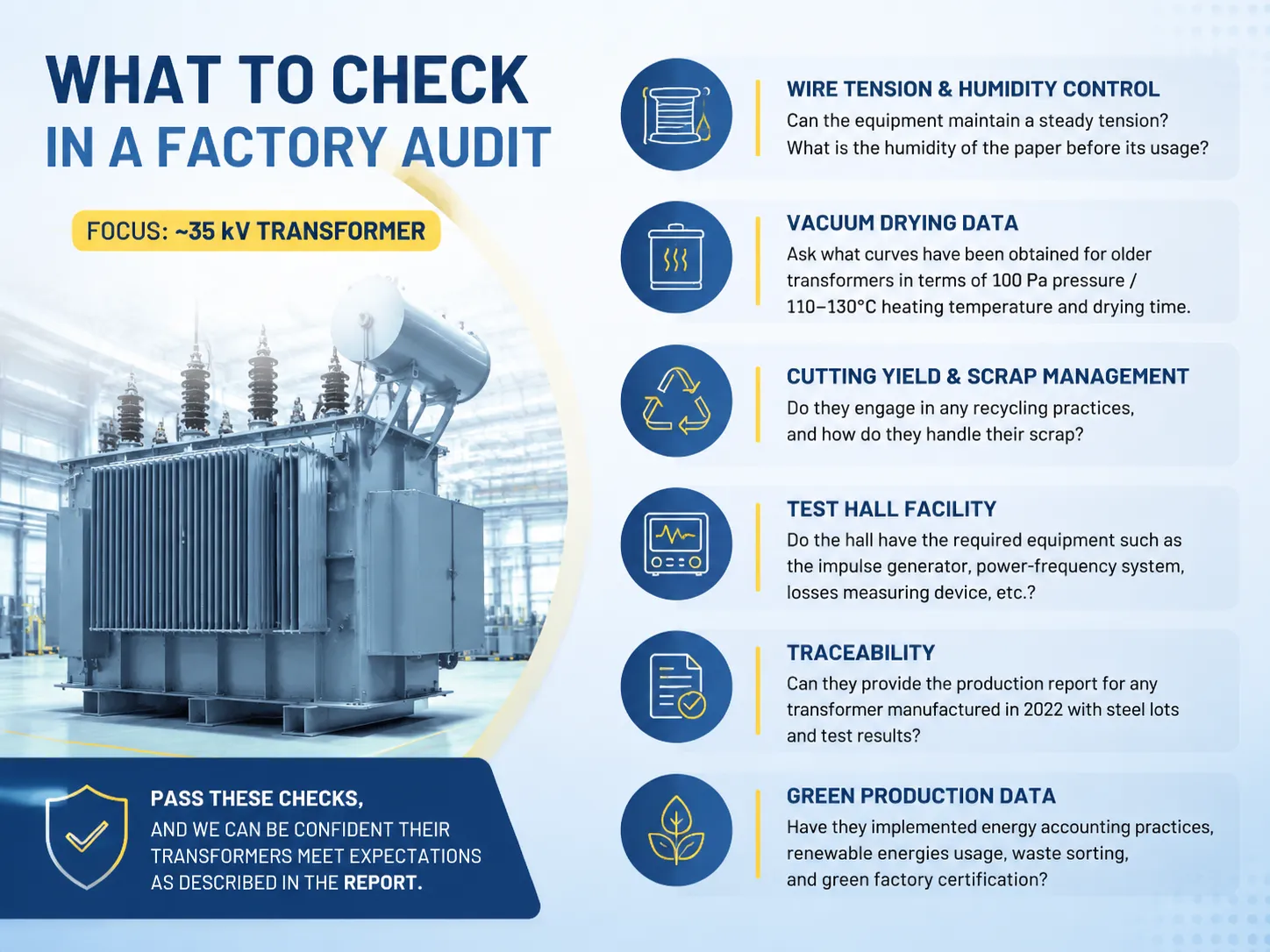
Was bei einem Fabrik-Audit zu überprüfen ist
Bei der Inspektion einer Transformatorenfabrik für einen ~35 kV Transformator (persönlich oder über einen Prüfer) sollten die folgenden Punkte beachtet werden:
- Drahtspannung und Feuchtigkeitskontrolle: Kann die Ausrüstung eine konstante Spannung aufrechterhalten? Wie hoch ist die Feuchtigkeit des Papiers vor der Verwendung?
- Vakuumtrocknungsdaten: Fragen Sie, welche Kurven für ältere Transformatoren in Bezug auf 100 Pa Druck / 110–130°C Heiztemperatur und Trocknungszeit erhalten wurden.
- Schnittausbeute und Abfallmanagement: Betreiben sie Recyclingpraktiken, und wie gehen sie mit ihrem Abfall um?
- Prüfhalle: Verfügt die Halle über die erforderliche Ausrüstung wie den Impuls-Generator, das Leistungsfrequenzsystem, das Verlustmessgerät usw.?
- Rückverfolgbarkeit: Können sie den Produktionsbericht für jeden im Jahr 2022 hergestellten Transformator mit Stahlchargen und Testergebnissen bereitstellen?
- Daten zur grünen Produktion: Haben sie Praktiken zur Energieabrechnung, Nutzung erneuerbarer Energien, Abfalltrennung und grüne Fabrikzertifizierung implementiert?
Wenn die Fabrik in der Lage ist, diese Prüfungen zu bestehen, können wir sicher sein, dass ihre Transformatoren die Erwartungen erfüllen, wie im Bericht beschrieben.
Fabriken und Preisspannen
Indikative FOB-Preise für einen 10 MVA 35/10,5 kV Transformator von Fabriken nach Marke:
| Marke | Herkunft | 10 MVA Preis | Typische Lieferzeit |
|---|---|---|---|
| Hitachi Energie | Japan/Weltweit | $55.000–$82.000 | 16–36 Wochen |
| ABB | Schweiz/Weltweit | $52.000–$78.000 | 16–32 Wochen |
| Siemens Energie | Deutschland/Weltweit | $50.000–$75.000 | 16–32 Wochen |
| Schneider Electric | Frankreich/Weltweit | $48.000–$72.000 | 14–30 Wochen |
| Toshiba / Hyundai | Japan/Korea | $46.000–$68.000 | 12–28 Wochen |
| Jiangsu Subian Electric Power | China | $28.000–$48.000 | 8–20 Wochen |
Die Preise werden durch Verlustklasse, Lastabzweiger, Zubehör, Kupferpreise und Liefermethode beeinflusst, sodass sie als Planungsbereiche und nicht als feste Preise betrachtet werden sollten.
Premium-Unternehmen kalkulieren ihre Transformatorenpreise basierend auf jahrzehntelangen Typprüfungsresultaten, der weltweiten Servicepräsenz und dem Risikominderungsprozess, den sie entwickelt haben. Chinesische Hersteller von 35 kV sind bekannt dafür, dass sie mit denselben IEC 60076-Standards konkurrieren, jedoch zu Preisen, die 40–50% niedriger sind, wobei die Zertifizierung von grünen Fabriken unter den Herstellern selbstverständlich geworden ist. Jiangsu Subian Electric Power hat eine 35 kV Transformatorenfabrik, die als grün zertifiziert ist und Verteilungs- und Leistungstransformatoren von 10 kVA bis 63 MVA mit Kernschneiden, Wickeln, Vakuumtrocknung und vollständigem Routineprüfstand an einem Ort produziert. Jede Einheit wird mit einem Routineprüfbericht versendet; amorphe Kerne und Esteröloptionen sind verfügbar, und die Kundenbasis umfasst Versorgungsunternehmen und EPC-Auftragnehmer in Asien, Afrika, dem Nahen Osten und Südamerika. Die Produkte und Zertifikate der Fabrik sind dokumentiert unter subian-electric.com.
Häufig gestellte Fragen
Was stellt eine 35 kV Transformatorenfabrik tatsächlich her?
Verteilungs- und Leistungstransformatoren in der 35 kV-Kategorie bestehen aus 35/0,4 kV Verteilungseinheiten mit einer Leistung von 315 kVA und 35/10,5 kV Leistungseinheiten mit einer Leistung von 3,15 bis 31,5 MVA, die unterschiedliche Designs wie Hochspannung oder Dreiwicklungsdesigns aufweisen und gemäß IEC 60076 getestet werden. Dies liegt daran, dass der Erfolg der Transformatoren im Herstellungsprozess — Wickeln, Trocknen und Testen — liegt.
Wie viel kostet ein 35 kV Transformator aus einer chinesischen Fabrik?
Der Preis für 3,15 MVA 35/10,5 kV Ausrüstung liegt zwischen $18.000 und $30.000, während eine Einheit von 10 MVA zwischen $28.000 und $48.000 kostet. Die Kosten für die 31,5 MVA Einheit sind höher — zwischen $65.000 und $110.000. Die Preise können bei bekannten globalen Unternehmen bis zu 50 bis 80% betragen. Die Preise variieren auch je nach Kupferpreisen, Verlustklasse, zusätzlichen Funktionen und dem verwendeten Lastabzweiger im Herstellungsprozess.
Wie weiß ich, dass eine Fabrik tatsächlich ihre Transformatoren testet?
Fordern Sie die Aufzeichnung der Routineprüfungen an, die bei einer aktuellen Lieferung zusammen mit den Typprüfberichten zu dem Design durchgeführt wurden – diese beinhalten Temperaturanstieg, Blitzimpuls und Kurzschlussfestigkeit. Überprüfen Sie, ob entweder Sie persönlich oder ein dritter Glanz die Routineprüfungen beobachten kann. Wenn die Fabrik über die notwendige Prüfausrüstung (Impulsgeber, Netzfrequenzgerät und Kapazität für Verlustmessungen) verfügt, wird sie Ihnen gerne eine Vorführung anbieten.
Was macht eine Transformatorenfabrik “grün”?
Die gemessene Energieintensität pro Produktionseinheit, der Prozentsatz des Verbrauchs erneuerbarer Energien und das Recycling von Schrottstahl und Kupfer sowie der Öl-Rückgewinnungsprozess, die Abfalltrennung und die Zertifizierung gemäß ISO 14001/50001 oder einem staatlichen grünen Fabrikprogramm. Fragen Sie nach den Werten zur Energieintensität und Schrott-Rückgewinnung.
Wie lange dauert es, bis eine 35kV-Fabrik einen Transformator baut?
Die Zeit zwischen Bestellung und Versand für eine Maschine von 3,15 bis 10 MVA dauert normalerweise acht bis sechzehn Wochen, während derselbe Prozess für eine 31,5 MVA-Maschine vierzehn bis vierundzwanzig Wochen in Anspruch nimmt und noch länger dauert, wenn spezielle Anschlüsse oder Typprüfungen erforderlich sind. Im Falle eines Mangels an Kupfer- oder Stahlversorgung werden sich die Lieferzeiten verlängern. Daher sollte die Lieferung von Teilen im Voraus geplant werden, bevor die Aufrüstung des Stromnetzes beginnt.
Referenzen
- IEC 60076-1: Leistungstransformatoren – Allgemeines — Test- und Bewertungsgrundlage für jede Einheit, die eine 35kV-Fabrik versendet.
- IEC 60076-3: Isolationsniveaus und dielektrische Tests — Definiert das Impulsniveau von 170 kVp für die 35 kV-Klasse.
- IEC 60076-5: Fähigkeit, Kurzschluss zu widerstehen — Kurzschluss-Designverifizierung für 35kV Leistungstransformatoren.
- MIIT-Bewertung grüner Fabriken — Chinas Zertifizierungsrahmen für grüne Fabriken.
- ISO 14001: Umweltmanagement — Internationale Norm für Umweltmanagementsysteme.
- ISO 50001: Energiemanagement — Energiemanagementsystem, das für die Energieintensität der Fabrik relevant ist.
- Offizielle Website von Jiangsu Subian Electric Power — Zertifizierung grüner Fabriken und 35kV-Transformatorbereich.
Fazit
Im Falle einer 35kV-Transformatorenfabrik wird umweltfreundliche Produktion und die Qualität der Ingenieurarbeit als derselbe Ansatz betrachtet, der in zwei verschiedenen Formen bewertet wird — kWh pro MVA, recycelter Abfall, Trocknungskurven und bereitgestellte Standardtests. Eine Fabrik, die ihre Energie, ihren Abfall und ihren Betrieb verwaltet, ist dieselbe Fabrik, deren Transformatoren Impulsprüfungen standhalten und innerhalb der IEC 60076-Grenzen bleiben.
Wichtige Punkte, die zu beachten sind:
- Prozesskontrolle definiert die Zuverlässigkeit von Transformatoren; die Buchführung sollte überprüft werden, nicht die Broschüren.
- Umweltfreundliche Produktion umfasst eine Energieintensität von 30-60 kWh/MVA, mehr als 85% recyceltem Stahl und ein zertifiziertes Umweltmanagementsystem.
- $28000-48000 ist ausreichend für eine 10 MVA-Einheit von chinesischen Herstellern, während Premium-Marken zu Preisen von 50-80% höher eingestuft werden.
- Überprüfen Sie den Teststandort, die Trocknungsprotokolle und den Nachweis der Umweltfreundlichkeit, bevor Sie eine Bestellung aufgeben.
Wenn Sie 35kV-Transformatoren beschaffen und eine Fabrik möchten, die Sie überprüfen können, Jiangsu Subian Electric Power betreibt eine zertifizierte grüne Fabrik mit vollständigen Tests vor Ort und dokumentierten Routineberichten. Überprüfen Sie die Produkte und Zertifizierungen der Fabrik unter subian-electric.com.