


Le chef de projet supervisant une initiative d'électrification rurale dispose de 40 minutes pour examiner et analyser trois offres pour la fourniture de 300 transformateurs de distribution, avec une fluctuation de prix allant jusqu'à 45%. Les devis les moins chers s'élèvent à $8,200 pour la livraison d'une unité de 1,000 kVA, tandis qu'un fournisseur chinois populaire vend ses produits à $9,600 et une marque européenne facture $14,000 pour un exemplaire. Tous les appels d'offres affirment se conformer aux normes IEC. Le prix est le seul facteur indiqué dans le tableau Excel, mais le responsable réalise qu'il y a beaucoup d'autres éléments à considérer pour une décision éclairée, y compris les pertes opérationnelles qui coûtent de l'argent chaque heure sur une période de 25 ans ; les certificats de test qui déterminent si une compagnie d'assurance compense les pertes ; et le contraste entre une usine qui répond aux lettres et une usine qui a disparu après l'expédition.
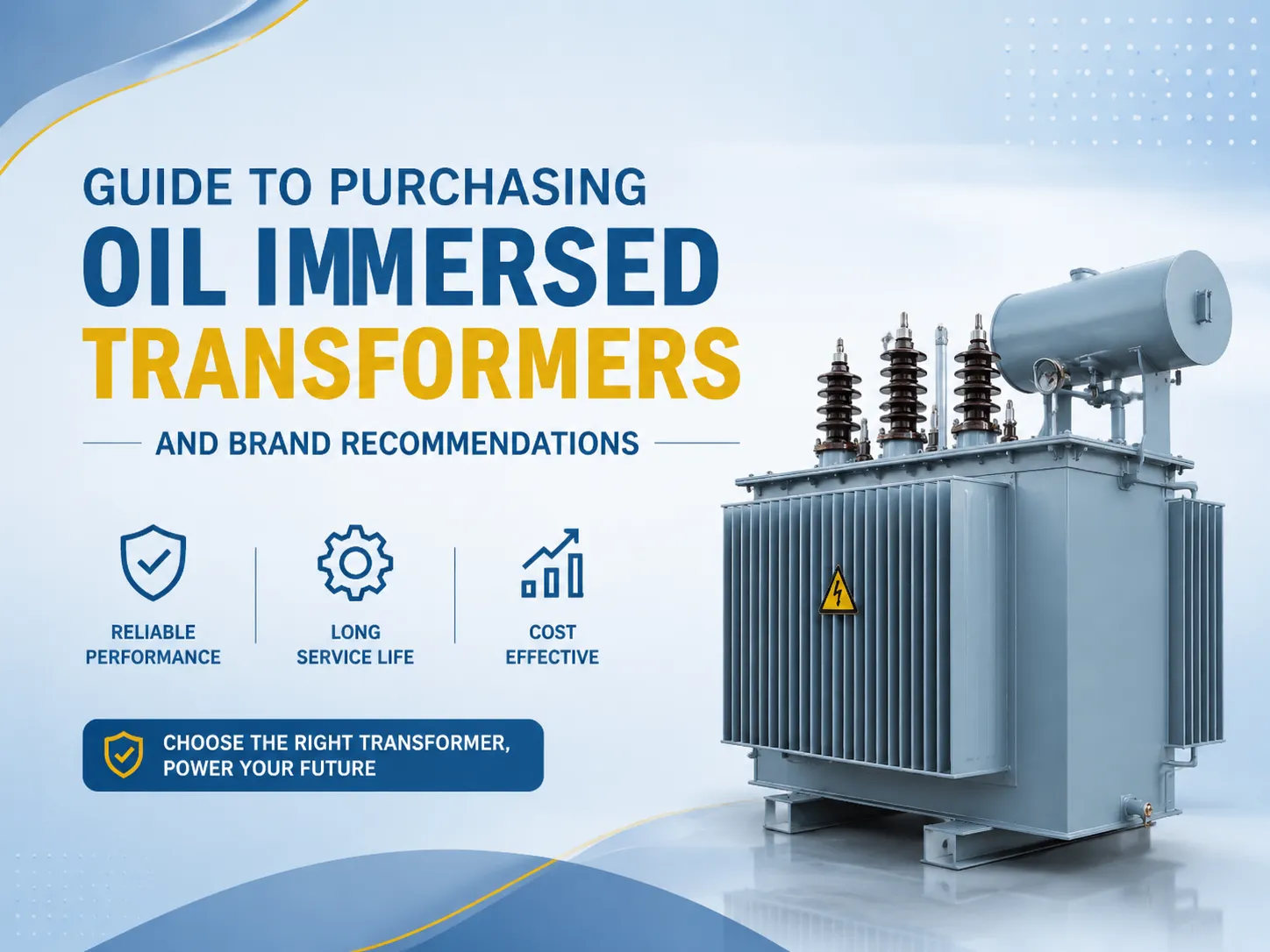
Ce guide d'achat vise à enseigner le processus complet d'achat de transformateurs immergés dans l'huile, y compris la spécification, la qualification des fournisseurs, l'évaluation technique et commerciale, et les conditions contractuelles, avec des marques suggérées organisées selon leur position sur le marché et leurs prix, permettant ainsi de faire un choix raisonnable.
Résumé. Pour un approvisionnement réussi de transformateurs immergés dans l'huile : (1) Il doit y avoir des spécifications techniques incluant les puissances, l'impédance, les classes de perte, etc. avant d'initier le processus d'approvisionnement. (2) Les fournisseurs doivent être qualifiés sur la base des résultats des tests, de l'expérience à l'exportation et de la certification ISO obtenue avant l'inspection par un tiers. (3) Le coût total de possession doit être calculé pour l'équipement à acheter en fonction des pertes futures encourues. (4) Les conditions contractuelles doivent être vérifiées, y compris les conditions de livraison, les dispositions de garantie, le numéro d'article et les dispositions de pénalité.
Étape 1 : Rédiger d'abord la spécification
Demander un prix avant d'écrire une spécification est la plus grande erreur dans l'approvisionnement de transformateurs. Dire simplement : “ veuillez soumettre un devis pour un transformateur de 10 MVA ” conduira à trois offres qui peuvent ne pas être comparables, c'est-à-dire qu'une offre peut être basée sur une impédance de 7.5%, une autre sur 8%. Un fournisseur peut proposer des enroulements en cuivre et un autre en aluminium. Un fournisseur a un relais Buchholz tandis qu'un autre n'en a pas. Ainsi, il y aura soit une évaluation inappropriée, soit une guerre sur les ordres de modification après l'attribution.
Voici ce qu'une fiche de spécification de transformateur appropriée devrait avoir au minimum :
| Paramètre | Valeur d'exemple | Pourquoi c'est important |
|---|---|---|
| Puissance nominale | 10 000 kVA | Définit la taille, le coût et les pertes |
| Rapport de tension | 35 ± 8 × 1.25% / 10,5 kV | Définit les enroulements et la plage de prises |
| Fréquence | 50 Hz | Affecte la conception du noyau |
| Groupe vectoriel | YNd11 | Définit le décalage de phase et la mise à la terre |
| Impédance | 8% | Influence le niveau de défaut et la régulation |
| Classe de perte | GB/T 6451 S11 ou mieux | Influence le coût énergétique sur la durée de vie |
| Niveau d'impulsion | 170 kVp (classe 35kV) | Définit la résistance à l'isolement |
| Refroidissement | ONAN / ONAF | Définit la capacité de notation et de surcharge |
| Norme régissant | Série IEC 60076 | Définit les tests et la conformité |
| Accessoires | Buchholz, PRD, indicateurs de température, déshydratant | Sécurité et surveillance |
Si vous n'êtes pas en mesure de répondre à chaque question, demandez à un conseiller ou à la division des normes de fournir de l'aide. Les deux à trois jours passés dans cet effort porteront leurs fruits lors du premier tour d'évaluations.
Étape 2 : Qualifier les fournisseurs
La qualification des fournisseurs est cruciale car elle permet de distinguer entre les fournisseurs qui n'ont que la capacité de faire des offres et ceux qui peuvent réellement tenir leurs promesses. Pour conclure avec succès une qualification appropriée des fournisseurs, il est nécessaire d'obtenir des preuves appropriées :
- La certification ISO 9001 est requise pour s'assurer que le système de gestion de la qualité approprié est appliqué et fiable.
- Des certificats d'essai de type pertinents pour la famille de conception doivent être obtenus : élévation de température, impulsion de foudre et tests de résistance au court-circuit selon la norme IEC 60076-5.
- Des rapports d'essai de production d'appareils récemment livrés de même puissance doivent être obtenus, y compris des informations sur le rapport, l'impédance, les pertes, les tests diélectriques.
- Trois à cinq références d'exportation sous forme de lettres ou de preuves de commandes de sociétés clientes situées sur des marchés similaires et vérifiées.
- Résultats d'audit du processus de fabrication, de préférence réalisés par un auditeur indépendant, vérifiant le processus de fabrication, de test et de certification de qualité.
- Stabilité financière : il est nécessaire de vérifier le processus de production d'entrée et la capacité à payer de grosses commandes.
Exigez toujours une vérification par un tiers lors de la commande de biens à l'étranger. Ne remettez jamais en question si l'inspection qui coûte $3K-$8K pour une commande d'une valeur de $200K en vaut la peine, en vous rappelant qu'il ne s'agit que de 1.5%-4% du prix de la commande et révèle généralement des problèmes impossibles à déceler uniquement en vérifiant des documents. De bons fournisseurs accueillent les inspections et ne fourniront pas de services à des clients hésitants.
Étape 3 : Évaluer le coût total de possession
Le prix principal est le chiffre le moins pertinent dans l'acquisition de transformateurs. L'évaluation correcte est le coût total de possession (CTP), et son principal composant est les pertes. La méthode :
- Prenez les pertes à vide ainsi que les pertes en charge de chaque offre à la température de référence.
- La valeur des pertes à vide est à votre tarif multiplié par 8 760 heures/an multiplié par 25 ans, indépendamment de la charge puisqu'elle fonctionne toujours.
- La valeur des pertes en charge est à votre tarif multiplié par 8 760 heures multiplié par (facteur de charge moyen) au carré multiplié par 25 ans.
- Ajoutez le coût initial, les frais de transport, l'installation et 2% du coût initial par an en tant que maintenance moyenne.
- Comparez les totaux, pas les coûts.
| Élément d'offre | Offre A (la moins chère) | Offre B (basse perte) |
|---|---|---|
| Coût initial (FOB) | $30,000 | $36,000 |
| Perte à vide (P0) | 11 kW | 8 kW |
| Coût P0 sur 25 ans @ $0.08/kWh | $192,000 | $140,000 |
| Coût de perte de charge (60% LF, 25 ans) | $525,000 | $508,000 |
| TCO total sur 25 ans | $747,000 | $684,000 |
Les données numériques sont convaincantes. Lorsqu'il est tarifé à $0.08 par kilowatt-heure, une déviation sans perte de charge de 10 kW entre deux offres de 10 MVA génère une valeur de $7,000 par an, ou $175,000 sur 25 ans. Ce montant est de nombreux multiples supérieur à la différence de prix entre la plupart des systèmes concurrents. La capitalisation des pertes est alors la règle dans l'industrie des services publics — et devrait l'être également dans votre entreprise.
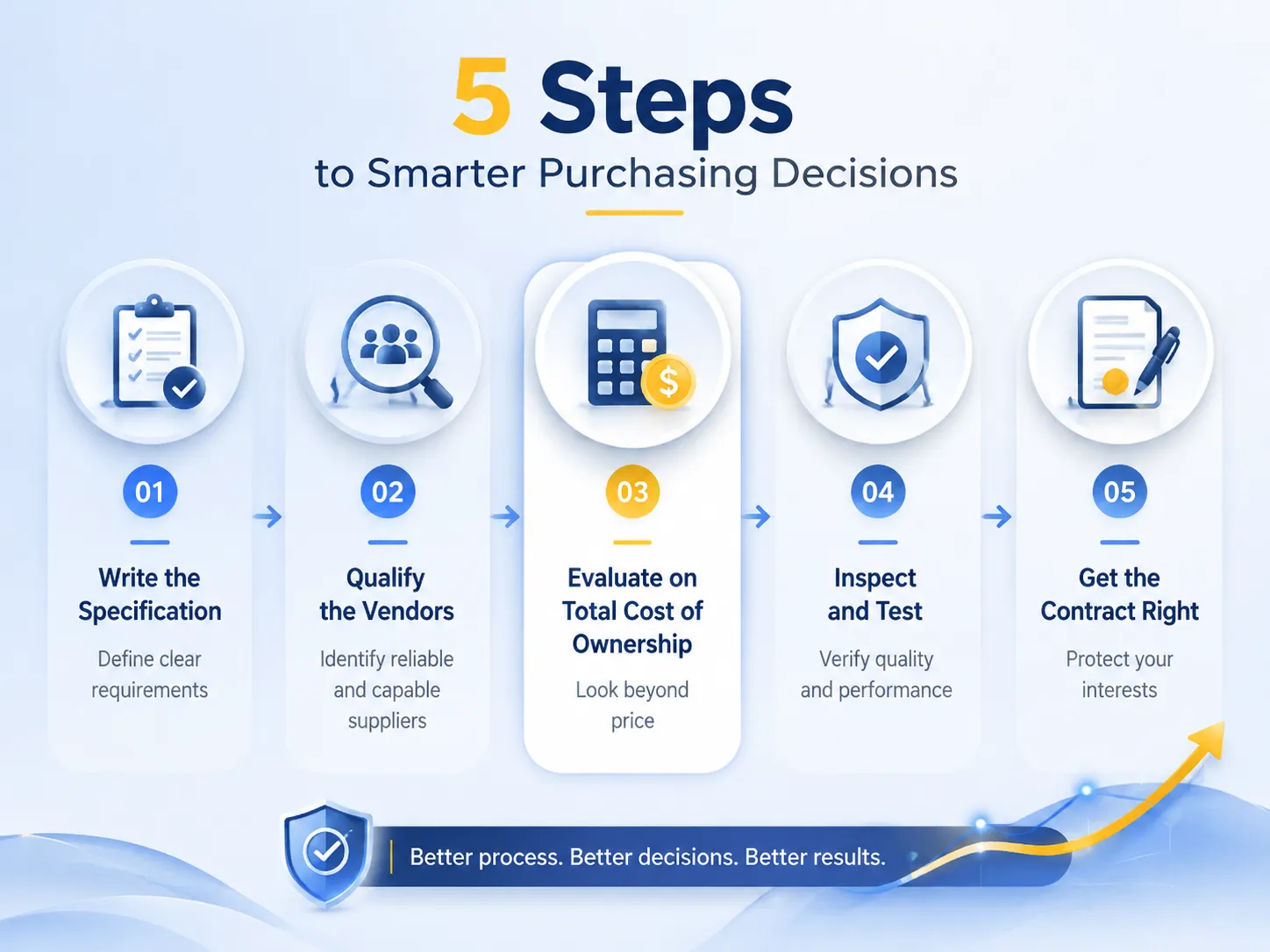
Étape 4 : Inspection et Test
Il y a trois étapes d'inspection et de test.
- La première étape se déroule à l'usine où le fabricant effectue des contrôles de routine de l'unité, tels que la vérification des rapports, des groupes vectoriels, de l'impédance, des pertes et de la résistance d'isolement. Vous pouvez utiliser soit un enregistreur vidéo, soit un inspecteur tiers pour témoigner de ces tests.
- La deuxième étape se déroule au point d'arrivée pour la vérification des dommages de transport, la vérification de la plaque signalétique et le stockage approprié de l'unité qu'elle soit dans l'huile ou dans de l'azote sec.
- La dernière étape est la mise en service et consiste à mesurer la résistance d'isolement et à effectuer un test diélectrique de l'huile, à vérifier le câblage du relais Buchholz, à réaliser un test complet de l'OLTC ainsi qu'à prendre un échantillon de DGA de référence.
Chaque étape ferme une fenêtre d'opportunité pour le risque.
| Point d'inspection | Contrôles typiques | Qui effectue |
|---|---|---|
| Usine, tests de routine | Rapport, groupe vectoriel, impédance, pertes, isolation, diélectrique | Fabricant + témoin tiers |
| Usine, tests de type | Élévation de température, impulsion de foudre, court-circuit | Tiers / laboratoire certifié |
| Arrivée sur site | Dommages de transport, plaque signalétique vs. commande, niveau d'huile, pression d'azote | Acheteur + expert en fret |
| Mise en service | Megger, diélectrique de l'huile, câblage du relais, exercice OLTC, DGA de référence | Installateur + acheteur |
Les tests d'usine valident l'équipement ; les contrôles à l'arrivée vérifient la logistique ; et la mise en service vérifie l'installation. Les omissions dans l'une des trois créent une incertitude pour la prochaine défaillance, ce qui peut être coûteux en termes de réclamations déposées auprès de la compagnie d'assurance ou de litiges de garantie.
Étape 5 : Bien rédiger le contrat
Les contrats d'achat de transformateurs ont des termes spécifiques qui méritent attention :
| Terme | Bonne pratique | Pourquoi |
|---|---|---|
| Garantie | 18–24 mois à partir de la mise en service, maximum 30 à partir de l'expédition | Couvre les défauts latents découverts en début de service |
| Garantie de perte | Pertes mesurées dans ±5% de l'appel d'offres, sinon pénalité | Empêche les devis de pertes optimistes |
| Tolérance d'impédance | ±7.5% selon IEC 60076-1 | Protège les hypothèses de coordination du système |
| Dommages-intérêts liquidés | 5% par semaine de retard, plafonné à 5–10% | Protège votre calendrier de projet |
| Pièces de rechange | Liste et prix convenus à la commande | Évite les prix captifs du marché secondaire |
| Documentation | Rapports d'essai, dessins, manuel en anglais | Nécessaires pour l'exploitation et l'assurance |
| Conditions de paiement | 10–30% d'acompte, solde contre jalons | Équilibre des flux de trésorerie et de l'effet de levier |
De plus, veuillez mentionner une norme de référence (soit IEC soit IEEE) dans le langage du contrat et en faire un point dans le rapport. Un certificat mentionnant la mauvaise norme est aussi bon que sans valeur.
Recommandations de marques par niveau
| censé | Marques | Forces | Meilleur pour |
|---|---|---|---|
| Premium mondial | Hitachi Energy, Siemens Energy, ABB | Profondeur d'ingénierie, historique de tests de type, service mondial | Transformateurs de puissance critiques, services publics réglementés |
| International de taille intermédiaire | Schneider Electric, Hyundai, Toshiba | Qualité solide, prix compétitifs, couverture régionale | Projets de distribution et de puissance moyenne |
| Industriel régional | TBEA, EMCO (Inde), Crompton | Échelle d'exportation, prix compétitifs | Flottes de distribution et services publics régionaux |
| Niveau de valeur d'exportation | Jiangsu Subian Electric Power et pairs | Certification IEC, prix d'exportation, spécifications flexibles | Services publics sensibles au coût, EPC, industriels |
Le niveau premium justifie son coût en raison des années de données sur les pannes, des programmes complets de tests de type et d'une empreinte mondiale. Le niveau de valeur d'exportation comble la plupart de l'écart technique en suivant des tests IEC similaires et des spécifications de matériaux et est en concurrence sur le prix et la livraison. Le niveau intermédiaire, cependant, offre un compromis approprié pour bon nombre de ses clients.
Le niveau de valeur d'exportation dans les transformateurs remplis d'huile est représenté par Jiangsu Subian Electric Power : transformateurs de distribution et transformateurs de puissance certifiés IEC 60076 allant de 35 kV à 110 kV, protocoles de test de routine pour chaque unité donnée, classes d'efficacité GB 20052, options OLTC et ester, ainsi qu'un historique de collaboration avec des services publics et des entrepreneurs EPC en Asie, en Afrique, au Moyen-Orient et en Amérique latine. Subian permet également l'inspection par des tiers et fournit des documents en anglais, qui sont les nécessités pour garantir un contrat d'exportation. Subian figure sur la liste des fournisseurs pour les acheteurs suivant une approche fondée sur des preuves pour leur sélection. Le catalogue et les certifications sont à subian-electric.com.
Plages de prix et ce qui les influence
Budgets FOB indicatifs, valables à des fins de planification :
| Puissance | Niveau de valeur (Chine) | Niveau intermédiaire | Niveau premium |
|---|---|---|---|
| 500 kVA | $6,000–$10,000 | $9,000–$13,000 | $12,000–$16,000 |
| 1 000 kVA | $14,000–$22,000 | $18,000–$26,000 | $22,000–$34,000 |
| 10 MVA (35kV) | $28,000–$48,000 | $40,000–$60,000 | $52,000–$82,000 |
| 5 MVA (35kV) | $65,000–$110,000 | $90,000–$130,000 | $125,000–$190,000 |
Les principaux facteurs de tarification sont les suivants : puissance et classe de tension, volume de pertes, changeur de prises (sous tension ajoute environ 15 à 30 pour cent), prix du cuivre (pour une unité de 10 MVA, vous avez environ quatre à six tonnes), accessoires et fabricant. Les devis sont valables de 15 à 45 jours car les prix du cuivre et de l'acier orienté changent. Les prix doivent être fixés dès que possible tandis qu'une clause d'escalade doit être incluse en cas de plans pluriannuels.
Erreurs d'achat courantes
- Faire un achat uniquement basé sur les coûts en kVA. L'équipement le moins cher a souvent plus de pertes, ce qui signifie que vous finissez par subir une perte pour chaque heure pendant 25 ans.
- Croire aux certificats sans vérifier. Demandez les numéros de rapport et vérifiez ; dans le cas de biens d'exportation, un tiers doit effectuer une inspection.
- Négliger la coordination d'impédance. Un mauvais choix concernant l'impédance peut rendre la protection par relais inutile — la plus grande erreur de toute la liste.
- Ne pas prêter attention aux aspects de transport et d'installation. Rappelez-vous qu'un transformateur de 10 MVA pèse environ 25 tonnes et nécessite des grues et une fondation, donc assurez-vous de planifier cela avant de faire un achat.
- Sauter l'analyse DGA de référence. Sans un échantillon de mise en service, vous ne pourrez pas déterminer si l'anomalie de gaz ultérieure est un défaut ou une tendance.
- Ignorer les pièces de rechange et les services. Les relais Buchholz ou les joints sont bon marché maintenant, mais pourraient être très coûteux plus tard.
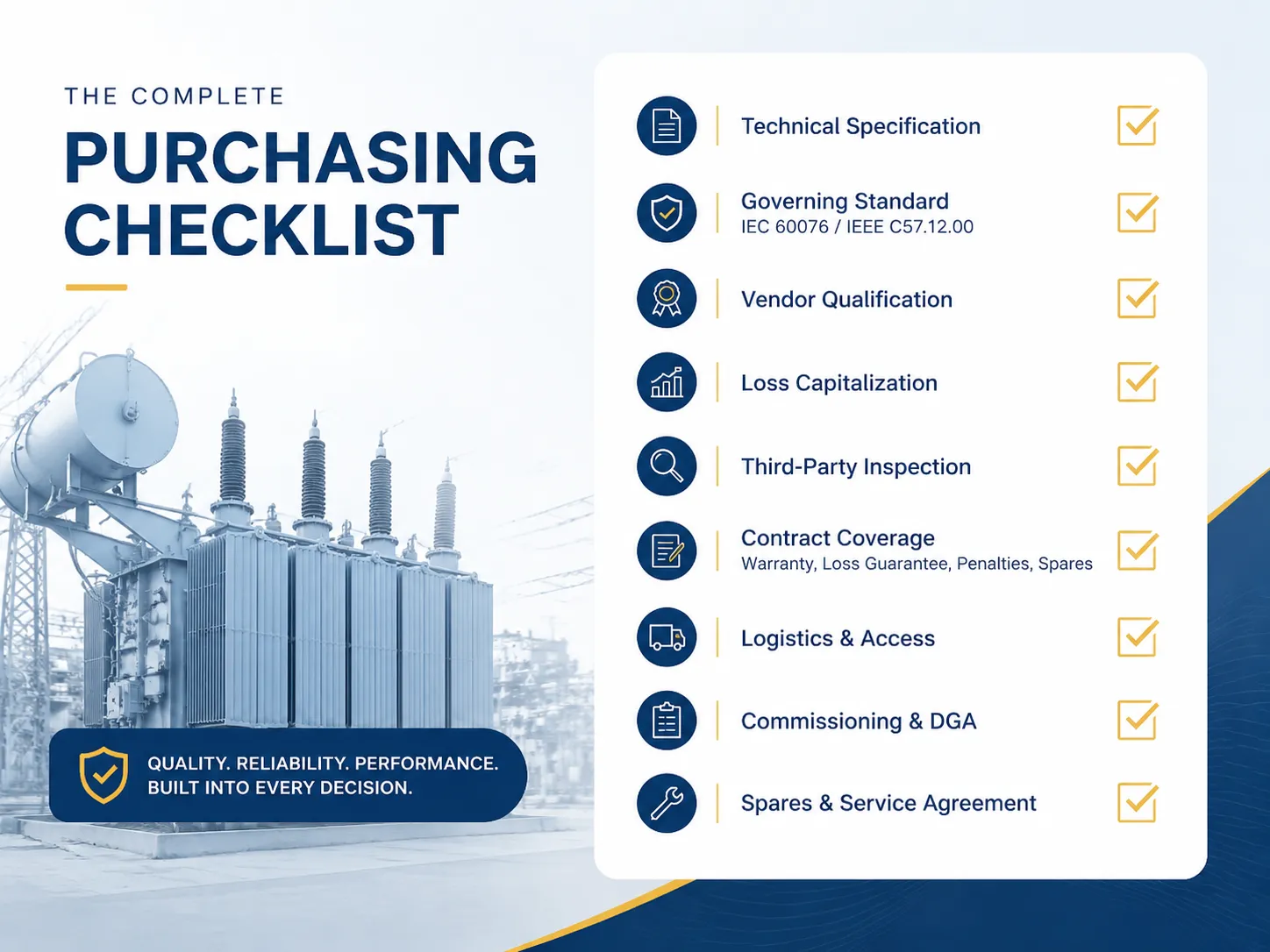
La liste de contrôle complète des achats
- ☐ Exigences techniques complètes créées et envoyées en circulation
- ☐ Norme réglementaire indiquée (IEC 60076 ou IEEE C57.12.00)
- ☐ Credentials du fournisseur rassemblés et confirmés
- ☐ Technique de capitalisation des pertes appliquée dans tous les appels d'offres
- ☐ Examen indépendant programmé pour les expéditions internationales
- ☐ Accord incorporant garantie, garantie de perte, amendes, pièces de rechange
- ☐ Itinéraire d'expédition et accès aux grues organisés
- ☐ Processus de démarrage ainsi que la base de l'analyse de l'huile de transformateur convenue
Questions Fréquemment Posées
Quel est un prix équitable pour un transformateur immergé dans l'huile de 1 000 kVA ?
Le plan pour l'exportateur chinois produit des prix allant de $14 000 à $22 000 FOB, de $18 000 à $26 000 par un fournisseur de milieu de gamme, et de $22 000 à $34 000 par un fabricant premium en fonction des taux de perte et des accessoires. Les frais de transport et d'assurance ajoutés totalisent généralement entre $2 000 et $6 000 en fonction de la distance.
Dois-je payer plus pour un transformateur à pertes réduites ?
En général, la réponse est affirmative. La capitalisation de l'écart montre qu'à $0,08/kWh, chaque kW de pertes à vide a une valeur d'environ $700 par an en fonctionnement ininterrompu, soit $17 500 sur 25 ans. Par conséquent, si l'offre avec des pertes réduites coûte un montant inférieur à l'écart capitalisé, c'est l'alternative la moins coûteuse.
Comment vérifier qu'un certificat de test IEC est authentique ?
Les informations importantes incluent le numéro du rapport de test, le laboratoire qui a émis le rapport et la date ; si possible, obtenez une copie du rapport pour une autre unité récente de la même marque ; et, s'il s'agit d'une commande d'exportation, demandez à un inspecteur tiers de vérifier le test lui-même. Les fabricants authentiques ont des dossiers complets ; les contrefaçons échouent généralement lorsqu'on leur demande la documentation originale.
Quelle marque devrais-je choisir ?
Allouez le niveau à l'actif. En ce qui concerne les transformateurs importants avec un service limité autour de leur emplacement, le prix du niveau premium peut être justifié. Lorsque nous parlons de transformateurs de niveau de valeur d'exportation tels que des flottes de distribution en volume avec des documents de sauvegarde et un TCO équivalent, évaluez-les en fonction des faits et du TCO, et non uniquement sur la réputation.
Combien de temps prend la livraison ?
La durée de livraison pour les systèmes de distribution varie de 8 à 24 semaines en fonction de la charge de l'usine. Dans le cas de transformateurs de capacité moyenne (3-31,5 MVA), le délai est généralement compris entre 16 et 40 semaines. Dans des circonstances défavorables, les grands transformateurs de puissance peuvent prendre plus de 60 semaines pour la livraison.
Références
- IEC 60076-1 : Transformateurs de puissance – Général — La spécification et la base de test pour chaque appel d'offres de transformateur.
- IEC 60076-5 : Capacité à résister au court-circuit — Test de court-circuit et exigences de conception référencées dans la qualification des fournisseurs.
- IEEE C57.12.00 : Transformateurs de distribution et de puissance immergés dans un liquide — Exigences nord-américaines équivalentes.
- IEC 60422 : Supervision et maintenance de l'huile — Limites de test de l'huile en service pour les unités achetées.
- ISO 9001 : Systèmes de gestion de la qualité — La base de gestion de la qualité pour la qualification des fournisseurs.
- Transformateurs Hitachi Energy — Référence pour les offres de transformateurs de puissance de niveau premium.
- Site officiel de Jiangsu Subian Electric Power — Produits et certifications de transformateurs immergés dans l'huile de niveau de valeur d'exportation.
Conclusion
L'achat d'un transformateur immergé dans l'huile se déroule en cinq étapes : spécification, qualification, évaluation du coût total de possession, inspection et contractualisation. Chaque étape transforme un achat à haut risque en un processus contrôlé et met généralement en lumière le fournisseur offrant la meilleure valeur, et non le prix le plus bas. La différence entre le “ prix le plus bas ” et “ le prix le plus bas sur 25 ans ” se situe souvent dans une fourchette de 30-60% du prix d'achat, c'est pourquoi le processus mérite d'être suivi.
Notes de synthèse :
- Obtenez toujours une spécification écrite avant de demander le prix.
- Évaluez le TCO plutôt que le prix de l'offre.
- Vérifiez les certificats et effectuez une inspection par un tiers pour les commandes à l'étranger.
- Choisissez la marque appropriée en fonction de l'importance de l'actif ; les faits ont la priorité sur les noms de marque.