


L'ingénieur de sous-station travaillant pour une entreprise de services publics provinciale subit beaucoup de stress. Il y a deux transformateurs de capacité 10 MVA dans une sous-station de la ville. Leur utilisation de charge est en moyenne de 60 pour cent. Le rapport énergétique du matin indique que les deux transformateurs consomment de l'énergie en continu en raison de leurs pertes à vide — 10 kW par unité, 20 kW pour les deux transformateurs, ce qui représente environ 175 000 kWh par an, sans compter les bénéfices en retour. Le responsable de l'ingénieur était au courant d'un appel d'offres pour un projet de démonstration “pionnier vert” qui implique de remplacer les anciennes unités de puissance par des unités à haute efficacité et de revendiquer la réduction des émissions de carbone en raison de ce remplacement. La spécification exigeait un transformateur auto-transformateur de 10 MVA avec un noyau amorphe et une perte à vide de moins de 6 kW. Maintenant, il incombe à l'ingénieur de découvrir si de telles unités existent et le coût de ces unités, ainsi que les économies possibles pour l'entreprise découlant de leur utilisation.
Cet article couvre la technologie, la performance, le prix et l'application du transformateur à économie d'énergie de 10 MVA, qui appartient à la catégorie du tournant dans le domaine de l'écologie dans les systèmes électriques modernes.
La réponse rapide est que le transformateur de dix MVA classé comme économiseur d'énergie est un transformateur de puissance moyenne : le rapport de tension diffère, les technologies de construction utilisées répondent aux normes de base d'efficacité énergétique. En prenant le rapport de tension de 35/10,5 kV, l'efficacité du nouveau transformateur est estimée à 8-10 kW de pertes à vide et au-dessus de 99,4% en termes d'efficacité à pleine charge. .
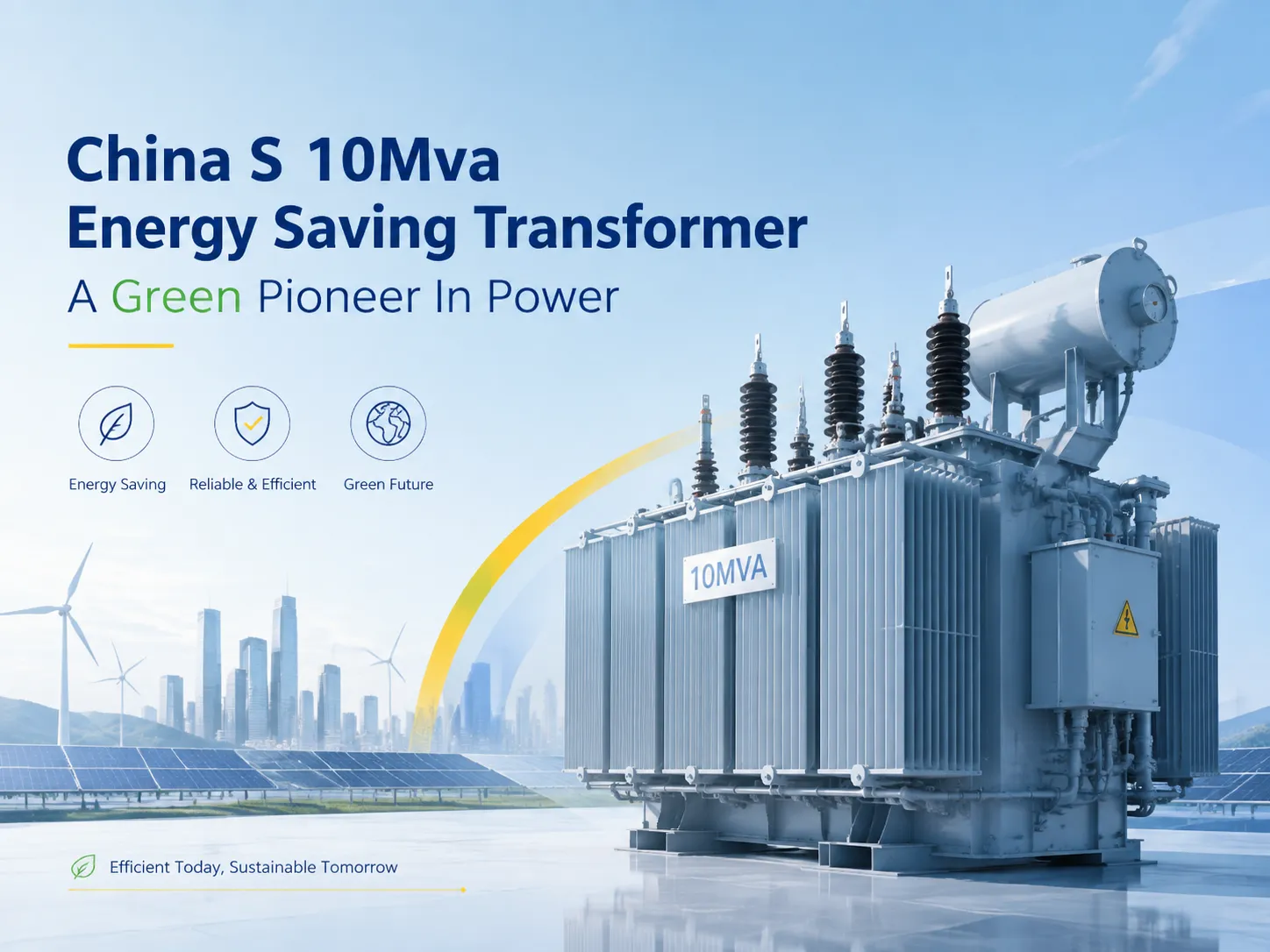
Ce qu'est un transformateur à économie d'énergie de 10 MVA
En général, un transformateur de 10 MVA a une capacité moyenne et se situe entre les dispositifs de distribution et de transmission. Pour la configuration typique de 35/10,5 kV, un 10 MVA est au centre du système par rapport aux sous-stations pour fournir de l'énergie aux villes abritant 8 000 à 15 000 clients ou des zones industrielles moyennes ; dans la configuration 110/35 kV, 10 MVA collecte de l'énergie au niveau du réseau de 35 kV. Sa consommation d'énergie s'élève à environ 40-70 GWh par an et ainsi son efficacité devient une préoccupation économique et environnementale importante.
Une unité “économiseur d'énergie” indique que cet équipement répond à une norme d'efficacité moderne et non à une norme historique. Par exemple, une unité de 10 MVA produite en 2005 avait une perte d'environ 14-18 kW lorsqu'elle était au repos, tandis qu'une unité contemporaine de 10 MVA de classe 2 GB 20052 a une perte d'environ 8-10 kW ou moins ; de plus, un transformateur à noyau amorphe innovant devrait minimiser la perte en dessous de 6-8 kW.
Le défi des pertes à 10 MVA
À 10 MVA, une attention suffisante doit être portée à la fois aux pertes, bien que à différents moments tout au long de l'année. La perte à vide se produit tout au long de l'année ou 8 760 heures. Une perte de 10 kW signifie une perte annuelle de 87 600 kWh même sans livraison d'énergie aux clients. La perte de charge dépend de la quantité de courant circulant dans le fil, car elle est égale à I²R. À seulement 60% de charge, les problèmes de perte ne concernent que 36% de perte disponible, mais c'est plutôt la variable la plus influente à des niveaux de facteur de charge élevés.
Le facteur de charge de la sous-station décide finalement de ce qu'il faut aborder en premier concernant les pertes. Les sous-stations à faible facteur de charge (40–60% en moyenne) devraient d'abord s'attaquer à la perte à vide, tandis que celles fortement chargées ont besoin à la fois de pertes de noyau plus faibles et de pertes d'enroulement plus faibles. Quoi qu'il en soit, des économies significatives peuvent être réalisées en apportant des changements relativement petits, c'est pourquoi des normes d'efficacité ont été développées spécifiquement pour ces types d'équipements.
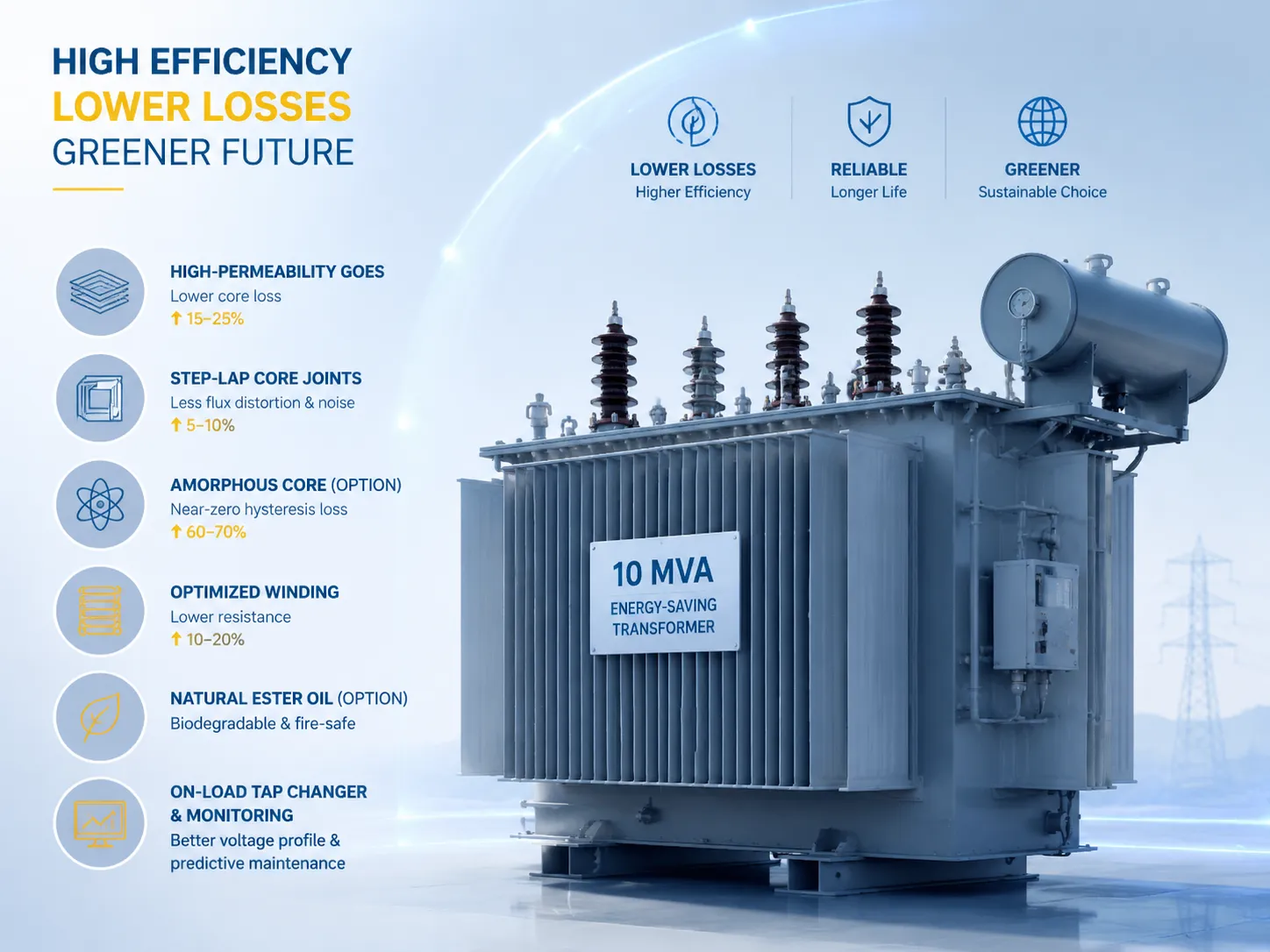
Technologies d'économie d'énergie appliquées
Les transformateurs modernes à économie d'énergie de 10 MVA combinent plusieurs leviers :
| Technologie | Ce qu'il fait | Effet à 10 MVA |
|---|---|---|
| GOES à haute perméabilité de 0,23 à 0,27 mm | Densité de perte de noyau plus faible | Perte à vide réduite de 15–25% par rapport à la norme |
| Joints de noyau en pas à pas / en biais | Distorsion de flux de joint réduite | Réduction supplémentaire de 5–10% de perte de noyau et de bruit |
| Noyau en métal amorphe | Perte d'hystérésis proche de zéro | Perte à vide réduite de 60–70% par rapport à la conventionnelle |
| Conducteur LV plus grand / enroulement optimisé | Résistance d'enroulement plus faible | Perte de charge réduite de 10–20% |
| Option d'huile d'esters naturels | Biodégradable, sûr contre les incendies, plus frais | Risque environnemental réduit, meilleure marge thermique |
| Changeur de prise sous charge avec surveillance | Régulation de tension et données d'état | Meilleur profil de tension, maintenance prédictive |
La technologie à noyau amorphe est principalement utilisée pour des puissances inférieures à 2,5 MVA mais n'a pas encore gagné en popularité pour 10 MVA, en raison des défis liés à la taille et à la manipulation du ruban, bien qu'elle soit disponible et déployée dans les projets de “pionniers verts”. Le design GOES à haute perméabilité est largement utilisé dans la plupart des achats de transformateurs de 10 MVA, la technologie à noyau amorphe étant proposée comme alternative premium.
Spécifications et normes typiques
Un transformateur à économie d'énergie de 10 MVA est spécifié et testé comme tout transformateur de puissance, avec des clauses d'efficacité ajoutées :
| Paramètre | Valeur typique (35/10,5 kV, 10 MVA) | Remarques |
|---|---|---|
| Puissance nominale | 10 000 kVA | Refroidissement ONAN/ONAF |
| Rapport de tension | 35/10,5 kV | ou 110/35 kV, ou variantes 33/11 kV |
| Impédance | 7–8% | Selon la conception de court-circuit IEC 60076-5 |
| Groupe vectoriel | YNd11 (typique) | Configuré au réseau |
| Pertes à vide | 8–10 kW (classe 2) ; <8 kW amorphe | Limites de perte GB 20052 / IEC 60076 |
| Pertes en charge | 45–55 kW à courant nominal | Dépend de la conception de l'enroulement |
| Impulsion de foudre | 170 kVp (classe 35 kV) | Selon IEC 60076-3 |
| Efficacité à pleine charge | >99,4% | À puissance nominale, 75°C |
| Niveau sonore | 58–65 dB(A) | Les joints en pas à pas et la faible densité de flux aident |
Toutes les valeurs doivent être confirmées sur le rapport de test de routine ; la revendication d'efficacité n'est aussi réelle que les valeurs de perte mesurées.
Économies quantifiées : Énergie, Coût, Carbone
Le cas d'un remplacement de 10 MVA utilisant le concept de pionnier vert est basé sur des calculs plutôt que sur des slogans de type. Par exemple, comparez une unité de 2005 (16 kW au repos) à une unité actuelle de grade 2 (9 kW au repos), en supposant que les deux fonctionnent à un facteur de charge de 60% tout au long de leur vie, ont une capacité de 10 MVA et produisent une perte à vide de 50 kW tandis que le tarif énergétique est de $0,08/kWh.
| Mètre | Ancienne unité | Nouvelle unité de grade 2 | Économie |
|---|---|---|---|
| Énergie à vide, annuelle | 140,160 kWh | 78,840 kWh | 61,320 kWh |
| Énergie de perte de charge, annuelle (60% LF) | 157,680 kWh | 157,680 kWh | 0 kWh |
| Coût énergétique annuel | $23,827 | $18,922 | $4,905 |
| CO2 annuel (0,5 kg/kWh) | 148,9 t | 118,3 t | 30,6 t |
| Économie actuelle sur 20 ans (8%) | — | — | ≈$48,000 |
Les économies d'énergie à vide — environ $4,900 chaque année — représentent environ 10%-17% du coût de l'équipement lui-même, permettant un retour sur investissement de 4 à 9 ans à partir du coût initial. En fait, le retour sur investissement est la principale raison pour laquelle des mesures réglementaires d'efficacité énergétique sont mises en place, car cela permet au marché de reconnaître les avantages d'économiser de l'énergie.
Applications dans les systèmes électriques
Le transformateur à économie d'énergie de 10 MVA est un actif de réseau polyvalent avec un attrait spécifique pour le vert :
| Application | Configuration | Pourquoi l'économie d'énergie est importante |
|---|---|---|
| Sous-stations de district | 35/10,5 kV | La perte à vide fonctionne 24/7 ; densité d'économie la plus élevée |
| Usines industrielles | 33/11 kV ou 35/10,5 kV | Un facteur de charge élevé récompense les pertes totales faibles |
| Collecte de plantes renouvelables | Élévation à 35 kV ou 110 kV | Aligne l'efficacité des actifs avec la production verte |
| Traction ferroviaire | 35/27,5 kV ou similaire | Le chargement cyclique bénéficie d'un design à faible perte |
| Projets de démonstration verts | N'importe lequel, avec surveillance | Les économies mesurées soutiennent les revendications de carbone |
Dans chaque scénario, il s'agit de similitudes. L'unité de 10 MVA semble suffisamment grande pour que des économies importantes en termes d'efficacité puissent se produire, tout en étant suffisamment courante pour que les économies puissent être prouvées par le rapport de test normal et un compteur d'énergie.
Fabricants et fourchettes de prix
Tarification FOB indicative pour un transformateur de puissance de 10 MVA 35/10,5 kV par marque et classe de perte :
| Marque | Origine | Perte standard | Économie d'énergie (grade 1–2 / amorphe) |
|---|---|---|---|
| Hitachi Energy | Japon/Global | $52,000–$72,000 | $58,000–$90,000 |
| ABB | Suisse/Global | $52,000–$70,000 | $58,000–$88,000 |
| Siemens Energy | Allemagne/Global | $50,000–$68,000 | $55,000–$85,000 |
| Schneider Electric | France/Mondial | $48,000–$65,000 | $53,000–$82,000 |
| Toshiba / Hyundai | Japon/Coree | $46,000–$62,000 | $50,000–$75,000 |
| Jiangsu Subian Electric Power | Chine | $28,000–$42,000 | $35,000–$60,000 |
Il existe différents prix pour différentes classes de perte, changeurs de prises de transformateurs, accessoires de transformateurs, type d'huile, prix du cuivre, et conditions de livraison.
Le prix des transformateurs de classe premium est basé sur l'expérience à long terme de l'entreprise, son réseau mondial et la diminution conséquente des risques liés à la marque. Cela a rendu raisonnable pour les fabricants de choisir des transformateurs de classe premium pour des actifs hautement sensibles. Les fabricants chinois fournissent les mêmes preuves de tests IEC 60076 et classe d'efficacité à un coût beaucoup plus bas, c'est pourquoi les transformateurs économiseurs d'énergie de 10 MVA produits en Chine remportent la plupart des appels d'offres pour des modifications écologiques dans les pays en développement. Jiangsu Subian Electric Power est un producteur chinois de transformateurs économiseurs d'énergie fabriquant des transformateurs de puissance de 10 MVA en 35/10,5 kV, 110/35 kV et versions élévatrices. Ils répondent aux classes de pertes GB 20052 1 et 2, ont des options pour des métaux amorphes et des changeurs de prises sous tension, subissent des tests conformes à la norme IEC 60076 et fournissent des rapports de tests de routine. Subian a fourni ces unités aux services publics de distribution et aux développeurs d'énergies renouvelables à travers l'Asie, l'Afrique, le Moyen-Orient et l'Amérique du Sud — la gamme est documentée sur subian-electric.com.
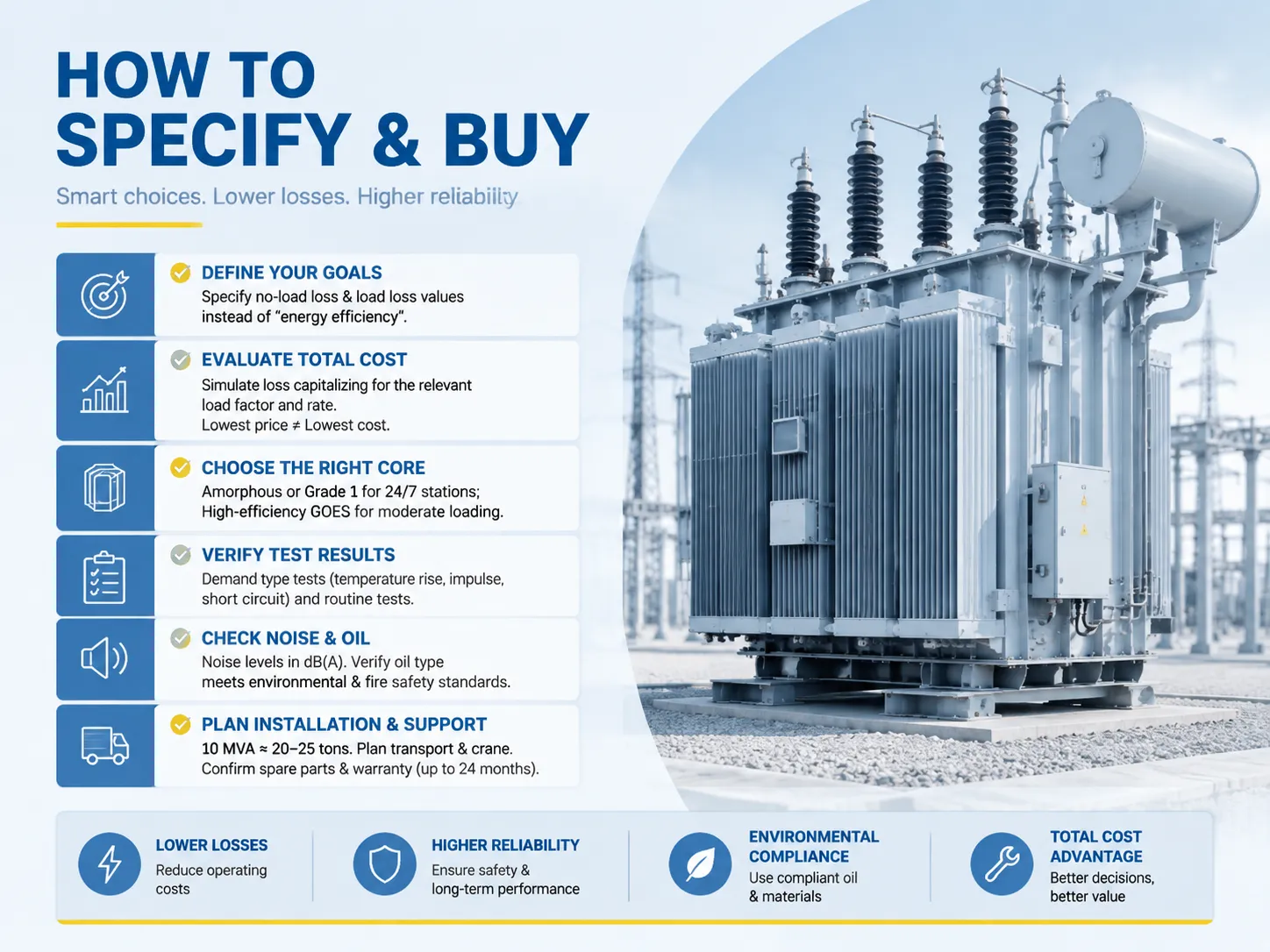
Comment spécifier et acheter
- Définissez clairement vos objectifs de pertes – spécifiez les valeurs de pertes à vide et de pertes en charge dans la demande au lieu d'utiliser le terme vague “ efficacité énergétique ”.”
- Avant de comparer les offres, simulez la perte en capitalisant pour le facteur de charge et le tarif pertinents. Il est bien connu que le prix le plus bas ne signifie pas les coûts les plus bas.
- Déterminez votre choix technique en fonction du profil de charge – noyau amorphe ou de grade 1 pour les stations 24/7 ; utilisez des GOES hautement efficaces pour une charge modérée.
- Fournissez la preuve des résultats des tests de demande, y compris les tests de type usine (augmentation de température, tests de court-circuit et d'impulsions) et les tests de routine de l'unité elle-même.
- Confirmez les niveaux de bruit et le type d'huile – cela doit être vérifié en dB(A) et la nature spéciale de l'huile doit être vérifiée selon les normes environnementales ou de sécurité incendie.
- Planifiez l'expédition et l'installation du transformateur, car un transformateur de 10 MVA peut peser environ 20-25 tonnes et nécessite une planification minutieuse de la grue et du transport ; les pièces de rechange et la garantie (jusqu'à 24 mois) doivent être discutées avant de passer la commande.
Questions Fréquemment Posées
Combien coûte un transformateur à économie d'énergie de 10 MVA ?
Il en coûte environ $28,000–$42,000 pour obtenir un transformateur standard de 10 MVA 35/10.5 kV auprès de fabricants chinois. Les types à économie d'énergie (classe 1–2) ou ceux avec une technologie de noyau amorphe sont au prix de $35,000–$60,000, tandis que les marques internationales facturent 50% à 80% de plus. D'autres facteurs influençant les prix sont la classe du transformateur, le type d'huile et le prix du cuivre.
Quelles pertes un transformateur de 10 MVA a-t-il réellement ?
Une unité moderne de grade 2 peut perdre environ 8 à 10 kW sans charge, tandis que la perte à courant maximum est d'environ 45 à 55 kW. Une unité de 2005 a perdu environ 14 à 18 kW sans effectuer de travail. L'objectif de la technologie à noyau amorphe est de réduire les pertes à 6 à 8 kW. Les chiffres corrects sont fournis par le rapport de test standard.
Combien d'argent le remplacement d'un transformateur de 10 MVA permet-il d'économiser ?
Réduire les pertes à vide de 16 kW à 9 kW à une charge moyenne de 60% et un coût de $0.08 par kWh entraîne une économie annuelle estimée d'environ $4900 et des économies totales sur 20 ans d'environ $48000. Cela signifie que les économies représentent 10-17% du coût de l'équipement tout en produisant des retours sur investissement de 4 à 9 ans avant de prendre en compte toute valeur liée aux incitations et aux émissions de carbone.
Un transformateur de 10 MVA peut-il avoir un noyau amorphe ?
Il est vrai que la technologie à noyau amorphe est plus courante en dessous de la barre des 2.5 MVA. Cependant, à 10 MVA, une ingénierie spéciale est requise pour mettre en place le système de ruban amorphe et pour les besoins de transport, ce qui rend le produit final significativement plus cher - de 20 à 40% de plus que le type GOES habituel.
Quelle classe d'efficacité devrais-je acheter ?
Utilisez votre capitalisation des pertes de modèle ainsi que votre tarif et facteur de charge pour faire fonctionner la station. Dans les stations à charge continue, vous devriez sélectionner un matériau de grade 1 ou amorphe. Pour les stations légèrement et saisonnièrement chargées, le grade 2 offre le maximum d'avantages économiques. Acheter une classe au-dessus du minimum actuel vous protège contre d'éventuels changements dans les normes futures.
Références
- IEC 60076-1 : Transformateurs de puissance – Général — Évaluation internationale et base d'essai pour les transformateurs de puissance de 10 MVA.
- IEC 60076-5 : Capacité à résister au court-circuit — Exigences de conception pour courts-circuits pour unités de puissance moyenne.
- GB 20052 : Classes d'efficacité énergétique pour les transformateurs de puissance — La structure de classe d'efficacité pour les conceptions de 10 MVA.
- Règlement européen sur l'écoconception 2019/1783 — Niveaux d'efficacité de l'UE pour les transformateurs de puissance moyenne.
- Programme d'efficacité des transformateurs du DOE américain — Économie des pertes et référence de classe d'efficacité.
- Programme d'efficacité énergétique de l'IEA — Contexte sur la réduction des pertes dans le réseau et la politique d'efficacité.
- Site officiel de Jiangsu Subian Electric Power — Gamme de transformateurs économes en énergie de 10 MVA et rapports d'essai.
Conclusion
Le transformateur économiseur d'énergie de 10 MVA provenant de Chine est véritablement un pionnier de la technologie verte car il peut servir de preuve que les pertes survenues lors de la transmission d'énergie pourraient être évitées en utilisant des dispositifs abordables. L'unité a affiché une grande fonctionnalité, des niveaux de performance écoénergétiques (qui correspondent aux normes d'évaluation énergétique établies) et des calculs assez simples – les dépenses liées aux pertes à vide ne dépasseront pas $4,200 – $8,800.
Points clés :
- Les unités modernes de 10 MVA ont une efficacité de plus de 99.4% et des pertes à vide de 8-10 kW, ce qui représente une réduction de moitié par rapport aux appareils de 2005.
- En utilisant l'option à noyau amorphe, les pertes peuvent être réduites encore plus pour les installations fonctionnant 24 heures sur 24.
- La période de retour sur investissement varie de 4 à 9 ans, en fonction de l'évitement des pertes ainsi que des économies en émissions de carbone et en paiements.
- Lors de l'installation d'un transformateur, il est nécessaire de préciser les exigences spécifiques en matière de pertes, de mettre en œuvre la capitalisation des pertes et de fournir une preuve de test.
Si vous remplacez ou étendez une capacité de classe 10 MVA, Jiangsu Subian Electric Power fournit des transformateurs de puissance de grade 1–2 selon la norme GB 20052 avec des valeurs de perte documentées et des rapports d'essai de routine, y compris des options à noyau amorphe et à huile ester, à des prix favorables à l'exportation. Consultez la gamme à subian-electric.com.