


Alle 3:47 del mattino, un allarme si attiva in una stazione di monitoraggio di una compagnia elettrica, indicando che l'ultima analisi dei gas disciolti (DGA) di un'unità da 40 MVA ha superato la soglia TDCG poiché la concentrazione di etilene e idrogeno nei dati normalizzati degli ultimi tre mesi è aumentata. In questo caso, l'unità è un importante trasformatore che fornisce energia a un'area industriale specifica e l'operatore deve prendere una decisione entro la mattina. Dieci anni fa, questo significava contattare esperti e generalmente sperare per il meglio. Oggi, tuttavia, questo è esattamente ciò che la diagnosi intelligente dei guasti e la manutenzione predittiva per i trasformatori dovrebbero affrontare.
Questo articolo illustra come le moderne tecniche di monitoraggio, l'interpretazione dell'analisi dei gas disciolti, l'analisi delle tendenze dei gas disciolti, i sensori online e il machine learning trasformano la manutenzione dei trasformatori da un approccio basato sul calendario a uno basato sulle condizioni. Imparerai quali guasti potrebbero essere rilevati, cosa significa ciascuna firma di gas, come interpretare gli standard di interpretazione di base e quali dispositivi e software sono necessari.
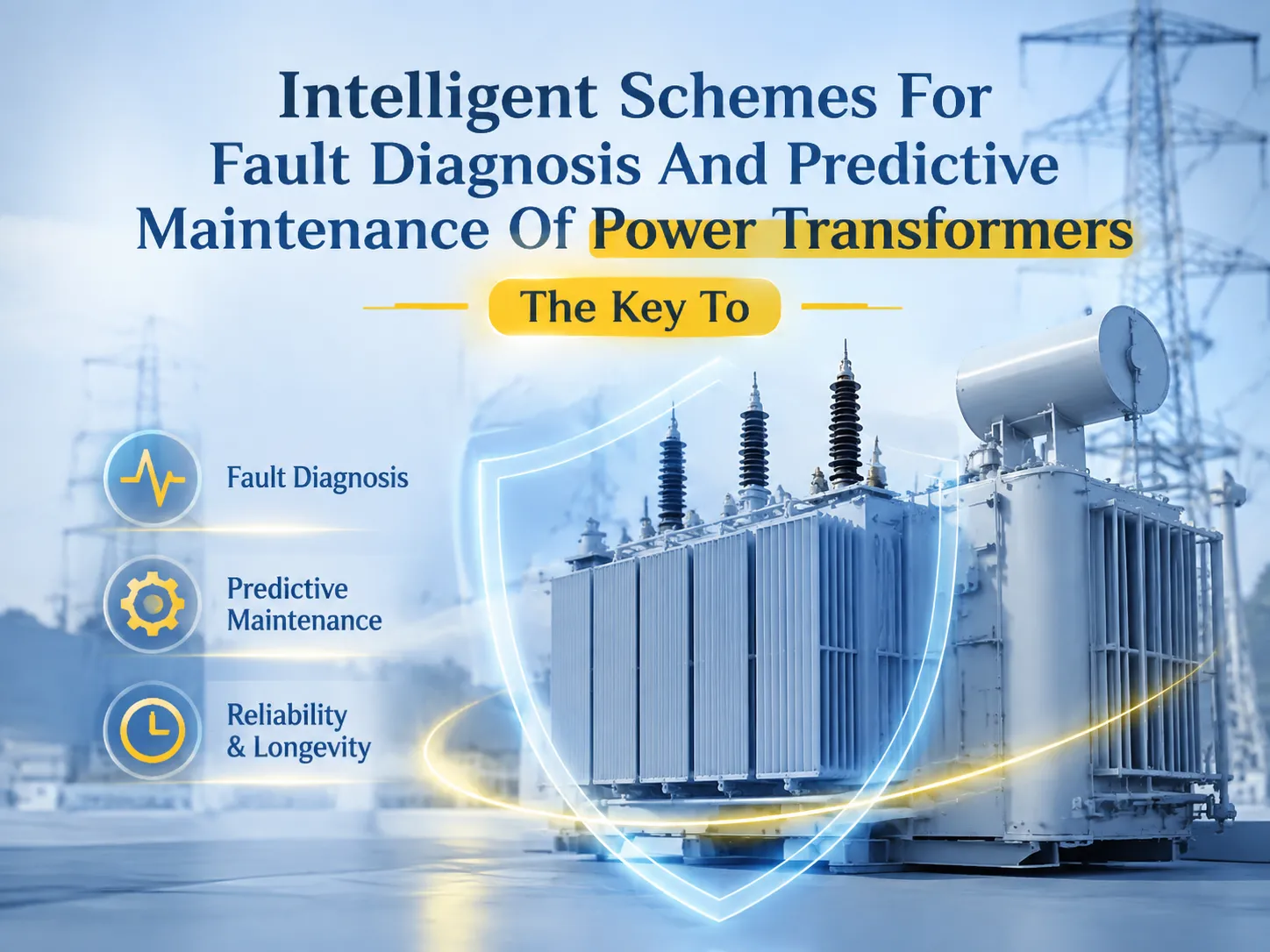
In breve: la manutenzione predittiva per i trasformatori implica la combinazione dell'analisi dei gas disciolti, l'uso di sensori online (DGA, scariche parziali, temperatura degli avvolgimenti e posizione dell'OLTC) e l'ausilio dell'analisi delle tendenze per rilevare guasti mesi prima di qualsiasi guasto o rottura. I gas vengono analizzati secondo gli standard IEC 60599 e IEEE C57.104 che adottano i cosiddetti triangoli di Duval. Di conseguenza, l'idrogeno indica l'insorgere di scariche parziali, l'etilene funge da indicatore di guasti termici sopra la temperatura di 700°C, mentre l'acetilene mostra la presenza di arco.
Perché la Manutenzione Predittiva Sta Sostituendo la Manutenzione Basata sul Calendario
Convenzionalmente, la manutenzione dei trasformatori avviene secondo un programma prestabilito: campionamento dell'olio ogni 1-3 anni; test di resistenza dell'isolamento su base annuale; ecc. Il problema con il metodo convenzionale è che tutti i trasformatori vengono trattati allo stesso modo, sebbene diversi studi abbiano indicato che lo stato dei trasformatori varia ampiamente. Risulta che alcuni trasformatori possono degradarsi nel corso di decenni mentre altri smettono di funzionare poco dopo la messa in servizio a causa di un difetto di progettazione. Quindi, la manutenzione basata sul calendario esegue ispezioni eccessive o salta accidentalmente i trasformatori in difficoltà.
La manutenzione predittiva ha un approccio diverso. Funziona continuamente o periodicamente e misura i parametri che riflettono lo stato dei trasformatori in base agli standard esistenti nel settore. È noto che la maggior parte dei guasti dei trasformatori è graduale piuttosto che istantanea e che solitamente l'isolamento, i cambiatori di presa e le guarnizioni sono responsabili dei guasti dei trasformatori. La degradazione graduale è esattamente ciò che il tipo di monitoraggio rappresentato da DGA, monitoraggio delle scariche parziali e monitoraggio della qualità dell'olio implica, e quindi un programma di monitoraggio delle condizioni ben strutturato aiuta a trasformare le interruzioni non pianificate in attività di manutenzione pianificate.
Tipi di guasti nei trasformatori di potenza e le loro firme
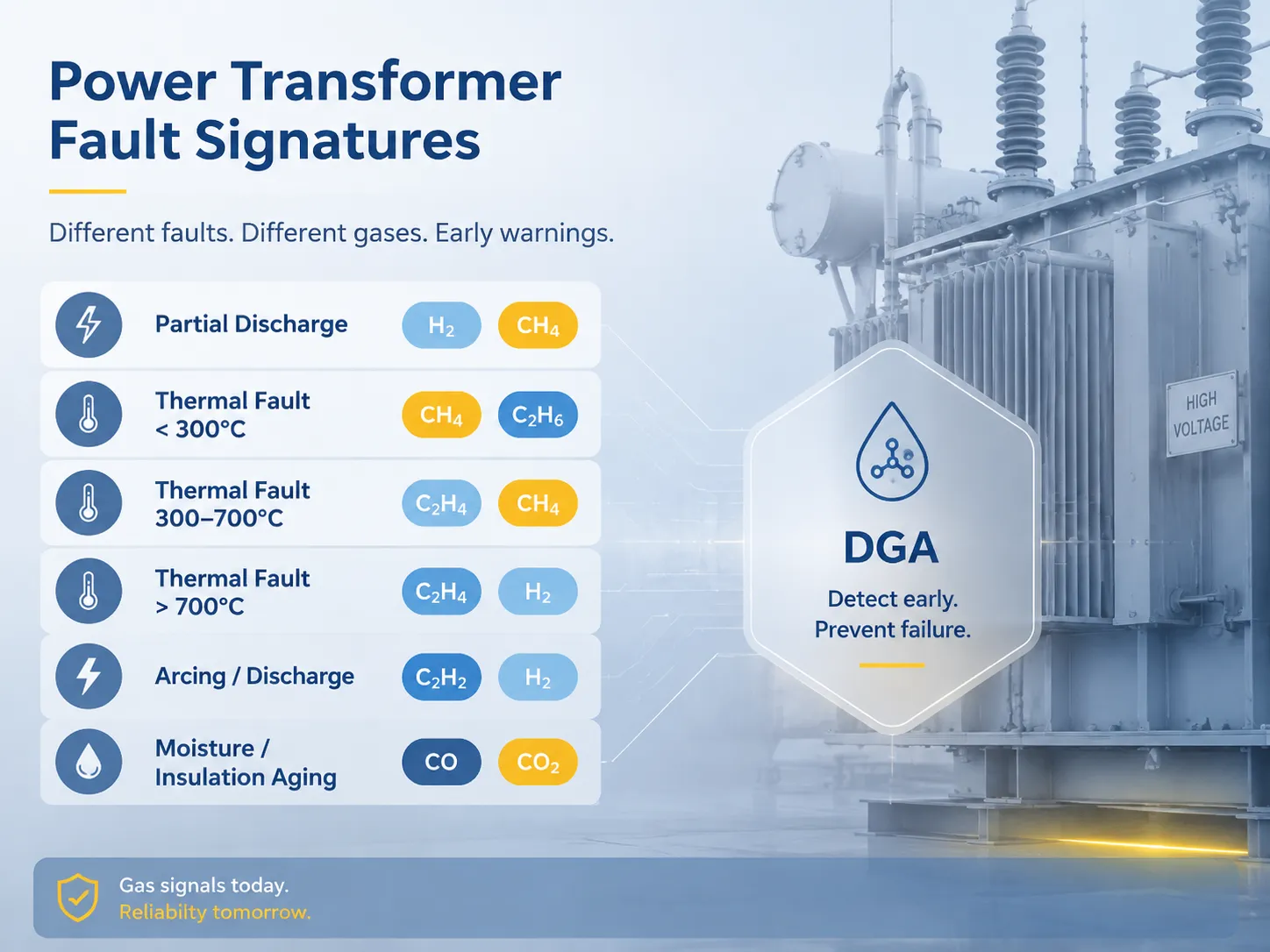
I guasti nei trasformatori producono firme misurabili. Conoscere quale gas corrisponde a quale guasto è la base per una diagnosi intelligente:
| Tipo di guasto | Gas di guasto primari | Causa Tipica | Metodo di rilevamento | Tempo di attesa tipico prima del guasto |
|---|---|---|---|---|
| Scarica parziale | Idrogeno (H2), metano | Vuoti di isolamento, scarsa impregnazione dell'olio, umidità | DGA, sensori PD UHF/elettrici | Mesi a anni |
| Guasto termico < 300°C | Metano, etano | Sovraccarico, guasto di raffreddamento, restrizione del flusso d'olio | DGA, temperatura degli avvolgimenti | Mesi |
| Guasto termico 300–700°C | Etilene, metano | Contatti difettosi, correnti circolanti nel nucleo | DGA, termografia | Settimane a mesi |
| Guasto termico > 700°C | Etilene, idrogeno | Sovraccarico severo, guasto a terra del nucleo | DGA, monitoraggio online | Giorni a settimane |
| Arco / scarica elettrica | Acetilene (C2H2), idrogeno | Arco del cambiavalvole, flashover degli avvolgimenti, connessioni allentate | DGA, relè Buchholz, sensori PD | Ore a giorni |
| Umidità / invecchiamento dell'isolamento | Monossido di carbonio, diossido di carbonio | Degradazione dell'isolamento in carta | Umidità dell'olio, analisi del furano | Anni |
Sebbene la tabella sia semplificata, riflette la realtà delle operazioni: ogni famiglia di guasti ha la propria firma che si verifica nell'olio molto prima che si verifichino disastri. Questo spiega perché la DGA è descritta come il miglior strumento di diagnosi per trasformatori a livello mondiale.
Analisi dei gas disciolti: lo strumento diagnostico principale
Il processo di formazione del guasto riscalda e stressa l'olio del trasformatore e l'isolamento chimico e porta alla formazione di gas che si dissolvono nell'olio. I gas disciolti nell'olio vengono analizzati tramite DGA (analisi dei gas disciolti), che è la procedura per misurare il contenuto di gas nell'olio. Tra i gas che fanno parte del set di gas standard ci sono idrogeno (H2), metano (CH4), etano (C2H6), etilene (C2H4), acetilene (C2H2), monossido di carbonio (CO) e diossido di carbonio (CO2). La DGA viene eseguita in tre modi diversi a seconda della criticità dell'unità:
- Campionamento di laboratorio periodico (annuale o semestrale): costa $200-500 per campione, inclusi spedizione e produzione del rapporto. Questo metodo è sufficiente per unità a bassa criticità.
- Kit DGA portatili da campo: costano tra $8.000 e $25.000; questi sono strumenti per controlli spot tra i campionamenti di laboratorio.
- Monitor DGA online: costano tra $8.000 e $60.000 installati per unità; misurano continuamente i gas chiave e possono essere utilizzati per trasformatori critici poiché la notifica anticipata sembra giustificare la spesa.
Ulteriori test di routine eseguiti per l'olio del trasformatore includono: tensione di rottura (>40 a 60 kV in olio nuovo quando misurata come determinato dalla IEC 60156), contenuto di umidità (i livelli di allerta sono solitamente superiori a 20 a 30 ppm nei trasformatori da 10 a 69 kV), acidità e contenuto di furano che indica l'invecchiamento della carta. Il costo per i test è di circa $150-$400 per pacchetto.
Interpretazione dei risultati DGA: IEEE C57.104 e IEC 60599
Le letture di gas non elaborate non hanno significato fino a quando non vengono analizzate. Due standard principali vengono utilizzati per interpretare le letture, ovvero gli standard IEEE C57.104 (Nord America) e IEC 60599 (internazionale), e anche il metodo del triangolo di Duval.
| Parametro | IEEE C57.104 Condizione 1 (Normale) | Condizione 2 (Attenzione) | Condizione 3 (Alto) | Condizione 4 (Severo) |
|---|---|---|---|---|
| Idrogeno (H2) | < 100 ppm | 100–200 ppm | 200–300 ppm | > 300 ppm |
| Metano (CH4) | < 75 ppm | 75–125 ppm | 125–200 ppm | > 200 ppm |
| Etilene (C2H4) | < 50 ppm | 50–100 ppm | 100–150 ppm | > 150 ppm |
| Acetilene (C2H2) | < 35 ppm | 35–50 ppm | 50–80 ppm | > 80 ppm |
| Gas combustibile totale disciolto (TDCG) | < 720 ppm | 720–1.920 ppm | 920–4.630 ppm | > 4.630 ppm |
| Azione raccomandata | Continuare il campionamento normale | Campionare più frequentemente, indagare | Indagine dettagliata, pianificazione della riparazione | Revisione immediata; probabile rimozione dal servizio |
La IEC 60599 segue un metodo complementare che si basa sia sui metodi dei rapporti di gas come i rapporti di Rodgers e Dornenburg sia sulle concentrazioni rilevanti di gas presenti in attrezzature vecchie e nuove. Inoltre, avverte anche che la produzione di gas potrebbe essere più istruttiva del semplice valore ottenuto in un certo momento. Per quanto riguarda il triangolo di Duval (e il pentagono di Duval), rappresenta una classificazione duale dei guasti in modo visivo. Gli attuali sistemi intelligenti riuniscono tutti e tre gli elementi – valori assoluti, tassi di generazione e sistema di classificazione per rapporto/triangolo e determinano equamente il grado e l'affidabilità delle misure adottate.
Sensori di Monitoraggio Online e i Loro Costi
I sistemi intelligenti portano il DGA a un livello superiore utilizzando la tecnologia dei sensori online che raccoglie continuamente informazioni sulle condizioni di un trasformatore. La tabella sottostante mostra l'attrezzatura standard dei sensori e il suo costo approssimativo per pezzo:
| Sensore / Monitor | Cosa misura | Costo Tipico (Installato) | Rilevamento primario |
|---|---|---|---|
| Monitor DGA online | Gas disciolti chiave | $8.000–$60.000 | Guasti termici ed elettrici |
| Sensore di scarica parziale (UHF/elettrico) | Attività PD in pC | $5.000–$30.000 | Difetti di isolamento, vuoti |
| Sensori di temperatura avvolgimento / olio | Temperatura del punto caldo e temperatura dell'olio superiore | $2.000–$8.000 | Sovraccarico, guasti di raffreddamento |
| Relè Buchholz + monitor di accumulo di gas | Gas e olio in aumento nel tubo del conservatore | $500–$3.000 | Guasti interni maggiori |
| Monitoraggio OLTC | Corrente del motore, coppia, posizione del contatto | $3.000–$15.000 | Usura meccanica del cambiavalute |
| Umidità dell'olio (online) | Saturazione relativa dell'acqua nell'olio | $1.500–$5.000 | Ingressi di umidità nell'isolamento |
| Integrazione della piattaforma SCADA / monitoraggio | Aggregazione dei dati, allarmi, dashboard | $5.000–$25.000 | — |
Il costo totale del set diagnostico completo per un trasformatore di potenza più importante è di circa $25,000–$120,000. La maggior parte delle utility implementa questo in fasi: sistemi diagnostici completi per i trasformatori più significativi, DGA online per trasformatori di valore intermedio e DGA periodica effettuata in laboratorio per tutti gli altri trasformatori.
Apprendimento automatico e schemi diagnostici intelligenti
Il funzionamento dei sistemi sofisticati di oggi può essere ricondotto al funzionamento di software analitici integrati con dati dei sensori. I database storici DGA, insieme ai modelli di trasformatore basati sulla fisica, forniscono le informazioni necessarie.
- Analisi delle tendenze e rilevamento delle anomalie: i modelli statistici identificano il normale schema di gas in ciascun'unità e riconoscono le deviazioni per rilevare problemi che passano inosservati dai tradizionali limiti fissi.
- Classificatori basati su rapporti: questo tipo prevede l'esecuzione automatizzata dei metodi secondo IEC 60599 e Duval, che consente di ottenere interpretazioni affidabili senza l'influenza degli analisti.
- I classificatori di apprendimento automatico consistono in un numero di tecniche come alberi decisionali, foreste casuali, SVM e reti neurali. Queste tecniche sono addestrate con migliaia di dati DGA etichettati con un livello di precisione dell'85-95 percento, secondo il benchmark.
- Gemello digitale / modelli termoidraulici: imitano il riscaldamento degli avvolgimenti, il che aiuta a determinare per quanto tempo gli avvolgimenti possono essere utilizzati.
La vera limitazione è legata all'accuratezza e all'affidabilità dei dati e dell'etichettatura. Ecco perché i sistemi intelligenti sono solo strumenti che possono aiutare a supportare la decisione.
Costruire un programma di manutenzione predittiva
Il percorso di implementazione pratica per le utility o i principali proprietari industriali può essere evidenziato come segue:
- In termini di stratificazione della flotta. Tutti i trasformatori saranno classificati in base all'importanza di ciascun trasformatore, e così le unità cruciali saranno dotate di monitoraggio continuo delle prestazioni, mentre per gli altri il campionamento sarà effettuato ogni 6-24 mesi in base all'età del trasformatore, al carico e ai precedenti registri operativi.
- Impostare la linea di base per l'analisi dei gas disciolti. È necessario ottenere dati DGA accurati per un dato trasformatore per comprendere i livelli normali di gas e il tasso di generazione all'inizio.
- Impostare il sistema di allerta in base ai termini e alle condizioni IEEE C57.104 e IEC 60599 riguardanti il livello e l'aumento.
- Integrare gli asset nella gestione degli asset. Aggiungere segnali di allerta agli ordini di lavoro consente all'azienda di reagire ai segnali di allerta forniti dal sistema.
- Definire le procedure secondo le quali il personale reagirà agli allarmi che potrebbero ricevere.
- Rivedere e regolare gli allarmi dopo 12-24 mesi in base ai risultati ricevuti dal monitoraggio.
La frequenza di campionamento dovrebbe seguire il rischio, non l'abitudine:
| Situazione | Frequenza raccomandata | Giustificazione |
|---|---|---|
| Unità di distribuzione sana | Ogni 1–3 anni | Basso rischio, basso costo |
| Trasformatore di potenza sano | Annuale | Sorveglianza standard |
| Dopo un guasto o un evento Buchholz | Entro pochi giorni, poi 3–6 mesi | Confermare causa e tendenza |
| Tendenza anomala dei gas | Settimanale a mensile | Monitorare il tasso di escalation |
| Unità critica con monitoraggio online | Campionamento continuo + annuale in laboratorio | Verificare l'accuratezza del sensore |
Costi medi: un programma DGA medio costa $20,000-$60,000 per 100 unità ogni anno, equivalenti a $200-$500 per campione. Il monitoraggio remoto di trasformatori essenziali varia da $30,000-$120,000 ciascuno, che copre le spese della piattaforma. Ora, vediamo come si confronta con il costo dell'inazione.
Analisi costi-benefici e ROI
È molto più facile giustificare la manutenzione predittiva utilizzando il metodo del caso aziendale piuttosto che farlo con la maggior parte delle richieste di capitale, poiché c'è un'alternativa chiara:
| Voce | Costo tipico |
|---|---|
| Sostituzione di un trasformatore da 20–60 MVA guasto | $200,000–$1.2 milioni (solo attrezzature) |
| Sostituzione di un trasformatore da 100+ MVA guasto | $1.5–$4 milioni |
| Costo di interruzione non pianificata per evento (stima dell'utility) | $50,000–$2 milioni a seconda del carico perso |
| Logistica e riparazione di emergenza (straordinario, trasporto, gru) | $30.000–$200.000 |
| Riparazione pianificata di un guasto rilevato (ad es. sostituzione OLTC, ricondizionamento) | $15.000–$120.000 |
| Programma annuale di manutenzione predittiva (per unità critica) | $2.000–$15.000 |
L'equazione è semplice: un guasto evitato di solito copre i costi del programma di monitoraggio per un periodo compreso tra cinque e 50 anni. Anche il beneficio parziale di poter convertire un'interruzione forzata in un'interruzione programmata identificando una condizione di guasto incipiente durante il campionamento di routine consente di risparmiare sui costi delle operazioni di emergenza rispetto a quelle normali, che possono frequentemente variare da $50.000 a $150.000 per occorrenza.
Limitazioni e Giudizio Umano
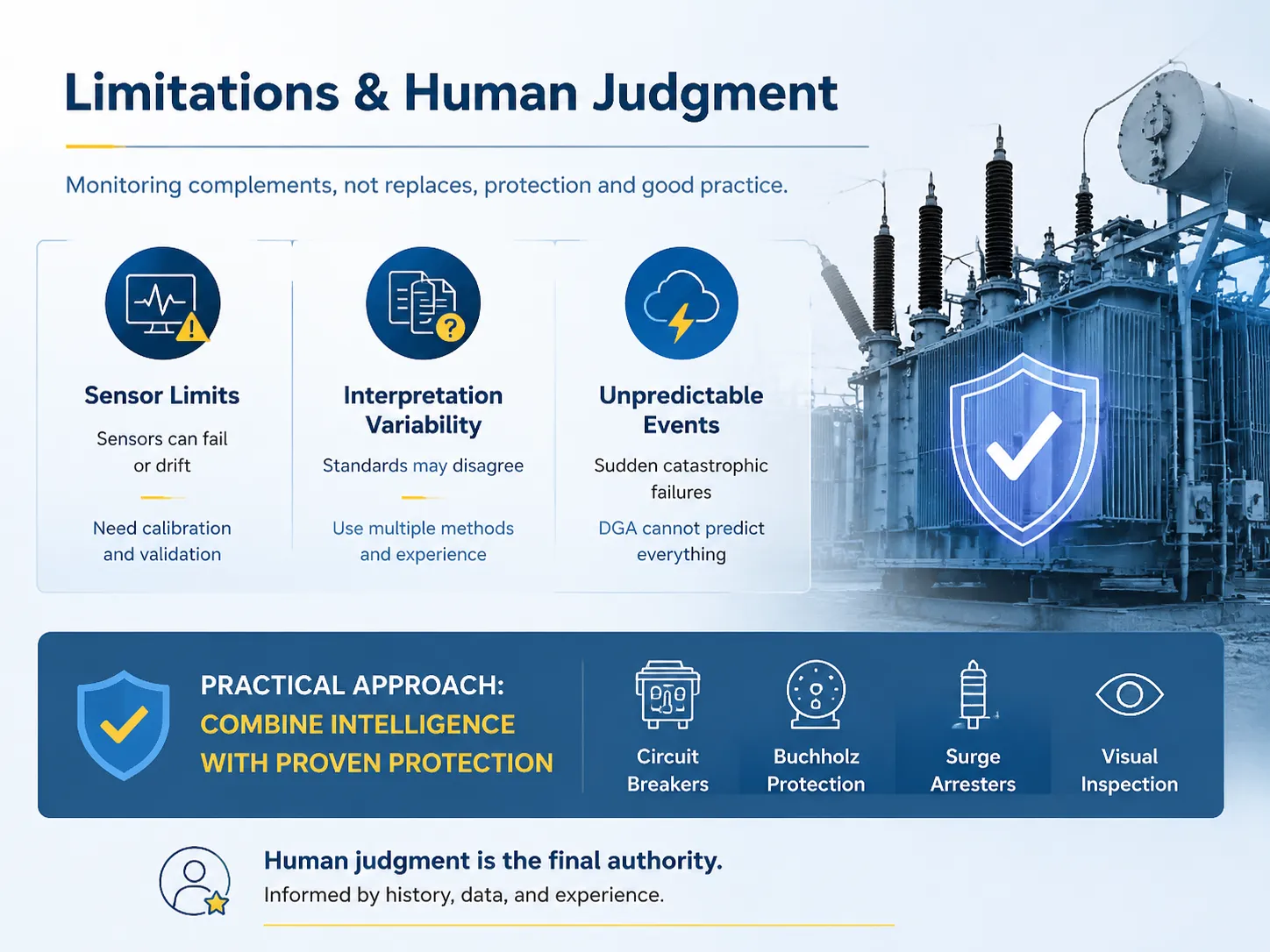
La manutenzione predittiva ha reali limitazioni e le applicazioni credibili della manutenzione predittiva non ignorano tali limitazioni. Anche i sensori online possono guastarsi e deviare, quindi i monitor devono essere calibrati e convalidati. I confini non sono chiari quando si tratta di interpretare le condizioni: un metodo può interpretare il dato modello di gas come termico, mentre un altro metodo potrebbe interpretare lo stesso modello di gas in termini di scarica, quindi gli analisti sono tenuti a utilizzare più metodi. È importante notare che ci sono alcuni guasti critici che non possono essere previsti tramite DGA (Analisi dei Gas Direzionali), come un guasto delle guarnizioni o un fulmine. Pertanto, l'idea del monitoraggio non è quella di sostituire, ma di complementare la sicurezza e il corretto funzionamento.
Il risultato pratico: devono essere utilizzati diagnosi intelligenti per determinare quali macchine richiedono attenzione, ma le misure convenzionali devono rimanere in vigore.
Domande frequenti
Qual è il test più importante per la diagnosi dei guasti nei trasformatori?
L'analisi dei gas disciolti (DGA) è spesso considerata il miglior test di diagnosi dei guasti poiché identifica segni chimici di guasti termici, scariche parziali e arco mesi prima che si verifichino i guasti. IEEE C57.104 fornisce avvisi di allerta, mentre IEC 60599 e i triangoli di Duval identificano i guasti e il monitoraggio delle tendenze di generazione prevede nuove formazioni di guasti che non possono essere rilevate da misure assolute.
Quanto costa il monitoraggio online dei trasformatori?
Il costo di un monitor DGA online varia da $8.000 a $60.000, mentre la spesa per un sistema di monitoraggio completo (DGA, indicatori di temperatura e umidità) per un trasformatore critico varia da $25.000 a $120.000. I costi di manutenzione ammontano a circa $1.000–$8.000 all'anno per ogni unità. I costi di campionamento DGA in laboratorio ammontano a circa $200 a $500 per campione, ma rappresentano un'alternativa più economica nel caso di trasformatori con bassa criticità.
Quale gas indica l'arco in un trasformatore?
Il principale gas che indica la presenza di arco nel trasformatore è l'acetilene (C2H2), ma di solito c'è anche molto idrogeno. Secondo IEEE C57.104, l'acetilene in concentrazioni superiori a 35 ppm significa che l'unità è nella banda di cautela, mentre un livello superiore a 80 ppm significa che devono essere intraprese azioni urgenti. Anche le concentrazioni più piccole richiedono di controllare la situazione, poiché l'arco può facilmente diventare più serio nel giro di poche ore.
Con quale frequenza dovrebbe essere campionato l'olio del trasformatore per DGA?
Se i trasformatori funzionano normalmente, gli oli possono essere testati ogni 1-3 anni, mentre per la maggior parte dei trasformatori di potenza una volta all'anno è il massimo raccomandato. Tuttavia, in caso di presenza di guasti, sovraccarichi, allarmi o tassi crescenti di emissioni di gas, l'olio del trasformatore deve essere testato più frequentemente, non più di una volta ogni sei mesi. Quando livelli anomali di DGA diventano evidenti, i campioni dovrebbero essere controllati su base settimanale o anche mensile fino a quando tutte le anomalie scompaiono.
L'apprendimento automatico può diagnosticare in modo affidabile i guasti dei trasformatori?
L'apprendimento automatico ha fornito tassi di accuratezza dell'85-95% per la sua analisi dei dati DGA, ma nel caso di tipi di malfunzionamento rari è difficile fare affidamento su questo metodo. Non si deve dimenticare che i risultati del ML dovrebbero sempre essere inviati per una valutazione aggiuntiva da parte dello specialista.
Riferimenti
- IEEE C57.104: Guida per l'interpretazione dei gas generati nei trasformatori immersi in olio — Lo standard principale nordamericano per l'interpretazione DGA con tabelle di condizione.
- IEC 60599: Attrezzature elettriche impregnate di olio minerale in servizio — Guida all'interpretazione del DGA — Quadro internazionale per l'interpretazione dei gas in attrezzature in servizio.
- IEC 60076-1: Trasformatori di Potenza — Generale — Standard di riferimento per la classificazione dei trasformatori, perdite e requisiti di progettazione.
- IEC 60422: Oli isolanti minerali in attrezzature elettriche — Guida alla supervisione e manutenzione — Riferimento per il monitoraggio della qualità dell'olio e limiti di manutenzione.
- CIGRÉ — Pubblica opuscoli tecnici sulle statistiche di guasti dei trasformatori, interpretazione del DGA e valutazione delle condizioni.
- IEEE — Fonte di sondaggi del gruppo di lavoro sulla affidabilità e standard diagnostici per trasformatori.
- Jiangsu Subian Energia Elettrica — Produttore di trasformatori conforme a IEC 60076 che supporta il monitoraggio delle condizioni e la pianificazione della manutenzione basata su DGA.
Conclusione
La diagnosi intelligente dei guasti insieme alla manutenzione predittiva trasforma la gestione dei trasformatori da un'impresa casuale a una pratica basata sui dati. Il DGA consente l'identificazione di tracce chimiche di guasti imminenti, i sensori permanenti aggiungono monitoraggio continuo e l'analisi consente di determinare il grado di attenzione in base a diversi metodi, dalle tecniche di rapporto all'apprendimento automatico. La logica è semplice: i sistemi di monitoraggio costano migliaia all'anno mentre prevenire un guasto porta a risparmi di centinaia di migliaia di dollari.
- Rendi il DGA uno strumento diagnostico essenziale secondo lo standard IEEE C57.104 e IEC 60599 con tendenze basate sulla velocità di sviluppo del guasto.
- Utilizza monitor online in base alla criticità dell'attrezzatura che si stima costi da 25.000 a 120.000 dollari.
- Fai differenziazione tra le unità, crea metriche di prestazione di base e imposta e registra allarmi relativi ai parametri monitorati.
- Fai dell'apprendimento automatico un aiuto nel processo decisionale, non un giudice finale nelle operazioni condotte.
- Pianifica le spese per le procedure DGA e prevedi di pagare 200-500 dollari per l'analisi di ciascun campione.