


Un ingegnere del progetto incaricato di una società di servizi pubblici sta formulando specifiche per un trasformatore di potenza principale con una capacità di 40 MVA e una tensione di 132/33 kV che può regolare il bus di distribuzione di 33 kV dell'intera regione. Il processo di progettazione per il trasformatore è quasi completato, ma su un punto sono state sollevate questioni durante le riunioni tenute: si riferisce al cambiavalvole sotto carico, su cui sono state poste molte domande. Le valutazioni di vari produttori sono state preparate dal punto di vista tecnico, ma i loro costi possono differire di 30%, gli intervalli di manutenzione differiscono 3 volte e le metriche di servizio tra i diversi progetti non sono disponibili nelle schede tecniche. L'ingegnere comprende che l'utilizzo del cambiavalvole sotto carico è fondamentale per il costo dell'operazione del trasformatore per un periodo di 30 anni.
L'obiettivo di questo articolo è fornire informazioni sulla selezione dei cambiavalvole sotto carico del trasformatore di potenza principale, che includerà l'intervallo di tap, la dimensione del passo, le valutazioni di corrente e tensione del passo, le differenze tra i tipi a resistenza e a vuoto, i loro costi e le specifiche da inviare ai fornitori.
Risposta: Un dispositivo di cambiavalvole sotto carico viene utilizzato per regolare il tap sull'avvolgimento di un trasformatore quando è sotto carico al fine di regolare la tensione senza interruzione dell'alimentazione. Per un'unità da 10 MVA – 60 MVA, i possibili intervalli di impostazione, rispettivamente, sono circa ± 8 × 1.25% o ± 6 × 2.5%. Il dispositivo OLTC è classificato per la stessa corrente continua massima della valutazione continua massima del trasformatore e ha la tensione del passo uguale alla tensione dell'avvolgimento.
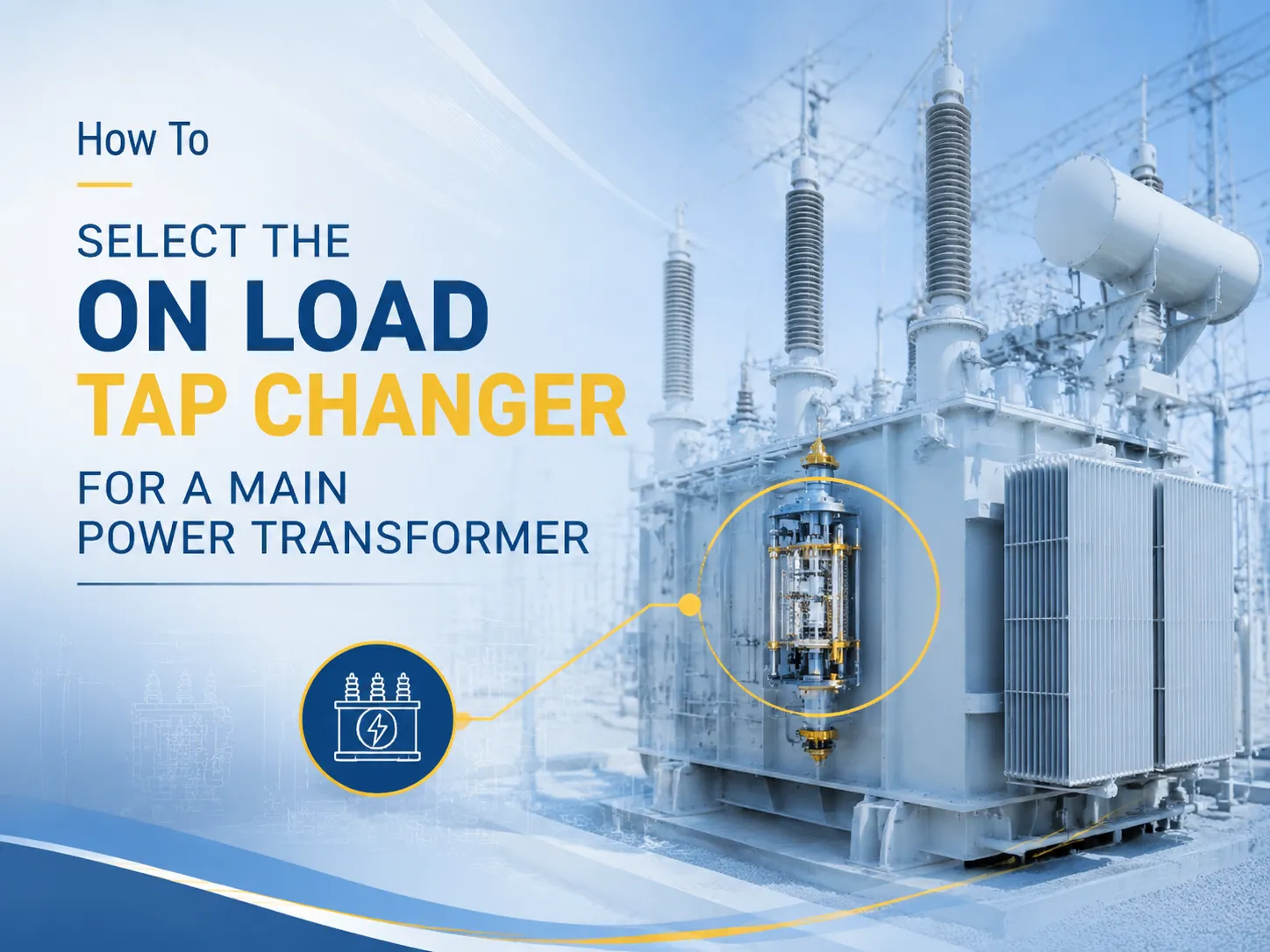
Cos'è un cambiavalvole sotto carico?
Il cambiavalvole sotto carico (OLTC) è un dispositivo controllato da motore presente nei trasformatori di potenza che altera le connessioni del tap della bobina di regolazione mentre l'energia è in uso. Questo avviene aumentando o diminuendo i tap, cambiando così il rapporto di trasformazione e la differenza di potenziale in uscita, il che indica che l'OLTC gioca un ruolo vitale nel processo di regolazione continua della tensione sotto condizioni di carico e sorgente variabili.
Essendo il tipo di dispositivo che esegue continuamente operazioni mentre la corrente scorre, l'OLTC è uno strumento di precisione, il che significa che l'interruttore deve essere azionato in condizioni particolari, mentre il processo di commutazione deve avvenire migliaia di volte prima che l'OLTC possa usurarsi.
Perché un trasformatore principale ne ha bisogno.
I trasformatori sono installati tra il sistema di trasmissione e il sistema di distribuzione. Entrambi i lati del trasformatore possono subire fluttuazioni di carico durante il giorno poiché la domanda può cambiare, così come la tensione di trasmissione, che varia a causa della configurazione della rete. Ad esempio, quando il trasformatore in questione ha una capacità di 40 MVA, la caduta di impedenza può variare tra 6-12%. Pertanto, quando si tratta di carico completo o senza carico, le regolazioni possono influenzare la caduta di tensione di diversi percentuali del trasformatore stesso. Inoltre, c'è il rischio che il bus a 33 kV possa scendere di 5-8% al di sotto della tensione normale, il che secondo le normative locali non è accettabile.
Per mantenere le variazioni di tensione richieste all'interno di un intervallo accettabile, un OLTC è solitamente combinato con il regolatore automatico di tensione (AVR).
Come un OLTC commuta senza interruzione
L'OLTC è progettato in due fasi. Il selettore trova il nuovo punto di attacco meccanicamente con gli avvolgimenti già connessi tramite il punto di attacco attivo. Pertanto, questo è il momento in cui l'operazione del selettore è considerata come avvenuta con valore di corrente zero. Dopo di che arriva il momento dell'interruttore deviatore che sposta conseguentemente la corrente dal punto di attacco principale al nuovo punto di attacco. L'impedenza di transizione è posizionata tra il selettore e l'interruttore deviatore in modo che la corrente che scorre non venga mai interrotta.
Il design del deviatore resistivo funziona in modo tale che la corrente scorra attraverso uno o due resistori di transizione che sono posizionati in mezzo. Il valore della resistenza è selezionato in modo tale che il flusso di corrente sia limitato al valore minimo durante il processo.
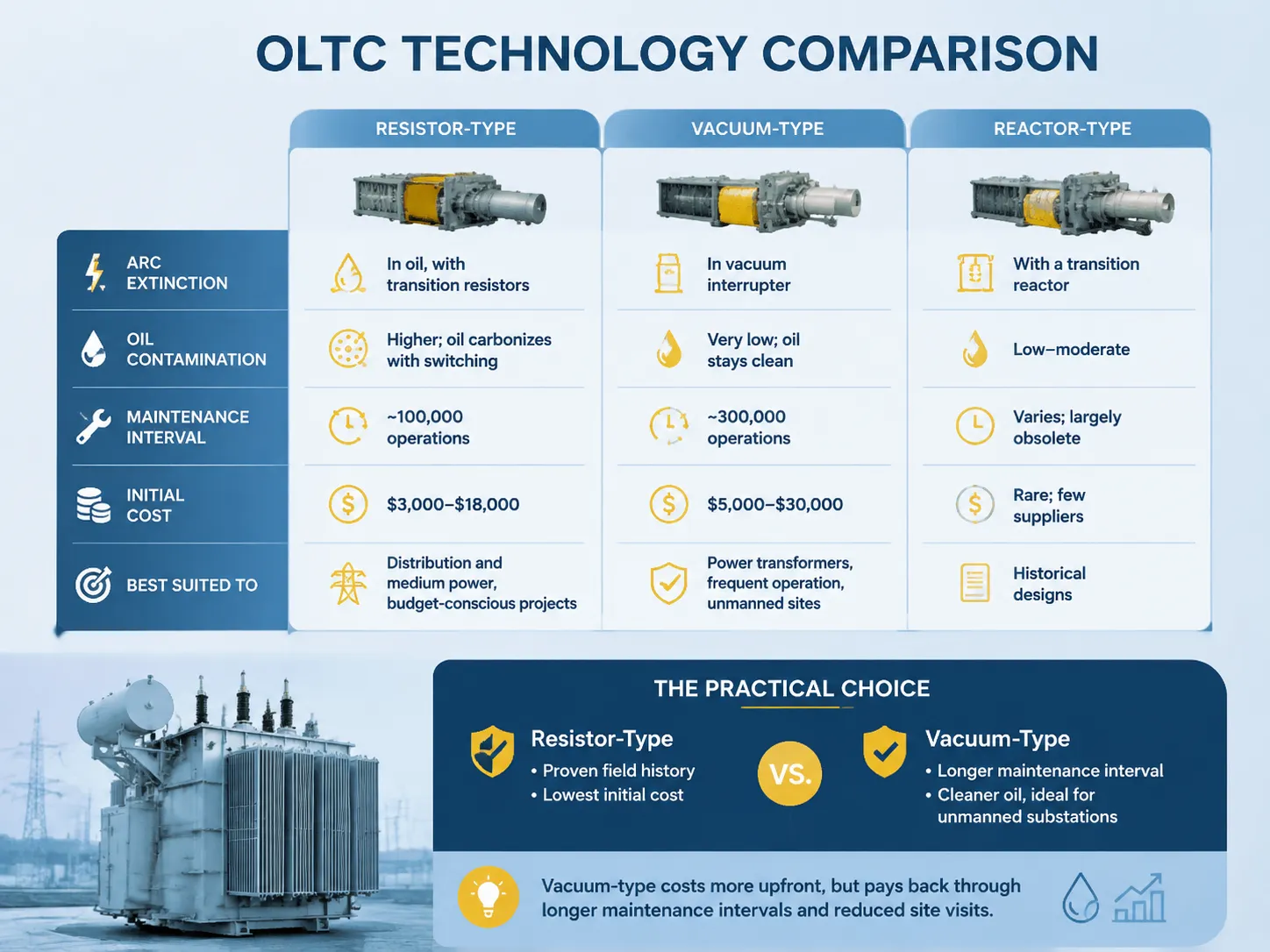
OLTC a resistenza vs. OLTC a vuoto vs. OLTC a reattore
| Caratteristica | OLTC di tipo resistivo | OLTC di tipo a vuoto | OLTC di tipo reattore (legacy) |
|---|---|---|---|
| Estinzione dell'arco | In olio, con resistori di transizione | In interruttore a vuoto | Con un reattore di transizione |
| Tasso di contaminazione dell'olio | Maggiore; l'olio si carbonizza con l'interruzione | Molto basso; l'olio rimane pulito | Basso-moderato |
| Intervallo di manutenzione | ~100.000 operazioni | ~300.000 operazioni | Varia; in gran parte obsoleto |
| Costo iniziale | $3,000-$18,000 | $5,000-$30,000 | Raro; pochi fornitori |
| Più adatto a | Progetti di distribuzione e potenza media, attenti al budget | Trasformatori di potenza, operazione frequente, siti non presidiati | Design storici |
Quando si tratta di nuovi trasformatori principali, di solito si può scegliere tra varietà resistive o a vuoto. La varietà resistiva è in uso da molto tempo e ha il costo iniziale più basso. Tuttavia, il tipo a vuoto costa di più all'inizio a causa di intervalli di manutenzione più lunghi e minori requisiti per il cambio dell'olio, che può essere una considerazione importante nel caso di sottostazioni non presidiati dove la sostituzione dell'olio richiede una visita in loco e tempi di inattività.
Selezionare l'intervallo di attacco e la dimensione del passo
L'intervallo di attacco è un calcolo del controllo della tensione. Il processo consiste in diversi passaggi:
- Prendere la fluttuazione di tensione attuale. Misurare la tensione del lato primario e la tensione del bus in stato di carico completo; può variare ±3-8% su una rete reale tra condizioni di carico leggero e completo.
- Aggiungere la caduta nell'impedenza del trasformatore. A piena capacità, la regolazione dei trasformatori con potenza di 10-40 MVA raggiunge 4-8%, e i tap devono tenere conto sia del cambiamento della sorgente che della caduta interna.
- Determinare la dimensione del passo. Di solito, si utilizzano passi di 1.25% per grandi trasformatori con regolazione adeguata, mentre i trasformatori più piccoli lavorano con passi di 2.5%.
- Impostare l'intervallo. L'intervallo di tap ±8×1.25% fornisce ±10% in 16 passi, mentre l'intervallo di tap ±6×2.5% genera ±15% utilizzando 12 passi. Per la maggior parte dei trasformatori nell'intervallo tra 10MVA e 60MVA, il primo intervallo è scelto come standard.
- Pensare all'AVR che fornisce una tensione di bus con l'aiuto di un relè in un passo con ritardo temporale che consente di evitare il hunting, e il numero di passi dovrebbe soddisfare i requisiti menzionati.
In conclusione, fare stime errate può portare a conseguenze: se l'intervallo è stretto, il trasformatore non sarà in grado di mantenere la tensione nelle condizioni peggiori, e se è troppo ampio, significherà la necessità di ulteriori spese per l'OLTC o il suo avvolgimento di regolazione.
Comprendere le valutazioni di corrente e di tensione del passo
| Valutazione | Significato | Valori tipici per 10-60 MVA |
|---|---|---|
| Corrente nominale | Corrente continua massima che l'OLTC trasporta | 300-1.250 A (in base alla valutazione del trasformatore) |
| Tensione di passo nominale | Tensione tra i punti di prelievo adiacenti | 500-3.000 V per passo |
| Capacità di commutazione nominale | Prodotto della corrente × tensione di passo che il deviatore può gestire | Fino a ~1.000 kVA per passo di commutazione |
| Cicli operativi | Vita progettuale in operazioni | 100,000-300,000+ |
| Normative | Base di progettazione e prova di tipo | IEC 60214-1/-2, IEEE C57.131 |
La corrente di passaggio deve coprire la massima corrente continua del trasformatore più il fattore di sovraccarico, se applicabile, in modo tale che per un contratto di sovraccarico 20% la valutazione dell'OLTC dovrà riflettere anche questo. In altre parole, la tensione di passo è altrettanto importante poiché una tensione di passo elevata significa molto più stress sul deviatore rispetto a una corrente elevata con bassa tensione di passo; questo viene verificato dal fornitore durante il test di capacità di commutazione.
Per aiutarti a visualizzare la relazione, ti forniamo il seguente riferimento dimensionale relativo al trasformatore che stai specificando.
| Valutazione del trasformatore | Tensione HV | Corrente continua massima | Valutazione tipica dell'OLTC | Fascia di prezzo dell'OLTC |
|---|---|---|---|---|
| 10 MVA | 66 kV | ~88 A | 100 A, passo 500-800 V | $4,000-$12,000 |
| 20 MVA | 110 kV | ~105 A | 125 A, passo 800-1.200 V | $6,000-$16,000 |
| 40 MVA | 132 kV | ~175 A | 200 A, passo 1.200-1.800 V | $8,000-$22,000 |
| 60 MVA | 220 kV | ~157 A | 200 A, passo 1.500-2.500 V | $12,000-$30,000 |
Dopo aver stabilito le valutazioni, è essenziale che la specifica delinei tutti i requisiti utilizzando un linguaggio dettagliato. Al minimo, la RFQ deve specificare i seguenti elementi in modo chiaro:
- Gamma di punti di prelievo e passi: devono essere specificati chiaramente, ad es., ±8×1.25% (17 passi) all'avvolgimento HV.
- La corrente di passaggio nominale: qual è la massima corrente continua, inclusa l'operazione di sovraccarico.
- Tensione di passo: massima tensione tra i punti di prelievo.
- Tipo: o un tipo resistivo o un tipo a vuoto, design a montaggio su torretta (tipo testa) o un'unità in serbatoio.
- Azionamento del motore: tensione (110/220 DC o AC), limitazioni di coppia, funzionamento locale o remoto e interfaccia AVR.
- Monitoraggio: visualizzazione della posizione, contatore delle ore di lavoro, livello dell'olio e monitoraggio della pressione dello spazio OLTC.
- Normative e prove di tipo: prove di tipo secondo IEC 60214-1, più IEEE C57.131 se il progetto è basato in Nord America.
- Ricambi e servizi: ricambi e servizi disponibili dai produttori.
Ci sono due punti di specifica più importanti che vengono frequentemente ignorati. Primo, la base di sovraccarico, che stabilisce che l'OLTC dovrebbe essere valutato per la capacità di sovraccarico del trasformatore e non solo per la capacità continua nominale. Secondo, l'interfaccia AVR e il protocollo di comunicazione, che mostrano se il cambiavalute può diventare parte dei sistemi di automazione della sottostazione o funzionerà in modo isolato manualmente.
OLTC per dimensione e dovere del trasformatore
- Trasformatori di potenza inferiore (meno di 5 MVA): Trasformatore a immersione in olio o a circolazione di olio (OLTC) quindi non utilizza OLTC; il prelievo in circuito è effettuato integrato da regolazione presso i regolatori a monte.
- Trasformatori a livello di sottostazione (5 a 60 MVA): La gamma di potenza per l'installazione di OLTC; i regolatori basati su sistema causato diretto sono utilizzati insieme a impatti tentativi standard sul bus regolato.
- Trasformatori di generatore elevatori; L'opzione OELTC è rara; la regolazione avviene a livello del generatore o della rete a seconda della capacità di generazione dei generatori.
- Trasformatori a livello industriale (10 a 50 MVA): L'opzione OLTC è disponibile anche a questo livello; tuttavia, viene scelto il tipo di OLTC a vuoto dove le variazioni operative sono frequenti.
- Trasformatori per forni e trasformatori rettificatori; c'è un'alta frequenza di operazioni di tapping, quindi il tipo di OLTC a vuoto è desiderato per l'operazione.
Confronto tra marche e prezzi
| Marca | Origine | Prodotti OLTC | Fascia di prezzo approssimativa |
|---|---|---|---|
| MR Reinhausen | Germania | Serie di resistori VACUTAP a vuoto e OILTAP — il riferimento globale | $6,000-$35,000 |
| ABB | Svizzera/Svezia | Pacchetti completi di trasformatore + OLTC | $5,000-$30,000 |
| Siemens | Germania | OLTC per trasformatori di potenza di grandi dimensioni | $6,000-$32,000 |
| Hitachi Energy | Svizzera | Cambio di passo del trasformatore di potenza | $7,000-$35,000 |
| Schneider Electric | Francia | Cambiatori di passo di classe distribuzione | $3,000-$15,000 |
| Jiangsu Subian Electric Power (integrato) | Cina | Trasformatori con OLTC provati coordinati secondo IEC 60214 | $4,000-$15,000 (come opzione trasformatore) |
poiché la tecnologia MR o i progetti in licenza sono utilizzati da quasi tutti i principali trasformatori in tutto il mondo. La serie VACUTAP di cambiatori di presa a vuoto è quella che ha stabilito lo standard per un funzionamento senza manutenzione. ABB, Siemens e Hitachi Energy offrono la propria tecnologia OLTC o in collaborazione. L'OLTC è solitamente un elemento nominato nel contratto del trasformatore e la scelta dipende dalle capacità del produttore di trasformatori e dalla filosofia di manutenzione del progetto. Jiangsu Subian Electric Power è tra i produttori che installano OLTC testati nei loro trasformatori, incluso il tipo a vuoto per commutazioni frequenti. Invece di ottenere un prodotto che viene fornito con un OLTC aggiuntivo, l'acquirente riceve un'assemblaggio chiavi in mano che copre torretta, azionamento e AVR come un sistema completo. Grazie alla politica di produzione e di prezzo efficiente di Subian, la fascia di prezzo dei trasformatori OLTC è di circa 40-60% inferiore rispetto alle offerte simili dei produttori europei. Tuttavia, indipendentemente dal marchio scelto, è sempre necessario indicare il tipo di OLTC nel contratto e controllare il certificato di prova di tipo.
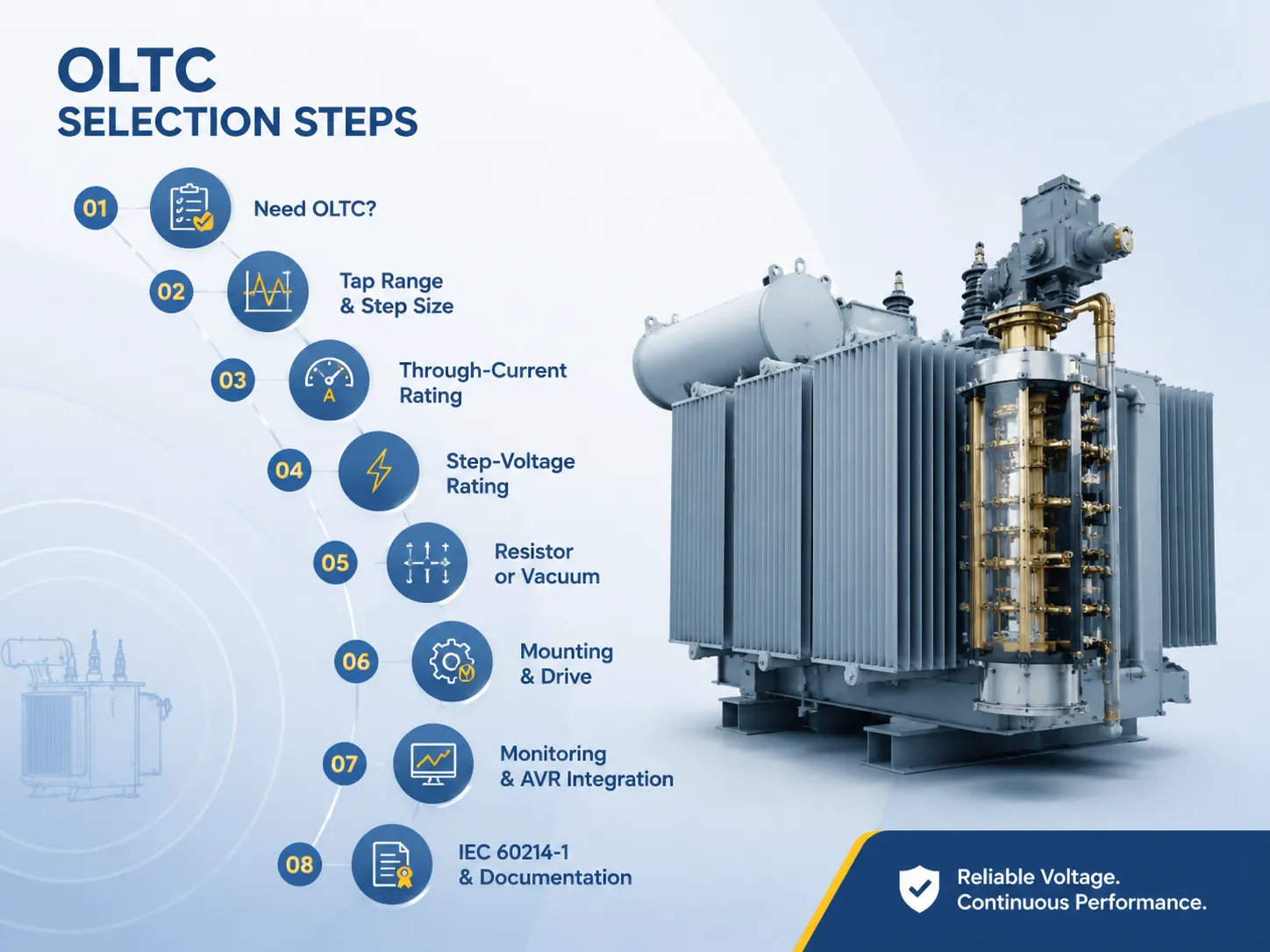
Procedura di selezione passo-passo
- Valutare se un OLTC è necessario. Se la fonte e il carico sono stabili, potrebbe essere necessario solo un cambio manuale, ma nel caso di un trasformatore di potenza, la regolazione automatica è quasi sempre richiesta.
- Determinare la dimensione e l'intervallo del passo di presa in base alla regolazione interna del trasformatore e alle fluttuazioni di tensione.
- Determinare la capacità di corrente in base alla corrente massima disponibile durante il funzionamento continuo con sovraccarichi.
- Controllare nuovamente la tensione del passo con la tensione da presa a presa dell'avvolgimento di regolazione.
- Decidere se utilizzare resistori o vuoto in base al budget, al dominio di applicazione e alla frequenza di commutazione.
- Identificare se è necessaria una montatura a torretta o a testa e decidere riguardo all'azionamento del motore, assicurandosi che supporti la tensione corretta e i controlli.
- Elencare i requisiti di monitoraggio e i requisiti per l'integrazione del regolatore automatico di tensione, inclusi la posizione, il contatore, il livello dell'olio e i protocolli di comunicazione.
- Assicurarsi che il certificato di prova di tipo e di prova di processo in conformità con IEC 60214-1 sia disponibile e includere la designazione dell'OLTC nel contratto.
Operazione, Monitoraggio e Manutenzione
La necessità di assistenza all'OLTC è principalmente influenzata dal tipo di OLTC e dalla frequenza con cui si accende e si spegne. Le raccomandazioni includono:
- Monitorare quante volte l'OLTC è stato azionato ogni mese. Un OLTC utilizzato in associazione a un trasformatore di potenza può effettuare 1.000-10.000 commutazioni all'anno; pertanto, gli intervalli di manutenzione dovrebbero essere calcolati in base al conteggio delle operazioni, piuttosto che in base al numero di anni.
- Negli OLTC a resistore, l'olio di installazione del deviatore dovrebbe essere considerato separatamente dall'olio nel serbatoio principale, poiché si carbonizza durante l'operazione di commutazione e degrada molto più rapidamente; filtralo o sostituiscilo secondo l'intervallo specificato dal produttore (~100.000 commutazioni).
- Negli OLTC a vuoto, non si verifica contaminazione durante l'operazione; pertanto, gli intervalli possono essere molto più lunghi (~300.000 commutazioni); tuttavia, il meccanismo e il motore devono essere controllati ad ogni viaggio importante.
- La coppia del motore, la posizione dell'interruttore del relè AVR e la posizione dell'indicatore di posizione devono essere verificate ogni anno.
- Monitorare le temperature e le pressioni dell'olio del deviatore; un aumento della temperatura indica un guasto nei contatti o un processo di commutazione anomalo.
- Registrare il contatore delle operazioni è il più conveniente poiché trasforma “effettuare la manutenzione ogni cinque-sette anni” in “effettuare la manutenzione ogni 100.000 operazioni”, il che significa una differenza considerevole per un trasformatore molto utilizzato.
La manutenzione richiesta da diversi progetti è drasticamente diversa. I due principali tipi di OLTC dovrebbero essere confrontati in base alle tue spese.
| Voce di manutenzione | OLTC di tipo resistivo | OLTC di tipo a vuoto |
|---|---|---|
| Intervallo di cambio dell'olio del deviatore | ~100.000 operazioni | ~300.000 operazioni |
| Tasso di carbonizzazione dell'olio | Moderato a alto | Molto basso |
| Intervallo di ispezione dei contatti | Ad ogni cambio dell'olio | Ogni 2°-3° cambio dell'olio |
| Manutenzione del motore | Stesso per entrambi (controllo annuale) | Stesso per entrambi |
| Costo di manutenzione stimato per 20 anni | $8,000-$20,000 | $4,000-$10,000 |
Domande frequenti
Quanto costa un cambiavalute a carico?
Quale intervallo di tap dovrei specificare per il mio trasformatore principale?
Qual è la differenza tra un cambiavalute a resistore e uno a vuoto?
Quanto spesso un OLTC ha bisogno di manutenzione?
Posso retrofittare un cambiavalute sotto carico a un trasformatore esistente?
Raramente e raramente in modo economico. L'avvolgimento di regolazione, il montaggio della torretta, le tolleranze del serbatoio e il raffreddamento devono tutti adattarsi all'OLTC, e la maggior parte dei trasformatori a tappo fisso non è mai stata progettata per uno. Se hai bisogno di regolazione continua su un'unità esistente, considera un trasformatore di regolazione della tensione separato o un regolatore di tensione in serie. Altrimenti, specifica l'OLTC nella fase di progettazione.
Riferimenti
- IEC 60214-1 — Cambiavalvole, Requisiti di Prestazione e Metodi di Prova — Lo standard principale OLTC che copre i test di tipo e le classificazioni.
- IEC 60214-2 — Regolatori di Tensione, Guida all'Applicazione — Guida alla selezione per gamme, passi e classificazioni.
- IEEE C57.131 — Requisiti per Regolatori di Tensione a Carico — Standard OLTC nordamericano.
- MR Reinhausen — Portale Regolatori di Tensione — La documentazione e i dati sul ciclo di vita del produttore leader di OLTC, VACUTAP/OILTAP.
- IEC 60076-1 — Trasformatori di Potenza, Requisiti Generali — Contesto a livello di trasformatore per l'integrazione e il collaudo del cambiavalute.
- Trasformatori ABB — Riferimento per l'integrazione di trasformatori e regolatori di tensione.
Conclusione
Scegliere il cambiavalute sotto carico per un trasformatore principale è un processo basato sui fatti. La variazione di tensione e la regolazione del trasformatore determinano l'intervallo, mentre la corrente del trasformatore e la capacità di commutazione determinano l'uscita. Finché tutto viene fatto correttamente, l'OLTC svolgerà le sue funzioni per molti anni.
- Calcola l'intervallo di derivazione utilizzando i valori di tensione effettivi e la regolazione interna.
- Valuta l'OLTC in base alle prestazioni di sovraccarico, non solo alla valutazione sulla targa.
- Opta per il tipo a vuoto quando sono coinvolti frequenti commutazioni e non c'è personale.
- Segui i registri delle prestazioni, registra il contatore e conserva il certificato del test di tipo allegato al contratto.