


ユーティリティ企業のプロジェクト担当エンジニアは、132/33 kVの電圧で40 MVAの容量を持つ主変圧器の仕様を策定しています。この変圧器は、地域全体の33 kVの配電バスを調整することができます。変圧器の設計プロセスはほぼ完了していますが、会議で問題が提起された点があります。それは、オンロードタップチェンジャーに関するもので、多くの質問が寄せられました。さまざまなメーカーの評価は技術的な観点から準備されましたが、コストは30%異なる可能性があり、メンテナンス間隔は3倍異なり、異なる設計間のサービスメトリックはデータシートにはありません。エンジニアは、オンロードタップチェンジャーの利用が、変圧器の30年間の運用コストにとって重要であることを理解しています。.
この記事の目的は、主変圧器のオンロードタップチェンジャーの選定に関する情報を提供することであり、タップ範囲、ステップサイズ、電流およびステップ電圧定格、抵抗型と真空型の違い、コスト、供給者に送信する必要がある仕様を含みます。.
答え:オンロードタップチェンジャー装置は、負荷がかかっているときに変圧器の巻線のタップを調整するために使用され、供給の中断なしに電圧を調整します。10 MVA – 60 MVAのユニットの場合、可能な設定範囲はそれぞれ約± 8 × 1.25%または± 6 × 2.5%です。OLTC装置は、変圧器の最大連続定格と同じ通過電流に対して定格されており、ステップ電圧は巻線の電圧と等しいです。.
オンロードタップチェンジャーとは何ですか?
オンロードタップチェンジャー(OLTC)は、電力変圧器に見られるモーター制御装置で、電力が使用されている間に調整コイルのタップ接続を変更します。これは、タップを増減させることによって行われ、ターン比と出力電位差が変わることを示し、OLTCが変動する負荷と電源条件の下での連続電圧調整プロセスにおいて重要な役割を果たすことを示しています。.
現在の電流が流れている間に継続的に操作を行う装置であるため、OLTCは精密機器であり、スイッチングは特定の条件下で行われる必要があり、OLTCが摩耗する前にスイッチングプロセスは何千回も行われなければなりません。.
なぜ主変圧器にはそれが必要なのか
トランスは、送電システムと配電システムの間に設置されます。トランスの両側は、需要の変化やグリッド構成による送電電圧の変化により、日中に負荷の変動を経験する可能性があります。たとえば、対象のトランスの容量が40 MVAの場合、インピーダンスドロップは6-12%の範囲になる可能性があります。したがって、フルロードまたは無負荷の場合、規制はトランス自体の電圧降下に数パーセント影響を与える可能性があります。さらに、33 kVバスが通常の電圧よりも5-8%低下するリスクがあり、これは地元の規制により許可されていません。.
必要な電圧変動を許容範囲内に維持するために、OLTCは通常、自動電圧調整器(AVR)と組み合わせて使用されます。.
OLTCが中断なしに切り替える方法
OLTCは二段階で設計されています。セレクターは、アクティブタップを介してすでに接続されている巻線で新しいタップポイントを機械的に見つけます。したがって、ここでのセレクターの動作はゼロ電流値で行われると考えられます。その後、ダイバータースイッチの時間が来て、原則タップから新しいタップに電流が移動します。遷移インピーダンスは、セレクターとダイバータースイッチの間に配置されているため、流れる電流は決して中断されません。.
抵抗ダイバーターの設計は、電流がその間に配置された1つまたは2つの遷移抵抗器を通過するように機能します。抵抗値は、プロセス中に電流の流れが最小値に制限されるように選択されます。.
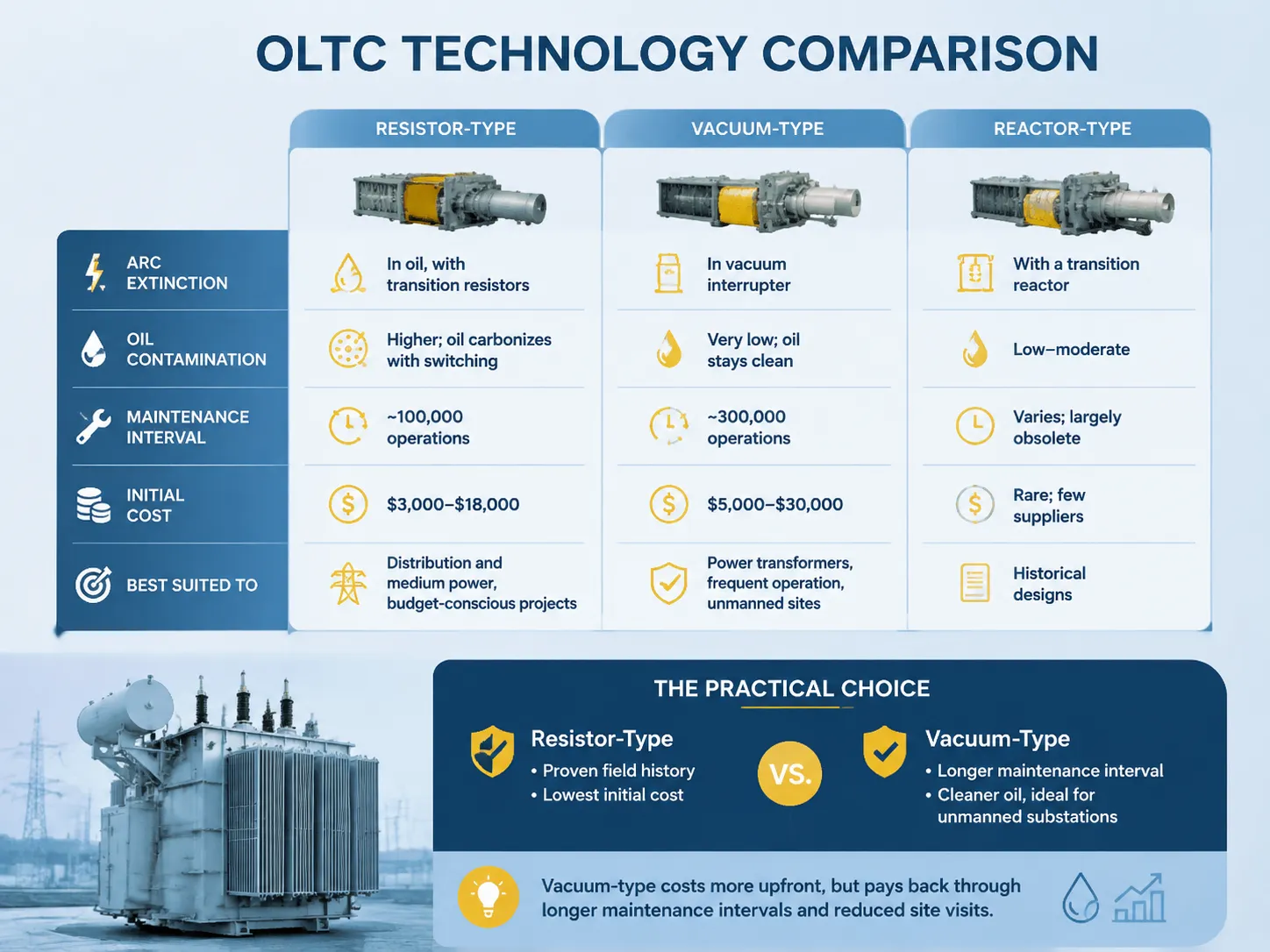
抵抗型 vs. 真空型 vs. リアクターOLTC
| 特徴 | 抵抗型OLTC | 真空型OLTC | リアクター型OLTC(レガシー) |
|---|---|---|---|
| アーク消滅 | 油中、遷移抵抗器を使用 | 真空遮断器内 | 遷移リアクターを使用 |
| 油の汚染率 | 高い; スイッチング時に油が炭化する | 非常に低い; 油は清潔に保たれる | 低-中程度 |
| メンテナンス間隔 | 約100,000回の操作 | 約300,000回の操作 | 変動; 主に時代遅れ |
| 初期コスト | $3,000-$18,000 | $5,000-$30,000 | 稀; 供給者は少ない |
| 最も適しているのは | 配電および中電力、予算を意識したプロジェクト | 電力トランス、頻繁な操作、無人サイト | 歴史的な設計 |
新しい主トランスに関しては、通常、抵抗型または真空型のいずれかを選択できます。抵抗型は長い間使用されており、初期コストが最も低いです。しかし、真空型は、メンテナンス間隔が長く、油交換の要件が少ないため、初期コストが高くなることがあります。これは、油の交換が現場訪問とダウンタイムを必要とする無人変電所の場合に重要な考慮事項となる可能性があります。.
タップ範囲とステップサイズの選択
タップ範囲は電圧制御の計算です。このプロセスは、いくつかのステップで構成されています。
- 実際の電圧変動を測定します。フルロード状態での一次側の電圧とバスの電圧を測定します。実際のグリッドでは、軽負荷とフルロード条件の間で±3-8%変動する可能性があります。.
- トランスのインピーダンスの低下を加えます。フルキャパシティで、10-40 MVAの電力を持つトランスの調整は4-8%に達し、タップはソースの変化と内部の低下の両方を考慮する必要があります。.
- ステップのサイズを決定します。通常、適切な調整を持つ大きなトランスには1.25%のステップが使用され、小さなトランスは2.5%のステップで動作します。.
- 範囲を設定します。±8×1.25%のタップ範囲は16ステップで±10%を提供し、±6×2.5%のタップ範囲は12ステップを使用して±15%を生成します。10MVAから60MVAの範囲内のほとんどのトランスには、最初の範囲が標準として選ばれます。.
- リレーの助けを借りて1ステップでバス電圧を提供し、ハンティングを避けるためのタイムラグを持つAVRについて考えます。また、ステップの数は前述の要件を満たす必要があります。.
結論として、誤った見積もりは結果を招く可能性があります。範囲が狭い場合、トランスは最悪の条件下で電圧を保持できず、範囲が広すぎる場合はOLTCまたはその調整巻線にさらなる費用が必要になることを意味します。.
現在の電流およびステップ電圧定格の理解
| 定格 | 意味 | 10-60 MVAの典型的な値 |
|---|---|---|
| 定格通過電流 | OLTCが運ぶ最大連続電流 | 300-1,250 A(トランスの定格による) |
| 定格ステップ電圧 | 隣接タップ間の電圧 | ステップごとに500-3,000 V |
| 定格切替容量 | ダイバータが処理できる電流×ステップ電圧の積 | スイッチングステップごとに最大約1,000 kVA |
| 動作サイクル | 動作における設計寿命 | 100,000-300,000+ |
| 規格 | 設計および型式試験の基準 | IEC 60214-1/-2、IEEE C57.131 |
通過電流は、トランスの最高連続電流と過負荷係数をカバーする必要があります。したがって、20%過負荷契約の場合、OLTCの定格もこれを反映する必要があります。言い換えれば、ステップ電圧は非常に重要です。なぜなら、高いステップ電圧は低いステップ電圧での高い電流よりもダイバータに対するストレスが大きくなるからです。これは、スイッチング容量試験中にベンダーによって確認されます。.
関係を視覚化するために、指定しているトランスに関連する以下のサイズ参照を提供します。.
| トランス定格 | 高圧電圧 | 最大連続電流 | 一般的なOLTC定格 | OLTC価格範囲 |
|---|---|---|---|---|
| 10 MVA | 66 kV | 約88 A | 100 A、ステップ500-800 V | $4,000-$12,000 |
| 20 MVA | 110 kV | 約105 A | 125 A、ステップ800-1,200 V | $6,000-$16,000 |
| 40 MVA | 132 kV | 約175 A | 200 A、ステップ1,200-1,800 V | $8,000-$22,000 |
| 60 MVA | 220 kV | 約157 A | 200 A、ステップ1,500-2,500 V | $12,000-$30,000 |
定格を確定した後、仕様書には詳細な言語を使用してすべての要件を明確に delineate することが重要です。少なくとも、RFQには以下の項目を明確に指定する必要があります:
- タップ範囲とステップ:明確に指定する必要があります。例:±8×1.25%(17ステップ)高圧巻線で。.
- 定格通過電流:最大連続電流は何か、過負荷運転を含む。.
- ステップ電圧:タップ間の最大電圧。.
- タイプ:抵抗器タイプまたは真空タイプ、タレットマウント設計(ヘッドタイプ)またはタンク内ユニット。.
- モータードライブ:電圧(110/220 DCまたはAC)、トルク制限、ローカルまたはリモート操作、およびAVRインターフェース。.
- モニタリング:位置表示、稼働時間カウンター、油位、およびOLTCスペースの圧力モニタリング。.
- 標準および型式試験:IEC 60214-1に基づく型式試験、さらにプロジェクトが北米に基づいている場合はIEEE C57.131。.
- スペアおよびサービス:メーカーから入手可能なスペアおよびサービス。.
よく無視される最も重要な仕様ポイントが2つあります。まず、過負荷基準で、OLTCはトランスの過負荷能力に対して定格されるべきであり、定格連続能力だけではありません。次に、AVRインターフェースと通信プロトコルで、タップチェンジャーが変電所自動化システムの一部になるか、孤立した手動ベースで動作するかを示します。.
トランスサイズと業務によるOLTC
- 小出力のトランス(5 MVA未満):油浸または油循環トランス(OLTC)はOLTCを使用しないため、回路内タッピングは上流のレギュレーターによる調整で補完されます。.
- 変電所レベルのトランス(5〜60 MVA):OLTCの設置のための電力範囲;直接原因のシステムベースのレギュレーターが使用され、調整されたバスに対する標準的な暫定的影響が伴います。.
- 発電機用昇圧トランス; OELTCオプションは稀であり、発電機の発電能力に応じて発電機またはグリッドレベルで調整が行われます。.
- 工業レベルのトランス(10〜50 MVA):このレベルでもOLTCオプションが利用可能ですが、運用の変更が頻繁に行われる場合は真空タイプのOLTCが選択されます。.
- 炉用トランスおよび整流器トランス; タッピング操作の頻度が高いため、運用には真空タイプのOLTCが望まれます。.
ブランドと価格比較
| ブランド | 起源 | OLTC製品 | おおよその価格範囲 |
|---|---|---|---|
| MR ラインハウゼン | ドイツ | VACUTAP真空およびOILTAP抵抗器シリーズ — グローバルリファレンス | $6,000-$35,000 |
| ABB | スイス/スウェーデン | 完全な変圧器 + OLTCパッケージ | $5,000-$30,000 |
| シーメンス | ドイツ | 大型電力変圧器用OLTC | $6,000-$32,000 |
| 日立エナジー | スイス | 電力変圧器のタップ切替 | $7,000-$35,000 |
| シュナイダーエレクトリック | フランス | 配電クラスのタップチェンジャー | $3,000-$15,000 |
| 江蘇省蘇辺電力(統合) | 中国 | IEC 60214に調整された実績のあるOLTCを備えた変圧器 | $4,000-$15,000(変圧器オプションとして) |
MR技術またはライセンス設計は、世界中のほぼすべての主要な変圧器で使用されています。VACUTAPシリーズの真空タップチェンジャーは、メンテナンスフリーの運転の標準を設定したものです。ABB、シーメンス、日立エナジーは、それぞれ独自のOLTC技術を提供しています。OLTCは通常、変圧器契約の中で指定された項目であり、選択は変圧器メーカーの能力とプロジェクトのメンテナンス哲学に依存します。江蘇省蘇辺電力は、頻繁な切替用の真空タイプを含む、テスト済みのOLTCを変圧器に設置するメーカーの一つです。追加のOLTCが付属する製品を購入する代わりに、バイヤーはターレット、ドライブ、AVRを含むターンキーアセンブリを一つの完全なシステムとして受け取ります。蘇辺の効率的な生産と価格政策により、OLTC変圧器の価格帯は、欧州メーカーの類似製品と比較して約40-60%低くなっています。しかし、選択するブランドに関係なく、契約書には常にOLTCタイプを明記し、型式試験証明書を確認してください。.
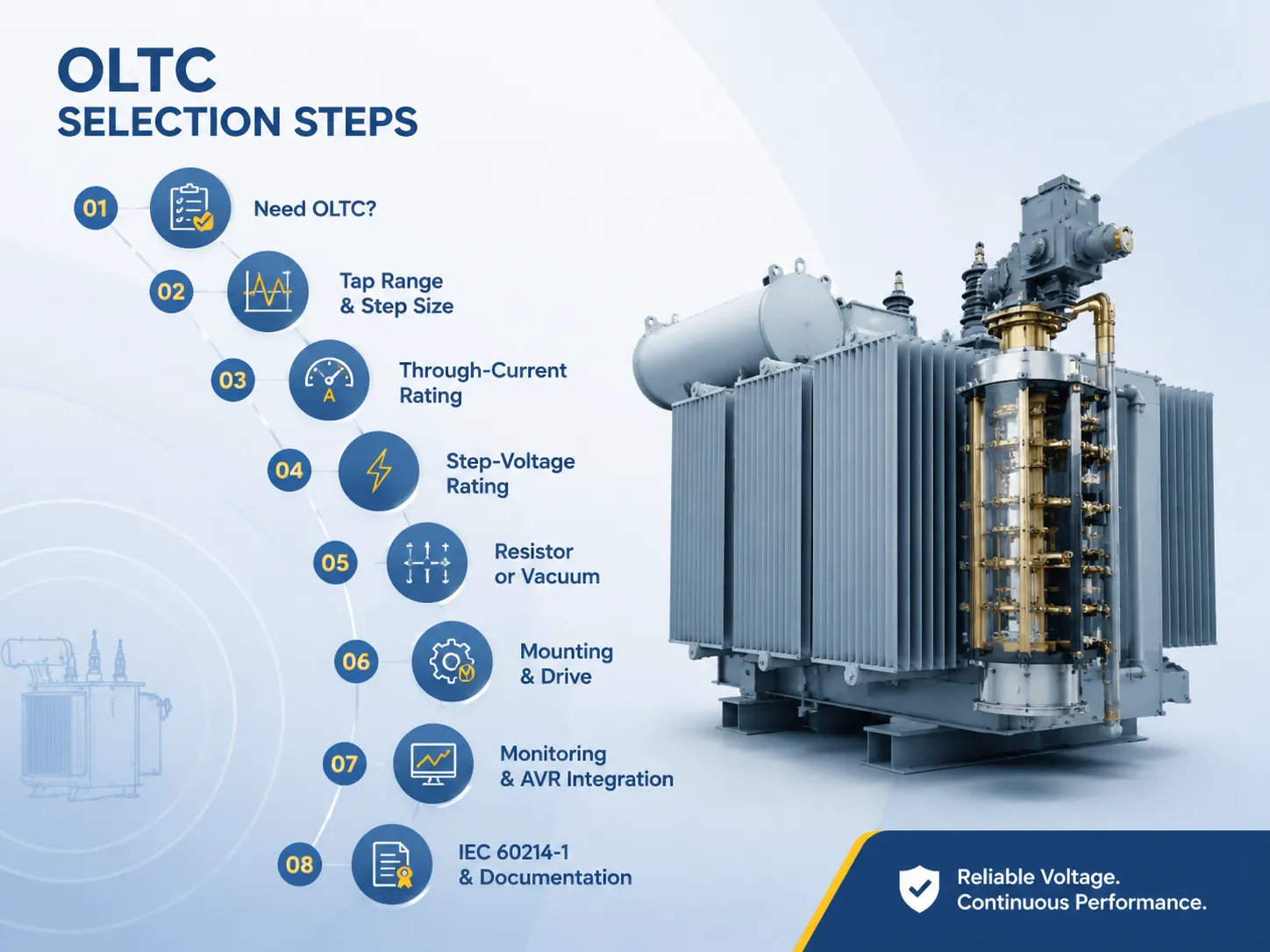
ステップバイステップの選定手順
- OLTCが必要かどうかを評価します。電源と負荷が安定している場合、手動タップのみで済むことがありますが、電力変圧器の場合、自動調整がほぼ常に必要です。.
- 変圧器の内部調整および電圧変動に応じて、タップステップサイズと範囲を決定します。.
- 過負荷時の連続運転中に利用可能な最大電流に基づいて、電流容量を決定します。.
- 調整巻線のタップ間電圧とステップ電圧を再確認します。.
- 予算、適用分野、および切替頻度に基づいて、抵抗器または真空を使用するかを決定します。.
- ターレットまたはヘッドマウントが必要かどうかを特定し、正しい電圧と制御を持つモータードライブを決定します。.
- 位置、カウンター、油位、および通信プロトコルを含む自動電圧調整器の統合要件をリストします。.
- IEC 60214-1に従った型式試験およびプロセステストの証明書が利用可能であることを確認し、契約書にOLTCの指定を含めます。.
操作、監視、およびメンテナンス
OLTCのサービスが必要かどうかは、主にOLTCの種類とオンオフの切替頻度によって影響されます。推奨事項には以下が含まれます:
- OLTCが毎月何回操作されたかを追跡します。電力変圧器と関連して使用されるOLTCは、年間1,000-10,000回の切替を行う可能性があるため、メンテナンス間隔は年数ではなく、操作回数に基づいて計算する必要があります。.
- 抵抗器OLTCでは、ダイバータ設置用のオイルはメインタンクのオイルとは別に考慮する必要があります。スイッチング操作中に炭化し、はるかに早く劣化するため、メーカーが指定した間隔に従ってフィルターまたは交換してください(約100,000回のスイッチ)。.
- 真空OLTCでは、運転中に汚染は発生しません。そのため、間隔ははるかに長くなる可能性があります(約300,000回のスイッチ)。それでも、メカニズムと駆動装置は主要なトリップごとにチェックする必要があります。.
- モータードライブのトルク、AVRリレーのスイッチの位置、および位置指示器の位置は毎年確認する必要があります。.
- ダイバータオイルの温度と圧力を監視してください。温度の急上昇は、接点の故障または異常なスイッチングプロセスを示します。.
- 操作カウンターを記録することは最もコスト効果が高く、「5年から7年ごとにメンテナンスを行う」を「100,000回の操作ごとにメンテナンスを行う」に変えるため、忙しいトランスフォーマーにとっては大きな違いを意味します。.
異なる設計によって必要なメンテナンスは大きく異なります。2つの主要なタイプのOLTCは、支出に基づいて比較する必要があります。.
| メンテナンス項目 | 抵抗型OLTC | 真空型OLTC |
|---|---|---|
| ダイバータオイルの交換間隔 | 約100,000回の操作 | 約300,000回の操作 |
| オイルの炭化率 | 中程度から高い | 非常に低い |
| 接点検査の間隔 | 各オイル交換時 | 2回目から3回目のオイル交換ごと |
| モータードライブのメンテナンス | 両方とも同じ(年次チェック) | 両方とも同じ |
| 推定20年間のメンテナンスコスト | $8,000-$20,000 | $4,000-$10,000 |
よくある質問
負荷時タップチェンジャーのコストはいくらですか?
メイントランスフォーマーに指定すべきタップ範囲は何ですか?
抵抗器と真空の負荷時タップチェンジャーの違いは何ですか?
OLTCはどのくらいの頻度でメンテナンスが必要ですか?
既存の変圧器にオンロードタップチェンジャーを retrofit できますか?
ほとんどの場合、経済的には難しいです。調整巻線、タレットマウント、タンククリアランス、冷却はすべてOLTCに適合する必要があり、ほとんどの固定タップ変圧器はそのために設計されていません。既存のユニットで連続的な調整が必要な場合は、別の電圧調整変圧器またはシリーズ電圧レギュレーターを検討してください。それ以外の場合は、設計段階でOLTCを指定してください。.
参考文献
- IEC 60214-1 — タップチェンジャー、性能要件および試験方法 — タイプ試験と定格をカバーするコアOLTC標準。.
- IEC 60214-2 — タップチェンジャー、アプリケーションガイド — 範囲、ステップ、および定格の選択ガイダンス。.
- IEEE C57.131 — 負荷タップチェンジャーの要件 — 北米のOLTC標準。.
- MR Reinhausen — タップチェンジャーポータル — 主要なOLTCメーカーのVACUTAP/OILTAP文書およびライフサイクルデータ。.
- IEC 60076-1 — 電力変圧器、一般要件 — タップチェンジャー統合および試験のためのトランスフォーマーレベルのコンテキスト。.
- ABBトランスフォーマー — 変圧器とタップチェンジャーの統合に関するリファレンス。.
結論
主要なトランスフォーマーの負荷タップチェンジャーを選択するプロセスは、事実に基づいています。電圧の変動とトランスフォーマーの調整が範囲を決定し、トランスフォーマーの電流と切替能力が出力を決定します。すべてが正しく行われれば、OLTCは何年もその機能を果たします。.
- 実際の電圧値と内部調整を使用してタップ範囲を計算します。.
- プレート上の定格だけでなく、過負荷性能に基づいてOLTCを評価します。.
- 頻繁な切替が関与し、人がいない場合は真空タイプを選択します。.
- パフォーマンス記録を追跡し、カウンターを記録し、契約に添付されたタイプ試験の証明書を保持します。.