


Presso un'azienda di logistica sulla costa del paese, il responsabile delle spedizioni per l'esportazione sta esaminando le prenotazioni del trimestre, che mostrano che quarantotto container stanno partendo per l'Africa occidentale, e ogni carico contiene o un paio di sottostazioni prefabbricate o una stazione prefabbricata. C'è una stazione che si distingue — una sottostazione di tipo box rivestita in acciaio inossidabile. Questo container è diretto verso un progetto di sviluppo di un resort sulla spiaggia a Lagos, dove l'aria salina ha corroso due involucri in acciaio ordinario in tre anni. L'ordine di acquisto del cliente indica la necessità di acciaio inossidabile perché il personale di manutenzione si trova a quattrocento chilometri dalla struttura più vicina e non può affrontare il problema della riverniciatura dell'involucro due volte all'anno.
Le sottostazioni prefabbricate in acciaio inossidabile sono tra gli articoli per l'esportazione in più rapida crescita per i produttori di trasformatori — e il motivo è ovvio. Questa pubblicazione descrive in dettaglio come le sottostazioni prefabbricate in acciaio inossidabile siano diverse dalle altre, cosa spinge le aziende a sceglierle ripetutamente, come vengono prodotte e consegnate, e quali sono i loro prezzi.
Una sottostazione prefabbricata in acciaio inossidabile è definita come una sottostazione di trasformazione di tipo box fabbricata in fabbrica con l'involucro in acciaio inossidabile della stazione (grado 304 o 316) che offre resistenza alla corrosione C5 senza la necessità di essere riverniciata. È caratterizzata dal fatto che tutte le colonne ordinarie necessarie sono presenti all'interno dell'involucro in una cabina resistente alle intemperie secondo la norma EC 62271-202. È richiesta dagli utenti di aree costiere, offshore, chimiche e tropicali perché ottimizza i costi di riverniciatura.
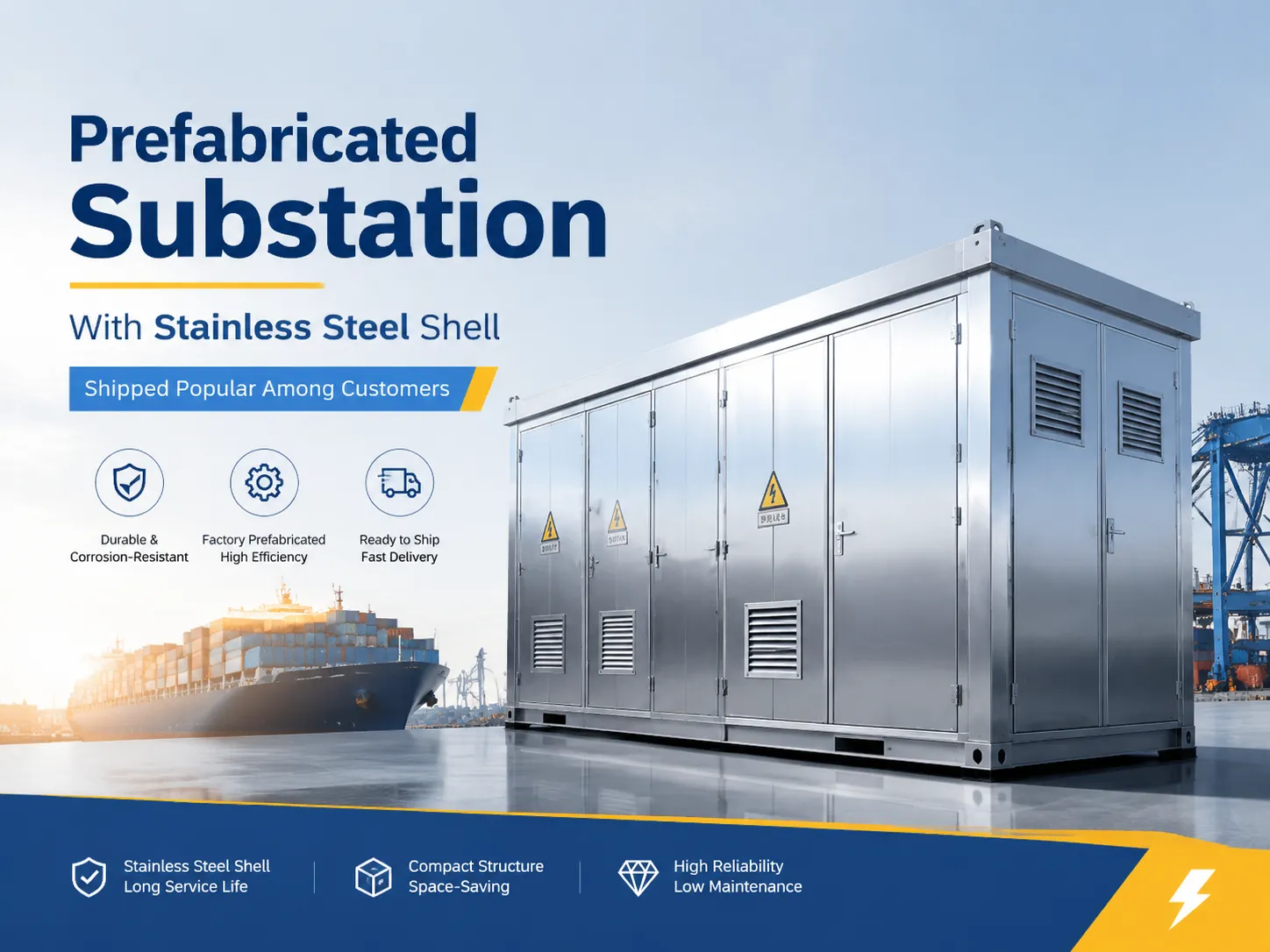
Cos'è una sottostazione prefabbricata in acciaio inossidabile?
Le sottostazioni prefabbricate sono talvolta chiamate “sottostazioni a box” o “sottostazioni compatte”. Queste sottostazioni sono pre-costruite in involucri completamente attrezzati che possono essere facilmente trasportati sul sito. Arrivano sul sito come due box. I due box contengono ogni parte che una sottostazione di distribuzione standard ha, incluso il trasformatore, l'apparecchiatura di media tensione, l'apparecchiatura di bassa tensione, il contatore e i dispositivi ausiliari. Il termine “acciaio inossidabile” in questo caso si riferisce all'involucro della sottostazione.
| Componente | Configurazione standard | Note |
|---|---|---|
| Trasformatore | 50–2.500 kVA, immerso in olio o di tipo secco | Installato in un compartimento ventilato con contenimento |
| Interruttori MV | Unità di anello principale (RMU) o interruttore, 12–36 kV | Unità isolate in SF6 o a vuoto comuni |
| Apparecchiatura di bassa tensione | Pannelli ACB/MCCB a 400 V | Misurazione e protezione integrate |
| Guscio dell'involucro | Acciaio inossidabile 304 o 316 | Secondo IEC 62271-202 con classificazione IP54/55 |
| Sistemi ausiliari | Illuminazione, ventilazione, riscaldatori, misurazione | Pre-cablato e testato in fabbrica |
Il principale standard internazionale in questo contesto è IEC 62271-202, che delinea i requisiti per la sicurezza, l'accessibilità, la ventilazione e il collaudo delle sottostazioni prefabbricate. Una sottostazione conforme viene testata contro l'aumento di temperatura, i test di cortocircuito e dielettrici con l'involucro completo in posizione e non solo con l'uso del trasformatore.
Perché Acciaio Inossidabile? L'Argomento della Corrosione
L'uso diffuso di involucri in acciaio inossidabile si basa su un fatto ingegneristico: Quando l'acciaio al carbonio è verniciato, si corrode nell'ambiente—il costo di riverniciatura nel ciclo di vita della sottostazione è maggiore del premio per l'acciaio inossidabile. La scienza:
- Corrosione: Nelle zone costiere, i cloruri nell'aria attaccano l'acciaio al carbonio. I sistemi di verniciatura per aree C2/C3 falliscono in 2-5 anni in condizioni costiere; anche le vernici di grado C5 devono essere controllate regolarmente ogni 5-10 anni.
- Comportamento dell'acciaio inossidabile: L'acciaio inossidabile crea uno strato protettivo composto da ossido di cromo che è auto-riparante. Ad esempio, il grado 304 resiste a condizioni costiere difficili, mentre il grado 316 è dotato dell'additivo molibdeno, che elimina i cloruri—l'acciaio inossidabile di grado 316 è ampiamente utilizzato in località offshore e chimiche.
- Costo: Ad esempio, una sottostazione in acciaio al carbonio verniciato con rivestimento C5 costa da $3.000 a $6.000, mentre quella costruita in acciaio inossidabile di grado 316 costa da $7.000 a $12.000.
- Considerando che il ciclo di vita di un rivestimento superficiale è di circa dieci anni, non è economico nemmeno a $2.500 per la riverniciatura.
Detto ciò, la verità effettiva sottende il fatto per cui i clienti delle zone costiere, dei climi caldi, dei siti di produzione chimica o dei luoghi con alta prevalenza di umidità preferiscono l'acciaio inossidabile per le loro esigenze.
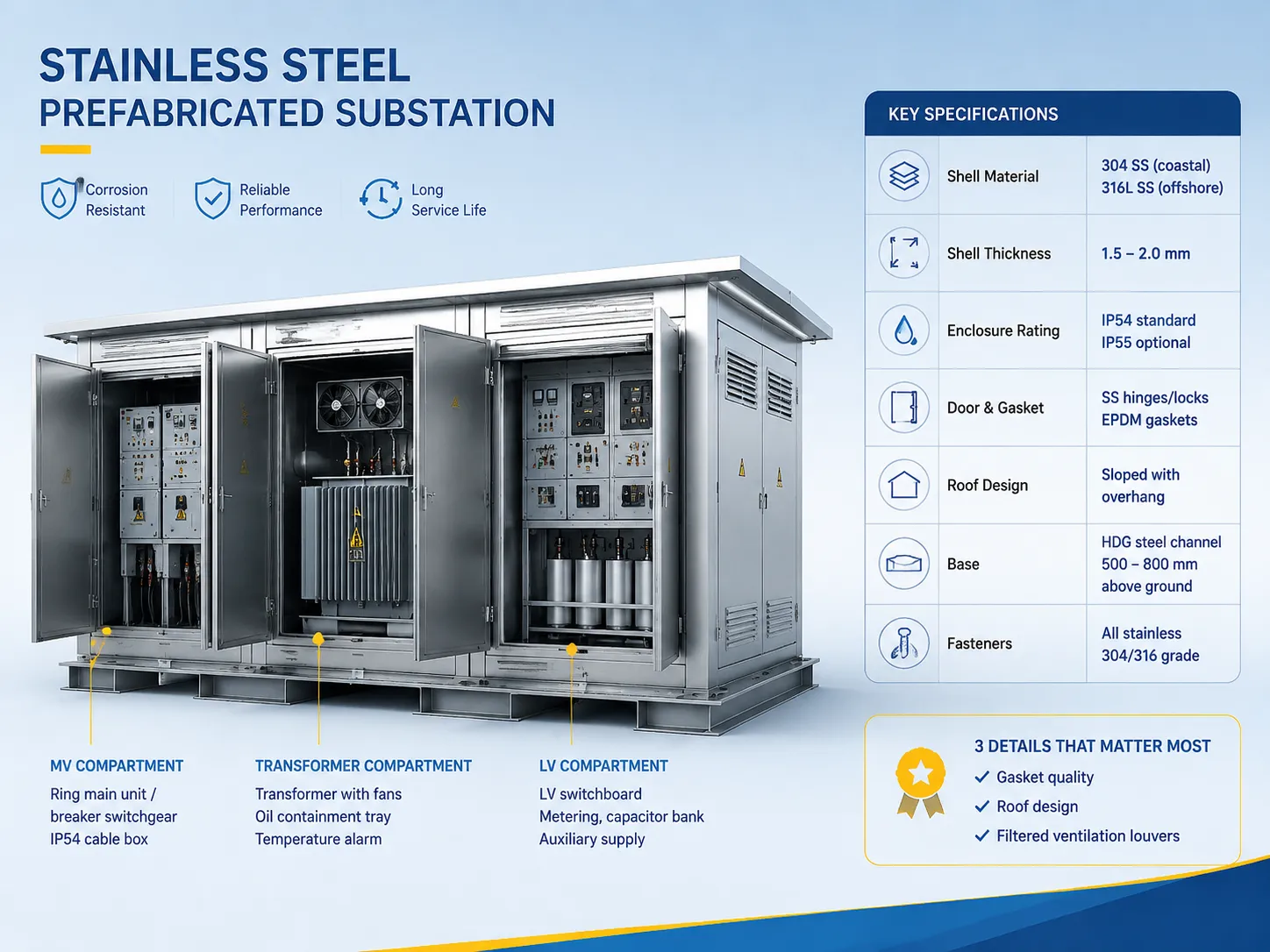
Struttura e Componenti
La sottostazione prefabbricata in acciaio inossidabile è più di un semplice trasformatore imballato in una scatola. Un'unità tipica è montata su una base a skid in una configurazione a tre zone.
- Comparto MV: Contiene l'unità principale ad anello o gli interruttori e il cavo in ingresso collegato alla sua scatola di cavi con grado di protezione IP54.
- Comparto Trasformatore: Ospita il trasformatore con ventilazione forzata (i ventilatori dimensionati secondo l'aumento di temperatura dell'unità), il vassoio di raccolta dell'olio e l'allarme attivato dalla temperatura.
- Comparto LV: Contiene il quadro elettrico LV, il sistema di misurazione, la batteria di condensatori (opzionale) e l'alimentazione ausiliaria con riscaldatori per prevenire la condensazione.
Il coperchio in acciaio inossidabile ha uno spessore di circa 1,5–2,0 mm, e le seguenti caratteristiche devono essere specificate dall'acquirente:
| Dettaglio | Specifica Raccomandata |
|---|---|
| Materiale della Scocca | Acciaio inossidabile 304 (costiero) / 316L inossidabile (offshore, chimico) |
| Spessore della Scocca | Pannelli di 1,5–2,0 mm, angoli rinforzati |
| Classe di protezione dell'involucro | Standard IP54, IP55 con rischio di spruzzi d'acqua |
| Porta e guarnizione | Cerniere/serrature in acciaio inossidabile, guarnizioni EPDM, sigilli antipolvere |
| Design del Tetto | Inclinato con sporgenza, canale di gocciolamento |
| Base | Canale in acciaio zincato a caldo, 500–800 mm sopra il suolo |
| Fissaggi | Tutti in acciaio inossidabile, gradi 304/316 |
I clienti citano sempre tre punti principali mentre considerano i fornitori, ovvero, la qualità della guarnizione, il design del tetto superiore e se le griglie di ventilazione sono schermate da insetti e polvere. Questi fattori influenzano la vita utile reale piuttosto che il tipo di apparecchiatura di manovra.
Come Viene Costruito e Testato
Il grande vantaggio di una sottostazione modulare è il fatto che viene costruita, testata e rigorosamente documentata prima di essere spedita dallo stabilimento di produzione. Il processo di produzione di una tale sottostazione e di garanzia della sua qualità prevede la seguente sequenza di passaggi:
- Produzione: Il rivestimento in acciaio inossidabile viene tagliato con un laser, piegato e saldato nella forma desiderata.
- Assemblaggio interno: L'attrezzatura elettrica, o parti dell'assemblaggio, sono posizionate sull'unità e fissate in posizione.
- Fili e connettori: Il cablaggio interno è fissato e etichettato in conformità con gli schemi.
- Test in fabbrica: La sottostazione è testata per isolamento, funzionamento dei circuiti e durata.
- Documentazione: l'unità viene spedita con tutti i documenti necessari, inclusi i rapporti di prova.
Il grande vantaggio per gli acquirenti di export-import è che visitando la fabbrica per assistere ai test in fabbrica, l'acquirente ha la possibilità di identificare 80% dei difetti che altrimenti verrebbero trascurati presso il sito estero senza un laboratorio locale.
Spedizione e installazione
Poiché sono costruite per essere spedite, le sottostazioni prefabbricate sono preferite dai clienti di esportazione per diversi motivi. Secondo le informazioni logistiche:
| Fattore | Valori tipici |
|---|---|
| Modalità di spedizione | Container flat-rack o open-top per unità fino a 2.500 kVA; break-bulk per unità molto grandi |
| Dimensioni dell'unità | 2,4–3,0 m di larghezza, 2,6–3,2 m di altezza, 4–12 m di lunghezza |
| Peso | 3–12 tonnellate per unità da 400–2.500 kVA |
| Lavori in loco | Fondazione in cemento, trincea per cavi, un sollevamento con gru, fissaggio alla fondazione |
| Messa in servizio | 2–5 giorni con un ingegnere di fabbrica o un partner locale |
Poiché le unità fornite dall'agenzia vengono trasportate come un'unità testata singola, l'installazione effettiva richiede 2-5 giorni rispetto a 4-8 settimane per la versione tradizionale in mattoni, il che è convincente per i clienti coinvolti in progetti difficili o urgenti.
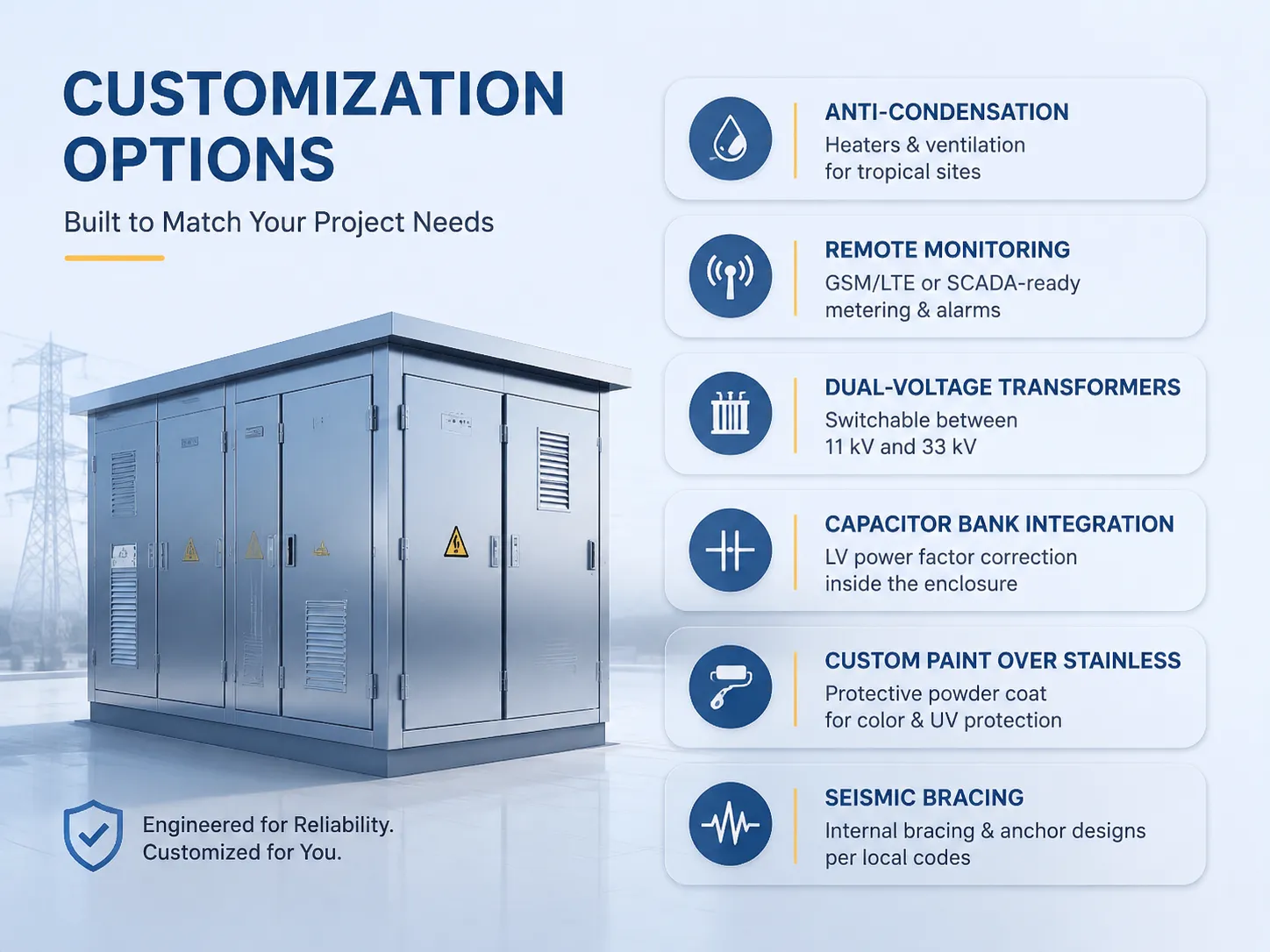
Opzioni di personalizzazione scelte dai clienti
Acquistare sottostazioni in acciaio inossidabile “pronte all'uso” non è molto comune. I clienti di esportazione chiedono frequentemente le seguenti modifiche personalizzate:
- Sistemi di controllo della condensazione: Un insieme di sistemi di ventilazione sensibili all'umidità e sistemi di riscaldamento controllati termostaticamente progettati per climi tropicali — $500-$2.000.
- Sistemi di controllo remoto: Dispositivi di misurazione e sistemi di allerta pronti per GSM/LTE o SCADA — $800-$3.000.
- Trasformatori con tensioni multiple: Trasformatori che possono funzionare sia con linee elettriche da 11kV che da 33kV da utilizzare nelle regioni dove esistono reti miste.
- Installazione di banchi di condensatori: Alcuni apparecchi per la correzione del fattore di potenza che impiegano sistemi a bassa tensione — $2.000 – $8.000.
- Verniciatura personalizzata su acciaio inossidabile: Diverse aziende possono scegliere di far dipingere le loro unità in acciaio inossidabile per scopi decorativi.
- Rinforzo sismico: In aree con attività sismica, i progettisti forniscono supporti interni e soluzioni di ancoraggio secondo le normative locali.
La capacità dei produttori di costruirlo in fabbrica invece di lasciare l'installazione ai contraenti locali consente loro di applicare un prezzo premium per le loro sottostazioni costruite in fabbrica.
Costi e Fasce di Prezzo
I costi delle sottostazioni prefabbricate in acciaio inossidabile variano in base alle loro classifiche, ai tipi di apparecchiature di manovra, ai nomi e al livello di integrazione, quindi il seguente intervallo mostra il prezzo FOB indicativo di esportazione di un'unità completa composta da apparecchiature di manovra RMU, trasformatore immerso in olio e pannello LV.
| Valutazione | Classe di Tensione | Involucro in acciaio al carbonio | Involucro in acciaio inossidabile (304/316) |
|---|---|---|---|
| 400–630 kVA | 10–35 kV | $7.000–$18.000 | $8.000–$22.000 |
| 800–1.250 kVA | 10–35 kV | $11.000–$28.000 | $13.000–$33.000 |
| 600–2.500 kVA | 10–35 kV | $24.000–$50.000 | $28.000–$60.000 |
Il costo della sottostazione prefabbricata in acciaio inossidabile è molto influenzato dalla classe di perdita del trasformatore, dal produttore dell'apparecchiatura di manovra e da altri fattori come la misurazione e il monitoraggio. Convenzionalmente, l'acciaio inossidabile aumenta il prezzo di 15%-30% rispetto a quello dell'acciaio al carbonio verniciato – questa spesa si ripaga negli 8-12 anni senza la necessità di riverniciare.
Top Brand e Confronto Prezzi
I produttori di sottostazioni prefabbricate sono sia grandi aziende elettriche sviluppate che piccole aziende specializzate. La seguente tabella illustra i prezzi indicativi per una stazione in acciaio inossidabile da 1000kVA, 33/0.4kV dotata di RMU e pannello LV.
| Marca | Paese | Punti di forza della sottostazione prefabbricata | Prezzo Indicativo (USD) |
|---|---|---|---|
| Schneider Electric | Francia | Gamma globale di RMU e sottostazioni compatte | $24.000–$40.000 |
| Siemens | Germania | Pacchetti integrati di media tensione, opzioni digitali | $25.000–$42.000 |
| ABB | Svizzera | Ampio portafoglio di sottostazioni compatte | $24.000–$41.000 |
| Eaton | USA | Eredità delle sottostazioni montate su basamento in Nord America | $22.000–$38.000 |
| ZPUE / AUSY (specialisti) | Polonia / Europa | Ingegneria dedicata per sottostazioni prefabbricate | $22.000–$45.000 |
| Jiangsu Subian Energia Elettrica | Cina | Unità IEC 62271-202, acciaio inossidabile 304/316, testate per l'esportazione, OEM | $13.000–$33.000 |
I principali marchi internazionali offrono ai loro clienti riconoscimento del marchio, ampie reti di assistenza in tutto il mondo e alta integrazione dell'apparecchiatura di manovra, che è molto importante per coloro che necessitano di requisiti speciali di finanziamento e assicurazione; pertanto, la reputazione della Jiangsu Subian Electric Power Company si basa sul lavoro perfetto svolto in questo campo in particolare, utilizzando unità certificate IEC 62271-202 dotate di involucri in acciaio inossidabile 304/316. Il suo successo è spiegato dalla buona reputazione dell'azienda, dalla consegna efficiente e dalla flessibilità delle unità prodotte.
Domande frequenti
Perché l'acciaio inossidabile è migliore dell'acciaio verniciato per gli involucri delle sottostazioni?
Nel caso dell'acciaio inossidabile, possiede la capacità di creare un ossido passivo che si ripara da solo, eliminando quindi la necessità di riverniciarlo. L'acciaio al carbonio, tuttavia, soffre di corrosione in siti costieri in due-cinque anni, anche con l'uso di sistemi di verniciatura C3/C4, richiedendo quindi la riverniciatura ogni cinque-dieci anni, con un costo di $2,500–$5,000 ogni volta. Pertanto, in 15 anni, l'acciaio inossidabile è tipicamente più economico e non dovrai preoccuparti della disconnessione poiché non ha bisogno di essere verniciato di nuovo.
Qual è la differenza di prezzo tra involucri in acciaio inossidabile e acciaio al carbonio?
Per una sottostazione da 1000 kVA, l'involucro in acciaio inossidabile 304/316 aggiunge dal 15 al 30 percento al costo rispetto al costo dell'acciaio al carbonio verniciato, che ammonta a $4,000–$8,000. Di conseguenza, due periodi di riverniciatura annullano la differenza finanziariamente significativa entro dieci anni, motivo per cui l'acciaio inossidabile è tipicamente specificato dai clienti che operano in regioni costiere o da aziende chimiche.
Quale grado di acciaio inossidabile dovrei scegliere, 304 o 316?
Il grado 304 di acciaio inossidabile sarà sufficiente per la maggior parte dei casi di siti costieri e tropicali. Tuttavia, si raccomanda l'uso del grado 316 di acciaio inossidabile per piattaforme offshore tropicali, aree costiere con spruzzi di mare diretto e impianti chimici situati in ambienti con cloruri. L'uso dell'acciaio inossidabile 316 aumenta i costi di produzione del guscio del 10-20 percento, ma vale la pena della spesa quando si verificano esposizioni al sale e altri fattori disturbanti.
Quanto tempo ci vuole per installare una sottostazione prefabbricata in loco?
L'installazione di un'unità già prefabbricata richiede da 2 a 5 giorni, rispetto a 4-8 settimane necessarie per costruire una sottostazione convenzionale in muratura. Il processo di installazione dell'unità prefabbricata include la preparazione di una piastra di cemento e il sollevamento utilizzando un verricello, oltre al serraggio, alla terminazione delle connessioni e all'entrata in funzione del dispositivo.
Quali test dovrei richiedere prima che una sottostazione in acciaio inossidabile venga spedita?
Devono essere eseguiti almeno i seguenti test: test di routine sui trasformatori come quelli specificati nello standard IEC 60076 (rapporto, resistenza di isolamento, perdite e aumento di temperatura), test sugli interruttori, test dielettrici e test sui circuiti ausiliari. Se sono richiesti test aggiuntivi, è possibile includere i test di aumento di temperatura secondo lo standard IEC 62271-202 nella specifica del prodotto.
Riferimenti
- IEC 62271-202 — Apparecchiature di interruttori ad alta tensione: Sottostazioni di trasformatori prefabbricati — lo standard di riferimento per la progettazione, la sicurezza e il collaudo delle sottostazioni di tipo box.
- IEC 60076 serie — Trasformatori di potenza — lo standard di base per il trasformatore all'interno della sottostazione prefabbricata.
- IEC 60529 — Gradi di protezione forniti dagli involucri (Codice IP) — definisce le classificazioni IP54/IP55 utilizzate nelle specifiche delle custodie.
- ISO 12944 — Protezione dalla corrosione delle strutture in acciaio — il quadro di corrosività della vernice che rende concreto il confronto tra acciaio inossidabile e verniciato.
- Forum Internazionale dell'Acciaio Inossidabile (worldstainless) — dati autorevoli sulle prestazioni di corrosione di 304/316 in atmosfere marine.
- NEMA — standard per sottostazioni a montaggio su basamento — equivalenti nordamericani e linee guida per l'applicazione delle sottostazioni compatte.
- Jiangsu Subian Electric Power — sito ufficiale — esportatore di sottostazioni prefabbricate in acciaio inossidabile IEC 62271-202.
Conclusione
Le sottostazioni prefabbricate in acciaio inossidabile sono diventate una preferenza per i clienti offshore e costieri grazie a tre fattori principali: le prestazioni a prova di corrosione in ambienti aggressivi, il tempo di installazione ottimizzato da settimane a soli giorni grazie alla prefabbricazione e ai test in fabbrica, e un costo totale del ciclo di vita più favorevole rispetto alle custodie verniciate in meno di un decennio. Criteri di specifica chiave come il grado 304 vs. 316, guarnizioni, design del tetto, classificazione IP, filtri di ventilazione e un test di fabbrica riflettono se una sottostazione può servire per il giusto periodo di tempo o richiederà manutenzione continua.
Per riassumere:
- Scegli il 316/316L per applicazioni offshore, spruzzi di mare o chimiche, e 304 per uso costiero generale.
- Assegna 15-30% per il premio della custodia in acciaio inossidabile in cambio di nessuna riverniciatura nei prossimi 8-10 anni.
- Richiedi la conformità IEC 62271-202 e i test richiesti in fabbrica prima della partenza
- Ordina la presenza in fabbrica per il collaudo degli ordini di esportazione
- Scegli il giusto equilibrio tra marchi globali come Schneider, Siemens e ABB e esportatori certificati IEC come Jiangsu Subian Electric Power per il controllo dei costi e la conformità