


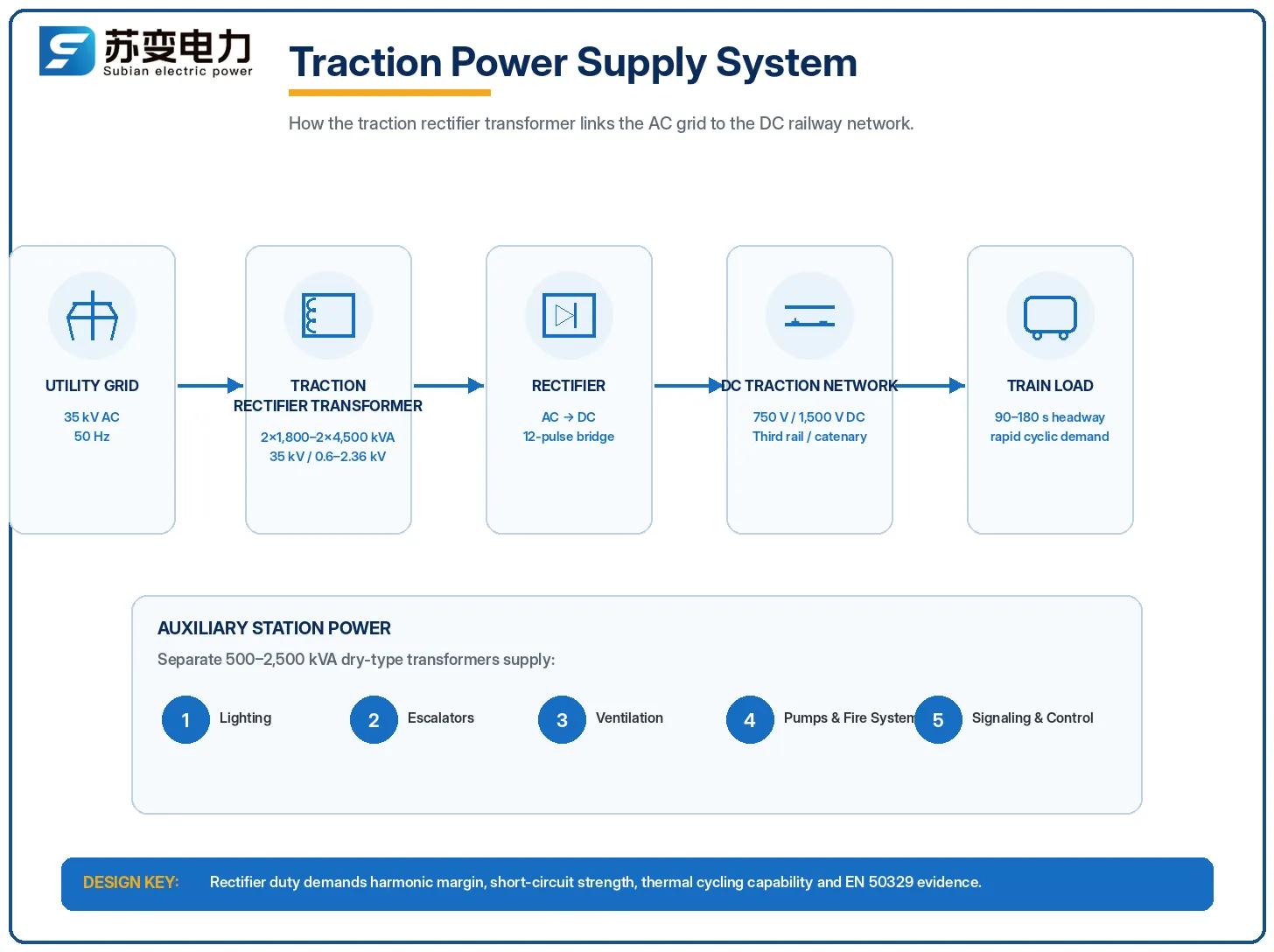
In qualità di ingegnere della potenza di trazione responsabile di una linea metropolitana di 45 km in grado di trasportare 80.000 passeggeri al giorno con intervalli di 90 secondi, utilizzerai un sistema di alimentazione di trazione composto da 35 kV AC. Questa distribuzione AC fornirà corrente a dodici sottostazioni di potenza di trazione che convertiranno l'energia in 750 V DC che sarà fornita tramite una terza rotaia. Allo stesso tempo in cui questo processo viene eseguito, ci sarà un altro set completo di trasformatori che fornirà energia ausiliaria per l'illuminazione all'interno delle stazioni, le scale mobili, i ventilatori di ventilazione e la segnalazione [1].
Il livello di competenze ingegneristiche elettriche necessario per lavorare con i trasformatori nel trasporto ferroviario è a un livello completamente diverso rispetto a qualsiasi altra applicazione. L'articolo descriverà i vari requisiti di progettazione per i trasformatori nel trasporto ferroviario, inclusi i trasformatori rettificatori di trazione, i trasformatori ausiliari, le misure per garantire la loro conformità agli standard IEC e i modi per affrontare i problemi con la loro dissipazione di calore, le correnti armoniche e la resistenza agli urti.
Perché i trasformatori ferroviari sono diversi
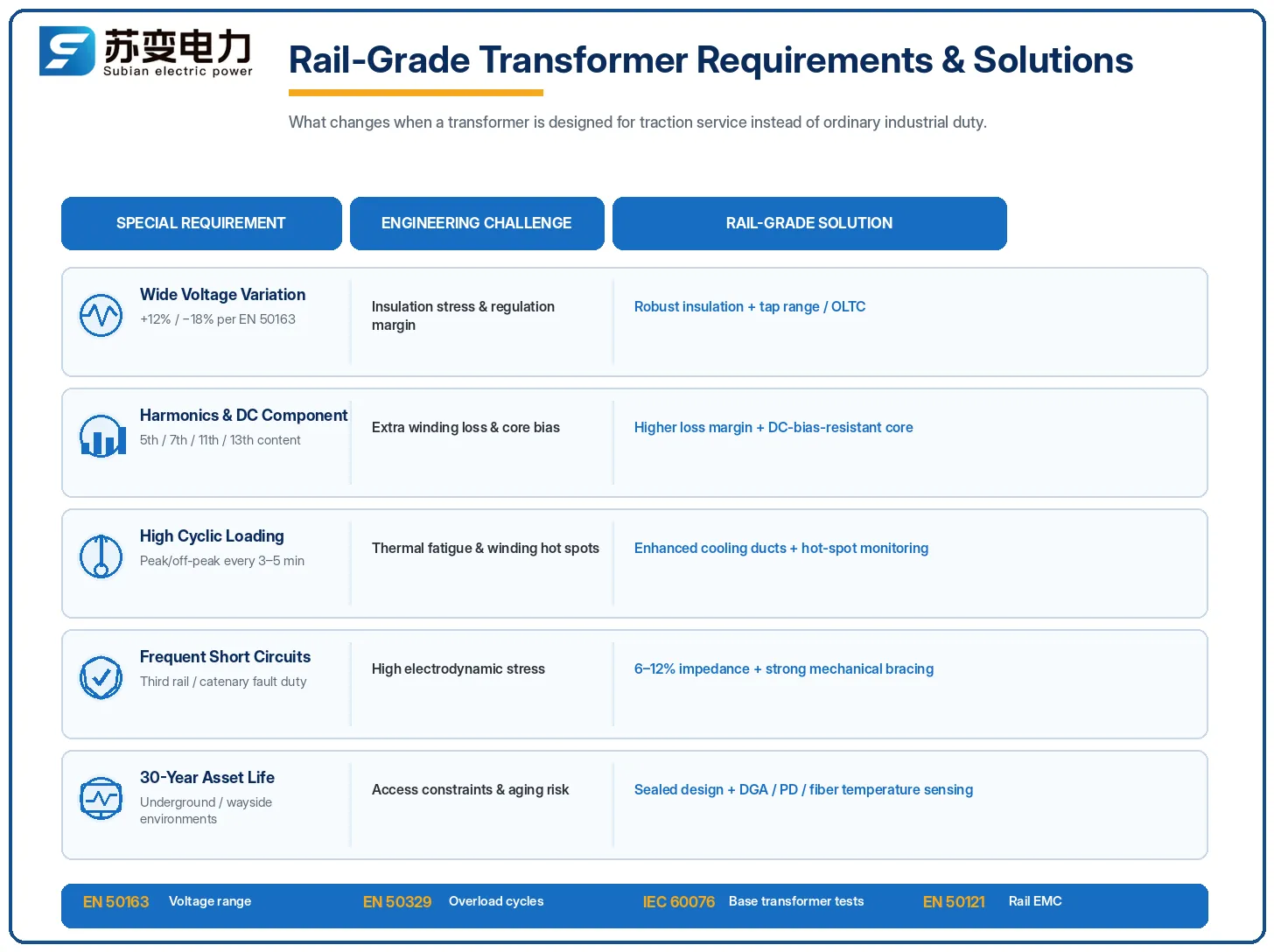
I trasformatori per il trasporto ferroviario operano all'incrocio di tre regimi impegnativi: qualità della potenza di trazione, affidabilità della stazione e vita utile dell'asset. Le differenze rispetto all'uso industriale sono concrete:
| Parametro di servizio | Impianto industriale | Trasporto ferroviario |
|---|---|---|
| Ciclo di carico | Variazioni prevedibili, ore di durata | Cicli di picco / fuori picco ogni 3–5 minuti |
| Intervallo di tensione | ±10% tipicamente | +12%/−18% secondo EN 50163 |
| Forma della corrente di carico | Quasi sinusoidale | DC rettificata, forti armoniche, componente DC occasionale |
| Frequenza di cortocircuito | Rara | Frequente sulla terza rotaia / catenaria |
| Installazione | Stanze spesso accessibili | Vault sotterranei, a lato dei binari, esposti a vibrazioni |
| Obiettivo di vita utile dell'asset | 20 anni tipici | 30 anni comuni nelle specifiche metropolitane |
Le differenze portano a specifiche speciali in ogni gara per trasformatori di trazione che includono un'impedenza aumentata per limitare i cortocircuiti; buona isolamento per consentire il funzionamento a tensione variabile; raffreddamento per affrontare rapidi cicli termici; e serbatoi resistenti agli urti sismici.
Trasformatori rettificatori di trazione
Un trasformatore rettificatore di trazione rappresenta il componente centrale dei sistemi di alimentazione di trazione DC. Lo scopo di questo trasformatore è ridurre le tensioni di alimentazione AC (10, 20 o 35 kV) alle tensioni di ingresso del rettificatore per questa applicazione, che sono generalmente nell'intervallo di 590 a 1.180 V AC per un sistema a 750 V DC e potrebbero essere superiori a 1.180 V e fino a 2.360 V per un sistema a 1.500 V DC.
| Sistema DC | Valutazione del trasformatore rettificatore | Impedenza tipica | Distanza di alimentazione per sottostazione |
|---|---|---|---|
| 750 V DC (terza rotaia, metropolitana) | 2×1.800–2×3.000 kVA | 6–8% | 2–4 km |
| 500 V DC (catenaria, ferrovia urbana) | 2×2.500–2×4.500 kVA | 8–12% | 4–8 km |
| 3 kV DC (linea principale legacy) | 2×3.000–2×6.000 kVA | 10–12% | 8–15 km |
Tre fattori sono importanti per la costruzione dei trasformatori rettificatori di trazione.
Contenuto di armoniche: Il raddrizzatore è caratterizzato da una corrente non sinusoidale ricca di armoniche (5°, 7°, 11°, 13° ordine) e, se c'è accensione asimmetrica, alcune piccole correnti DC che possono sbilanciare impropriamente il nucleo e causarne il surriscaldamento. Pertanto, il trasformatore dovrebbe essere costruito con margini più elevati per le perdite di avvolgimento.
Valori di impedenza: L'impedenza 6–12% fornisce sia il limite della corrente di cortocircuito che alimenta il guasto della terza rotaia – che può verificarsi più volte al giorno – sia la specifica della commutazione del raddrizzatore. Questo valore rappresenta un compromesso tra protezione e regolazione.
Capacità di sovraccarico: Il servizio di traino consente il sovraccarico, poiché la norma EN 50329 (la norma applicabile per i trasformatori di trazione) specifica cicli di sovraccarico, ad esempio 150% per 5 minuti o 300% per 1 minuto, durante i quali il trasformatore può operare senza rischio di malfunzionamenti.
Il trasformatore raddrizzatore di trazione 2×2,500 kVA costa $45,000–$120,000 a seconda del marchio, del metodo di raffreddamento e della disponibilità di un involucro fonoassorbente per le stazioni sotterranee.
Trasformatori ausiliari e di stazione laterale
Inoltre, i trasformatori ausiliari sono necessari per ogni stazione. Questi si occupano dei servizi della stazione, cioè illuminazione, scale mobili, ventilazione, pompe, sistemi antincendio e sistema di segnalazione.
Alimentazione per la segnalazione: l'unità di segnale e i sistemi di controllo dei treni necessitano di un'alimentazione senza variazioni di tensione superiori a ±10% e interruzioni di potenza non superiori a 10 ms. Questo richiede l'uso di un trasformatore condizionatore di tensione dedicato.
Carichi ausiliari della stazione: i trasformatori di tipo secco da 500–2,500kVA sono utilizzati principalmente sotto forma di trasformatori ausiliari; questi condensatori sono necessari per la sicurezza dell'ambiente sotterraneo.
Attrezzature laterali: queste sono unità più piccole da 100–500kVA utilizzate per alimentare i passaggi a livello, i segnali e le telecomunicazioni a bordo binario.
I trasformatori ausiliari di stazione possono costare tra $15,000 e $40,000 per un trasformatore da 1000–2500 kVA. Sono anche progettati per avere una vita superiore a 30 anni, monitorati e mantenuti, poiché un trasformatore guasto può effettivamente fermare qualsiasi stazione.
Norme che regolano i trasformatori ferroviari
L'acquisto di trasformatori ferroviari fa riferimento a un insieme specifico di norme che gli acquirenti in altri settori vedono raramente. Conoscerle è essenziale per una gara conforme:
| Standard | Ambito | Perché è importante |
|---|---|---|
| IEC 60076 (serie) | Progettazione e collaudo di base del trasformatore | Fondamento per tutte le classificazioni e i test dei trasformatori ferroviari |
| EN 50163 | Tensioni di alimentazione dei sistemi di trazione | Definisce l'intervallo di tensione +12%/−18% che il trasformatore deve gestire |
| EN 50329 | Trasformatori di trazione e il loro raffreddamento | Definisce i cicli di sovraccarico di trazione e le regole di progettazione termica |
| IEC 60310 | Trasformatori di trazione su materiale rotabile | Copre i trasformatori a bordo dei treni stessi |
| EN 50121 | EMC per applicazioni ferroviarie | Limiti di compatibilità elettromagnetica per l'attrezzatura delle sottostazioni |
| EN 50122-1 | Disposizioni protettive relative alla sicurezza elettrica nei sistemi di trazione | Requisiti di messa a terra e collegamento per le sottostazioni |
Ci sono due installazioni da notare. EN 50329 è lo standard metrico utilizzato dalla maggior parte delle autorità metropolitane nei cicli di sovraccarico e nei test termici; è il documento che trasforma la frase “150% per 5 minuti” da un modo di dire informale in qualcosa che è stato sottoposto a test. EN 50121 tratta della compatibilità elettromagnetica ed è di solito il primo standard a essere violato dai fornitori di attrezzature a basso costo poiché le sottostazioni di trazione devono funzionare accanto a installazioni di segnalazione non influenzate dalle correnti di commutazione dell'inverter.
Requisiti speciali: Tensione, Armoniche, Shock termico
Quattro requisiti specifici pongono sfide persistenti ai produttori di trasformatori nei progetti ferroviari, che dovrebbero essere esplicitamente specificati nelle gare.
Ampio intervallo di tensione (EN 50163): Il trasformatore insieme ai suoi cambiatori di presa deve mantenere la tensione di uscita entro +12%/−18% della tensione nominale. Questo problema è risolto con l'aiuto di cambiatori di presa sotto carico, se presenti, o fornendo margini di progettazione sufficienti nell'avvolgimento.
Armoniche e resistenza DC: Poiché la corrente è distorta dal carico del raddrizzatore e può iniettare un bias DC, gli avvolgimenti dovrebbero essere progettati con margini di perdite aumentati così come flusso del nucleo/spazio libero. I dettagli di questo problema vengono rivelati dai test di aumento della temperatura in condizioni nominali e sovraccaricate.
Cicli termici: Cambiamenti rapidi di carico fanno riscaldare e raffreddare gli avvolgimenti ogni pochi minuti, mettendo sotto stress meccanico l'isolamento. I test di sovraccarico secondo EN 50329 e la verifica dei cicli termici distinguono le unità ferroviarie da quelle industriali.
Shock, vibrazione e rumore: Mentre le installazioni sotterranee e a lato binario richiedono vincoli sismici e smorzamento delle vibrazioni, il livello di rumore deve essere limitato affinché l'attrezzatura della stazione adiacente diventi inferiore a 65 dB(A).
Per il cliente, questo si traduce nel seguente: se viene offerta una quotazione per un trasformatore di distribuzione standard per scopi di rettificazione della trazione, ciò dimostra una mancanza di comprensione del problema. L'unità dovrebbe superare i test di tipo secondo EN 50329 o requisiti simili, inclusi test in condizioni di sovraccarico e il relativo rapporto non dovrebbe includere solo i test di aumento di temperatura IEC 60076.
Soluzioni Innovative dai Produttori
I produttori di trasformatori hanno risposto a queste esigenze con un insieme di soluzioni innovative che ora sono caratteristiche standard nelle attrezzature di grado ferroviario:
| Innovazione | Problema Risolto | Implementazione Tipica |
|---|---|---|
| Condotti di raffreddamento delle avvolgiture migliorati | Cicli termici rapidi | Condotti assiali e radiali dimensionati per picchi di calore di breve durata |
| Design del nucleo resistente al bias DC | Componente DC del rettificatore | Sezione trasversale del nucleo più grande e margine di flusso con acciaio di alta qualità |
| Sensori di temperatura a fibra ottica integrati | Gestione dei punti caldi in condizioni di sovraccarico | Sensori FBG o fluorottici incorporati negli avvolgimenti che alimentano il DCS |
| Involucri a bassa rumorosità e cabine acustiche | Limiti di rumore della stazione <65 dB(A) | Serbatoi a doppia parete, rivestimenti ammortizzanti, montaggio resiliente |
| Design sigillati e senza manutenzione | Vincoli di accesso alle volte sotterranee | Serbatoi saldati, conservazione dell'olio con azoto o adsorbimento di gas |
| Gemello digitale / monitoraggio online | Garanzia di vita utile dell'asset di 30 anni | DGA, scarica parziale e profilazione del carico con analisi remota |
Nel caso di nuovi progetti metropolitani, la norma è il monitoraggio completo dei trasformatori di trazione dove ci sono DGA online e rilevatori di scarica parziale che inviano dati al centro di controllo operativo. Questo non è un lusso: in effetti, i trasformatori di trazione sono gli unici asset che possono subire un guasto imprevisto che porta all'immediata interruzione delle entrate, costringendo gli operatori a considerare il monitoraggio non semplicemente come un'opzione ma come una necessità.
Lista di controllo delle specifiche per progetti ferroviari
Indicare i livelli di tensione DC (750 V / 1.500 V / 3 kV), così come la tensione e la frequenza di alimentazione AC in conformità con l'intervallo di tensione EN 50163 e i requisiti del ciclo di sovraccarico EN 50329 (150% per cinque minuti e 300% per un minuto, secondo il dovere specifico del progetto). Dichiarare l'intervallo di impedenza che può essere utilizzato per limitare i cortocircuiti, confermandolo con lo studio di protezione.
Richiedendo che il design sia resistente ai componenti armonici e DC, richiedere test per l'aumento di temperatura con l'uso delle caratteristiche e dei carichi nominali con armoniche.
Specificare le condizioni ambientali, inclusi un vault sotterraneo e il lato della pista, altitudine sul livello del mare e livello di umidità.
Specificare i livelli massimi di rumore (normalmente 65-75 dBA) e le qualifiche sismiche/vibrazionali. Richiedere opzioni di monitoraggio online (DGA, PD e temperatura) da implementare per le nuove unità.
Richiedere i documenti che dimostrano che i test sono conformi a EN 50329 o equivalente. Definire la vita utile di 30 anni dell'attrezzatura e richiedere la fornitura di pezzi di ricambio.
Verificare la conformità con l'EMC secondo EN 50121 prima della consegna.
Top Brand e Confronto Prezzi
Il mercato dei trasformatori di trazione è governato da produttori che si sono affermati fornendo sistemi metropolitani e di linea principale. La tabella fornisce stime dei costi per un trasformatore rettificatore di trazione 2×2.500 kVA, 35 kV; tuttavia, i prezzi effettivi dipendono dall'impedenza, dai mezzi di raffreddamento e dall'involucro acustico.
| Marca | Paese | Forza del portafoglio ferroviario | Prezzo Indicativo (USD) |
|---|---|---|---|
| Siemens | Germania | Ecosistema completo di potenza di trazione, ampie referenze metropolitane | $70.000–$120.000 |
| ABB | Svizzera | Eredità di integrazione di rettificatori e convertitori | $65.000–$115.000 |
| Hitachi Energy | Giappone/Svizzera | Solida esperienza nel settore dei trasformatori di potenza e di trazione ferroviaria | $75.000–$120.000 |
| Schneider Electric | Francia | Pacchetti di sottostazione e potenza ausiliaria | $60.000–$105.000 |
| Alstom (catena di fornitura) | Francia | Integrazione del sistema di trazione per materiale rotabile e potenza fissa | Specifico per il progetto |
| Jiangsu Subian Energia Elettrica | Cina | Trasformatori rettificatori e ausiliari conformi IEC/EN, OEM | $45.000–$80.000 |
I fornitori noti in Europa e Giappone hanno decenni di esperienza in referenze metropolitane, ampia esperienza nel tipo di test EN 50329 e la capacità di fornire pacchetti completi di potenza di trazione. Sono gli unici qualificati a partecipare a molti progetti metropolitani di punta con rigorose specifiche di contenuto locale. Jiangsu Subian Electric Power sta lavorando per colmare questo divario per progetti ferroviari internazionali, fornendo trasformatori rettificatori e ausiliari conformi a IEC 60076 costruiti secondo le specifiche di sovraccarico EN 50329, che sono quotati a circa 40–60% dei prezzi europei. Le autorità metropolitane e i contraenti EPC che confrontano le offerte possono seguire la strada pratica di selezionare un fornitore certificato come Subian insieme ad altri importanti fornitori mondiali, confermare i certificati di tipo EN 50329 e i protocolli di test in fabbrica, e utilizzare la differenza di costo per finanziare la sorveglianza e i pacchetti di pezzi di ricambio.
Domande frequenti
Qual è la potenza tipica di un trasformatore rettificatore di trazione metropolitana?
Il sistema metropolitano DC che opera a 750 volt impiega tipicamente due trasformatori rettificatori con potenze di 2.1000 kVA o 2.3000 kVA in ogni sottostazione di trazione. Il sistema DC a 1.500 V impiega 2 trasformatori rettificatori ideali con potenze di 2.8000 kVA o 2.4500 kVA.
Perché i trasformatori ferroviari costano così tanto più dei trasformatori industriali?
Un trasformatore rettificatore di trazione da 2×2.500 kVA costa $45.000–$120.000 rispetto a $9.000–$18.000 per un'unità di distribuzione di dimensioni simili. Il premio copre avvolgimenti capaci di sovraccarico secondo EN 50329, resistenza agli armonici e al componente DC, vita progettuale di 30 anni, costruzione a bassa rumorosità, qualificazione sismica e collaudo di tipo — oltre al carico documentale dell'approvvigionamento ferroviario.
Quale intervallo di tensione deve sopportare un trasformatore di trazione?
Secondo EN 50163, i sistemi di trazione devono operare su +12%/−18% della tensione nominale. Per un sistema a 25 kV ciò significa 19–28 kV, e per un'alimentazione a 35 kV circa 28.7–39.2 kV. Il trasformatore e il suo cambiavalute devono regolare l'uscita su tutto questo intervallo, motivo per cui l'OLTC è comune su grandi unità di trazione.
Un trasformatore di distribuzione standard può essere utilizzato per il servizio di trazione?
Solo con una vasta riprogettazione, e la maggior parte delle autorità metropolitane non lo accetterà. Il servizio di trazione aggiunge armoniche del rettificatore, un possibile componente DC, cicli termici rapidi e cortocircuiti frequenti. Un'unità standard si surriscalderà durante il ciclo di sovraccarico EN 50329 e invecchierà prematuramente — tipicamente guastandosi in 5–8 anni invece dei 30 richiesti.
Quale monitoraggio dovrebbe avere un moderno trasformatore di trazione?
La migliore prassi per i nuovi progetti metropolitani è il DGA online più il rilevamento delle scariche parziali, la temperatura degli avvolgimenti tramite sensori a fibra ottica e il profilo di carico che alimenta il centro di controllo operativo. Questo aggiunge tipicamente $6.000–$20.000 per unità ma trasforma il trasformatore da un elemento di manutenzione reattiva a un bene gestito con capacità predittiva.
Riferimenti
- EN 50329 — Applicazioni ferroviarie: Installazioni fisse, trasformatori di trazione — lo standard specifico per la trazione che definisce i cicli di sovraccarico e le regole di progettazione termica.
- EN 50163 — Tensioni di alimentazione dei sistemi di trazione — definisce l'intervallo di tensione +12%/−18% per le attrezzature di trazione.
- IEC 60076 serie — Trasformatori di potenza — lo standard di base per progettazione e collaudo citato in tutte le gare per trasformatori di trazione.
- IEC 60310 — Trasformatori di trazione su rotabili — requisiti per i trasformatori a bordo dei treni.
- EN 50121 — Standard EMC ferroviari — limiti di compatibilità elettromagnetica per le attrezzature delle sottostazioni di trazione.
- Gazzetta Ferroviaria — report di settore su specifiche di progetti di metropolitana, tram e potenza di trazione.
- Jiangsu Subian Electric Power — sito ufficiale — produttore di trasformatori rettificatori e ausiliari conformi IEC per progetti ferroviari.
Conclusione
I trasformatori impiegati nei sistemi ferroviari sono esposti a un profilo operativo diverso da qualsiasi altro utilizzato da qualsiasi applicazione industriale: si prevede che resistano a rapidi cicli termici a intervalli minimi, gestiscano grandi fluttuazioni di tensione, affrontino armoniche generate dal raddrizzatore, siano in grado di sopportare frequenti cortocircuiti e durino 30 anni in servizio. Pertanto, è fondamentale soddisfare questi requisiti rispettando gli standard pertinenti, in particolare, EN 50163 e EN 50329; determinando correttamente l'impedenza e la capacità di sovraccarico; richiedendo prova di conformità con i tipi di test richiesti; e implementando sistemi di monitoraggio moderni nelle unità che consentano di prevedere i guasti anziché rilevarli.
Punti principali:
Selezionare le unità di trazione secondo i cicli di sovraccarico EN 50329 e i requisiti di tensione EN 50163.
Assicurarsi di controllare l'impedenza rispetto ai dati dello studio di cortocircuito; il valore di 6-12% è normale.
Richiedere che il nucleo del trasformatore sia resistente al bias DC e che gli avvolgimenti siano in grado di lavorare con armoniche.
Aggiungere il monitoraggio in tempo reale di numerosi parametri per garantire la sicurezza dell'investimento.
Per l'alimentazione di potenza di trazione e trasformatore ausiliario su progetti metropolitani, tramviari o di linea principale, contattare Jiangsu Subian Electric Power a www.subian-electric.com.