


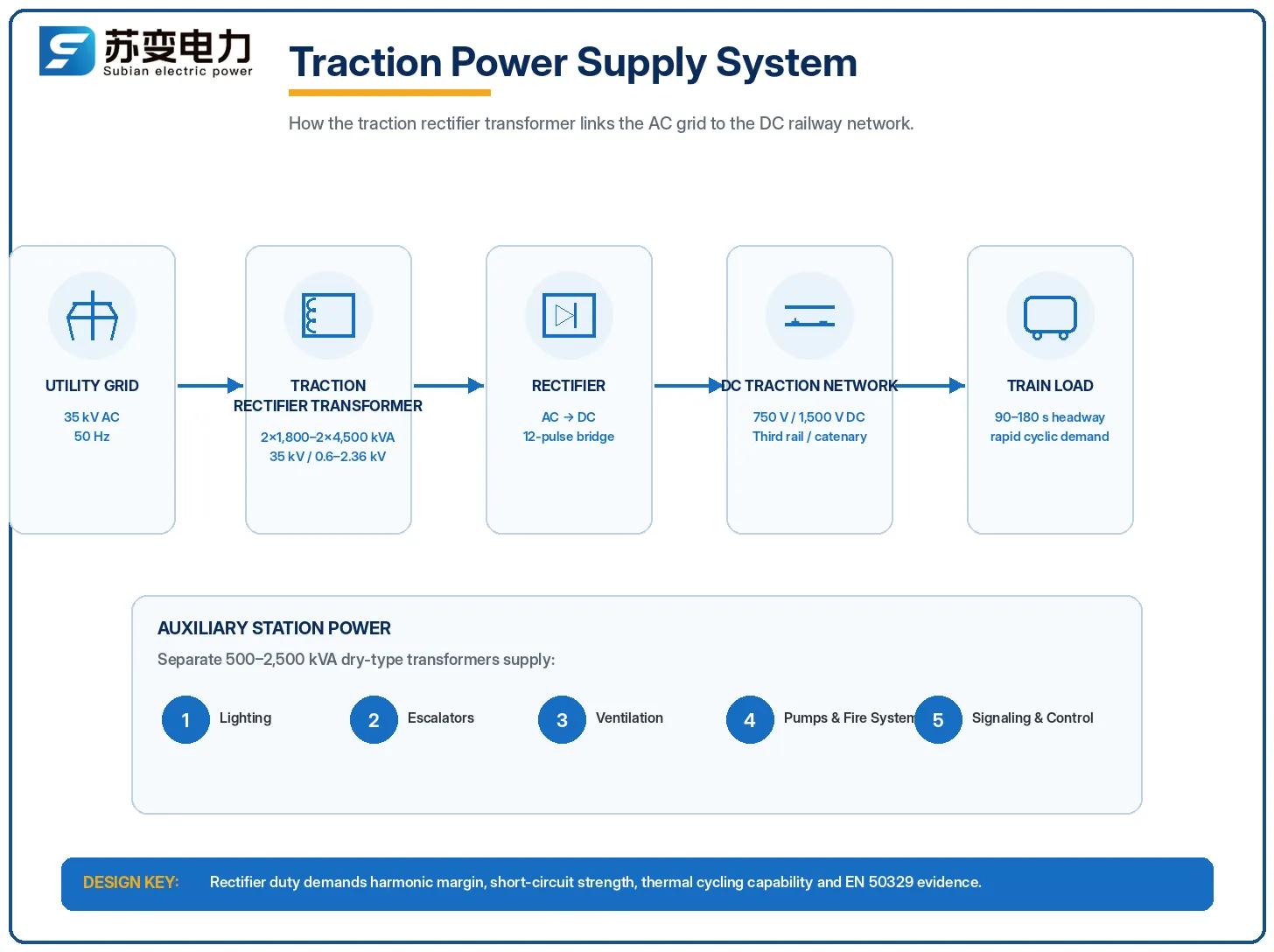
45 kmのメトロラインの牽引電力エンジニアとして、1日あたり80,000人の乗客を輸送できる能力を持ち、90秒の間隔で運行するために、35kV ACからなる牽引電力システムを利用します。このAC配電は、エネルギーを750V DCに変換する12の牽引電力変電所に電流を供給します。この750V DCは、サードレールを介して供給されます。このプロセスが行われる同時に、駅内の照明、エスカレーター、換気ファン、信号用の補助電力を供給するための別の完全な変圧器セットも存在します[1]。.
鉄道輸送における変圧器の作業に必要な電気工学スキルのレベルは、他のアプリケーションとは全く異なるレベルです。この記事では、牽引整流器変圧器、補助変圧器、IEC基準への適合を確保するための対策、熱放散、ハーモニック電流、衝撃耐性に関する問題への対処方法を含む、鉄道輸送における変圧器のさまざまな設計要件について説明します。.
鉄道変圧器が異なる理由
鉄道輸送用変圧器は、牽引電力の品質、駅の信頼性、資産の寿命という3つの厳しい条件の交差点で動作します。産業用のものとは具体的に異なります:
| 稼働パラメータ | 工業プラント | 鉄道輸送 |
|---|---|---|
| 負荷サイクル | 予測可能なシフト、数時間 | ピーク/オフピークサイクルは3〜5分ごと |
| 電圧範囲 | ±10%が一般的 | +12%/−18%(EN 50163による) |
| 負荷電流の形状 | ほぼ正弦波 | 整流されたDC、重いハーモニクス、時折のDC成分 |
| 短絡頻度 | 稀 | サードレール/カテナリーで頻繁 |
| 設置 | アクセス可能な部屋が多い | 地下のバルト、線路脇、振動にさらされる |
| 資産寿命の目標 | 一般的に20年 | メトロ仕様では30年が一般的 |
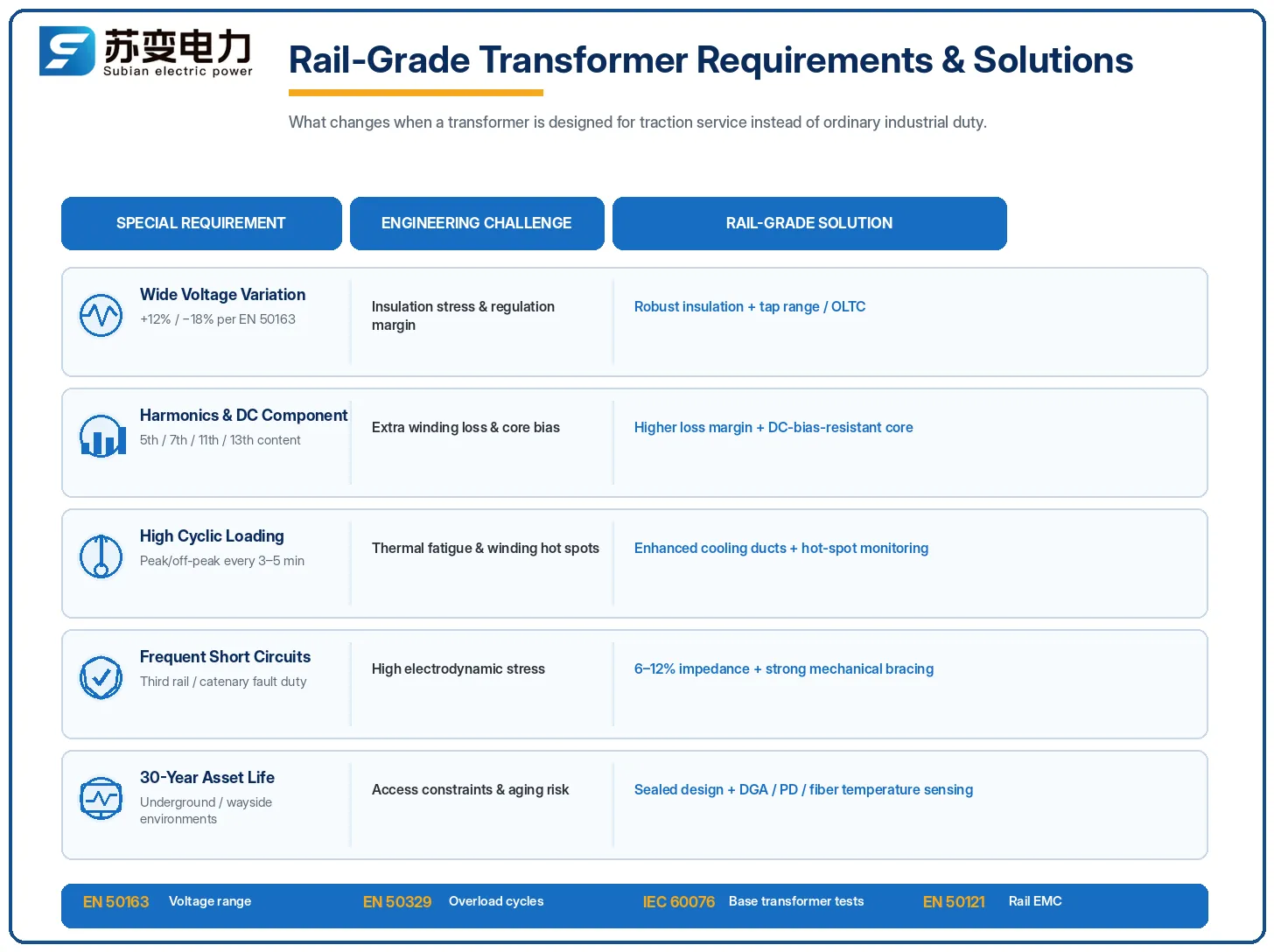
これらの違いは、短絡を制限するためのインピーダンスの増加、可変電圧運転を可能にするための良好な絶縁、急速な熱サイクルに対応するための冷却、地震衝撃に耐えるタンクを含む、すべての牽引変圧器の入札に特別な仕様をもたらします。.
牽引整流器変圧器
牽引整流器変圧器は、DC牽引供給システムの中心的なコンポーネントを表します。この変圧器の目的は、AC供給電圧(10、20、または35 kV)を、このアプリケーションの整流器入力電圧に減少させることです。これらは一般的に750 V DCシステム用の590〜1,180 V ACの範囲であり、1,500 V DCシステム用には1,180 Vを超え、最大2,360 Vになる可能性があります。.
| DCシステム | 整流器変圧器の定格 | 一般的なインピーダンス | 変電所ごとの供給距離 |
|---|---|---|---|
| 750 V DC(サードレール、メトロ) | 2×1,800–2×3,000 kVA | 6–8% | 2–4 km |
| 1,500 V DC(カテナリー、都市鉄道) | 2×2,500–2×4,500 kVA | 8–12% | 4–8 km |
| 3 kV DC(レガシー主幹線) | 2×3,000–2×6,000 kVA | 10–12% | 8–15 km |
牽引整流器変圧器の構造において重要な要素は3つあります。.
高調波成分:整流器は、高調波(5次、7次、11次、13次)の豊富な非正弦波電流によって特徴付けられ、非対称点火がある場合には、コアを不適切にバイアスし、過熱を引き起こす可能性のある小さな直流が含まれることがあります。したがって、変圧器は巻線損失のためにより高いマージンで構築されるべきです。.
インピーダンス値:6–12%インピーダンスは、第三軌条の故障に供給される短絡電流の制限を提供し(これは1日に数回発生する可能性があります)、整流器のコミュテーションを指定します。この値は、保護と調整の妥協の結果を表しています。.
過負荷能力:トレーリングサービスは過負荷を許可し、EN 50329(牽引変圧器に適用される標準)は、例えば150%で5分間または300%で1分間の過負荷サイクルを指定しており、その間、変圧器は故障のリスクなしに動作することができます。.
2×2,500 kVA牽引整流器変圧器のコストは、ブランド名、冷却方法、および地下駅用の防音ハウジングの有無に応じて$45,000–$120,000です。.
補助および側道駅変圧器
さらに、補助変圧器はすべての駅に必要です。これらは駅のサービス、すなわち照明、エスカレーター、換気、ポンプ、消防システム、および信号システムを担当します。.
信号電源供給:信号ユニットと列車制御システムは、±10%を超える電圧変動がなく、10msを超えない電源供給が必要です。これには専用の電圧調整変圧器の使用が必要です。.
駅の補助負荷:500〜2,500kVAの乾式変圧器は主に補助変圧器の形で使用されます。これらのコンデンサーは地下環境の安全性に必要です。.
側道機器:これらは100〜500kVAの小型ユニットで、踏切、信号、および線路脇の通信を供給するために使用されます。.
補助駅変圧器は、1000〜2500 kVAの変圧器に対して$15,000から$40,000のコストがかかる可能性があります。また、故障した変圧器が駅を効果的に停止させる可能性があるため、30年以上の寿命を持ち、監視およびメンテナンスが行われるように設計されています。.
鉄道変圧器に関する基準
鉄道変圧器の調達は、他の業界のバイヤーがほとんど目にしない特定の基準セットを参照します。これらを知ることは、準拠した入札にとって不可欠です。
| 標準 | 範囲 | なぜ重要か |
|---|---|---|
| IEC 60076(シリーズ) | 基本的な変圧器の設計と試験 | すべての鉄道変圧器の定格と試験の基礎 |
| EN 50163 | 鉄道システムの供給電圧 | 変圧器が処理しなければならない+12%/−18%の電圧範囲を定義します |
| EN 50329 | 鉄道変圧器とその冷却 | 鉄道の過負荷サイクルと熱設計ルールを定義します |
| IEC 60310 | 車両の鉄道変圧器 | 列車自体の車載変圧器をカバーします |
| EN 50121 | 鉄道アプリケーションのEMC | 変電所機器の電磁両立性の限界 |
| EN 50122-1 | 鉄道システムにおける電気安全に関する保護規定 | 変電所の接地およびボンディング要件 |
注目すべき2つのインストールがあります。EN 50329は、過負荷サイクルと熱試験において大多数の地下鉄当局が使用するメトリック基準です。これは「150%を5分間」というフレーズをカジュアルな言い回しから試験を受けたものに変える文書です。EN 50121は電磁両立性に関するもので、トラクション変電所がインバータからのスイッチング電流に影響されない信号設備の隣で動作しなければならないため、低コスト機器の供給者によって最初に違反されることが多い基準です。.
特別な要件:電圧、ハーモニクス、熱衝撃
鉄道プロジェクトにおける変圧器メーカーに持続的な課題をもたらす4つの特定の要件があり、これらは入札で明示的に指定されるべきです。.
幅広い電圧範囲(EN 50163):変圧器はそのタップチェンジャーと共に、出力電圧を定格電圧の+12%/−18%の範囲内に保つ必要があります。この問題は、負荷タップチェンジャーを使用することで解決されるか、巻線に十分な設計マージンを提供することで解決されます。.
高調波と直流抵抗:電流が整流器負荷によって歪み、直流バイアスを注入する可能性があるため、巻線は損失マージンを増加させ、コアフラックス/ヘッドルームを考慮して設計されるべきです。この問題の詳細は、定格および過負荷条件での温度上昇試験によって明らかになります。.
熱サイクル:急速な負荷変動により、巻線は数分ごとに加熱および冷却され、絶縁体に機械的ストレスをかけます。EN 50329に従った過負荷試験と熱サイクル検証は、鉄道用ユニットと産業用ユニットを区別します。.
衝撃、振動、騒音:地下および軌道脇の設置では、地震対策と振動ダンピングが必要ですが、隣接する駅機器の騒音レベルは65 dB(A)未満に制限されるべきです。.
顧客にとって、これは次のように翻訳されます:標準の配電変圧器の見積もりが牽引整流器の目的で提供される場合、これは問題を理解していないことを示しています。このユニットは、EN 50329または同様の要件に従った型式試験に合格する必要があり、過負荷条件での試験を含む関連報告書には、IEC 60076の温度上昇試験だけでなく、他の情報も含まれるべきです。.
製造業者からの革新的なソリューション
変圧器メーカーは、これらの要求に応えるために、現在鉄道グレードの機器に標準機能として組み込まれている一連の革新的なソリューションを提供しています:
| イノベーション | 問題解決 | 典型的な実装 |
|---|---|---|
| 強化された巻線冷却ダクト | 急速な熱サイクル | ピーク短時間熱パルス用にサイズ調整された軸方向および半径方向のダクト |
| 直流バイアス耐性コア設計 | 整流器の直流成分 | より大きなコア断面積と高グレード鋼によるフラックスマージン |
| 統合されたファイバーレーザー温度センサー | 過負荷時のホットスポット管理 | DCSにフィードする巻線埋め込みFBGまたはフルオロ光センサー |
| 低騒音エンクロージャーおよび音響キャビン | 駅の騒音制限 <65 dB(A) | 二重壁タンク、ダンピングライナー、弾性マウント |
| 密閉型、メンテナンスフリーの設計 | 地下バルトアクセス制約 | 溶接タンク、窒素ブランケットまたはガス吸着油保存 |
| デジタルツイン / オンライン監視 | 30年の資産寿命保証 | DGA、部分放電、およびリモート分析による負荷プロファイリング |
新しいメトロプロジェクトの場合、トラクション変圧器の完全監視が標準であり、オンラインDGAおよび部分放電検出器が運用コントロールセンターにデータを送信します。これは贅沢ではなく、実際にはトラクション変圧器は予測できない故障を引き起こし、収益の即時中断をもたらす唯一の資産であるため、オペレーターは監視を単なるオプションではなく必要不可欠なものとして扱わざるを得ません。.
鉄道プロジェクトの仕様チェックリスト
DC電圧レベル(750 V / 1,500 V / 3 kV)およびEN 50163電圧範囲およびEN 50329過負荷サイクル要件(プロジェクト固有の業務に応じて、5分間の150%および1分間の300%)に従ったAC供給電圧と周波数を示してください。短絡を制限するために使用できるインピーダンス範囲を示し、保護研究で確認してください。.
設計が高調波およびDC成分に対して耐性があることを要求し、高調波を伴う定格特性および負荷を使用した温度上昇試験を求めてください。.
地下バルトおよび軌道脇を含む環境条件、高度、湿度レベルを指定してください。.
最大騒音レベル(通常65-75 dBA)および地震/振動資格を指定してください。新しいユニットに対してオンライン監視オプション(DGA、PD、および温度)の実装を求めてください。.
テストがEN 50329または同等に準拠していることを証明する文書を求めてください。機器の30年の寿命を定義し、スペアパーツの供給を求めてください。.
配送前にEN 50121に従ったEMCの遵守を確認してください。.
トップブランドと価格比較
トラクション変圧器の市場は、メトロおよび主幹線システムを供給することで確立されたメーカーによって支配されています。表は2×2,500 kVA、35 kVトラクション整流器変圧器のコスト見積もりを提供しますが、実際の価格はインピーダンス、冷却手段、および騒音エンクロージャに依存します。.
| ブランド | 国 | 鉄道ポートフォリオの強み | 指標価格(USD) |
|---|---|---|---|
| シーメンス | ドイツ | 完全なトラクション電力エコシステム、広範なメトロ参照 | $70,000–$120,000 |
| ABB | スイス | 整流器およびコンバータ統合の遺産 | $65,000–$115,000 |
| 日立エナジー | 日本/スイス | 強力な鉄道電力およびトラクション変圧器の実績 | $75,000–$120,000 |
| シュナイダーエレクトリック | フランス | 変電所および補助電力パッケージ | $60,000–$105,000 |
| アルストム(サプライチェーン) | フランス | 車両および固定電力のためのトラクションシステム統合 | プロジェクト固有 |
| 江蘇省蘇辺電力 | 中国 | IEC/EN準拠のトラクション整流器および補助変圧器、OEM | $45,000–$80,000 |
ヨーロッパと日本の既知のサプライヤーは、メトロのリファレンスにおいて数十年の経験を持ち、EN 50329タイプテストにおいて広範な経験を有し、完全な牽引電力パッケージを提供する能力があります。彼らは、厳しいローカルコンテンツ仕様を持つ多くのフラッグシップメトロプロジェクトに入札する資格を持つ唯一の存在です。江蘇省蘇辺電力は、国際鉄道プロジェクトのためにこのギャップを埋めるために取り組んでおり、EN 50329過負荷仕様に基づいて構築されたIEC 60076準拠の整流器および補助トランスを提供しており、価格はヨーロッパの価格の約40–60%です。オファーを比較しているメトロ当局やEPC請負業者は、サプライヤーとしてSubianのような認定サプライヤーを選択し、他の主要な世界のサプライヤーとともに、EN 50329タイプテスト証明書と工場試験プロトコルを確認し、コスト差を監視およびスペアパーツパッケージの資金に利用する実用的なルートを取ることができます。.
よくある質問
メトロ牽引整流器トランスの典型的な定格は何ですか?
ƒœルトで動作するDCメトロシステムは、通常、各牽引変電所で2,1000 kVAまたは2,3000 kVAの定格を持つ2つの変圧器整流器を使用します。1,500 V DCシステムは、2,8000 kVAまたは2,4500 kVAの定格を持つ2つの理想的な変圧器整流器を使用します。.
なぜ鉄道用トランスは産業用トランスよりもはるかに高価なのですか?
2×2,500 kVAの牽引整流器トランスは、$45,000–$120,000の価格で、同様のサイズの配電ユニットは$9,000–$18,000です。このプレミアムは、EN 50329過負荷対応の巻線、ハーモニックおよびDCバイアス抵抗、30年の設計寿命、低騒音構造、耐震資格、およびタイプテストをカバーします — さらに、鉄道調達の文書負担も含まれます。.
牽引トランスはどの電圧範囲に耐えなければなりませんか?
EN 50163に従い、牽引システムは名目電圧の+12%/−18%で動作しなければなりません。25 kVシステムの場合、これは19–28 kVを意味し、35 kV供給の場合はおおよそ28.7–39.2 kVです。トランスとそのタップチェンジャーは、この全範囲で出力を調整しなければならないため、大型牽引ユニットではOLTCが一般的です。.
標準の配電トランスを牽引用途に使用できますか?
大規模な再設計が必要であり、ほとんどのメトロ当局はそれを受け入れません。牽引用途は整流器のハーモニクス、可能なDC成分、急速な熱サイクル、および頻繁な短絡を追加します。標準ユニットはEN 50329過負荷サイクルの下で過熱し、早期に劣化します — 通常、必要な30年ではなく5–8年で故障します。.
現代の牽引トランスにはどのような監視が必要ですか?
新しいメトロプロジェクトのベストプラクティスは、オンラインDGAおよび部分放電センサー、ファイバーオプティックセンサーによる巻線温度、運用制御センターにフィードする負荷プロファイリングです。これにより、通常$6,000–$20,000の追加コストがかかりますが、トランスを受動的メンテナンス項目から予測能力を持つ管理資産に変換します。.
参考文献
- EN 50329 — 鉄道アプリケーション:固定設置、牽引トランス — トラクション専用の標準で、過負荷サイクルと熱設計ルールを定義しています。.
- EN 50163 — トラクションシステムの供給電圧 — トラクション機器のための +12%/−18% 電圧範囲を定義しています。.
- IEC 60076シリーズ — 電力変圧器 — すべてのトラクション変圧器入札で参照される基本設計および試験標準です。.
- IEC 60310 — 車両上のトラクション変圧器 — 列車のための車載変圧器要件。.
- EN 50121 — 鉄道EMC標準 — トラクション変電所機器のための電磁両立性限界。.
- 鉄道公報 — メトロ、トラム、およびトラクション電力プロジェクト仕様に関する業界報告。.
- Jiangsu Subian Electric Power — 公式サイト — 鉄道プロジェクトのためのIEC準拠のトラクション整流器および補助変圧器の製造業者。.
結論
鉄道システムで使用される変圧器は、他の産業用途では使用されない運用プロファイルにさらされています:それらは、短い間隔での急速な熱サイクルに耐え、大きな電圧変動を処理し、整流器によって生成される高調波に対処し、頻繁な短絡に耐え、30年間のサービスを持続することが期待されています。したがって、関連する標準、特にEN 50163およびEN 50329を遵守し、インピーダンスと過負荷容量を適切に決定し、必要な試験の遵守証明を要求し、故障を検出するのではなく予測することを可能にする最新の監視システムをユニットに実装することによって、これらの要件を満たすことが重要です。.
主なポイント:
EN 50329の過負荷サイクルおよびEN 50163の電圧要件に従って牽引ユニットを選択してください。.
短絡試験のデータに対してインピーダンスを確認してください。6-12%の値は正常です。.
変圧器のコアがDCバイアス耐性を持ち、巻線が高調波で動作できることを要求します。.
投資の安全性を確保するために、さまざまなパラメータのリアルタイム監視を追加します。.
メトロ、トラム、または幹線プロジェクトの牽引電力および補助変圧器供給については、江蘇省蘇辺電力にお問い合わせください。 www.subian-electric.com.