


ユーティリティプランナーは、20 MVAおよび66/11 kVの電圧レベルで定格されたパワートランスの2つのオファーを比較検討しています。両方のメーカーは、同じ電力容量を同一の損失で提供し、ほぼ同じ価格を提示していますが、主な違いはオイルシステムにあります。1つのメーカーは、シリカゲルブリーダーを備えた従来の外部オイルコンザーバータンクに基づいてトランスを設計しましたが、もう1つのメーカーはコンザーバーなしの波形拡張タンクを設計しました。プランナーは、選択されたオイルシステムのタイプがオイル保存システム自体だけでなく、メンテナンススケジュール、火災リスクのレベル、価格にも影響を与えることを理解しています。通常、コンザーバー付きユニットのコストは密閉ユニットの価格よりも5-10%高くなりますが、最初のオプションは今後何年にもわたって簡素化された規制に従ってオイルを管理することを可能にします。.
ガイドは、コンザーバーの目的、市場に存在するさまざまなデザイン、サイズの計算方法、およびオイル絶縁トランスのオイル保存システムに最も適したものを選択する方法に関する情報を提供します。.
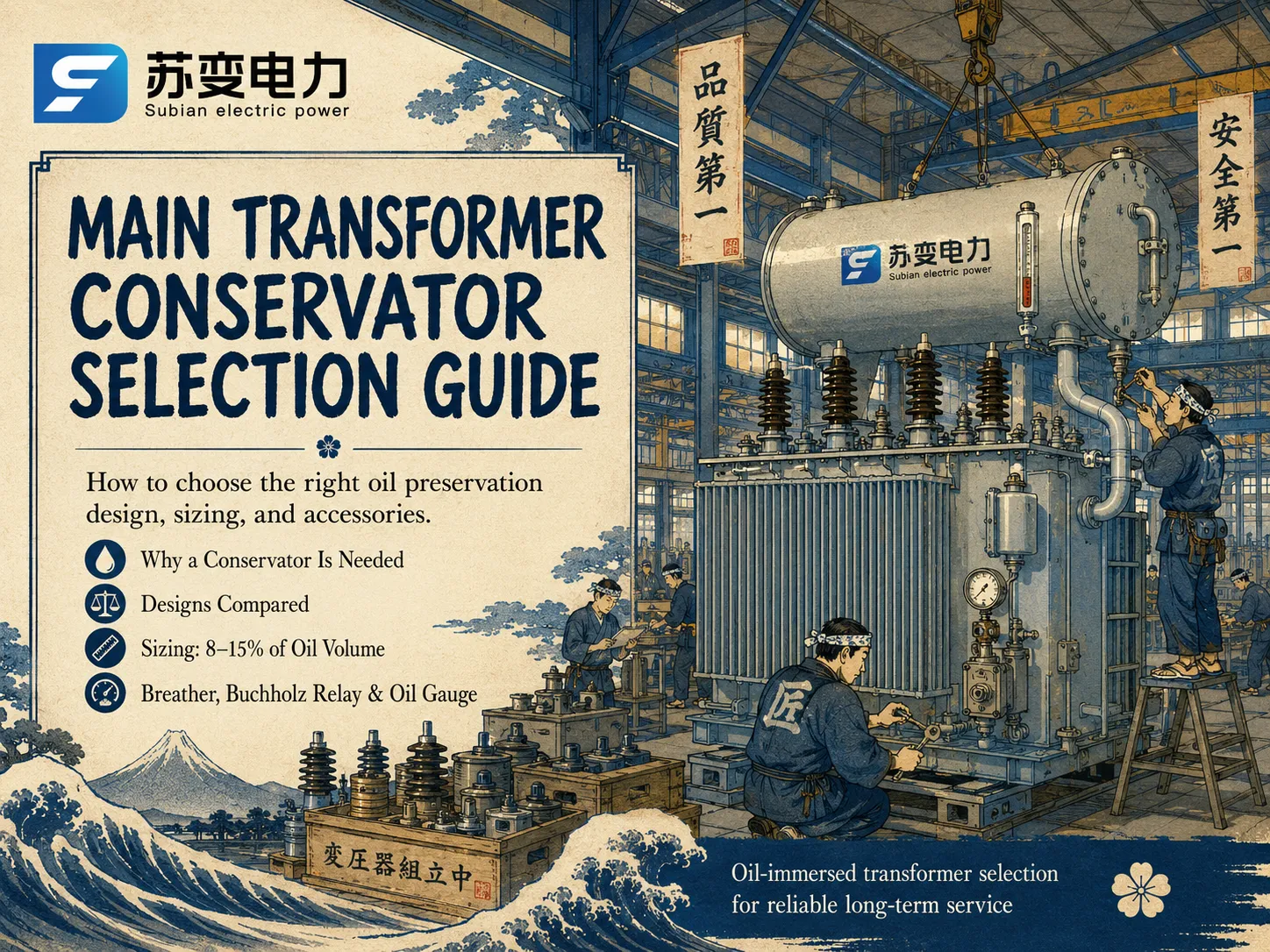
トランスのコンザーバーとは何ですか?
コンザーバーは、主トランスのタンクの上部に配置され、主タンクとパイプで接続された補助的な円筒形または長方形のタンクとして定義できます。これは、温度(負荷)の変動に応じてレベルが変動するためのオイル量を備えています。オイルが加熱により膨張すると、主タンク内に圧力がかからないようにコンザーバーに充填されます。オイルは、作業中に追加の真空を作成することなく、コンザーバーと主タンクの間を流れます。コンザーバーは、ブリーダーを介して大気に開放されている(または膜で密閉されている)ため、主タンクの上部に配置される必要がある重要な理由の1つです。.
コンザーバーがない場合、完全に密閉されたタンクは、オイルが膨張するにつれて内部圧力が上昇し、冷却時には内部に真空が発生し、タンク構造にストレスをもたらすことを意味します。.
これらの結果をもたらす3つの特性
オイルは温度に応じて膨張します。鉱油は、摂氏1度の温度ごとに約0.07%膨張します。10,000リットルの容量のタンクが50°Cの温度変化にさらされると、オイルの体積と圧力が350リットル増加することを考慮すると、剛性のある密閉タンクは破裂するか、呼吸穴からオイルを押し出すことが明らかです。.
主タンクは常に満杯でなければなりません。主タンク内のオイルが減少すると、その上部の巻線が露出し、湿気が絶縁体に入り込むことを許します。コンザーバーの助けを借りて、オイルは主タンクを容易に満たします。.
ガス空間の圧力は管理されなければなりません。コンザーバーの設計により、オイルの上に小さなガス空間を持つことができ、これはブリーザーによって制御されます。コンザーバーなしの設計では、ガス空間は負荷の増加に伴って膨張したり収縮したりし、その結果、空気がタンク内に出入りします。.
したがって、「自由呼吸」オイル保存システムを製造することが可能になります。.
コンザーバー設計の比較
| 設計 | 仕組み | 一般的なオイル容量の予備 | 相対コスト |
|---|---|---|---|
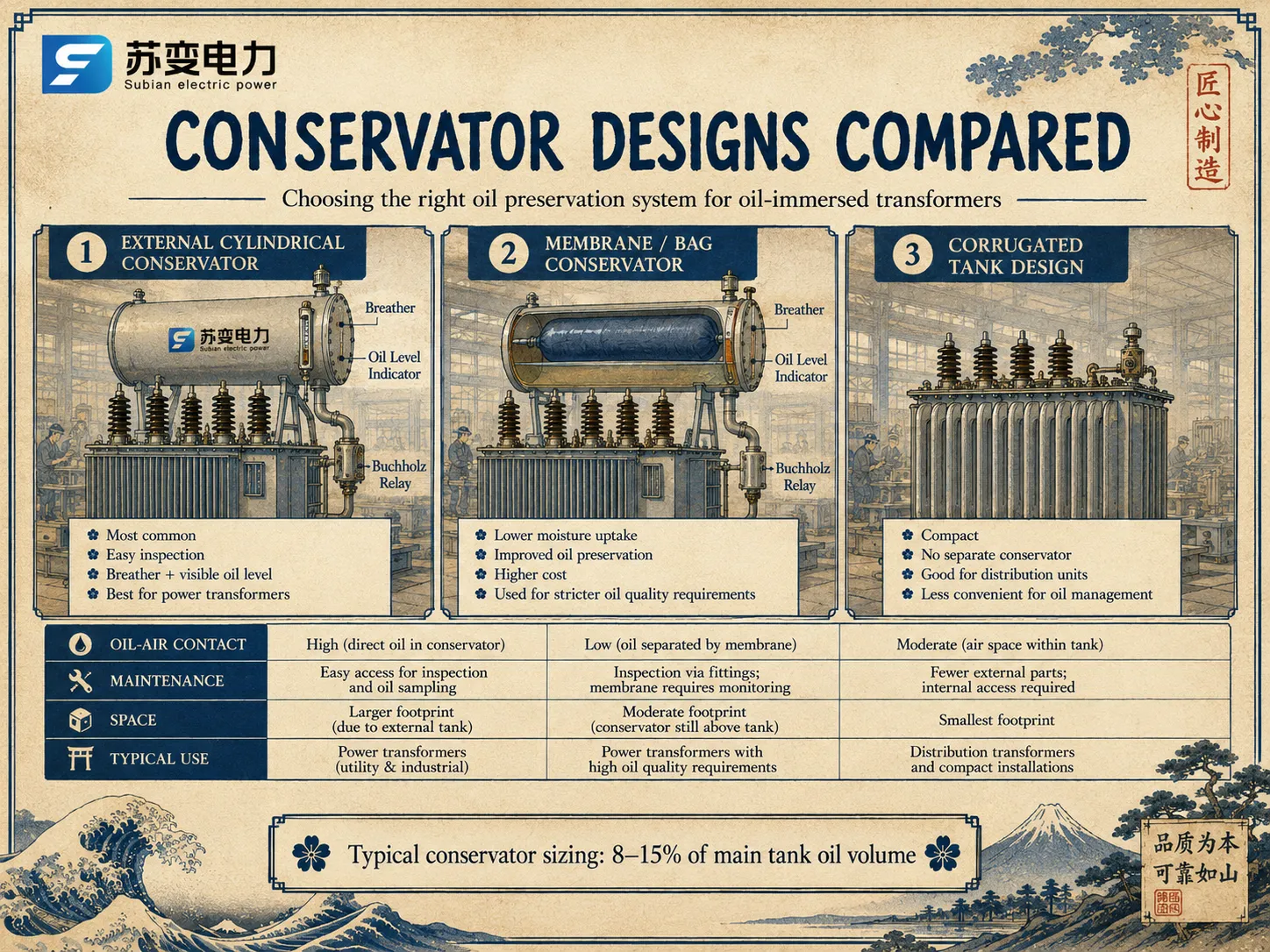
| 外部円筒型コンザーバー | タンクの上に別のドラム、上部にブリーザー、下部にオイルパイプ | タンク容量の8-15% | ベースライン |
| 膜/バッグコンザーバー | ゴム製のバッグまたは膜がオイルと空気を分離し、密閉されたガス空間を形成します。 | 8-15% | プレーンコンザーバーに対して+10-20% |
| 波形タンク壁設計 | 別のコンザーバーはなく、柔軟な波形タンク壁が膨張を吸収します。 | 統合型 | プレーンコンザーバーに似ています。 |
| 密閉/ガスブランケットタンク | 窒素クッションまたは膜を持つ固定タンク; ブリーザーなし | なし(ガス空間) | +5-15% |
ブリーザー付きの外部コンザーバーは、シンプルで安価に構築でき、検査が容易であるため、世界で最も一般的な設計です。膜コンザーバーは、オイルを外部の空気から完全に分離するゴム製のバッグを追加するため、オイルは呼吸による酸素や湿気に触れることはありませんが、バッグの損傷をチェックする必要があります。波形タンク設計は、別の容器を排除し、スペースとシンプルさがメンテナンスの便利さよりも重要な配電トランスに人気があります。.
コンザーバーの適切なサイズ設定
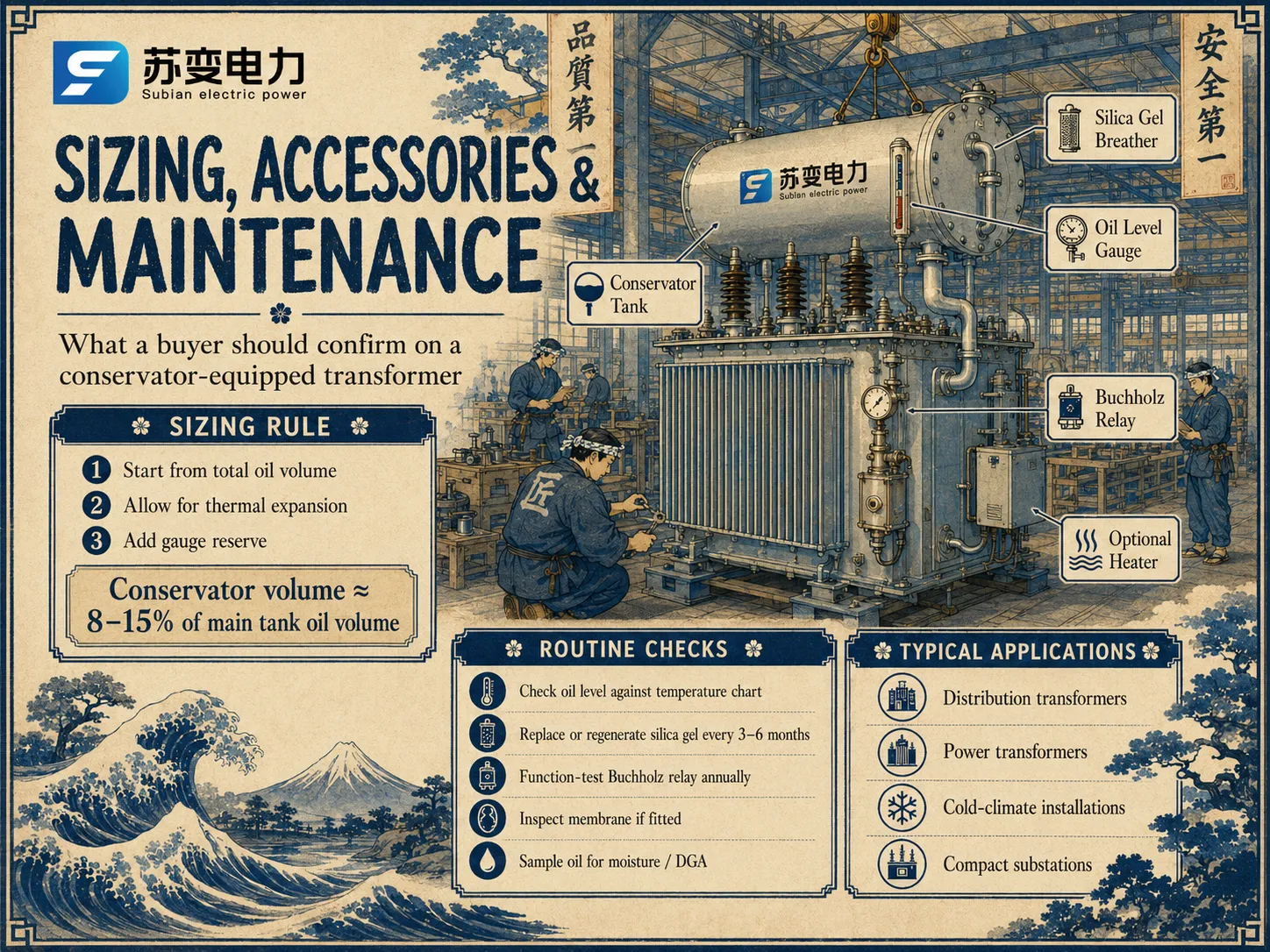
コンザーバーは、運転中の最小温度と上部油の最大許容温度の間で油が膨張する体積を考慮するのに十分な容量を持っている必要があります。各ステップを実行する必要があります:温度範囲を決定します。通常の温暖条件では、油は冷間始動時の-10度から負荷下での90度までの範囲で振る舞い、これは100Kの温度変動に相当します。熱帯地域の場合は、実際のデータを使用してください。膨張する油の体積を計算します。これは、油の体積に膨張係数を掛ける必要があり、ざっくり言うと、温度変動の度数に対してKあたり約0.0007です。したがって、例えば、油の体積が100Kで10,000kgに達する場合、これは約700リットルに相当します。油位指示器のために予備スペースを考慮する必要があります。コンザーバーは、熱い状態での最大マークから、冷たい状態での最小マークまで、常に油位を示す必要があり、これにより、精密な油の体積よりも20から30%多くの油を示唆します。これは、タンクの一般的な油の体積の約8から15%と見なされます。すべてを間違って計算すると、かなりの費用がかかります。コンザーバーが小さいと、油がブリーザーを通じて外に漏れ、タンクに油のシミができ、湿った空気が吸収されます。一方、コンザーバーが大きすぎると、余分な材料と油が発生します。迅速にサイズを決定するために、トランスの油の総体積から始めます。ここでは、100kの温度変動に対するコンザーバーのサンプルエンジニアリング参考値を示します:
| トランス定格 | 一般的な総油量 | コンザーバー作業容量(10-12%) | コンザーバータンク容量(ゲージ予備付き) |
|---|---|---|---|
| 100 kVA配電 | 300-400 L | 35-50 L | 60-80 L |
| 1 MVA配電 | 1,500-2,000 L | 150-240 L | 250-350 L |
| 10 MVA電力 | 8,000-12,000 L | 800-1,400 L | 1,200-2,000 L |
| 40 MVA電力 | 25,000-35,000 L | 2,500-4,200 L | 3,500-6,000 L |
コンザーバーアクセサリーと保護
| アクセサリー | 目的 | 一般的な仕様 |
|---|---|---|
| シリカゲルブリーザー | コンザーバーに入る空気の除湿 | 1-15 kg 吸湿剤、色変化インジケーター |
| 油位計(磁気式) | 一目で油位を表示 | フロート + ポインター、ダイヤルに最小/最大の表示 |
| ブクホルツ(ガス)リレー | コンザーバーパイプでのガスと油の急上昇を検出 | DN50-DN100、2つのフロートスイッチ |
| 膜 / エアセル | 密閉設計で大気から油を分離 | 交換可能なゴム製バッグ |
| コンザーバーヒーター(オプション) | 寒冷気候での結露を防止 | サーモスタット式、防水 |
コンザーバー装備の変圧器では、ブクホルツリレーはメインタンクとコンザーバーの間のパイプに取り付けられています — その正しい標準位置です。ブリーザーはコンザーバーの上部に取り付けられ、油位計はエンドキャップに取り付けられます。これらのアクセサリーはすべて、適切に管理された工場での変圧器の定期テストの一部としてテストされます。.
コンザーバー vs. 波形タンク vs. 密閉設計
| 特徴 | 外部コンザーバー | 波形タンク | 密閉 / ガスブランケット |
|---|---|---|---|
| 油と空気の接触 | ブリーザーを介して制御 | ブリーザーを介して制御 | なし(密閉) |
| メンテナンスアクセス | 優れた; 検査と補充が簡単 | 良好; ゲージでのレベル | 限定的; 油サンプリングのみ |
| 変圧器のコスト影響 | +5 から +10% | +3 から +8% | +5 から +15% |
| 典型的な用途 | ほとんどの電力および配電変圧器 | 配電、スペース制約のあるサイト | 湿気の侵入を最小限に抑える必要がある場所 |
| 火災リスク | 類似; 油の体積がドライバー | 類似 | わずかに低い酸素曝露 |
5 MVA以上の変圧器では、外部コンザーバーが圧倒的に一般的な選択肢です。これは、油の管理、レベルの検査、ガスリレーのメンテナンスを簡単にするからです。波形タンクは、価格とフットプリントがメンテナンスの便利さよりも重要な100-2,500 kVA配電クラスで支配的です。密閉設計は、油が決して空気に触れない必要がある場所に現れますが、補充と検査を複雑にするため、例外的な存在です。.
どの設計がどの変圧器に適しているか
- 配電変圧器(50-2,500 kVA):外部コンザーバーまたは波形タンク、どちらもブリーザー付き; コンザーバーは季節的なチェックを簡素化します。.
- 電力変圧器(5-100 MVA):ブリーザー付きの外部コンザーバー、ブクホルツリレー、磁気油位計; 低湿度吸収が指定されている場合は膜コンザーバー。.
- 発電機昇圧およびネットワーク変圧器:厳格な油品質保証を満たすための膜または密閉コンザーバー。.
- 寒冷気候の設置:ヒーター付きのコンザーバーと、低温範囲のための適切なサイズ。.
- コンパクトな変電所およびスキッドパッケージ:高さとスペースを節約するための波形タンクまたは膜コンザーバー。.
ブランドと価格比較
| ブランド | 起源 | コンザーバーの提供 | おおよその価格範囲(単体) |
|---|---|---|---|
| ABB | スイス/スウェーデン | コンザーバーと密閉設計のフルレンジ | $1,200-$9,000 |
| シーメンス | ドイツ | コンザーバー装備の電力変圧器 | $1,500-$10,000 |
| 日立エナジー | スイス | 大型ユニット用の膜コンザーバーオプション | $1,500-$12,000 |
| シュナイダーエレクトリック | フランス | 配電変圧器のコンザーバー | $800-$5,000 |
| 専門アクセサリーメーカー(Comemなど) | イタリア / 中国 | コンザーバータンク、バッグ、レベルゲージ | $500-$6,000 |
| 江蘇省蘇辺電力 | 中国 | コンザーバーおよび波形デザイン、完全なアクセサリーセット | $600-$6,000 |
ABB、Siemens、Hitachi Energy、Schneider Electricなどの欧州のリーダーは、完全なトランスフォーマーパッケージの一部としてコンザーバーデザインを構築し、専門のアクセサリーメーカーは世界中にスタンドアロンのコンザーバーとレベルゲージを供給しています。トランスフォーマー自体には、通常、コンザーバーが基本価格に含まれているため、実際の比較は完全なパッケージ間で行われます。メーカーは 江蘇省蘇辺電力 外部コンザーバーと波形タンクデザインの両方を提供し、ブリーザー、ブクホルツリレー、磁気オイルゲージがセットとして含まれ、テストされています — 全体のアセンブリは定期テスト証明書に記載されます。Subianのコンザーバー装備トランスフォーマーの価格は、同等の欧州ブランドの見積もりよりも約40-60%低く、これがアジア、アフリカ、ラテンアメリカの公共事業やOEMにとって一般的な選択肢となっている理由です。見積もりを比較する際は、コンザーバー、アクセサリー、およびそのテストがタンク価格に隠されるのではなく、項目別に記載されていることを常に確認してください。.
適切なコンザーバーの選び方に関するヒント
まず、オイル保存方法について決定を下してください。ブリーザー付きの自由呼吸型、膜密封型、または完全密封型のコンザーバーを選択しますか?あなたの選択がコンザーバーのデザインを決定します。.
次のステップは、温度に対するサイズを考慮することです。サイトの実際の最低温度と最高温度を使用してください。8-15%ルールは100Kの範囲を仮定しており、寒冷地ではより大きなタンクが必要です。.
次に、アクセサリーを確認してください。コンザーバーには、ブリーザー、オイルゲージ、保護スキームで要求される位置にブクホルツリレーが必要です。.
次のステップは、メンテナンスへのアクセスを確認することです。サイトが無人の場合、遠くから読み取れるレベルゲージを備えたコンザーバー、またはオイルレベルを確認する必要のないデザインを購入することが望ましいです。.
フットプリントを考慮してください。コンテナ化された変電所や外部コンザーバーに波形デザインを使用すべきですか?
アクセサリーがどのようにテストされたかの記録を要求する必要があります。.
操作とメンテナンス
コンザーバーのメンテナンス要件はシンプルですが特有です:
毎週、標準温度補正レベルチャートに対する不一致のためにコンザーバーのオイルレベルゲージを確認してください。レベルチャートからのいかなる偏差も、オイル漏れやオイルへの湿気の浸入を示します。.
ブリーザーにあるシリカゲルは、3-6ヶ月ごとに交換または再充填し、シリカゲルの色が変わって飽和を示す場合はすぐに行ってください。.
年に一度、コンザーバー管に設置されたブクホルツリレーの機能テストを実施し、このコンポーネントが正常に機能していることを確認します。.
停電が発生するたびに、コンザーバー内に敷かれている膜に穴や硬化がないかを点検し、バッグとコンザーバー壁の間に十分なスペースがあることを確認します。.
コンザーバーのサンプルポイントで、油の水分と溶解ガスをサンプリングします。コンザーバー内の油は、全体の油供給システムの指標と見なされます。.
コンザーバーのゲージを無視することは、実際に機器の冷却失敗の主な原因の一つです。安定した油漏れは油のレベルを下げ、リレーは主要なガス生成に反応するため、オペレーターはタンクが数ヶ月間満たされていないことに気づきます。コンザーバーのコストはわずか100ドルですが、低油レベルについてはずっと前に示すことができたでしょう。.
よくある質問
トランスのコンザーバーのコストはいくらですか?
単体のコンポーネントとして、コンザーバータンクは容量と材料に応じて$800-$8,000のコストがかかり、ブリーザー、油ゲージ、リレーには$50-$1,200が追加されます。完全なトランスの場合、コンザーバーの設計は密閉タンクに対して総価格に約5-10%を追加します。1 MVAの配電ユニットの場合、コンザーバーパッケージは通常、見積もりに$500-$2,000を追加します。.
どのサイズのコンザーバーが必要ですか?
サイトの最小および最大油温度間の完全な油膨張を吸収できるようにサイズを決定します。エンジニアリングのルールは、主タンクの油容量の8-15%であり、100 Kの変動に対して10-12%が一般的なデフォルトです。寒冷地では大きい方が必要で、熱帯地域では温度帯が狭い場合は小さい方を使用できます。.
コンザーバーと油膨張タンクの違いは何ですか?
言葉が異なるだけで、同じものです。コンザーバー(油コンザーバー、膨張タンク、または油保存タンクとも呼ばれる)は、油の熱膨張を収容し、タンクを満たすために主タンクの上に取り付けられた小さな容器です。「コンザーバー」という用語はトランスエンジニアリングの標準であり、「膨張タンク」はより一般的なエンジニアリング用語です。.
トランスはコンザーバーなしで動作できますか?
はい — 波形タンク、膜、完全密閉設計はすべて、別の外部コンザーバーなしで動作します。しかし、すべての油浸トランスには何らかの形の油保存が必要です。波形タンクは柔軟な壁を使用し、密閉タンクは窒素クッションまたは膜を使用し、コンザーバーだけが目に見える油レベルと簡単なメンテナンスアクセスを提供します。5 MVAを超えるトランスでは、実際にはコンザーバーが強く推奨されます。.
なぜ私のコンザーバーの油レベルゲージが下がっているのですか?
まず、温度補正されたレベルチャートと照らし合わせて確認してください — 寒い夜にレベルが下がるのは正常です。レベルが現在の温度に対してチャート値を下回る場合、油漏れ(溶接部、ガスケット、サンプルバルブを確認)または油空間を消費する湿気の侵入が原因です。実際のレベルの低下は優先的な発見として扱います:低いコンザーバーレベルは最終的に巻線の上部を露出させ、ブクホルツトリップを引き起こす可能性があります。.
参考文献
- IEC 60076-1 — 電力変圧器、一般要件 — 油保存システム、コンザーバー、およびアクセサリーをカバーするマスタースタンダード。.
- IEEE C57.12.00 — 液体浸漬変圧器の一般要件 — 北米の油保存機器に関する要件。.
- IEEE C57.106 — 絶縁ミネラルオイルの受入れと保守に関するガイド — オイルの湿気と品質が保護されるコンザーバー。.
- 日立エナジー — 変圧器製品 — コンザーバーと密封トランスの設計オプションの参考。.
- ABBトランスフォーマー — オイル保存システムの文書に関する業界の参考。.
- トランスフォーマーズマガジン — コンザーバーのメンテナンスとオイルシステム設計に関する実用的な記事。.
結論
コンザーバーはトランスのオイル保存システムの穏やかなコアとして機能します。熱膨張を吸収し、オイル充填タンクの保護を提供し、ブリーザーおよびガスリレーの支持として機能し、可視で測定可能なオイルシステムを持つことでメンテナンス担当者による監視を容易にします。コンザーバーの設計がコンパクトさのために固体形状に依存するか、利便性のために外部コンザーバーを使用するか、オイルの純度のために膜ソリューションが必要であるかにかかわらず、テンプレートのエンジニアリング仕様から継承するのではなく、賢明に選択する必要があります。.
現場の実際の温度に応じてコンザーバーのサイズを確保してください(タンク容量の8-15%)。.
オイルゲージ、ブリーザー、およびブクホルツリレーをセットで使用することを確認してください。.
レベルゲージを温度チャートと照らし合わせて毎週確認してください。.
すべての見積もりにコンザーバーとアクセサリーをリストしてください。.
IEC 60076-1に準拠した完全なアクセサリーテストを備えたコンザーバー装備のオイル浸漬トランスについては、連絡してください。 江蘇省蘇辺電力 で www.subian-electric.com kVA、電圧、および現場の温度データを含む明細見積もりをリクエストしてください。.