


バングラデシュでは、テキスタイルパークの運営マネージャーの公共料金が6か月連続で同じ問題を呈していました。パークの4台の1,000 kVAトランスは、数年間にわたり40%の平均負荷で稼働し続けた結果、コア損失が発生しました。これは、同じ周波数で発生する無負荷損失であり、不要で非生産的な電力使用に対して年間$18,000~$26,000のコストがかかることになります。エネルギー監査の結果、1990年代に遡る2台の配電トランスが、最新のモデルと同等の損失特性を持っていることが明らかになりました。実際のジレンマは、マネージャーが行動を起こす必要があるかどうかではなく、どのような行動を取るべきかということでした。マネージャーは、コンサルタントからエネルギー効率の良い改修が工場全体で最も迅速な選択肢であるという一文のメッセージを受け取りました。.
この出版物は、電力トランスに関するエネルギー効率の良い改修の概念、交換との比較、経済的運用慣行の種類、関連するコスト、そして正確な回収期間の計算方法について説明しています。.
トランスのエネルギー効率の良い改修という用語は、通常、エネルギー集約型のコアや巻線をエネルギー効率の良いものに置き換えること、またはほとんどの場合、新しいエネルギー効率の良いタイプのトランスに完全に交換することを指します。これはGB 20052またはIEC分類に従います。改修には新しいトランスの60-80%のコストがかかることがありますが、性能は新しいトランスを使用する場合と同等であり、このような解決策はエネルギー効率の良いプロジェクトでは一般的ではありません。しかし、適切なサイズ、負荷管理、タップの調整、損失捕捉などの経済的運用措置は、投資を1年未満で回収することができます。.
トランスのエネルギー効率の良い改修の意味
エネルギー効率の良い改修という用語は、トランスの損失を減少させるために行われる変更または交換を指します。損失には2種類あり、最初のものは無負荷損失で、トランスが何らかの形で負荷されているときに発生し、負荷には影響されません。負荷損失は負荷の二乗に基づいています。トランスの場合、両方のタイプの損失には価値がありますが、その価値はトランスの運用方法によって大きく異なります。.
改修には以下のアクションが含まれます。最初の方法は新しいトランスを購入すること、2番目は既存のトランスを巻き直すかコアを交換すること、3番目は負荷管理または冷却技術を追加すること、最後は運転ポイントを再設計すること(負荷を駆動する必要があるか、並行して作業するか、その他の方法で)です。.
トランスの損失を理解する:無負荷対負荷
これは無負荷損失(または鉄損失)と呼ばれ、損失はコアを単独で磁化することによって発生します。フルロードで動作しているかどうかにかかわらず、このエネルギーの損失は毎年8760時間発生し、エネルギー節約の努力において最も重要な要素となります。負荷損失(または銅損失)は、巻線を通過する電流によって発生し、電流の二乗に応じて変化します。言い換えれば、変圧器が50%の負荷で動作している場合、定格負荷損失のうち25%のみが記録されます。.
| 変圧器のサイズ | 古い設計の無負荷損失 | 現代のGB 20052-2グレード2 | アモルファスコア(グレード1) |
|---|---|---|---|
| 100 kVA | 270–350 W | 130–180 W | 60–90 W |
| 400 kVA | 800–1,100 W | 400–520 W | 180–260 W |
| 1,000 kVA | 1,500–2,100 W | 700–1,100 W | 350–500 W |
| 2,500 kVA | 3,200–4,500 W | 1,600–2,400 W | 800–1,200 W |
示されているように、古い変圧器のコア損失は一般的に現代のモデルの2倍、アモルファスコアモデルと比較すると3倍から5倍高くなります。これらの損失が24時間365日発生することを考えると、年間のコストの変動は重要です:kWh料金が0.10の場合、無負荷損失のケースでは総損失の差は$876になります。.
現場での改修 vs 完全交換
既存の変圧器の巻き直しとコアの再加工は、製造業者にとって可能性があり、タンクと付属品が良好な状態であり、変圧器に特異な定格がある場合や、グリッドコードやサイトの制約が同等の交換を行う機会を与えない場合には、正しい選択かもしれません。.
しかし、ほとんどの場合、数字はこの決定に対して反対のことを示します。.
- 現場での巻き直しは新しい変圧器の約60-80%のコストがかかりますが、古いタンク、古いガスケット、ブッシング、オイルを持つユニットが残り、過去の故障の削減はありません。.
- 現代のユニットに交換することは、現代の鋼の効率的な利点、新しいタンク、絶縁、保証、メンテナンスコストの削減を得ることを意味します。.
- 規格は変わっています:2005年に購入した変圧器はGB 20052に適合できません。現代の基準は異なるため、1995年以前に取得した変圧器は言うまでもありません。古いコアでは基準に適合することは不可能で、必要な0.9 kWの代わりに約1.8 kWの損失が示されます。.
実用的なルールは、物理的な理由やサイトの制約で交換ができない場合にのみ改修を行うことです。そうでなければ、許可されている最高効率クラスに交換する必要があります。.
| オプション | コスト vs 新しいユニット | 無負荷損失の結果 | 保証 | 最適な時 |
|---|---|---|---|---|
| 現場での再巻き | 新しいものの60–80% | 古いコアが残り、わずかな利益 | 巻き直しのみ | 特異な定格、固定されたサイト制約 |
| 現場での再コア加工 | 新しいものの70–90% | 新しいコアだが古いタンク/ブッシング | コアのみ | 経済的であることはまれ |
| 完全交換、グレード2 | 100% | 1990年代のユニットの半分 | 完全ユニット、12–24ヶ月 | 標準的な回収ケース |
| 完全交換、アモルファスコア | 120–140% | 60–70% 従来型以下 | 完全ユニット、12–24ヶ月 | 24/7 稼働アプリケーション |
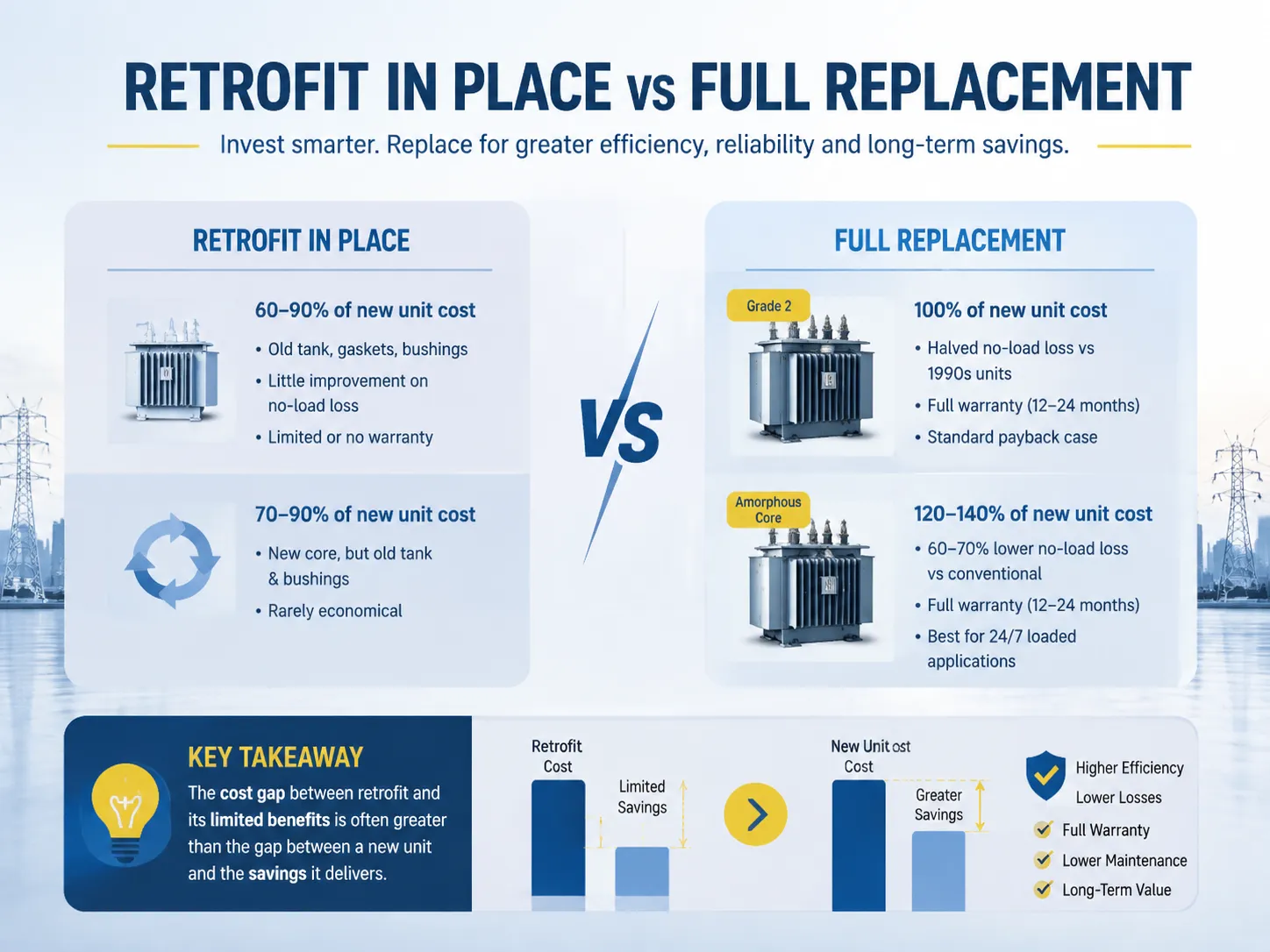
コンサルタントがシステムの交換を推奨する理由は、チャートに示されています。レトロフィットのコストとそれが達成するものの違いは、通常、新しいユニットのコストとそれが生み出す節約の違いよりも大きいです。.
指定するためのエネルギー節約技術
エネルギー節約のために新しいトランスを購入する際に重要な4つの技術選択肢があります:
| 技術 | 典型的な無負荷損失の節約 | 追加の初期コスト | 最良の回収条件 |
|---|---|---|---|
| 高透磁率GOES(0.23 mm) | 15–25% vs 標準グレード | +3–6% | TCOに対してほぼ常にプラス |
| アモルファス金属コア | 60–70% vs 従来型コア | +20–40% | 高負荷係数、24/7運転 |
| 低損失巻線設計(より高い銅質量) | 10–20%低い負荷損失 | +2–5% | 重負荷トランス |
| 天然エステル(植物)オイル | 電気的には鉱油と同じ | +10–15% | 火災安全性と持続可能性の優先事項 |
アモルファス合金は、データセンター、病院、または連続プロセスプラントのような24時間アプリケーションを考慮する際に非常に注意深く検討する必要があります。なぜなら、トランスは24時間負荷がかかるからです。初期コストが高い分は、コアの損失が低いために得られる節約で相殺されます。平均して、アモルファスコアの1,000 kVAトランスは、標準の高効率トランスと比較して追加コストを回収するのに4〜8年かかります。.
経済的運用:既存の資産を最適化する
経済的運用は、所有するトランスを最も効果的に管理することに関するものです。コストは非常に少なく、回収期間は通常数ヶ月で測定されます:
- 最適なサイズのフリートを特定する:負荷パターンを分析し、40%未満の負荷の2つのトランスを1つのトランスに置き換えることを検討します。トランスの運用コストは低下します。.
- 並列運転を制御する:同時に2つのトランスが稼働している場合、2番目のトランスの軽負荷時に最初のトランスを稼働させ続けることにはほとんど意味がありません。.
- タップを正しく設定する:電圧を許容範囲の下限に保つタップ位置を選択すると、励磁電流と磁化電流が減少します。.
- トランスを低温で運転させる:これは重要です。なぜなら、ラジエーターが詰まると油温が上昇し、絶縁の劣化が加速するからです。.
- メータリングプランでトランスの損失を観察する:シャットダウン期間中の無負荷損失とピーク時の負荷損失を測定し、それを損失資本化モデルに使用します。.
変圧器を運転中の2台のうち1台を夜間にオフにすることができる配電会社は、プロセスによる損失を40-60%節約することができるため、1つのスイッチを変更することで数千ドルを節約できることが明らかです。.
| 経済的運用の測定 | 資本コスト | 典型的な節約 | 回収期間 |
|---|---|---|---|
| 軽負荷時に冗長な並列ユニットをオフにする | なし | 銀行の夜間無負荷損失の40–60% | 即時 |
| 電圧帯域に対してタップ位置を最適化する | なし | トランスの損失の1–3% | 即時 |
| ラジエーターを清掃し、冷却を回復する | メンテナンス作業 | ホットスポットの劣化を低下させ、寿命を延ばす | <1年 |
| 軽負荷の2台のユニットを1台に置き換える | 新しいユニット | 1台の無負荷損失が排除される | 3~8年 |
| 損失メーターとトレンドレビューを追加 | $500–$2,000 | 年間$1,000の価値がある損失問題を特定 | <1年 |
同じパターンが一貫していることが観察されています:運用措置は即座に回収可能です。しかし、資本措置は損失資本化パターンに従います。両方のアプローチを適用する施設は、完全な利益を享受します。.
回収期間と損失資本化の計算
損失資本化は代替案を評価するための専門的なアプローチです:変圧器の寿命中に発生する無負荷損失と負荷損失の各ワットの現在価値を得るために計算を行い、その後、初期コストを加算し、最も安価な総コストを選択する必要があります。提供された式はその目的に使用できます:
- 年間無負荷損失コスト = 無負荷損失 (kW) × 8,760 時間 × タリフ ($/kWh)。.
- 年間負荷損失コスト = 負荷損失 (kW) × 年間の時間 × 負荷係数² × タリフ。.
- 20年間の現在価値は、年間コストに9.8を掛けたものとほぼ等しくなるべきです(割引率8%で)。.
例として、無負荷が1,000 W、負荷が10,000 WのGB 20052グレード2 1,000 kVAユニットを、無負荷が500 W、負荷が10,000 Wのアモルファスグレード1ユニットと、負荷係数40%で$0.10/kWhのタリフを使用して比較することが可能です。この状況では、グレード1ユニットは無負荷損失のみに関して$438の節約に寄与することができると言えます。したがって、現在価値は20年間で約$4,300に達し、初期コストは約$2,000-3,000となり、運用時のアモルファスユニットの明らかな利点を示しています。.
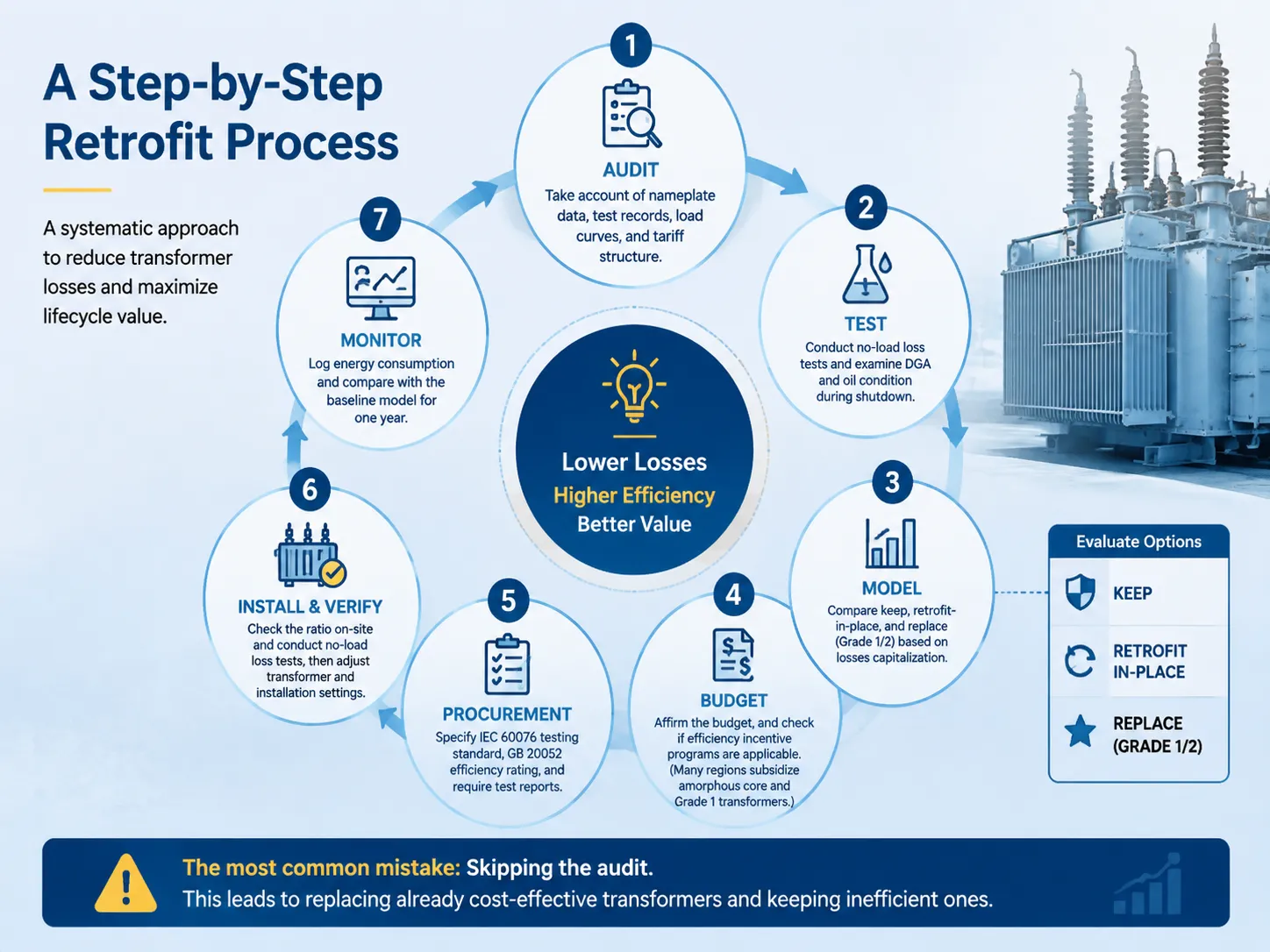
ステップバイステップのレトロフィットプロセス
- 監査:変圧器の名板データ、試験記録、負荷曲線、および料金構造を考慮する。.
- 試験:該当する場合は無負荷損失試験を実施し、シャットダウン中にDGAおよび油の状態を調べる。.
- モデル:損失の資本化に関して、保持、現地改修、グレード1/2での置き換えの比較を行う。.
- 予算:予算を確認し、効率インセンティブプログラムが適用可能かどうかを確認する(多くの地域ではアモルファスコアおよびグレード1の変圧器に補助金を出している)。.
- 調達:IEC 60076試験規格、効率評価のためのGB 20052規格の要件を明記し、試験報告書を要求する。.
- 設置と確認:現場で比率を確認し、無負荷損失試験を実施し、その後変圧器の設定と設置設定を調整する。.
- 監視:エネルギー消費のログを作成し、1年間のベースラインモデルと比較する。.
監査ステップを実施しないことは、組織が最も一般的に犯す間違いであり、この実践はすでにコスト効果のある運用を行っている変圧器を変更し、同時に非効率的なユニットをそのままにしておくことにつながる。.
ブランドと効率クラスによるコスト
ブランドと効率クラス別の新しい1,000 kVA 10/0.4 kV省エネ配電変圧器の価格(FOB):
| ブランド | 起源 | 標準効率 | 高効率(グレード1 / アモルファス) |
|---|---|---|---|
| 日立エナジー | 日本/グローバル | $8,500–$12,000 | $12,000–$17,000 |
| ABB | スイス/グローバル | $8,000–$11,500 | $11,500–$16,500 |
| シーメンスエナジー | ドイツ/グローバル | $7,500–$11,000 | $11,000–$15,500 |
| シュナイダーエレクトリック | フランス/グローバル | $7,000–$10,500 | $10,500–$15,000 |
| 江蘇省蘇辺電力 | 中国 | $4,000–$6,500 | $5,500–$8,500 |
価格見積もりは、損失クラス、タップチェンジャー、アクセサリー、銅価格、および納入条件によって異なる場合があります。これらは計画範囲として扱い、確定的な見積もりとは見なさないでください。.
有名ブランドは、グローバルサービスネットワークと広範な型試験を通じてその品質を証明しています。中国のTierに対する主張は、彼らの製品がIEC 60076に従って同じ試験結果を持ち、GB 20052に従って同じ効率を持ちながら、初期コストが40%-50%安いということです。江蘇省蘇辺電力は、効率グレードGB 20052の液浸変圧器を製造する中国のメーカーで、容量は最大63 MVAです。蘇辺は、アジア、アフリカ、中東の公益事業や工業団地に省エネ改修を提供しており、その範囲は文書化されています。 subian-electric.com.
よくある質問
省エネ変圧器のコストはいくらですか?
高効率の400-kVAトランスは、$2,500から$4,500の間で、1,000-kVAトランスは$4,000から$8,500の間で、中国のサプライヤーからFOBで配送されます。後者には中間性能のトランスが含まれますが、最高品質のモデル(クラス1アモルファスコア)はより高価です。ヨーロッパおよび日本のトランスは、通常、中国製のものよりも50%から80%高くなります。トランスのコストは、損失クラスやアクセサリー、原材料価格によって異なります。.
古いトランスを再巻きする方が新しいものを購入するより安いですか?
巻き直しは通常、新しいユニットのコストの60%から80%の間で、古いガスケットやブッシングを使用し、巻き直しプロセス以外に新しい保証がないため、古いユニットと同じかそれ以下の性能を提供します。技術的な理由で新しいトランスを設置できない場合を除き、現代の低損失トランスに交換することは、通常、より実行可能な経済的選択肢となります。.
古いトランスはどれくらいの電力を無駄にしますか?
一般的に、1990年代の1,000 kVAユニットは、無負荷状況で1,500-2,100 Wの損失があり、年間13,000-18,000 kWhを消費し、$1,050-$1,800の価値があります(電気料金が$0.08-$0.10/kWhの範囲であると仮定)。現代のグレード2ユニットは、その損失を半分に減少させ、アモルファスコア設計を使用することでさらに減少させることができます。.
トランスを交換するための良い回収期間はどれくらいですか?
通常、古い従来の設備を新しいエネルギー効率の良いものに交換するための時間は、運転モードで3〜8年です。この時間は、コスト料金と負荷係数によって決定されます。設備のサイズ設定、並列運転、タッピングなどの経済管理技術は、通常、1〜2年以内に投資を回収し、最小限または無資本投資で済みます。.
どの効率グレードを購入すればよいかはどうやってわかりますか?
現在の料金と負荷係数に基づいて損失資本化を行います。高負荷および高負荷係数のサイトでは、利用可能な最高の製品(GB 20052-2クラス1またはアモルファスコア)を選択します。軽負荷および季節的なサイトでは、クラス2がしばしば最良の選択肢です。なぜなら、無負荷損失の違いが価格差を正当化しないからです。.
参考文献
- IEAエネルギー効率2023 — トランスの効率と損失削減政策に関するグローバルな文脈。.
- IEC 60076-1: 電力変圧器 – 一般 — 損失検証のための評価および試験基準。.
- GB 20052: 電力トランス用エネルギー効率グレード(中国) — 業界全体で使用される効率グレード基準。.
- 米国DOEトランス効率プログラム — 北米の効率規則と損失経済。.
- 日立エナジーのトランスフォーマーポートフォリオ — プレミアムエネルギー効率トランスの提供に関する参考。.
- 江蘇省蘇辺電力公式サイト — テストレポート付きのエネルギー効率およびアモルファスコアトランスの範囲。.
結論
トランスのエネルギー効率の良いアップグレードとその効果的な活用は、発電事業者や産業企業にとって最も有益なエネルギープロジェクトの一つです。この技術が複雑であるためではなく、むしろ旧式のトランスが過剰に稼働し、ほとんど気づかれずに電力を放出しているからです。技術を構造的なレベルで、損失資本化アプローチやエネルギー効率の良い運用を検討することで、交換に対して3〜8年、運用の変更に対して1〜2年の回収期間を簡単に達成できます。.
ここから導き出せる主な結論は以下の通りです:
- 無負荷損失は年間8,760時間であり、1990年代に製造されたトランスを最新の低損失ユニットに切り替えることで、通常50%の損失削減を達成できます。.
- 現場での改修は、交換よりも低いTCOを得ることはほとんど成功しません。.
- 投資なしでエネルギー効率の良い運用を使用することで、投資の最も早い回収が達成できます。.
- アモルファスコアトランスは、設備の需要が高い場合に良好な回収が得られます。.
あなたの施設がエネルギー効率の良い改修を評価している場合、, 江蘇省蘇辺電力 アモルファスコア設計を含む、文書化された無負荷損失試験結果を持つGB 20052グレード1-2トランスを輸出に優しい価格で供給します。監査から始めてください — 製品範囲は subian-electric.com.