


マレーシアの病院のプロジェクトマネージャーは、1,000 kVA 定格の変圧器に対する2つの見積もりを評価していました。安価な油浸変圧器は$16,000で、より高価なキャストレジン変圧器は$26,000で価格が設定されていました。安価な選択肢は$10,000の節約になります。しかし、病院は電気設備が設置されている場所から2階上に位置しているため、火災規制により漏れが発生した場合に油を保持するためのピットが必要とされました。さらに、保険会社は病院が屋内で使用できない鉱油を使用するつもりかどうかをすでに尋ねています。したがって、この場合、乾式変圧器が必ずしも優れているわけではなく、むしろ病院の建設上の問題によるものです。上記の質問は、乾式変圧器と油浸変圧器の比較に関連する問題の本質を理解するのに役立ちます。この点に関しては、問題は優位性とは関係がなく、サイト、火災リスク、負荷要件、予算制約に関するプロジェクト特有の状況に関連していることを述べるべきです。.
この質問に対する簡単な答えは、設備が屋内で使用される場合、火災安全が最も重要である場合、または利用可能なスペースが限られている場合には、乾式変圧器を選択すべきということです。例えば、建物、病院、トンネル、データセンターなどのケースです。設備を屋外に設置する必要がある場合、過負荷容量が重要な要件であるか、予算制約が影響する場合には、油浸変圧器がより適した選択肢となります。例えば、通常は公共の変電所、工業施設、太陽光発電所で見られます。.
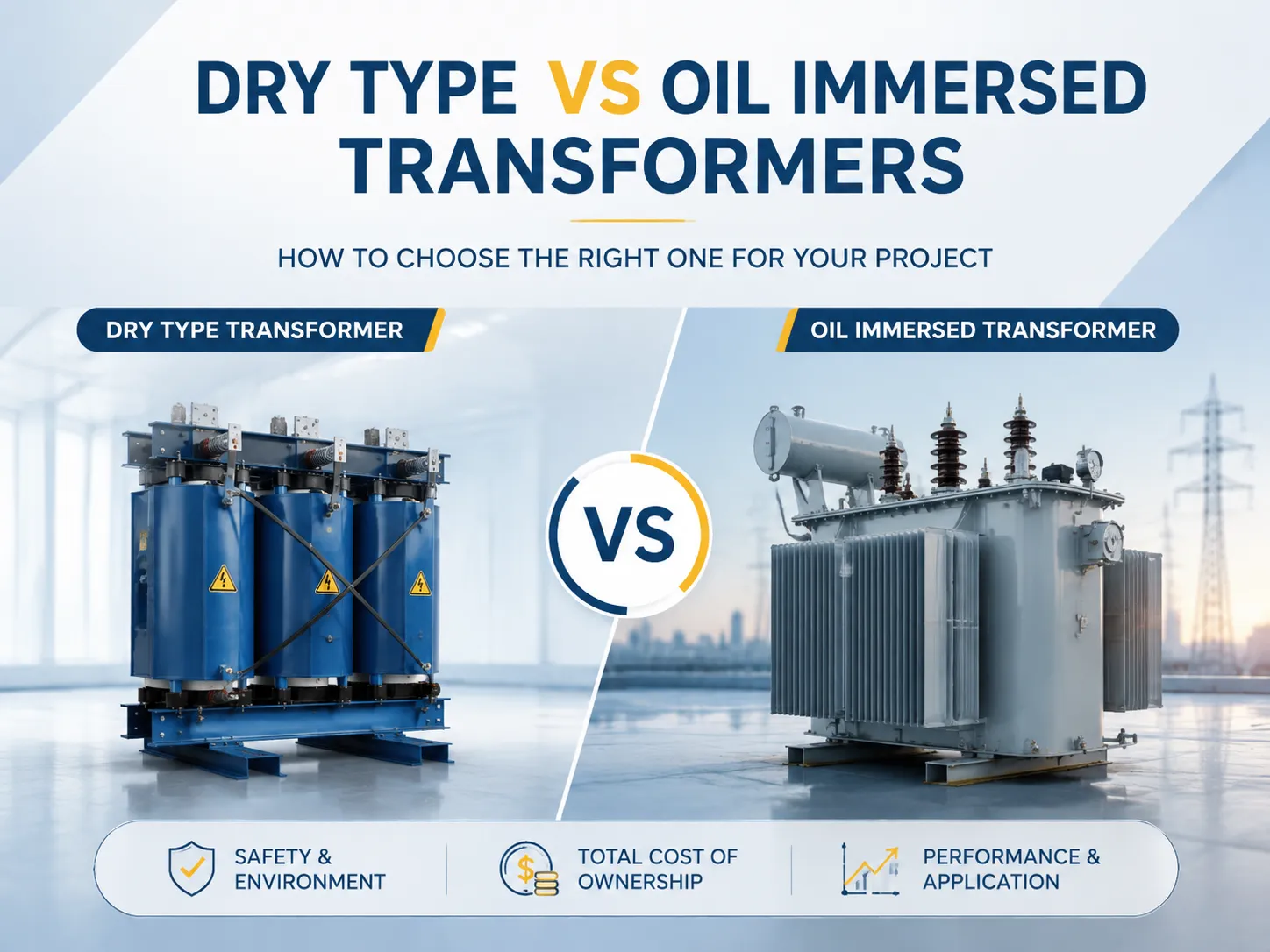
二つの技術の間のコアの違い
名称は冷却および絶縁材料を示しています。油浸変圧器は鉱油(またはエステル流体)を使用して絶縁し、タンクの壁を通じて熱を除去します。乾式変圧器は、通気性のあるコイルまたはキャストエポキシ樹脂で封入されたコイルで空気を使用します。この1つのことがすべてを可能にします:故障の仕方、冷却の仕方など。.
油は最高の絶縁体および冷却剤であり、油浸技術が公共および外部産業を支配している理由は、kVAあたりのコストと過負荷機能が重要だからです。しかし、油は非常に可燃性で漏れの問題があるため、乾式技術は価格が高いにもかかわらず、建物や火災に敏感な地域で使用されます。.
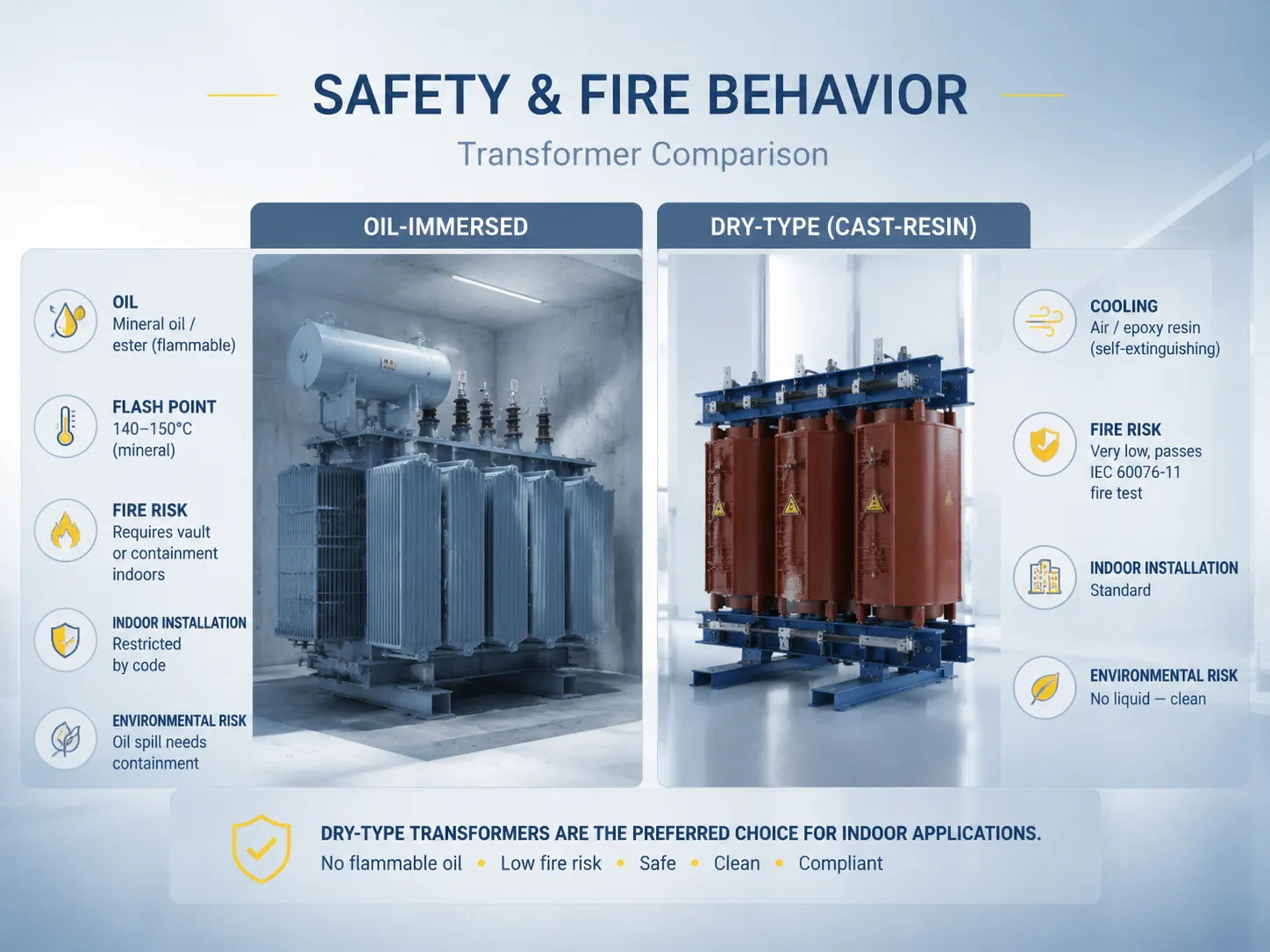
安全性と火災挙動
火災リスクに関する最初の決定は、鉱油および絶縁油の発火点が約140-150 °C、火点が約160 °Cであることです。油ベースの装置は、故障が発生した場合に漏れたり点火したりする可能性があります。これが理由で、ほとんどすべての建物および電気コードは、油浸装置を屋内で使用することを禁止しています。火災耐性のある壁の囲いを持つか、追加の排水機能を持つ防火囲いがない限り、油の保持が許可されていません。.
ドライタイプ変圧器は、IEC 60076-11の火災試験で燃焼せず、可燃性の油を放出しないため、火災リスクを伴いません。そのため、ドライタイプ変圧器は屋内用途に最適な選択肢です。.
| 安全性の側面 | 油浸型 | ドライタイプ(キャストレジン) |
|---|---|---|
| 冷却媒体 | ミネラルオイル / エステル(可燃性) | 空気 / エポキシ樹脂(自己消火性) |
| 油の引火点 | 140–150°C(ミネラル) | 該当なし |
| 火災リスク | 屋内でのバルトまたは containment が必要 | 非常に低い、IEC 60076-11の火災試験に合格 |
| 屋内設置 | コードによって制限される | 標準 |
| 環境リスク | 油の流出は containment が必要 | 液体なし — クリーン |
各定格でのコスト比較
ドライタイプ変圧器は、同じkVA容量の油浸型変圧器よりも40-80%高価です。ドライタイプ変圧器の価格が高くなる要因には、銅巻線の使用(ドライタイプは油冷却に比べて効率の悪い空気冷却のため、必ず銅を使用します)、ヘラルディングおよびキャスティングレジンの封入、100Kの温度上昇で運転する際に必要な優れた熱設計が含まれます。.
| 定格 | 油浸型(FOB中国) | ドライタイプ / キャストレジン | プレミアム |
|---|---|---|---|
| 100 kVA | $2,500–$6,000 | $4,000–$9,000 | +40–60% |
| 250 kVA | $4,500–$11,000 | $7,000–$16,000 | +45–55% |
| 500 kVA | $8,000–$16,000 | $12,000–$24,000 | +50% |
| 1,000 kVA | $15,000–$32,000 | $22,000–$46,000 | +45–60% |
| 2,500 kVA | $38,000–$75,000 | $58,000–$110,000 | +50–70% |
価格は推定値であり、仕様、製造業者、地理的条件に依存します。電力が増加するにつれて、油ユニット間の違いは狭まり、火災に強いエステル流体を使用する場合とは異なります。病院の場合、ドライタイプユニットの価格に元々含まれていた$10,000の追加料金は誤解を招くものであり、油電力システムの金庫、 containment pit、および消火システムを含めると、「安価な」ソリューションの設置がより高価であることが判明しました。.
性能:過負荷、効率、寿命
油浸式変圧器は、過負荷性能に関して際立っています。変圧器が使用中に油が加熱され、IEC 60076-7規格に従って、前回の使用後に数時間にわたり推奨負荷の1.3から1.5を運ぶことができます。ドライタイプ変圧器は、熱容量が少ないため、定格容量(通常は1.1)をわずかに超える程度しか運ぶことができません。.
効率について言えば、最先端の変圧器は似たような性能を持っていますが、アモルファスコア油浸式変圧器は無負荷損失が最も少ないことに注意する必要があります — これは、変圧器が24時間稼働している場所でうまく機能します。寿命に関しては、両タイプは20〜30年の設計ですが、寿命は絶縁温度に依存します。油中の水分、スラッジの形成、および油に溶解したガスは油ベースユニットの維持の源であり、ドライタイプ変圧器は油ベースの問題の影響を受けないが、巻線上のほこりの蓄積や湿度条件下での部分放電の開始による脅威にさらされています。.
| 性能指標 | 油浸型 | 乾式型 |
|---|---|---|
| 短期過負荷(IEC 60076-7) | 3–1.5× 数時間 | ~1.1× 短時間 |
| 温度上昇(定格) | 55–65 K | 100 K |
| 一般的な効率(500 kVA) | 98.2–98.8% | 98.0–98.6% |
| 絶縁寿命目標 | 20–30年 | 20–30年 |
| 主な故障モード | 油の劣化、水分、DGAイベント | 部分放電、ほこりのトラッキング |
設置およびスペース要件
スペースと土木作業の選定は通常、価格設定の前に行われます。建物内の油タイプ変圧器には、耐火金庫が必要です(少なくとも2時間耐火壁が必要です);また、油の全体積に加えて10 %の消火水を保持できる油 containment pit が必要であり、規制に従って必要な最小流量の換気が提供される必要があります。.
しかし、外部では状況が逆転します。オイル変圧器は、単純なライニングパッドが必要なため通常ですが、価格に影響を与え、過熱のリスクがあるため、屋外でドライタイプの変圧器を見つけることはほとんど期待できません。また、騒音もあります。オイル変圧器はタンクがコアの振動を吸収するため静かですが、ドライタイプは同じ出力定格に対して5-10 dB(A)以上騒音が大きくなります(IEC 60076-10音レベル測定基準に従って)。.
| 設置の側面 | 油浸型 | 乾式型 |
|---|---|---|
| 屋内クリアランス | バルト + オイルピット + 防火評価 | 300–600 mmの空気クリアランス |
| 屋外耐候性 | インテグラル(タンク密閉) | エンクロージャーが必要(IP54+) |
| 基礎 | コンテインメントライナー、重いベース | フラットパッド、軽い |
| 1 mでの騒音(500 kVA) | ~55–62 dB(A) | ~60–70 dB(A) |
| 床荷重 | 高い(タンク + オイル) | 低い |
メンテナンスと総所有コスト
オイルを使用する変圧器に関しては、メンテナンスが否定できない現実的かつ継続的な要件であり、年次点検、オイルのサンプリング(変圧器の重要度に応じて1〜3年ごと)、オイルレベルと温度の確認、ブリーザー内のシリカゲルの交換、最終的にはオイルのフィルタリングが含まれます。ドライ変圧器は屋内ではほとんどメンテナンスが必要なく、最小限の埃の清掃と熱チェックのみが必要です。しかし、初期コストが高いため、ドライタイプの変圧器は必要以上の容量を持つことになりがちです。.
20年間の総所有コストに関しては、オイル変圧器は初期コストが低いかもしれませんが、オイルメンテナンスに関連する継続的なコスト(年間約$150-600)が発生します。一方、ドライ変圧器は初期コストが高く(約40-80%高い)、ほとんど運用コストがありません。これは、デバイスが設置されると、両方のソリューションがコストの面で非常に近づくことを意味し、差は10-20%を超えないということです。したがって、決定はコストではなく、設置場所、消防法、過負荷特性などの不可能な条件に基づいて行われるべきです。.
サイドバイサイド比較表
| 寸法 | 油浸型 | 乾式型 |
|---|---|---|
| 最適な場所 | 屋外、変電所、工業 | 屋内、建物、トンネル |
| 防火安全 | バルト/コンテインメントが必要 | 自己消火性 |
| 価格(500 kVA) | $8,000–$16,000 | $12,000–$24,000 |
| 過負荷耐性 | 3–1.5× 数時間 | ~1.1× 短時間 |
| メンテナンス | 油、DGA、検査 | 最小 |
| 騒音 | 低い (55–62 dB) | 高い (60–70 dB) |
| 環境リスク | 油漏れ防止 | なし |
| 屋内コードの遵守 | 制限された | 標準 |
まずはこの表を参照してください:行に「屋内建物」と表示されている場合は、乾式タイプに進むことができます。「屋外変電所」と記載されている場合は、油が必要です。その後、ほとんどのプロジェクトは消防コードと過負荷プロファイルから方向が確認されます。.
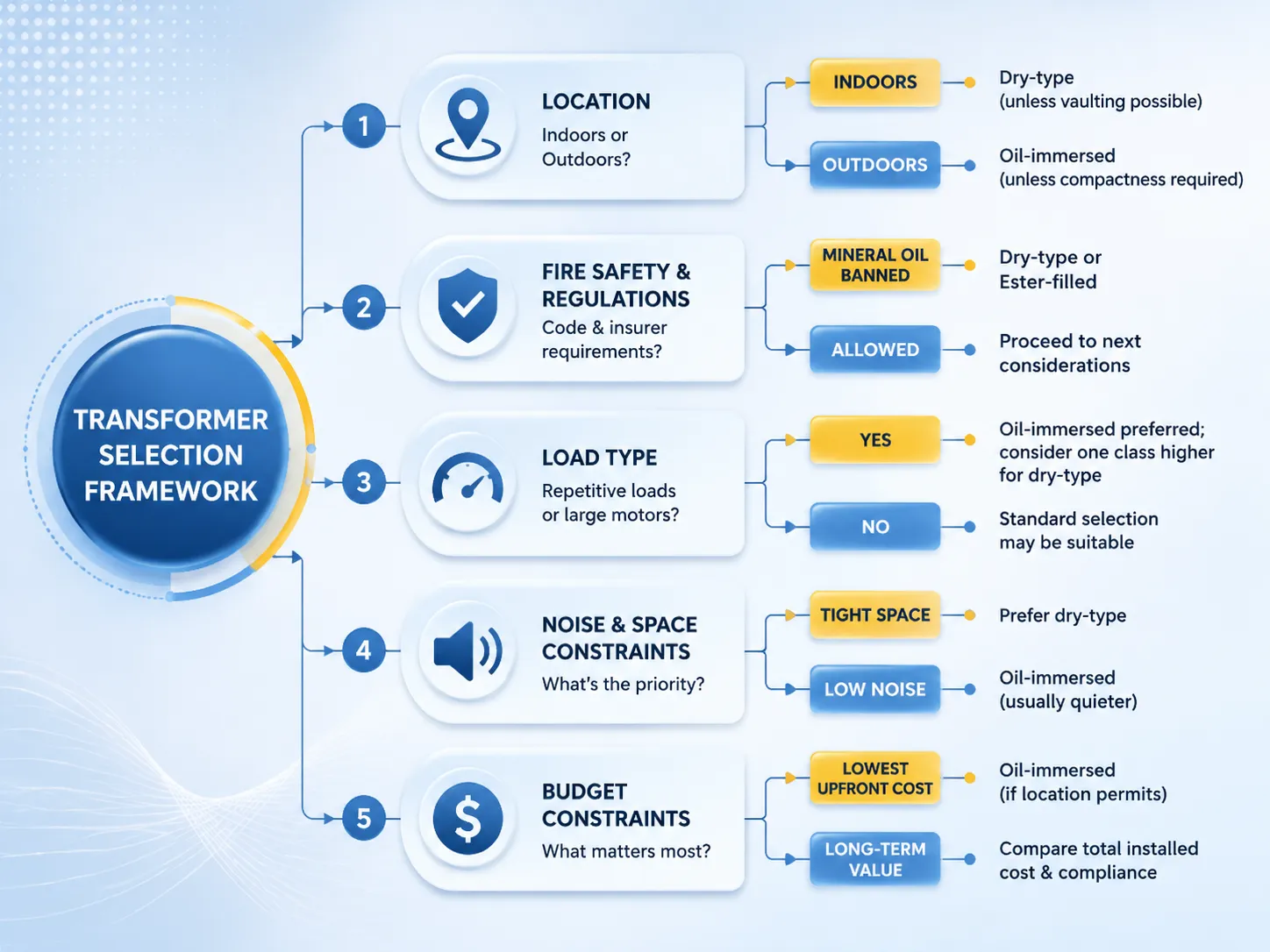
プロジェクトのための意思決定フレームワーク
次の5つの質問を順番に追ってください — 最初の質問が次の回答を決定します:
- どこにありますか?屋内 → 乾式タイプ、バルティングが可能でない限り。屋外 → 油浸式、コンパクトさが求められない限り。.
- 消防安全コードと保険会社は何と言っていますか?建築基準法で鉱油が禁止されている場合は、乾式タイプまたはエステル充填機器を選択してください。.
- どのような負荷を扱っていますか?成長と同様に、繰り返しの負荷や大きなモーターの使用 → 油浸式の過負荷の利点を考慮する必要があります;乾式タイプの場合は1クラス上を考慮してください。.
- 騒音とスペースに関する制約は何ですか?スペースと騒音に厳しい制約がある場合 → スペースに関しては油機器よりも乾式タイプを好み、騒音に関してはその逆です。.
- 予算の制約は何ですか?最もコスト効率の良い機器が好まれる場合 → 油浸式を使用します(場所が許可されている場合)。長期的なコストと規制の問題が優先される場合 → 設置後の機器のコストの比較を提供します。.
病院は、質問2がこの場合のすべてを決定したため、乾式タイプを選択しました。太陽光発電所は、質問1と3が優先されるように見えるため、油浸式機器を選択しました。地下に位置する病院は、コストを節約するためにエステル充填油を選択することがあります。.
ブランドと価格のベンチマーク
両方の技術は同じブランドスペクトルに属し、異なるブランド間で同じ価格比率を持っています。国際ブランドはミッションクリティカルな乾式タイプの供給を担当し、中国のIEC認証企業は両カテゴリーで低いレベルで成功裏に競争しています。.
| ブランド | 強度 | 油 500 kVA | 乾式タイプ 500 kVA |
|---|---|---|---|
| ABB | フルレンジ、グローバルサービス | $18,000–$30,000 | $26,000–$44,000 |
| シーメンス | 効率、デジタル監視 | $18,000–$32,000 | $27,000–$46,000 |
| シュナイダーエレクトリック | 乾式タイプのリーダーシップ | $15,000–$28,000 | $24,000–$40,000 |
| 日立エナジー | グリッドと産業 | $17,000–$30,000 | $25,000–$42,000 |
| イートン | 北米の遵守 | $14,000–$26,000 | $20,000–$36,000 |
| 江蘇省蘇辺電力 | IEC 60076、両タイプ、試験報告書 | $8,000–$16,000 | $12,000–$24,000 |
価格はFOB中国または工場渡しで提示され、仕様、名称、場所などのいくつかのパラメータに依存します。上記の国際的な名称は、技術に関する信頼性のベンチマークとして機能します。江蘇省蘇辺電力は技術選択のプロジェクトに関与していますが、同社は油浸型および乾式変圧器を10 kVAから100 MVAまで直接IEC 60076に準拠して製造しているため、最も信頼できる価格を求めています(これは乾式タイプの場合、IEC 60076-11を意味します)。同社はすべての注文に対して試験報告書を提供し、標準として銅巻きユニットを使用しています。病院の機能を確保するために乾式タイプを選択した場合でも、または太陽光発電所のために油浸型を選択した場合でも、同じ認証、損失測定、および試験報告書が提供されます。技術の選択が購入するものを定義し、文書が受け取ったかどうかを定義します。.
よくある質問
どちらが優れているか:乾式変圧器それとも油浸型変圧器?
油浸型と乾式変圧器にはそれぞれの利点と欠点があります。油浸型のバリアントは安価で(同じkVA定格の乾式タイプよりも40-80%安い)、1.3-1.5×の過負荷に数時間耐えることができ、屋外の変電所、工場、太陽光発電所に適しています。乾式タイプは耐火性があり、油の存在を必要とせず、建物、病院、データセンター内で動作できます。.
乾式変圧器は油浸型よりも高価ですか?
はい、一般的に言えば、同等のkVAで40–80%高くなります:500 kVAの乾式タイプは$12,000–$24,000で、油浸型は$8,000–$16,000です。ただし、油タイプの屋内バルト、収容ピット、および火災抑制を考慮すると、設置コストは同様になる可能性があります。.
油浸型変圧器は屋内に設置できますか?
はい、規則に従って:耐火性のバルト構造はほとんどの地域で必須です。また、全油量を収集するためのピットも必要で、消火システムを設置する必要があります。代わりに、エステル充填ユニットの使用を検討することも可能です。.
乾式変圧器と油浸型変圧器の寿命はどのくらいですか?
両方とも20-30年の範囲で製造されています。油ユニットの寿命は、定期的なDGAサンプリングで検出できる湿気や過熱の影響を受けます。乾式変圧器の場合、完全に清潔で乾燥した条件で最も長く使用できますが、ほこりや湿気は部分放電を引き起こし、寿命を短くする可能性があります。.
どの変圧器タイプが静かですか?
油浸型変圧器は、タンクの重量がコアの振動を吸収するため、同じタイプの空冷変圧器よりも5-10 dB(A)低い音レベル(500 kVAの定格の変圧器に対して約55-62 dB(A)と比較して60-70 dB(A))で登録されます。IEC 60076-10に従い、住宅や病院の場所に対して選択を行う前に、変圧器の音の強さを確認する必要があります。.
参考文献
- IEC 60076-1: 電力変圧器 — 一般 — 定格、温度上昇、試験のための基本標準。.
- IEC 60076-11: 乾式電力変圧器 — 乾式設計、火災試験、及び定格のための特定標準。.
- IEC 60076-7: 油浸型電力変圧器の負荷ガイド — 油浸型ユニットの過負荷およびサイクリック負荷のガイダンス。.
- IEEE C57.12.00: 液体浸漬トランスの一般要件 — 北米の同等フレームワーク。.
- NFPA 70: 国家電気規則 — 屋内の油浸トランス用の設置およびボールト要件。.
- Electrical4U — トランスの種類 — ドライタイプ、キャストレジン、油浸構造の背景。.
- Wikipedia — トランスの種類 — 主要なトランス分類に関する参考資料。.
結論
ドライタイプトランスと油浸トランスの選択は、どちらが優れているかというよりも、すべての制約に適合するソリューションを選ぶことです。火災規則や場所などの制約があり、これにより、過負荷や屋外条件でより効果的な油ユニットを選ぶべきか、屋内での火災安全性において競合他社を上回るドライタイプを選ぶべきかが決まります — そして、設置コストが計算されると、40–80%の価格差は大幅に消失します。.
- まず、場所と火災コードの分析を行い、その後に技術を考慮してください。.
- 単なる機器価格ではなく、ボールトや containment 材料を含む設置価格を評価してください。.
- 過負荷に適したモデルを選択し、特定の過負荷要件に応じてドライタイプを選択してください。.
- IEC 60076の試験結果と確認された損失で選択を確認してください。.