


제철소에서 아크 용광로 변압기는 백열강에서 불과 몇 미터 떨어진 곳에 위치하며, 40,000 A의 2차 전류를 가지고 있습니다. 반도체 공장에서 주 변압기는 110 kV를 20 kV로 낮추어 계획되지 않은 다운타임을 견딜 수 없는 시설에 공급합니다. 주 변압기는 실제로 산업 세계의 중추로, 유틸리티 라인에서 고전압 공급을 전송한 다음, 이를 저전압으로 공장의 스위치기어, 엔진 및 용광로에 전달합니다.
이 기사에서는 주 변압기가 무엇인지, 배전 변압기 및 유닛 변압기와 어떻게 구별하는지, 산업 시설에 맞게 크기와 사양을 어떻게 정하는지, 효율성, 임피던스, 냉각, 보호 및 가격 측면에서 비용이 얼마나 되는지에 대해 알아볼 수 있습니다. 전기 엔지니어, 플랜트 엔지니어 또는 구매 관리자 여부에 관계없이 이 가이드는 올바른 선택을 하기 위해 필요한 모든 기술적 및 상업적 데이터를 제공합니다.
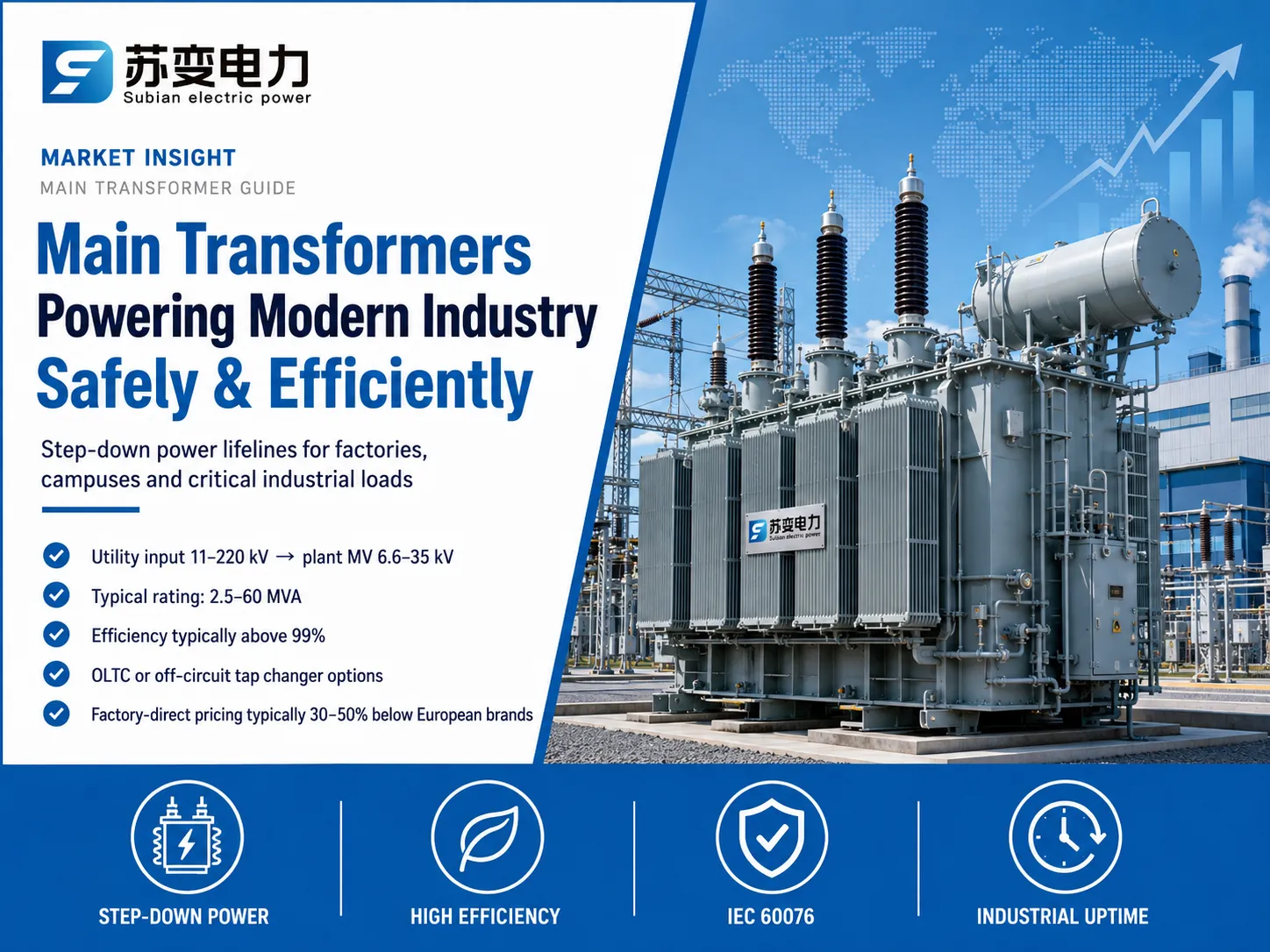
주 변압기란 무엇인가? (정의)
산업, 상업 또는 유틸리티 시설의 주 변압기는 가장 큰 전력 변압기로, 시설을 전력망에 연결하고 모든 내부 배전 네트워크에 전력을 공급하는 장치입니다. 예를 들어 제철소에서는 40MVA/110kV 유닛일 수 있으며, 중형 공장은 2.5MVA/11kV 유닛을 사용하고, 병원 캠퍼스는 아마도 여러 개의 2MVA 유닛을 적용하여 중복성을 제공합니다. 이 장치가 주 변압기라고 불리는 이유는 전압 값이 아니라 변압기가 공장의 주요 전기 구성 요소로서의 위치에 있습니다.
주 변압기는 손실, 고품질 절연, 작동하는 탭 체인저 및 적절한 보호 솔루션과 관련하여 최상의 솔루션을 포함하므로 최대 신뢰성으로 작동하도록 제조됩니다. 주 변압기의 고장으로 인한 비용은 수리 비용뿐만 아니라, 공정 플랜트의 경우 고장으로 인한 손실이 수백만 달러에 이를 수 있습니다.
산업 전력 시스템에서 주 변압기의 역할
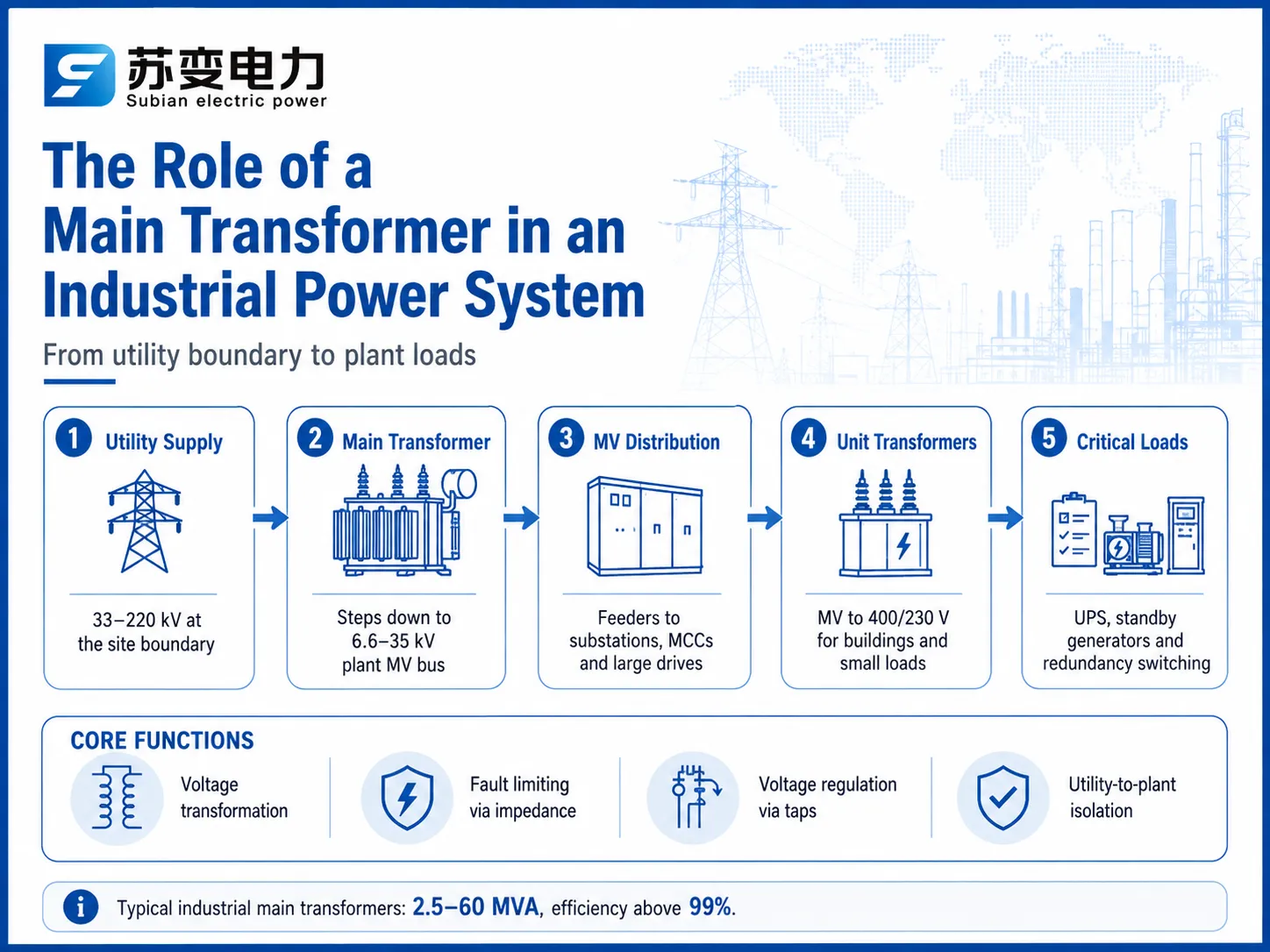
현대 산업 설치의 전력 구조는 대체로 유사한 패턴을 따릅니다:
유틸리티 연결 — 33 kV에서 220 kV까지 범위가 있으며, 설치의 경계에 위치합니다(외부 전력 공급이 시설의 전기 시스템에 연결되는 지점).
주 변압기 — 시설 자체에 대해 6.6 kV에서 35 kV의 공급 전압을 생성합니다.
중전압 배전 시스템 — 변전소, 모터 제어 센터 및 주요 드라이브에 대한 전력 연결을 포함합니다.
유닛 변압기 — 공급 전압을 6.6 kV에서 35 kV로 낮추어 400V 및 230V를 생성하고 건물 및 소형 부하에 전기를 공급합니다.
중요한 부하 — 무정전 전원 공급 장치(UPS), 백업 발전기 및 설치된 중복 스위치로 나타납니다.
이러한 틀에서, 주 변압기는 전압을 변환할 뿐만 아니라 임피던스로 인해 전체 회로를 결함으로부터 보호하고, 탭의 가용성에 따라 전압을 제어하며, 유틸리티 네트워크와 시설을 분리합니다.
시설을 위한 주 변압기 크기 결정 방법
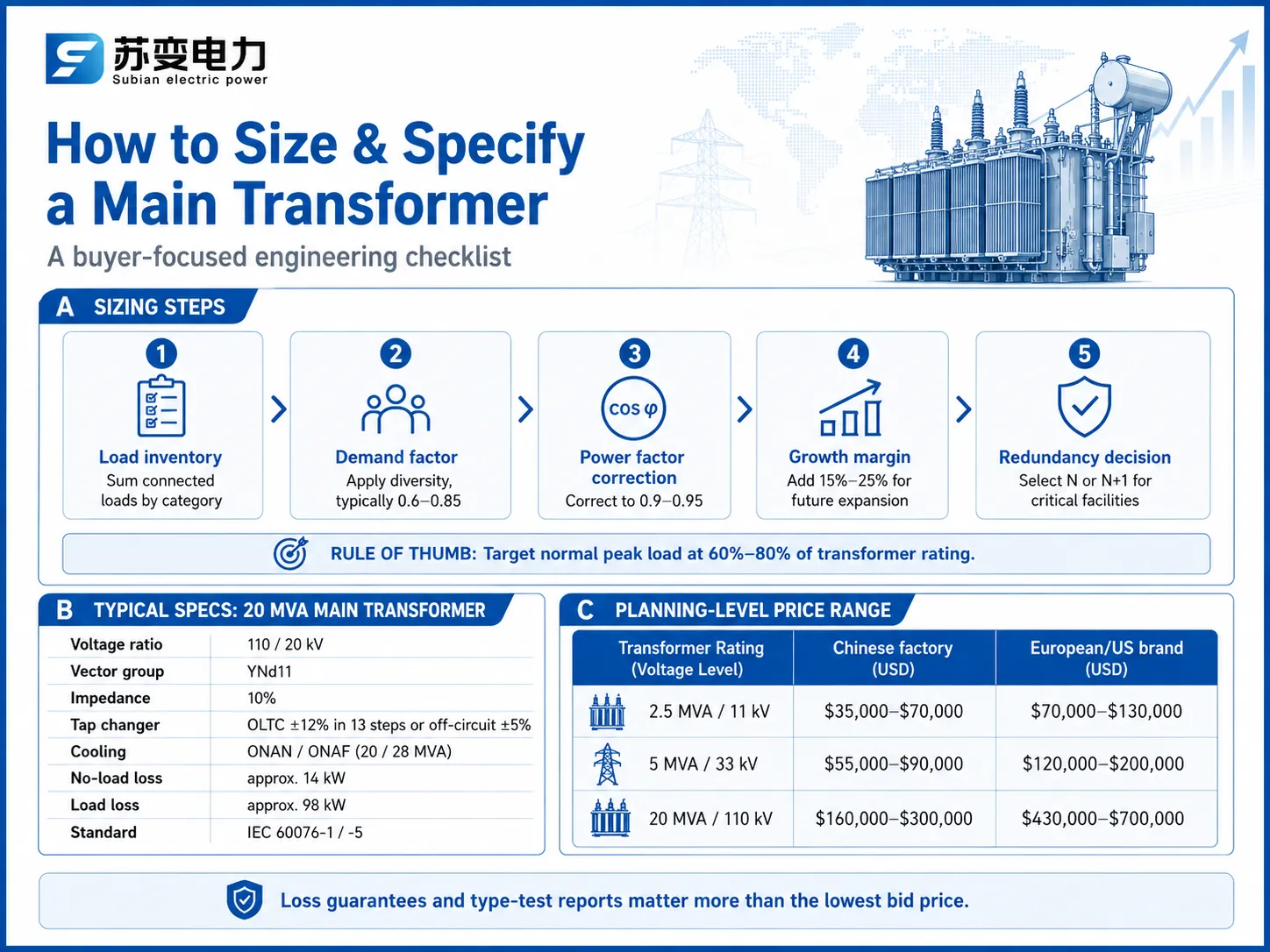
크기 결정은 모든 다른 사양을 결정짓는 요소입니다. 엔지니어링 순서:
| 단계 | 방법 | 일반적인 결과 |
|---|---|---|
| 부하 목록 | 카테고리별로 연결된 부하 합산 | 예: 8 MW 연결됨 |
| 수요 계수 | 다양성 적용 (0.6–0.85 일반적) | 예: 최대 수요 6 MW |
| 역률 보정 | 9–0.95로 보상 | ≈6.5–7 MVA 겉보기 |
| 성장 여유 | 미래를 위해 15%–25% 추가 | ≈8–8.5 MVA 선택됨 |
| 중복성 결정 | N 또는 N+1 구성 | 중요할 경우 2×8 MVA |
산업 시설에 대한 확실한 지침은 주 변압기를 크기 조정하여 정기적인 피크 부하가 정격의 60%에서 80% 사이에 있도록 하는 것입니다. 이는 과부하에 대한 여유가 있고, 효율성이 극대화되며, 모터가 시작할 때 전력 감소에 대한 충분한 여유가 있음을 보장합니다. 중요 시설의 경우, 두 개의 변압기를 N+1 구성으로 사용하는 것이 (두 변압기 모두 비상 시 전체 부하를 처리할 수 있는 경우) 매우 일반적이 되었습니다.
주 변압기 유형 및 구성
| 구성 | 전압 단계 | 전형적인 정격 | 사용 장소 |
|---|---|---|---|
| 2권선, 오일 침지형 | 110/20 kV | 5–60 MVA | 대부분의 산업 현장 |
| 2권선, 건식형 | 11/0.4 kV 또는 20/0.4 kV | 5–10 MVA | 실내, 화재 민감 시설 |
| 3권선 | 110/20/6.6 kV | 10–60 MVA | 여러 전압 수준을 가진 공장 |
| N+1 쌍 뱅크 | 110/20 kV ×2 | 2×5–2×30 MVA | 데이터 센터, 병원, 정유소 |
삼권 변압기는 현장에서 중전압 프로세스 버스와 별도의 보조 버스가 모두 필요한 경우에 인기가 있으며, 세 번째 권선은 또한 고조파 경로를 제공하고 별도의 유닛 변압기의 필요성을 줄입니다.
주 변압기 vs. 배전 변압기 vs. 유닛 변압기
| 측면 | 주 변압기 | 배전 변압기 | 유닛 변압기 |
|---|---|---|---|
| 위치 | 유틸리티 경계에서 공장 MV | MV 피더에서 최종 사용자까지 | 공장 MV에서 LV 부하까지 |
| 일반적인 정격 | 5–60 MVA | 50 kVA–2,500 kVA | 100 kVA–3 MVA |
| 1차 전압 | 11–220 kV | 4–35 kV | 6–35 kV |
| 작동 프로파일 | 지속적인 고부하 + 과부하 | 가변 부분 부하 | 건물/프로세스 부하 |
| 일반 가격 | $35k–$300k+ | $1.5k–$45k | $5k–$70k |
“주”와 “유닛”의 경계는 단일 변압기가 두 가지 작업을 모두 수행하는 소규모 시설에서 모호해질 수 있지만, 엔지니어링 우선순위는 다릅니다: 주 변압기는 신뢰성과 지속적인 부하를 최적화하고, 유닛 변압기는 비용과 유연성을 최적화합니다.
산업용 주 변압기에 대한 주요 사양
| 매개변수 | 일반 값 |
|---|---|
| 정격 전력 | 20 MVA |
| 전압 비율 | 110 / 20 kV |
| 벡터 그룹 | YNd11 |
| 임피던스 전압 | 10% |
| 탭 체인저 | OLTC ±12% 13단계, 또는 오프 회로 ±5% |
| 냉각 | ONAN/ONAF (20/28 MVA) |
| 무부하 손실 | ≈14 kW |
| 부하 손실 | ≈98 kW |
| 절연 수준 | 550 kV BIL (110 kV 측) |
| 표준 | IEC 60076-1/-5 |
이 숫자는 구매자와 제조자 간의 계약입니다. 어떤 편차 — 더 높은 손실, 다른 임피던스, 약한 탭 범위 — 는 가격과 성능을 변경하므로 생산 전에 잠금이 필요합니다.
효율성, 손실 및 총 소유 비용
대부분의 산업용 주 변압기는 99.0%에서 99.6% 사이의 효율성 수준으로 작동합니다. 예를 들어, 20 MVA 변압기의 효율성이 99.4%일 경우, 전체 부하 작동 시 열 손실은 약 120 kW에 해당하며, 이는 1년 운영 시 약 1,000 MWh의 총 소비량에 해당합니다. 이는 평균 요금 $0.08–0.15/kWh에서 연간 $80,000–150,000의 비용에 해당하며, 대기 시간 동안 발생하는 손실은 포함되지 않습니다.
효과적인 비용 평가는 20–30년 동안 수행되어야 합니다. 저손실 모델의 제작에는 약 5%–10%의 추가 비용이 발생하지만, 장기적으로 운영 비용을 절감합니다. 20 MVA 변압기 유닛의 손실을 5 kW 줄이면 연간 약 44 MWh의 절약이 발생하며, 이는 연간 약 $4,400–6,600의 절약을 의미하며, 정상 산업 가격 솔루션에서 20년 동안 $90,000–130,000의 절약을 제공합니다.
보호 및 안전 엔지니어링
다층 보호의 가장 중요한 접근 방식은 해당 위치에서 가장 높은 가치를 지닌 변압기에 대한 것입니다.
다양한 보호 스키마로 시작합니다:
차동 보호(87T)는 변압기의 1차 측 전류와 2차 측 전류(비율 및 벡터 그룹에 대해 보정됨)를 비교하여 내부 결함을 신속하게 감지합니다.
과전류 보호(50/51)는 위상 및 접지 결함 백업을 지원합니다.
제한 접지 결함(REF, 64)은 권선에서 접지 결함을 감지하는 데 도움을 줍니다.
부흐홀츠 릴레이는 가스 형성으로 인해 초기 단계에서 고장을 감지하며, 서지 및 파형 임펄스 알람을 생성할 수 있습니다.
온도 알람은 변압기가 IEC 60076-2에서 설정한 기준에 따라 온도 한계에 도달했음을 나타냅니다.
압력 해제, OLTC 보호 및 서지 억제기는 변압기를 기계적 힘과 번개로부터 보호합니다.
시운전 및 유지보수 경험은 IEEE C57.140(유지보수 가이드) 및 IEC 60076-7(부하 가이드)에서 설정한 기준을 따릅니다.
현대 산업 전반에 걸친 응용 프로그램
철강 및 금속 가공 — 30-120 MVA 범위의 부하를 처리하는 주 변압기 + 용광로 변압기, 매우 힘든 작업 주기에서 작동합니다.
컴퓨터 센터 — 보장된 중복성을 갖춘 쌍 주 변압기, 종종 110/20 kV 전압 수준에서 2×10-2×30 MVA 범위입니다.
제약 및 반도체 — 불리한 부하에 연결되고 실내 설치를 위한 건식 옵션 선택 외에도 고품질 전압을 요구합니다.
광업 — 특정 설계가 필요한 외딴 지역, 어려운 환경 요인, 높은 주변 온도, 나쁜 접근 조건에 대응합니다.
화학 및 정제 — 연속 부하 기술은 일반적으로 N + 1 기준으로 작동하며 상당한 초과 부하 용량을 지원합니다.
상업 건물 및 병원 — 엄격한 중복 요구 사항에 따라 5-20 MVA입니다.
각 상황에서 구매의 논리는 유사할 것입니다: 부하의 특성과 크기를 일치시키고, 투자로 손실을 최적화하며, 다운타임이 손실을 의미하는 곳에 중복성을 추가하고, 릴레이 연결로 보호를 추가합니다.
현실적인 가격 & 최고의 브랜드
주요 변압기 가격은 정격, 전압, 손실, 탭 체인저 및 브랜드에 따라 달라집니다. 오일 침지형 장치에 대한 계획 수준 범위:
| 정격 / 전압 | 중국 공장 (예: 수비안, TBEA) | 유럽/미국 브랜드 |
|---|---|---|
| 5 MVA / 11 kV | $35,000–$70,000 | $70,000–$130,000 |
| 5 MVA / 33 kV | $55,000–$90,000 | $120,000–$200,000 |
| 20 MVA / 110 kV | $160,000–$300,000 | $430,000–$700,000 |
| 40 MVA / 110 kV | $300,000–$550,000 | $800,000–$1,300,000 |
가격은 사양, 손실 수준 및 지역에 따라 다릅니다. 국제 브랜드 프리미엄 없이 부하 프로필에 맞게 설계된 주요 변압기가 필요한 산업 구매자를 위해, 장쑤 수비안 전력 는 강력한 옵션입니다: 50 kVA에서 220 kV 클래스까지 배급 및 전력 변압기를 생산하는 중국 변압기 제조업체로, 맞춤 임피던스, 탭 범위 및 냉각 구성을 갖춘 2.5–60 MVA 산업 주요 변압기를 포함합니다. 장치는 IEC 60076 유형 시험 보고서 및 전체 공장 시험 문서와 함께 배송되며, 엔지니어는 보호 인터페이스 설계 및 현장 시운전을 지원합니다. 공장 직송 가격은 일반적으로 유럽 동급 제품보다 30%–50% 저렴하며, 복잡한 프로젝트를 위한 OEM/ODM 맞춤화가 가능합니다.
자주 묻는 질문
주요 변압기와 유닛 변압기의 차이는 무엇인가요?
주요 변압기는 시설을 11–220 kV의 유틸리티 그리드에 연결하고 전체 공장의 MV 배급을 6.6–35 kV로 공급합니다. 유닛 변압기는 더 작으며(보통 100 kVA–3 MVA) 공장의 MV 버스를 400/230 V로 낮춰 건물, 조명 및 소형 부하에 사용됩니다. 대형 사이트에는 하나 또는 두 개의 주요 변압기와 수십 개의 유닛 변압기가 있습니다.
공장에 맞는 주요 변압기를 어떻게 크기 조정하나요?
연결된 부하를 합산하고, 0.6–0.85의 수요 계수를 적용하며, 전력 계수를 0.9–0.95로 수정하고, 15%–25%의 성장 여유를 추가한 후, 정상 피크 부하가 60%–80%의 정격에 위치하도록 가장 가까운 표준 정격을 선택합니다. 중요한 시설의 경우, 각각 전체 부하를 처리할 수 있는 N+1 쌍 유닛을 사용합니다. 6 MW의 최대 수요는 일반적으로 8–10 MVA 변압기로 이어집니다.
산업 주요 변압기가 달성해야 하는 효율성은 얼마인가요?
전체 부하에서 99.0%–99.6%를 기대하며, 무부하 손실은 정격의 약 0.05%–0.1%, 부하 손실은 0.4%–0.7%입니다. 20 MVA 유닛은 14 kW의 무부하 손실과 98 kW의 부하 손실을 보일 수 있습니다. 보장된 손실 값을 요청하고, 입찰 간의 자본화된 손실 비교를 20–30년 동안 수행한 후 선택하세요 — 손실 차이는 일반적으로 가격 차이를 초과합니다.
공장을 위한 주요 변압기 비용은 얼마인가요?
5–5 MVA / 11–33 kV 유닛에 대해 $35,000–$90,000을 예산으로 잡고, 20 MVA / 110 kV에 대해 중국 공장에서 $160,000–$300,000(또는 유럽 브랜드에서 $430,000–$700,000)을 예산으로 잡으며, 프리미엄 브랜드에서 40 MVA 클래스에 대해 최대 $1.3 백만을 예산으로 잡습니다. 보호, 설치, 테스트 및 토목 공사에 대해 20%–40%를 추가하세요.
제 주요 변압기에 부하 탭 체인저가 있어야 하나요?
전력 회사의 전압이 ±5% 이상 변동하거나 부하로 인해 의미 있는 전압 스윙이 발생하는 경우, 예 — OLTC는 ±12%에서 ±16% 범위 내에서 자동으로 공장 MV를 ±2%로 유지합니다. 공급이 안정적이고 부하가 일정하다면, ±5%에서 오프 회로 탭 체인저가 더 저렴하고 적합합니다. OLTC는 일반적으로 정격에 따라 $15,000–$60,000을 추가합니다.
참고 문헌
- IEC 60076-1: 전력 변압기 — 일반 — 주요 변압기에 대한 정격, 허용 오차 및 테스트.
- IEC 60076-5: 단락 내성 — 산업용 의무에 필수적인 단락 내성 요구 사항.
- IEC 60076-7: 오일 침지 전력 변압기를 위한 하중 가이드 — 과부하 능력 및 열 노화 안내.
- IEEE C57.12.00: 액체 침지 변압기에 대한 일반 요구 사항 — 북미 동반 표준.
- IEEE C57.140: 변압기 유지보수 가이드 — 산업용 장치에 대한 유지보수 및 상태 평가 참조.
- 히타치 에너지 변압기 — 대형 변압기 기술에 대한 산업 참조.
결론
- 주요 변압기는 현대 산업의 전기 시스템에서 중요한 구성 요소로, 기업의 에너지 구조의 기초를 형성합니다. 크기, 손실 최적화, 보호 유형 및 중복성의 매개변수가 향후 수년간 현장의 성능과 비용을 결정합니다.
크기는 정상 최대 부하가 정격 용량의 60%–80%가 되도록 선택해야 하며, 성장 여유는 15%–25%이어야 합니다.
손실은 20–30년 자본화 손실 모델을 사용하여 최적화해야 합니다.
보호는 차동 보호, REF, 부흐홀츠 릴레이 및 온도 제어를 통해 제공되어야 하며, 유지보수는 DGA를 따라야 합니다.
이러한 변압기의 예산은 2.5–5 MVA의 경우 $35k에서 $90k, 20 MVA/110 kV의 경우 $160k에서 $300k(공장 직송) 범위여야 합니다.
새로운 공장을 계획하거나 기존 변전소를 업그레이드하려는 경우, 장쑤 수비안 전력 5 MVA에서 60 MVA까지의 주요 변압기를 IEC 60076 인증, 맞춤형 탭 및 냉각 구성, 예산에 맞는 공장 직송 가격으로 설계하고 공급할 수 있습니다.