


두 변압기는 전력 등급, 전압 등급 및 성능 매개변수 측면에서 동일하며 동일한 효율성 클래스에 속합니다. 그러나 두 변압기가 동일한 기술 매개변수를 가지고 있음에도 불구하고, 한 변압기는 다른 변압기보다 약 40% 더 무겁고 거의 20% 더 비쌉니다. 그럼에도 불구하고 하나는 작동 중이고 다른 하나는 이미 교체되었습니다. 이는 모든 변압기에서 사용되는 재료의 요소 중 하나인 권선 도체와 관련된 문제입니다.
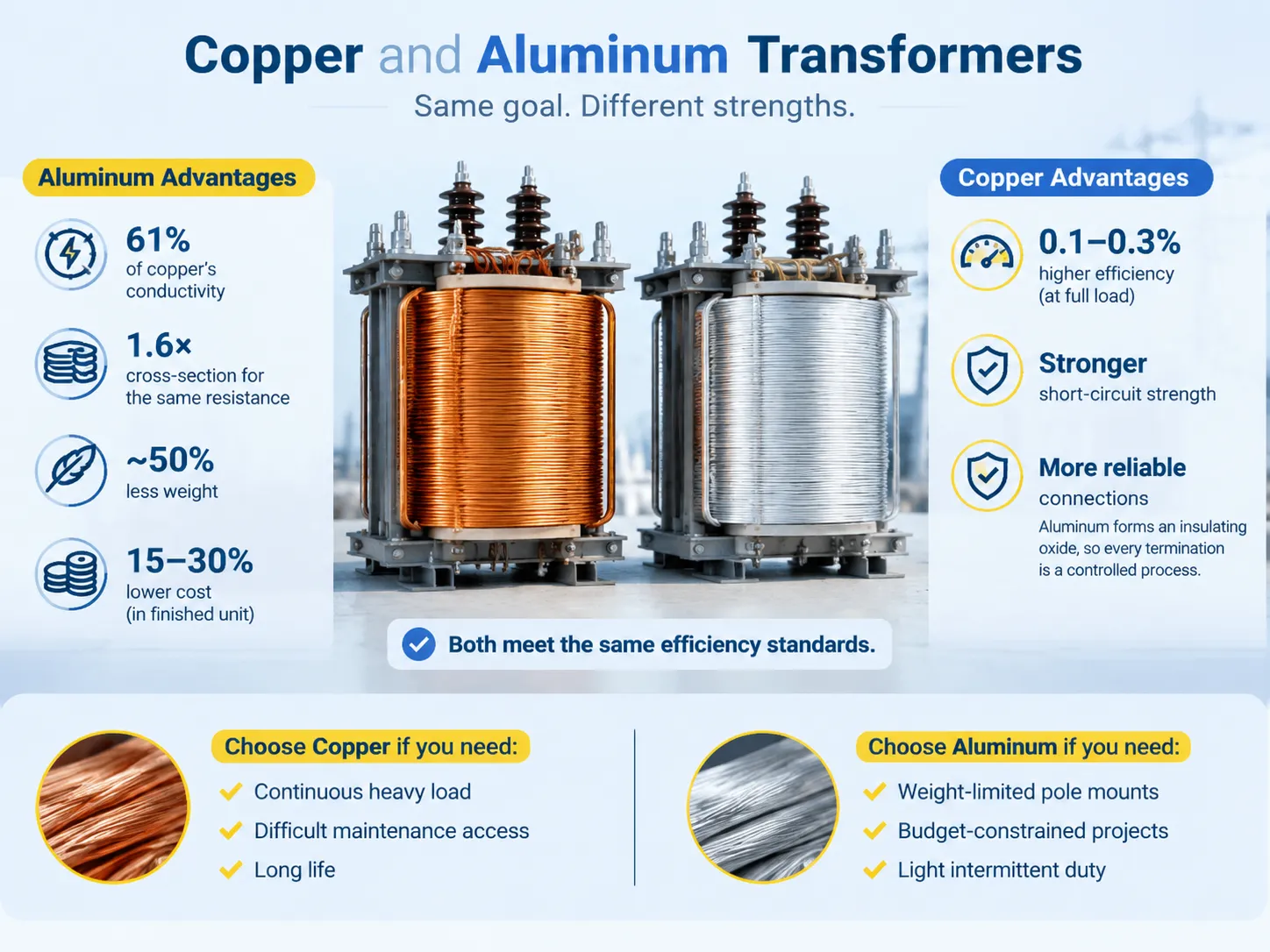
요약하자면, 알루미늄은 구리에 비해 61%의 전도성을 가지며 동일한 저항을 얻기 위해 1.6배 더 높은 단면적이 필요하지만, 무게는 약 절반이며 최종 버전에서 15에서 30% 더 저렴합니다. 구리는 완전 부하 시 0.1에서 0.3%의 기계 효율성 측면에서 더 우수하며, 단락 및 연결의 신뢰성에서도 마찬가지입니다. 알루미늄은 주변에 산화물을 형성하여 모든 연결을 복잡한 과정으로 만듭니다. 효율성 수준에 관계없이, 구리는 유지보수가 어려운 일정한 하중 상황에서 선호되며, 알루미늄은 기둥 장착 설치나 예산이 제한된 프로젝트와 같은 무게 제한이 있는 경우에 사용됩니다.
두 재료가 존재하는 이유
구리는 이제 수년간 산업의 표준 재료로 자리 잡았습니다. 구리는 또한 금속 간 비교의 산업 기준점이 되었습니다. 국제 연화 구리 기준은 구리 와이어가 100% IACS에서 구리의 전도성을 기반으로 한다고 명시하고 있습니다.
알루미늄은 성능과는 관계없는 두 가지 이유로 이 영역에 도달했습니다. 첫째, 가격입니다. 시장에서 알루미늄의 가격은 킬로그램당 구리 가격의 일부에 불과하며, 가격이 꽤 안정적입니다. 둘째, 알루미늄의 무게 우위입니다. 알루미늄은 구리보다 약 3배 가볍고, 이 요소는 기둥 장착 변압기와 관련하여 중요합니다.
그 결과, 세계는 금속 선택 측면에서 두 그룹의 국가로 지리적으로 나뉘었으며, 이는 구매자에게 놀라운 일이 될 수 있습니다. 예를 들어, 인도는 오랫동안 알루미늄 권선 배전 변압기를 사용해 왔으며, 이 지역에서 알루미늄 기둥 장착 변압기가 생산되었습니다. 반면, 미국은 1970년대 알루미늄 와이어의 불행한 실패로 인해 구리를 사용한 국가로, 이는 알루미늄에 대한 오랜 불신을 초래하였고, 구리는 이 지역에서 사용되는 주요 금속이 되었습니다.
이 두 가지 전략은 잘못된 것이 아니며, 각 국가의 우선 순위를 반영하고 이러한 우선 순위에 따라 올바른 선택을 할 수 있게 합니다.
그들을 구분짓는 일곱 가지 숫자
| 특성 | 구리 | 알루미늄 |
|---|---|---|
| 전도도 | 100% IACS | 61% IACS |
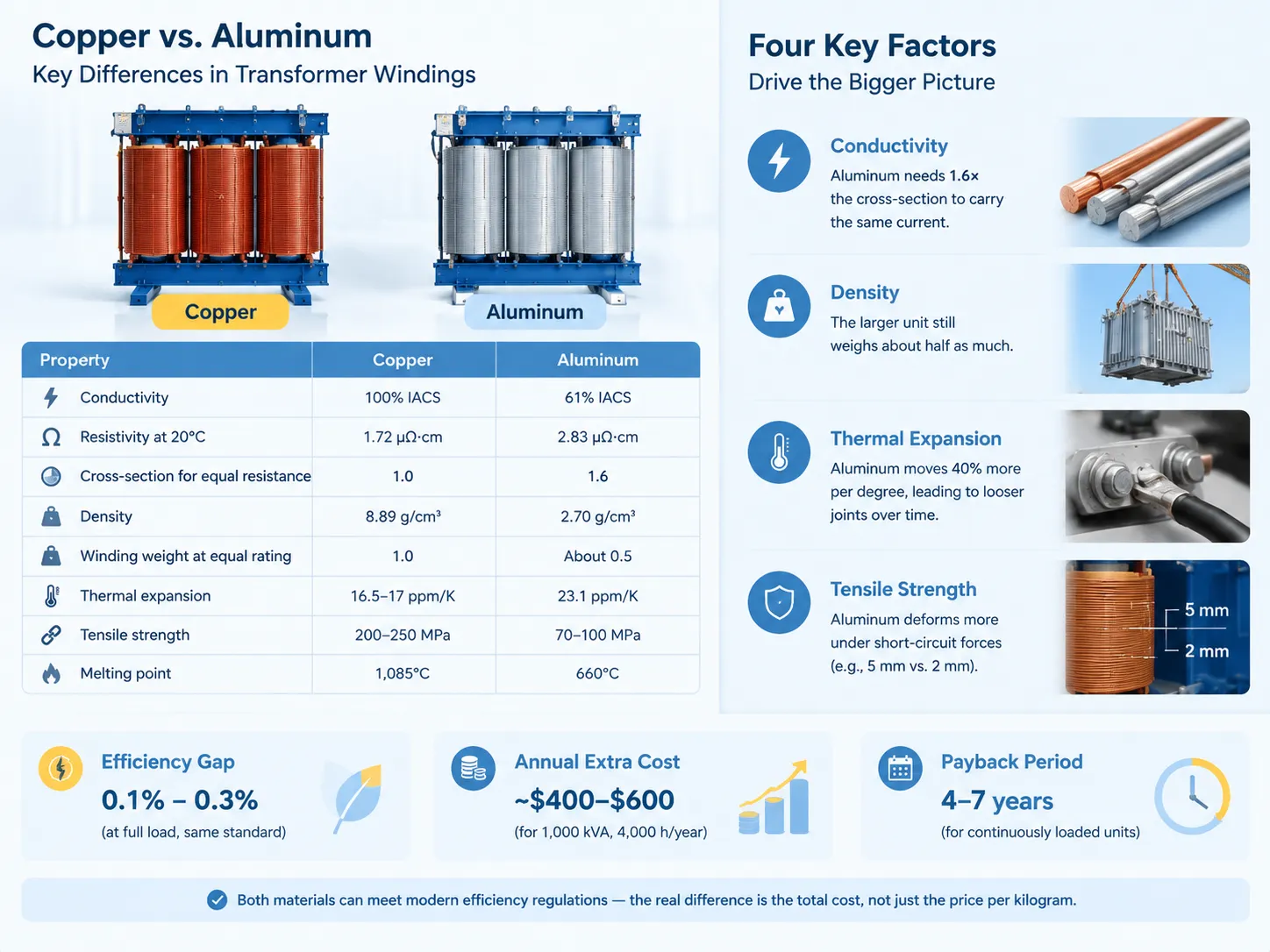
| 20°C에서의 저항률 | 72 µΩ·cm | 83 µΩ·cm |
| 동일한 저항을 위한 단면적 | 1.0 | 1.6 |
| 밀도 | 89 g/cm³ | 70 g/cm³ |
| 동일한 등급에서의 권선 무게 | 1.0 | 약 0.5 |
| 열 팽창 | 5–17 ppm/K | 1 ppm/K |
| 인장 강도 | 200–250 MPa | 70–100 MPa |
| 용융점 | 1,085°C | 660°C |
네 개의 행이 나머지 모든 것을 담당합니다.
- 전류의 단면적은 전도율에 의해 결정됩니다. 알루미늄은 61% IACS의 전도율을 가지며 동일한 양의 전류를 전도하기 위해 1.6배의 면적이 필요합니다. 그 결과, 더 큰 권선 창이 생기며 이는 일반적으로 더 큰 변압기 코어와 탱크를 필요로 합니다. 더 커지지만 더 가벼워집니다.
- 이러한 효과의 이유는 밀도입니다. 이는 크레인의 하중, 운송 비용 및 인클로저 설계와 같은 많은 측면에 영향을 미치기 때문에 무시할 수 없는 요소라는 점을 강조하는 것이 중요합니다.
- 열 팽창은 연결 문제의 원인입니다. 알루미늄의 열 팽창은 구리보다 훨씬 크기 때문에 알루미늄 변압기의 모든 연결은 더 큰 움직임의 영향을 받게 됩니다.
- 인장 강도에 대한 설명은 단락 회전 모터를 이해하는 데에도 중요합니다. 결함이 발생하면 많은 전자기력이 발생하여 모터 권선에 적용된 전류의 제곱에 해당합니다.
이러한 선택에서 발생하는 구조적 차이, 즉 주조 수지 설계가 더 큰 권선 창을 수용하는 방식은 이 비교에서 볼 수 있습니다. SCB13 및 국제 주조 수지 설계.
효율성: 0.1에서 0.3%의 주장을 제대로 수행하기
효율성 격차는 실제로 대부분의 판매 대화가 암시하는 것만큼 크지 않지만, 그 경제적 영향은 구매자가 가정하는 것보다 더 큽니다.
두 변압기가 동일한 기준으로 제작되고 알루미늄 권선이 요구되는 대로 더 큰 단면적을 가지게 되면, 전체 부하 효율성 차이는 약 0.1%에서 0.3%에 해당하며, 이는 실제로 공학 문헌에 의해 입증되었습니다. 실제로 약 1.5-2 %의 수치는 일반적으로 알루미늄 변압기를 더 높은 기준으로 제작된 구리 변압기와 비교합니다.
수학을 계산해 봅시다. 1,000 kVA 변압기를 4,000시간 운영 및 평균 60% 부하로 설정해 보겠습니다. 이 용량에서 0.2%의 효율성 차이는 변압기가 약 1.2 kW의 에너지를 잃는 것을 의미하며, 이는 연간 약 4,800 kWh의 손실에 해당합니다. 이 에너지 손실로 인한 결과 비용은 상업적 비용으로 연간 수백 달러에 달하며, 이는 효율성 이점이 장비 구매에 대한 초기 투자보다 상당히 높다는 것을 의미합니다.
따라서 이는 이 산업에서 수행된 대부분의 생애 주기 평가가 구리가 1,000 kVA의 용량으로 지속적으로 운영되는 변압기에 대해 4-7년 내에 비용을 회수한다고 결론짓는 이유이기도 합니다. 이러한 용량을 초과하는 경우, 대기 변압기이든 간헐적으로 운영되는 변압기이든 알루미늄이 더 나은 선택임을 입증합니다.
준수에 관해서는 두 재료 모두 동일하게 적용됩니다. 미국 DOE 및 EU 효율성 기준의 2단계에서 설정한 효율성 규정을 포함하여 시행 중인 효율성 규정은 알루미늄 설계가 효율성 등급을 충족하면 규정을 준수함을 의미합니다. 이 경우 일반적으로 필요한 것은 더 큰 코어와 더 큰 도체를 사용하는 것뿐입니다. 이러한 재료는 실제로 에너지 손실에 차이를 만들 것입니다.
가격 차이가 등급에 따라 어떻게 나타나는지는 이론보다 실제 견적에서 더 쉽게 볼 수 있으며, 크기별 차이는 이 분석에서 다루어집니다. 100 kVA 마크에서의 변압기 가격.
연결: 알루미늄이 명성을 얻는 곳
이 섹션은 실제 결과의 대부분을 설명합니다.
Copper also oxidizes, but copper oxide is a semiconductor and will break down under contact pressure which means when a bolt copper connection is tightened, the metal-to-metal connection is resumed. Aluminium oxide, on the other hand, consists of a tough and hard insulator with very high melting point which does not break down under pressure and which is quickly created on a newly abraded surface. A connection looking tight can have the resistance high enough to produce heat.
This single feature serves as an explanation for the aluminum branch wiring fails in North America of the 1970s and the reason why any trustworthy aluminum transformer uses many countermeasures combined.
- Plating. Copper or tin-plating of aluminum conductor prevents formation of oxide at the contact interface.
- Transition joints. A copper-to-aluminium transition part either welded by friction or bonded explosively moves from the difficult-to-control interface to a factory-controlled part.
- Ultrasonic welding. Breaks the oxide layer and bonds at molecular level creating a joint with an interface free of corrosion.
- Antioxidant compound combined with a proper connector. Field termination should include paste and hardware which is suitable for aluminum conductor. Codes are usually strict about the connection suitability to the conductor material.
- Modern aluminum transformers having plated conductors with factory transition joints are reliable devices, unlike an aluminum transformer terminated in the field by someone not familiar with the rules and thereby, earned this bad reputation.
If a winding does eventually fail, whether it can be rebuilt is a material question of its own. Copper rewinds cleanly and is easy to solder; aluminum is harder to repair and often scrapped instead, which is the practical background to transformer rewinding and repair.
Service Life and What Actually Ages
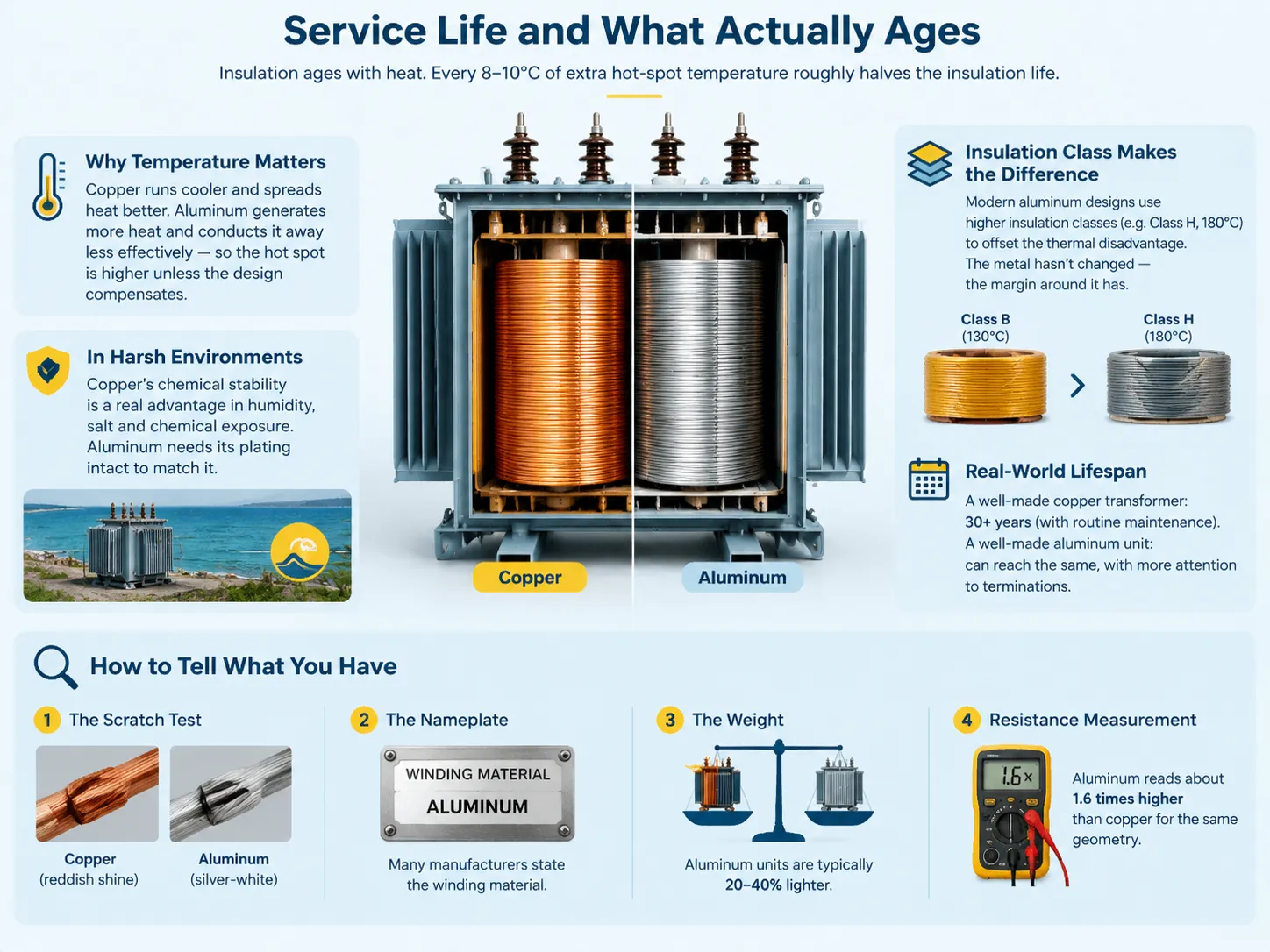
When it comes to insulation, age is a key factor as it is affected by the increased temperature. Each increment of 8-10°C of hot-spot temperatures can result in the insulation life getting shorter. The essence of heat insulation can be observed from these temperature changes rather than from metal properties.
Furthermore, copper makes the least amount of resistance compared to aluminum, that is why very little heat is formed with copper since there is less heat. Also, copper can distribute heat evenly and very well. Aluminum produces even more heat, but it can’t disperse it efficiently, which increases the hot spot for the same design unless additional cooling is provided.
Aluminum technology can address all these issues effectively, and one of the best way to do that is to improve the insulation. Moving from Class B (at 130°C) to Class H (at 180°C) means that the thermal disadvantage is worked off which is a standard approach for basically good aluminum constructions. The metal is not changed; but what changed was the surrounding conditions.
When it comes to the aggressive environment, humidity and chemicals affect copper, whereas aluminum standing alone is fine only when coated. There is a real difference between inspections on aluminum and copper, if the installation is coastal and has twenty years of salt exposure.
Now it comes to the actual lifespan: a good quality copper transformer can serve for more than 30 years under normal service and with regular maintenance; on the other hand, an aluminum transformer can reach the same life expectancy with its terminals being taken care of.
How to Tell What You Have
Four methods, classified in the order of minimum to maximum effort required.
- The scratch test. You need to scratch a winding conductor until the metal underneath becomes visible. Copper will acquire a reddish glimmer while aluminum will remain silvery white. While the colors of the insulation do not provide any reliable information about the metal being used because both copper and aluminum use similar amber enamel, it’s the test that scrap yards usually use in order to have an easy way of avoiding paying for a copper unit under an aluminum rate.
- The nameplate. Many manufacturers indicate what kind of metal is being used in winding manufacture, and therefore if there is a nameplate indicating that aluminum is being used, this statement is final. The absence of such an indication does not mean anything.
- The weight. Compare with the published weight of the design. An aluminum unit with the same kVA rating and of the same enclosure type usually weighs 20-40 percent less than a copper unit of the same configuration, because the tank and core dominate.
- The resistance. You simply need to test DC resistance for each winding and compare against the calculated resistance value of copper.
The measurement approach and the acceptance values are the same ones used in commissioning, set out in this guide to testing a transformer before it is energised.
Choosing: The Decision Rules
Five governing rules that are meant for the purposes of specification.
- Heavy continuous operation. Copper. The efficiency difference is offset and the thermal margin extends service life.
- Installation with weight limitations. Aluminum. It can be a pole installation, a rooftop, structure with limits, or any site with crane being a limiting factor.
- Difficult maintenance access. Copper. Fewer joint connections to re-torque, and less dependence on a criticism that everything has been done right.
- Harsh environment. Copper or aluminum with proper coating and record of inspections.
- A project with limited budget and low utilization. Aluminum. Lifecycle consideration is inaudible for transformers functioning less than 800 hours a year.
Two specifications surpass the five mentions above. If customer standard states copper, it’s something to use regardless of calculations. If the fault current in the bus is high, it will turn from the efficient material argument to mechanical strength into the matter of safety rather than wasting money. A standard unit such as a 150 kVA 스텝다운 변압기 is available in either material, and the right choice depends on which of these rules binds.
Scrap Value and End of Life
The metal matters at the end too, and the difference is not small.
| 재료 | Whole-unit scrap | Stripped winding |
|---|---|---|
| Copper-wound transformer | $0.25–$0.60/lb, average about $0.35 | $3.20–$3.90/lb as #2 copper |
| Aluminum-wound transformer | $0.10–$0.20/lb | Much lower; rarely worth stripping |
The significant difference between the pricing policies of whole-unit and stripped units necessitates yards knowing what the winding is before quoting the price. This means also that the copper transformer has residual value, which aluminum does not possess, and therefore must be a part of the total cost of ownership of а big unit.
There are two warnings before hauling away anything. Oil-filled units should be drained and the oil produced prior to 1979 may contain PCBs and hence classifies the equipment as hazardous waste instead of a scrap. Confirm the age and also check the nameplate for the non-PCB mark before arranging for collection.
자주 묻는 질문
What are the differences between copper and aluminum transformers?
The main difference is conductivity: an aluminum wire carries 61% of the load of a copper wire with the same cross-section. This means that an aluminum wind has to be around 1.6 times bigger with half the weight. The strength of copper is higher and the expansion is less, where copper is better at resisting short-circuit forces, and the termination is more reliable because the copper oxide can conduct. The price of aluminum is 15-30% lower, its weight is around 40% less.
How to tell if a transformer is copper or aluminum?
To get to the bare metal of a winding conductor, scratch the surface. The copper is red and aluminum is silver-white; however, it must be stressed that the colour of the enamel is not diagnostic. If scratch tests cannot be done, compare the weight of the unit with figures available in the literature or measure the DC resistance of a coil, where the ratio will be around 1.6 times for aluminum as compared to copper for the same design.
Why can’t aluminum and copper be used together?
They can, but not if contacting them directly in a moist environment. A galvanic couple is formed when these two metals are connected, which means that aluminum will be corroded first in this connection. Therefore, we have to use an approved bimetal connector for each connection, a transition plate made out of friction welding, or a coated barrier. Most jurisdictions require the connectors to be made for the particular conductor materials used, thus using a bare copper lug with the aluminum conductor is a non-compliance case and a corrosion threat.
What’s the scrap value of a copper transformer?
Copper-wound transformers go for a total of $0.25 to $0.60 per pound for a total value of about $0.35, depending on factors such as copper-to-steel ratio and yard. If the windings are removed, the copper alone will sell for #2 with a price tag of $3.20 to $3.90 per pound, explaining why high-volume scrap collectors dismantle transformers. Aluminum-wound transformers are worth $0.10-0.20 per pound and seldom justify windings being ripped off.
참고 문헌
- Maddox Transformer — Aluminum vs Copper in Distribution Transformers
- Elscott Transformers — Copper vs Aluminum Dry-Type Transformer Windings
- Copper Development Association — Conductivity and Application Data
- UL Solutions — Transformer Listing and Construction Requirements
- 미국 에너지부 — 배급 변압기 효율 기준
결론
Transformers made from copper and aluminum are important in their own way. The correct type for a specific transformer is determined by its operation mode rather than personal choice. Copper ones are suitable for continuous loads, extreme conditions, difficult maintenance, and long service life. At the same time, aluminum is only suitable if the transformer is light and cheap, and the situation allows the use of aluminum materials.
The price of the transformer does not matter here. The only point which matters is the difference in annual costs of losses depending on the time of usage. For example, if the transformer is used only a few hundred hours a year, the annual difference will be negligible and close to zero.