


쇼핑몰이나 데이터 센터에 있고 케이블에서 몇 피트 떨어져 있다면, 건물을 서비스하는 패드 장착 장비와 11 kV를 400 kV로 변환하는 건식 변압기라는 두 가지 주요 유형의 변압기를 지나치게 될 것이며, 이를 인식하지 못할 것입니다. 전기로 작동하는 모든 것은 변압기에 의존하여 전압을 변환하는 가장 중요한 기능 중 하나를 수행하게 됩니다.
이 기사에서는 변압기의 작동 원리를 간단하고 명확하게 설명하며, 전압 변환, 절연, 임피던스 매칭 및 조정과 같은 과정에 대한 적절한 수치를 제공하여 변압기에 대한 지식이 다양한 산업의 전기적 요구를 유지하는 데 도움이 될 수 있음을 보여줄 것입니다.
변압기란 무엇이며 실제로 무엇을 하는가?
변압기는 공유된 자기 코어 주위에 배치된 특정 수의 코일(종종 권선이라고 함)로 구성된 정적 장치입니다. 본질적으로 변압기의 주요 목적은 교류(AC)의 에너지를 한 회로에서 다른 회로로 전송하면서 전압과 전류 수준을 변경하고 주파수는 동일하게 유지하는 것입니다. 따라서 변압기는 작동 중에 이동 부품이 없기 때문에 매우 신뢰할 수 있는 전기 장치입니다.
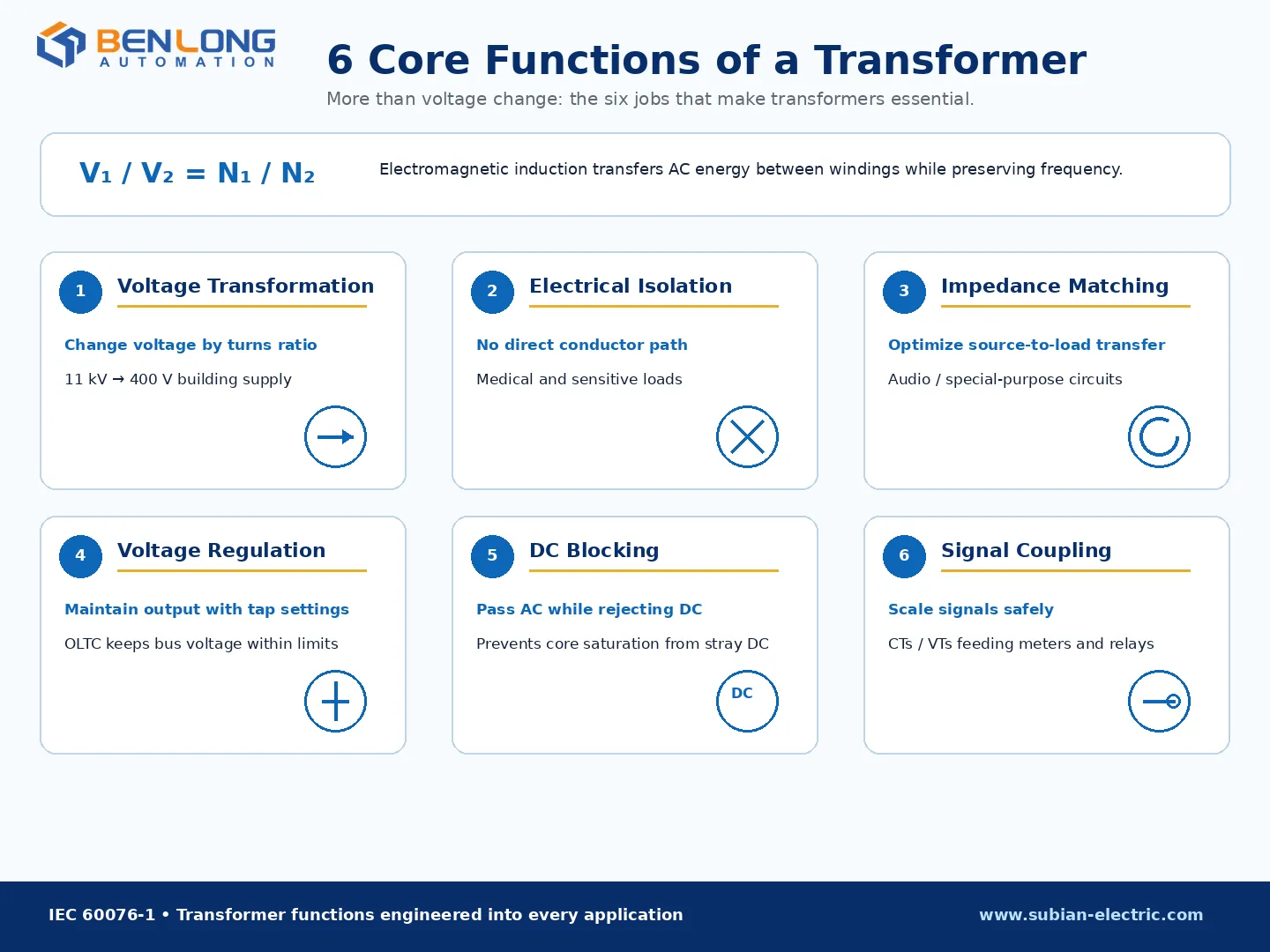
변압기의 이름은 전압을 변환하는 작동에서 유래합니다. 일반적으로 승압형 변압기는 효율적인 장거리 전력 공급을 위해 전압을 증가시키고, 강압형 변압기는 전압을 감소시키는 데 도움을 줍니다. 그러나 전압을 변경하는 것은 변압기가 할 수 있는 일의 작은 부분일 뿐입니다. 변압기는 회로 절연기, 임피던스 매칭 장치, DC 차단기, 공급 제어 방법 등으로도 작용합니다.
변압기의 작동 원리: 한 다이어그램의 가치가 있는 단어들
그 뒤에 있는 작동 원리는 패러데이의 유도 법칙입니다. 1차 권선의 전류는 적층 강철 코어를 통과하는 변화하는 자기장을 생성합니다. 변화하는 자기장은 2차 코일에 전류를 유도합니다. 2차 전압과 1차 전압의 비율은 권선 비율에 따라 결정됩니다:
V1 / V2 = N1 / N2, 이상적으로는 V1 × I1 = V2 × I2입니다.
전류는 1차 회로를 통해만 흐르기 때문에(유도를 통해 연결이 존재하지만 2차 회로는 직접 전기가 공급되지 않음), 변압기는 두 회로를 절연 상태로 유지합니다. 실제로 11/0.4 kV에서 100 kVA 정격의 배전 변압기는 전체 부하에서 1차에서 약 9 A를 운반하며, 2차의 부하는 약 144 A가 될 것입니다.
변압기의 여섯 가지 기능
| 기능 | 그것이 하는 일 | 실제 사례 |
|---|---|---|
| 전압 변환 | 권선 비율을 통해 전압 수준 변경 | 건물 공급을 위한 11 kV → 400 V |
| 전기 절연 | 회로를 분리; 직접 전도체 경로 없음 | 의료 영상 스위트를 메인 결함으로부터 절연 |
| 임피던스 매칭 | 소스와 부하 간의 전력 전송 최적화 | 앰프 출력을 스피커에 맞추기(오디오 변압기) |
| 전압 조정 | 탭 체인저를 통해 출력을 한계 내에서 유지 | OLTC가 ±2%에서 20 kV 버스를 유지 |
| DC 차단 | AC는 통과시키고, DC는 차단 | 배전 코어가 포화되는 것을 방지하는 유해 DC |
| 신호 결합 | 레벨을 분리하면서 신호를 전송 | 보호 릴레이에 전원을 공급하는 계측 변압기 |
대부분의 사람들은 첫 번째 줄만 생각하지만, 격리, 조정 및 DC 차단이 바로 그리드 장애 동안 민감한 장비를 살리는 요소입니다.
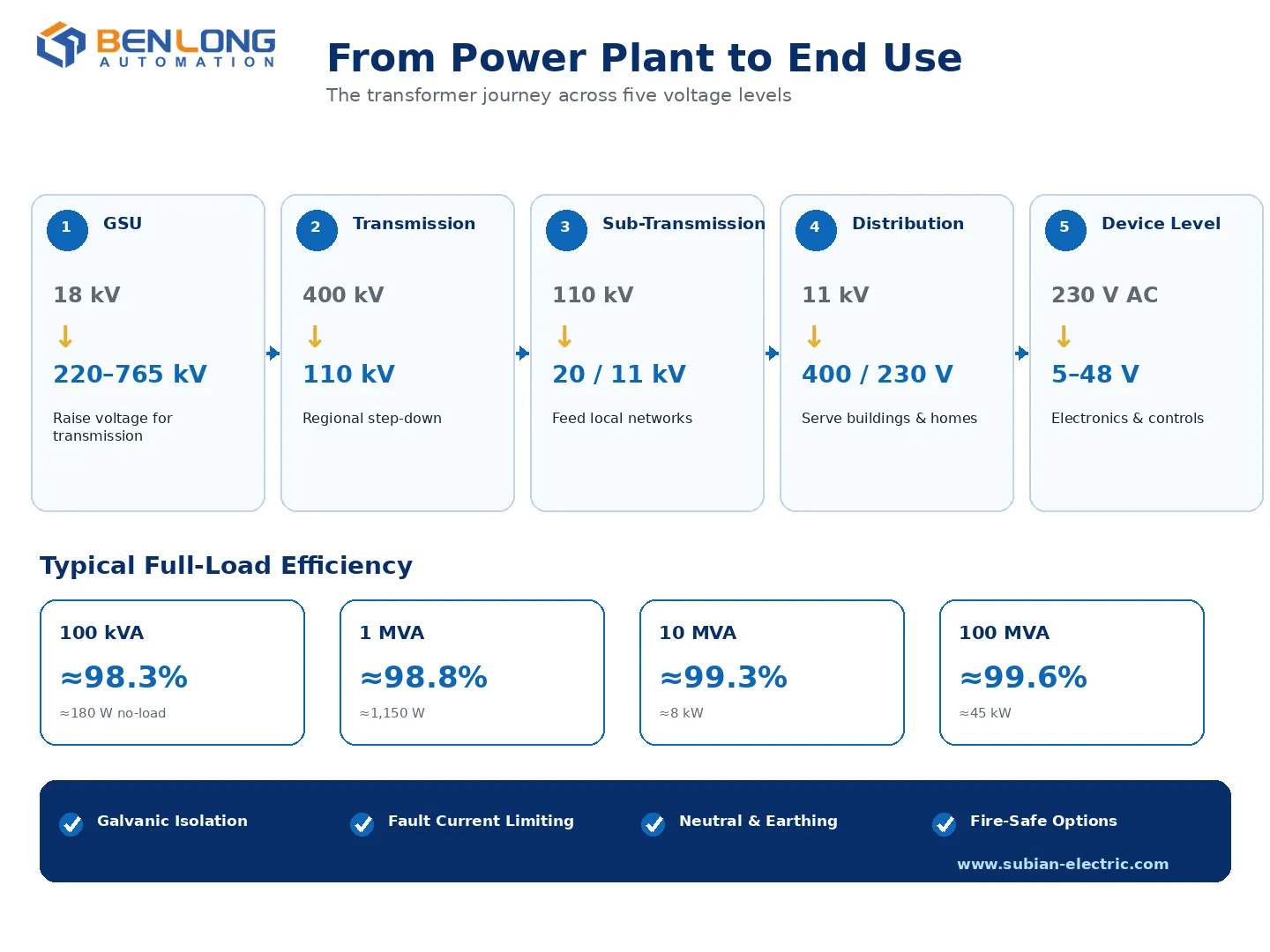
변압기의 여정: 발전소에서 당신의 집까지
당신의 집에서의 조명 과정은 수많은 변압기로 구성되어 있습니다. 이 목적을 위해 사용되는 변압기 체인을 살펴보겠습니다:
GSU 변압기 – 발전기 출력 전압 18 kV가 220–765 kV 수준으로 상승합니다.
송전 단계 변압기 – 400 kV의 전압을 지역 변전소에서 110 kV 수준으로 낮춥니다.
하위 송전 변압기 – 110 kV 입력을 20/11 kV로 줄입니다.
배전 변압기 – 당신의 집 밖에 있는 기둥 또는 패드 장착 변압기로 도달하는 11 kV의 전압을 400/230 V로 줄입니다.
장치 수준 변압기 – 충전기 및 기타 전원 공급 장치가 다양한 전기 기기의 작동에 필요한 5–48 V로 전압을 더 낮춥니다.
이렇게 하면 발전소와 휴대폰 충전기 사이에 4-6개의 변압기가 있다는 것을 쉽게 이해할 수 있습니다.
변압기 유형 및 그 기능
| 유형 | 전압 범위 | 기능 초점 | 일반적인 용도 |
|---|---|---|---|
| 전력 변압기 | 33–765 kV | 대량 전송, 조정 | 변전소, 발전소 |
| 배전 변압기 | 4–35 kV | 최종 단계 감소, 효율성 | 기둥/패드 장착, 건물 |
| 건식 / 주조 수지 | 최대 35 kV | 화재 안전, 실내 사용 | 고층 건물, 병원, 해양 |
| 절연 변압기 | 모든 | 갈바닉 분리, 소음 | 의료, 실험실, 데이터 센터 |
| 자동 변압기 | HV 그리드 | 경제적인 결합 | 220/110 kV 상호 연결 |
| 계측 변압기 | 모든 | 측정 및 보호 스케일링 | 릴레이, 계량기, 모니터링 |
겹치는 점에 유의하십시오: “전력 변압기”와 “배전 변압기”는 동일한 기본 기능을 수행하지만 서로 다른 작업 주기를 위해 설계되었습니다 — 하나는 지속적인 고부하용, 다른 하나는 가변 부분 부하용입니다. 그 단일 차이가 대부분의 사양 결정을 이끕니다.
효율성, 손실 및 에너지 요금
변압기 효율성은 높지만 무료는 아닙니다. 손실은 부하가 없는(철) 손실로 나뉘며, 이는 장치가 전원이 공급되는 동안 24시간 작동하며, 부하(구리) 손실은 전류의 제곱에 비례하여 증가합니다. 일반적인 값:
| 등급 | 무부하 손실 | 부하 손실 | 전체 부하에서의 효율성 |
|---|---|---|---|
| 100 kVA | ≈180 W | ≈1,500 W | ≈98.3% |
| 1 MVA | ≈1,150 W | ≈10,500 W | ≈98.8% |
| 10 MVA | ≈8 kW | ≈55 kW | ≈99.3% |
| 100 MVA | ≈45 kW | ≈320 kW | ≈99.6% |
변압기는 지속적으로 작동하므로 손실로 인한 비용이 중요합니다. 약 1.5%의 손실을 가진 1 MVA 용량의 배전 변압기는 연간 약 10–15 MWh의 전기 에너지를 낭비할 수 있으며, 이는 상업 전기의 일반 가격에서 수천 달러의 비용이 발생할 수 있습니다. 운영자는 수천 개의 장치가 있는 경우 효율성 기준(예: 중국의 GB 20052 및 EU의 규정 548/2014)이 국가에 경제적 의미가 있을 것임을 염두에 두어야 합니다.
안전 기능: 격리, 접지 및 보호
변압기는 다음과 같은 안전-critical 작업에 사용됩니다:
갈바닉 격리: 1차 및 2차 권선 간에 전도성 연결이 없으므로 부하 측에서 발생하는 결함이 공급 회로로 되돌아갈 수 없습니다.
결함 제한: 변압기의 임피던스(일반적으로 5에서 10% 사이)는 단락 전류를 제한하여 전기 회로의 후속 섹션에서 스위치 기어 및 보호 장치의 손상을 방지합니다.
중성 접지: 변압기 권선의 유형 및 구성은 접지 전압 및 변압기 보호 방식에 대한 정보를 제공하는 중성 접지 계획을 정의합니다.
화재 안전: 건식 및 에스터 충전 변압기는 NFPA 70 및 IEC 60076-11 표준이 건물 내에서의 응용을 촉진하기 때문에 오일 충전 장비보다 안전한 것으로 간주됩니다.
신뢰할 수 있는 전압 분리: 오일 절연 부싱 및 변압기의 기타 절연 설계는 위험한 전압 영역에 대한 접근을 차단합니다.
이 목록은 변압기 설치가 거리 요구 사항, 오일 격리 등과 같은 측면에 대한 지식이 필요한 엔지니어링 활동으로 분류된 이유에 대한 정보를 제공합니다.
변압기 사양 및 정격 표
| 매개변수 | 전형적인 값 (1 MVA, 11/0.4 kV) |
|---|---|
| 정격 전력 | 1,000 kVA |
| 전압 비율 | 11,000 / 400 V |
| 벡터 그룹 | Dyn11 |
| 임피던스 전압 | 6% |
| 냉각 | ONAN |
| 절연 수준 | 75 kV BIL 기본 |
| 무부하 손실 | ≈1,150 W |
| 부하 손실 | ≈10,500 W |
| 표준 | IEC 60076-1 |
이 열 개의 숫자는 장치의 전체 기능 계약을 정의합니다. 구매자가 변압기를 비교할 때, 이 숫자와 그 뒤에 있는 보증을 비교하는 것입니다.
건물, 산업 및 인프라 전반에 걸친 응용 프로그램
- 상업적 엔티티 — 11킬로볼트 공급이 400 및 230볼트로 변환됩니다.
의료 시설 — 민감한 의료 기기를 보호하기 위해 사용되는 절연 변압기.
데이터 센터 — 중전압 시스템 및 무정전 전원 공급 장치 배급 및 강하 장치 설치.
제조 현장 — 변압기는 33킬로볼트에서 11킬로볼트로 전압을 낮추는 데 사용됩니다.
풍력 및 태양광 재생 에너지 — 변전소는 재생 가능 에너지 출력을 저전압에서 그리드 전압으로 변환하는 데 역으로 사용됩니다.
철도 운영 작업 — 25 kV 전압으로 에너지를 전송하는 변전소 변압기.
현실적인 가격 & 최고의 브랜드
변압기는 정격, 사양 및 브랜드에 따라 가격이 책정됩니다. 계획 수준 범위(FOB, 오일 침지형, 표준 손실):
| 브랜드 / 유형 | 1 MVA | 20 MVA / 110 kV |
|---|---|---|
| 히타치 에너지 / 지멘스 | $35,000–$70,000 | $430,000–$700,000 |
| 슈나이더 일렉트릭 | $30,000–$55,000 | $280,000–$450,000 |
| TBEA (중국) | $18,000–$35,000 | $180,000–$320,000 |
| 장쑤 수비안 전력 (중국) | $16,000–$30,000 | $160,000–$300,000 |
가격은 사양, 손실 수준 및 지역에 따라 다릅니다. 전체 기능 세트가 필요한 프로젝트 — 변환, 절연, 조정 및 안전 — 유럽 브랜드 프리미엄 없이, 장쑤 수비안 전력 50 kVA에서 220 kV 클래스까지의 배급 및 전력 변압기를 제조하며, 오일 침지형 및 건식 유형, IEC 60076 유형 시험 보고서, OEM/ODM 맞춤화 및 공장 직거래 가격은 일반적으로 서구 동급보다 30%–50% 낮습니다. 그들의 엔지니어는 설치에 정확히 맞추기 위해 벡터 그룹, 탭 및 보호 인터페이스를 지정합니다.
자주 묻는 질문
가정에서 변압기의 주요 기능은 무엇인가요?
전기 기둥 또는 패드 장착 변압기는 배급 전압을 약 11 kV에서 400 / 230 V로 낮춥니다. 이 감소 외에도 변압기는 절연을 제공하여 공급 측의 결함이 가정 회로에 영향을 미치지 않도록 하고, 전류 스케일링을 통해 장치가 100 kVA의 정격으로 약 400 V에서 약 144 A를 공급할 수 있게 합니다. 분리된 변압기 이후, 충전기는 전압을 다시 5-48 V DC로 낮춥니다.
변압기는 왜 움직이는 부품이 없나요?
그 기능이 기계적이지 않고 전자기적이기 때문입니다: 1차에서의 교류가 코어에서 변화하는 자기 플럭스를 생성하고, 이는 2차에서 전압을 유도합니다. 회전하거나 왕복할 것이 없기 때문에 변압기는 일반적으로 30-40년 동안 유지보수가 오일 테스트, 개스킷 교체 및 탭 체인저 서비스로 제한되며 지속적으로 작동합니다.
변압기는 실제 작동에서 얼마나 효율적인가요?
배급 변압기는 약 98%–99%에서 작동하고, 대형 전력 변압기는 정격의 99.0%–99.7%에서 전체 부하로 작동합니다. 효율성은 부분 부하에서 최고조에 달하며(일반적으로 정격의 40%–75%), 엔지니어들이 변압기를 크기 조정하여 정상 부하가 그 범위에 있도록 합니다. 손실은 지속적이므로 효율성과 손실 보증이 장기 운영 비용을 지배합니다.
승압 변압기와 강하 변압기의 차이는 무엇인가요?
기능적으로 동일한 물리학, 반대 방향: 승압 변압기는 2차측에 더 많은 권선이 있으며(V2 > V1) 발전소에서 전송을 위해 전압을 높이는 데 사용됩니다; 강압 변압기는 1차측에 더 많은 권선이 있으며(V2 < V1) 배전 및 최종 사용자에게 전력을 공급합니다. 동일한 물리적 변압기는 공급 측이 어떤 권선인지에 따라 두 역할 모두에 사용될 수 있습니다.
건물이나 공장을 위한 변압기 비용은 얼마인가요?
100 kVA 유닛은 약 $1,500–$8,000, 1 MVA 유닛은 $18,000–$45,000(유형) 또는 $28,000–$70,000(건식 유형), 20 MVA / 110 kV 전력 변압기는 브랜드 및 사양에 따라 $160,000–$700,000입니다. 항상 동일한 사양에 대한 견적을 요청하고, 설치, 보호 및 테스트 비용을 고려해야 하며, 이는 장비 가격에 20%–40%를 추가할 수 있습니다.
참고 문헌
- IEC 60076-1: 전력 변압기 — 일반 — 등급, 허용 오차 및 테스트에 대한 국제 표준.
- IEC 60076-11: 드라이 타입 변압기 — 건식 유형 및 주조 수지 변압기에 대한 특정 요구 사항.
- IEEE C57.12.00: 액체 침지 변압기에 대한 일반 요구 사항 — 북미 동반 표준.
- NFPA 70: 국가 전기 규정 — 건물 내 변압기에 대한 설치 및 안전 요구 사항.
- 미국 EPA: 변압기 효율성 — 에너지 및 기후 정책을 위한 변압기 효율성이 중요한 이유.
- Siemens Energy 변압기 — 현대 변압기 공학을 위한 벤치마크 참조.
결론
변압기의 기능은 현대 생활의 조용한 중추입니다: 전압 변환, 절연, 임피던스 매칭, 조절, DC 차단 및 신호 결합이 모두 이동 부품 없이 98% 이상의 효율로 제공됩니다. 발전소의 GSU에서 건물 외부의 패드 장착 유닛에 이르기까지 전기 체인의 모든 단계는 이 장치에 의존합니다.
- 변압기는 회로를 절연하고 결함을 제한하면서 권선 비율에 따라 전압을 변경합니다.
- 98%–99.7%의 효율성은 대규모로 비용이 발생합니다 — 손실 보증이 중요합니다.
- 안전 기능(절연, 접지, 임피던스)은 선택 사항이 아니라 설계된 것입니다.
- 100 kVA에 대해 $1.5k–$8k, 1 MVA에 대해 $18k–$45k, 20 MVA 클래스에 대해 $160k–$700k의 예산을 잡으세요.
건물, 공장 또는 유틸리티 프로젝트를 위한 변압기를 지정하는 경우, 장쑤 수비안 전력 50 kVA에서 220 kV 클래스까지의 배전 및 전력 변압기를 IEC 60076 인증과 함께 제공하며, 프로젝트의 모든 단계에 대한 엔지니어링 지원을 제공합니다.