


O relatório de comissionamento de um dispositivo de 40 MVA que levou 14 meses para ser entregue foi adquirido pelo engenheiro da subestação. O dispositivo deve atender a uma região que possui 60.000 consumidores. 28.000 litros de óleo estão presentes dentro do tanque, juntamente com 20 toneladas de conjunto de núcleo e bobinas e o sistema de resfriamento da unidade, que é responsável por regular o calor com um aumento de temperatura de 65K. O engenheiro percebe que a simplicidade do tanque de aço tem complicações potenciais na forma de química de gás dissolvido, gerenciamento de pontos quentes, equilíbrio de umidade entre papel e líquido e um comutador de derivação que é responsável por mudar sob carga.
O objetivo deste artigo é fornecer informações sobre transformadores de potência imersos em líquido, como esses dispositivos atuam como transformadores de tensão de potência, a forma como o sistema de resfriamento funciona, a diferença entre óleo mineral e fluidos ésteres, a complexidade dos padrões de falha que estão ligados ao controle da operação do transformador e os preços associados a máquinas de várias capacidades.
Em resumo, um transformador de potência preenchido com líquido é um tipo de transformador que é resfriado e isolado usando um líquido, na maioria das vezes óleo mineral, que é empregado em cerca de 75–85% de unidades, enquanto quando há risco de incêndio ou efeitos perigosos para o meio ambiente, óleos como ésteres naturais e sintéticos são utilizados. O método de resfriamento líquido proporciona maior capacidade de resfriamento do que o resfriamento por meio de ar, a tolerância de temperatura é (65K) igual a (65K) e acima de 50–60K para transformadores secos.
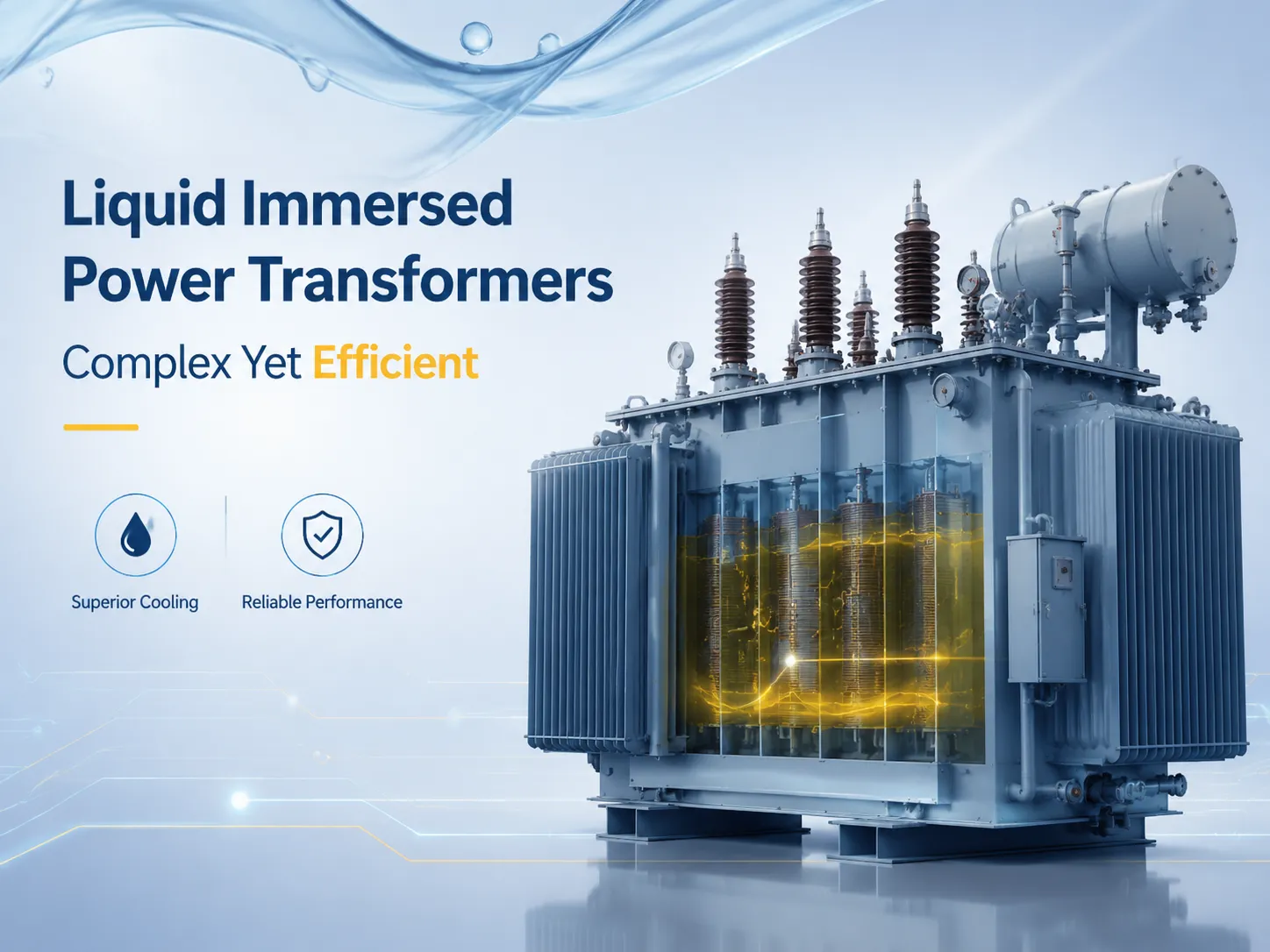
O que é um transformador de potência imerso em líquido?
Um transformador de potência imerso em líquido é aquele em que a parte ativa do transformador, incluindo a bobina e o núcleo, está alojada em um tanque de aço preenchido com um fluido isolante. O papel do líquido isolante é duplo. Em primeiro lugar, ele atua como um dielétrico que isola condutores do solo e fornece algumas partes da isolação junto com papel e papelão prensado. Em segundo lugar, ele atua como um refrigerante e transporta o calor para longe da bobina e do núcleo para o tanque e radiadores que são posteriormente resfriados pelo ar.
Essa combinação de duas funções é uma razão para a alta eficiência da imersão líquida. O ar é um mau dielétrico e também um mau condutor de calor, tornando possível dissipar calor da bobina do tipo seco com muito mais esforço. Para adicionar, a condutividade térmica do líquido é cerca de trinta e seis vezes maior do que a do ar e leva muito mais calor por litro do que o ar. Assim, desde várias centenas de kVA, praticamente todo transformador é considerado um transformador do tipo líquido imerso (que é frequentemente referido como transformador imerso em óleo).
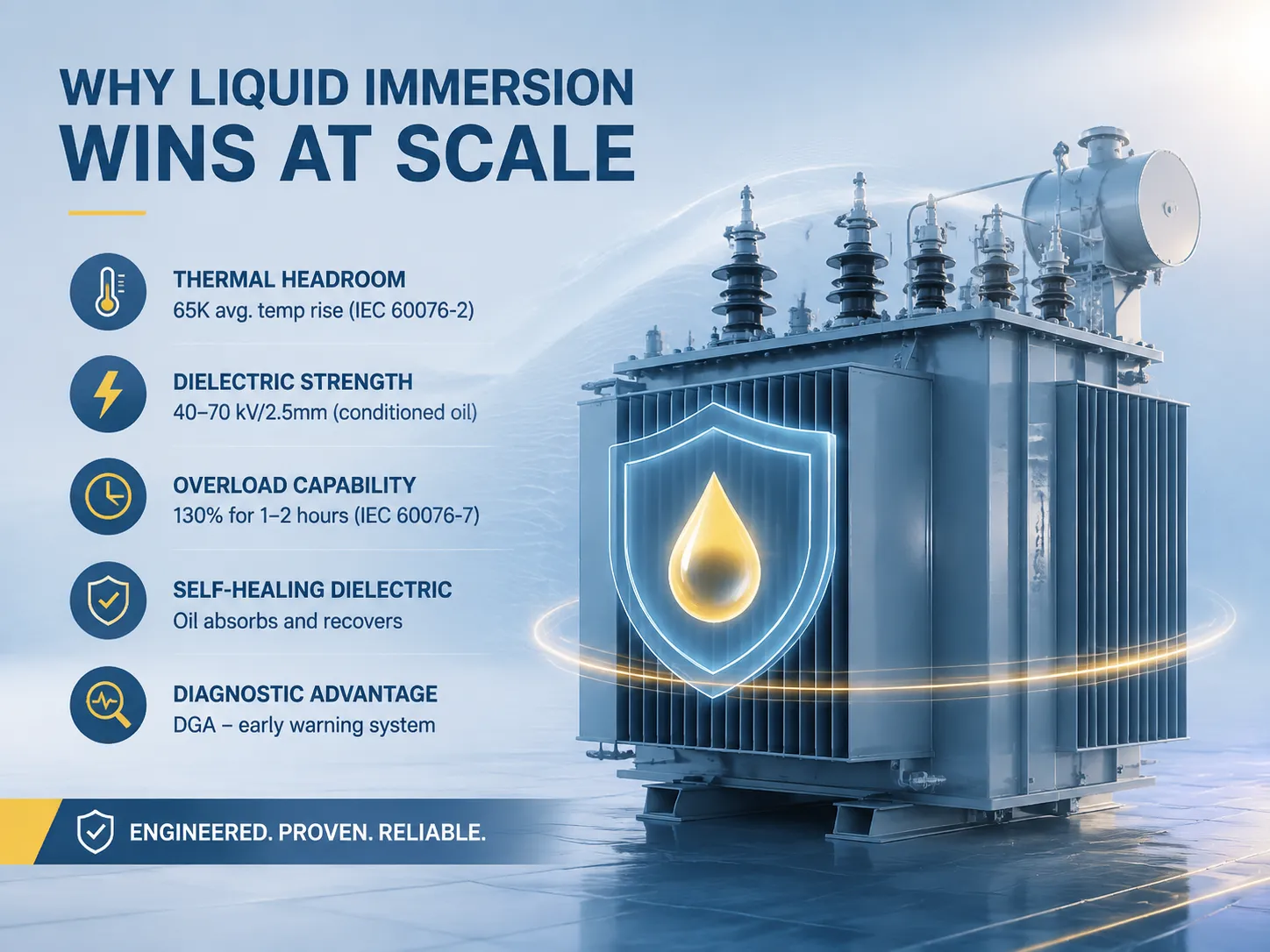
Por que a imersão líquida vence em escala
As razões pelas quais a imersão líquida é melhor quando se trata de tamanhos de transformadores podem ser simplesmente afirmadas:
- Margem térmica: De acordo com a IEC 60076-2, a elevação média da temperatura dos enrolamentos utilizados em transformadores imersos em óleo é igual ou inferior a 65 graus Celsius, o que resulta em classificações contínuas mais altas devido à melhor transferência de calor que pode ser alcançada.
- Resistência dielétrica: Devido ao óleo ter uma resistência dielétrica de 40-70 kV/2,5 mm, ele pode ser utilizado para reduzir o espaço livre e o volume, uma vez que é muito maior do que o de seu equivalente em ar.
- Capacidade de sobrecarga: Transformadores líquidos são construídos para suportar sobrecargas por breves períodos de tempo – por exemplo, como prescreve a IEC 60076-7, sobrecargas na quantidade de 130 % podem continuar por 2 horas.
- Dielétrico auto-reparável: Descargas menores no óleo criam gás, que se dissolve, e o óleo retorna ao seu estado operacional normal, ao contrário de um espaço de ar, que não pode se curar.
- Diagnosabilidade: O líquido expressa uma impressão química de cada processo que ocorre dentro dele, o que torna a análise de gás dissolvido o sistema de alerta precoce mais eficaz em engenharia elétrica.
Essas vantagens são contrabalançadas pelas desvantagens conhecidas dos sistemas líquidos, nomeadamente o perigo de incêndio e vazamentos, peso, bem como a complexidade das atividades de manutenção inerentes ao uso de máquinas que contêm líquido. É por isso que a indústria confia em soluções de engenharia, normas e estrita adesão às regras para minimizar esses riscos.
Como o Resfriamento e Isolamento Líquido Funcionam
Em transformadores preenchidos com líquido, o resfriamento é realizado com ventilação natural ou forçada por ar. No modo básico ONAN (óleo natural, ar natural):
- O calor produzido pelo núcleo e pelos enrolamentos aquece o óleo que envolve o transformador, tornando-o menos denso;
- O óleo aquecido é movido através de dutos dentro dos enrolamentos para a parte superior do tanque;
- O óleo aquecido é liberado para o conservador e depois através de radiadores, onde é resfriado pelo ar;
- O óleo resfriado retorna à parte inferior do transformador e flui de volta para os enrolamentos para repetir o ciclo.
Projetos modernos permitem controlar o processo de resfriamento com sistemas de fluxo de óleo em transformadores maiores envolvendo bombas para forçar o óleo através dos dutos de enrolamento (modos OF) e ventiladores na frente dos radiadores (modos AF). Os modos de resfriamento em questão são refletidos na designação da placa de identificação como ONAN, ONAF, OFAF, etc.
| Código de resfriamento | Significado | Aumento típico de capacidade | Uso comum |
|---|---|---|---|
| ONAN | Óleo natural, ar natural | Classificação base | Maioria da distribuição e potência média |
| ONAF | Óleo natural, ar forçado (ventiladores) | +20–30% enquanto os ventiladores estão em funcionamento | Cargas cíclicas, margem de sobrecarga |
| OFAF | Óleo forçado, ar forçado | +30–45% | Transformadores de potência média a grande |
| ODAF | Fluxo de óleo direcionado, ar forçado | Maior classificação por unidade | Transformadores de grande potência >60 MVA |
Enquanto uma unidade com uma classificação de 40 MVA ONAN pode ser classificada como 50 MVA ONAF ao usar ventiladores, uma vez que os ventiladores dobram aproximadamente o calor dissipado pelo lado do ar, a isolação funciona como um meio composto. Papel e papelão prensado compõem a barreira de isolamento, enquanto o líquido ocupa todo o espaço livre existente. Também é importante notar que o equilíbrio de umidade no papel e no óleo deve ser levado em consideração. O papel absorve água facilmente e o óleo é capaz de dissolver água. Na aplicação de transformadores preenchidos com éster, o óleo permite uma alta absorção de umidade pelo papel, o que retarda o processo de envelhecimento, enquanto nas unidades de óleo isolante mineral padrão, a água penetra no papel mais rapidamente, o que acelera o envelhecimento do papel.
Óleo Mineral vs. Fluidos de Éster
Selecionar o tipo de líquido é uma das especificações mais importantes para um transformador imerso em líquido. As principais opções são:
| Fluido | Ponto de fogo | Biodegradabilidade | Tolerância à umidade | Custo relativo do fluido | Melhor ajuste |
|---|---|---|---|---|---|
| Óleo mineral | ~160°C | Lento | Baixo | Base de referência | Subestações padrão |
| Mineral de alta temperatura | ~300°C | Lento | Baixo | +20–40% | Interno, maior margem de segurança |
| Éster natural | >300°C | >90% em 28 dias | Alto | +30–60% | Áreas de risco ambiental e de incêndio |
| Éster sintético | >300°C | Moderado | Alto | +60–100% | Interno, ativos críticos de alta tensão |
O óleo mineral ainda é considerado a opção mais comum devido ao seu baixo custo e ampla utilização, devido às suas características suficientes quando instalado efetivamente com a devida separação contra incêndio e contenção de óleo. Ésteres são utilizados em casos onde é necessário seguir leis ou regulamentos locais sobre o uso de óleo mineral - em ambientes internos, ao redor de corpos d'água, em poços urbanos compactos e ativamente em locais que utilizam recursos renováveis. Deve-se mencionar que os ésteres são bastante caros em comparação ao óleo mineral - $3000 – $8000, o que depende totalmente da capacidade de um transformador - e tal investimento será recuperado na forma de aprovação de todas as licenças, condições de seguro e redução do envelhecimento do papel.
A Complexidade: Modos de Falha e Diagnósticos
Transformadores preenchidos com líquido falham de maneiras bem definidas, então para saber como operar o ativo, é necessário entender:
- Envelhecimento do isolamento: A principal causa de falha, devido à influência da temperatura e umidade. Cada seis graus (Celsius) de excesso térmico reduz pela metade a vida útil do isolamento de papel.
- Ingressos de umidade: Traumas sofridos pelo isolamento interno através de seus respiradouros, vazamentos e gaxetas envelhecidas. Mais umidade reduz a resistência dielétrica.
- Descargas parciais e arco elétrico: Manutenção da atmosfera onde os gases produzidos são idênticos àqueles que o DGA detecta.
- Falhas térmicas: O aumento da temperatura do óleo interno devido a contatos ruins ou dutos bloqueados também causa desenvolvimento de gás.
- Mau funcionamento do comutador de derivação: Detalhes dentro de um corpo preenchido com óleo que se desgastam com a operação.
Cada causa de mau funcionamento deixa uma prática de “trilha de gás”: agora o líquido pode ser chamado de “amostra diagnóstica viva” a um custo de $200–600 visitas por ano. Com monitoramento online de múltiplos gases a um custo de $8000–40000, tem sido possível monitorar o estado de transformadores preenchidos com óleo de alguma forma.
Especificações Típicas por Classificação
| Classificação | Classe de tensão | Impedância | Resfriamento | Perda típica (sem carga / carga) |
|---|---|---|---|---|
| 500 kVA | 10–35 kV | 4–4.5% | ONAN | ~1.0 / ~5.2 kW |
| 000 kVA | 10–35 kV | 4.5–5% | ONAN | ~1.7 / ~10.5 kW |
| 10 MVA | 35–110 kV | 7.5–8% | ONAN/ONAF | ~10 / ~50 kW |
| 40 MVA | 110–220 kV | 10–12% | ONAN/ONAF/OFAF | ~30 / ~170 kW |
| 100 MVA | 110–220 kV | 12–14% | OFAF/ODAF | ~70 / ~380 kW |
Os números referem-se à especificação IEC 60076 e mudam dependendo da categoria de perda, tipos de materiais e produtor. No entanto, a tendência está sempre presente: a impedância aumenta com a classificação de potência para manter as correntes durante uma falha sob controle, o resfriamento se torna mais intenso durante a operação e as perdas aumentam a uma taxa mais lenta do que a potência, assim aumentando a eficiência com o tamanho: uma máquina de 100 MVA pode alcançar eficiência superior a 99.7%.
Eficiência e Economia de Vida Útil
O custo de transformadores preenchidos com líquido depende das perdas, e essas perdas são significativas. Por exemplo, se tomássemos um equipamento elétrico de 40 MVA com 30 kW de perda sem carga e 170 kW de perda de carga a 60% de utilização:
- A perda sem carga seria: 30 kW mantidos por 8.760 horas: 30 × 8.760 = 263 MWh/ano.
- As perdas de carga seriam:170 kW × 0,36 × 8.760 horas = 536 MWh/ano.
- O número resultante é: A soma disso é cerca de 800 MWh/ano avaliado em $56.000-$80.000 com base em $0,07-0,10/kWh.
Em 25 anos, as perdas totais somariam $1,4-$2,0 milhões – isso é várias vezes maior do que o valor de compra do equipamento. Assim, essa é a principal razão pela qual as empresas levam as perdas em consideração ao estimar despesas de energia e preferem adquirir unidades com preços mais altos, mas com perdas menores. Existe uma regra prática: para cada diferença de 10 kW de perdas, os custos precisam ser avaliados em $7.000 – $8.700 por ano de operação contínua sem carga ou ajustados de acordo com a razão de utilização para perdas de carga.
| Exemplo de 40 MVA | Perda (kW) | Energia anual (MWh) | Custo de 25 anos @ $0,08/kWh |
|---|---|---|---|
| Perda sem carga (P0) | 30 | 263 | $525,000 |
| Perda de carga (Pk) a 60% fator de carga | 170 | 536 | $1,072,000 |
| Total | — | 799 | $1,597,000 |
| Preço de compra de referência | — | — | $220,000-$400,000 |
Paisagem de Marca e Preços
O mercado de transformadores imersos em líquido envolve quase todos os fabricantes de transformadores sem exceções. Os detalhes típicos do preço FOB:
| Marca | Origem | 1 MVA | 10 MVA | 40 MVA |
|---|---|---|---|---|
| Hitachi Energy | Japão/Global | $22.000–$34.000 | $55.000–$82.000 | $250.000–$400.000 |
| Siemens Energy | Alemanha/Global | $21.000–$32.000 | $50.000–$75.000 | $240.000–$380.000 |
| ABB | Suíça/Global | $20.000–$31.000 | $52.000–$78.000 | $240.000–$390.000 |
| Schneider Electric | França/Global | $19.000–$29.000 | $48.000–$72.000 | — (foco em distribuição) |
| Hyundai / Toshiba | Coreia/Japão | $18.000–$28.000 | $46.000–$68.000 | $220.000–$350.000 |
| Jiangsu Subian Electric Power | China | $14.000–$22.000 | $28.000–$48.000 | Até 110kV classe sob solicitação |
As diferenças de preço entre as linhas de produtos são observadas principalmente em produtos caros, onde a complexidade de engenharia, o histórico de testes e o serviço global entram em jogo. Por outro lado, em produtos de baixo custo, as diferenças de preço quase colapsaram devido à padronização da tecnologia e ao aumento da disponibilidade de certificação.
Jiangsu Subian Electric Power é uma empresa chinesa envolvida na produção de transformadores de distribuição do tipo imerso em líquido com classificações de capacidade para 35-110 kV, em conformidade com a IEC 60076. A linha de produtos da Subian inclui transformadores feitos com óleos minerais, bem como ésteres, e com diferentes configurações de reguladores de tensão sob carga e classificações de eficiência. Os produtos são utilizados com sucesso por concessionárias e contratantes EPC em toda a Ásia e África.
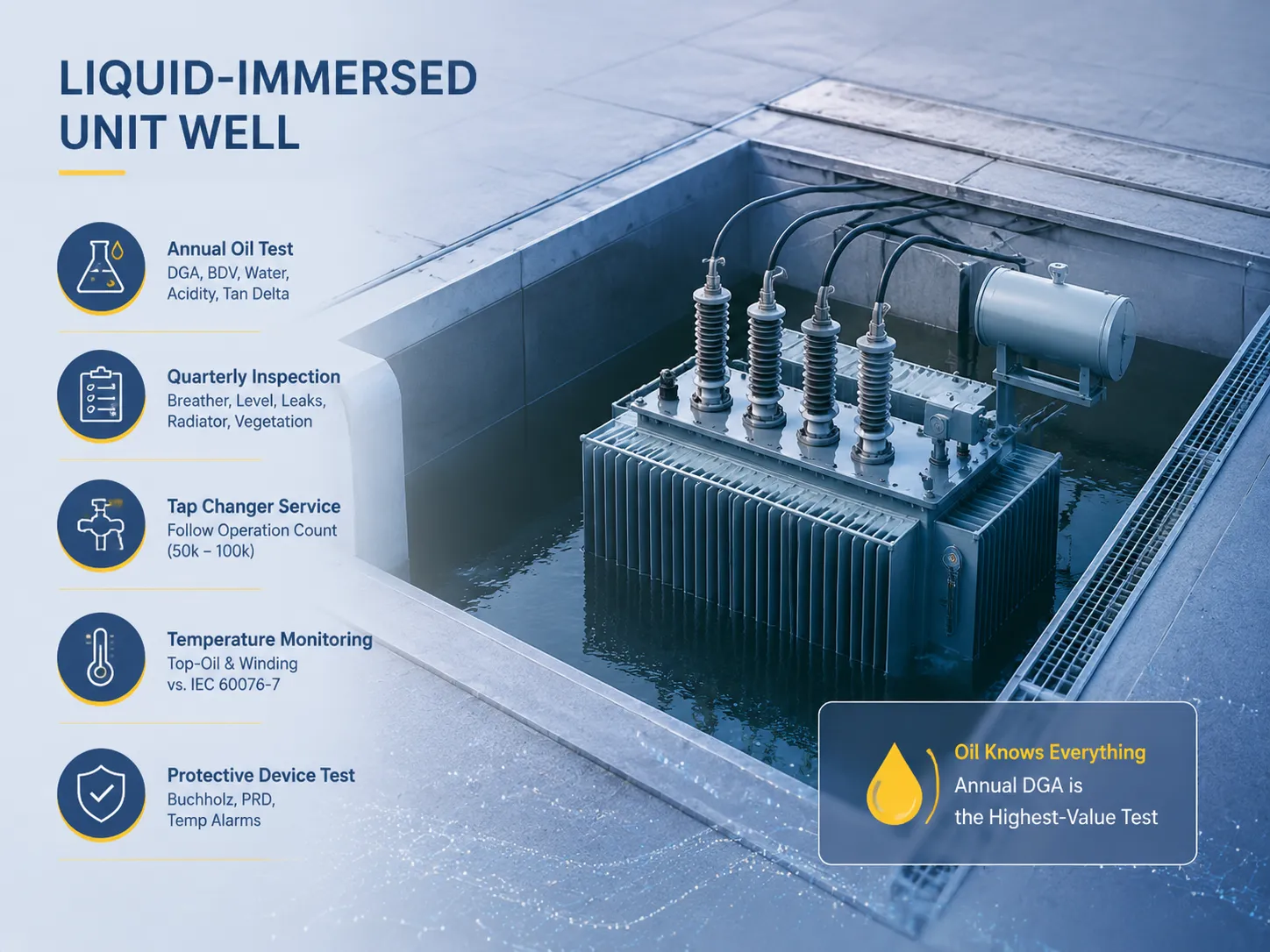
Operando uma Unidade Imersa em Líquido de Forma Eficiente
A operação eficiente de um transformador preenchido com óleo deve ser considerada uma tarefa rotineira, não um projeto:
- Realizar amostragem de óleo usando a IEC 60422 anualmente. O teste DGA deve ser concluído, e o óleo deve ser testado para resistência dielétrica, teor de água, acidez e tan delta. Em caso de qualquer alteração na razão, mantenha a amostragem regular.
- A inspeção trimestral deve ser realizada para os seguintes itens: gel de sílica no respirador, nível de óleo, vazamentos, limpeza do radiador e vegetação circundante.
- A manutenção do trocador de tomadas deve ocorrer com base em seu uso. Trocadores de tomadas do tipo preenchido com óleo geralmente servem entre 50.000 a 100.000 comutações.
- As leituras de temperatura precisam ser registradas: temperatura do óleo superior e temperatura do enrolamento em conformidade com as curvas de carga da IEC 60076-7. Investigue a causa de um aumento de temperatura se ocorrer.
- O teste dos dispositivos de proteção precisa ser realizado. O teste deve incluir a verificação do gás do relé Buchholz e das quedas de surto, a válvula de alívio de pressão e ambos os alarmes de temperatura.
Perguntas Frequentes
Por que a maioria dos grandes transformadores é imersa em líquido em vez de ser do tipo seco?
O resfriamento e a isolação líquidos provaram ser muito superiores, uma vez que o óleo tem uma condutividade térmica aproximadamente 30 vezes maior que a do ar e oferece uma resistência dielétrica muito maior. A partir de um certo nível de potência, a imersão em líquido oferece melhor desempenho, reduzindo a área de instalação e o custo. O tipo de transformador seco é geralmente utilizado em locais onde preocupações com incêndio e contenção impedem o uso de óleo — para menos de cerca de 5 MVA.
Qual é a diferença entre transformadores imersos em óleo e imersos em líquido?
Não há diferença. Imerso em óleo é o termo antigo para a tecnologia de transformadores a óleo; imerso em líquido é amplamente utilizado para abranger óleos, fluidos de éster natural, fluidos de éster sintético e fluidos de silicone também. Portanto, neste caso, o termo recomendado é imerso em líquido. No entanto, uma vez que o fluido é escolhido, é aconselhável mencioná-lo e incluí-lo na especificação.
Quanto custa um transformador imerso em líquido?
Os preços variam consideravelmente dependendo da classificação de potência, fabricante, número e tipos de recursos adicionais; no entanto, como uma estimativa aproximada, os seguintes custos podem ser indicados: para modelos de 500 kVA, os preços variam de 6000 a 16.000, enquanto unidades de 1000 kVA custam cerca de 14.000 a 34.000 e 10 MVA custam entre 28.000 a 82.000. Também deve-se levar em consideração o fato de que os fluidos éster são mais caros do que o óleo mineral, e a diferença de preço pode variar de 30 a 100 por cento.
Os transformadores preenchidos com éster valem o prêmio?
O marco do uso de ésteres é que, em casos onde o óleo mineral comum será difícil de usar devido a regulamentos de incêndio ou normas ambientais, os fluidos éster serão a melhor alternativa. A razão é que eles têm várias vantagens, incluindo ponto de inflamabilidade superior a 300°C, biodegradabilidade e retardamento do processo de envelhecimento do papel. Embora os fluidos sejam mais caros em 30 a 100%, seu uso pode ser justificado devido a possíveis permissões das autoridades competentes e por razões de seguro que podem, finalmente, comprovar o valor do preço mais alto.
Com que frequência o óleo do transformador deve ser testado?
Para transformadores em modo de operação padrão, a frequência de testes deve ser anual, conforme prescrito pelas normas IEC 60422. Em outros casos, se ocorrerem mudanças significativas acima do nível de referência, então testes mensais devem ser realizados para identificar mudanças e tendências relevantes.
Referências
- IEC 60076-1: Transformadores de potência – Geral — Classificações, aumento de temperatura e requisitos de teste para transformadores de potência imersos em líquido.
- IEC 60076-3: Níveis de isolamento e testes dielétricos — Requisitos de teste de impulso e dielétrico por classe de tensão.
- IEC 60296: Especificação de óleos isolantes minerais — Requisitos de qualidade para novo óleo de transformador.
- IEC 60422: Orientação de supervisão e manutenção para óleos isolantes minerais — Limites e cronogramas de teste de óleo em serviço.
- IEEE C57.12.00: Transformadores de Distribuição e Potência Imersos em Líquido — Requisitos gerais da América do Norte para unidades imersas em líquido.
- IEEE C57.104: Interpretação dos Gases Gerados em Transformadores Imersos em Óleo — Interpretação de DGA e níveis de ação.
- Site oficial da Jiangsu Subian Electric Power — Produtos de transformadores imersos em líquido, opções de fluido e documentação de teste.
Conclusão
Transformadores preenchidos com líquido têm um controle firme sobre a rede elétrica, pois mantêm a melhor eficiência possível para resfriamento e isolamento de máquinas elétricas substanciais. Embora alguns aspectos — química dos fluidos, gerenciamento de pontos quentes, reguladores, monitoramento — possam ser complicados, as regras e procedimentos tornam fácil o manuseio, proporcionando uma vantagem de eficiência que sistemas do tipo seco não conseguem alcançar.
Principais pontos a lembrar:
- O resfriamento líquido torna possível alcançar >99% de eficiência em transformadores médios e grandes, enquanto não oferece nenhuma vantagem para máquinas do tipo seco nessa classificação de potência.
- O óleo mineral é o líquido tradicional; os fluidos éster justificam seu preço baseado em $30-$100 por cento praticamente em todos os casos de incêndio e questões ecológicas.
- O teste anual de DGA pode custar $200-$600, mas traz o maior lucro na engenharia elétrica.
- Prepare-se para pagar entre $6.000-$400.000, desconsiderando perdas, enquanto leva em conta o desempenho de um transformador.