


Em um parque industrial em rápido desenvolvimento perto da Cidade de Ho Chi Minh, um empreiteiro está organizando a fiação de 50 fábricas em um período que não permite obras civis de um ano. Em vez de construir uma subestação clássica de concreto, a concessionária utiliza uma subestação em contêiner, que consiste em um módulo compacto montado em fábrica, que é entregue em um caminhão, colocado na laje de concreto ao meio-dia e colocado em operação até o final da semana. Após dois anos, quando uma fábrica de tecidos deve dobrar sua capacidade de 800 para 1600 kVA, a concessionária só precisa trocar os contêineres e retestar os fios para concluir esse trabalho em um único dia.
Subestações em contêiner, que estão disponíveis em diferentes designs e configurações, surgiram como centros de energia compactos em sistemas modernos de fornecimento de energia e encontraram amplas aplicações em áreas urbanas, locais industriais, plantas renováveis e projetos de eletrificação rural.
Para resumir: Uma subestação em caixa é conhecida como uma subestação pré-montada ou compacta e é um tipo de subestação montada. Ela possui um transformador (50 a 2.500 kVA), equipamentos de média tensão (RMU ou disjuntor, 12 a 36 kV), equipamentos de baixa tensão, aparelhos de medição e sistemas auxiliares em um único invólucro certificado de acordo com a IEC 62271-202. Ela precisa de pouco tempo para ser entregue e instalada; portanto, é altamente avaliada como um centro de energia compacto.
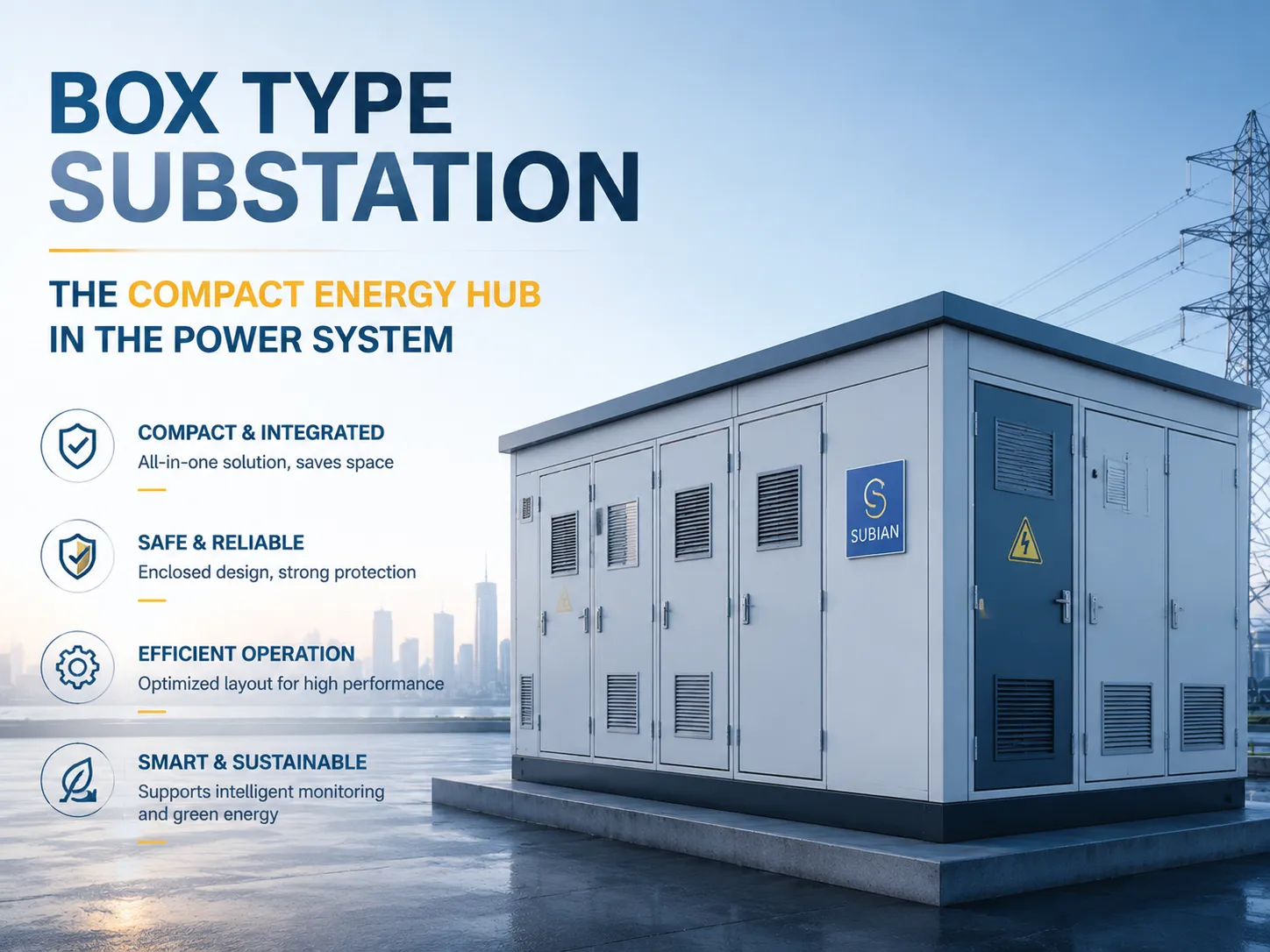
O que é uma subestação do tipo caixa?
Uma subestação em caixa é uma unidade tudo-em-um que é construída em fábrica e vendida para cumprir a função de subestação de distribuição. É caracterizada por altos níveis de integração de todos os elementos, como o transformador, equipamentos de média tensão, bem como equipamentos de baixa tensão, relés de proteção, equipamentos para medição e outros subsistemas.
O nome vem do invólucro, que é feito de aço ou aço inoxidável. As medidas também são definidas como 2,4–3,0 m de largura e 4–12 m de comprimento.
| Recurso | Subestação do Tipo Caixa | Subestação Convencional |
|---|---|---|
| Construção | Invólucro feito em fábrica | Construído no local em tijolo/concreto |
| Tempo de instalação | 2–5 dias | 4–12 semanas |
| Teste | Unidade completa testada em fábrica | Montado no local, parcialmente não testado |
| Realocação | Sim — levantar e mover | Não |
| Área de terreno | Pequeno, compacto | Grande, com estradas de acesso |
| Custo de capital | Custo total mais baixo | Obras civis mais altas |
No caso de concessionárias e desenvolvedores, a subestação do tipo caixa não é apenas mais uma técnica de construção. Em vez disso, é uma nova maneira de entregar o projeto, permitindo que o controle de qualidade seja removido do local de construção e realizado na fábrica.
Por que é o Centro de Energia Compacto
Subestações do tipo caixa são referidas como centros de energia compactos, uma vez que todas as funções de uma estação de distribuição são realizadas em centros elétricos compactos dentro de algumas dezenas de metros quadrados. Os quatro fatores que contribuem para sua eficiência nos sistemas de energia de hoje são:
- Tempo: A eletrificação de uma máquina do tipo caixa pode levar dias e não meses, o que é crítico para zonas industriais, acelerando novos desenvolvimentos residenciais e a recuperação elétrica após um desastre.
- Custo: A exclusão de obras civis e a coordenação de vários contratantes geralmente reduz o custo total instalado em 20 a 40% em comparação com soluções de capacidade semelhante.
- Flexibilidade: Essas máquinas podem ser movidas e redimensionadas dependendo das mudanças no padrão de carga, o que edifícios fixos não oferecem.
- Qualidade de fábrica: Os testes de tipo com fechamento completo (de acordo com a IEC 62271-2020) implicam que o desempenho da unidade em relação ao superaquecimento, curto-circuito e propriedades dielétricas foi testado antes que a máquina chegue ao local.
Como resultado, a capacidade de distribuição moderna é essencialmente representada por subestações do tipo caixa em todo o mundo.
Estrutura e Layout Interno
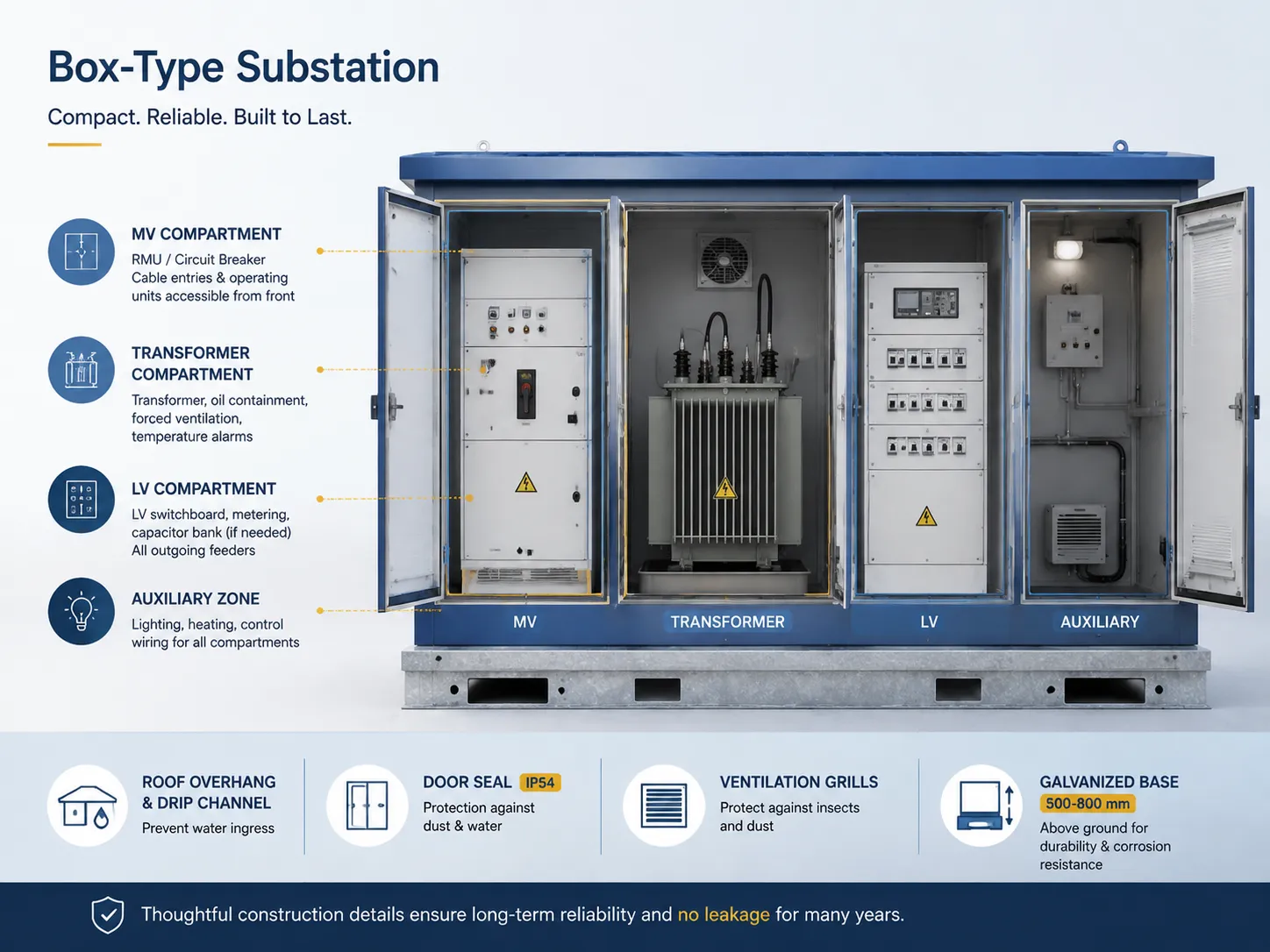
Subestações do tipo caixa normais têm três ou quatro compartimentos para realizar certas funções, separados por paredes e organizados de tal forma que cada compartimento tenha sua própria porta e possa ser acessado do lado de fora também:
- O compartimento MV, incluindo a unidade de anel principal (RMU) ou o equipamento de manobra do disjuntor onde as entradas de cabo estão localizadas; todas as unidades operacionais necessárias, incluindo a alça de operação, os intertravamentos e os indicadores são acessíveis pelo lado frontal do compartimento.
- O compartimento do transformador que contém um transformador juntamente com contenção de óleo, sistema de ventilação forçada e alarmes de temperatura; a porta é intertravada com a desconexão MV se necessário.
- O compartimento LV, que contém o quadro de distribuição LV, medição e banco de capacitores, se necessário; todos os alimentadores de saída terminam neste compartimento.
- A zona auxiliar, que inclui iluminação, aquecimento e fiação de controle distribuída por todos os compartimentos.
Os detalhes de construção que contribuem para a confiabilidade a longo prazo são os seguintes: um beiral no telhado e um canal de gotejamento, um selo de porta IP54, grelhas de ventilação que protegem contra a operação de insetos e poeira, e uma base galvanizada a quente elevada de 500-800 mm acima da superfície do solo. Esses detalhes permitem determinar se a unidade não vaza mesmo quinze anos depois ou começa a vazar após o segundo ano de operação.
Tipos e Configurações
As subestações do tipo caixa são classificadas por arranjo de montagem, material de fechamento e tipo de equipamento de manobra:
| Classificação | Variantes | Aplicação Típica |
|---|---|---|
| Montagem | Montadas no solo / montadas em base | Distribuição urbana, industrial e rural |
| Material da caixa | Aço carbono (pintado), aço inoxidável, GRP/composto | Locais costeiros/corrosivos usam aço inoxidável ou composto |
| Equipamento de manobra de média tensão | RMU (SF6 ou isolado sólido), chave de carga, disjuntor a vácuo | RMU para redes em loop/anéis; disjuntor para grandes alimentações industriais |
| Transformador | Imerso em óleo ou tipo seco | Tipo seco para ambientes internos/sensíveis ao fogo; óleo para uso geral |
| Configuração | Unidade única, tandem (seções de transformador + equipamento de manobra), mini subestação | Unidades mini para cargas de escala rural e montadas em postes |
Na América do Norte, a família análoga é a subestação de transformador montada em base, que é regida pela IEEE C57.12.27 e geralmente emprega tecnologia de frente morta para segurança. Os compradores devem alinhar seu produto com os padrões necessários dependendo da região de uso; IEC 62271-202 para a maioria dos mercados exportadores, IEEE C57.12 para os EUA e partes da América Latina.
Subestação do Tipo Caixa vs. Subestação Convencional
A escolha entre uma subestação do tipo caixa e uma subestação convencional depende das restrições do projeto. A tabela de decisão:
| Fator de Decisão | Escolha o Tipo Caixa Quando | Escolha o Convencional Quando |
|---|---|---|
| Cronograma | Conexão à rede necessária em semanas | O cronograma de construção é flexível |
| Terreno | Pegada limitada, terra cara | Terra disponível e barata |
| Incerteza de crescimento | A carga pode crescer ou se realocar | A carga é certa e de longo prazo |
| Ambiente | Áreas costeiras, corrosivas e propensas a inundações | Local benigno no interior |
| Cultura de manutenção | Locais remotos, habilidades locais limitadas | Oficina de utilidade bem equipada |
| Disponibilidade de capital | O custo total instalado é a restrição | O custo operacional de longo prazo domina |
Na realidade, o modo tradicional ainda prevalece em subestações conectadas à transmissão e em centros de distribuição muito grandes, mas cada vez mais novas distribuições urbanas e renováveis utilizam soluções do tipo caixa. A tendência em direção à pré-fabricação tem testemunhado uma tendência de alta por mais de uma década.
Principais Áreas de Aplicação
Existem quatro principais setores de aplicação para subestações do tipo caixa.
- Distribuição urbana e comercial. Essas subestações garantem a operação de distritos residenciais, centros comerciais, edifícios de escritórios altos e redes de ruas. A rápida instalação e o design compacto dessas subestações as tornam ideais para áreas urbanas.
- Parques industriais. Aqui, cada fábrica ou grupo de fábricas recebe uma subestação. A capacidade da subestação do tipo caixa pode ser aumentada de 400 kVA para 1.600 kVA.
- Usinas geradoras de energia renovável. Usinas solares normalmente empregam muitas subestações do tipo caixa para manter os inversores em operação. Usinas de energia eólica implementam essa tecnologia para conectar turbinas elétricas às linhas de rede.
- Eletrificação rural. Em áreas rurais, subestações do tipo caixa atendem à demanda de eletricidade de vilarejos e negócios agrícolas a custos bastante baixos.
Em todos os casos, a subestação desempenha a mesma função essencial de hub de energia elétrica: recebe o fornecimento de energia, processa-o de maneira necessária, garante o fornecimento na rede e fornece o consumo de eletricidade apropriado — tudo dentro da subestação.
Normas e Testes
Os padrões que definem a qualidade e segurança das subestações do tipo caixa:
| Padrão | Escopo | Requisitos Chave para Compradores |
|---|---|---|
| IEC 62271-202 | Subestações de transformadores pré-fabricadas | Testes de tipo de unidade completa: aumento de temperatura, curto-circuito, dielétrico |
| IEC 60076 | Transformadores de potência | Classificação do transformador, perdas, testes de rotina/tipo |
| IEC 60529 | Proteção de invólucro IP | IP54 mínimo para unidades externas; IP55 onde existe risco de spray de água |
| IEC 62271-200 | Equipamento de manobra metálico em MV | Requisitos de segurança e teste de RMU |
| IEEE C57.12.27 | Integridade do equipamento montado em pad (América do Norte) | Construção de frente morta e resistência a violação |
Um dos principais testes realizados em um invólucro é o teste de aumento de temperatura IEC 62271-202, que garante que o transformador não exceda os limites de temperatura de isolamento enquanto opera em plena capacidade. Em outras palavras, já em ambientes quentes, o desempenho real dos fornecedores que realizam apenas testes em transformadores sem invólucros difere daquele dos fornecedores que realizam testes com invólucros.
Custos e Faixas de Preço
Preços indicativos para subestações completas do tipo caixa (equipamento de manobra RMU, transformador imerso em óleo, painel de baixa tensão) variam com a classificação, manobra, classe de perda e material do invólucro:
| Classificação | Classe de Tensão | Preço Típico (USD) | Tempo de Entrega |
|---|---|---|---|
| 400–630 kVA | 10–35 kV | $7.000–$20.000 | 6–12 semanas |
| 800–1.250 kVA | 10–35 kV | $11.000–$33.000 | 8–14 semanas |
| 600–2.500 kVA | 10–35 kV | $24.000–$60.000 | 10–18 semanas |
Aumente os preços em 15-30% para caixas de aço inoxidável, 10-20% para transformadores a seco, e adicione 800-3000 USD para recursos adicionais, que incluem atualizações de medição e monitoramento. Os preços são dados como FOB e são afetados por muitos fatores — especificações, marcas, regiões. Nunca se esqueça de pedir uma estimativa de perda ao solicitar cotações de preços.
Principais Marcas & Comparação de Preços
Incluídos na indústria de subestações do tipo caixa estão os principais players do mundo no setor elétrico, juntamente com a especialização limitada no campo da fabricação de unidades pré-fabricadas. Os dados de preços da subestação de 1.000 kVA, 33/0,4 kV, incorporando RMU e painel LV são apresentados na tabela mostrada abaixo.
| Marca | País | Forças da Subestação Compacta | Preço Indicativo (USD) |
|---|---|---|---|
| Schneider Electric | França | Integração de RMU e gama global de subestações compactas | $22.000–$38.000 |
| Siemens | Alemanha | Opções digitais, sistemas de proteção integrados | $23.000–$40.000 |
| ABB | Suíça | Amplo portfólio, fortes referências de utilidade | $22.000–$39.000 |
| Eaton | EUA | Força de mercado de montagem em pad e norte-americana | $20.000–$36.000 |
| ZPUE / AUSY (especialistas) | Europa | Engenharia dedicada de subestações pré-fabricadas | $22.000–$45.000 |
| Jiangsu Subian Electric Power | China | Unidades IEC 62271-202, opções de transformadores a óleo/seco, OEM | $11.000–$33.000 |
Os líderes multinacionais fornecem salvaguardas para marcas, variando de postes maduros das linhas de produtos RMU a organizações de serviços em todo o mundo; são esses fatores que lhes permitem vencer a maioria das licitações onde há altos requisitos para cobertura de seguro. A Jiangsu Subian Electric Power está entre a faixa de baixo preço, oferecendo subestações do tipo caixa em conformidade com a IEC 62271-202, com várias opções para transformadores (imersos em óleo/secos), equipamentos de manobra (RMU/disjuntor) e invólucros (pintados/ inox/composto) a cerca de 40-55% dos preços europeus. Para empresas que utilizam subestações compactas em suas operações, a Subian, com sua combinação de certificação IEC, testes de fábrica, experiência em exportação e capacidades de personalização OEM, é uma opção altamente competitiva em comparação com os players do mercado internacional.
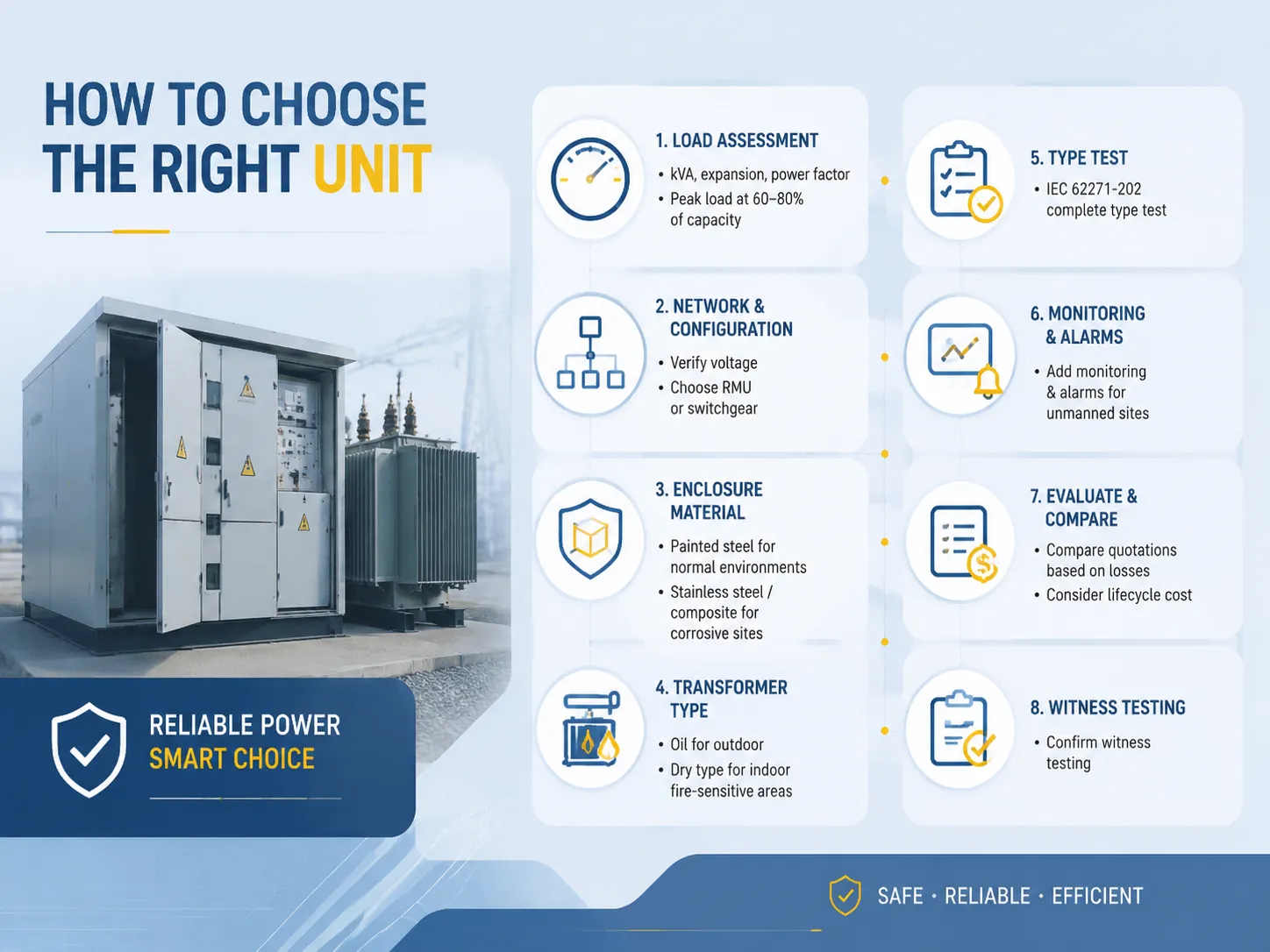
Como Escolher a Unidade Certa
- Estabeleça a carga: atualmente kVA, planos de expansão e fator de potência – assegure-se de que a carga de pico esteja entre 60-80% da capacidade do transformador.
- Verifique a tensão da rede e o tipo de configuração (anel, radial, alimentação dupla etc.) para escolher RMU ou equipamento de manobra.
- Decida sobre o material do invólucro de acordo com o ambiente: aço carbono pintado para locais não agressivos; aço inoxidável ou material composto para locais corrosivos/costeiros.
- Determine o tipo de transformador de acordo com os requisitos de incêndio: transformador isolado em óleo para ar livre, transformador seco para locais sensíveis ao fogo internos.
- Assegure-se de que o teste IEC 62271-202 para teste completo do tipo de equipamento seja realizado.
- Adicione sistemas de monitoramento e alarmes para locais não tripulados.
- Compare cotações com base nas perdas de avaliação e confirme o teste de testemunha.
Perguntas Frequentes
Quanto custa uma subestação do tipo caixa?
De acordo com a capacidade de tamanho da unidade, o preço do transformador varia significativamente. Por exemplo, um transformador de 400 a 1000 kVA pode custar entre $7.000 a $33.000. Da mesma forma, um transformador na faixa de 1.600 a 2.500 kVA pode variar de $24.000 a $60.000. O aço inoxidável como material pode custar entre 15-30% do custo total do transformador, unidades do tipo seco pedem um adicional de 10-20%, enquanto atualizações de monitoramento custarão entre $800-$3.000.
Quanto tempo leva a instalação?
Em geral, o período de instalação de uma base de concreto é de cerca de 2 a 5 dias, incluindo uso de guindaste, instalação, fixação, terminação de cabos e processo de comissionamento. Em contrapartida, uma subestação convencional requer de quatro a doze semanas de instalação. Graças a uma abordagem de teste de fábrica, problemas de comissionamento são raros, desde que os cabos no local estejam instalados e a base tenha sido construída de acordo com a recomendação do fornecedor.
Uma subestação do tipo caixa pode ser realocada ou ampliada posteriormente?
De fato — este é um de seus principais benefícios. Um transformador pode ser transportado, realocado e energizado em um local, enquanto uma unidade maior pode ser instalada no invólucro com um transformador menor. Essa flexibilidade funciona bem para indústrias e cidades em rápido desenvolvimento.
Qual é a diferença entre uma subestação do tipo caixa e um transformador montado em base?
Eles são parentes regionais. A subestação tipo caixa (IEC 62271-202) incorpora equipamentos de manobra de média tensão, transformador e equipamentos de manobra de baixa tensão em uma única unidade e é encontrada principalmente em toda a Europa, Ásia, Oriente Médio e África. O transformador montado em base (IEEE C57.12, América do Norte), por outro lado, é tradicionalmente uma unidade independente com conexões de frente morta na base.
Quais testes devo exigir antes de aceitar uma subestação tipo caixa?
O transformador deve passar por testes de rotina de acordo com a IEC 60076, bem como testes de equipamentos de manobra e testes completos da unidade de acordo com a IEC 62271-202 quando necessário. Essas duas coisas devem incluir testes de elevação de temperatura quando o gabinete for fornecido, testes de resistência a curto-circuito e testes dielétricos. Se o pedido for para materiais exportados, certifique-se de solicitar que a observação e inspeção do teste de fábrica sejam realizadas antes do envio.
Referências
- IEC 62271-202 — Equipamento de manobra de alta tensão: Subestações transformadoras pré-fabricadas — a norma reguladora para o projeto, segurança e testes de tipo de subestações tipo caixa.
- Série IEC 60076 — Transformadores de potência — a norma base para os transformadores instalados dentro de unidades tipo caixa.
- IEC 62271-200 — Equipamento de manobra de média tensão em metal fechado — requisitos para os compartimentos de RMU e disjuntores.
- IEC 60529 — Graus de proteção fornecidos por invólucros (Código IP) — define as classificações de invólucro IP54/IP55.
- IEEE C57.12.27 — Integridade do invólucro de equipamentos montados em base — requisitos de frente morta e resistência a violação da América do Norte.
- NEMA — normas para transformadores de distribuição montados em base — orientações de aplicação e classificação para equipamentos de subestação compacta nas Américas.
- Jiangsu Subian Electric Power — site oficial — fabricante e exportador de subestações tipo caixa IEC 62271-202.
Conclusão
As subestações tipo caixa são chamadas de um hub de energia na distribuição moderna de energia devido à sua velocidade superior, valor econômico, adaptabilidade e boa qualidade de fábrica em comparação com instalações de subestações tradicionais. O pacote completo da subestação, incluindo equipamentos de manobra de MV, transformador, equipamentos de manobra de LV, medição e proteção, é entregue pré-montado e pronto para instalação. A estação pode ser instalada em questão de dias e pode ser movida ou ampliada uma vez que a rede de energia se expanda.
Principais conclusões:
- Selecione o tamanho do transformador que pode suportar uma carga de pico de 60-80%; A escolha de RMU ou disjuntor vem com as considerações da rede.
- Selecione construção à prova d'água (aço inoxidável ou composto) feita para ambientes costeiros ou corrosivos.
- Este tipo de equipamento precisa passar por testes IEC 62271-202 e não apenas testes de transformador.
- Ao escolher alguns produtos, considere as perdas econômicas. Não hesite em pedir o testemunho do teste de fábrica, se for relevante para você.
- Os fornecedores mais comuns são Schneider, Siemens e ABB.