


Um gerente de instalações em um shopping center nos subúrbios de Dallas viu dois trabalhadores de utilidade abrirem uma caixa de aço verde perto do estacionamento, examinarem o bushing e imediatamente fecharem novamente, tudo dentro de um quarto de hora. Este gabinete — conhecido como transformador montado em base — forneceu energia para as três principais lojas que compõem o shopping, praça de alimentação e sistema de ar condicionado por nove anos sem causar interrupções no local. Não havia cercas, fiação aérea e nada indicando a presença de qualquer equipamento de alta tensão. Todo o transformador em si estava escondido atrás de uma carcaça de aço resistente a violação que estava fixada a uma fundação de concreto e instalada abaixo do solo.
O artigo fornece algumas diretrizes para fazer boas compras de transformadores montados em base. Inclui informações específicas sobre quais características distinguem um produto de qualidade de produtos ruins, normas e testes que provam a qualidade da unidade, o que verificar antes de pagar por ela, bem como o preço de uma unidade de boa qualidade.
Em resumo, um transformador montado em base é definido como um transformador à prova de violação construído no solo usando uma base de concreto, garantindo que todas as conexões de fornecimento e entrega sejam instaladas subterraneamente usando conectores de frente morta. Dispositivos de primeira linha são construídos de acordo com IEEE C57.12.27 (integridade do invólucro), IEEE C57.12.00 (requisitos gerais) e IEEE C57.12.90 (métodos de teste), com capacidade de 75 a 5.000 kVA e tensão de fornecimento de 15 a 35 kV.
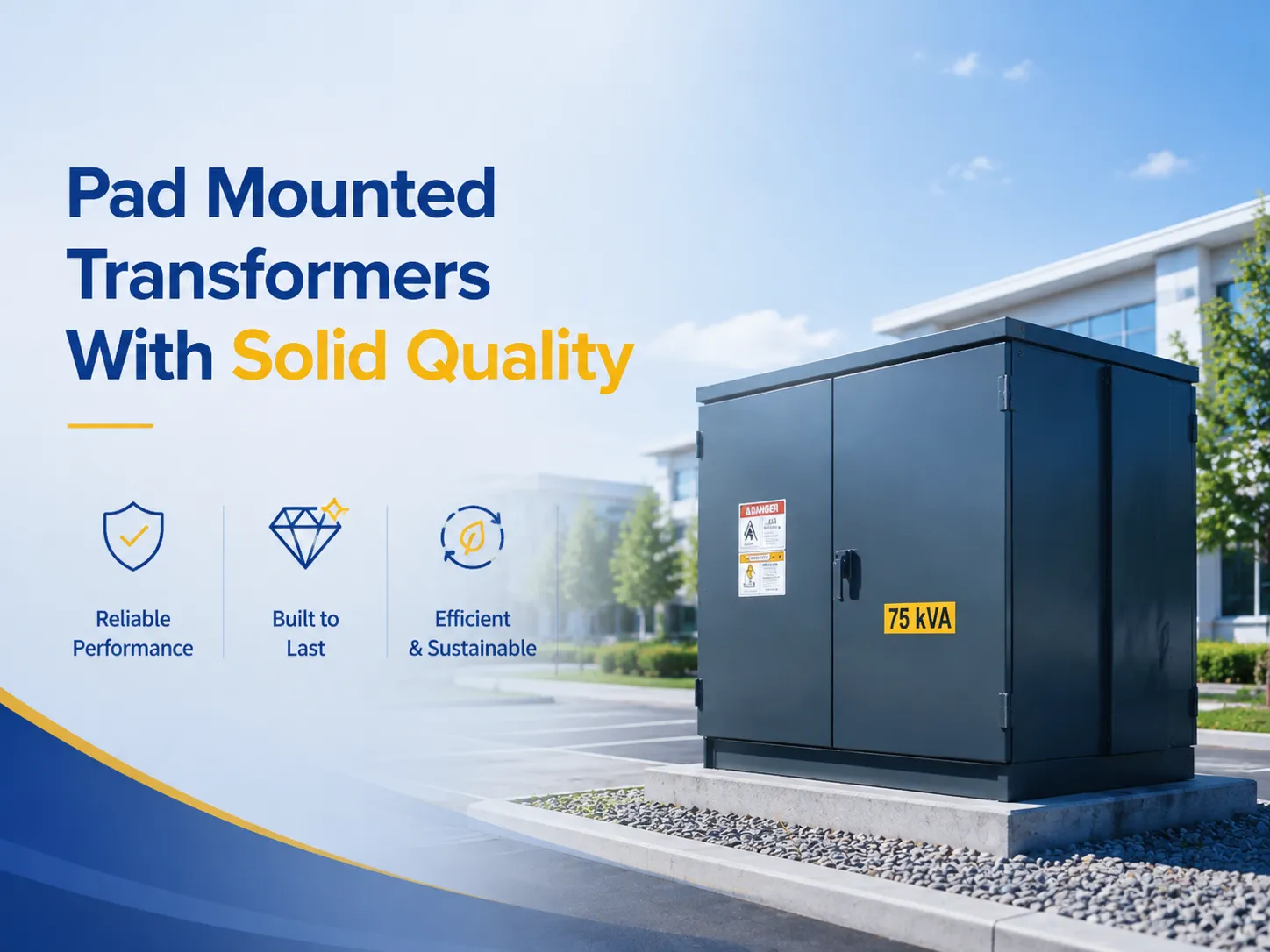
O que é um Transformador Montado em Base?
Um transformador montado em base representa um transformador de distribuição seguramente enclausurado em um gabinete de aço aterrado que repousa sobre uma base de concreto ao nível do solo. É um método preferível que é convencional em sistemas de distribuição subterrânea na América do Norte e tem sido usado cada vez mais no Oriente Médio, América Latina e Sudeste Asiático, onde empresas de utilidade e desenvolvedores preferem ocultar equipamentos de distribuição para que equipamentos montados em postes não representem mais um risco à segurança.
Esta família específica de produtos é definida por dois elementos – o primeiro é conhecido como “design de frente morta”, que significa uma extremidade energizada de ponta a ponta do cabeamento dentro de um conector isolado e protegido, o que, por sua vez, significa que não há pontos vivos expostos mesmo no caso de abrir a porta do gabinete. Em segundo lugar, o design resistente a violação implica que o invólucro deve ser feito de uma maneira que garanta que abri-lo sem autorização não levaria à exposição de componentes que estão energizados, o que é especificado pela IEEE C57.12.27. O transformador é normalmente imerso em óleo monofásico ou trifásico; sua capacidade varia de 75 kVA a 5000 kVA, dependendo das exigências do setor de utilidade.
O termo “montado em base” refere-se à instalação em vez da tensão onde as principais classes de tensão primária são 15 kV, 25 kV e 35 kV, com configurações de tap padrão tendo tensão secundária de 240/120 V monofásico e 480Y/277 V trifásico.
O que “Qualidade Sólida” Realmente Significa
“Qualidade sólida” é simplesmente um termo de mercado, a menos que seja aplicado a critérios mensuráveis. No setor de transformadores montados em base, “qualidade sólida” significa cinco coisas mensuráveis:
- Design certificado: O equipamento é projetado e testado seguindo IEEE C57.12.00 (especificações gerais), IEEE C57.12.90 (padrões de teste) e IEEE C57.12.27 (integridade da caixa) com um relatório de teste de tipo válido.
- Perdas mensuráveis: As perdas de vazio e de carga da unidade não são apenas citadas na especificação de design, mas medidas fisicamente em cada unidade. Um transformador montado em base de 500 kVA com qualidade sólida tipicamente tem uma perda de vazio de aproximadamente 0,8–1,2 kW e uma perda de carga de cerca de 5,5–8,5 kW a 85 graus Celsius.
- Isolamento testado: O transformador passa em testes de impulso de onda completa e de onda cortada, testes de tensão e tensão induzida, e medições do fator de potência do isolamento.
- Proteção real da caixa: A carcaça atende aos requisitos da IEEE C57.12.27 para resistência a violação, travamento e fluxo de ar e possui vedação do tipo IP54 com um compartimento de cabo totalmente selado.
- Materiais rastreáveis: O aço do núcleo, o enrolamento de cobre ou alumínio e o óleo isolante são documentados e podem ser certificados mediante solicitação.
Se um cliente perguntar “este é um montado em base de qualidade sólida?”, a resposta correta não é uma frase chamativa, mas uma pasta contendo um relatório de teste de tipo, certificados de testes de rotina, certificados de materiais e padrões de controle de qualidade do local de fabricação. Qualquer fornecedor que não consiga fornecer a documentação mencionada acima não vende qualidade, mas apenas alegações.
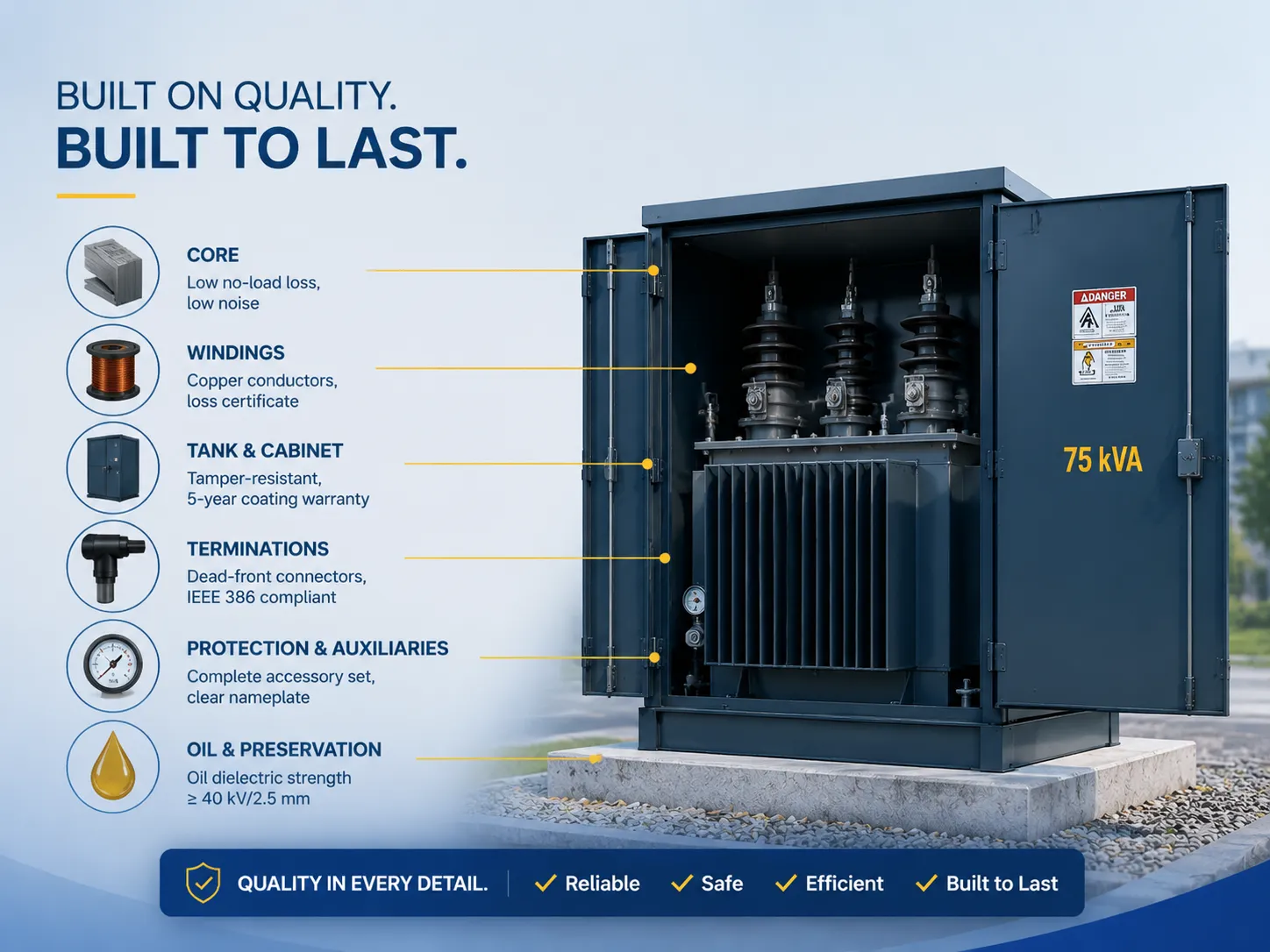
Construção e Componentes Chave
O transformador montado em base é composto por uma série de montagens que podem ser bem definidas por fatores de qualidade.
| Montagem | Componentes Principais | Indicadores de Qualidade |
|---|---|---|
| Núcleo | Laminações de aço silício orientado a grão (por exemplo, 23ZH085/27ZH095), juntas em passo | Baixa perda de vazio, baixo ruído (≤55 dB(A) a 1 m) |
| Enrolamentos | Condutores de cobre ou alumínio, enrolamento em camada ou disco, isolamento de papel tratado | Material do condutor documentado, certificado de perda |
| Tanque e gabinete | Carcaça de aço galvanizado a quente ou de 14 gauge, travamento, dobradiças internas | Teste de resistência a violação da IEEE C57.12.27, garantia de revestimento de 5 anos |
| Terminações | Conectores de cotovelo de frente morta, buchas de ruptura de carga ou de ruptura morta, suportes de estacionamento | Atende aos requisitos de conectores da IEEE 386 |
| Proteção e auxiliares | Dispositivo de alívio de pressão, medidor de nível de óleo, válvula de drenagem, placa de identificação, pads de aterramento | Conjunto completo de acessórios operacionais, placa de identificação clara conforme IEEE C57.12.00 |
| Óleo e preservação | Óleo mineral (ou óleo vegetal FR3), conservador ou tanque selado, respirador dessecante | Resistência dielétrica do óleo ≥40 kV/2,5 mm antes do envio |
Os potenciais compradores devem perguntar sobre três coisas. Primeiro, a qualidade do aço do núcleo. Em segundo lugar, que tipo de enrolamentos são usados (cobre ou alumínio, e qual o peso do cobre ou condutividade elétrica)? Por último, o tanque passa no teste de violação descrito na norma IEEE C57.12.27?
Tipos e Classificações
| Tipo | Faixa de Classificação | Aplicação Típica |
|---|---|---|
| Montado em base monofásico | 75–333 kVA | Subdivisões residenciais, pequeno comércio, distribuição subterrânea rural |
| Montado em base trifásico | 300–2.500 kVA | Edifícios comerciais, escolas, parques industriais, distribuição em campus |
| Grande pad-mount trifásico | 500–5.000 kVA | Alimentadores industriais grandes, centros de dados, hospitais |
| Live-front (estilo mais antigo) | 75–2.000 kVA | Instalações legadas; substituídas por dead-front por segurança |
| Dead-front (padrão atual) | 75–5.000 kVA | Todas as novas instalações de acordo com IEEE C57.12.27 |
As categorias de tensão no nível primário incluem classe de 15 kV (em termos de tensão mais alta de 15,0 kV), classe de 25 kV (em termos de tensão mais alta de 25,0 kV) e classe de 35 kV (em termos de tensão mais alta de 34,5 kV). As configurações de tensão secundária podem incluir 240/120 V (para conversão monofásica), 480Y/277 V, 208Y/120V e classe de 600 V para recursos especiais. Quanto à impedância, a característica normalmente está na faixa de 1,4-5,75%, dependendo do tamanho e design.
Como Funciona e Por Que É Seguro
O procedimento é apenas a física clássica dos transformadores – a circulação magnética induz uma corrente no enrolamento secundário nas proporções ditadas pelo número de voltas – mas o design é seguro para as pessoas. A energia vem através do cabo de alta tensão subterrâneo que se conecta ao cotovelo dead front indo para o bushing. O bushing é isolado e aterrado como resultado, então nenhum elemento de corrente pode ser alcançado mesmo no caso de a porta do gabinete ser aberta. O transformador opera de acordo com o princípio de reduzir a tensão a um nível utilizável, e os fios de baixa tensão saem pela parte inferior do gabinete para o medidor ou painel de serviço.
Existem três camadas no sistema de segurança: o sistema de conector dead front (IEEE 386), um gabinete à prova de violação e trancado (IEEE C57.12.27), e o aterramento do gabinete e neutro. Juntos, eles garantem que não importa se uma pessoa toca em gabinetes, portas ou invólucros, não corre o risco de ser eletrocutada mesmo que o gabinete seja atacado.
Montagem em Base vs. Outras Montagens de Transformadores
| Fator | Montagem em Base | Montagem em Poste | Subestação Prefabricada (Tipo Caixa) |
|---|---|---|---|
| Localização | Solo, base de concreto | Poste de utilidade | Solo, invólucro maior |
| Classificação típica | 75–5.000 kVA | Até ~167 kVA | 50–2.500 kVA |
| Terminações | Dead-front, subterrâneo | Ao ar livre, acima | Fechado, cabo ou barra coletora |
| Padrão de segurança | IEEE C57.12.27 | Design aberto, regras de espaço livre | IEC 62271-202 |
| Tempo de instalação | 1–2 dias | Horas (equipe de poste) | 2–5 dias |
| Impacto visual | Baixo (gabinete ao nível do solo) | Alto (poste + fios) | Moderado |
| Melhor para | Distribuição subterrânea, urbana/suburbana | Linhas rurais aéreas | Necessidades de comutação MV/LV + transformador |
A consideração tomada pelos distribuidores determina a preferência: sistemas aéreos sempre usam poste, sistemas subterrâneos sempre usam montagem em base e onde quer que equipamentos de manobra MV, medição e proteção sejam instalados em um só lugar, a subestação prefabricada é uma escolha. Onde a estética, segurança contra violação e fornecimento de energia subterrânea são importantes, as montagens em base são mais vantajosas do que as outras.
Normas e Testes
| Padrão | Escopo | Requisito Chave |
|---|---|---|
| IEEE C57.12.00 | Requisitos gerais para transformadores de distribuição imersos em líquido | Classificações, impedância, acessórios, placa de identificação |
| IEEE C57.12.90 | Procedimentos de teste para transformadores de distribuição | Testes de perda, impedância, dielétrico, impulso |
| IEEE C57.12.27 | Integridade do invólucro de equipamento montado em base | Dead-front, resistência a violação, trancamento |
| IEEE 386 | Sistemas de conectores isolados separáveis | Requisitos para conectores de cotovelo de frente morta |
| IEC 60076 (para unidades de exportação) | Transformadores de potência | Base de teste internacional alternativa |
| Eficiência DOE 2016 (N. América) | Eficiência de transformadores de distribuição | Níveis mínimos obrigatórios de eficiência |
Testes de funcionalidade padrão são realizados em cada unidade. Testes como relação e grupo vetorial, resistência de enrolamento, perdas a vazio e sob carga, tensão de impedância, dielétrica (tensão aplicada e induzida), resistência de isolamento e testes de pressão/vácuo do tanque são realizados. Testes de tipo ou de resistência (impulso, aumento de temperatura, resistência a curto-circuito) são feitos apenas uma vez por família. Nos EUA, os padrões mínimos de eficiência (adotados em 2016, aplicados em 2019) limitam as perdas e proíbem qualquer aço de núcleo com baixa eficiência.
Custos e Faixas de Preço
Os preços para transformadores montados em base com boa qualidade (trifásicos, frente morta, 15–35 kV, 480Y/277 V secundário, enrolamentos de cobre) são apresentados abaixo.
| Classificação | Classe de Tensão | Preço Típico (USD) | Tempo de Entrega |
|---|---|---|---|
| 75–150 kVA (monofásico) | 15–25 kV | $1.800–$3.500 | 8–16 semanas |
| 300–500 kVA | 15–25 kV | $4.500–$9.000 | 10–20 semanas |
| 750–1.000 kVA | 25–35 kV | $8.500–$16.000 | 12–22 semanas |
| 500–2.500 kVA | 25–35 kV | $12.000–$30.000 | 14–28 semanas |
| 000–5.000 kVA | 35 kV | $25.000–$60.000 | 16–32 semanas |
Aumente o preço em 5–10% para a classe de 35 kV em vez de 15 kV, em 5–8% para a classe de aço de núcleo de maior eficiência, e em $300–$1500 para opções adicionais (protetores contra surtos, cotovelos de ruptura de carga ou óleo vegetal). Os preços acima são cotados Ex Works e mudam dependendo das especificações, marcas e regiões. O tempo de espera para a entrega dos transformadores é muito grande, então os compradores devem verificar a disponibilidade dos dispositivos com antecedência.
Principais Marcas & Comparação de Preços
| Marca | País | Força | Preço Indicativo — 500 kVA (USD) |
|---|---|---|---|
| Prolec GE | EUA/México | Líder de mercado na América do Norte, base de referência de utilidade | $6.500–$12.000 |
| Hitachi Energy (ABB) | Suíça | Engenharia global, grande portfólio de transformadores | $7.000–$13.000 |
| Siemens | Alemanha | Opções digitais, cobertura de padrões internacionais | $7.000–$12.500 |
| Schneider Electric | França | Soluções de distribuição, rede de serviços global | $6.800–$12.000 |
| Eaton | EUA | Ampla gama de montagens em base para comercial e utilidade | $6.500–$11.500 |
| Jiangsu Subian Electric Power | China | Montagens em base compatíveis com IEEE/IEC, enrolamentos de cobre, OEM | $4.500–$9.000 |
Os melhores produtores da América do Norte podem garantir uma qualificação bem-sucedida para empresas de utilidade, entregas imediatas e serviço pós-venda. A Jiangsu Subian Electric Power começou a produzir transformadores montados em base de acordo com os padrões IEEE C57.12 com enrolamentos de cobre, terminação de frente morta e certificado de teste de perdas com preço mínimo – cerca de 30–45% mais baixo do que o das empresas ocidentais. A Subian pode oferecer testes certificados, documentação sobre as perdas alcançadas e custo dos transformadores, o que torna a empresa uma boa candidata para entrar na lista final para fornecer tal equipamento junto com empresas ocidentais.
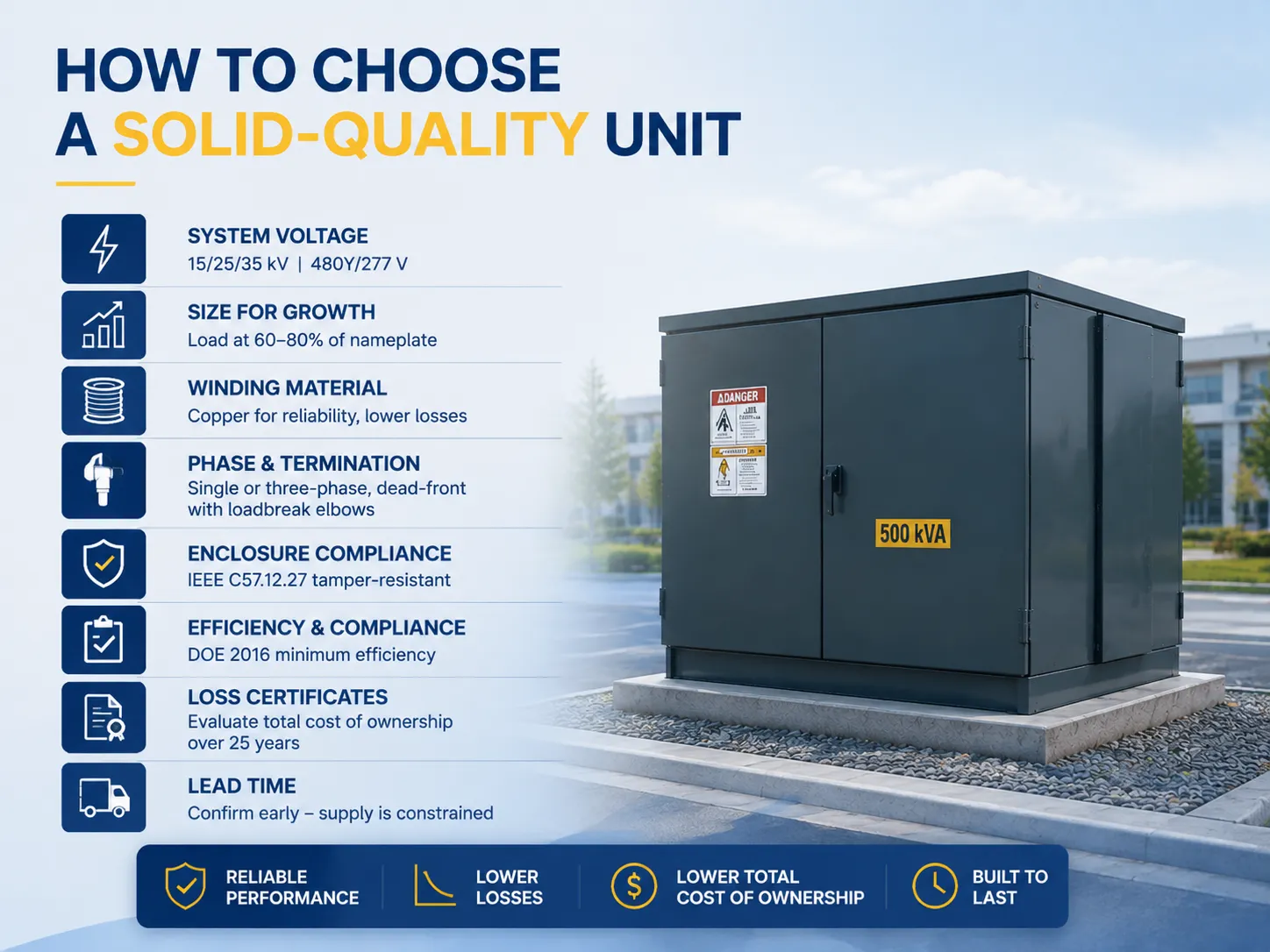
Como Escolher uma Unidade de Boa Qualidade
- Confirme a tensão no sistema — classe de tensão primária (15/25/35 kV) e tensão secundária precisa (por exemplo, 480Y/277 V).
- Dimensione para o crescimento da carga — selecione kVA para carga de pico de 60–80% da placa de identificação; uma unidade de 500 kVA atendendo 400 kVA de pico deixará espaço para crescimento.
- Escolha o material do enrolamento com sabedoria, considerando o cobre para máxima confiabilidade e menores perdas, enquanto o alumínio é mais barato, mas suas perdas devem ser examinadas.
- Escolha a fase e a terminação e decida sobre o tipo de fase, dead-front ou outro, onde joelhos dead-front e loadbreak são usados para comutação frequente.
- Exija conformidade com IEEE C57.12.27 e revise o mecanismo de bloqueio para suas instalações.
- Verifique a classe de perda e confira a conformidade com as diretrizes do DOE. Neste caso, preste atenção à eficiência mínima de 2016 do DOE nos EUA.
- Obtenha um certificado de perda para cada unidade e, em seguida, calcule o custo total de propriedade por 25 anos (TCO) após corrigir suas suposições.
Lista de Verificação de Inspeção Antes da Entrega
- A placa de identificação corresponde à especificação em termos de classificação kVA, tensão, valor de impedância, vetorização de grupo e derivação.
- Os resultados dos testes incluem razão, perdas, valores de impedância, resistência dielétrica e de isolamento.
- A integridade do invólucro foi verificada: arrombamentos podem ser realizados através de portas abertas; as dobradiças funcionam corretamente e os selos estão intactos.
- Os acessórios do reator nuclear estão limpos e o tipo de conector corresponde ao IEEE 386.
- Propriedades do óleo: o nível total de tensão de ruptura não deve ser inferior a 40 kV/2,5 mm; o nível de óleo é visível do lado de fora e não há vazamentos visíveis nas costuras do tanque e nas válvulas.
- Os acessórios do tanque estão presentes, como o dispositivo de alívio de pressão, válvula de drenagem e placas de aterramento.
- A documentação está completa: documentação IEC e IEEE, certificado de materiais, relatório de controle de qualidade.
Perguntas Frequentes
Quanto custa um transformador montado em pad?
Geralmente, os transformadores montados em pad podem variar de preço dependendo da classe de classificação de tensão. O preço de um transformador monofásico de 75-150 kVA pode variar de $1.800 a $3.500. Por outro lado, um transformador trifásico montado em pad de 500 kVA pode variar de $4.500 a $9.000 e um grande transformador montado em pad de 1500-2500 kVA geralmente custa cerca de $12.000 a $30.000. Outros fatores, como acessórios adicionais, tipo de enrolamentos e classe de eficiência, geralmente adicionam 5-20% ao preço. Observe que todos os preços mencionados acima são preços FOB indicativos que podem variar por marca, região e especificações.
Qual é a diferença entre montagens dead-front e live-front?
A diferença fundamental entre os dois tipos de transformadores refere-se às unidades Dead-front. Esses tipos de transformadores são isolados e blindados, unidades Dead-front sem partes energizadas presentes, nem mesmo em um caso onde a porta do gabinete está aberta. Transformadores Dead-Front atendem aos padrões IEEE C57.12.27 para quaisquer novas instalações. Quanto aos transformadores live-front, os problemas de segurança que podem causar em relação aos bushings energizados expostos são as razões pelas quais se tornaram obsoletos há décadas. Observe que as unidades Dead-front têm mais vantagens do que as live-front.
Quanto tempo dura um transformador montado em pad?
Em geral, transformadores podem durar até 25-40 anos se forem devidamente mantidos e fabricados. Um número de aspectos determina a vida útil esperada dos transformadores, incluindo a idade do isolamento até o momento da falha (que depende dos níveis de temperatura e umidade), as condições do óleo utilizado em um transformador e o histórico de operação do equipamento. Essa é a razão pela qual os operadores geralmente coletam amostras de óleo a cada dois a cinco anos para monitorar os níveis de umidade, os níveis de gás dissolvido (DGA) e a resistência elétrica.
Transformadores montados em pad precisam de uma cerca?
A principal vantagem dos transformadores montados em base refere-se ao fato de que não é necessário construir nenhuma cerca adicional ao redor do transformador. Devido às disposições de segurança contra violação, esses transformadores estão em conformidade com a IEEE C57.12.27, não sendo necessário proteger os transformadores com cercas ao redor e outras soluções de segurança. Além disso, os transformadores montados em base geralmente são posicionados próximos a muitos objetos importantes ao redor dos playgrounds, calçadas e até entradas.
Qual é o prazo de entrega para transformadores montados em base?
O prazo de entrega esperado para transformadores geralmente depende de sua capacidade e carga de trabalho da fábrica. Transformadores trifásicos padrão precisam de cerca de 10-22 semanas para o processo de fabricação, enquanto transformadores maiores (com capacidade de 3000-5000 kVA) podem ser produzidos em 16-32 semanas. O prazo de entrega em todo os Estados Unidos aumentou para mais de 30 semanas devido à atual escassez de equipamentos e os slots de produção precisam ser reservados com antecedência.
Referências
-
-
- IEEE C57.12.00 — Requisitos gerais para transformadores de distribuição imersos em líquido — o padrão de design e classificação base para montados em base.
- IEEE C57.12.90 — Procedimentos de teste para transformadores de distribuição — a base de teste para perdas, desempenho dielétrico e de impulso.
- IEEE C57.12.27 — Integridade do invólucro de equipamentos montados em base — o requisito de frente morta e resistência a violação que define a qualidade do invólucro sólido.
- IEEE 386 — Sistemas de conectores isolados separáveis — requisitos para conectores de cotovelo de frente morta.
- U.S. DOE — Padrões de eficiência de transformadores de distribuição — níveis mínimos de eficiência obrigatórios para unidades vendidas nos Estados Unidos.
- NEMA — Orientação sobre a aplicação de transformadores de distribuição — orientação sobre aplicação e classificação para o mercado norte-americano.
- Jiangsu Subian Electric Power — site oficial — fabricante e exportador de transformadores montados em base em conformidade com a IEEE.
-
Conclusão
A extensa qualidade encontrada nos transformadores montados em base não é apenas uma declaração de marketing; é uma combinação de um processo certificado, perdas verificadas, isolamento testado, capas intransponíveis e materiais rastreáveis. Todos os clientes que puderem verificar esses cinco fatores por escrito, inspecionar visualmente o produto antes do pagamento e comparar perdas testadas evitarão problemas com importações de baixa qualidade.
- Exija conformidade com a IEEE C57.12.00/.27/.90 e relatórios de teste regulares para todos os aparelhos.
- Encomende aparelhos para pelo menos 60-80% do valor nominal da carga e indique soluções de cobre com frente morta onde a confiabilidade é necessária.
- Compare as ofertas com base nas perdas avaliadas ao longo de 25 anos, em vez de considerar apenas o primeiro preço, e estime o tempo de resposta com antecedência.
- Certifique-se de inspecionar o invólucro, conexões, óleo e documentação antes de aceitar a entrega final.
- Considere empresas líderes da América do Norte, por exemplo, Prolec GE, Eaton e aquelas certificadas pela IEC/IEEE, como Jiangsu Subian Electric Power.