


ダラス郊外のショッピングセンターの施設管理者は、駐車場近くの緑色の鋼製ボックスを開ける二人の電力会社の作業員を見かけ、ブッシングを調べてすぐに再びシャットダウンするのを目撃しました。 このキャビネット — パッドマウントトランスフォーマーとして知られる — は、ショッピングモールを構成する三つの主要店舗、フードコート、空調システムに対して、9年間にわたり、現地での停電を引き起こすことなく電力を供給していました。 フェンスはなく、上部配線もなく、高電圧機器の存在を示すものは何もありませんでした。 トランスフォーマー全体は、コンクリート基礎にボルトで固定され、地下に設置された、改ざん防止の鋼製ケースの後ろに隠れていました。.
この記事では、パッドマウントトランスフォーマーの良い購入を行うためのガイドラインを提供しています。 それには、品質の良い製品と悪い製品を区別する特性、基準、ユニットの品質を証明するテスト、支払い前に確認すべきこと、良質なユニットの価格に関する具体的な情報が含まれています。.
要するに、パッドマウントトランスフォーマーは、コンクリートパッドの上に設置された改ざん防止のトランスフォーマーとして定義されており、すべての供給および配信接続が地下に設置されたデッドフロントコネクタを使用していることを保証します。 一流のデバイスは、IEEE C57.12.27(エンクロージャの完全性)、IEEE C57.12.00(一般要件)、およびIEEE C57.12.90(試験方法)に従って構築されており、容量は75から5,000 kVA、供給電圧は15から35 kVです。.
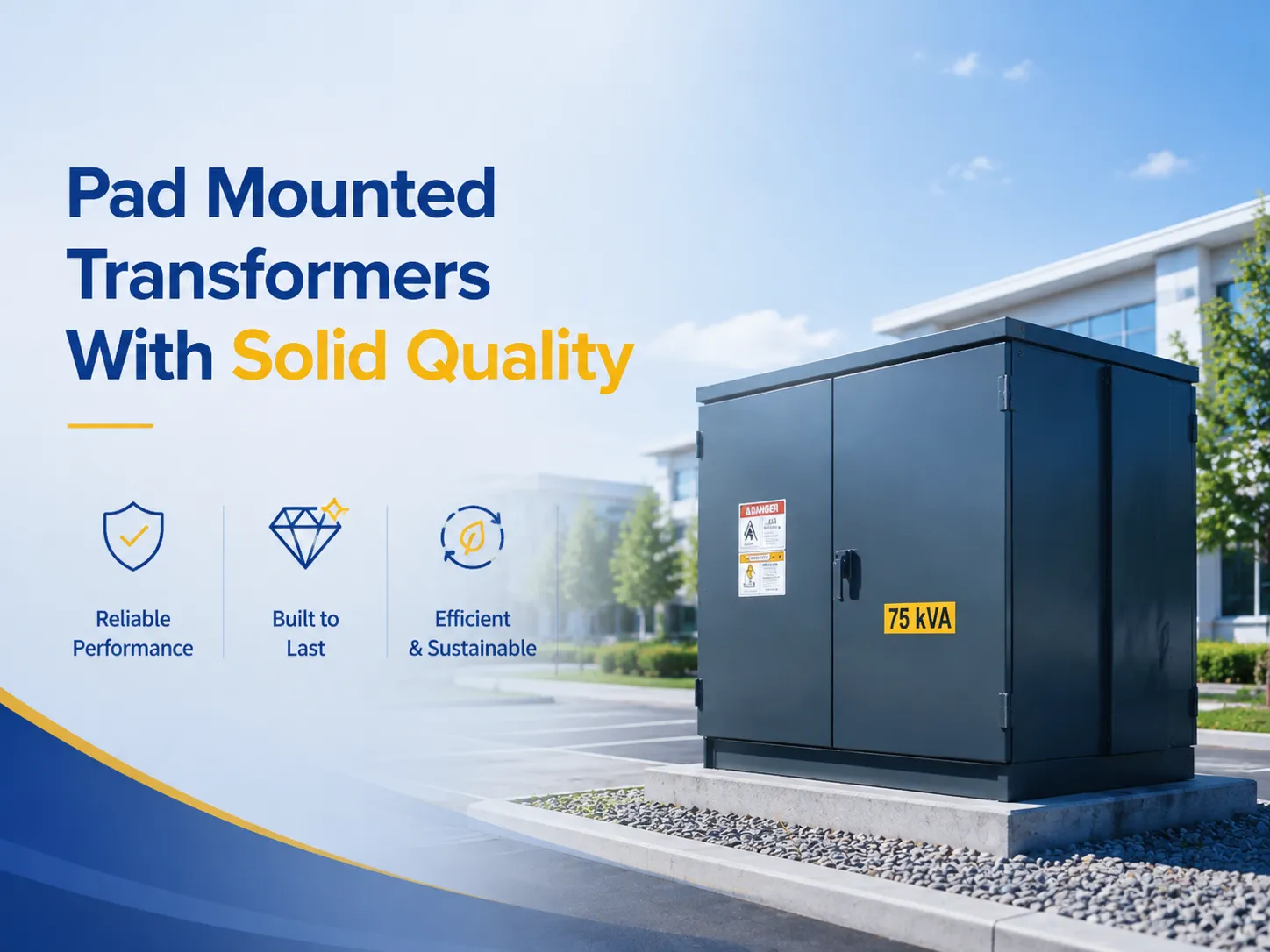
パッドマウントトランスフォーマーとは何ですか?
パッドマウントトランスフォーマーは、地面レベルのコンクリート基盤の上に設置された接地された鋼製キャビネットに安全に囲まれた配電トランスフォーマーを表しています。 これは、北米の地下配電システムで一般的な方法であり、中東、ラテンアメリカ、東南アジアでも増加して使用されており、電力会社や開発者は配電機器を隠すことを好むため、ポールマウント機器が安全上の危険をもたらさないようにしています。.
この特定の製品群は、二つの要素によって定義されます。第一は「デッドフロントデザイン」として知られ、絶縁された保護コネクタ内のケーブルの端から端までが通電されていることを意味し、これによりキャビネットのドアを開けた場合でも露出したライブポイントがないことを意味します。 第二に、改ざん防止設計は、無許可で開けることができないようにエンクロージャが作られていることを意味し、これにより通電されたコンポーネントが露出することはありません。これはIEEE C57.12.27によって規定されています。 トランスフォーマーは通常、単相または三相の油浸式であり、その容量は電力セクターの要件に応じて75 kVAから5000 kVAまで変動します。.
「パッドマウント」という用語は、主に電圧ではなく設置を指し、主要な一次電圧のクラスは15 kV、25 kV、35 kVであり、標準的なタップ構成は240/120 V単相および480Y/277 V三相の二次電圧を持っています。.
「ソリッドクオリティ」とは実際に何を意味するのか
“「ソリッドクオリティ」は、測定可能な基準に適用されない限り、市場用語に過ぎません。パッドマウントトランスの分野において、「ソリッドクオリティ」は5つの測定可能な要素を意味します:
- 認証設計:機器は、IEEE C57.12.00(一般仕様)、IEEE C57.12.90(試験基準)、およびIEEE C57.12.27(ボックスの完全性)に従って設計および試験され、有効な型試験報告書があります。.
- 測定可能な損失:ユニットの無負荷損失および負荷損失は、設計仕様から引用されるだけでなく、すべてのユニットで物理的に測定されます。ソリッドクオリティの500 kVAパッドマウントは、通常、無負荷損失が約0.8〜1.2 kW、負荷損失が約5.5〜8.5 kW(85度セルシウス)です。.
- 試験済み絶縁:トランスは、全波およびカット波インパルステスト、電圧および誘導電圧テスト、絶縁力率測定に合格します。.
- 実際のボックス保護:ハウジングは、IEEE C57.12.27の抗改ざん、ロック、空気流通の要件を満たし、完全に密閉されたケーブルコンパートメントを持つIP54タイプのシーリングがあります。.
- トレース可能な材料:コア鋼、銅またはアルミニウムの巻線、および絶縁油は文書化され、要求に応じて認証可能です。.
顧客が「これはソリッドクオリティのパッドマウントですか?」と尋ねた場合、正しい答えはキャッチーなフレーズではなく、型試験報告書、定期試験証明書、材料証明書、および製造サイトの品質管理基準を含むフォルダーです。上記の文書を提供できない供給者は、品質ではなく主張を販売しています。.
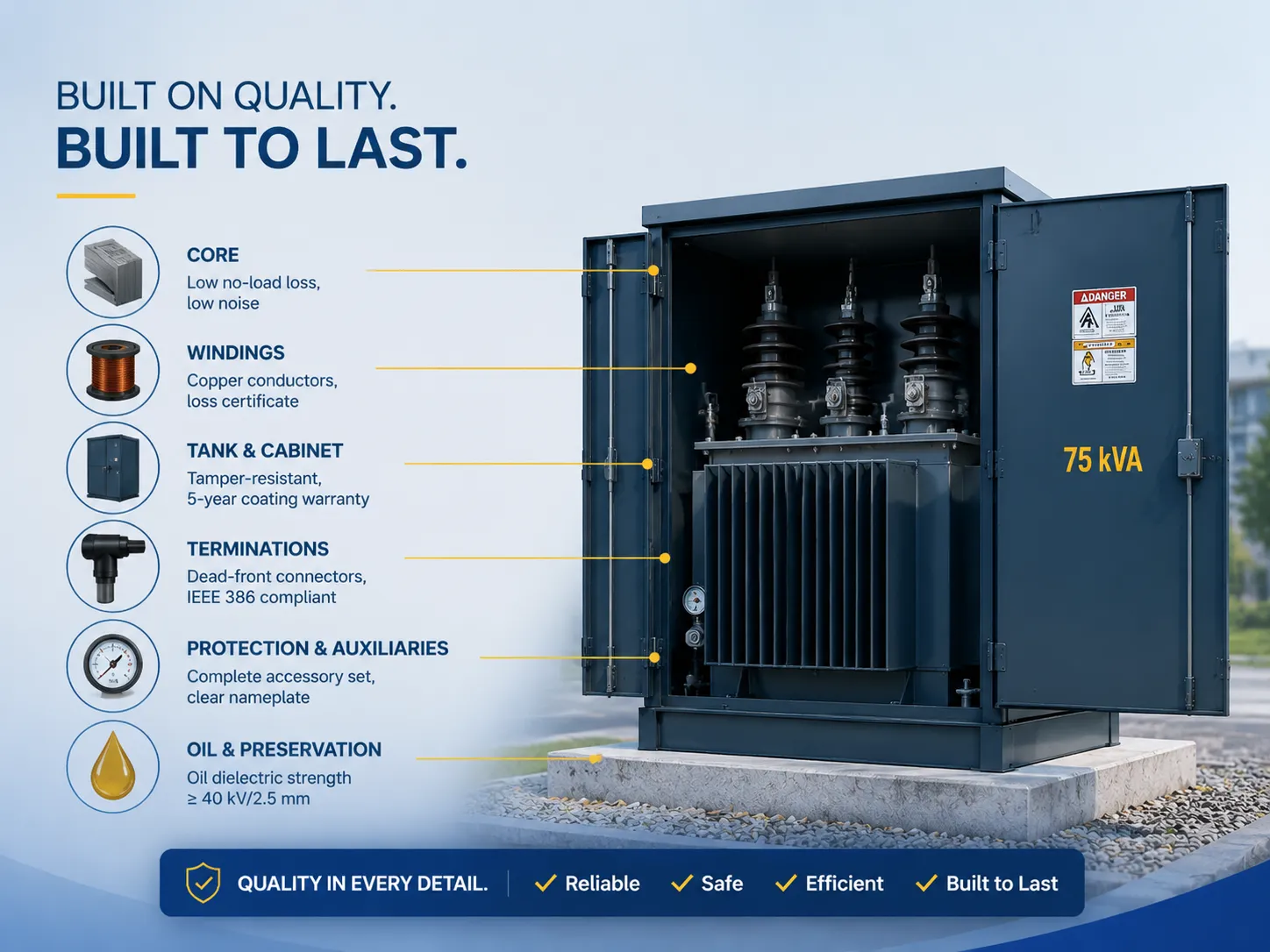
構造と主要コンポーネント
パッドマウントトランスは、品質要因によって明確に定義できるいくつかのアセンブリで構成されています。.
| アセンブリ | 主要コンポーネント | 品質指標 |
|---|---|---|
| コア | 粒状シリコン鋼のラミネーション(例:23ZH085/27ZH095)、ステップラップジョイント | 低無負荷損失、低ノイズ(1 mで≤55 dB(A)) |
| 巻線 | 銅またはアルミニウム導体、層またはディスク巻線、処理された紙絶縁 | 文書化された導体材料、損失証明書 |
| タンクとキャビネット | ホットディップ亜鉛メッキまたは14ゲージ鋼のエンクロージャ、パッドロック、内部ヒンジ | IEEE C57.12.27の抗改ざん試験、5年のコーティング保証 |
| 端子 | デッドフロントエルボコネクタ、負荷開放またはデッドブレークブッシング、駐車スタンド | IEEE 386コネクタ要件を満たす |
| 保護と補助装置 | 圧力解放装置、油位計、排水バルブ、名札、接地パッド | 完全な操作アクセサリーセット、IEEE C57.12.00に従った明確な名札 |
| 油と保存 | ミネラルオイル(またはFR3植物油)、コンザーバまたは密閉タンク、乾燥剤ブリーザー | 出荷前の油の絶縁強度≥40 kV/2.5 mm |
潜在的な購入者は、3つのことを確認する必要があります。まず、コア鋼のグレード。次に、どのような巻線が使用されているか(銅またはアルミニウム、銅の重量または電気伝導率は何か)。最後に、タンクはIEEE C57.12.27規格で説明されている抗改ざん試験に合格していますか?
タイプと定格
| タイプ | 定格範囲 | 一般的な用途 |
|---|---|---|
| 単相パッドマウント | 75–333 kVA | 住宅団地、小規模商業、田舎の地下配電 |
| 三相パッドマウント | 300–2,500 kVA | 商業ビル、学校、工業団地、キャンパス配電 |
| 大型三相パッドマウント | 2,500–5,000 kVA | 大型産業フィーダー、データセンター、病院 |
| ライブフロント(旧型) | 75–2,000 kVA | 従来の設置;安全のためにデッドフロントに置き換えられました |
| デッドフロント(現在の標準) | 75–5,000 kVA | IEEE C57.12.27に従ったすべての新しい設置 |
一次レベルの電圧カテゴリには、15 kVクラス(最高電圧15.0 kV)、25 kVクラス(最高電圧25.0 kV)、および35 kVクラス(最高電圧34.5 kV)が含まれます。二次電圧構成には、240/120 V(単相変換用)、480Y/277 V、208Y/120V、および特別な機能のための600 Vクラスが含まれる場合があります。インピーダンスについては、特性は通常1.4-5.75%の範囲内で、サイズと設計によって異なります。.
仕組みと安全性の理由
手順は、変圧器の古典的な物理学に過ぎません - 磁気循環が二次巻線に電流を誘導し、巻数によって決まる比率で動作しますが、設計は人々にとって安全です。電力は、デッドフロントエルボに接続される地下の高電圧ケーブルを通って供給されます。ブッシングは絶縁され、接地されているため、キャビネットのドアが開いても電流要素に触れることはできません。変圧器は、電圧を使用可能なレベルに下げる原理に従って動作し、低電圧の配線がキャビネットの底からメーターまたはサービスパネルに出ています。.
安全システムには3つの層があります:デッドフロントコネクターシステム(IEEE 386)、改ざん防止および施錠されたキャビネット(IEEE C57.12.27)、およびキャビネットと中性線の接地です。これらは、誰かがキャビネット、ドア、またはエンクロージャに触れても感電のリスクがないことを保証します。.
パッドマウントと他の変圧器マウント
| 要因 | パッドマウント | ポールマウント | プレハブ変電所(ボックスタイプ) |
|---|---|---|---|
| 場所 | 地面、コンクリートパッド | ユーティリティポール | 地面、大型エンクロージャ |
| 一般的な定格 | 75–5,000 kVA | 最大約167 kVA | 50–2,500 kVA |
| 端子 | デッドフロント、地下 | オープンエア、上部 | エンクロージャ、ケーブルまたはバスバー |
| 安全基準 | IEEE C57.12.27 | オープン設計、クリアランスルール | IEC 62271-202 |
| 設置時間 | 1–2日 | 時間(ポールクルー) | 2–5日 |
| 視覚的影響 | 低(地面レベルのキャビネット) | 高(ポール + ワイヤー) | 中程度 |
| 最適 | 地下配電、都市/郊外 | 上部農村線 | MV/LV切替 + 変圧器のニーズ |
配電業者が考慮することが優先事項を決定します:上部システムは常にポールを使用し、地下システムは常にパッドマウントを使用し、MVスイッチギア、メーター、保護が1か所に設置される場合、プレハブ変電所が選択されます。美観、改ざんからの安全性、地下電源供給が重要な場合、パッドマウントは他のものよりも有利です。.
標準と試験
| 標準 | 範囲 | 主要要件 |
|---|---|---|
| IEEE C57.12.00 | 液体浸漬型配電変圧器の一般要件 | 定格、インピーダンス、アクセサリー、名板 |
| IEEE C57.12.90 | 配電変圧器の試験手順 | 損失、インピーダンス、誘電体、インパルステスト |
| IEEE C57.12.27 | パッドマウント機器エンクロージャの完全性 | デッドフロント、改ざん耐性、施錠 |
| IEEE 386 | 分離型絶縁コネクタシステム | デッドフロントエルボコネクタの要件 |
| IEC 60076(輸出ユニット用) | 電力変圧器 | 代替国際試験基準 |
| DOE 2016 効率(北米) | 配電変圧器の効率 | 必須最低効率レベル |
標準機能テストは各ユニットに対して実施されます。比率とベクトルグループ、巻線抵抗、無負荷および負荷損失、インピーダンス電圧、絶縁(印加および誘導電圧)、絶縁抵抗、タンク圧力/真空テストなどのテストが行われます。タイプまたは耐久性テスト(インパルス、温度上昇、短絡耐性)は、ファミリーごとに1回のみ実施されます。米国では、最低効率基準(2016年に採用、2019年に施行)が損失を制限し、低効率のコア鋼を禁止しています。.
コストと価格帯
良質なパッドマウント変圧器(3相、デッドフロント、15–35 kV、480Y/277 V二次、銅巻線)の価格は以下の通りです。.
| 定格 | 電圧クラス | 典型的な価格(USD) | リードタイム |
|---|---|---|---|
| 75–150 kVA(単相) | 15–25 kV | $1,800–$3,500 | 8–16週間 |
| 300–500 kVA | 15–25 kV | $4,500–$9,000 | 10–20週間 |
| 750–1,000 kVA | 25–35 kV | $8,500–$16,000 | 12–22週間 |
| 1,500–2,500 kVA | 25–35 kV | $12,000–$30,000 | 14–28週間 |
| 3,000–5,000 kVA | 35 kV | $25,000–$60,000 | 16–32週間 |
35 kVクラスの価格を15 kVの代わりに5–10%増加させ、高効率コア鋼のクラスのために5–8%増加させ、追加オプション(サージプロテクター、負荷開放エルボまたは植物油)のために$300–$1500増加させます。上記の価格は工場渡しであり、仕様、ブランド、地域によって変動します。変圧器の納期は非常に長いため、購入者は事前にデバイスの在庫を確認する必要があります。.
トップブランドと価格比較
| ブランド | 国 | 強度 | 参考価格 — 500 kVA(USD) |
|---|---|---|---|
| プロレックGE | 米国/メキシコ | 北米市場のリーダー、公共事業の基準 | $6,500–$12,000 |
| 日立エナジー(ABB) | スイス | グローバルエンジニアリング、大型変圧器ポートフォリオ | $7,000–$13,000 |
| シーメンス | ドイツ | デジタルオプション、国際基準のカバレッジ | $7,000–$12,500 |
| シュナイダーエレクトリック | フランス | 配電ソリューション、グローバルサービスネットワーク | $6,800–$12,000 |
| イートン | 米国 | 商業および公共事業向けの広範なパッドマウント範囲 | $6,500–$11,500 |
| 江蘇省蘇辺電力 | 中国 | IEEE/IEC準拠のパッドマウント、銅巻線、OEM | $4,500–$9,000 |
北米の優れた生産者は、公共事業会社への成功した資格保証、即時納品、アフターサービスを保証できます。江蘇省蘇辺電力は、IEEE C57.12基準に従って、銅巻線、デッドフロント終端、最小価格での損失試験証明書を持つパッドマウント変圧器の生産を開始しました。これは、西洋企業の約30–45%低価格です。蘇辺は、認証された試験、達成された損失に関する文書、変圧器のコストを提供できるため、同様の機器を提供するための最終候補リストに入る良い候補となります。.
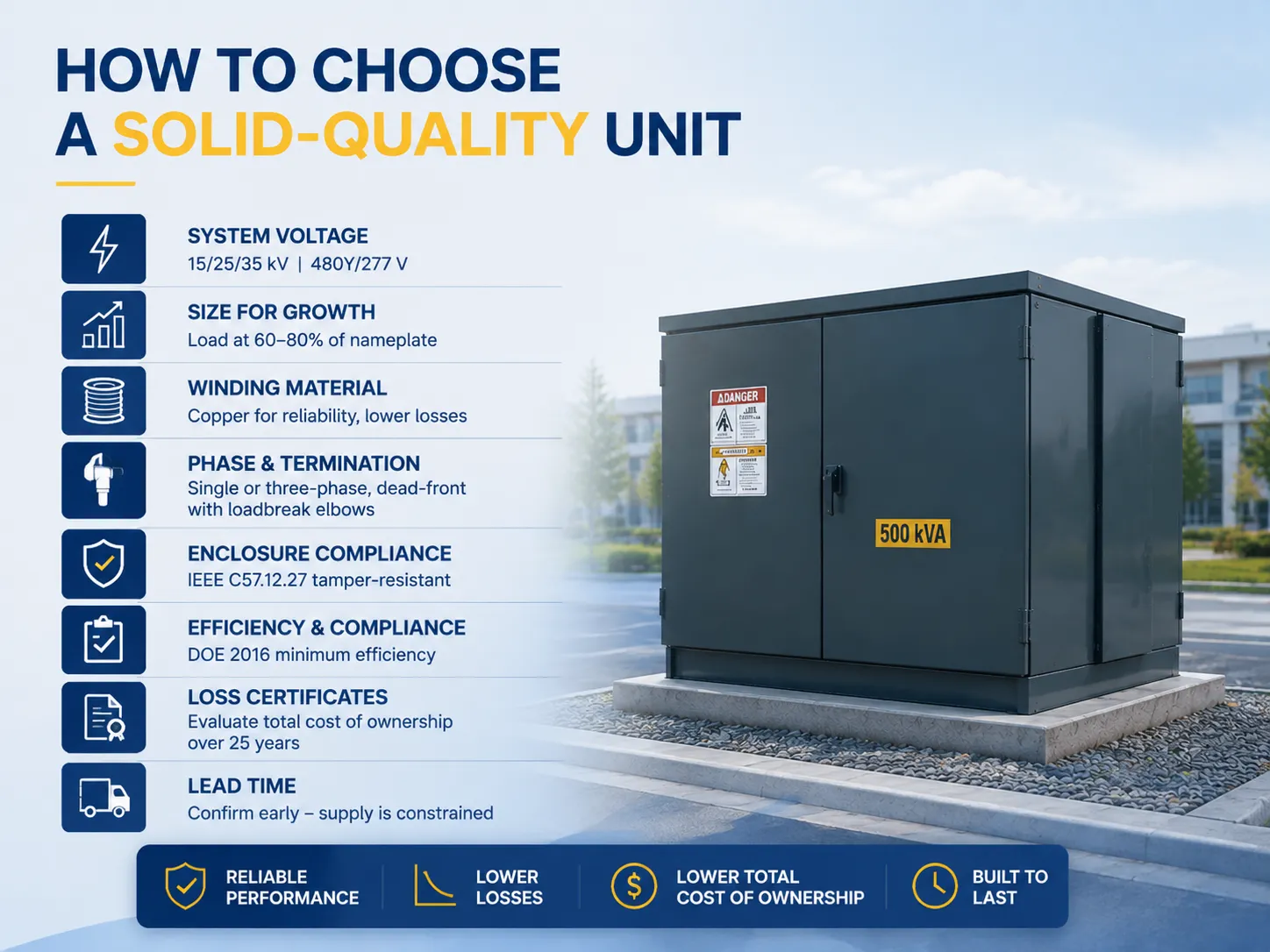
高品質ユニットの選び方
- システム内の電圧を確認する — 主電圧クラス(15/25/35 kV)および正確な二次電圧(例:480Y/277 V)。.
- 負荷の成長に対するサイズ — 名札のピーク負荷60–80%に対してkVAを選択します。400 kVAのピークに対応する500 kVAユニットは、成長の余地を残します。.
- 鉄心材料を賢く選択し、最大の信頼性と低損失のために銅を考慮し、アルミニウムは安価ですが、その損失を検討する必要があります。.
- フェーズと端子を選択し、デッドフロントまたはその他のタイプのフェーズを決定します。デッドフロントと負荷遮断エルボは頻繁な切り替えに使用されます。.
- IEEE C57.12.27の準拠を要求し、施設のロック機構を確認します。.
- 損失クラスを確認し、DOEガイドラインへの準拠をチェックします。この場合、米国のDOE 2016最小効率に注意してください。.
- 各ユニットの損失証明書を取得し、仮定を修正した後、25年間の総所有コスト(TCO)を計算します。.
配送前の検査チェックリスト
- 名札はkVA定格、電圧、インピーダンス値、グループベクトリング、タッピングに関して仕様と一致しています。.
- テスト結果には比率、損失、インピーダンス値、誘電体および絶縁抵抗が含まれます。.
- エンクロージャの完全性が確認されました:開いたドアから侵入される可能性があります;ヒンジは正常に機能し、シールは無傷です。.
- 原子炉アクセサリーは清潔で、コネクタのタイプはIEEE 386に対応しています。.
- 油の特性:全体の破壊電圧レベルは40 kV/2.5 mmを下回ってはいけません;油のレベルは外部から見える必要があり、タンクの継ぎ目やバルブに目に見える漏れがないこと。.
- タンクアクセサリーが存在します。圧力解放装置、排水バルブ、接地パッドなど。.
- 文書は完全です:IECおよびIEEE文書、材料証明書、品質管理報告書。.
よくある質問
パッドマウントトランスの価格はいくらですか?
一般的に、パッドマウントトランスはその電圧定格クラスに応じて価格が異なる場合があります。75-150 kVAの単相トランスの価格は$1,800から$3,500の範囲です。一方、500 kVAの三相パッドマウントトランスは$4,500から$9,000の範囲で、1500-2500 kVAの大型パッドマウントトランスは通常$12,000から$30,000の価格です。追加のアクセサリー、巻線の種類、効率クラスなどの他の要因は、通常価格に5-20%を加えます。上記のすべての価格は、ブランド、地域、仕様によって異なる可能性のある指標的なFOB価格であることに注意してください。.
デッドフロントとライブフロントのパッドマウントの違いは何ですか?
両方のトランスの基本的な違いは、デッドフロントユニットに関係しています。この種のトランスは絶縁され、シールドされており、開いたキャビネットドアがあってもライブ部品は存在しません。デッドフロントトランスは、新しい設置に対してIEEE C57.12.27基準を満たしています。ライブフロントトランスは、露出したライブブッシングに関する安全上の問題が原因で、数十年前に廃れました。デッドフロントユニットは、ライブフロントユニットよりも多くの利点があります。.
パッドマウントトランスの寿命はどのくらいですか?
一般的に、変圧器は適切に維持管理され、製造されていれば25〜40年持つことができます。変圧器の期待寿命を決定する要素には、故障までの絶縁体の年齢(温度と湿度レベルに依存)、変圧器で使用される油の状態、設備の運用履歴が含まれます。そのため、オペレーターは通常、湿度、溶解ガスレベル(DGA)、電気的強度を監視するために、2年から5年ごとに油のサンプルを採取します。.
パッドマウント変圧器にはフェンスが必要ですか?
パッドマウント変圧器の主な利点は、変圧器の周りに追加のフェンスを建設する必要がないという点です。これらの変圧器はIEEE C57.12.27に準拠しているため、周囲のフェンスやその他の安全対策で変圧器を保護する必要はありません。さらに、パッド変圧器は通常、遊び場、歩道、さらには入口の近くに多くの重要な物件の近くに配置されます。.
パッドマウント変圧器のリードタイムはどのくらいですか?
変圧器の期待リードタイムは通常、その容量と工場の作業負荷に依存します。標準の三相変圧器は製造プロセスに約10〜22週間を要し、より大きな変圧器(容量3000〜5000 kVA)は16〜32週間で製造されます。アメリカ全体でのリードタイムは、現在の設備不足のために30週間以上に増加しており、生産スロットは事前に予約する必要があります。.
参考文献
-
-
- IEEE C57.12.00 — 液浸型配電変圧器の一般要件 — パッドマウントの基本設計および定格標準。.
- IEEE C57.12.90 — 配電変圧器の試験手順 — 損失、絶縁体、インパルス性能の試験基準。.
- IEEE C57.12.27 — パッドマウント機器のエンクロージャの完全性 — デッドフロントおよび改ざん防止要件を定義する堅固なエンクロージャの品質。.
- IEEE 386 — 分離可能な絶縁コネクタシステム — デッドフロントエルボコネクタの要件。.
- U.S. DOE — 配電変圧器の効率基準 — アメリカ合衆国で販売されるユニットの必須最低効率レベル。.
- NEMA — 配電変圧器の適用ガイダンス — 北米市場向けの適用および定格ガイダンス。.
- Jiangsu Subian Electric Power — 公式サイト — IEEE準拠のパッドマウント変圧器の製造業者および輸出業者。.
-
結論
パッドマウント変圧器に見られる広範な品質は単なるマーケティングの声明ではなく、認証されたプロセス、検証された損失、試験された絶縁体、通過不可能なカバー、追跡可能な材料の組み合わせです。これらの5つの要素を文書で確認でき、支払い前に製品を視覚的に検査し、試験された損失を比較できるすべてのクライアントは、低品質の輸入品の問題を回避できます。.
- IEEE C57.12.00/.27/.90への準拠を要求し、すべての機器の定期的な試験報告書を求めてください。.
- 名板値の負荷の少なくとも60-80%の機器を注文し、信頼性が求められる場合はデッドフロントの銅巻きソリューションを示してください。.
- 最初の価格だけを考慮するのではなく、25年間の評価された損失に基づいてオファーを比較し、事前にターンアラウンドタイムを見積もってください。.
- 最終納品を受け入れる前に、エンクロージャー、接続、オイル、および文書を必ず検査してください。.
- Prolec GE、Eaton、Jiangsu Subian Electric PowerのようなIEC/IEEE認証を受けた北米の主要企業を考慮してください。.