


В качестве менеджера по экспорту завода по производству трансформаторов средней мощности, изучающего заказы за последний квартал, он очень четко видит ту же тенденцию. Энергетическая компания в Кении сделала заказ на 400 распределительных устройств. EPC-компания в Саудовской Аравии приобрела 12 штук трансформаторов подстанций мощностью 31,5 МВА. Разработчик строительства дата-центра из Персидского залива заказал устройства с наполнителем на основе эфира 35 кВ с онлайн-мониторингом. В то время как три года назад этот завод продавал свою продукцию в основном на внутреннем рынке и конкурировал только по ценам, сегодня он конкурирует по сертификатам, потерям, срокам доставки и способности проходить аудиты, проводимые третьими сторонами. Трансформаторная промышленность прошла через переход к новой стадии, и компании, которые неправильно интерпретировали этот сдвиг, теряют тендеры.
Настоящая работа предназначена для исследования изменений, произошедших в отрасли масляных трансформаторов с точки зрения структурных сил, стоящих за этим, цифр, сдвига в производстве и продажах, а также последствий для потенциальных клиентов.
Резюме: Сектор масляных трансформаторов достиг новой стадии, характеризующейся четырьмя элементами: ростом спроса, стимулируемым электрификацией; узкими местами мощностей, что увеличило время доставки крупных силовых трансформаторов до 18-36 месяцев; нормативными актами, касающимися энергоэффективности, которые превратили уровни потерь в критерий законности; и диверсификацией экспортных рынков, с растущей долей программ коммунальных услуг от производителей из Китая и Индии на рынках Африки, Ближнего Востока, Юго-Восточной Азии и Южной Америки.
Что на самом деле означает “Новая Фаза”
Все сектора экономики проходят изменения со временем, и предыдущий период трансформаторной промышленности, который происходил примерно в 2000-х и середине 2010-х годов, можно охарактеризовать как время товаризации. Это означает, что стандартные распределительные трансформаторы разрабатывались на основе спецификаций, а конкуренция определялась в первую очередь ценами и быстрыми сроками доставки. Новое развитие отличается в следующих четырех основных аспектах: рост спроса опережает рост мощностей; требования к энергоэффективности и правила безопасности включены в правила закупок; количество стран для экспорта увеличилось с нескольких до десятков; и решение о покупке основывается не только на цене, но и на результатах испытаний и надежности доставки.
Ничто из этого не является временным. Электрификация, укрепление сетей и интеграция возобновляемых источников энергии — это процессы, которые продолжаются десятилетиями. Нормативные акты становятся все более строгими. Как только клиент сталкивается со сроком выполнения заказа в 24 месяца и получает партию дефектных сертификатов испытаний, поведение клиента изменится навсегда.
Драйверы спроса: электрификация и сети
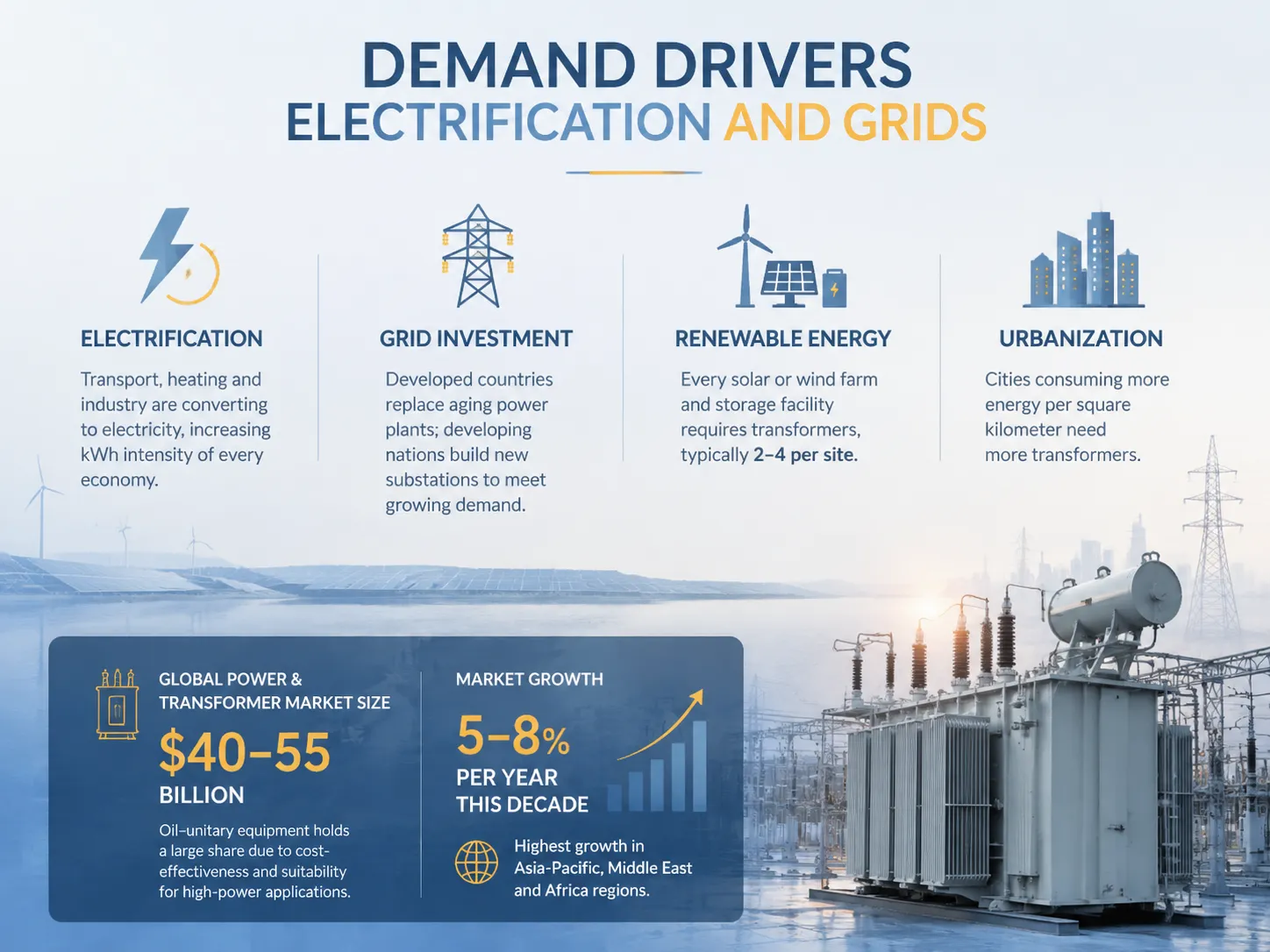
Потребность в трансформаторах обусловлена четырьмя основными тенденциями:
- Электрификация использования энергии: транспорт, отопление и промышленность теперь переходят на электричество, тем самым увеличивая интенсивность потребления кВтч в каждой экономике.
- Инвестиции в электросеть: развитые страны теперь нуждаются в замене старых электростанций, а развивающиеся страны должны строить новые подстанции из-за роста спроса на электроэнергию.
- Использование возобновляемой энергии: каждая солнечная или ветровая электростанция и хранилища должны иметь трансформаторы для их работы, особенно 2–4 трансформатора для каждого конкретного объекта.
- Урбанизация: города, потребляющие большие объемы энергии на квадратный километр, нуждаются в большем количестве трансформаторов.
Экспертиза указывает на то, что размер мирового рынка электроэнергетики и трансформаторов составляет $40-55 миллиардов, в то время как оборудование с масляным охлаждением занимает значительную часть рынка, поскольку использование масляного охлаждения более экономично и подходит для крупных энергетических установок. В общем, рост рынка в этом десятилетии оценивается в 5-8% в год, с наибольшими темпами в Азиатско-Тихоокеанском регионе, а также на Ближнем Востоке и в Африке.
Дефицит поставок и сроки выполнения
Определяющей реальностью со стороны предложения на этой новой стадии является то, что производственные мощности не соответствуют спросу. Задержки в производстве крупных трансформаторов в начале 2020-х годов увеличились в четыре раза в Европе и Северной Америке, а для распределительных трансформаторов задержки составили 6-12 месяцев. Произошло сочетание причин, начиная от нехватки инвестиций в мощности в течение десятилетия с высокими ценами на сырьё и стремительного роста цен на электрическую сталь с зерновой ориентацией до нехватки рабочей силы в некоторых регионах и внезапного спроса, связанного с программами электросетей и возобновляемых источников энергии.
| Класс оборудования | Типичный срок выполнения (2018) | Типичный срок выполнения (сейчас) | Комментарий |
|---|---|---|---|
| Распределительный, <2,500 кВА | 6–10 недель | 12–24 недели | Всё ещё самая короткая очередь |
| Средняя мощность, 3–31.5 МВА | 10–16 недель | 20–40 недель | Сроки выполнения для экспорта варьируются в зависимости от загрузки завода |
| Крупная мощность, >63 МВА | 12–20 месяцев | 18–36 месяцев | Сильно ограничены в некоторых регионах |
Стратегическая реакция включала инвестиции в заводы с новыми и расширенными фабриками в Соединенных Штатах, Европе, Индии и регионе Персидского залива. Однако новая мощность потребует нескольких лет для установки и сертификации. В ожидании этого покупатели адаптируются, заказывая раньше, подписывая рамочные контракты, стандартизируя проекты и сохраняя необходимые стратегические запасы. Теперь это случай, когда надежность поставок фактически стала рыночным преимуществом, стоящим денег.
Регулирование как формирователь рынка
Регулирование переместилось из фона в центр отрасли. Инструменты различаются по регионам, но имеют общую направленность:
| Регион | Ключевое правило | Рыночные последствия |
|---|---|---|
| ЕС | Экодизайн 548/2014 + 2019/1783 | Ограничения потерь поэтапно; низкоэффективные запасы выводятся из эксплуатации |
| США | Обновления DOE 10 CFR Part 431 | Минимальная эффективность повышена; стимулы для возвращения производства |
| Китай | GB 20052-2020 | Классы эффективности обязательны в тендерах |
| Индия | Звездная маркировка BEE | Классы потерь, предлагаемые и обязательные |
С появлением регуляций производители значительно изменяют свои продуктовые линии. Вместо традиционных производственных процессов от производителей требуется разработка сердечников из CRGO и аморфной стали. Сторона покупателей больше не может полагаться на традиционную практику простого приобретения самого дешевого доступного продукта; в новых регуляторных условиях самый дешевый соответствующий продукт может отсутствовать.
Трансформация экспортного рынка
География поставок значительно расширилась.
| Регион | Драйвер спроса | Ответ на поставки |
|---|---|---|
| Европа | Укрепление сетей, интеграция возобновляемых источников энергии | Расширение мощностей, программы возвращения производства |
| Соединенные Штаты | Стандарты DOE, расходы на инфраструктуру | Новые отечественные заводы |
| Индия | Электрификация, промышленный рост | Крупный экспортер, увеличивающий мощность |
| Ближний Восток / Персидский залив | Новые города, промышленные зоны | Местные инициативы по производству |
| Африка | Программы электрификации | Сильная зависимость от импорта |
| Юго-восточная Азия | Рост производства | Импорт плюс региональные заводы |
Десять лет назад большинство экспортных заказов было распределено между несколькими странами. В настоящее время произошли значительные изменения в экспортной модели компаний по всему миру.
- Китайские производители смогли обеспечить производство масляных трансформаторов для коммунальных служб и EPC в Африке, на Ближнем Востоке, в Юго-Восточной Азии, Центральной Азии и Латинской Америке, успешно конкурируя по цене, срокам поставки и сертификации.
- Наибольший рост среди индийских производителей наблюдается как в производстве силовых трансформаторов, так и в производстве распределительных трансформаторов благодаря обширной инфраструктуре тестирования и сертификации в стране.
- Корейские и японские поставщики больше ориентированы на промышленные проекты и трансформаторы с высокими спецификациями.
- Европейские и американские поставщики в основном сосредоточены на контрактах для коммунальных служб, где инженерия имеет первостепенное значение; услуги предоставляются на месте, а политика компании играет важную роль в принятии решений.
В конечном итоге это привело к созданию поистине глобального рынка, который предоставляет своим покупателям возможность сравнивать несколько источников для одной спецификации. Единственная опасность заключается в том, что существует множество поставщиков, продающих некачественную продукцию с поддельными сертификатами. В эту новую эпоху роль покупателя заключается не в поиске поставщика, а в проверке, говорит ли он правду.
Внутри завода: модернизация производства
Новая стадия также наблюдается на заводах, которые были созданы для массового производства. Шаги, которые отличают конкурентоспособных экспортеров сегодня от товарных производителей прошлого, включают:
- Современные автоматизированные системы резки сердечников, оснащенные лазерной резкой и системами контроля укладки, которые обеспечивают улучшенную стабильность потерь без нагрузки от одного производственного блока к другому.
- Установки для намотки с компьютерным управлением и системой сжатия, которые обеспечивают однородность прочности на короткое замыкание.
- Вакуумные сушилки, оснащенные сложной системой контроля влажности, которая гарантирует качество изоляции.
- Испытательные лаборатории с откалиброванным оборудованием для определения параметров потерь, импульсными генераторами и устройствами для измерения частичных разрядов.
- Сертифицированная система качества (ISO 9001) и абсолютная прослеживаемость материалов до сертификатов испытаний.
Эти инвестиции генерируют данные. Современный завод, занимающийся экспортом, проводит испытания на каждом произведенном блоке и может предоставить доказательства типовых испытаний на повышение температуры, импульсные разряды и прочность на короткое замыкание. Разница между новой фазой и предыдущей заключается в том, что покупатели требуют эти доказательства до размещения заказов, а не после возникновения проблемы.
Структура отрасли: кто кому служит
| Сегмент | Представительные игроки | Фокус |
|---|---|---|
| Глобальный премиум-уровень | Hitachi Energy, Siemens Energy, ABB | Крупные силовые трансформаторы, цифровые услуги, коммунальные службы |
| Глобальный уровень распределения | Schneider Electric, GE Vernova | Трансформаторы распределения, коммерческие рынки |
| Региональный промышленный уровень | Хендай, Хиосунг, Тошиба, ТБЭА | Силовые трансформаторы, внутренний плюс экспорт |
| Уровень объема экспорта | Китайские и индийские производители, включая Jiangsu Subian | Распределение и средняя мощность, цена-плюс-сертификация |
Премиум-уровень усердно работает над тем, чтобы заслужить свою премиум-репутацию благодаря глубине инженерии, истории испытаний, глобальному обслуживанию и снижению рисков, связанному с его брендом. Экспортный уровень использует те же стандарты испытаний и материалов, но с более низкой базой затрат. На этом новом этапе барьеры для входа закрылись в плане технологий, но расширились по цене. Это, безусловно, объясняет тот факт, что в настоящее время уровни больше не сравниваются по репутации.
Уровни цен на новом этапе
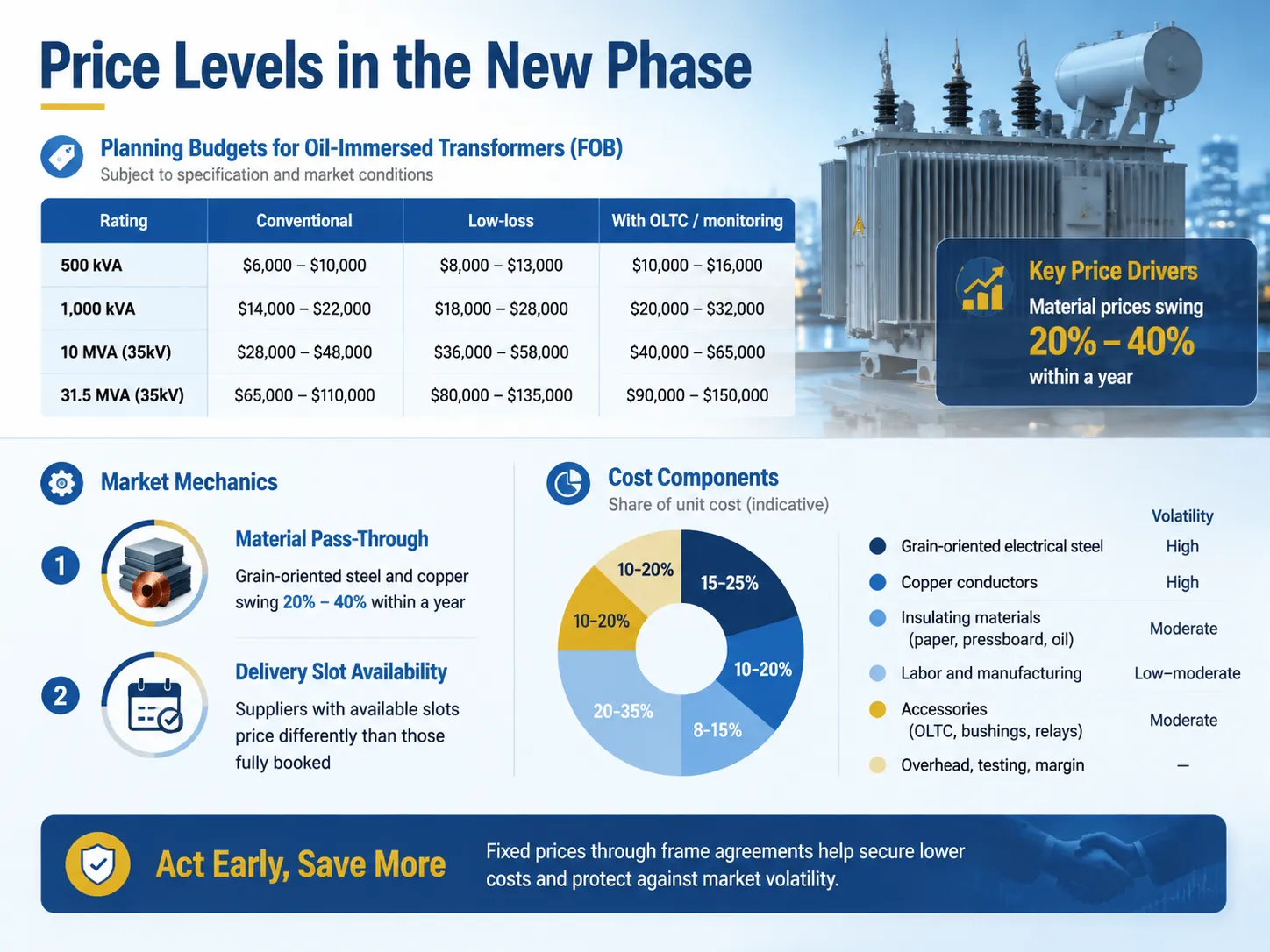
Текущие плановые бюджеты для трансформаторов с масляным погружением (FOB, в зависимости от спецификации и рыночных условий):
| Рейтинг | Обычный | Низкие потери | С OLTC / мониторингом |
|---|---|---|---|
| 500 кВА | $6,000–$10,000 | $8,000–$13,000 | $10,000–$16,000 |
| 1,000 кВА | $14,000–$22,000 | $18,000–$28,000 | $20,000–$32,000 |
| 10 МВА (35кВ) | $28,000–$48,000 | $36,000–$58,000 | $40,000–$65,000 |
| 5 MVA (35kV) | $65,000–$110,000 | $80,000–$135,000 | $90,000–$150,000 |
В настоящее время существуют два рыночных механизма, которые определяют рыночные цены. Это: во-первых, передача материалов, которая позволяет колебаниям на уровне 20-40 процентов для стали и меди, связанных с зерном, в течение года, и во-вторых, ценообразование, основанное на нехватке слотов для доставки. Производитель, у которого есть доступный слот для доставки на напряженном рынке, имеет другую ценовую стратегию, чем тот, у кого полный заказ.
| Компонент стоимости | Доля единичной стоимости (индикативная) | Волатильность |
|---|---|---|
| Электрическая сталь с зерновой ориентацией | 15–25% | Высокая (20–40% колебания) |
| Медь проводники | 10–20% | Высокая (связанная с LME) |
| Изоляционные материалы (бумага, прессованная доска, масло) | 8–15% | Умеренное |
| Труд и производство | 20–35% | Низкий–умеренный |
| Аксессуары (OLTC, вводы, реле) | 10–20% | Умеренное |
| Надземный, испытания, маржа | 10–20% | — |
Поскольку совокупные затраты на сталь и медь составляют почти 40% от общих затрат, цены на материалы значительно влияют на краткосрочные колебания котировок. Клиенты, которые заранее фиксируют цены, заключая рамочные соглашения, обычно платят меньше по сравнению с клиентами, которые обращаются к поставщику с их котировками в конце процесса.
Что покупателям следует делать иначе
- Начните заранее. В новую эпоху время выполнения заказа может измеряться месяцами, а не неделями, что означает, что будет полезно объявить тендеры до утверждения бюджетов.
- Будьте точными. Спецификация должна включать номиналы, соотношения, импедансы, потери, импульсы, отводы, требования к охлаждению и стандарты. Слабые спецификации приводят к самым низким ставкам и худшим долгосрочным затратам.
- Проверяйте и перепроверяйте все. Гарантии, сертификаты качества, отчеты о рутинных и типовых испытаниях, сертификаты на масло и сертификаты ISO 9001 должны быть проверены. В случае экспортного заказа имеет смысл получить инспекцию третьей стороны на критическом этапе производственного процесса, хотя это может стоить 1%–2% от цены контракта.
- Извлекайте максимальную выгоду из потерь. Когда потеря составляет $0.08 за кВтч, потеря без нагрузки в 10 кВт равна $7,000–$8,700 в год. Капитализация потерь поможет сформировать четкие критерии тендера.
- Подписывайте рамочные контракты. Долгосрочный контракт с фиксированной ценой позволит выиграть тендер в последний момент.
- Храните стратегические запасы. В эпоху задержек поставок лучшая страховка — это одна запасная единица по ключевому параметру.
Ключевые игроки в новой фазе
На всех уровнях компании, которые часто упоминаются покупателями в тендерах на трансформаторы, были названы в таблице выше, каждая из них занимает четкое место в рыночной структуре. Мировые лидеры отвечают за определение уровня эталонного качества; экспортный класс указывает уровень эталонного ценообразования; а самые мудрые покупатели учитывают оба параметра одновременно.
В сегменте экспортного класса Jiangsu Subian Electric Power демонстрирует появление нового типа китайских экспортеров трансформаторов, с сертификатами IEC 60076, отчетами о возвратных испытаниях для всех единиц, группами эффективности согласно GB 20052 и широким ассортиментом продукции от распределительных до 35kV трансформаторов, оснащенных OLTC, эфирной жидкостью и функциями мониторинга. Subian имеет положительный опыт работы с коммунальными и EPC клиентами в Азии, Африке, на Ближнем Востоке и в Латинской Америке и может предоставить отчеты об инспекции от третьих сторон. Их каталог и сертификаты находятся по адресу subian-electric.com.
Часто задаваемые вопросы
Почему сроки поставки трансформаторов стали такими длинными?
Спрос на электрификацию, замену сетей и возобновляемые технологии превысил производственные мощности, в то время как цены на материалы и доступность квалифицированной рабочей силы ограничили предложение. В некоторых местах время ожидания строительства крупных трансформаторов составляет от 18 до 36 месяцев. Новые производственные мощности находятся в стадии строительства, но процесс завершения занимает несколько лет.
Действительно ли рынок трансформаторов растет?
Да. Ожидается, что рынок силовых и распределительных трансформаторов на данный момент составит от $40 до 55 миллиардов и будет расти на 5-8% ежегодно к концу этого десятилетия благодаря инвестициям в сети, возобновляемые источники и электрификацию. Масляные трансформаторы составляют примерно 75-80% от общего объема отгруженной мощности.
Как мне проверить тестовые данные китайского производителя?
Запрашиваются отчеты о рутинных испытаниях с сертификатами, имеющими серийные номера. Запрашиваются отчеты о типовых испытаниях, связанных с повышением температуры, импульсом молнии и коротким замыканием для конкретного дизайна. Запрашивается подтверждение сертификата ISO 9001 вместе с организацией инспекции третьей стороной или испытаний под наблюдением на заводе. Сильный производитель согласится предоставить всю необходимую информацию как можно скорее, в то время как слабый, вероятно, задержит это.
Должен ли я покупать у премиум-бренда или экспортного производителя?
Актив, который у вас есть, и рынок, который вы занимаете, определят ваш выбор. Когда речь идет о высокоприоритетных активах типа "одна точка", где отсутствует местная сервисная инфраструктура, вероятно, имеет смысл, что премиум-категория обладает достаточной глубиной в инженерии и сервисной сети, чтобы оправдать свою цену. При работе с крупномасштабными флотами, где данные испытаний и цена играют обе роли, авторизованный производитель, вероятно, предоставит лучшие общие эксплуатационные расходы.
Как быстро меняются цены на трансформаторы?
Быстро. Цены на сталь и медь могут варьироваться от 20% до 40% каждый год, а котировки действительны в течение 15-45 дней. Фиксированные цены в контрактах и гибкие ставки обычно являются наиболее распространенным способом защиты в случае многолетних контрактов.
Ссылки
- МЭА: Электрические сети и безопасные энергетические переходы — Инвестиционный контекст в сетях, стоящий за ростом спроса на трансформаторы.
- Регламент ЕС по экодизайну 548/2014 (с изменениями 2019/1783) — Правила эффективности, формирующие рынок трансформаторов в Европе.
- Стандарты эффективности трансформаторов Министерства энергетики США (10 CFR Part 431) — Минимальные уровни эффективности и реакция предложения на рынке США.
- IEC 60076-1: Силовые трансформаторы – Общие сведения — Базовые параметры проектирования и испытаний, используемые в спецификациях этой статьи.
- Трансформаторы Siemens Energy — Справочник для премиум-класса утилит.
- Трансформаторы Hitachi Energy — Справочник для проектирования силовых трансформаторов и цифровых услуг.
- Официальный сайт Jiangsu Subian Electric Power — Продукты трансформаторов, погруженных в масло, экспортного уровня, сертификаты и документация по испытаниям.
Заключение
В настоящее время индустрия трансформаторного масла испытывает рост спроса, при этом ограниченная доступная мощность, регулирование и закупки на основе доказательств. Для производителей цена больше не является основным конкурентным фактором; теперь они придают приоритет данным испытаний, гарантии доставки и эксплуатационным характеристикам. С другой стороны, для покупателей своевременные закупки, точные спецификации, подтвержденные поставщики и капитализация убытков в каждой заявке становятся выигрышной стратегией. Ключевые выводы:
- Учитывайте, что время выполнения заказа составляет от 12 до 40 недель в зависимости от класса; закупайте заранее.
- Не забудьте включить убытки и результаты испытаний в список законно принятых валют, которые используются в качестве доказательства.
- Проводите инспекции импорта с помощью третьих сторон; сертифицированные документы должны быть проверены, а не просто приняты на веру.
- Отложите около $6,000–150,000 в зависимости от рейтингов и зафиксируйте цены через рамочные соглашения.
На этом этапе у поставщиков, которые смогут доказать свою надежность в доставке и получить сертификаты, будет больше шансов попасть в список потенциальных поставщиков. Jiangsu Subian Electric Power является одним из таких экспортеров, сертифицированных по IEC 60076, и его ассортимент продукции, документация по испытаниям и экспортная история заслуживают внимания на subian-electric.com.