


Учтите, что ваш производственный процесс сталкивается с проблемами каждый день после обеда, так как местная распределенная система снабжения не может справиться с пиковыми нагрузками — пока двигатели все еще работают, напряжение падает ниже требуемого значения +/-5%, указанного в приводах с переменной скоростью, и вам приходится выбирать между покупкой новой подстанции и реализацией менее дорогого решения. В большинстве случаев лучшим решением является бустерный трансформатор — устройство, преобразующее существующее питание за счет регулировки напряжения, что помогает решить проблему с просадкой линейного напряжения без воздействия на электрические машины. В этой статье мы подробно обсудим лучшие типы бустерных трансформаторов, подходящие для эксплуатации в 2026 году.
Краткий ответ: Бустерный трансформатор — это тип трансформатора, который предназначен для работы вместе с другими трансформаторами в последовательной цепи, где его вторичная обмотка подключена непосредственно к нагрузочному контур, таким образом, он увеличивает уровень напряжения выше исходного напряжения на входе трансформатора, обеспечивая поддержание напряжения без внесения каких-либо изменений в конфигурацию подстанции и ее работу. Наиболее широко используемыми типами являются бустеры с фиксированным соотношением, бустеры с автоматическим переключением обмоток (OLTC), автотрансформаторные бустеры, бустеры типа buck-boost и бустеры с фазовым сдвигом.
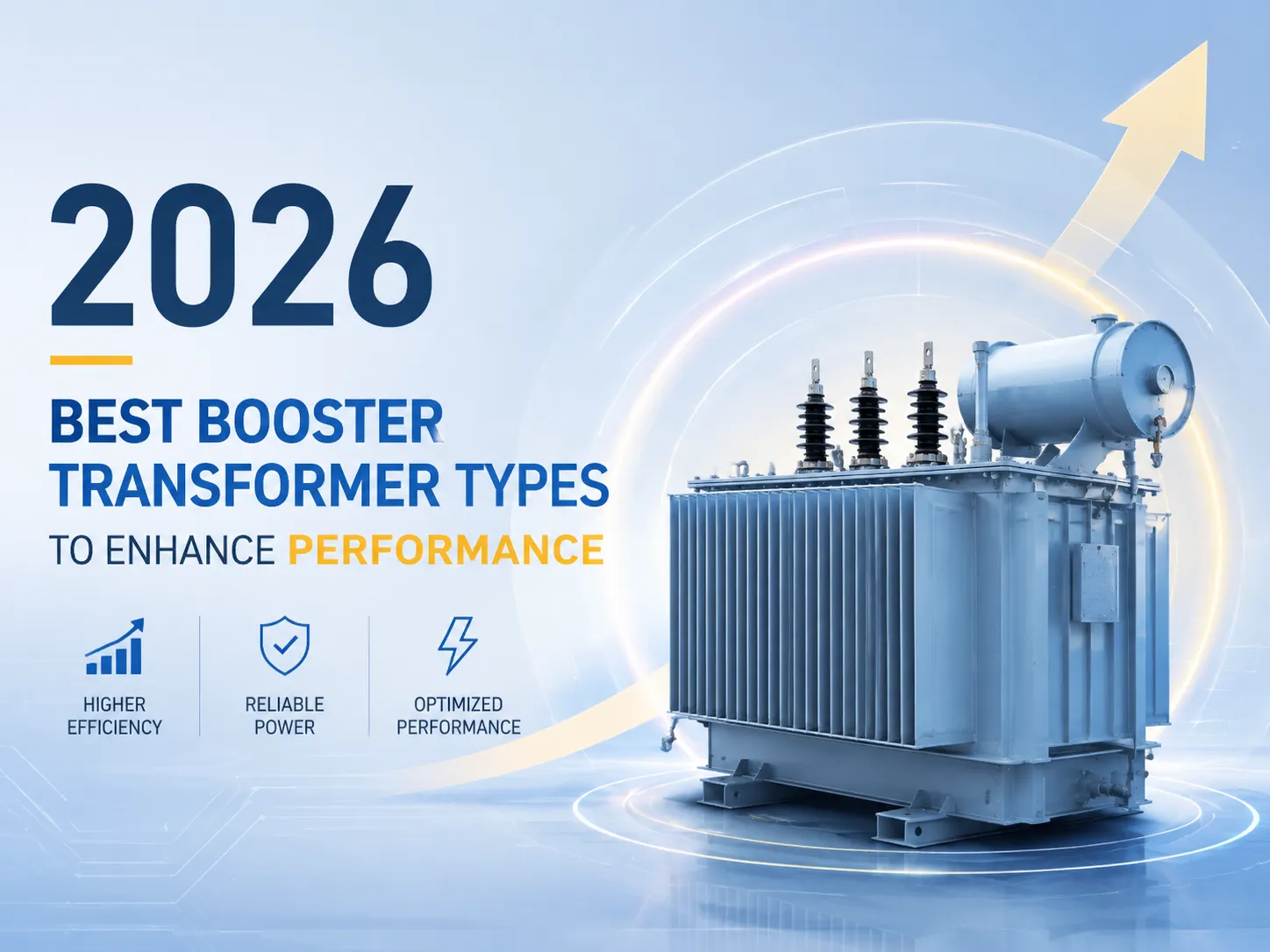
Что такое бустерный трансформатор?
Бустерный трансформатор — это уникальный силовой трансформатор, который подключается последовательно к питающей линии, а не параллельно. Его первичная обмотка получает энергию от регулирующего источника (часто это сама линия, через отвод или через небольшой контрольный трансформатор), в то время как его вторичная цепь подключена непосредственно к нагрузочному контуру. Напряжение, генерируемое во вторичной цепи, добавляется к линейному напряжению для создания общего увеличения. Бустер действует как последовательный трансформатор повышающего типа и способен увеличить напряжение питания на точное значение, которое можно предсказать. Поскольку бустер обрабатывает только увеличение, его номинальная мощность в кВА очень низка по сравнению с нагрузкой, которую он поддерживает, что обычно составляет всего 5 процентов до 25 процентов от нагрузки в кВА, что делает бустер значительно дешевле по сравнению с трансформатором питания.
Как работает бустерный трансформатор
Пример помогает лучше понять работу бустера. Рассмотрим случай, когда напряжение на питающей линии падает с 480 В до 448 В при полной нагрузке, что составляет 6.7% падения напряжения. Однако можно добавить вторичную обмотку бустера, чтобы вернуть 32 вольта и восстановить напряжение до 480 В. Таким образом, для нагрузки 200 А увеличенная мощность в кВА составляет 32 × 200 = 6.4 кВА, чтобы управлять цепью на 200 кВА. Первичная сторона получает питание от линии (либо с фиксированным отводом, либо с переключателем отводов под нагрузкой), а вторичная сторона подключена последовательно с проводником линии таким образом, что напряжение добавляется. С помощью переключателя реверса или соединения в режиме buck может быть возможно удалить напряжение из линии питания.
5 основных типов бустерных трансформаторов
| Тип | Принцип работы | Типичное применение | Указательная цена (US$) |
|---|---|---|---|
| Фиксированное соотношение бустера | Добавляет постоянное напряжение через фиксированные отводы | Коррекция провисания на длинных линиях | $1,500–$15,000 |
| OLTC бустер | Переменный буст, установленный переключателем отводов под нагрузкой | Колеблющиеся промышленные и коммерческие нагрузки | $6,000–$45,000 |
| Автотрансформаторный бустер | Однообмоточная конструкция, легче и дешевле | Умеренный буст в ограниченных пространствах | $1,200–$12,000 |
| Бак-буст трансформатор | Добавляет или вычитает напряжение, переподключая обмотки | Напряжение линии слишком высокое или слишком низкое | $800–$9,000 |
| Фазосдвигающий бустер | Регулирует как величину, так и угол фазы | Управление потоком энергии в сетях | $15,000–$120,000 |
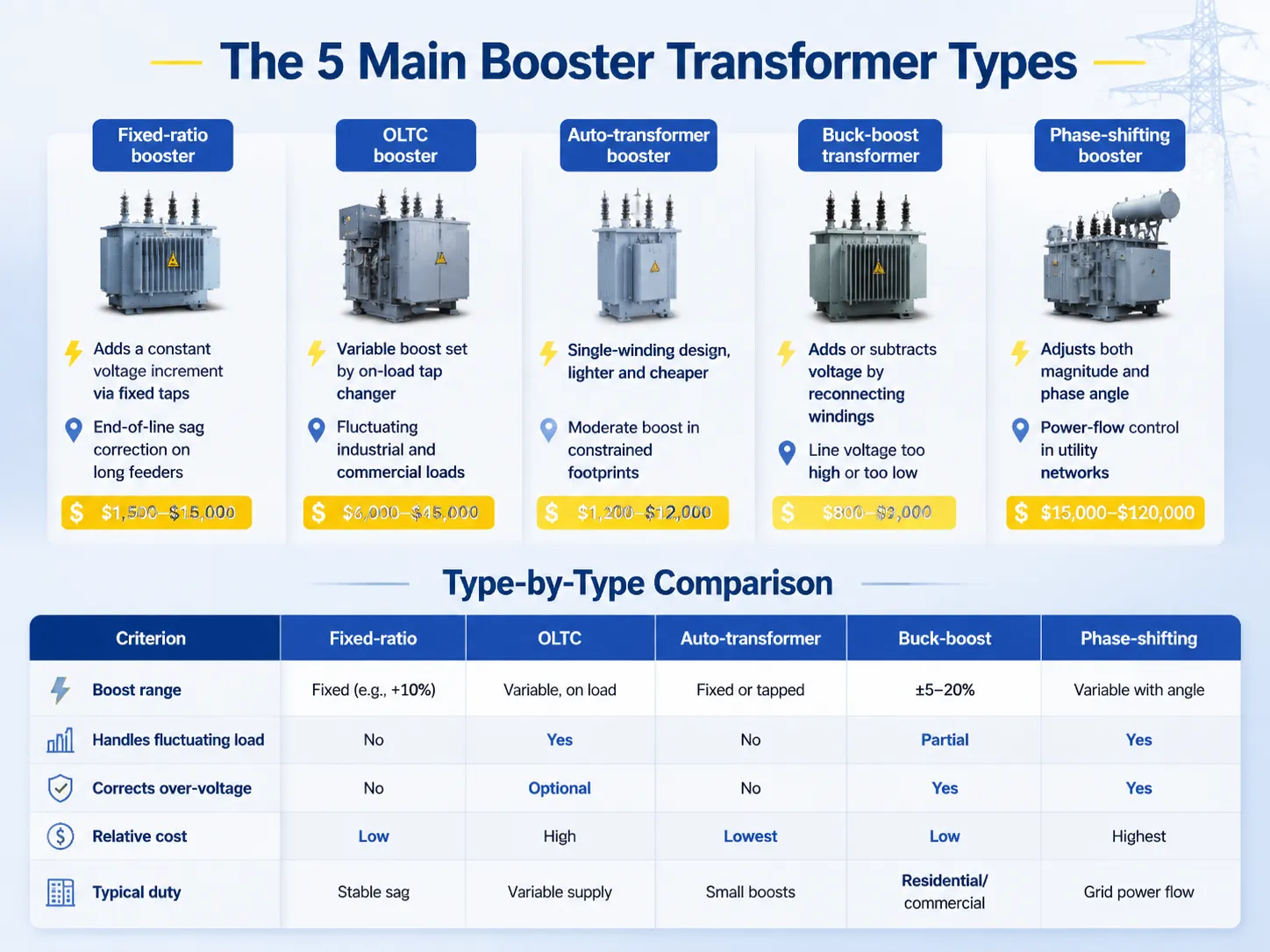
Таблица сравнения по типам
| Критерий | Фиксированное соотношение | ОЛТЦ | Автотрансформатор | Бак-буст | Фазосдвигающий |
|---|---|---|---|---|---|
| Диапазон буста | Фиксированный (например, +10%) | Переменный, под нагрузкой | Фиксированный или с отводами | ±5–20% | Переменный с углом |
| Обрабатывает колеблющуюся нагрузку | Нет | Да | Нет | Частичный | Да |
| Корректирует перенапряжение | Нет | По желанию | Нет | Да | Да |
| Относительная стоимость | Низкий | Высокий | Наименьший | Низкий | Наивысшая |
| Типичная нагрузка | Стабильный провис | Переменное питание | Небольшие бусты | Жилой/коммерческий | Поток электроэнергии в сети |
Ключевые характеристики, на которые стоит обратить внимание в 2026 году
- Большой, аутентичный ассортимент бустов. Убедитесь, что он может покрыть ваш максимальный провал без проблем; устройство, которое может обеспечить буст 10%, не может покрыть провал 15%.
- Переключение под нагрузкой может быть выполнено, когда напряжение постоянно колеблется, чтобы избежать отключения для ручной регулировки отводов.
- Низкое сопротивление. Увеличитель работает последовательно с нагрузкой и вызывает снижение собственного импеданса, поэтому важно поддерживать его на низком уровне для решения проблемы.
- Хорошее качество изоляции. Необходимо поддерживать четкое разделение между двумя частями системы, чтобы изоляция была спроектирована в соответствии с рабочим напряжением, а не напряжением буста.
- Соответствие IEC 60076 для повышения температуры и стойкости к короткому замыканию, а также регулярный отчет с измерением потерь.
- Разрешено переключение с виновным движением для легкого обхода.
| Спецификационный элемент | Типичное значение / выбор | Примечания |
|---|---|---|
| Класс линейного напряжения | 480 В, 600 В или СВ до 34,5 кВ | Определяет изоляцию и BIL |
| Диапазон буста | +5–15% (понижающий-увеличивающий: ±5–20%) | Соответствует измеренному наихудшему провалу |
| Увеличитель kVA | Увеличение V × Линейный A / 1000 | Обычно 5–25% нагрузки kVA |
| Охлаждение | AN/AA (сухой), ONAN (масляный) | Непрерывная серия |
| Стандарт | IEC 60076-1, -3, -5 | Требуется отчет о регулярных испытаниях |
| Аксессуары | Выключатель обхода, реле защиты | Обход необходим для обслуживания |
Где увеличители решают реальные проблемы
Трансформаторы-увеличители используются в различных ситуациях, когда электроснабжение недостаточно высоко для правильной работы приборов, например, когда фабрика расположена в 5 км от электростанции, или когда склад делит один трансформатор с другими машинами, или когда холодильное оборудование запускает компрессоры во время ежедневного падения уровней напряжения. Их также можно использовать временно на строительных площадках или во время электроснабжения для конкретного события. При использовании в секторах электроэнергетики трансформаторы-увеличители с фазовым сдвигом контролируют поток электричества между двумя линиями электрических цепей, тем самым уменьшая мощность. Не имеет значения, какую ситуацию мы рассматриваем, вопрос затрат будет одинаковым: индивидууму придется потратить несколько тысяч долларов на трансформатор серии увеличителей, а не на установку питающего кабеля, трансформатора или стабилизатора, что обойдется ему или ей в десятки тысяч долларов.
| Применение | Симптом | Лучший тип увеличителя | Типичный размер |
|---|---|---|---|
| Длинный конец сельского питающего кабеля | Стабильное низкое напряжение на расстоянии | Фиксированное соотношение | 5–50 кВА |
| Промышленное предприятие с колеблющейся нагрузкой | Колебания напряжения с производством | ОЛТЦ | 25–500 кВА |
| Коммерческое/жилое снабжение | Линия работает на высоком или низком уровне | Бак-буст | 1–75 кВА |
| Питание от дизель-генератора | Падение под стартовой нагрузкой | Фиксированное соотношение | 10–100 кВА |
| Параллельные цепи коммунальных услуг | Неровное распределение мощности | Фазосдвигающий | 100–2,000 кВА |
Основы расчета и спецификации
Рейтинг kVA бустера определяется путем умножения необходимого буст-напруги на ток нагрузки. Формула: Boost kVA = Boost voltage (V) x Line current (A)/1000. Например, для фидера 480 V с током 400 A, которому требуется буст 24 V, необходимый серийный kVA составит 24 x 400/1000 = 9.6 kVA при фактическом контроле нагрузки 192 kVA. После установления рейтинга kVA необходимо определить следующие параметры: уровень линейного напряжения (480 V и 600 V или что-то из рынка среднего объема (до 34.5 kV) для эффективного использования бустеров), диапазон буста (например, от 240V до 63 kV), градиент диапазона буста, векторную группу тока и полярность, технологию охлаждения (сухие типы должны использовать охлаждение с помощью воздуха AN/AA или масляное охлаждение ONAN), а также экологические характеристики его использования (температура, высота, использование в помещении или на улице). В случае использования бустеров среднего напряжения не забудьте подтвердить BIL и отклонение, которое может поддерживать работу устройства.
| Пример системы | Линейное напряжение | Ток нагрузки | Необходимый буст | Рейтинг бустера |
|---|---|---|---|---|
| Заводской конец фидера | 480 В | 200 А | +24 В (5%) | 8 kVA |
| Склад с VFDs | 480 В | 400 A | +32 В (6.7%) | 8 kVA |
| Холодильное хранилище | 400 В | 500 A | +30 В (7.5%) | 15 кВА |
| Средневолтовая сельская линия | 11 кВ | 80 A | +550 В (5%) | 44 кВА |
| Регулятор потока электроэнергии | 33 кВ | 150 A | Переменный 0–10% | До 500 kVA |
Топовые бренды и ценовые категории
| Бренд | Страна | Фокус на продукте | Ориентировочный диапазон цен (US$) |
|---|---|---|---|
| ABB | Швейцария/Швеция | OLTC и регуляторы с фазовым сдвигом | $8,000–$120,000 |
| Сименс | Германия | Регуляторы напряжения и бустерные устройства | $7,000–$100,000 |
| Schneider Electric | Франция | Бустеры и малые бустеры | $800–$12,000 |
| Итон | США | Бустеры понижения для систем 480 V | $700–$9,000 |
| GE Grid (часть Hitachi Energy) | США/Швейцария | Регуляторы промышленного класса | $10,000–$130,000 |
| Jiangsu Subian Electric Power | Китай | Индивидуальные бустеры, бустеры понижения, типы OLTC | $1,500–$45,000 |
Указанные цены являются ориентировочными и зависят от типа, диапазона повышения, класса напряжения и аксессуаров. ABB, Siemens, Schneider Electric, Eaton и Hitachi Energy являются производителями высококачественной продукции и предоставляют наиболее полные рекомендации по использованию ранее упомянутых продуктов. Для тех, кто ценит аналогичные инженерные возможности, но по более низкой цене, Jiangsu Subian Electric Power Co., Ltd. предлагает производство индивидуальных бустеров и трансформаторов понижения в соответствии с IEC 60076 в сухих и масляных формах с механизмами переключения под нагрузкой, которые могут понадобиться клиенту. Инженеры Subian помогают с подбором трансформаторов, тестированием и предоставлением необходимой документации для экспорта. Для проекта 2026 года, где важны бюджет и сроки, это делает Subian практическим партнером. Ознакомьтесь с ассортиментом продукции на сайте Subian Electric.
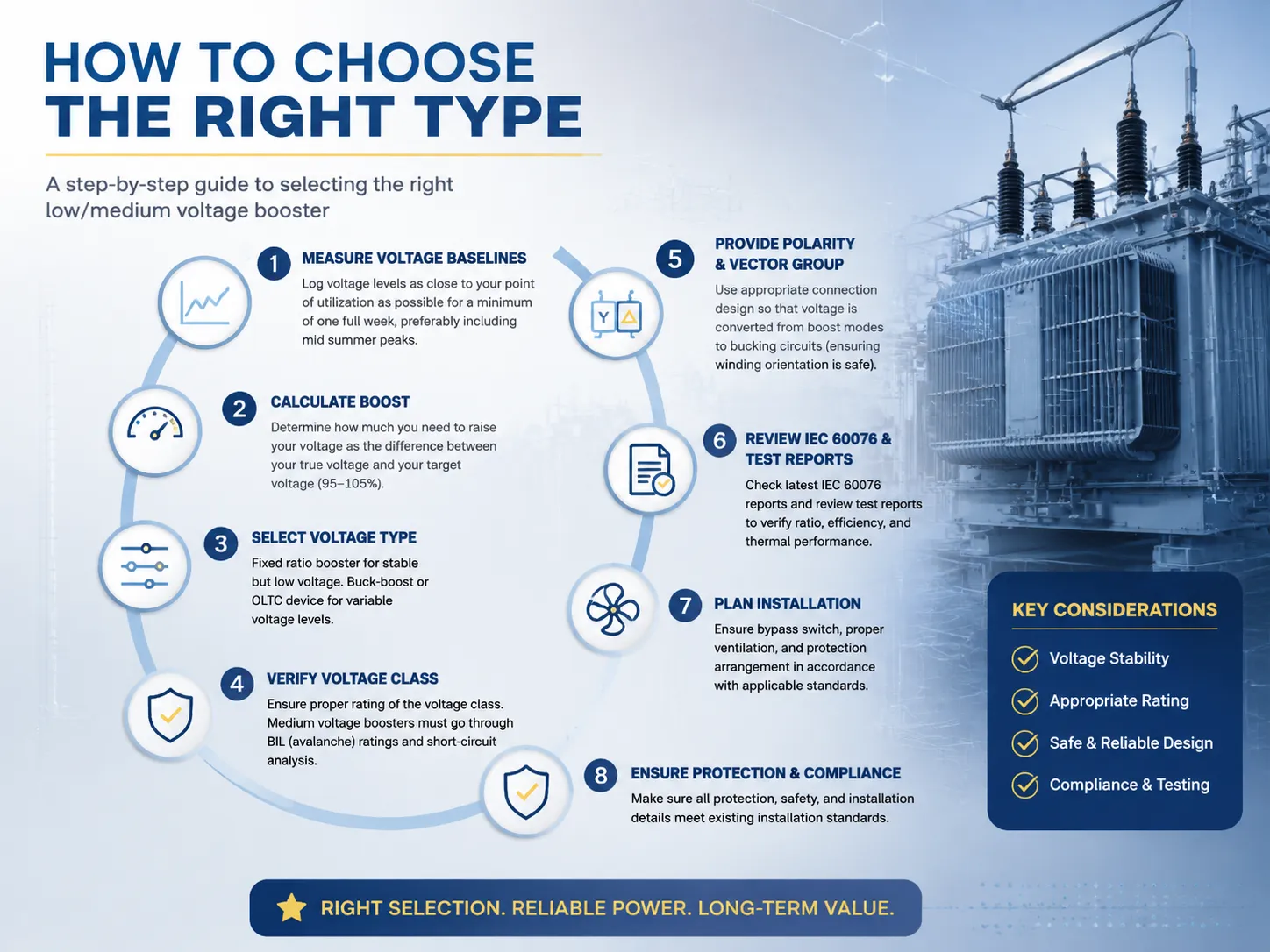
Как выбрать правильный тип
- Измерьте наихудший случай для ваших базовых уровней напряжения. Записывайте уровни напряжения как можно ближе к вашему месту использования в течение минимум одной полной недели, желательно включая пики середины лета, чтобы определить ваши самые низкие и высокие уровни напряжения.
- Рассчитайте, сколько повышения вам нужно. Определите, насколько вам нужно повысить ваше напряжение как разницу между вашим истинным напряжением и заранее определенным/целевым напряжением (которое должно быть в пределах от 95 до 105%).
- Выберите, использовать ли фиксированное напряжение или регулируемое напряжение. Если ваше напряжение обычно стабильно, но низко, фиксированный бустер является наиболее экономичным выбором; если уровни напряжения переменные, следует использовать устройство бустера понижения или OLTC.
- Проверьте рейтинг класса напряжения. Поскольку бустер низкого напряжения является распространенным элементом, бустеры среднего напряжения должны пройти оценку лавинной стойкости (BIL) и анализ короткого замыкания.
- Укажите полярность и векторную группу. Используйте альтернативную схему подключения, чтобы напряжение преобразовывалось из режимов повышения в схемы понижения (обеспечивая безопасную ориентацию обмоток).
- Получите последние отчеты IEC 60076 и просмотрите отчеты о тестировании, чтобы увидеть, соответствует ли соотношение, эффективность и тепловое состояние конструкции.
- Организуйте детали установки. Убедитесь, что есть обходной переключатель, правильная вентиляция устройств и защита в соответствии с существующими стандартами установки.
Часто задаваемые вопросы
Является ли бустерный трансформатор тем же, что и трансформатор повышения?
Это неверная интерпретация. Трансформатор увеличивает уровень всего напряжения и используется аналогично установке трансформатора. Увеличитель используется последовательно и обеспечивает лишь небольшое увеличение напряжения, и, следовательно, имеет номинальную мощность кВА, значительно ниже нагрузки, которую он питает. Их принцип работы одинаковый.
Какой размер увеличителя мне нужен для нагрузки 200 кВА с провалом 10%?
Рассчитайте увеличение напряжения, умножив полученную мощность на ток нагрузки; для 200 кВА при 480 В, получая примерно 240 А, увеличение напряжения рассчитывается как 10% от 480 В, что составляет 48 В, таким образом, размер увеличителя эквивалентен 48 × 240 / 1000, аналогично 11.5 кВА. Всегда оставляйте соответствующий запас между 10% и 20%, так что давайте скажем, выберем 14 кВА, который вам может понадобиться скорректировать в зависимости от данных напряжения, которые вы предоставите поставщику.
Может ли увеличитель трансформатор исправить перенапряжение, а также недонапряжение?
Разновидность buck-boost является единственным трансформатором, способным выполнять обе функции. Он позволяет вам перенастраивать обмотки так, чтобы результирующее напряжение могло либо добавляться, либо уменьшаться от напряжения питания. В отличие от этого, обычный трансформатор с соотношением способен только увеличивать напряжение питания. Если ваше местоположение подвержено как высокому, так и низкому напряжению питания в разное время в течение года, то вам следует выбрать устройство buck-boost.
Сколько стоит трансформатор buck-boost?
В случае низковольтных систем (240 до 600 В) цена небольшого трансформатора buck-boost (1 до 10 кВА) составляет около $800 до $3,000, в то время как цена больших установок (10 до 50 кВА) колеблется от $3,000 до $9,000. Трансформаторы повышающего напряжения среднего напряжения, которые оснащены переключателем отводов под нагрузкой, имеют диапазон цен от $15,000 до $45,000 и более. Эта цена для каждой установки варьируется в зависимости от стандарта, номинальной мощности, производителя и должна быть указана в соответствии с требованиями.
Поставляет ли Subian индивидуальные увеличители для экспорта?
Абсолютно. Jiangsu Subian Electric Power производит фиксированные трансформаторы OLTC и buck-boost в соответствии со стандартами IEC 60076 и отправляет по всему миру вместе с необходимыми сертификатами испытаний и экспортной документацией. Пожалуйста, поделитесь своими данными о напряжении и требованиями к нагрузке, чтобы получить рекомендации по размеру.
Ссылки
- IEC 60076-1 — Силовые трансформаторы: Общие сведения — регулирующий стандарт для номинала трансформатора, потерь и испытаний.
- IEC 60076-5 — Способность выдерживать короткое замыкание — стандарт проверки для последовательно соединенных обмоток в условиях короткого замыкания.
- IEC 60076-3 — Уровни изоляции и диэлектрические испытания — устанавливает требования к изоляции для трансформаторов повышающего напряжения среднего напряжения.
- Eaton — Руководство по применению трансформаторов Buck-Boost — практическое руководство по выбору и подключению устройств buck-boost.
- Hitachi Energy — Продукты трансформаторов — справочная документация для трансформаторов регулирования уровня, соответствующих требованиям коммунальных служб.
- UL 1561 — Стандарт безопасности для трансформаторов сухого типа — стандарт безопасности, часто упоминаемый для низковольтных бустеров и продуктов buck-boost в Северной Америке.
Заключение
Один из дешевых и быстрых способов справиться с понижением напряжения в сети — использовать бустерный трансформатор; поскольку это устройство работает как последовательное устройство вместе с линией электропередачи, оно немного повышает напряжение и стоит в несколько раз меньше нового трансформатора или питающего кабеля. А именно, существует 5 типов бустерных трансформаторов: фиксированное соотношение, OLTC, автотрансформатор, buck-boost и фазосдвигающий, которые могут быть использованы в случаях постоянного падения выходного напряжения, оперативных проблем с колеблющимся напряжением и в сетевых приложениях, обычно требующих трансформатор, который сдвигает фазы. Следует учитывать реальные эксплуатационные характеристики трансформатора, предоставляемые производителем. Jiangsu Subian Electric Power предлагает индивидуальные бустеры по конкурентоспособным ценам напрямую с завода с полной инженерной поддержкой — свяжитесь с компанией через официальный сайт ваши данные о напряжении для получения предложения, соответствующего спецификациям.