


Инженер проекта из компании по производству ветровой энергии в Европе анализировал технические характеристики трансформаторов для ветровой электростанции мощностью 30 МВт. Трансформаторы, передающие электричество от генератора в сеть, располагались близко к турбинам, и некоторые из них подвергались проверкам со стороны совета по устойчивому развитию, который учитывал потери за период 25 лет, углеродный след масла и вопросы переработки в конце срока службы. Обычный трансформатор на минеральном масле прошел бы процесс технического одобрения. Однако выигравшим предложением стал трансформатор с экологически чистой упаковкой, который включал трансформатор с аморфным сердечником, заполненный натуральным эфирным маслом с доказанно меньшим углеродным следом, что имело финансовый смысл с точки зрения вклада в общие расходы проекта.
Настоящая статья предоставляет обзор характеристик, которые делают силовой трансформатор экологически чистым, и механизма его работы вместе с его затратами.
Краткий ответ: Силовой трансформатор, который дружелюбен к окружающей среде, должен иметь минимальное воздействие на окружающую среду на протяжении всего жизненного цикла, включая минимальные потери в холостом режиме (аморфные сплавные сердечники уменьшают потери в холостом режиме на 60 до 70%), использование биоразлагаемого натурального эфирного масла вместо минерального масла, более тихую работу, повышенную перерабатываемость и меньший углеродный след благодаря экологически чистым методам производства. Когда речь идет об эффективности, зеленые трансформаторы поддерживают экологически чистую энергию – эксплуатационные расходы составляют от $0.08 до $0.10/кВтч, что позволяет окупить премиальную цену за 3 до 8 лет, если устройства работают с постоянной нагрузкой, а единицы на эфирном масле минимизируют риск пожара и экологические затраты на ветровых, солнечных и городских площадках.
Что такое экологически чистый силовой трансформатор
Экологически чистый трансформатор создается и производится таким образом, чтобы иметь наименьший экологический след на протяжении всего своего жизненного цикла (минимальные эксплуатационные потери, сниженный риск пожара и утечек, более тихая работа, более простая утилизация и т.д.). Это не одна технология, а серия выборов, сделанных в различных процессах, которые можно контролировать.
| Этап жизненного цикла | Обычный выбор | Зеленый выбор |
|---|---|---|
| Производство | Стандартное сетевое электричество, смешанная сталь | Зеленый завод, возобновляемая энергия, переработанные материалы |
| Операция — сердечник | 30 мм обычный GOES | 23 мм сердечник с высокой проницаемостью или аморфный сердечник |
| Операция — изоляция | Минеральное масло | Натуральное эфирное (растительное) масло |
| Операция — шум | Основной дизайн сердечника | Ступенчатые соединения, звукоизолирующие корпуса (на 3–8 дБ(A) ниже) |
| Конец срока службы | Утилизация масла как опасных отходов | Биоразлагаемое масло, перерабатываемая сталь и медь |
В результате трансформатор создает меньшее воздействие на окружающую среду и имеет меньший углеродный след на каждом этапе своего жизненного цикла — и именно поэтому эту конфигурацию можно последовательно называть зеленым трансформатором.
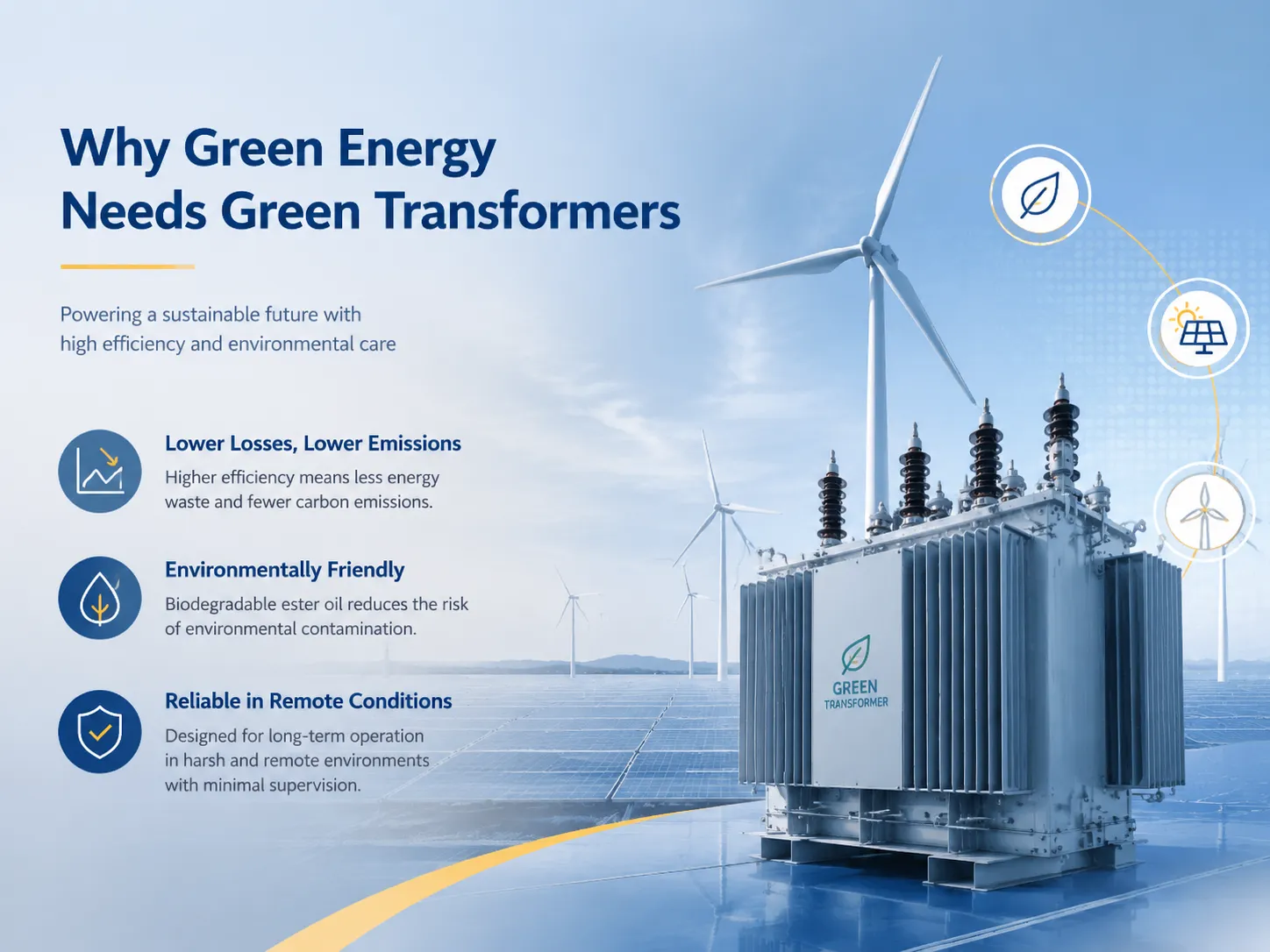
Почему зеленой энергии нужны зеленые трансформаторы
Сектор генерации зеленой энергии, включающий генерацию ветровой энергии, генерацию солнечной энергии и генерацию хранения энергии, имеет необычный профиль в отношении трансформаторов, используемых в проектах генерации энергии. Генераторы производят энергию на разных уровнях мощности и в удаленных местах. Трансформаторы, используемые для этих продуктов, работают уже много десятилетий и требуют очень мало контроля. Вот два следствия этого факта:
- Потери как выбросы: любое количество энергии, потерянное на трансформаторе, уже было произведено дважды — один раз на возобновляемом генерационном объекте и один раз на резервной электростанции. Если потери в трансформаторе уменьшить, количество выбросов, производимых системой, также снизится.
- Удаленные и деликатные места: ветряные турбины расположены в полях и на море, солнечные электростанции находятся в пустынях и населенных районах. Это означает, что утечка минерального масла в таких местах является серьезной экологической катастрофой, в то время как утечка биоразлагаемого эфирного масла имеет незначительное или малое воздействие на окружающую среду.
В результате банки проектов и отделы устойчивого развития уделяют особое внимание спецификациям трансформаторов. Хотя трансформаторы занимают небольшую долю в стоимости строительства ветряной или солнечной станции (около 30-50 МВт), они представляют собой значительную долю как в экологических рисках, так и в выбросах на протяжении всего жизненного цикла.
Низкопотерянные сердечники: аморфная и высокопроницаемая сталь
Сердечник представляет собой самый большой экологический фактор, так как потери без нагрузки происходят постоянно. Разница между двумя примерами трансформатора на 1,000 кВА удивительна.
| Технология сердечника | Потребление без нагрузки | Ежегодно потерянная энергия | Ежегодный эквивалент CO2* |
|---|---|---|---|
| Обычный GOES (старый дизайн) | 1,500–2,100 Вт | 13,100–18,400 кВтч | 5–9.2 т |
| Высокопроницаемый 0.23 мм GOES | 700–1,100 Вт | 6,100–9,600 кВтч | 1–4.8 т |
| Аморфный металл | 350–500 Вт | 3,100–4,400 кВтч | 5–2.2 т |
*Базовые выбросы при уровне 0.5 кг CO2/кВтч. Это предоставляется только для информационных целей. Выбросы зависят от местной генерации электроэнергии.
Технология аморфного сердечника произвела революцию в отрасли благодаря улучшениям 60-70%, наблюдаемым в отношении потерь без нагрузки, что является значительным экологическим достижением.
Натуральное эфирное масло: биоразлагаемая изоляция
Натуральное эфирное масло считается второй важной частью зеленого трансформатора. Поскольку оно приготовлено из растительных материалов, оно экологически отличается от минерального масла по следующим аспектам:
- Биоразлагаемость: известно, что натуральное эфирное масло естественным образом разлагается в почве и воде, что означает, что утечки не приводят к инцидентам с опасными отходами.
- Пожарная безопасность: учитывая температуру вспышки 300 °C (по сравнению с 135–150 °C минерального масла), натуральное эфирное масло снижает риск пожара, что позволяет использовать это экологически чистое масло в коммунальных установках, расположенных в городских районах.
- Тепловая производительность: Натуральное эфирное масло позволяет работать при более высоких температурах, что приводит к более длительному сроку службы изоляционной бумаги или к получению больших нагрузок при равной мощности.
Недостатком использования натурального эфирного масла является то, что оно дорогое и имеет другую вязкость, так как стоимость натурального эфирного масла в 2-3 раза выше, чем стоимость минерального масла, в то время как вязкость этих двух материалов также различна, что побуждает проектировщиков модифицировать насосы и охладители в системах, где используется это масло.
Снижение шума и воздействие на окружающую среду
Шум является экологическим элементом, и НИОКР трансформаторов ставит его на передний план мониторинга. Шум в сердечнике в основном возникает из-за магнитострикции, что означает, что материал физически удлиняется в процессе магнетизации, плюс соединения в дизайне между слоями. Применяемые меры в зеленом дизайне:
- Использование стыков с шагом и скошенных соединений сердечника, позволяющее уменьшить искажения потока на соединениях,
- Работа при низкой плотности магнитного потока в сердечнике, тем самым жертвуя небольшим количеством материала и получая необходимые децибелы,
- Использование звукоизолирующих корпусов и креплений самых громких единиц.
Результаты показывают, что хорошо изготовленные распределительные трансформаторы работают на уровне 48–58 дБ(A) на расстоянии 1 метра, в то время как старые или плохо соединенные конструкции издают шум на уровне 55–65 дБ(A). Разница в 3–8 дБ(A) примерно эквивалентна половине звука для соседа.
Экологическая эффективность в жизненном цикле
Для правильной оценки экологической эффективности трансформатора необходимо провести оценку с точки зрения жизненного цикла. Доли для типичного распределительного трансформатора за срок службы 25 лет иллюстрированы на графике ниже:
| Фаза жизненного цикла | Доля выбросов в жизненном цикле (ориентировочно) | Основной фактор |
|---|---|---|
| Производство (воплощенное) | 5–15% | Сталь, медь и энергия завода |
| Эксплуатация — потери в режиме холостого хода | 30–50% | Потери в сердечнике при работе 8,760 ч/год |
| Эксплуатация — потери при нагрузке | 20–40% | Потери обмотки, зависящие от тока |
| Конец срока службы | 0–5% | Утилизация масла и переработка материалов |
В таких ситуациях потери являются доминирующей концепцией, что делает экологически безопасный трансформатор практически равным эффективному. Это объясняет, почему эффективность и экологические заявления совпадают в маркетинге зеленых трансформаторов и почему клиентам необходимо проверять информацию о потерях в испытательном отчете, а не на этикетке.
Применения в ветровой, солнечной энергетике и хранении
Основные приложения зеленой энергии и конфигурации трансформаторов, которые им соответствуют:
| Применение | Роль трансформатора | Предпочтительная зеленая конфигурация |
|---|---|---|
| Наземные ветровые электростанции | Повышение напряжения турбины, 0.69/33kV; станция 33/110kV | Аморфный сердечник, эфирное масло, контроль шума |
| Оффшорный ветер | Морская подстанция повышения напряжения | Высокоэффективные силовые установки, компактные и прочные |
| Солнечные электростанции в масштабе утилиты | Повышение напряжения инвертора 0.4/33kV или 0.6/33kV | Класс 1–2, низкие потери, для наружного применения |
| Хранение батарей | Трансформатор PCS, 0.4/10kV или 0.69/33kV | Дизайны с низкими потерями при нагрузке для высоких циклов |
| Зеленый водород и электронные топлива | Большие трансформаторы повышения напряжения и выпрямительные трансформаторы | Высокоэффективные силовые трансформаторы |
В каждом случае процесс остается прежним: зеленый дизайн требует больших первоначальных затрат, но экономия на ущербе и экологических кредитах поддерживает финансирование, разрешения и обязательства разработчика по устойчивому развитию.
Зеленые варианты трансформаторов и цены
Ориентировочные цены FOB на распределительный трансформатор мощностью 1,000 кВА 10/0.4 кВ, экологически чистый, по брендам:
| Бренд | Происхождение | Класс 2 (GOES, минеральное масло) | Аморфный сердечник + эфирное масло |
|---|---|---|---|
| Hitachi Energy | Япония/Глобальный | $9,000–$12,500 | $14,000–$21,000 |
| ABB | Швейцария/Глобально | $8,500–$12,000 | $13,500–$20,000 |
| Siemens Energy | Германия/Глобально | $8,000–$11,500 | $13,000–$19,500 |
| Schneider Electric | Франция/Глобально | $7,500–$11,000 | $12,500–$19,000 |
| Jiangsu Subian Electric Power | Китай | $4,000–$7,000 | $5,500–$11,000 |
Цены зависят от номинала, класса потерь и типа масла, которое они имеют, наличия переключателя отводов среди других параметров и должны рассматриваться как диапазоны для планирования, а не как предложения.
Производители по всему миру имеют большой опыт и хорошие программы типового испытания для разработки трансформаторов на основе эфирного масла и аморфных конструкций. Сегодня китайские производители предлагают ту же технологию и решения с маслом, но с ценой на 40-50 процентов ниже по сравнению с конкурентами, что помогает получить доступ к экологически чистым трансформаторам даже на рынках, где важна стоимость. Jiangsu Subian Electric Power — китайский производитель зеленых трансформаторов и энергосберегающих трансформаторов, который производит трансформаторы с аморфным сердечником и трансформаторы на натуральном эфирном масле, в диапазоне от 10 кВ до 63 МВ, протестированные в соответствии с IEC 60076 и поставляемые со всеми соответствующими отчетами о тестировании. Subian поставил зеленые устройства для проектов ветряной, солнечной и накопительной энергетики по всей Азии, Африке, на Ближнем Востоке и в Южной Америке — его ассортимент задокументирован на subian-electric.com.
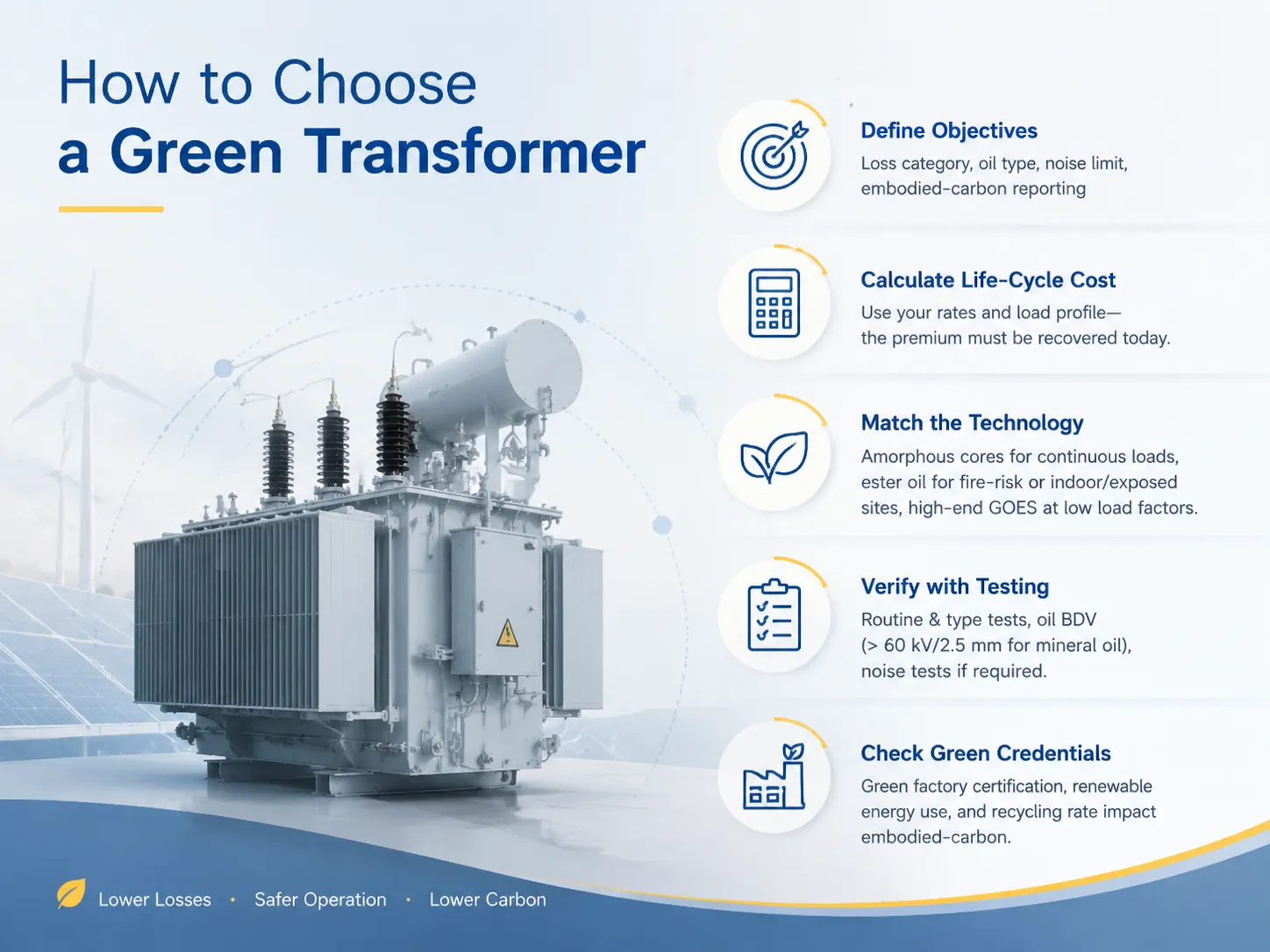
Как выбрать зеленый трансформатор
- Установите экологические цели: категория потерь, тип масла, предел шума и любые продукты отчетности по углеродным выбросам, необходимые для проекта.
- Рассчитайте капитализацию потерь, используя ваши тарифы и профиль нагрузки — премия должна быть получена сегодня.
- Назначьте технологию в зависимости от места: аморфные сердечники для постоянных нагрузок, эфирное масло для огнестойких мест в случае работы в помещении и воздействия окружающей среды, и высококачественные GOES при низких коэффициентах нагрузки.
- Требования к тестированию: испытания рутинных потерь для каждого устройства, типовые испытания для каждого проекта, breakdown voltage масла (необходимо > 60 кВ/2,5 мм для свежего минерального масла; смотрите спецификацию эфирного масла отдельно), и испытания шума, где это требуется.
- Проверьте экологические показатели завода: сертификация зеленого завода и уровень использования возобновляемой энергии и переработки влияют на показатели углеродных выбросов.
Спецификации назначенной дисциплины были одинаковыми для трансформаторов: сегодня разница в том, что экологические характеристики продукта определены и могут быть проверены.
Часто задаваемые вопросы
Что делает трансформатор экологически чистым?
Существуют четыре измеряемых качества, а именно низкие потери при отсутствии нагрузки (аморфные или высокопроницаемые сердечники), использование биоразлагаемого натурального эфирного масла вместо минерального, низкий уровень шума и меньший углеродный след благодаря экологически чистому производственному процессу.
Сколько стоит зеленый трансформатор?
Стоимость устройства мощностью 1,000 кВА с аморфным сердечником и натуральным эфирным маслом составляет примерно $5,500 до $11,000 FOB у китайских производителей. Премиальные бренды имеют свой ценовой диапазон на 50% до 80% выше этой стоимости. Существует дополнительное увеличение цены примерно на 20% до 55% за экологически чистую конфигурацию, что зависит от типа сердечника и масла, выбранного.
Стоят ли экологически чистые трансформаторы дополнительных затрат?
В случае, если нагрузка постоянна или используется чувствительное приложение, ответ — да. Сбережения от потерь окупают премию за 3-8 лет, а эфирное масло устраняет риск пожара/утечки в дополнение к снижению выбросов. Однако для приложений с низкой нагрузкой и низким риском стандартное высокоэффективное устройство должно быть лучшим вариантом.
Работают ли трансформаторы на эфирном масле так же хорошо, как и устройства на минеральном масле?
С точки зрения электрической производительности они оба разработаны в соответствии с одинаковыми стандартами конструкции и испытаний IEC 60076 и имеют схожую систему классов эффективности. Однако с точки зрения пожарной безопасности и экологической чистоты рекомендуется эфирное масло, но оно требует дополнительных затрат на масло в размере 10-25% и изменений в системе охлаждения из-за его более высокой вязкости.
Сколько CO2 экономит трансформатор в зеленых приложениях?
Используя коэффициент сетевого фактора 0,5 кг CO2/кВтч, замена трансформатора мощностью 1,000 кВА 1990-х годов на трансформатор с аморфными сердечниками может привести к экономии 5,000-7,000 кВтч и 2,5–3,5 т CO2 ежегодно, что составляет около 60–90 т в целом за весь 25-летний период. Общая экономия может быть значительно больше на установках генерации электрической энергии от ветра или солнца, содержащих десятки трансформаторов.
Ссылки
- IEC 60076-1: Силовые трансформаторы – Общие сведения — Международная база для оценки и испытаний для верификации зеленых трансформаторов.
- IEC 62770: Природные эстеры для трансформаторов — Спецификация для природных эстеров изоляционных жидкостей.
- GB 20052: Классы энергоэффективности для трансформаторов мощностью — Классы эффективности, лежащие в основе конструкций с низкими потерями.
- Программа энергоэффективности МЭА — Данные о доле потерь трансформатора и интеграции зеленой энергии.
- Система зеленого производства MIIT — Сертификация зеленого завода, относящаяся к углероду, заключенному в продукцию.
- Программа эффективности трансформаторов Министерства энергетики США — Классы эффективности и справочник по экономике потерь.
- Официальный сайт Jiangsu Subian Electric Power — Ассортимент трансформаторов с аморфными сердечниками и природным эстером.
Заключение
Зеленые трансформаторы являются ключевым элементом зеленой энергии, который редко упоминается в анонсах проектов. Тем не менее, они составляют значительную долю выбросов и экологических рисков на протяжении всего их жизненного цикла. Эта технология протестирована, стандартизирована и становится все менее затратной: аморфные сердечники, природное эстерное масло, низкий уровень шума и экологически чистое производство объединены для создания трансформаторов, чья экологичность соответствует электричеству, которое они передают.
Заголовки:
- Аморфный сердечник снижает потери в режиме холостого хода на 60%-70%, уменьшая выбросы на установках возобновляемой энергии.
- Эстерное масло может быть обнаружено в природе и не воспламеняется, что означает, что риск загрязнения при передвижении и в городах минимизирован.
- Использование экологически чистого оборудования добавляет 20%-55% к цене покупки сразу, но окупается в течение 3-8 лет за счет снижения потерь и рисков.