


Разработчик фотогальванических систем, предоставляющий вам однолинейную схему для солнечного парка мощностью 50 МВт, часто упускает самую важную часть системы: солнечный трансформатор который действует между инверторами и сборной сетью 33 кВ. Функция солнечный трансформатор заключается в использовании низкого напряжения от инвертора и его увеличении до напряжения, подходящего для подключения к сети. Конструкция трансформатора влияет на количество энергии, доступной для передачи в сеть, на то, как подключить солнечный парк к земле, и на то, одобрит ли коммунальное предприятие подключение или нет. В статье обсуждаются определение и рабочие принципы солнечного трансформатора, а также его различия с обычным распределительным трансформатором и затраты на установки различных масштабов.
Что такое солнечный трансформатор?
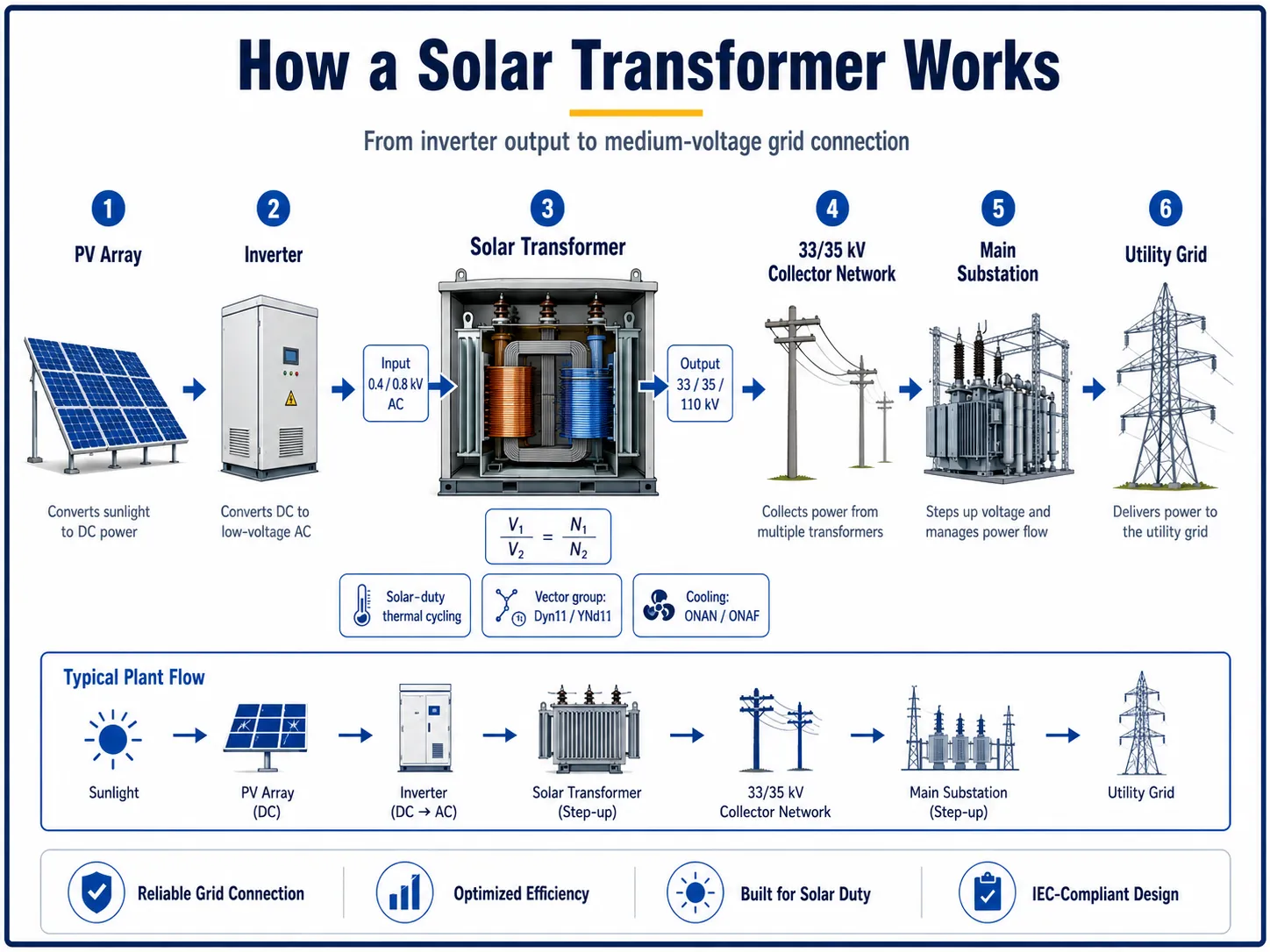
A солнечный трансформатор это специальный трансформатор для солнечных энергетических установок. Переменный ток производится фотогальваническими инверторами с низким напряжением, обычно 0,4 кВ (400 В) в случае строковых фотогальванических инверторов и 0,8–1 кВ в случае центральных инверторов. Точка подключения к сети работает на различных уровнях напряжения, обычно на 33 кВ, 35 кВ, 66 кВ или 110 кВ. Цель солнечного трансформатора аналогична цели трансформатора повышающего, так как он преобразует напряжение выходного тока с низкого на среднее, следуя инженерным решениям установки солнечной электростанции. Он известен под названиями PV трансформатор, солнечный трансформатор или трансформатор инвертора. В отличие от распределительного трансформатора, который используется для подключения к переменным нагрузкам, солнечный трансформатор подключается к постоянному коэффициенту трансформации, подключаясь только к прерывистой нагрузке.
Как работает солнечный трансформатор
Рабочий механизм основан на типичной физике трансформаторов: низковольтный переменный ток от инвертора попадает в первичную обмотку и индуцирует переменный поток в ламинированном сердечнике, производя напряжение во вторичной обмотке в соответствии с коэффициентом трансформации. Если инвертор выдает 0,8 кВ, а напряжение коллектора равно 33 кВ, коэффициент трансформации составляет около 1 к 41, а вторичный линейный ток примерно 1/41 первичного тока. Номинальная мощность трансформатора в кВА основана на мощности кластера инверторов: инверторные станции мощностью 2 МВт обычно идут с трансформаторами 2-2,5 МВА (чтобы учесть запас по перегрузке и потери). Установка работает только в дневное время, ее выход варьируется от нуля до максимального значения и обратно по мере прохождения времени, поэтому магнитный поток, изоляция и охлаждение создаются на основе этого профиля, в отличие от реактора с постоянной нагрузкой для распределения коммунальных услуг.
Почему солнечная нагрузка отличается от распределительной нагрузки
| Аспект | Солнечный (PV) трансформатор | Обычный распределительный трансформатор |
|---|---|---|
| Направление потока энергии | Однонаправленный (НН на ВН) | Двунаправленный или следящий за нагрузкой |
| Профиль нагрузки | Прерывистый, следящий за солнцем, ежедневный цикл | Непрерывный с сезонными пиками |
| Циклы переключения | Ежедневное подключение/отключение инвертора | Редкий |
| Перегрузочная нагрузка | Пиковые нагрузки в полдень при высокой температуре окружающей среды | Случайный, заданный проектом |
| Гармоники | Умеренные, от переключения инверторов | Обычно низкие |
| Типичная векторная группа | Dyn11, YNd11 (в зависимости от сетевого кода) | Дин11, Дин5 |
| Интеграция | Часто на основании/коробочного типа с MV распределительными устройствами | Автономное устройство |
Устройство должно быть способно выдерживать ежедневные термические циклы, не нанося повреждений изоляции, выдерживать температурные пики в условиях, подобных пустынным, и быть подключенным в соответствии с требованиями сети. Различные сетевые коды указывают, что низковольтная обмотка должна быть соединена в дельту, а высоковольтная обмотка — в звезду с заземленным нейтралем (векторная группа, такая как YNd11), что определяет требования к заземлению коллектора в целом.
Типы солнечных трансформаторов
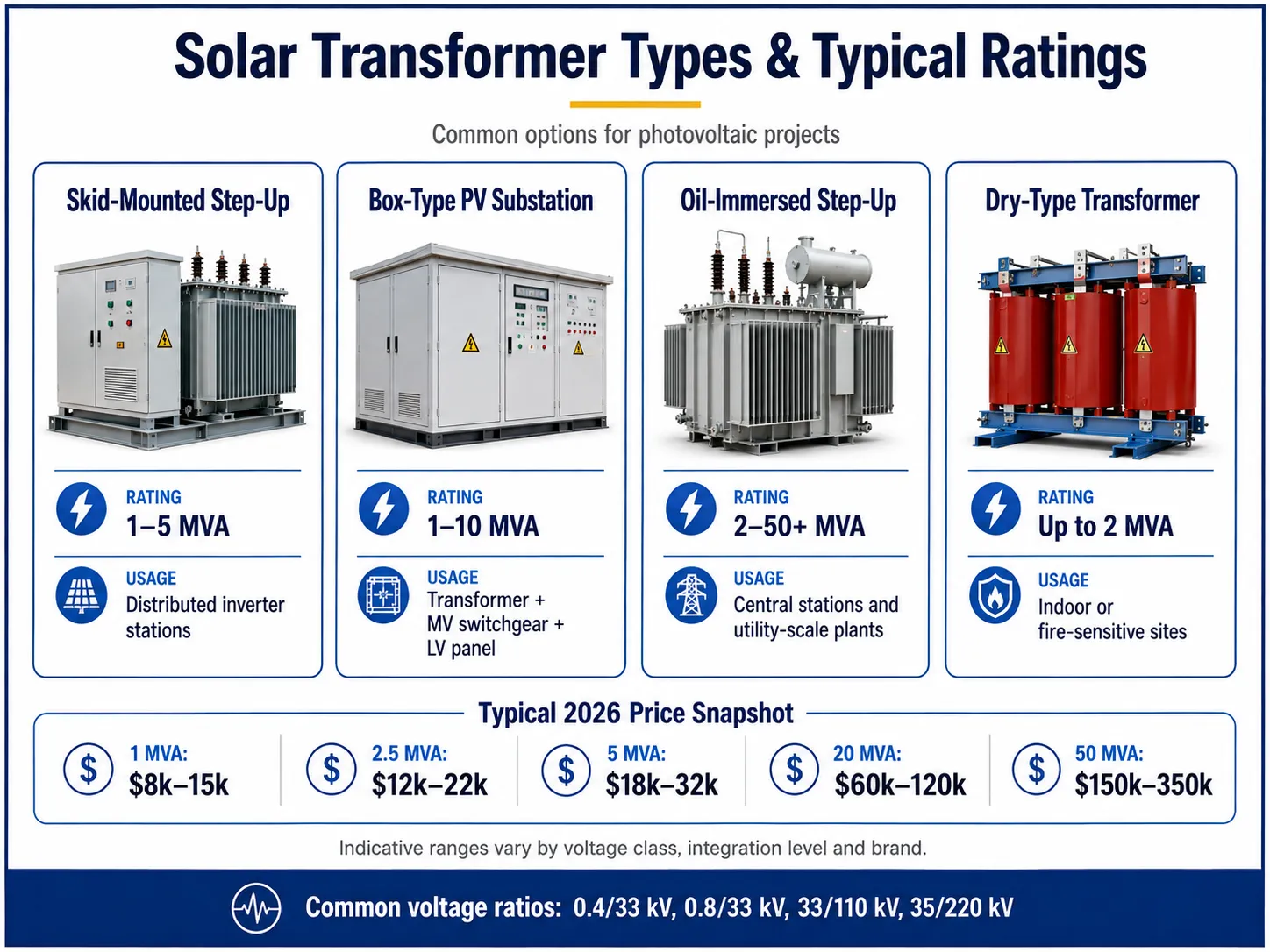
- Повышающие трансформаторы, которые устанавливаются на подставках или скидах и используются для распределенных инверторных станций мощностью от 1 до 5 МВА и устанавливаются в сочетании с MV распределительными устройствами.
Контейнерные солнечные подстанции, также называемые контейнеризированными единицами, состоят из трансформаторов коробчатой формы, MV распределительных устройств, LV панелей и систем мониторинга, в одном корпусе для быстрой установки в зоне использования.
Масляные повышающие трансформаторы, используемые на основных электростанциях и в приложениях на уровне коммунальных услуг, с мощностью от 2 до более 50 МВА, включая трансформаторы на 66–110 кВ.
Сухие трансформаторы для использования в зонах, где существует пожарная опасность, и для недорогих коммерческих установок.
Сервисные трансформаторы, расположенные в солнечных подстанциях, для обеспечения энергией необходимого оборудования, такого как освещение, система мониторинга.
| Тип | Рейтинг | Форма | Типичное применение |
|---|---|---|---|
| Повышающий трансформатор на подставке / скиде | 1–5 МВА | Скид с MV распределительными устройствами | Распределенные инверторные станции |
| Коробочная солнечная подстанция | 1–10 МВА | Контейнер/скид интегрированный | Быстрая установка в поле |
| Масло-иммерсионный повышающий | 2–50+ МВА | Автономный или в банке | Центральные станции, 66–220 кВ |
| Сухой тип | До 2 МВА | Литая смола, внутри помещения | Крыша, коммерческое помещение |
| Служба станции | 50–500 кВА | Масляный или сухой тип | Вспомогательные установки |
Архитектура солнечной электростанции: где находится трансформатор
Обычная солнечная электростанция масштаба утилиты обычно имеет строковые инверторы, которые подают на коллекторную сеть. Если рассмотреть распределенную компоновку, инверторная станция мощностью 1-3 МВт имеет индивидуальный трансформатор повышающего типа, который повышает напряжение с 0,4-0,8 кВ до 33 кВ. После достижения 33 кВ коллектор идет в главную подстанцию, где находится большой трансформатор повышающего типа (или банк), который поднимает напряжение до уровня 110 кВ или 220 кВ. Компоновка центральной станции подразумевает, что все инверторы подают на низковольтные шины из одного места, в то время как один большой трансформатор выполняет операцию повышения. Местоположение трансформатора определяет его номинал, векторную группу и защиту, поскольку трансформатор защищен с помощью защит уровня трансформатора (защита от перегрузки и дифференциальная защита для крупных машин, температурные и газовые реле), а также защитой инвертора в соответствии с требованиями оператора сети.
| Размер установки | Инверторная станция | Необходимые блоки на раме | Главный трансформатор станции |
|---|---|---|---|
| 5 МВт | 2× 2,5 МВА | 2 | 5 МВА, 33/110 кВ (по желанию) |
| 20 МВт | 8× 2,5 МВА | 8 | 20 МВА, 33/110 кВ |
| 50 МВт | 20× 2,5 МВА | 20 | 50 МВА, 35/220 кВ (или 33/110 кВ) |
| 100 МВт | 40× 2,5 МВА | 40 | 2× 60 МВА, 35/220 кВ |
Векторные группы и заземление в солнечных электростанциях Типичные специфическиеатрибуты
Векторная группа определяется комбинацией сетевого кода и философии заземления, это не связано с опытом или обычаями. Для инверторной части низковольтная обмотка обычно соединяется как дельта, чтобы избежать циркулирующих токов и создать четкий путь для гармоник, средневольтная/высоковольтная обмотка — как звезда с нейтралью, заземленной для обеспечения надежного соединения с сетью. Стандартные группы — Dyn11 (НВ дельта, СВ звезда с нейтралью) и YNd11 (ВВ звезда с нейтралью, НВ дельта) в зависимости от стороны, которая соединяется с сетью. Нейтральное заземление, связанное с сетью, может быть жестким, с использованием заземляющего трансформатора или через нейтральный заземляющий резистор, в соответствии с практиками токов короткого замыкания в соответствующей электрической компании. Проверьте обязательства по сетевому коду перед заказом оборудования — неправильная векторная группа приводит к неудаче исследования подключения к сети и может вызвать месячные задержки в вводе в эксплуатацию или проблемы с оборудованием.
| Номинал (МВА) | Напряжение | Векторная группа | Импеданс | Охлаждение |
|---|---|---|---|---|
| 1 | 0,4 / 33 кВ | Дин11 | 6% | ОНАН |
| 2.5 | 0,8 / 33 кВ | Дин11 | 6–8% | ОНАН/ОНАФ |
| 5 | 0,8 / 35 кВ | Dyn11 или YNd11 | 8% | ОНАФ |
| 20 | 33 / 110 кВ | YNd11 | 10–12% | ОНАН/ОНАФ |
| 50 | 35 / 220 кВ | YNd11 | 12–14% | ОНАФ/ОДАФ |
Критерии проектирования обычно включают условия 40-55°C для температур окружающей среды (с понижением для горячих мест), базовый уровень на высоте 1000 м и срок службы 25 лет в соответствии с ожидаемым сроком эксплуатации солнечной электростанции. Убедитесь, что вы дважды проверили расчет повышения температуры в самый сложный месяц на вашем объекте заранее.
Затраты: Трансформатор, Рама и Доставка
Трансформатор обычно составляет 1-3% от CAPEX солнечного проекта, но он является важной частью процесса ввода в эксплуатацию. Ориентировочные ценовые диапазоны в 2026 году для различных моделей трансформаторов составляют: трансформатор 1 МВА 0.4/33 кВ – $8,000 – $15,000; трансформатор 2.5 МВА – $12,000 – $22,000; трансформатор 5 МВА – $18,000 – $32,000; трансформатор 20 МВА класса 110 кВ – $60,000 – $120,000; трансформатор 50 МВА класса 220 кВ – $150,000 – $350,000. Если требуется полный блочный ПВ подстанция, которая включает трансформатор и различные части, такие как СВ щит, НН панель и мониторинг, цена будет на 30-60 % выше, чем цена одного трансформатора, а время установки будет меньше. Также стоимость транспортировки крупных трансформаторов очень высока, и график должен быть согласован заранее из-за строгих временных ограничений солнечных проектов.
| Статья затрат | Ориентировочное значение | Примечания |
|---|---|---|
| Трансформатор как доля CAPEX | 1–3% | Небольшая, но критически важная статья |
| Премия за блочный/коробочный тип | +30–60% сверх голого устройства | Включает СВ щит, НН панель, мониторинг |
| Морская перевозка (средний размер) | 5–15% от FOB | Порт-порт, 2–6 недель |
| Экономия на установке на месте | Дни до недель | Заводские испытанные скиды уменьшают полевые работы |
| Потери трансформатора за 25 лет | $50k–$200k типичный завод | Капитализируйте потери в сравнении поставщиков |
Как выбрать солнечный трансформатор
Отремонтируйте конструкцию установок напряжения. В терминах тока инвертора, уровня напряжения, генерируемого коллектором, точки подключения к сети, будет указано количество и кВА на станцию.
Рассчитайте номинальное напряжение. Убедитесь, что номинальная мощность трансформатора соответствует мощности группы инверторов с запасом 10%-30% для учета потерь, климатических условий и модернизаций. Обратите внимание, что номиналы НН распределительных щитов и кабелей должны соответствовать номиналам трансформаторов.
Проверьте векторную группу и заземление. Убедитесь, что вы изучили применимый кодекс сети, чтобы узнать детали, касающиеся концепции генерации напряжения и нейтрального заземления.
Проанализируйте климатические условия на площадке. Если окружающая температура и высота требуют снижения номинала, обязательно выполните соответствующие рекомендации. Например, температура 50 градусов в пустыне должна привести к гораздо более низкому номиналу, чем на уровне земли.
Определите метод интеграции. В случае необходимости быстрой установки с заводскими испытаниями выберите тип юбки/коробки; автономные конструкции могут быть использованы, если это требуется планировкой завода или местными законами о содержании.
Проведите проверку соответствия IEC 60076. Убедитесь, что вы проверили уровни изоляции, допустимое повышение температуры, потери и способность выдерживать короткое замыкание, а также запросите полный отчет о тестировании.
Завершите планирование времени доставки. Определите время, необходимое для доставки, до основной поставки электроэнергии завода.
Топовые бренды и ценовые категории
| Бренд | Страна | Фокус на солнечных продуктах | Ориентировочный диапазон цен (US$) |
|---|---|---|---|
| ABB | Швейцария/Швеция | Солнечные трансформаторы повышающего напряжения и на шасси | $10,000–$350,000 |
| Сименс | Германия | Солнечные трансформаторы для коммунальных масштабов | $9,000–$320,000 |
| Schneider Electric | Франция | Коробочные солнечные подстанции | $8,000–$150,000 |
| Hitachi Energy | Швейцария | Большие силовые трансформаторы для солнечной энергии | $15,000–$400,000 |
| Итон | США | Распределенные солнечные повышающие устройства | $8,000–$60,000 |
| Jiangsu Subian Electric Power | Китай | Солнечные трансформаторы и коробочные солнечные подстанции | $8,000–$120,000 |
Указанные цены могут варьироваться в зависимости от классификации, диапазона напряжения, объема интеграции и бренда. ABB, Siemens, Schneider Electric, Hitachi Energy и Eaton отправили свои продукты в некоторые из крупнейших солнечных парков мира, имея отличные результаты своих проектов. Малые разработчики, которым требуется та же сертификация по IEC60076 более экономичным способом, могут приобрести солнечные повышающие трансформаторы, произведенные Jiangsu Subian Electric Power Co., Ltd., а также целые коробочные солнечные подстанции, где типы или номиналы могут быть настроены в соответствии с характеристиками инверторов и сети. Subian известен поставкой продуктов возобновляемой энергии на различные рынки по всему миру. Изучите ассортимент солнечных продуктов на сайте Subian Electric.
Часто задаваемые вопросы
Является ли солнечный трансформатор просто обычным трансформатором повышающего напряжения?
Хотя его концепция электрически одинакова, дизайн был выполнен для работы в солнечной энергетике: работа с прерывистыми нагрузками, следящими за солнцем, ежедневными циклами включения/выключения, повышенной температурой окружающей среды и инверторами, обеспечивающими гармонические искажения и спецификации векторной группы, определяемые альтернативными источниками энергии. Обычный повышающий трансформатор может быть подходящим для фотоэлектрической станции, но параметры и технологии охлаждения не будут адаптированы и настроены для этого применения, что приведет к сокращению срока службы оборудования или необходимости в более высоких спецификациях, чем необходимо.
Какое соотношение напряжения типично для солнечного трансформатора?
Общие комбинации напряжений на инверторных станциях включают 0,4/33 кВ, 0,4/35 кВ и 0,8/33 кВ для распределенных инверторных станций, а общие соотношения напряжений для центральных инверторных станций составляют 33/110 кВ и 35/220 кВ. Точное соотношение может варьироваться в зависимости от структуры станции и точки подключения к сети; более крупные станции также могут иметь промежуточный уровень напряжения коллектора.
Нужен ли мне отдельный трансформатор для солнечной станции?
Да. Выходное напряжение, производимое инверторами, низкое, в то время как напряжение подключения к сети среднее или высокое. Поэтому необходим повышающий трансформатор. В случае распределенных станций трансформатор требуется для каждой инверторной станции, тогда как в случае центральных станций один трансформатор достаточно для всей станции. Трансформатор обеспечивает заземляющую ссылку, как требует кодекс сети.
Сколько стоит солнечный трансформатор?
Рекомендуется сказать, что цены на блоки мощностью 1–2,5 МВА, как правило, колеблются между $8,000 и $22,000 долларов США, в то время как блок мощностью 5 МВА стоит от $18,000 до 32,000 долларов США. Цены на более мощный блок 20 МВА 110 кВ поднимаются до $60,000–$120,000; блоки мощностью 50 МВА 220 кВ стоят $150,000–$350,000. Солнечная электростанция в коробке добавит 30–60% за все интегрированные переключающие и мониторинговые устройства, но это поможет снизить затраты на установку на месте. Используйте эти полезные данные, чтобы запросить индивидуальную смету для вашего конкретного проекта.
Может ли Subian предоставить полную фотоэлектрическую подстанцию?
Да. Jiangsu Subian Electric Power имеет солнечные повышающие трансформаторы и готовые солнечные подстанции в коробке, состоящие из трансформатора, СВН, НН панелей и мониторинга, все вместе на одном заводском испытанном блоке и быстро устанавливаемом. Компания отвечает за инспекцию третьими лицами и доставку на место проекта.
Ссылки
- IEC 60076-1 — Силовые трансформаторы: Общие сведения — регулирующий стандарт для оценки и испытаний солнечных трансформаторов.
- IEC 60076-3 — Уровни изоляции и диэлектрические испытания — определяет уровни изоляции для классов напряжения коллектора и передачи.
- IEC 60076-5 — Способность выдерживать короткое замыкание — проверка короткого замыкания для повышающих обмоток.
- IEC 62271-212 — Компактные сборные устройства (GIS и GIL) — относится к солнечным подстанциям в коробке и интегрированным в блоки.
- IEA — Солнечная энергия — глобальный контекст для развертывания фотоэлектрических систем и спроса на оборудование.
- Hitachi Energy — Продукты трансформаторов — справочная документация для крупных солнечных трансформаторов.
Заключение
Солнечный трансформатор является незаменимым звеном между инвертором и сетью: он повышает низковольтный выход установки до коллекторного или трансмиссионного напряжения, обеспечивает заземляющую ссылку, требуемую сетевым кодом, и должен выдерживать рабочий цикл — прерывистый, с ежедневными циклами, горячий — который обычный распределительный трансформатор никогда не испытывает. Правильная спецификация начинается с архитектуры напряжения и рейтинга инверторного кластера, затем фиксирует векторную группу и заземление в соответствии с сетевым кодом, снижает мощность для климатических условий площадки, выбирает форму интеграции и устанавливает график поставки, который соответствует дате энергизации. Jiangsu Subian Electric Power предлагает солнечные трансформаторы и блочные солнечные подстанции, соответствующие IEC 60076, по конкурентоспособным ценам, поддерживаемые экспортным опытом и полным заводским тестированием. Отправьте однолинейную схему вашей установки и данные о нагрузке через официальный сайт чтобы получить предложение, соответствующее спецификации, для вашего следующего солнечного проекта.