


Brazil’s electrical distribution system mainly runs on middle voltage resulting in the common usage of 13.8 kV as well as other voltages of 11 kV, 34.5 kV, and 69 kV, which are being produced in Brazil. Any electrical distribution system has at least one load break switch, which is a device that interrupts the load and isolates it during the maintenance works. Another problem is the growing demand for electricity because of which the Brazilian distributed generation sector is being formed including solar energy installations which need to meet the ANEEL standards like any other form of renewable energy production. This paper is going to analyze the situation with load break switch suppliers in Brazil, highlighting the companies and their products.
The expanse of load break switch producers in Brazil consists of major businesses such as ABB, Siemens, Schneider Electric, Eaton, and Toshiba. There are three major types of load break switches sold in the Brazilian market including indoor and outdoor models and also parts of ring main units or switchgear. The crucial thing for manufacturers is to have their products approved by INMETRO and obtain appropriate test reports as given in the IEC 62271-103 Standard with wider provision of local services.
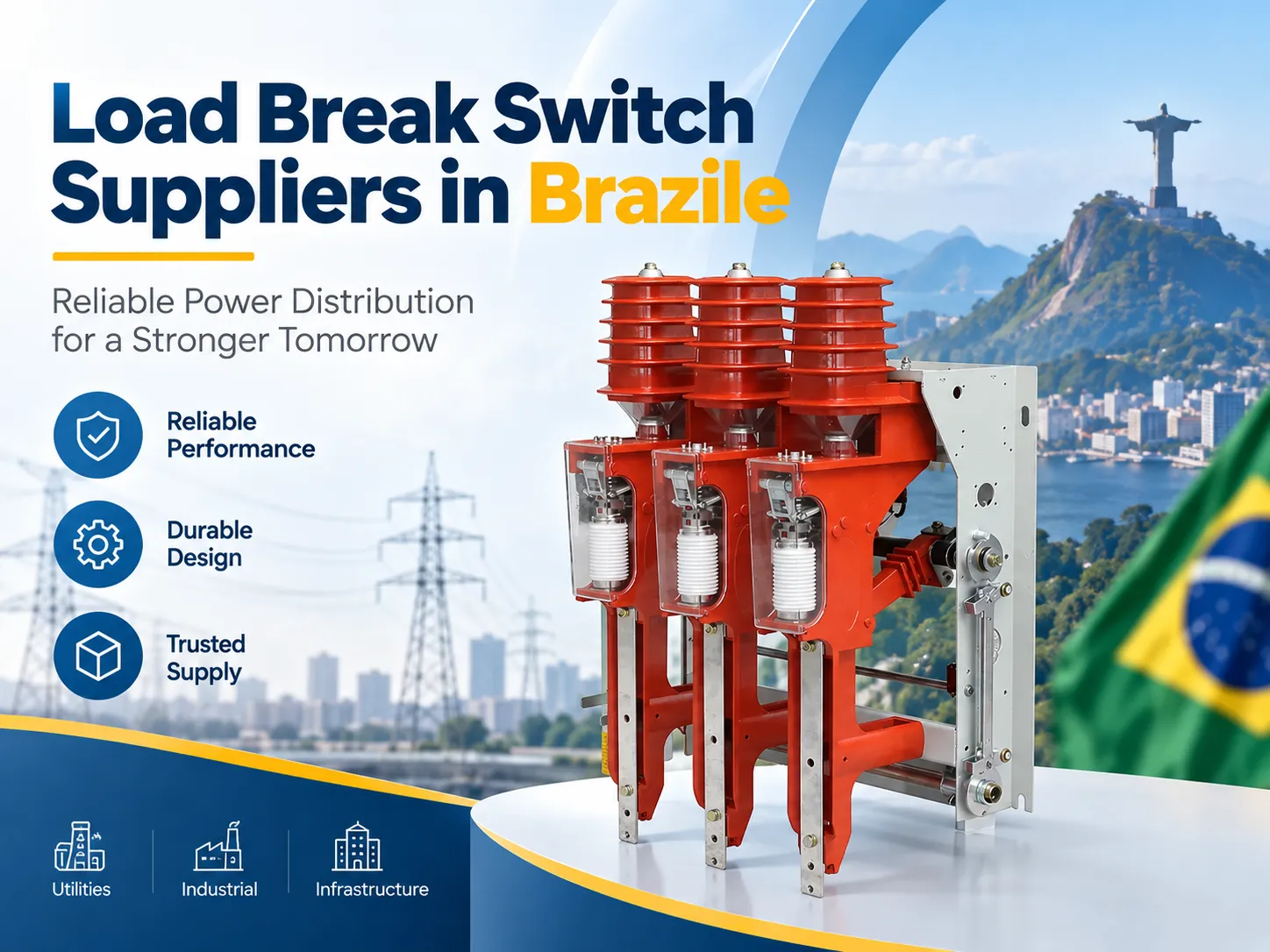
First, what exactly is a load break switch?
When it comes to classification in the hierarchy of protection, Load Break Switches (LBSs) are a notch below Circuit Breakers. Although LBSs can break circuit currents in hundreds of amps, they cannot break fault currents. Therefore, LBSs are made in the form of switch fuses which serve perfectly for breaking the normal circuit and eliminating short circuits. LBSs can be seen installed on Ring Main Units (RMUs), on poles used for distribution in distribution transformers at MV level and in MV switchgears of commercial and industrial facilities.
Such distinction is important for buyers, as it affects the list of tests and ratings a solution should undergo. A simple isolator can be switched on only in no current conditions, while a load break switch has to go through type testing that will confirm the ability to turn on its nominal current for thousands of times without failures, with the circuit breaker being able to interrupt a fault current. IEC 62271-103 (previously IEC 60265-1) gives the standards for load break switches that are implemented in Brazil, along with INMETRO certification.Understanding the ratings language on a datasheet — rated voltage, rated current, short-circuit making capacity, and mechanical endurance — is exactly the same discipline buyers need when reading transformer specifications, which is why our transformer specifications guide is a useful companion read for anyone new to MV equipment datasheets.
Why the Brazilian market is different
In Brazil, sales of load break switches are spurred on by four different aspects.
- Mandatory INMETRO certification. All electrical devices used for regulated aims have to have the INMETRO certification in Brazil and distribution companies and operators have to prove they possess type-test certificates in order to be able to use the devices in their networks. Without the valid documents for both INMETRO/IEC type tests, the operation within the Electric Power industry is not possible.
- Electric systems and climatic conditions. While the voltage standard for distribution systems in Brazil is and mostly comprises the amount equal to 13.8kV, the tropical climate characterized by humid air, high ultraviolet radiation and storms inflict extensive harm to outdoor switchgear equipment. The salt air of Northeast Brazil and humid air of the Amazon basin cause the worst conditions possible on earth for medium voltage equipment of this kind which is why all the outdoor LBS devices used in Brazil are made with the highest levels of protection (IP65-plus) against corrosion.
- The rise of distributed generation technologies. The net metering promotion by ANEEL results in the creation of one of the world’s largest rooftop solar energy markets and thus the implementation of large-scale utility solar and wind energy projects. Any generation facility connected needs medium voltage circuit electrical equipment including load break switches hence it could be said that renewable EPCs are among the biggest load breaker devices users in the country.
- Two layer supply chain structure. The first tier includes world-famous concerns having their production facilities in Brazil while the second one is represented by international companies (including big Chinese production base usually exporting through the port of Santos) which deliver devices to Brazilian wholesalers and producers that are certified but significantly cheaper (20-40%). However, it should be understood that the choice of either tier is based on the specifications and supporting services rather than the price alone.
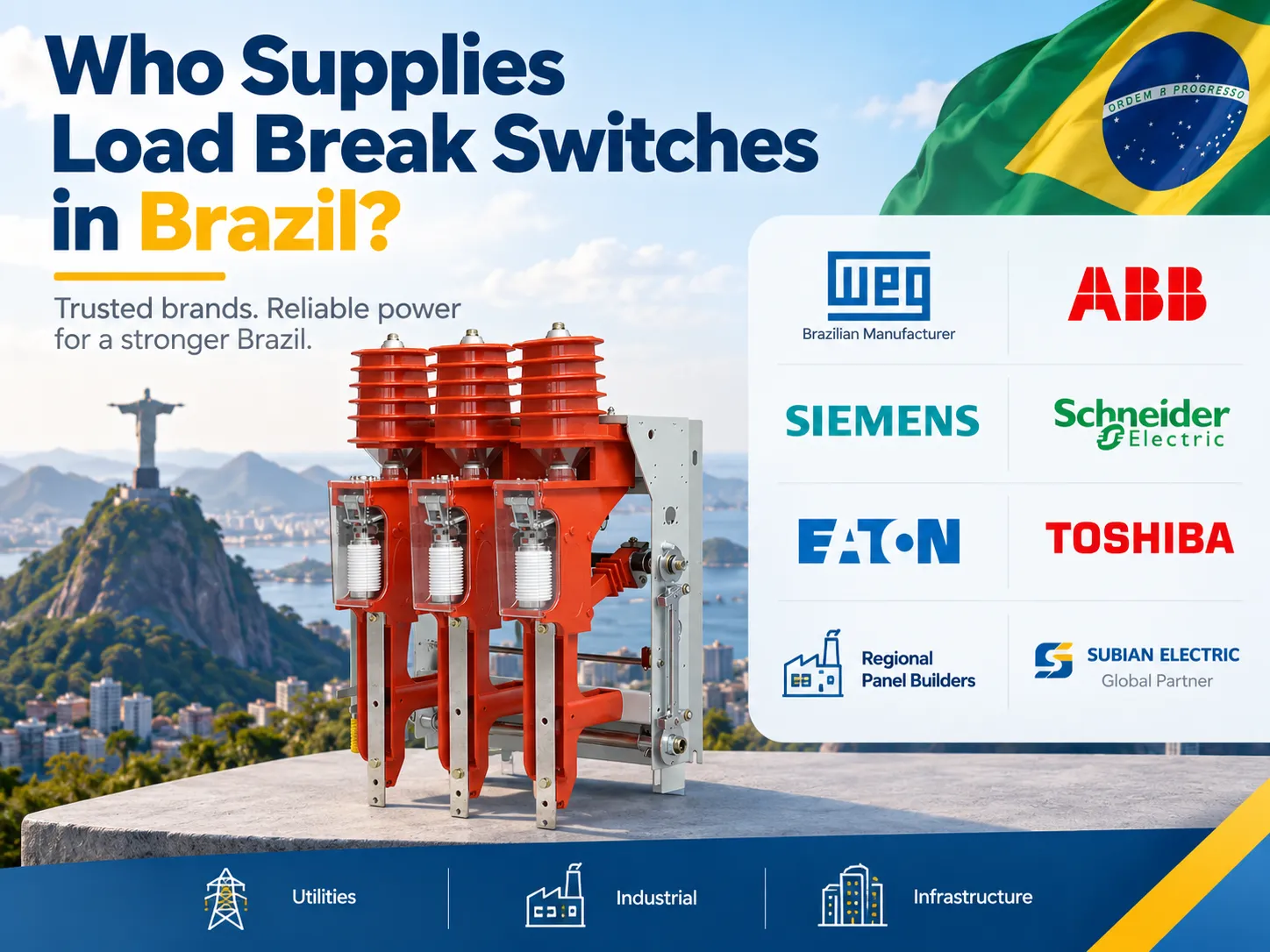
Who supplies load break switches in Brazil?
| Supplier | Base | Position and strengths |
|---|---|---|
| WEG | Jaraguá do Sul, Santa Catarina (Brazilian) | The homegrown industrial giant — switchgear, transformers, and motors with global reach; the default “national champion” choice for utilities and large projects wanting a Brazilian manufacturer with full local service |
| ABB Brasil | São Paulo (Osasco) and other plants | Global leader in MV switching and RMUs; strong smart-grid compatibility and a deep installed base with Brazilian utilities; premium pricing |
| Siemens Brasil | São Paulo / Jundiaí | Precision engineering and industrial automation heritage; Siemens Energy is Brazil’s main producer of high-voltage disconnectors (80+ years), and Siemens supplies the MV switchgear and LBS lines around it |
| Schneider Electric Brasil | São Paulo | Strong in RMUs, secondary distribution, and eco-design lines aligned with Brazil’s sustainability agenda; broad panel-builder channel |
| Eaton Brasil | São Paulo | Rugged outdoor and industrial LBS ranges favored in mining and manufacturing; good humidity-and-corrosion performance for tropical duty |
| Toshiba do Brasil and other international subsidiaries | São Paulo | Industrial MV switchgear strength, mainly serving large industry and infrastructure projects |
| Regional panel builders and switchgear specialists (e.g., Grupo Redentor, Tecno System, Eletrocel) | Belo Horizonte / São Paulo | Assemble and distribute MV panels and RMUs, often integrating imported certified LBS components; valuable for local assembly, faster delivery, and regional service |
| International value manufacturers (including China-based exporters) | Zhejiang and other clusters | IEC 62271-103-certified indoor, outdoor, and RMU-type LBS at 20-40% below premium brands; the source behind many Brazilian distributor and EPC imports |
Fair commentary on the position of Subian Electric in the value segment: Brazilian companies engaged in the manufacture and provision of infrastructure increasingly prefer using certified components from international manufacturers together with local assembly services. This model allows to keep costs down while meeting the required standards. Subian Electric is one of such manufacturers. The company is based in China and specializes in manufacturing transformers, metering transformers, and other MV equipment, thus meeting IEC and SANS quality standards and having a well-established export base. Instead of claiming to be a Brazilian plant with local personnel, Subian Electric is an honest partner that provides certified electrical components to Brazilian importers и corresponses.The transformers that LBS units protect and connect are the core of that picture, and our distribution transformer guide covers what buyers should know about the equipment on the other side of the switch.
Types of load break switches and their specifications
In Brazil, there are five different main types of LBS, and the selection is based on their usage and applications.
| Type | Construction | Typical ratings | Where used in Brazil |
|---|---|---|---|
| Indoor air-insulated LBS | Air-break contacts in an enclosed panel or cubicle | 12-24 kV, 400-630 A, 20-25 kA making | Industrial MV switchboards, substation auxiliaries, building MV rooms |
| Outdoor pole-mounted LBS | Air-insulated, IP65+ weatherproof housing | 12/13.8-36 kV, 400-630 A | Rural feeders, distribution-line sectioning, DG interconnection points |
| SF6 / gas-insulated LBS and RMUs | Sealed gas compartments (SF6 or SF6-free alternatives) | 12-24 kV (up to 36 kV), 630 A, compact | Urban RMUs, substations, where space and pollution demand sealed construction |
| Switch-fuse combination | LBS in series with HV fuses, often in one enclosure | 12-24 kV, up to 200 A fuse-limited | Transformer protection at distribution substations; the most common configuration |
| Oil-immersed and vacuum types | Contacts in oil or vacuum bottles | Distribution transformer-mounted, up to 36 kV | Padmount and transformer-integrated switching where arc control must be sealed |
The key aspects to take into account when comparing any switches are rated voltage (the switch must suit the system: 12 kV switches cannot be used in 13.8 kV systems), rated normal current (400 A, 630 A, or 1250 A depending on the load), rated short-time withstand current and making capacity (the switch should carry any fault current coming through fuses/breaker for enough time to clear it), mechanical endurance, and insulation characteristics (the ability to withstand lightning strikes depending on the local isokeraunic level — Brazil is known for high lightning strike rates in some regions).Where the switchgear includes metering — common at generation and utility interconnection points — the current transformers in the same cubicle must be specified and certified together with the switch, which is why our current transformer product range is the reference many Subian customers use for that part of the package.
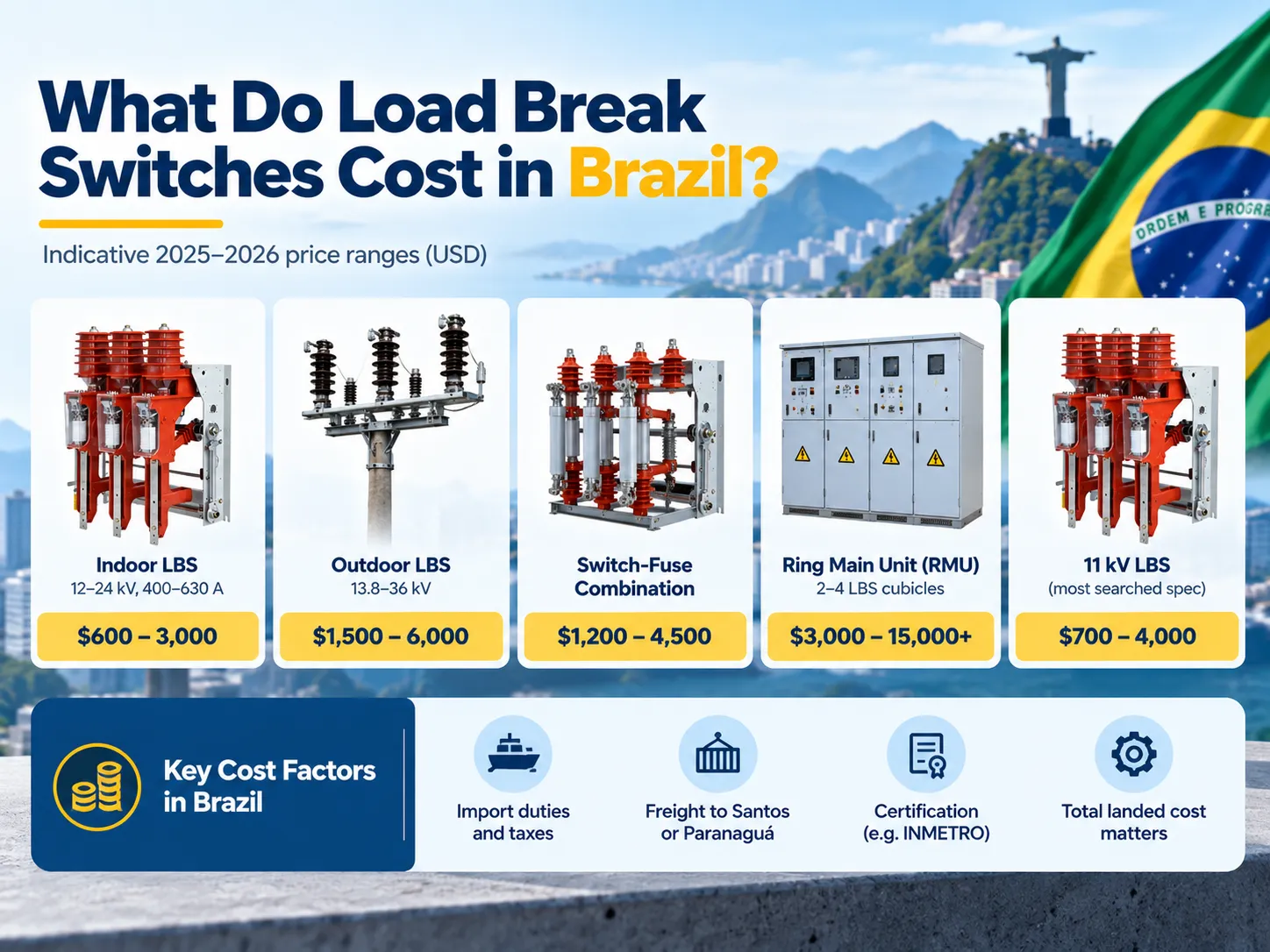
What do load break switches cost in Brazil?
Should evaluate realistic price bands for the Brazilian market in terms of components and cubicles for the period of 2025-2026 (estimation prior to taxes and installation):
| Product | Typical price (USD) | Notes |
|---|---|---|
| Indoor air-insulated LBS, 12-24 kV, 400-630 A | $600-3,000 | Component level; price rises steeply with making capacity and certification scope |
| Outdoor pole-mounted LBS, 13.8-36 kV | $1,500-6,000 | Weatherproof housing, corrosion treatment, and operating mechanism drive cost |
| Switch-fuse combination (LBS + fuses) | $1,200-4,500 | Fuse holders, HRC fuses, and interlocking add to the base switch |
| Ring main unit (RMU) with 2-4 LBS cubicles | $3,000-15,000+ | SF6 or SF6-free; the “cubicle” price buyers often see in panel quotes |
| 11 kV load break switch (the spec buyers search most) | $700-4,000 | Indoor units at the lower end, outdoor/rugged or certified utility-approved at the top |
Two realities about costs should be mentioned. First, premium manufacturers are usually charging 30-40% more than the prices proposed by value manufacturers for similar certified products. Second, import and taxation influences are quite substantial in Brazil — and it means that because the total cost should be taken into consideration when performing calculations.The same landed-cost discipline applies when buyers compare complete packages, and the vendor-selection framework for engineered equipment — certification verification, reference checks, and total-cost comparison — is worked through in our how to choose a transformer supplier guide, which transfers directly to switchgear suppliers.
How to choose a load break switch supplier in Brazil
Use these six verifications for evaluating all types of LBS suppliers such as WEG and the international value suppliers:
- Always, certification comes first. Request for INMETRO conformity documentation and IEC 62271-103 type-test certifications that apply specifically for the model and type in question, instead of a general letter stating that the factory is approved. If the switch will be connected into the network of utility, verify that it was added to the list of the utility’s certified products before any negotiations are made.
- Check that the product corresponds to the duty of the systems. 12 k and 13.8 k V belong to different insulation classes; therefore, check rated voltage, lightning impulse level, and rated current among some other things and check that the making capacity conforms to the maximum fault current in the connection place.
- Verify working mechanisms and durability. Inquire for appropriate mechanical operations ratings and the type of the mechanism — spring, manual, or electric. The switch operated once a week must have a highly durable construction instead of a cheap construction made for occasional use.
- Demand auditable documents. The documentation that is supposed to be provided prior to payment should include the following – test reports, drawings, material certificates, and the factory acceptance test procedure.
- Make sure that there is local help for the imported devices. In case you are buying from an international manufacturer, find out who has spare parts and does commissioning in Brazil, as well as ask how quick the company’s fulfillment of the warranty will take. The certified switch becomes a liability in case there are no spare parts available.
- Calculate total landed costs instead of unit costs. Calculate everything that really matters such as ex-work price, transportation costs, duty, charges, and spare parts costs.
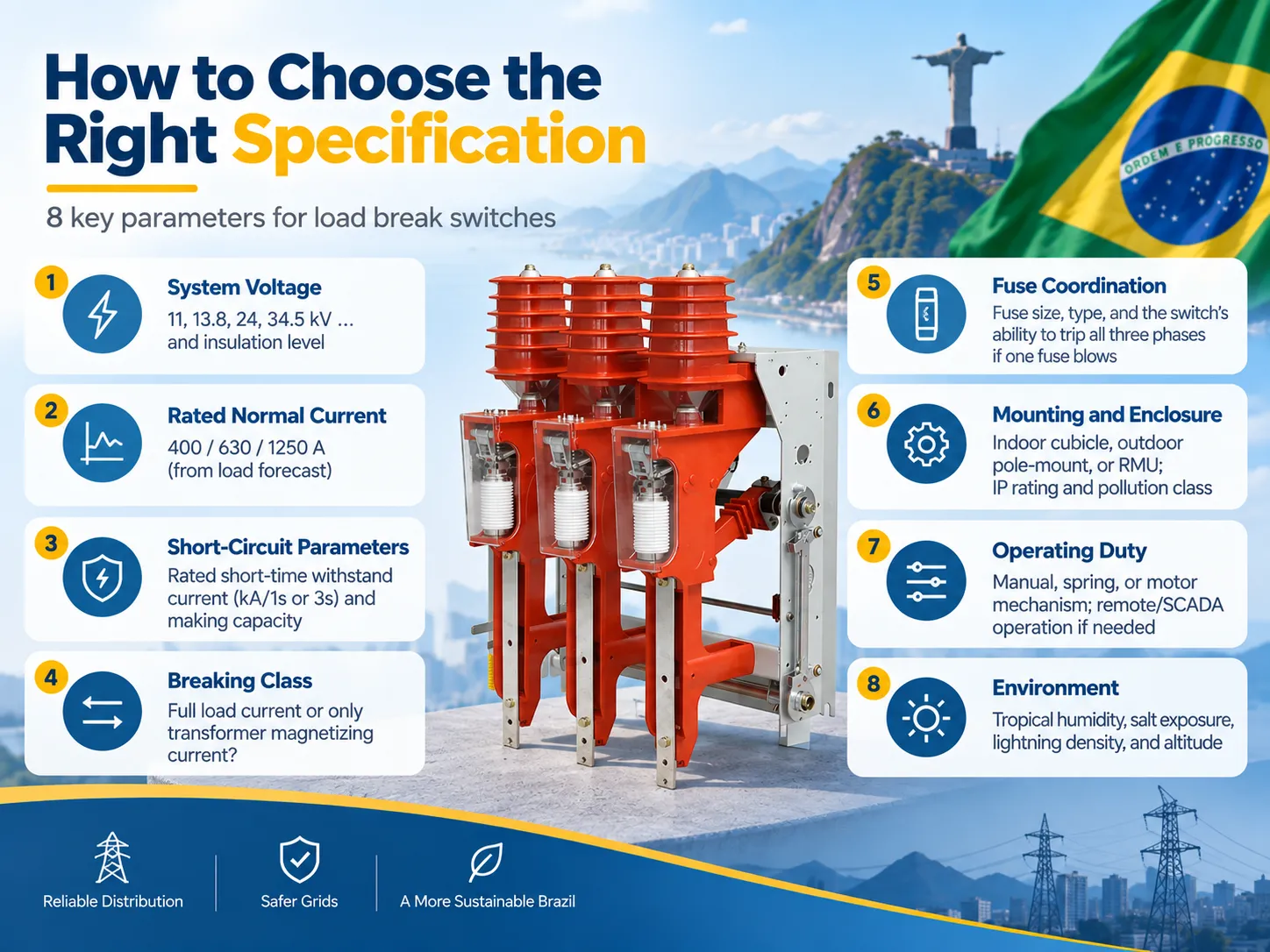
How to choose the right specification
Make sure to prepare a specification list before contacting a vendor. Here are the eight criteria behind every decision you make:
- Voltage and insulation: what is the system voltage (11, 13.8, 24, 34.5 kV…)
- Rated current: what is the rated normal current (400/630/1250 A) based on the predicted load?
- Short-circuit data: how much is the rated short-time withstand current (kA: 1s and/or 3s) and make capabilities.
- Breaking class: is it necessary to break full load or transformer magnetizing current?
- Fuse coordination for switch-fuse units — size, type of the fuse, ability of the switch to trip all three phases when one fuse blows.
- Installation and housing height: is it indoor, outdoor, IP rating, and pollution class.
- Duty cycle: whether it will use manual, spring, or motor action with remote/SCADA capability or not.
- Environment: tropical, salty, humid, lightning dense, high altitude place.
Protection coordination is always part of the design, which means the interaction between the switch, fuses, and earth-fault protection plays a major role in yielding either a momentary loss of power or completely broken switch.The basics of that coordination are explained in our earth fault protection guide, which covers the fault types the fuse and relay system must detect and clear.
FAQ
How much does a load break switch cost?
In numerous instances, mainly on the component level, the cost difference that exists among the indoor medium voltage load break switches (12–24 kV, 400–630 A) is huge, ranging from around $600 to $3000. And for the outdoor load break switches, for instance, the pole mounted type would cost $1500–6000, the combination switch-fuses would cost roughly $1200–4500, and the ring main units with load break switches would range from $3000 to $15000 and more. The differences in the pricing might be attributed to the product’s brand as the medium-range brands are often 30–40% more expensive than the manufacturers with certified values and the key number to look at is actually the total landed cost (including all freight charges and import duties) in Brazil.
What is the price of an 11kV load break switch?
On average, one could say that the price of an 11kV load break switch may vary between $700 and $4000 depending on its type and certification. The indoor air insulated units are going to be more affordable while the outdoor utility approved and certified load break switches will be more expensive than the rest. Don’t forget to include the costs of the import, certification, and installation when budgeting.
What are the common problems with load break switches?
The problems with load break switches involve contact erosions that result from breaking of the load a number of times lacking adequate arc control, issues related to mechanism of the load break switch (such as springs, linkages, or motor drives), issues with reach resulting from the moist and polluted environment, fuse coordination errors, and gas insulation issues with the older types of gas-insulated load break switches. In addition to that, the outdoor types may suffer from corrosion of the materials used for sealing and UV destruction so following the protection measures IP65+ is a must in Brazil.
What are the different types of load break switches?
Usually, there are the following types of load break switches available: indoor/load break switches/air-insulated type, outdoor/pole-mounted load break switches, gas-insulated (both SF6 and SF6-free) load break switches, switch-fuse combinations. Typically, the load break switches are available in the range of between 12 and 36 kV.
What is the difference between a load break switch and a circuit breaker?
To put it simply, load break switches operate in normal states, while circuit breakers not only break load current but also deal with malfunction states. Combination of load break switches and fuses is an ideal option for transformer and feeder operations which need maintenance but circuit breakers are required for more complex operations with higher capabilities involved.
References
- ABB — Medium Voltage Switching Products
- Siemens — Medium Voltage Switchgear and LBS
- WEG — Brazilian Switchgear and Distribution Equipment
- INMETRO — Brazilian Certification Authority
Conclusion
The question “Who are the suppliers of load break switches in Brazil?” can have two completely different responses if factoring in the purchasing process. In this respect, the first one is the so-called “premium” group made up of companies such as WEG, ABB Brasil, Siemens Brasil, Schneider Electric Brasil and Eaton Brasil. On the other hand, the “value” group means foreign companies able to present all necessary certificates and manufacturers of panels and distributors at lower prices (that is, 20-40% lower than in the premium segment). Finally, intermediaries like Subian Electric can also be mentioned since they stock their load break switches from importers or EPCs.