


رأى مدير المرافق في مركز تسوق في ضواحي دالاس عمال خدمات عامة يفتحون صندوقًا فولاذيًا أخضر بالقرب من موقف السيارات، ويفحصون العازل، ثم أغلقوه مرة أخرى على الفور، كل ذلك في غضون ربع ساعة. كانت هذه الخزانة - المعروفة باسم المحول المثبت على القاعدة - قد زودت الطاقة للمتاجر الثلاثة الكبرى التي تشكل مركز التسوق، ومنطقة الطعام، ونظام التكييف لمدة تسع سنوات دون التسبب في أي انقطاعات في الموقع. لم يكن هناك سياج، ولا أسلاك علوية، ولا شيء يدل على وجود أي معدات عالية الجهد. كان المحول نفسه مخفيًا خلف غلاف فولاذي مقاوم للتلاعب تم تثبيته على أساس خرساني ومركب تحت الأرض.
يقدم المقال بعض الإرشادات لشراء محولات مثبتة على القاعدة بشكل جيد. يتضمن معلومات محددة حول الخصائص التي تميز المنتج الجيد عن المنتجات الرديئة، والمعايير، والاختبارات التي تثبت جودة الوحدة، وما يجب التحقق منه قبل الدفع، بالإضافة إلى سعر الوحدة ذات الجودة الجيدة.
باختصار، يُعرف المحول المثبت على القاعدة بأنه محول مقاوم للتلاعب مبني على الأرض باستخدام قاعدة خرسانية، مما يضمن أن جميع اتصالات الإمداد والتسليم مثبتة تحت الأرض باستخدام موصلات غير مكشوفة. يتم تصنيع الأجهزة عالية الجودة وفقًا لمعايير IEEE C57.12.27 (سلامة الغلاف)، وIEEE C57.12.00 (المتطلبات العامة)، وIEEE C57.12.90 (طرق الاختبار)، بسعة تتراوح من 75 إلى 5000 kVA وجهد إمداد يتراوح من 15 إلى 35 kV.

ما هو المحول المثبت على القاعدة؟
يمثل المحول المثبت على القاعدة محول توزيع محاط بأمان داخل خزانة فولاذية مؤرضة تستقر على قاعدة خرسانية عند مستوى الأرض. إنها طريقة مفضلة تقليدية في أنظمة التوزيع تحت الأرض في أمريكا الشمالية وقد تم استخدامها بشكل متزايد في الشرق الأوسط وأمريكا اللاتينية وجنوب شرق آسيا، حيث تفضل شركات المرافق والمطورون إخفاء معدات التوزيع بحيث لا تشكل المعدات المثبتة على الأعمدة خطرًا على السلامة.
تُعرف هذه العائلة المحددة من المنتجات بعنصرين - الأول يُعرف باسم “تصميم غير مكشوف”، مما يعني أن الطرف النشط من الكابلات داخل موصل معزول ومحمى، مما يعني أنه لا توجد نقاط حية مكشوفة حتى في حالة فتح باب الخزانة. ثانيًا، يعني التصميم المقاوم للتلاعب أن الغلاف يجب أن يُصنع بطريقة تضمن أن فتحه دون إذن لن يؤدي إلى كشف المكونات النشطة، وهو ما تحدده IEEE C57.12.27. عادةً ما يكون المحول أحادي الطور أو ثلاثي الطور مغمورًا بالزيت؛ تتراوح سعته من 75 kVA إلى 5000 kVA، اعتمادًا على متطلبات قطاع المرافق.
يشير مصطلح “مثبت على القاعدة” إلى التركيب بدلاً من الجهد حيث أن الفئات الرئيسية من الجهد الأولي هي 15 kV و25 kV و35 kV، مع تكوينات التوصيل القياسية التي تحتوي على جهد ثانوي قدره 240/120 V أحادي الطور و480Y/277 V ثلاثي الطور.
ماذا تعني “الجودة الصلبة” فعليًا؟
“الجودة الصلبة” هي ببساطة مصطلح سوقي ما لم يتم تطبيقه على معايير قابلة للقياس. في قطاع المحولات المثبتة على القاعدة، تعني “الجودة الصلبة” خمسة أشياء قابلة للقياس:
- التصميم المعتمد: تم تصميم المعدات واختبارها وفقًا لمعايير IEEE C57.12.00 (المواصفات العامة)، وIEEE C57.12.90 (معايير الاختبار)، وIEEE C57.12.27 (سلامة الصندوق) مع تقرير اختبار نوع صالح.
- الخسائر القابلة للقياس: لا تقتصر خسائر الوحدة في حالة عدم التحميل والتحميل على الاقتباس من مواصفات التصميم، بل يتم قياسها فعليًا على كل وحدة. عادةً ما تحتوي المحولات المثبتة على القاعدة بقدرة 500 كيلوفولت أمبير ذات جودة صلبة على خسارة في حالة عدم التحميل تبلغ حوالي 0.8–1.2 كيلووات وخسارة في حالة التحميل تبلغ حوالي 5.5–8.5 كيلووات عند 85 درجة مئوية.
- العزل المختبر: تمر المحولات باختبارات نبض الموجة الكاملة والموجة المقطوعة، واختبارات الجهد والجهد المستحث، وقياسات معامل القدرة للعزل.
- حماية الصندوق الفعلية: يتوافق الهيكل مع متطلبات IEEE C57.12.27 لمقاومة العبث، والقفل، وتدفق الهواء، ويحتوي على ختم من نوع IP54 مع حجرة كابل محكمة الإغلاق بالكامل.
- المواد القابلة للتتبع: يتم توثيق الفولاذ الأساسي، ولفائف النحاس أو الألمنيوم، وزيت العزل، ويمكن اعتمادها عند الطلب.
إذا سأل عميل “هل هذه قاعدة ذات جودة صلبة؟”، فإن الإجابة الصحيحة ليست عبارة جذابة بل مجلد يحتوي على تقرير اختبار نوع، وشهادات اختبارات روتينية، وشهادات المواد، ومعايير مراقبة الجودة لموقع التصنيع. أي مورد غير قادر على تقديم الوثائق المذكورة أعلاه لا يبيع الجودة بل الادعاءات.
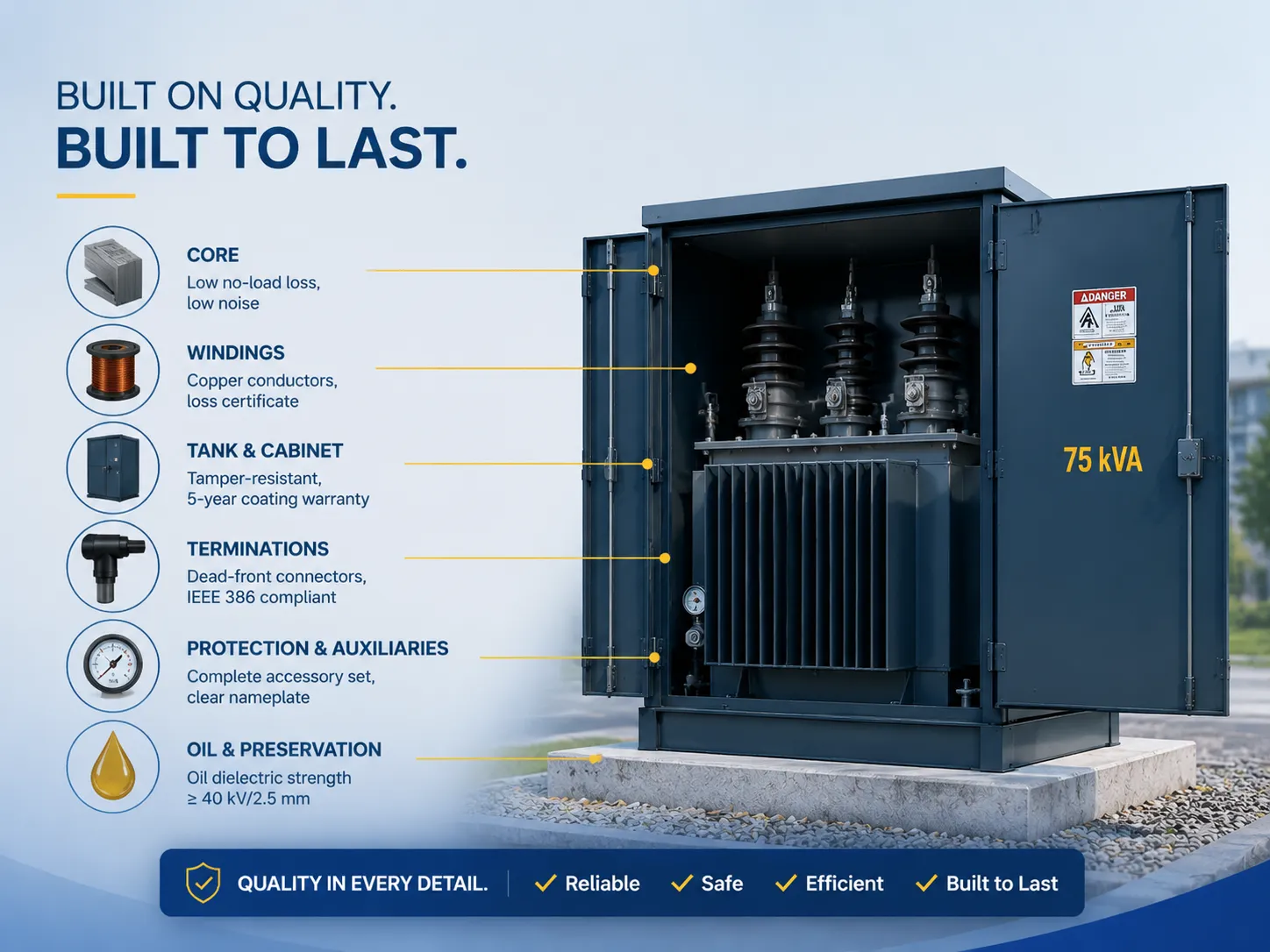
البناء والمكونات الرئيسية
تتكون المحولات المثبتة على القاعدة من عدد من التجميعات التي يمكن تعريفها جيدًا من خلال عوامل الجودة.
| التجميع | المكونات الرئيسية | مؤشرات الجودة |
|---|---|---|
| القلب | صفائح فولاذية سيليكونية موجهة (مثل 23ZH085/27ZH095)، وصلات خطوة-تداخل | خسارة منخفضة في حالة عدم التحميل، ضوضاء منخفضة (≤55 ديسيبل (A) عند 1 م) |
| اللفائف | موصلات نحاسية أو ألمنيومية، لفائف طبقية أو قرصية، عزل ورق معالج | مادة الموصل الموثقة، شهادة الخسارة |
| الخزان والخزانة | هيكل فولاذي مجلفن بالغمس الساخن أو بسماكة 14، قفل، مفصلات داخلية | اختبار مقاومة العبث وفقًا لمعيار IEEE C57.12.27، ضمان طلاء لمدة 5 سنوات |
| التوصيلات | موصلات كوع أمامية ميتة، عوازل تحميل أو عوازل ميتة، قواعد وقوف | تفي بمتطلبات موصل IEEE 386 |
| الحماية والملحقات | جهاز تخفيف الضغط، مقياس مستوى الزيت، صمام تصريف، لوحة اسم، وسادات تأريض | مجموعة ملحقات تشغيل كاملة، لوحة اسم واضحة وفقًا لمعيار IEEE C57.12.00 |
| الزيت والحفظ | زيت معدني (أو زيت نباتي FR3)، خزان محافظ أو مغلق، جهاز تنفس مجفف | قوة العزل للزيت ≥40 كيلوفولت/2.5 مم قبل الشحن |
يجب على المشترين المحتملين الاستفسار عن ثلاثة أشياء. أولاً، درجة الفولاذ الأساسي. ثانيًا، ما نوع اللفائف المستخدمة (نحاس أو ألمنيوم، وما هو وزن النحاس أو الموصلية الكهربائية)؟ أخيرًا، هل يمر الخزان باختبار مقاومة العبث الموصوف في معيار IEEE C57.12.27؟
الأنواع والتصنيفات
| النوع | نطاق التصنيف | التطبيق النموذجي |
|---|---|---|
| قاعدة أحادية الطور | 75–333 كيلوفولت أمبير | تقسيمات سكنية، تجارية صغيرة، توزيع تحت الأرض في المناطق الريفية |
| محول ثلاثي الطور مثبت على قاعدة | 300–2,500 كيلوفولت أمبير | المباني التجارية، المدارس، الحدائق الصناعية، توزيع الحرم الجامعي |
| محول ثلاثي الطور كبير مثبت على قاعدة | 2,500–5,000 ك.ف.أ | مغذيات صناعية كبيرة، مراكز بيانات، مستشفيات |
| تصميم أمامي حي (نمط قديم) | 75–2,000 ك.ف.أ | التركيبات القديمة؛ تم استبدالها بتصميم أمامي ميت لأمان |
| تصميم أمامي ميت (المعيار الحالي) | 75–5,000 ك.ف.أ | جميع التركيبات الجديدة وفقًا لمعيار IEEE C57.12.27 |
تشمل فئات الجهد على المستوى الأولي فئة 15 kV (من حيث أعلى جهد 15.0 kV)، فئة 25 kV (من حيث أعلى جهد 25.0 kV)، وفئة 35 kV (من حيث أعلى جهد 34.5 kV). قد تشمل تكوينات الجهد الثانوي 240/120 V (لتحويل أحادي الطور)، 480Y/277 V، 208Y/120V وفئة 600 V للميزات الخاصة. أما بالنسبة للممانعة، فإن الخصائص عادة ما تكون في نطاق 1.4-5.75%، اعتمادًا على الحجم والتصميم.
كيف يعمل ولماذا هو آمن
الإجراء هو مجرد فيزياء كلاسيكية للمحولات - الدورة المغناطيسية تحفز تيارًا في الملف الثانوي بالنسبة التي تحددها أعداد اللفات - لكن التصميم آمن للناس. الطاقة تأتي من خلال كابل عالي الجهد تحت الأرض الذي يتصل بكوع التصميم الأمامي الميت المتجه إلى العازل. العازل معزول ومؤرض نتيجة لذلك، لذا لا يمكن الوصول إلى أي عنصر تيار حتى في حالة فتح باب الخزانة. تعمل المحول وفقًا لمبدأ خفض الجهد إلى مستوى قابل للاستخدام، وتخرج الأسلاك منخفضة الجهد من أسفل الخزانة إلى العداد أو لوحة الخدمة.
هناك ثلاث طبقات لنظام الأمان: نظام موصل التصميم الأمامي الميت (IEEE 386)، خزانة محكمة الإغلاق ومؤمنة (IEEE C57.12.27)، وتأريض الخزانة والحيادي. معًا يضمنون أنه بغض النظر عما إذا كان شخص ما يلمس الخزانات أو الأبواب أو الحاويات، فإنهم لا يخاطرون بالصعق الكهربائي حتى لو تم الاعتداء على الخزانة.
تركيب المحولات المثبتة على القاعدة مقابل التركيبات الأخرى
| العامل | مثبتة على القاعدة | مثبتة على العمود | محطة فرعية مسبقة الصنع (نوع صندوق) |
|---|---|---|---|
| الموقع | أرض، قاعدة خرسانية | عمود المرافق | أرض، حاوية أكبر |
| التصنيف النموذجي | 75–5,000 ك.ف.أ | حتى ~167 kVA | 50–2,500 كVA |
| التوصيلات | تصميم أمامي ميت، تحت الأرض | هواء مفتوح، فوق الرأس | مغلقة، كابل أو قضيب ناقل |
| معيار الأمان | IEEE C57.12.27 | تصميم مفتوح، قواعد الفضاء | IEC 62271-202 |
| وقت التركيب | 1–2 أيام | ساعات (فريق العمود) | 2–5 أيام |
| التأثير البصري | منخفض (خزانة على مستوى الأرض) | مرتفع (عمود + أسلاك) | معتدل |
| الأفضل لـ | توزيع تحت الأرض، حضري/ضاحي | خطوط ريفية فوق الرأس | احتياجات التحويل MV/LV + المحولات |
الاعتبار الذي يأخذه الموزعون يحدد التفضيل: الأنظمة فوق الرأس تستخدم دائمًا العمود، والأنظمة تحت الأرض تستخدم دائمًا قاعدة التثبيت وأينما يتم تركيب معدات التحويل، القياس والحماية في مكان واحد، فإن المحطة الفرعية المسبقة الصنع هي الخيار. حيثما تكون الجمالية والأمان من العبث وتوفير الطاقة تحت الأرض مهمة، فإن التركيبات المثبتة على القاعدة أكثر فائدة من غيرها.
المعايير والاختبارات
| معيار | النطاق | المتطلبات الرئيسية |
|---|---|---|
| IEEE C57.12.00 | المتطلبات العامة للمحولات المغمورة بالسوائل | التصنيفات، الممانعة، الملحقات، لوحة الاسم |
| IEEE C57.12.90 | إجراءات اختبار المحولات التوزيعية | اختبارات الفقد، الممانعة، العزل، والنبض |
| IEEE C57.12.27 | سلامة حاوية المعدات المثبتة على القاعدة | تصميم أمامي ميت، مقاومة للعبث، قفل |
| IEEE 386 | أنظمة موصلات معزولة قابلة للفصل | متطلبات موصل الكوع ذو الواجهة الميتة |
| IEC 60076 (للوحدات المصدرة) | محولات الطاقة | أساس الاختبار الدولي البديل |
| كفاءة DOE 2016 (أمريكا الشمالية) | كفاءة المحولات التوزيعية | مستويات الكفاءة الدنيا الإلزامية |
يتم إجراء اختبارات الوظائف القياسية لكل وحدة. يتم إجراء اختبارات مثل النسبة ومجموعة المتجهات، مقاومة اللف، خسائر عدم التحميل والتحميل، جهد المعاوقة، الجهد العازل (الجهد المطبق والمستحث)، مقاومة العزل، واختبارات ضغط/فراغ الخزان. يتم إجراء اختبارات النوع أو التحمل (النبض، ارتفاع درجة الحرارة، تحمل الدائرة القصيرة) مرة واحدة فقط لكل عائلة. في الولايات المتحدة، تحدد معايير الكفاءة الدنيا (المعتمدة في 2016، والمفروضة في 2019) الخسائر وتحظر أي فولاذ أساسي بكفاءة منخفضة.
التكاليف ونطاقات الأسعار
يتم تقديم الأسعار للمحولات المثبتة على القاعدة ذات الجودة الجيدة (ثلاثية الطور، واجهة ميتة، 15–35 كيلوفولت، 480Y/277 فولت ثانوي، لفائف نحاسية) أدناه.
| التصنيف | فئة الجهد | السعر النموذجي (دولار أمريكي) | وقت التسليم |
|---|---|---|---|
| 75–150 كVA (أحادي الطور) | 15–25 كيلوفولت | $1,800–$3,500 | 8–16 أسبوعًا |
| 300–500 كVA | 15–25 كيلوفولت | $4,500–$9,000 | 10–20 أسبوعًا |
| 750–1,000 كVA | 25–35 كيلوفولت | $8,500–$16,000 | 12–22 أسبوعًا |
| 1,500–2,500 كVA | 25–35 كيلوفولت | $12,000–$30,000 | 14–28 أسبوعًا |
| 3,000–5,000 كVA | 35 كيلوفولت | $25,000–$60,000 | 16–32 أسبوعًا |
زيادة السعر بمقدار 5–10% لفئة 35 كيلوفولت بدلاً من 15 كيلوفولت، بمقدار 5–8% لفئة فولاذ النواة بكفاءة أعلى، وبمقدار $300–$1500 للخيارات الإضافية (حمايات من الارتفاع المفاجئ، كوع كسر الحمل أو زيت نباتي). الأسعار المذكورة أعلاه هي أسعار Ex Works وتختلف حسب المواصفات، العلامات التجارية، والمناطق. وقت الانتظار لتسليم المحولات كبير جدًا لذا يجب على المشترين التحقق من توفر الأجهزة مسبقًا.
أفضل العلامات التجارية ومقارنة الأسعار
| العلامة التجارية | الدولة | القوة | السعر الإرشادي — 500 كVA (دولار أمريكي) |
|---|---|---|---|
| بروليك GE | الولايات المتحدة/المكسيك | الرائد في السوق الأمريكية الشمالية، قاعدة مرجعية للمرافق | $6,500–$12,000 |
| هيتاشي إنرجي (ABB) | سويسرا | هندسة عالمية، مجموعة كبيرة من المحولات | $7,000–$13,000 |
| سيمنز | ألمانيا | خيارات رقمية، تغطية المعايير الدولية | $7,000–$12,500 |
| شنايدر إلكتريك | فرنسا | حلول توزيع، شبكة خدمات عالمية | $6,800–$12,000 |
| إيتون | الولايات المتحدة الأمريكية | مجموعة واسعة من المحولات المثبتة على القاعدة للاستخدام التجاري والمرافق | $6,500–$11,500 |
| شركة جيانغسو سوبين للطاقة الكهربائية | الصين | محولات مثبتة على القاعدة متوافقة مع IEEE/IEC، لفائف نحاسية، OEM | $4,500–$9,000 |
يمكن لأفضل المنتجين في أمريكا الشمالية ضمان تأهيل ناجح لشركات المرافق، تسليم فوري، وخدمة ما بعد البيع. بدأت شركة جيانغسو سوبين للطاقة الكهربائية في إنتاج المحولات المثبتة على القاعدة وفقًا لمعايير IEEE C57.12 مع لفائف نحاسية، إنهاء واجهة ميتة، وشهادة اختبار الخسائر بسعر أدنى – حوالي 30–45% أقل من تلك الخاصة بالشركات الغربية. يمكن لسوبين تقديم اختبار معتمد، وثائق تتعلق بالخسائر المحققة وتكلفة المحولات، مما يجعل الشركة مرشحًا جيدًا للدخول في القائمة النهائية لتوفير مثل هذه المعدات جنبًا إلى جنب مع الشركات الغربية.
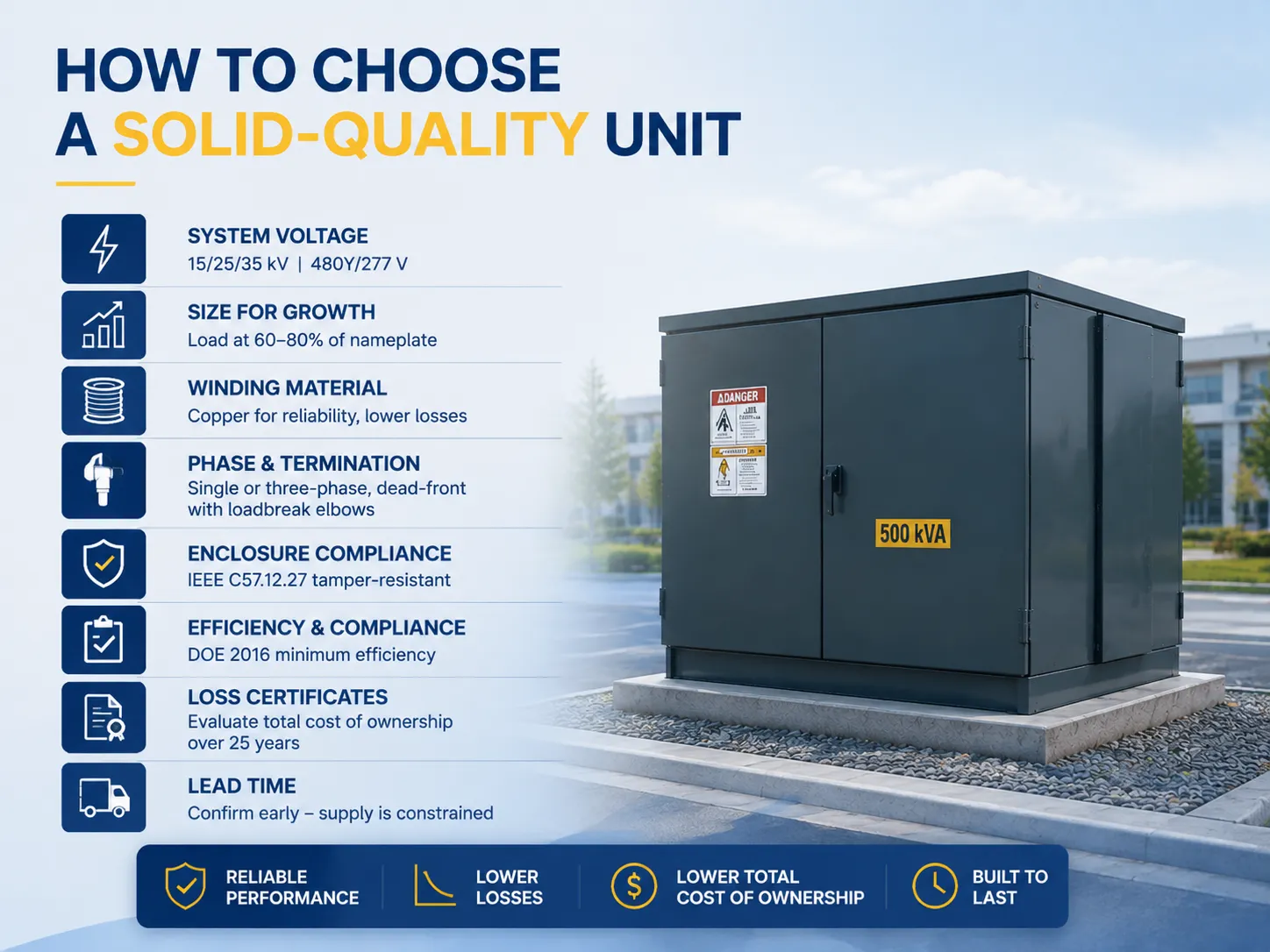
كيفية اختيار وحدة ذات جودة عالية
- تأكيد الجهد في النظام — فئة الجهد الأولية (15/25/35 كيلوفولت) والجهد الثانوي الدقيق (على سبيل المثال، 480Y/277 فولت).
- الحجم لنمو الحمل — اختر kVA للحمل الأقصى 60–80% من الاسم؛ ستترك وحدة 500 كVA تخدم 400 كVA ذروة مجالًا للنمو.
- اختر مادة اللف بعناية، مع الأخذ في الاعتبار النحاس لتحقيق أقصى موثوقية وخسائر أقل، بينما الألمنيوم أرخص ولكن يجب فحص خسائره.
- اختر الطور والتوصيل وقرر نوع الطور، سواء كان أماميًا ميتًا أو غير ذلك، حيث يتم استخدام المرفقات الميتة والمحمولة للتبديل المتكرر.
- يتطلب الامتثال لمعيار IEEE C57.12.27، وراجع آلية القفل لموقعك.
- تحقق من فئة الخسارة وتحقق من الامتثال لإرشادات DOE. في هذه الحالة، يرجى الانتباه إلى الحد الأدنى من كفاءة DOE 2016 في الولايات المتحدة.
- احصل على شهادة خسارة لكل وحدة ثم احسب التكلفة الإجمالية للملكية لمدة 25 عامًا (TCO) بعد تصحيح افتراضاتك.
قائمة التحقق من الفحص قبل التسليم
- لوحة الاسم تتطابق مع المواصفات من حيث تصنيف kVA، الجهد، قيمة المقاومة، توجيه المجموعة، والتوصيلات.
- تشمل نتائج الاختبار النسبة، الخسائر، قيم المقاومة، المقاومة العازلة والعزل.
- تم التحقق من سلامة الغلاف: يمكن أن يتم السطو من خلال الأبواب المفتوحة؛ تعمل المفصلات بشكل صحيح والأختام سليمة.
- ملحقات المفاعل النووي نظيفة، ونوع الموصل يتوافق مع IEEE 386.
- خصائص الزيت: يجب ألا يقل مستوى جهد الانهيار الكلي عن 40 kV/2.5 مم؛ مستوى الزيت مرئي من الخارج، ولا توجد تسريبات مرئية عند لحامات الخزان والصمامات.
- ملحقات الخزان موجودة، مثل جهاز تخفيف الضغط، صمام التصريف، وألواح التأريض.
- الوثائق كاملة: وثائق IEC وIEEE، شهادة المواد، تقرير مراقبة الجودة.
الأسئلة المتكررة
كم تكلفة المحول المثبت على القاعدة؟
بشكل عام، يمكن أن تختلف أسعار المحولات المثبتة على القاعدة حسب فئة تصنيف الجهد. يمكن أن تتراوح أسعار المحول أحادي الطور بقدرة 75-150 kVA من $1,800 إلى $3,500. من ناحية أخرى، يمكن أن يتراوح سعر المحول ثلاثي الطور المثبت على القاعدة بقدرة 500 kVA من $4,500 إلى $9,000، وعادة ما يكلف المحول الكبير المثبت على القاعدة بقدرة 1500-2500 kVA حوالي $12,000 إلى $30,000. عوامل أخرى مثل الملحقات الإضافية، نوع اللفائف، وفئة الكفاءة عادة ما تضيف 5-20% إلى السعر. لاحظ أن جميع الأسعار المذكورة أعلاه هي أسعار FOB إرشادية يمكن أن تختلف حسب العلامة التجارية، المنطقة، والمواصفات.
ما الفرق بين المحولات المثبتة على القاعدة ذات الواجهة الميتة والواجهة الحية؟
الفرق الأساسي بين كلا النوعين من المحولات يشير إلى وحدات الواجهة الميتة. تلك الأنواع من المحولات معزولة ومحمية وحدات الواجهة الميتة بدون أجزاء حية موجودة، حتى في حالة فتح باب الخزانة. تلبي المحولات ذات الواجهة الميتة معايير IEEE C57.12.27 لأي تركيبات جديدة. أما بالنسبة للمحولات ذات الواجهة الحية، فإن القضايا المتعلقة بالسلامة التي قد تسببها البوشات الحية المكشوفة هي الأسباب التي جعلتها تصبح غير مستخدمة منذ عقود. لاحظ أن وحدات الواجهة الميتة لديها مزايا أكثر من الوحدات ذات الواجهة الحية.
كم تدوم المحولات المثبتة على القاعدة؟
بشكل عام، يمكن أن تدوم المحولات حتى 25-40 عامًا إذا تم صيانتها وتصنيعها بشكل صحيح. تحدد عدد من الجوانب العمر المتوقع للمحولات بما في ذلك عمر العزل حتى لحظة الفشل (الذي يعتمد على مستويات الحرارة والرطوبة)، وظروف الزيت المستخدم في المحول وتاريخ تشغيل المعدات. لهذا السبب، عادة ما يأخذ المشغلون عينات من الزيت كل سنتين إلى خمس سنوات لمراقبة مستويات محتوى الرطوبة، مستويات الغاز المذاب (DGA)، والقوة الكهربائية.
هل تحتاج المحولات المثبتة على القاعدة إلى سياج؟
الميزة الرئيسية للمحولات المثبتة على القاعدة تشير إلى أنه لا يتطلب بناء أي سياج إضافي حول المحول. بسبب أحكام سلامة التلاعب، فإن هذه المحولات تتوافق مع IEEE C57.12.27، لذا لا حاجة لحماية المحولات بسياج محيط وحلول أمان أخرى. بالإضافة إلى ذلك، عادة ما يتم وضع المحولات المثبتة على القاعدة بالقرب من العديد من الأشياء المهمة حول الملاعب، الأرصفة وحتى المداخل.
ما هو الوقت المتوقع لتسليم المحولات المثبتة على القاعدة؟
يعتمد الوقت المتوقع لتسليم المحولات عادةً على سعتها وحمولة المصنع. تحتاج المحولات ثلاثية الطور القياسية إلى حوالي 10-22 أسبوعًا لعملية التصنيع، بينما يمكن إنتاج المحولات الأكبر (بسعة 3000-5000 kVA) في 16-32 أسبوعًا. لقد زاد وقت التسليم عبر الولايات المتحدة إلى أكثر من 30 أسبوعًا بسبب النقص الحالي في المعدات والحاجة إلى حجز فترات الإنتاج مسبقًا.
المراجع
-
-
- IEEE C57.12.00 — المتطلبات العامة للمحولات المغمورة بالسوائل — معيار التصميم والتقييم الأساسي للمحولات المثبتة على القاعدة.
- IEEE C57.12.90 — إجراءات اختبار المحولات الموزعة — الأساس الاختباري للخسائر، العزل، وأداء النبض.
- IEEE C57.12.27 — سلامة غلاف المعدات المثبتة على القاعدة — متطلبات الجبهة الميتة ومقاومة التلاعب التي تحدد جودة الغلاف الصلب.
- IEEE 386 — أنظمة الموصلات المعزولة القابلة للفصل — متطلبات الموصلات ذات الكوع الجبهة الميتة.
- وزارة الطاقة الأمريكية — معايير كفاءة المحولات الموزعة — مستويات الكفاءة الدنيا الإلزامية للوحدات المباعة في الولايات المتحدة.
- NEMA — إرشادات تطبيق المحولات الموزعة — إرشادات التطبيق والتقييم للسوق الأمريكية الشمالية.
- Jiangsu Subian Electric Power — الموقع الرسمي — مصنع ومصدر للمحولات المثبتة على القاعدة المتوافقة مع IEEE.
-
الخاتمة
الجودة الواسعة الموجودة في المحولات المثبتة على القاعدة ليست مجرد بيان تسويقي؛ إنها مزيج من عملية معتمدة، خسائر موثقة، عزل مختبر، أغطية غير قابلة للاختراق، ومواد قابلة للتتبع. جميع العملاء الذين يمكنهم التحقق من هذه العوامل الخمسة كتابيًا، وفحص المنتج بصريًا قبل الدفع، ومقارنة الخسائر المختبرة سيتجنبون مشاكل الواردات ذات الجودة المنخفضة.
- اطلب الامتثال لـ IEEE C57.12.00/.27/.90 وتقارير اختبار منتظمة لجميع الأجهزة.
- اطلب الأجهزة لما لا يقل عن 60-80% من قيمة الاسم المكتوب للحمل وأشر إلى الحلول المعزولة ذات الجبهة الميتة حيثما كانت الموثوقية مطلوبة.
- قارن العروض بناءً على الخسائر المقدرة على مدى 25 عامًا بدلاً من النظر فقط إلى السعر الأولي وتقدير وقت التحول مسبقًا.
- تأكد من فحص الغلاف، والاتصالات، والزيت، والوثائق قبل قبول التسليم النهائي.
- ضع في اعتبارك الشركات الرائدة في أمريكا الشمالية، مثل Prolec GE، Eaton، وتلك المعتمدة من IEC/IEEE مثل Jiangsu Subian Electric Power.