


أنت إما المهندس الكهربائي الذي يعمل على مشروع توسيع الشبكة الإقليمية، أو مدير المشتريات الذي يعمل على إعداد الإمدادات لمصنع، أو الموزع الذي يتعامل مع مشروع كهرباء ريفي، وكل عرض أسعار للمعدات التي تحصل عليها يحتوي على عنصر واحد مشترك: محول توزيع مغمور بالزيت بقدرة 1000 kVA و35 kV. عندما تطلب من مورديك عرض أسعار، سيقول نصفهم “S11-1000/35-0.4”، بينما سيذكر النصف الآخر الاسم كـ “محول زيت بقدرة 1000 kVA و35 kV S11”. إذا كنت تتساءل عن معنى رقم الطراز هذا، ولماذا يعتبر S11 تحسينًا عن طراز S9، وما يجب أن يكون سعر الجهاز، تابع قراءة هذا الدليل.
S11-1000/35-0.4 هو محول توزيع مفضل دوليًا في فئة 35 kV. هذا محول ثلاثي الطور، بتردد 50 هرتز، مغمور بالزيت بقدرة 1000 kVA، مسؤول عن تحويل جهد 35 kV إلى 400/230V. في هذه المقالة، سنصف مبادئ عمل طراز S11 بما في ذلك معنى جميع مكونات رقم الطراز.
إجابة قصيرة: S11-1000/35-0.4 هو محول توزيع ثلاثي الطور، مغمور بالزيت، بتردد 50 هرتز، بسعة مصنفة تبلغ 1000 kVA. لديه جهد أولي يبلغ 35 kV وجهد ثانوي يبلغ 400 V (0.4 kV). “S” تمثل تكوين ثلاثي الطور؛ “11” تشير إلى رقم سلسلة التصميم مع انخفاض خسائر عدم التحميل بمقدار 30% تقريبًا مقارنةً بنوع أقدم S9؛ بينما “1000” تمثل السعة المصنفة و “35-0.4” نسبة الجهد.
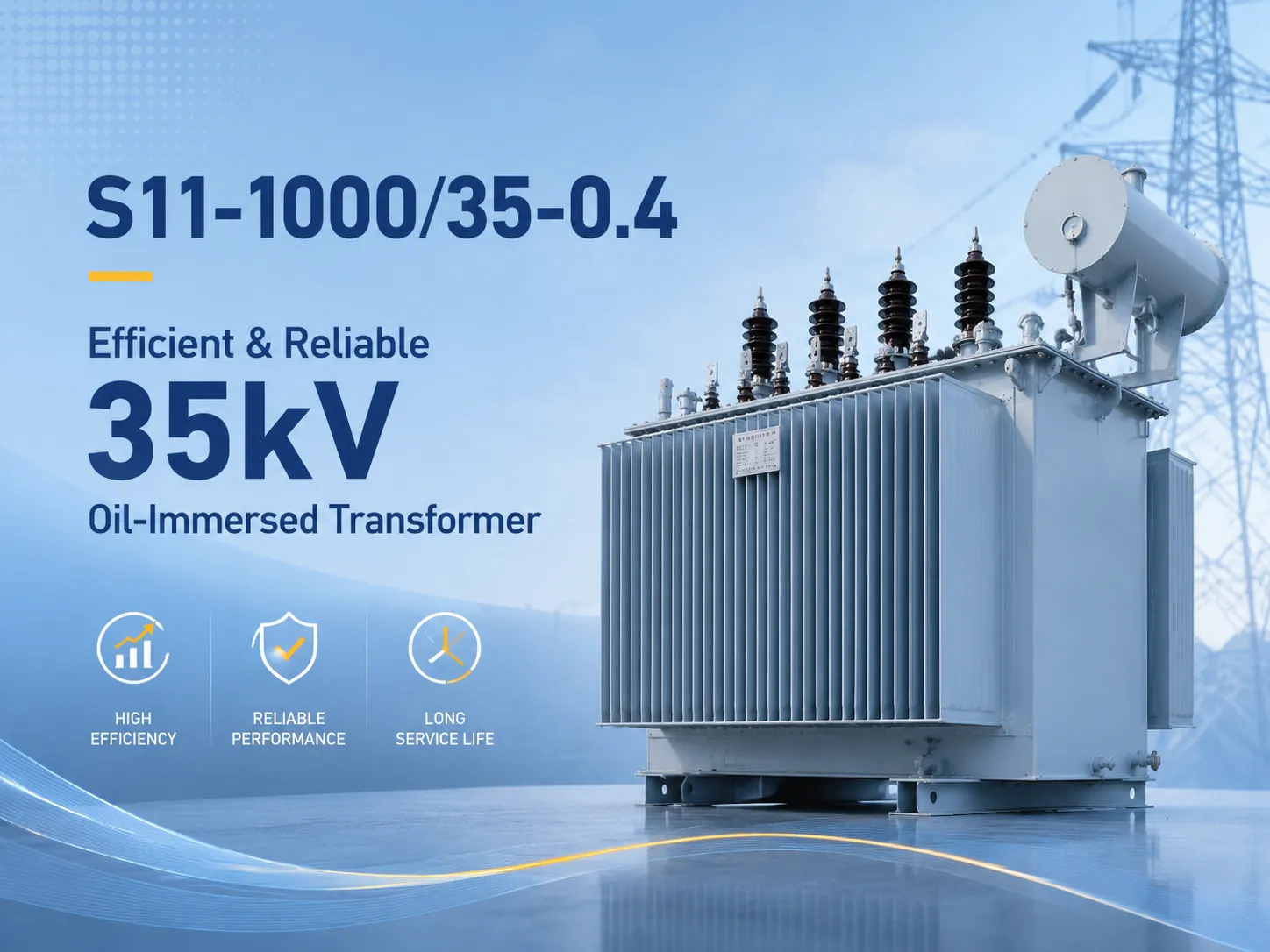
فك شفرة رقم الطراز: ماذا يعني S11-1000/35-0.4
تبدو أرقام طراز المحولات غامضة، ولكن في نظام التسمية الصيني/ISO، يحمل كل جزء معنى محدد. بالنسبة لـ S11-1000/35-0.4:
| جزء | المعنى | التفاصيل |
|---|---|---|
| S | ثلاثي الطور | “S” (سان شيانغ، 三相) تشير إلى وحدة ثلاثية الطور، على عكس “D” للطور الأحادي |
| 11 | سلسلة التصميم | السلسلة التصميمية الحادية عشرة، التي تتميز بنواة منخفضة الخسارة باستخدام فولاذ سيليكون موجه بالحبوب مدلفن على البارد |
| 1000 | السعة المصنفة | تصنيف القدرة الظاهرة 1000 kVA |
| 35 | الجانب عالي الجهد | جهد أولي مصنف 35 kV |
| 0.4 | الجانب منخفض الجهد | جهد ثانوي مصنف 0.4 kV (400V) |
وبالتالي، يمكن تفسير “S11-1000/35-0.4” بالكامل على أنه محول ثلاثي الطور من السلسلة 11 بسعة طاقة 1000 kVA يعمل عند 35kV على الجانب المدخل و0.4 kV على الجانب المخرج. بعض الشركات المصنعة تشير إلى المحولات كـ S11-1000/35 أو S11-M-1000/35؛ الحرف الأخير يعني أن وحدة المحول مغلقة بالكامل ولديها عزل كهربائي عميق بواسطة الزيت. عندما تحتوي المواصفات على معلومات مثل “تركيبة الجهد 35 ± 2×2.5% / 0.4 kV”، فهذا يعني أن المحول يحتوي على مفتاح تغيير موصل خارج الدائرة مع إمكانية إجراء تعديلات بواسطة 5% على الجانب الأول ويعمل عند 0.4 kV على الجانب الثاني من المحول.
ما هو محول مغمور بالزيت بقدرة 1000 kVA و35 kV؟
يتم تعريف المحول الغمر بالزيت بقدرة 1000 كVA كمحول توزيع متوسط الجهد يستقبل الطاقة من الشبكة عند 35 kV (أو من محطة فرعية بجهد 35 kV) ويخفضها إلى مستوى الجهد المنخفض البالغ 400 فولت - 230 فولت الذي يتم الحصول عليه في نهاية الحمل. تشير كلمة “مغمور بالزيت” إلى أن اللفائف والنواة مغمورة بالكامل في زيت عازل لأغراض العزل والتبريد.
في نطاق محولات التوزيع، يعتبر المحول بقدرة 1000 كVA كبيرًا بما يكفي لتزويد الطاقة للمصانع والمباني والمستشفيات ومجموعات من مئات المنازل. في الوقت نفسه، هو صغير بما يكفي ليتم نقله من المصنع كوحدة واحدة (على شاحنة) وتركيبه إما على قاعدة في الهواء الطلق أو في غرفة صغيرة من المحطة الفرعية. إنه محول قياسي لشبكات التوزيع بجهد 35 kV في الصين وجنوب شرق آسيا وأفريقيا والشرق الأوسط وأمريكا اللاتينية.
أهم البيانات من أي ورقة بيانات للمحول هي:
- السعة المصنفة = 1000 كVA (قد يُشار إليه أيضًا كـ 1 MVA)
- نسبة الجهد = 35kV / 0.4 kV (مع نقاط سحب خارج الدائرة عند 35 ± 2×2.5% kV)
- التردد = 50 هرتز
- مجموعة المتجهات = Yyn0 (أو Dyn11 عند الطلب)
- التبريد = ONAN (زيت طبيعي، هواء طبيعي)
- جهد المقاومة = 6.5% (لهذا الحجم)
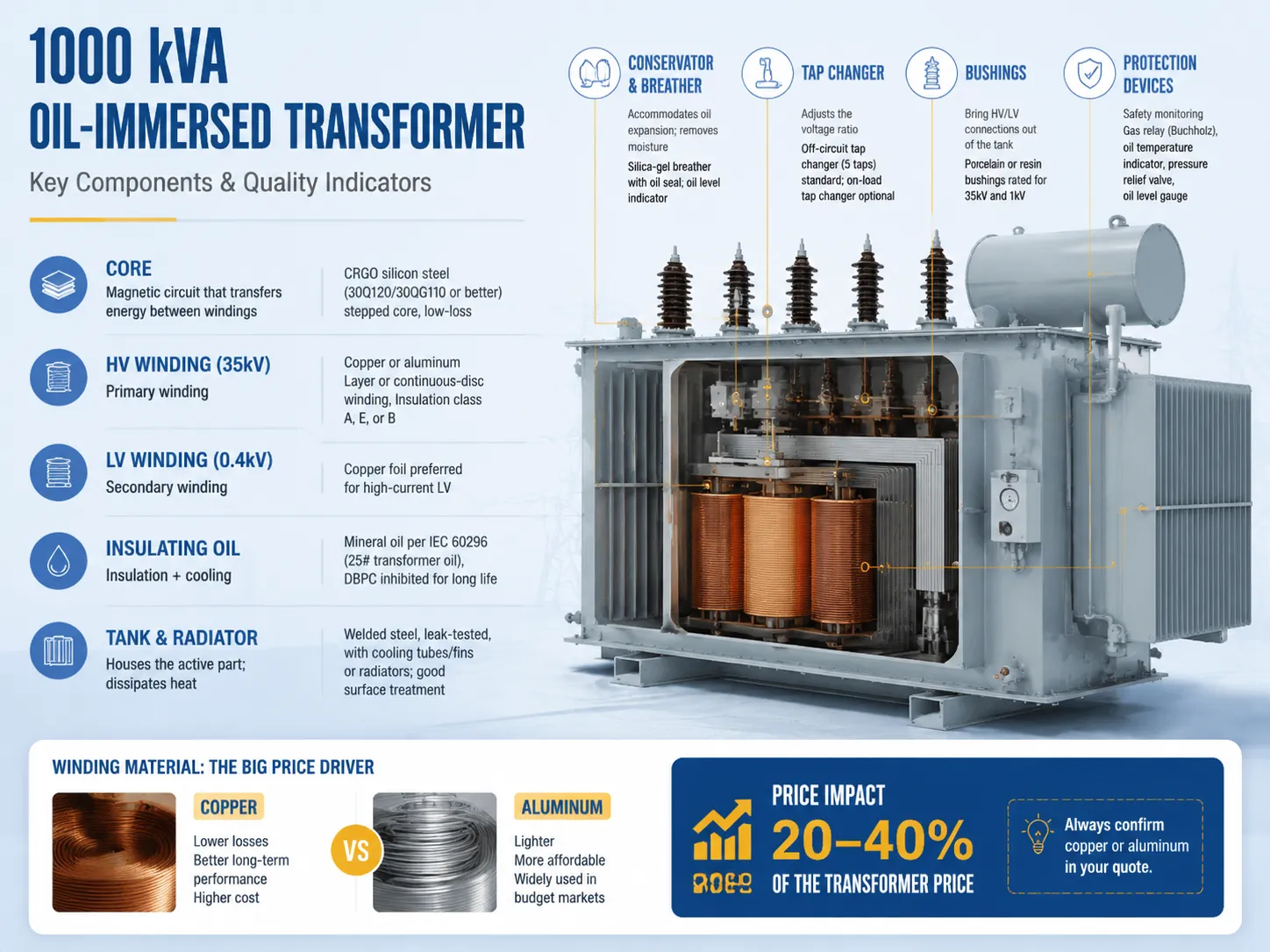
البناء والمكونات الرئيسية
يساعد فهم ما هو داخل الخزان في تقييم الجودة عند مقارنة العروض. يتكون المحول الغمر بالزيت بقدرة 1000 كVA من هذه الأجزاء الرئيسية:
| المكون | الوظيفة | مؤشر الجودة |
|---|---|---|
| القلب | دائرة مغناطيسية تنقل الطاقة بين اللفائف | فولاذ سيليكون موجه حبيبي مدلفن على البارد (CRGO)، تصميم نواة متدرجة، درجات فقدان منخفضة (30Q120/30QG110 أو أفضل) |
| لفائف الجهد العالي | لفائف أولية بجهد 35kV | نحاس أو ألمنيوم؛ لفائف طبقية أو قرصية مستمرة؛ فئة عزل مناسبة (A، E، B) |
| لفائف الجهد المنخفض | لفائف ثانوية بجهد 0.4kV | لفائف ورقية أو سلكية؛ يُفضل استخدام ورق النحاس للجهد المنخفض عالي التيار |
| زيت عازل | عزل + تبريد | زيت معدني وفقًا لمعيار IEC 60296 (مثل زيت المحول 25#)؛ مثبط DBPC لعمر طويل |
| الخزان والمشعاع | يحتوي على الجزء النشط؛ يبدد الحرارة | فولاذ ملحوم، مختبر للتسرب، مع أنابيب/زعنفة تبريد أو مشعات؛ معالجة سطحية جيدة |
| الحافظ والمجفف | يستوعب تمدد الزيت؛ يزيل الرطوبة | مجفف هلام السيليكا مع ختم زيت؛ مؤشر مستوى زيت مناسب |
| محول التغيير | يضبط نسبة الجهد | محول سحب خارج الدائرة (5 نقاط سحب) قياسي؛ محول سحب تحت الحمل اختياري |
| البوشينغ | إخراج اتصالات HV/LV من الخزان | عوازل خزفية أو راتنجية مصنفة لـ 35kV و 1kV |
| أجهزة الحماية | مراقبة السلامة | مرحل الغاز (بوشهولز)، مؤشر درجة حرارة الزيت، صمام تخفيف الضغط، مقياس مستوى الزيت |
تهيمن خياران من المواد على فرق السعر: لفات النحاس مقابل الألمنيوم. يوفر النحاس خسائر أقل وأداء أفضل على المدى الطويل ولكنه يكلف أكثر بكثير. الألمنيوم أخف وأرخص ويشيع استخدامه في الأسواق الموجهة للميزانية. تأكد دائمًا من المعدن الذي تم اقتباسه - إنه أحد أكبر محركات الأسعار، ويمكن أن يكون الفرق 20–40% من سعر المحول.
المواصفات الفنية في لمحة
إليك المواصفات التمثيلية لمحول S11-1000/35-0.4 المصنوع وفقًا لمعيار IEC 60076 / GB 1094 (قيم نموذجية، تأكد من الأرقام الدقيقة مع ورقة بيانات الشركة المصنعة):
| المعامل | القيمة النموذجية |
|---|---|
| السعة المصنفة | 1000 ك.ف.أ |
| نسبة الجهد | 35 ± 2×2.5% / 0.4 ك.ف |
| التردد | 50 هرتز |
| مجموعة المتجهات | Yyn0 (Dyn11 اختياري) |
| طريقة التبريد | أونان |
| خسارة عدم التحميل (P0) | ~1.15 – 1.45 ك.و |
| خسارة الحمل (Pk عند 75°C) | ~10.3 – 11.4 kW (نحاس) / ~11.5 – 13 kW (ألمنيوم) |
| جهد الممانعة (Uk) | 6.5% – 7.0% |
| تيار عدم الحمل (I0) | ~0.7 – 1.0% |
| مستوى العزل (HV) | LI 200 ك.ف / AC 85 ك.ف |
| مستوى الصوت | ~60 – 65 ديسيبل(A) |
| المعايير | IEC 60076، GB 1094، GB/T 6451 |
| نوع الزيت | زيت معدني وفقًا لمعيار IEC 60296 |
| الوزن (الإجمالي) | ~3,200 – 4,200 كجم حسب المواد |
| الأبعاد (تقريبًا) | ~2.2 × 1.5 × 2.4 م (طول × عرض × ارتفاع مع المشعات) |
وفقًا لهذه الأرقام، يقع S11-1000/35-0.4 ضمن فئة الخسارة القياسية “T2” في النظام الصيني لتصنيف كفاءة الطاقة (GB 20052)، والذي هو أقل من نماذج S13/S15 غير المتبلورة عالية الجودة، ولكنه لا يزال أفضل بكثير من نماذج S7/S9 القديمة التي لا تزال موجودة في الشبكات القديمة.
S11 مقابل S9 مقابل S13: كيف تقارن سلسلة التصميم
يتم تمييز نطاقات التصميم لمحوّلات التوزيع الصينية وفقًا لأجيالها، حيث تكون كل جيل أكثر كفاءة من سابقتها. فيما يلي تحليل للسلاسل الثلاث حيث تقاس الكفاءة عند 1000 kVA عند 35 kV.
| سلسلة | مادة القلب | خسارة عدم الحمل (1000kVA، تقريبًا) | مستوى الخسارة النسبية | الحالة |
|---|---|---|---|---|
| S7 | فولاذ سيليكون مدلفن على الساخن | ~2.0 – 2.3 ك.و | خط الأساس (الأعلى) | تم إيقافه (محظور للشراء في الشبكات الجديدة) |
| S9 | فولاذ سيليكون CRGO | ~1.7 – 1.8 ك.و | ~25% أقل من S7 | قديم، لا يزال شائعًا في الخدمة |
| S11 | فولاذ سيليكون CRGO عالي الجودة | ~1.15 – 1.45 ك.و | ~30% أقل من S9 | المعيار السائد الحالي |
| S13 | فولاذ CRGO عالي الجودة + تصميم محسّن | ~0.9 – 1.1 ك.و | ~25% أقل من S11 | خيار متميز لكفاءة الطاقة |
| S15 (غير متبلور) | شريط سبيكة غير متبلورة | ~0.55 – 0.7 ك.و | ~50% أقل من S11 | أعلى كفاءة، تكلفة أعلى |
لقد أصبحت سلسلة S11 الخيار القياسي لشبكات المرافق والتوزيع الصناعي بسبب نسبة السعر والجودة المثالية. إن فقدان الحمل الخالي لـ S11 أقل بـ ~30% من S9 مما يؤدي إلى توفير آلاف الدولارات في الطاقة خلال فترة خدمة تبلغ 20 عامًا، ولهذا السبب تتطلب العديد من شركات الخدمة العامة في جميع أنحاء العالم الآن وحدات S11 من البائعين، وقد توقفت الصين عن السماح باستخدام وحدات S7 والأقدم في عملية توصيل الشبكة.
إذا كان المشروع يقع في بلد لديه لوائح صارمة لكفاءة الطاقة مثل تصميم البيئة في الاتحاد الأوروبي أو المستوى 2 من GB 20052 في الصين، فسيكون من الضروري استخدام S13 أو S15 غير المتبلور. بالنسبة لبقية الأسواق، فإن S11 ستفي بالغرض.
التطبيقات: أين يتم استخدام هذه المحولات
يتم استخدام محول S11 بقدرة 1,000 kVA، 35/0.4kV في تطبيقات متنوعة، تشمل:
- القطاع الصناعي: للمصانع التي تشمل خطوط الإنتاج والمحركات واللحام وأنظمة التدفئة والتهوية وتكييف الهواء.
- المباني التجارية: يوفر الطاقة لمباني المكاتب، ومراكز التسوق، والمستشفيات، والفنادق، ومراكز البيانات كمحول توزيع لنظام الجهد المنخفض.
- الكهرباء الريفية: لشبكات توزيع القرى والبلدات الريفية التي تغذيها خطوط 35 kV.
- قطاع الطاقة: يقلل من الجهد من محطات تحويل الطاقة الشمسية ويزود محطات الرياح والطاقة الشمسية.
- صناعة التعدين: يوفر الطاقة لمواقع العمل المعزولة التي يتم تزويدها بجهد توزيع 35 kV.
- البنية التحتية: يستخدم في المطارات ومحطات القطارات ومحطات ضخ المياه، إلخ.
- تحديث النظام الكهربائي: يستبدل وحدات S7/S9 القديمة بوحدات ذات خسائر أقل وموثوقية أعلى.
في جميع هذه المشاريع، تقوم المحولات بتغذية لوحات المفاتيح ذات الجهد المنخفض، والتي بدورها تزود أنظمة الطاقة بجهد 400 فولت. ونتيجة لذلك، فإن فشل مثل هذه المعدات الكهربائية يمكن أن يؤدي إلى مشاكل كبيرة يجب تجنبها بأي ثمن.
المزايا الرئيسية لسلسلة S11
لماذا تباع الكهرباء بشكل جيد؟
- خسائر الحمل الخالي المنخفضة: حوالي 30% أقل من تلك الخاصة بـ S9، مما يعني أن هناك خسائر أقل مع المحولات الثابتة.
- عمر طويل: لقد تم استخدامها في جميع أنحاء العالم لسنوات عديدة.
- صيانة منخفضة: الشيء الوحيد الذي يجب القيام به هو تغيير الزيت وإجراء فحوصات دورية.
- قدرة تحميل عالية: تحتوي خزان الزيت على قدرة تحميل كبيرة (على سبيل المثال 120% لمدة ساعتين على الأقل وفقًا لـ IEC 60076-7).
- تكلفة موفرة: أسعار المحولات الزيتية أقل من تلك الخاصة بالمحولات الجافة في تلك الفئة.
- موحدة: تم تصنيع الأجهزة وفقًا لمعايير IEC 60076 و GB 1094 بحيث يمكن العثور على الأجزاء بسهولة في جميع أنحاء العالم.
- تركيب بسيط: يتم تسليم جميع الأجهزة مجمعة ومختلطة بالزيت.
المحولات الزيتية أقل تكلفة من المحولات الجافة حيث تتفاوت أسعارها بمقدار 30-50% اعتمادًا على تصنيفاتها. على الرغم من أنه يجب أخذ في الاعتبار أن الوحدة الزيتية تتطلب استخدام حاوية خرسانية بالإضافة إلى الامتثال للوائح الحريق وقواعد الصيانة.
دليل الأسعار: ماذا تتوقع
تختلف أسعار المحولات بشكل كبير حسب المواد والإكسسوارات والشهادات. إليك دليل واقعي لعام 2026 لمحولات S11-1000/35-0.4 (FOB المصنع، باستثناء الشحن والتركيب):
| التكوين | نطاق الأسعار (FOB) | ملاحظات |
|---|---|---|
| لفائف الألمنيوم، إكسسوارات أساسية | $11,000 – $15,000 | خيار ميزانية؛ خسائر أعلى |
| لفائف النحاس، إكسسوارات أساسية | $14,000 – $18,000 | موصى به لمعظم المشترين |
| لفائف النحاس + محول تحميل | $18,000 – $24,000 | للأحمال الحساسة لتنظيم الجهد |
| لفائف النحاس + حزمة حماية كاملة | $16,000 – $22,000 | مرحل بوخولز، مقياس درجة حرارة الزيت، تخفيف الضغط، مقياس المستوى |
| علامة تجارية متميزة (ABB/Siemens/Hitachi) | $25,000 – $45,000+ | علامة تجارية متميزة، شبكة خدمات محلية |
ما هو مشمول مقابل الأشياء الإضافية: غالبًا ما يغطي السعر الأساسي المحول نفسه، وزيته، وخزانته، وموصلاته، والإكسسوارات الأساسية (التي تشمل الحافظ، والمجفف، ومقياس الزيت). عادةً ما تنطبق تكاليف إضافية على تكلفة محولات التحميل، وعوازل الصدمات، وخزانات التحكم في درجة الحرارة، ونوع الطلاء المحدد، والتفتيش من طرف ثالث (SGS/BV/Intertek)، والشحن/التعبئة والتوثيق. دائمًا اطلب عرضًا كاملاً بناءً على جميع هذه العناصر لأغراض المقارنة.
بالنسبة للنقل: وحدة بقيمة طاقة 1,000 kVA تزن حوالي 3.5–4.5 طن بينما تكلفة الشحن حوالي $1,500–$4,000 حسب نقطة الوجهة بالإضافة إلى تكاليف الجمارك والنقل المحلية.
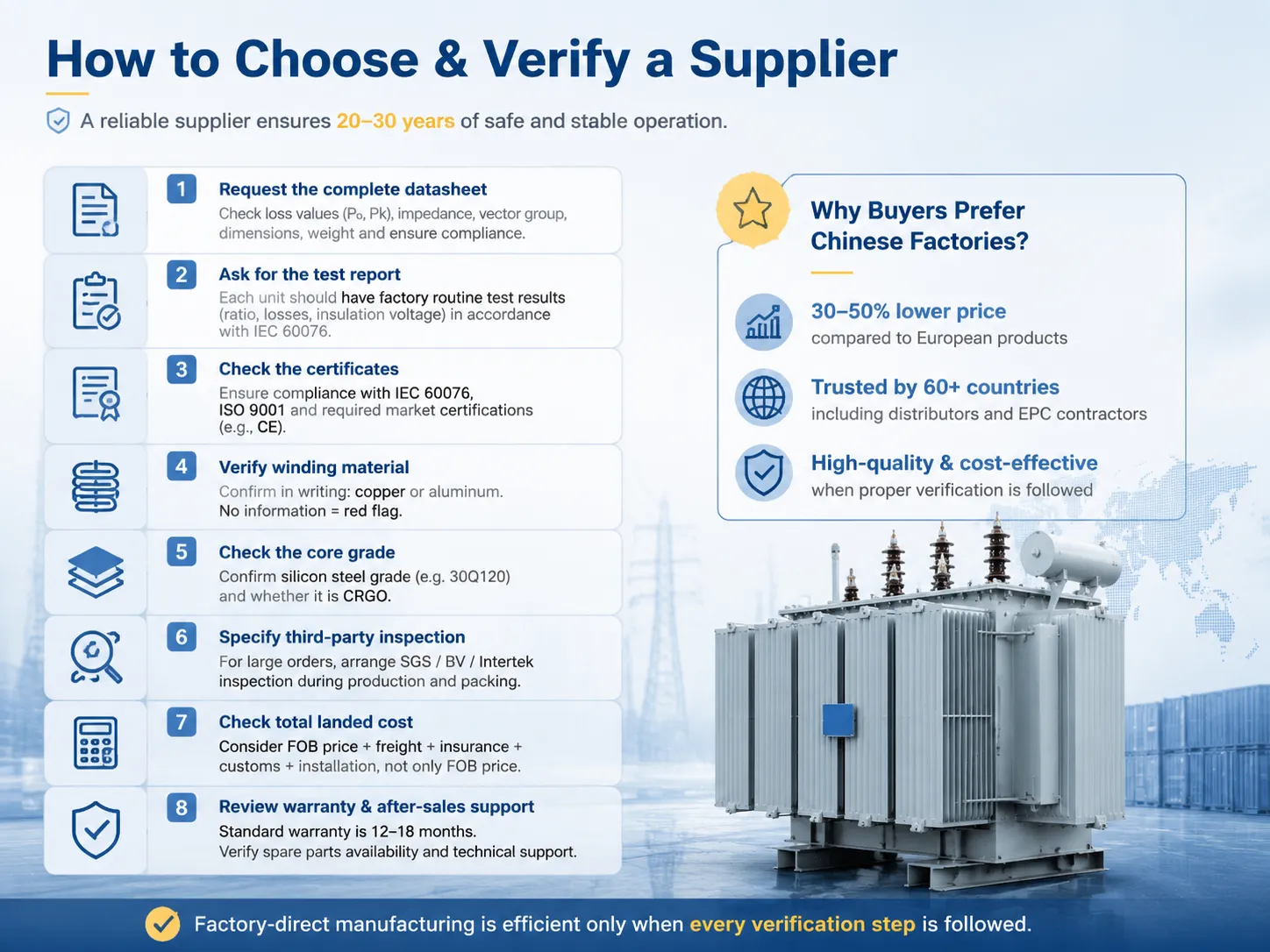
كيفية اختيار والتحقق من المورد
نظرًا لعمر المحول المتوقع من 20 إلى 30 عامًا، فإن اختيار الشركة المصنعة له بنفس أهمية اختيار المواصفات. إليك عملية تحقق بسيطة يجب اتباعها.
- اطلب ورقة البيانات الكاملة: قيم الخسارة (P0، Pk)، والمقاومة، ومجموعة المتجهات، والأبعاد، والوزن وتحقق مما إذا كانت البيانات المستلمة تتوافق مع المعايير الخاصة بتصنيفك.
- اطلب من المصنع تقديم تقرير الاختبار. يتم شحن كل وحدة مع تفاصيل اختبارات المصنع الروتينية (النسبة، الخسائر، جهد العزل). لاحظ أن التقرير يجب أن يتوافق مع قواعد IEC 60076 في حالة الامتثال لـ IEC/GB.
- تحقق من الشهادات: تحقق من الامتثال لـ IEC 60076، وشهادة المصنع ISO 9001 بالإضافة إلى الشهادات المطلوبة الخاصة بسوقك (وجود علامات CE، إلخ).
- تحقق من مادة اللف. أكد كتابيًا أنها نحاس أو ألمنيوم. إذا لم تحتوي الاقتباس على معلومات حول المعدن المستخدم في التصنيع، فهذه علامة سيئة.
- تحقق من درجة القلب: اكتشف درجة الفولاذ السيليكوني (مثل 30Q120)، وكذلك ما إذا كان CRGO.
- حدد فحص الطرف الثالث (إذا كان ذلك ممكنًا): في حالة الطلبات الكبيرة، من الأفضل إضافة فحص SGS/BV/Intertek أثناء الإنتاج وفي مرحلة التعبئة.
- تحقق من التكلفة الإجمالية المتكبدة: فكر في سعر FOB + الشحن + التأمين + الجمارك + التركيب، وليس فقط في سعر FOB.
- اطلع على شروط الضمان وما بعد البيع: فترة الضمان القياسية هي 12-18 شهرًا؛ تحقق من توفر قطع الغيار والدعم.
لماذا يفضل المشترون المصانع الصينية؟ تنتج الصين، ممثلة بشركة جيانغسو سوبين للطاقة الكهربائية وغيرها من الشركات المملوكة للدولة، الغالبية العظمى من المحولات التوزيعية. عادةً ما يكون سعر المنتجات من الصين أقل بنسبة 30-50% مقارنةً بالمنتجات من أوروبا، لذا يقوم الموزعون ومقاولو EPC في أكثر من 60 دولة بشراء محولات 35kV من المصانع الصينية. ومع ذلك، فإن استخدام التصنيع المباشر من المصنع له كفاءة فقط إذا تم اتباع جميع إجراءات التحقق.
أساسيات التركيب والصيانة
أساسيات التركيب
- قم بالتركيب على قاعدة مستوية، مع ضمان دوران هواء كافٍ في المنطقة المحيطة بالخزان؛ الالتزام بالحد الأدنى من متطلبات الشركة المصنعة بشأن المسافة بين البوشات والمشعات.
- تحقق من حالة الزيت، مع النظر إلى هلام السيليكا (الأزرق = جاف، الوردي = مشبع)، والمقاييس.
- تأكد من أن مجموعة المتجهات وإعدادات التوصيل متوافقة مع الشبكة المعنية.
- قم بتوصيل الخزان بنظام التأريض بشكل مناسب؛ لا تقم بتشغيل الطاقة على الخزان الذي لم يتم تأريضه.
- قم بإجراء الاختبارات الأساسية: مقاومة العزل (IR)، النسبة، وقوة العزل للزيت إذا كانت الوحدة خارج الخدمة لفترة طويلة.
قائمة فحص الصيانة الروتينية
| الفاصل الزمني | الفحوصات |
|---|---|
| شهري | الفحص البصري؛ مستوى الزيت وفحص التسرب؛ لون هلام السيليكا؛ ضوضاء غير عادية |
| ربع سنوي | تحقق من مؤشر درجة حرارة الزيت أثناء الحمل؛ تأكد من أن زعانف التبريد نظيفة |
| سنويًا | اختبار مقاومة العزل؛ تحليل عينة الزيت (قوة العزل، الرطوبة)؛ تحقق من جهاز حماية بوشولز وجهاز تخفيف الضغط؛ اختبار تشغيل محول التوصيل |
| كل 3-5 سنوات | اختبار زيت كامل (جهد الانهيار، الحموضة، تحليل الغاز المذاب DGA)؛ فحص طلاء الخزان؛ تحقق من الحشوات والبوشات |
يعتبر تحليل الغاز المذاب (DGA) أفضل تحليل متاح لأنه يعطي تنبيهًا عن أجزاء الفشل الوشيك (التي تشمل ارتفاع درجة الحرارة، التفريغ الجزئي، والقوس الكهربائي). إنها طريقة فعالة من حيث التكلفة للاختبار السنوي لأي آلة أساسية بقدرة 1,000 kVA.
الأسئلة المتكررة
ماذا يعني S11-1000/35-0.4؟
تشير التسمية S11-1000/35-0.4 إلى محول توزيع ثلاثي الطور منخفض الفقد من السلسلة 11 (S11) والذي يتم غمره في الزيت وله قدرة 1000 kVA مع جهد أولي قدره 35 kV وجهد ثانوي قدره 0.4 kV. في رقم السلسلة 11، يتم تصنيع المحولات من فولاذ السيليكون المدلفن على البارد الموجه والذي يجعلها تحقق تقليلًا في الفقد في حالة عدم التحميل بنسبة حوالي 30% مقارنةً بتلك الخاصة بمحولات سلسلة S9.
كم يكلف محول 1000 kVA بجهد 35kV؟
عادةً ما يتراوح سعر المحول الغمر بالزيت S11-1000/35-0.4 الشامل بين $11,000 و$22,000 FOB من منشأة إنتاج صينية، وذلك حسب ما إذا كانت اللفات مصنوعة من النحاس أو الألمنيوم وبناءً على نوع مفتاح التبديل المستخدم مع الملحقات الأخرى. تكلف الوحدات ذات اللفات النحاسية مع الملحقات العادية بين $14,000 و$18,000؛ أسعار العلامات التجارية الأوروبية الرائدة تتراوح بين $25,000 و$45,000+. أخيرًا، أضف $1,500–$4,000 لرسوم الشحن البحري إلى معظم الوجهات.
ما الفرق بين محولات S9 وS11 وS13؟
تشير إلى الأجيال الحديثة من التصميم حيث يحتوي كل منها على خسائر أقل عند عدم التحميل مقارنة بسابقتها. بالنسبة لـ 1000 kVA، فإن خسائر عدم التحميل هي (تقريبًا): S9: 1.7- 1.8 kW، S11: 1.15-1.45 kW (أقل بنسبة 30 في المئة من S9 السابقة)؛ S13: 0.9-1.1 kW (أقل بنسبة 25 في المئة من S11). الوحدات الجديدة ذات النواة غير المتبلورة S15 لديها خسائر أقل بحوالي 50 في المئة، على الرغم من أن تكلفتها أعلى من S11. في هذه الأثناء، تعتبر S11 هي التكنولوجيا الرائدة حاليًا، بينما يتم إيقاف أنواع S7 والأقدم تدريجيًا على مستوى العالم.
هل يمكن استخدام محول 1000 kVA 35kV في مصنع؟
نعم، إنه واحد من أكثر السعات استخدامًا بين المصانع المتوسطة. يمتلك محول 1000 kVA عند 400V سعة تيار تبلغ حوالي 1400A لكل مرحلة (حوالي 800-900 kW من الحمل المستمر اعتمادًا على عامل القدرة التشغيلي). في مصنع يحتوي على خطوط إنتاج متعددة، ومحركات، وأنظمة HVAC، فإن هذا هو الحجم المثالي الأول؛ قد تحتوي المصانع الأكبر على عدة محولات أو محول أكبر.
كم تدوم مدة حياة المحول الغمر بالزيت؟
بشرط أن يتم صيانة المحول بشكل صحيح، فإن محولات S11 المملوءة بالزيت لها عمر عمل طبيعي يتراوح بين 25 إلى 30 عامًا. من أجل ذلك، فإن بعض العوامل الأكثر أهمية التي تؤثر على عمر محولات الزيت هي: جودة الزيت (اختبارات سنوية لجودة الزيت)، DGA، ملف الحمل (أي لمنع الأحمال الزائدة المستمرة)، درجة الحرارة التشغيلية، وظروف البيئة. قد تستمر المحولات المثبتة بشكل جيد والمصانة بشكل جيد لأكثر من 40 عامًا.
المراجع
- IEC 60076-1: المحولات الكهربائية — عام — المعيار الدولي الأساسي الذي يحكم التصنيفات، والخسائر، والمقاومة، واختبار محولات الطاقة، بما في ذلك فئة 35kV.
- IEC 60076-7: دليل تحميل محولات الطاقة — دليل التحميل الذي يحدد قدرة التحميل الزائد والحدود الحرارية لمحولات الغمر بالزيت.
- سلسلة GB 1094 (المعيار الصيني لمحولات الطاقة) — المعيار الوطني الصيني لمحولات الطاقة، المعادل وظيفيًا لـ IEC 60076 والمطلوب للوحدات المتصلة بالشبكة في الصين.
- IEC 60296: السوائل للتطبيقات الكهربائية — زيوت العزل المعدنية غير المستخدمة — المعيار الذي يحدد متطلبات الجودة لزيت المحولات المعدنية.
- وزارة الطاقة الأمريكية — كفاءة محولات التوزيع — خلفية حول سبب أهمية كفاءة المحولات لاستهلاك الطاقة واقتصاديات تكلفة الخسارة.
- شركة جيانغسو سوبين للطاقة الكهربائية المحدودة. — مصنع صيني للمحولات المغمورة بالزيت والمحولات الجافة (سلسلة S11/S13/S15، 10–110kV)، معتمد وفقًا لمعيار IEC 60076 ويصدر إلى جميع أنحاء العالم؛ مرجع مباشر من المصنع للأسعار والتوريد.
الخاتمة
إن S11-1000/35-0.4 هو محول موثوق للغاية يستخدم في أنظمة توزيع 35 kV. المحول ثلاثي الطور مغمور بالزيت ويبلغ قدرته 1,000 kVA. اسم طراز الجهاز يعمل كوصف. يتميز بتصميم ثلاثي الطور منخفض الفقد من نوع S11، كونه محولًا ثلاثي الطور بقدرة 1,000 kVA. إليك قائمة بما يجب على العملاء اتباعه:
- كن محددًا قدر الإمكان بشأن المواصفات. من الضروري الإشارة إلى ما إذا كانت لفات المحول مصنوعة من النحاس أو الألمنيوم، نوع مفتاح التغيير، الملحقات، والشهادات (IEC 60076 / GB 1094).
- تحقق من كل شيء مرة أخرى قبل إجراء عملية الشراء. اطلب من المورد الخاص بك المواصفات التفصيلية، تقرير اختبار المصنع، وعرضًا مع قائمة مفصلة من الإضافات.
- قدر الأموال التي تخطط لإنفاقها بشكل واقعي. سيتراوح سعر المحول من $11,000 إلى $22,000 مع التسليم من الصين.
- اشترِ ما تم صيانته بشكل صحيح. سيساعدك الاختبار السنوي للزيت والاختبارات التشخيصية على حماية الأصل لمدة تقارب 30 عامًا.
- قم بالتسوق الذكي بالنسبة لموردي الوحدة في الصين. سيساعدك الموردون المناسبون على توفير أموالك بشكل كبير.
إن S11-1000/35-0.4 هو بالتأكيد خيارك الأفضل إذا كنت تستبدل وحدتك القديمة S7/S9 أو تضع S11 في مكان جديد.