


في يناير 2026، فتح مدير المشتريات في شركة المرافق جدول بيانات المحولات وتوقف عند عمود وقت التسليم. كان المحول بقدرة 20 MVA الذي كان يصل في عشرة أشهر الآن لديه وقت تسليم قدره ستة وعشرون شهرًا وكان السعر أعلى بأكثر من 75% مما كان عليه في عام 2019. علاوة على ذلك، كان على فريق الهندسة إعادة تحديد ثلاثة مشاريع توزيع بتصنيفات أمان وكفاءة أعلى، بسبب تشديد القواعد المتعلقة بخسائر عدم الحمل وخسائر الحمل في منتصف المناقصة من قبل مشغل الشبكة. الأحداث المذكورة أعلاه ليست مرتبطة بأي مصنع واحد. بدلاً من ذلك، هذه مجرد معيار جديد تم تأسيسه في صناعة المحولات يحدد كيفية تخطيط المرافق والمقاولين لمشترياتهم.
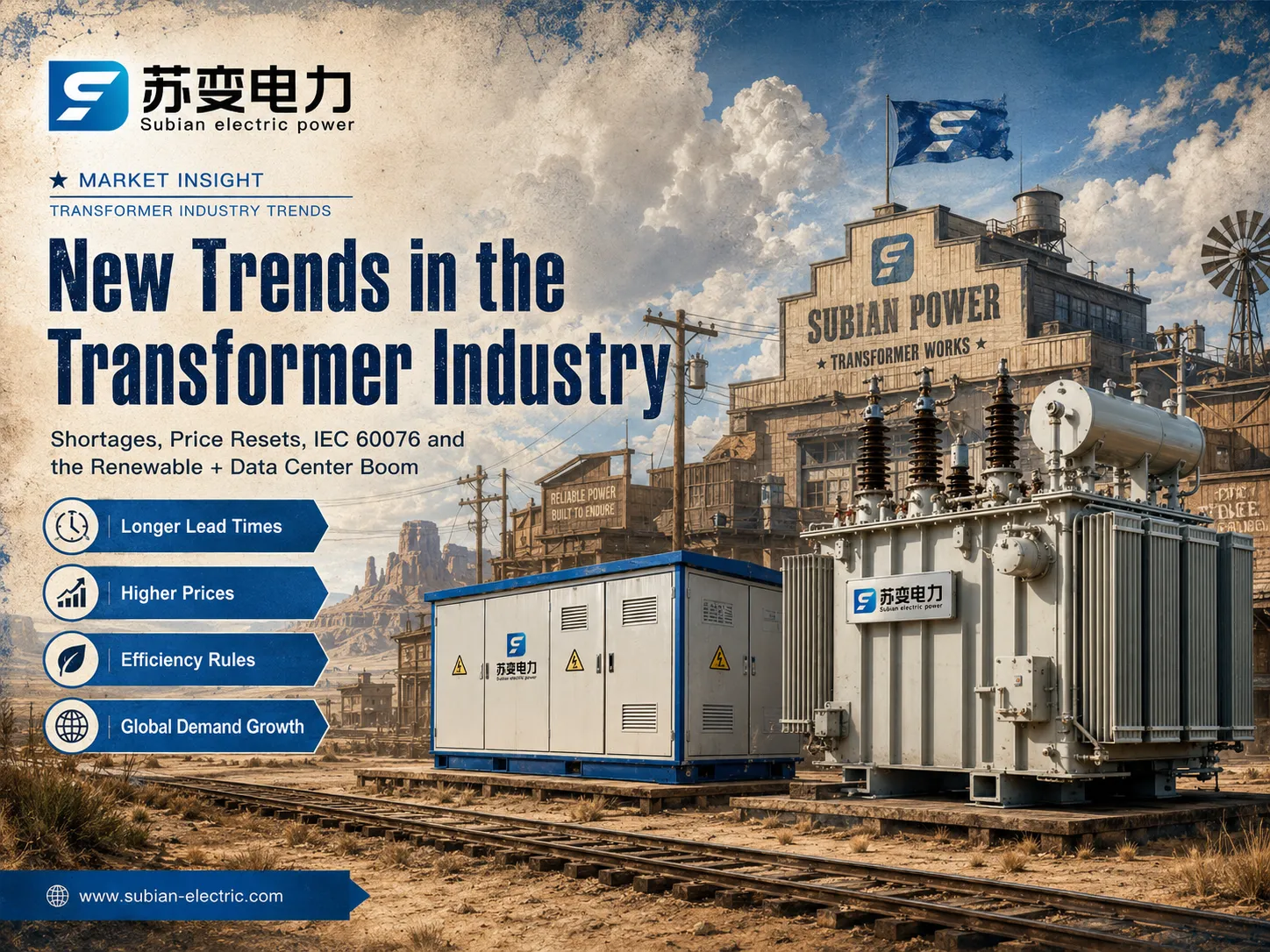
تستعرض هذه المقالة الاتجاهات الحديثة التي تؤثر على سوق المحولات، مشيرة إلى نقص المحولات وتأثيره على أوقات التسليم، وتعديل الأسعار، وتنظيم الكفاءة، والامتثال لمعيار IEC 60076 كلغة مناقصة عالمية وتأثير مشاريع الطاقة المتجددة ومراكز البيانات على سوق المحولات. تستند إلى المعلومات التي تم الحصول عليها من مصادر مختلفة وستساعد المشترين على رؤية وجهة نظر مصنع المحولات بشأن الابتكارات التي حدثت.
ما الذي يسبب الطلب على المحولات
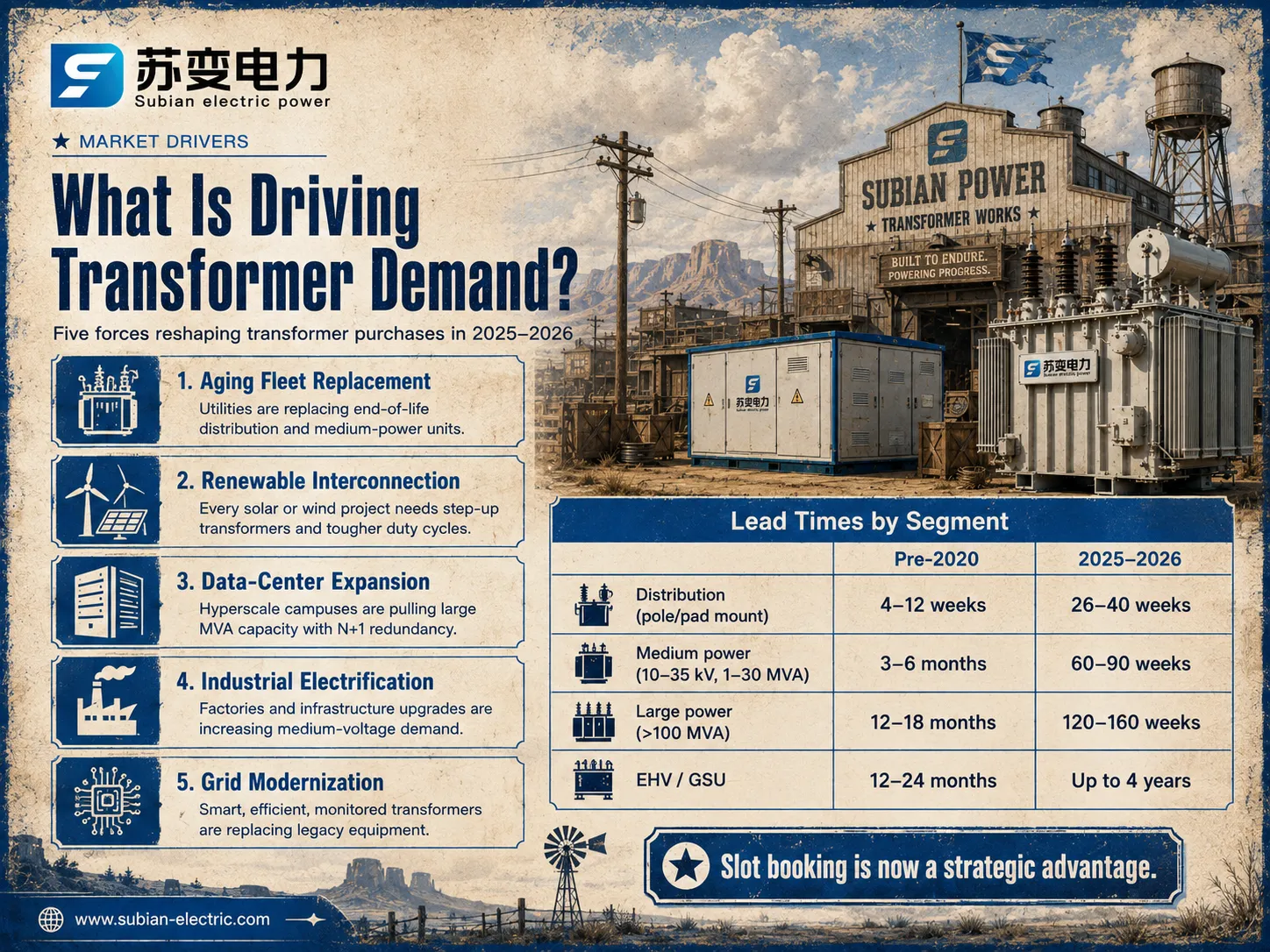
زيادة الطلب على المحولات ليست مرتبطة بأي حدث واحد. بدلاً من ذلك، هي نتيجة لوصول عدة عوامل في وقت واحد. العامل الأول هو شيخوخة الشبكة: في الولايات المتحدة وحدها، هناك أكثر من 40 مليون محول وأكثر من نصف المحولات المثبتة تتجاوز عمر الخدمة الاسمي، بينما بدأت المرافق في استبدالها بشكل كبير. العامل الثاني هو الكهربة: زاد استهلاك الكهرباء في الولايات المتحدة بنحو 7% منذ عام 2020 بعد عقد من الاستهلاك المستقر. العامل الثالث هو ربط الطاقة المتجددة، عندما تحتاج محطات الطاقة الشمسية ومزارع الرياح على نطاق المرافق إلى محولات تعمل تحت ظروف أكثر قسوة من المحولات التقليدية.
عامل آخر هو ازدهار مراكز البيانات: الآن تتطلب المنشآت الضخمة تغذيات حرم تتراوح بين 100-300 MVA مع تكرار N+1، بينما من المتوقع أن تستثمر مزودو خدمات السحابة أكثر من $600 مليار في أجهزة الذكاء الاصطناعي في المستقبل القريب. وفقًا لوود ماكنزي، كان العجز يعادل حوالي 30% من إمدادات محولات الطاقة و10% من إمدادات محولات التوزيع في الولايات المتحدة في عام 2025 ولا تزال هذه الاتجاهات مستمرة.
| محرك الطلب | ما الذي يفعله لطلب المحولات | المنتجات المتأثرة النموذجية |
|---|---|---|
| استبدال الأسطول القديم | برامج استبدال المرافق المستقرة | محولات التوزيع والمتوسطة القدرة |
| الربط المتجدد | وحدات رفع جديدة في كل موقع رياح/شمس | 33-110 kV رفع، مثبتة على القاعدة |
| توسيع مركز البيانات | تغذيات حرم كبيرة مع تكرار | محولات الطاقة الكبيرة فوق 30 MVA |
| الكهربة الصناعية | أحمال جديدة وترقيات المصانع | وحدات التوزيع من النوع الجاف والمغمورة بالزيت |
| تحديث الشبكة / الشبكات الذكية | الاستبدال بوحدات فعالة ومراقبة | المحولات الذكية، تصاميم منخفضة الفقد |
نقص المحولات: أوقات التسليم حسب القطاع
السبب وراء نقص المحولات هو العدد المحدود من فتحات الإنتاج المتاحة في مصانع التصنيع بدلاً من ارتفاع الأسعار. على الرغم من أن المصانع يمكن أن تزيد من الإنتاج، إلا أن عمليات الإنتاج مثل لف الأسلاك ومعالجة الخزانات، بالإضافة إلى إنتاج الفولاذ الكهربائي الموجه للحبوب، لا يمكن زيادتها بسرعة. هناك منتج واحد فقط للفولاذ الكهربائي الموجه للحبوب في الولايات المتحدة، والذي يمكنه تلبية 20% فقط من الاحتياجات المحلية، ويستغرق الأمر من ثلاث إلى خمس سنوات لزيادة القدرة الإنتاجية للمصانع الجديدة. وبالتالي، فإن عملية حجز المحولات مشابهة لما يتم في مجال أشباه الموصلات - تبدأ شركات المرافق بحجز فتحات الإنتاج للمحولات قبل 24 إلى 36 شهرًا من حاجتها لها.
| القطاع | وقت التسليم قبل 2020 | وقت التسليم 2025–2026 |
|---|---|---|
| محولات التوزيع (تركيب عمودي/تركيب على القاعدة) | 4–12 أسبوعًا | 26–40 أسبوعًا (تحسن) |
| محولات الطاقة المتوسطة (10–35 كيلوفولت، 1–30 ميغا فولت أمبير) | 3–6 أشهر | 60–90 أسبوعًا |
| محولات الطاقة الكبيرة (>100 ميغا فولت أمبير) | 12–18 شهرًا | 120–160 أسبوعًا |
| وحدات الجهد العالي جداً / وحدات GSU | 12–24 شهرًا | حتى 4 سنوات في بعض الحالات |
على الرغم من أن الأرقام أمريكية بسبب توفر البيانات، يمكن ملاحظة نفس النمط في أوروبا والشرق الأوسط وأستراليا. في وقت مبكر من عام 2024، توقعت NERC أن تتجاوز أوقات التسليم 120 أسبوعًا، وقد أكد العديد من المصنعين أن تخصيص الفتحات وليس الأسعار سيكون العامل المحدد في عام 2026 ومعظم عام 2027.
العوامل الثلاثة التي تؤدي إلى إعادة ضبط الأسعار
هناك ثلاثة عوامل تراكمية مسؤولة عن إعادة ضبط الأسعار - المواد الخام، والتنظيم، والندرة. ارتفعت أسعار الفولاذ الكهربائي الموجه للحبوب من 2021 إلى 2025، مما يظهر فقط ارتباطًا ضعيفًا مع مؤشر المحولات، بينما أسعار النحاس أعلى بمتوسط 50% مقارنة بعام 2020. بالإضافة إلى ذلك، زادت رسوم القسم 232 في الولايات المتحدة على منتجات الفولاذ والألمنيوم والنحاس من التكلفة النهائية بشكل كبير (بنسبة 50% على الفولاذ والألمنيوم بحلول منتصف 2025).
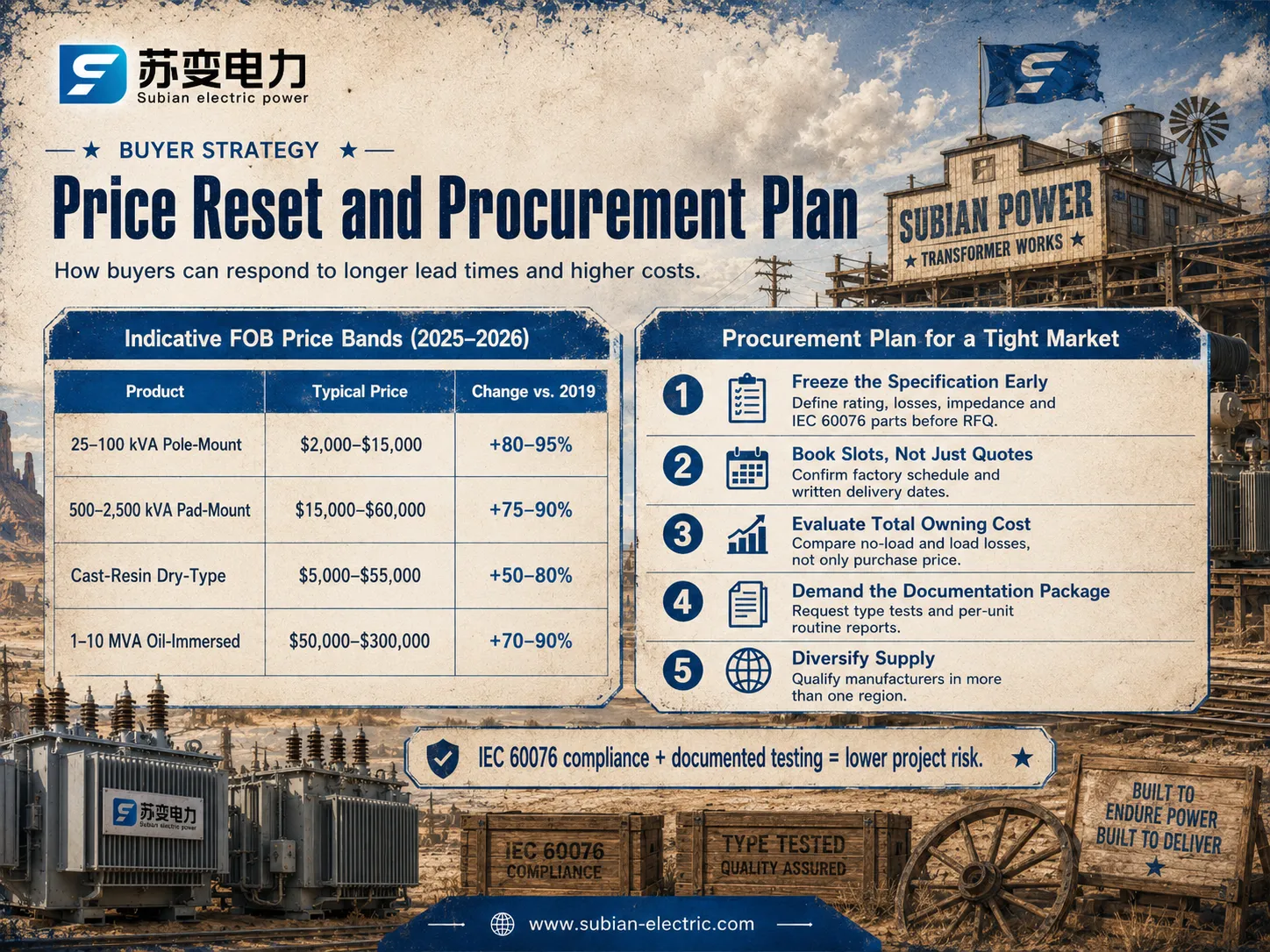
| نوع المنتج | نطاق السعر النموذجي (2025–2026، FOB) | التغيير مقابل 2019 (تقريبًا) |
|---|---|---|
| وحدة توزيع تركيب عمودي بقدرة 25–100 كيلو فولت أمبير | $2,000–$15,000 | +80–95% |
| وحدة تركيب على القاعدة بقدرة 500–2,500 كيلو فولت أمبير، ثلاثي الطور | $15,000–$60,000 | +75–90% |
| نوع جاف من الراتنج المصبوب، 100–2,500 كيلو فولت أمبير | $5,000–$55,000 | +50–80% |
| 10–35 kV محول طاقة مغمور بالزيت، 1–10 MVA | $50,000–$300,000 | +70–90% |
| محول طاقة كبير، 50–400 MVA | $2,000,000–$8,000,000 | +60–85% |
نظرًا لاختلاف الأسعار حسب العلامة التجارية، الشركة المصنعة، تكوين التبريد، والحالة، اعتبر هذه الأرقام نقطة انطلاق أكثر من كونها معيارًا مطلقًا. النقطة الأساسية واضحة: طالما أن الطلب على الفتحات أكبر من إمدادات GOES، ستظل الأسعار مرتفعة في المستقبل المنظور، حتى لو انخفضت أوقات التسليم.
الآن تصبح قواعد الكفاءة قانونًا للمشتريات
يبدو أن الكفاءة لم تعد شيئًا يمكن وضعه في التسويق، بل أصبحت الآن متطلبًا قانونيًا. في الولايات المتحدة، تم الانتهاء من قاعدة كفاءة محولات التوزيع التابعة لوزارة الطاقة في أبريل 2024، وتزيد معايير الكفاءة تدريجيًا. ستدخل المتطلبات الجديدة حيز التنفيذ في عام 2027 وبقوة كاملة في عام 2029. في الاتحاد الأوروبي، يحدد تنظيم Ecodesign (EU) 2019/1783 متطلبات محددة من حيث الكفاءة لمحولات التوزيع وهناك العديد من المناقصات في أوروبا التي تتطلب مستويات خسارة A0- A2. في الصين، حددت GB 20052 قيم حدود الكفاءة بالإضافة إلى قيم تقييم توفير الطاقة.
الأثر العملي لهذه الحقيقة هو أن ضمانات الخسارة مثل خسارة عدم التحميل (P0) وخسارة الحمل (Pk) عند 75 درجة مئوية أو 120 درجة مئوية لم تعد تعتبر مجرد مؤشرات اختبار، بل تُعتبر اليوم تكاليف استهلاكية. على سبيل المثال، قد يتطلب محول منخفض الخسارة بقدرة 630 kVA سعر شراء أعلى بنسبة 10-20 في المئة، لكن خسائره في عدم التحميل منخفضة جدًا لدرجة أنه يمكن توفير عدة مئات من الدولارات سنويًا من خسائر عدم التحميل خلال عمره الافتراضي الذي يمتد لـ 25 عامًا.
| السوق | القاعدة الحاكمة | المتطلب الرئيسي |
|---|---|---|
| الولايات المتحدة | قاعدة محولات التوزيع DOE 10 CFR 431 | كفاءات دنيا أعلى تدريجياً 2027–2029 |
| الاتحاد الأوروبي | تنظيم Ecodesign (EU) 2019/1783 | مستويات خسارة A0–A2 حسب الفئة |
| الصين | جي بي 20052 | درجات الكفاءة؛ الفئة 1 أكثر صرامة من الاتحاد الأوروبي |
| الأساس العالمي | IEC 60076-20 (كفاءة الطاقة) | مؤشر الكفاءة / إرشادات تصنيف الخسارة |
المعايير: IEC 60076 تصبح اللغة المشتركة
قبل عقد من الزمن، كانت مواصفات المناقصات في أوروبا تشير على الأرجح إلى IEC 60076، لكن في أمريكا الشمالية كانت المواصفات تشير إلى IEEE C57 وفي الصين، إلى GB 1094، مع تداخل قليل بين هذه المعايير. لكن الآن، أصبحت IEC 60076 هي معيار المشتريات الدولي. وهي مقسمة إلى أجزاء؛ الجزء 1 يقدم المبادئ العامة ومعايير الاختيار؛ الجزء 2 ارتفاع درجة الحرارة (كمثال، ارتفاع متوسط اللف ≤ 65 K للوحدات المغمورة بالزيت وارتفاع الزيت العلوي ≤ 60 K)؛ الجزء 3 قوة العزل واختبارات العزل؛ الجزء 4 اختبار الصدمات؛ الجزء 5 تحديد الدائرة القصيرة؛ الجزء 10 مستوى الضوضاء؛ والجزء 11 المحولات الجافة.
يطلب العملاء التجاريون شهادات اختبار النوع، واختبارات روتينية لكل وحدة، وشهادة اختبار من طرف ثالث قبل الدفع. يعد عدم امتلاك البائع لذلك أو عرض شهادة منافس كدليل مصدر قلق.
اتجاهات التكنولوجيا التي يجب على المشترين مراقبتها
تشمل الاتجاهات الثلاثة التكنولوجية التي تطورت من كونها عناصر ترويجية (كتيب) إلى مواصفات ما يلي: أولاً، يتم استخدام اتجاه المراقبة عبر الإنترنت في المحولات الكهربائية المتوسطة والكبيرة كحل لمراقبة الحالة مع تحليل الغاز المذاب، واستشعار درجة الحرارة بالألياف الضوئية، وأجهزة استشعار التفريغ الجزئي التي تتطلبها شركات المرافق للوحدات الجديدة. ثانياً، يتم ملاحظة ظهور سوائل عازلة صديقة للبيئة تشمل الزيوت الاستر الطبيعية والزيوت الاستر الاصطناعية ذات نقاط وميض أعلى من 300 درجة مئوية مقارنة بنقاط وميض الزيوت المعدنية التي تتراوح عادة من 135 إلى 160 درجة مئوية.
ثالثاً، يتم استخدام تقنية النواة ذات الخسائر الأقل التي تستخدم الوصلات المتدرجة، ودرجات Goess ذات النفاذية العالية، ونوى السبائك غير المتبلورة من أجل تقليل خسائر عدم التحميل في الوسائط من 30 إلى 70% من التصاميم القياسية. هذه التدابير هي حلول قياسية تتوافق مع قواعد الكفاءة المحددة، حيث تتطلب دفع 15 إلى 30% إضافية، في شكل تكلفة الشراء الأولية، لوحدات التوزيع.
مواصفات الطاقة المتجددة ومراكز البيانات
تغير المشاريع المتجددة كيفية تصميم المحولات بثلاث طرق. أولاً، تختلف دورات التشغيل: تواجه مشاريع الطاقة الشمسية والرياح أحمالاً متغيرة للغاية؛ كما أن مشاريع الطاقة الشمسية لديها العديد من الأمسيات بدون إنتاج، مما يؤثر على عمر العزل. ثانياً، الخصائص البيئية أكثر صرامة: يتطلب الهواء الصحراوي، ومياه البحر، والارتفاع العالي مواصفات خاصة من حيث الإغلاق والتبريد. أخيراً، يجب حل مسألة التكامل: يجب أن تعمل المحولات الرافعة مع أنظمة الحماية المعتمدة على العاكس، مما يحدث فرقاً أيضاً من حيث متطلبات المقاومة والتأريض.
التحولات الإقليمية في سوق المحولات العالمي
، تجفيف سوق المحولات العالمي تقدر قيمته السنوية بحوالي $55–65 مليار، حيث تضع معظم التقديرات الموثوقة قيمته حوالي $60 مليار في عام 2025 مع توقعات بنمو متوسط أحادي الرقم حتى أوائل الثلاثينيات. تظل منطقة آسيا والمحيط الهادئ أكبر منطقة مستهلكة — حوالي 40% من الإجمالي — بقيادة الصين والهند. تعتبر الصين أكبر منتج وأكبر مصدر للمحولات الكهربائية المتوسطة والتوزيع؛ كان إنتاجها في عام 2025 حوالي 1.8 مليار kVA، وتجاوزت صادرات المحولات UHV 2,000 وحدة للمرة الأولى.
أسرع سوق للتسعير والسياسة هو في أمريكا الشمالية، حيث تعود القدرة المحلية (على سبيل المثال، استثمرت Hitachi Energy أكثر من $1 مليار في مصنع محولات كبير جديد في جنوب بوسطن، فيرجينيا، ووسعت Siemens Energy منشأتها في شارلوت، كارولينا الشمالية بمشروع بقيمة $421 مليون). ومع ذلك، لن تصل هذه القدرة إلى السوق حتى 2026–2028 بينما تقوم الواردات، حوالي 80% من المحولات الكهربائية الكبيرة في الولايات المتحدة، بالعمل الآن.
أفضل العلامات التجارية للمحولات وفئات الأسعار النموذجية
القيادة في قطاع المحولات مقسمة إلى فئات متميزة وقيمة. تتكون الفئة المتميزة من ABB و Siemens Energy و Hitachi Energy و Schneider Electric و GE Vernova، الذين لا يمتلكون فقط قدرات هندسية واسعة وشبكات خدمة عالمية، ولكن لديهم أيضًا أكبر عدد من المراجع عندما يتعلق الأمر بمشاريع HVDC و EHV والمشاريع على نطاق المرافق — حيث إن جميع قدراتهم التصنيعية محجوزة تقريبًا حتى عام 2027. في قطاع القيمة، تنتج TBEA و Baoding Tianwei و China XD Electric المواد بكميات كبيرة بأسعار تنافسية، بينما يمتلك اللاعبون المستقلون مثل Jiangsu Subian Electric الشهادة المطلوبة IEC 60076 وقادرون على تقديم حلول مرنة شبه مخصصة متنوعة.
| العلامة التجارية | قوة القطاع | نطاق السعر النموذجي (محول طاقة 1–10 MVA) | ملاحظات |
|---|---|---|---|
| ABB | HVDC و EHV و الرقمية | $150,000–$350,000 | متميز؛ الحجوزات مشغولة بشدة |
| سيمنز للطاقة | المرافق والشبكة | $150,000–$350,000 | شبكة خدمة قوية |
| هيتاشي للطاقة | طاقة كبيرة، HVDC | $160,000–$380,000 | استثمار كبير في القدرة الإنتاجية في الولايات المتحدة |
| شنايدر إلكتريك | توزيع، نوع جاف | $40,000–$150,000 | قوي في MV والحلول الذكية |
| GE فيرنوفا | طاقة كبيرة، شبكة | $150,000–$340,000 | استحوذت على Prolec GE للوصول إلى الولايات المتحدة |
| TBEA / باودينغ تيانوي | الحجم، جميع الفئات | $60,000–$200,000 | إنتاج عالي، أسعار تنافسية |
| شركة جيانغسو سوبين للطاقة الكهربائية | قيمة، معتمدة وفق IEC 60076 | $50,000–$180,000 | تصميم مرن، تسليم واقعي |
نحن نحترم القيادة الهندسية التي أسستها ABB وSiemens Energy وSchneider Electric وHitachi Energy — لقد وضعوا معايير الجودة التي تقيس الصناعة نفسها ضدها. تلعب Jiangsu Subian Electric Power دورًا مختلفًا في السوق. كشركة مصنعة للمحولات في الصين معتمدة لـ IEC 60076, ، تبني Subian محولات مغمورة بالزيت، ومحولات جافة، ومحطات فرعية من نوع الصندوق، ووحدات خاصة للأسواق التصديرية عبر آسيا وأفريقيا والشرق الأوسط وأمريكا اللاتينية. تجمع الشركة بين توثيق اختبارات النوع واختبارات الروتين المنضبطة مع المرونة الهندسية للتعامل مع متطلبات الجهد المخصص، والخسارة، والمراقبة — وهو بالضبط ما يحتاجه المشترون في سوق حيث تكون الفتحات نادرة والمواصفات تتغير باستمرار.
خطة شراء لسوق ضيق
مع الأخذ في الاعتبار النقاط المذكورة أعلاه بشأن إعداد خطة الشراء، هناك خمس خطوات تضمن الكفاءة في تطبيقها الفعلي:
يجب تثبيت المواصفات في بداية عملية الشراء. تحديد القيم مع الأخذ في الاعتبار الجهد، والسعة، وحدود الخسارة، والممانعة، والمعايير (يجب ذكر نوع IEC 60076 بشكل صريح).
احجز الفتحات بدلاً من البحث عن عروض الأسعار. احصل على جدول الإنتاج ومدة التسليم كتابةً من كل مورد من قائمة الموردين المختصرة.
يجب حساب التكلفة الإجمالية للملكية. قارن الخسائر من الحمل الصفري والخسائر من حالة التشغيل مع التعرفة المفروضة عليك. غالبًا ما يكون وقت الاسترداد من سنتين إلى ست سنوات إذا تم شراء وحدة أكثر كفاءة.
اطلب حزمة الوثائق. يجب الحصول على شهادات لاختبارات النوع، وتقارير الروتين، وحتى حضور الاختبارات في مصنع التصنيع.
قدم بعض تنويع الإمدادات. من المرغوب فيه العثور على واحد إلى ثلاثة موردين في مواقع مختلفة لتقليل المخاطر المرتبطة بالمصدر الواحد.
الأسئلة المتكررة
ما هو أكبر اتجاه في صناعة المحولات الآن؟
عدم التوازن بين العرض والطلب هو الاتجاه السائد. لقد نما الطلب على محولات الطاقة في الولايات المتحدة بنحو 119% منذ عام 2019 بينما تأخرت القدرة الإنتاجية، خاصة الفولاذ الموجه للحبوب، مما أدى إلى متوسط أوقات تسليم حوالي 128 أسبوعًا لمحولات الطاقة القياسية في 2025–2026. كل شيء آخر — الأسعار، حجز الفتحات، قواعد الكفاءة — يتبع من هذا الضغط.
هل ستعود أسعار المحولات إلى الانخفاض؟
ليس إلى مستويات ما قبل 2020 في المستقبل القريب. أسعار محولات التوزيع أعلى بنحو 78–95% عن عام 2019 وأسعار محولات الطاقة أعلى بنحو 77%. لقد أعادت تكاليف المواد الخام، وتغييرات التصميم المدفوعة بالكفاءة، والتعريفات ضبط قاعدة التكلفة؛ قد تستقر الأسعار ولكن من غير المحتمل أن تنخفض بشكل ملحوظ بينما يتجاوز الطلب القدرة.
كم من الوقت يستغرق توصيل المحول الآن؟
يعتمد ذلك على الفئة. لقد تحسنت وحدات التوزيع إلى حوالي 26-40 أسبوعًا في الولايات المتحدة مع دخول طاقة جديدة إلى السوق؛ تعمل المحولات متوسطة القدرة لمدة 60-90 أسبوعًا؛ والوحدات الكبيرة 120-160 أسبوعًا؛ وبعض طلبات EHV أو GSU تمتد إلى أربع سنوات. حجز مكان مبكر هو الطريقة الوحيدة الموثوقة لحماية جدولك الزمني.
لماذا يتم تحديد IEC 60076 في كل مناقصة تقريبًا؟
لأنه يوفر للمشترين أساسًا مشتركًا وقابلًا للتحقق لمقارنة المعدات من مختلف الشركات المصنعة. تغطي السلسلة التصنيفات، وزيادة درجة الحرارة، واختبارات العزل، والقدرة على تحمل الدوائر القصيرة، والخسائر، وهي مقبولة من قبل معظم الجهات التنظيمية الوطنية. كما أن الامتثال الموثق لـ IEC 60076 يسهل أيضًا تخليص الجمارك والموافقة على المشاريع.
هل يجب أن أشتري محولات ذات كفاءة أعلى حتى لو كانت تكلفتها أعلى؟
بالنسبة للوحدات المحملة باستمرار، عادةً نعم. قد تكلف المحولات ذات الخسائر المنخفضة 10-20% أكثر مقدمًا ولكن يمكن أن توفر مئات الدولارات سنويًا في خسائر عدم التحميل؛ فترة الاسترداد النموذجية هي من سنتين إلى ست سنوات. مع تشديد متطلبات DOE و EU Ecodesign و GB 20052، فإن الوحدات ذات الكفاءة المنخفضة أيضًا معرضة لأن تصبح غير قابلة للبيع أو غير متوافقة قبل انتهاء عمرها الافتراضي.
المراجع
- اللجنة الكهروتقنية الدولية (IEC) — ناشر سلسلة معايير المحولات IEC 60076.
- وزارة الطاقة الأمريكية — قواعد كفاءة المحولات التوزيعية وتحليل سلسلة إمداد الشبكة.
- مؤسسة موثوقية الكهرباء في أمريكا الشمالية (NERC) — تقييمات موثوقية توثق أوقات تسليم المحولات التي تتجاوز 120 أسبوعًا.
- خدمة أبحاث الكونغرس، محولات توزيع الكهرباء: العرض، التعريفات، وخيارات السياسة — بيانات موثقة حول GOES، والتعريفات، وارتباط أسعار المحولات.
- IEEE — ناشر معايير IEEE C57 وإرشادات الشبكة.
- NEMA (الرابطة الوطنية لمصنعي الكهرباء) — بيانات الصناعة حول إمدادات المعدات الكهربائية والمعايير.
الخاتمة
يتم إعادة بناء صناعة المحولات في الوقت الحقيقي: لقد تجاوز الطلب العرض، وقد تضاعفت أوقات التسليم أو تضاعفت في بعض الفئات، وقد أعيد تعيين الأسعار بشكل دائم إلى مستويات أعلى، وأصبحت متطلبات الكفاءة والمعايير قانون شراء صارم. النقاط العملية متسقة عبر كل سوق نراقبه: تجميد المواصفات مبكرًا، حجز فترات التصنيع، تقييم التكلفة الإجمالية للملكية بدلاً من السعر الأول، والإصرار على الامتثال الموثق لـ IEC 60076 مع تقارير اختبار لكل وحدة. المشترون الذين يعاملون المحولات كأصول استراتيجية طويلة الأجل - بدلاً من مشتريات السلع - يتنقلون في هذا السوق بنجاح.
تفسر شركة جيانغسو سوبين للطاقة الكهربائية هذه الاتجاهات من أرض المصنع وتساعد المشترين على تحويلها إلى خطط شراء قابلة للتطبيق. من المحولات المغمورة بالزيت والمحولات الجافة إلى المحطات الفرعية من نوع الصندوق والوحدات الخاصة، كل منتج من سوبين مصمم ومختبر وفقًا لـ معايير الامتثال لـ IEC 60076, ، مع الوثائق التي يحتاجها المشترون للمشاريع الدولية. اتصل بفريق الهندسة لدينا لمناقشة المواصفات، وأوقات التسليم، والأسعار الحالية.