


هل سبق لك أن صادفت لوحة اسم محول تظهر Dyn11 وتساءلت عما تعنيه الحروف والأرقام؟ إذا كانت الإجابة نعم، فأنت تنظر إلى المحول دلتا-واي، الذي يعد الأكثر شيوعًا في أنظمة التوزيع حول العالم. عندما يُكلف المهندس بتشغيل محطة توزيع جديدة أو مصنع صناعي، سيواجه هذا المحول في تقريبًا كل تصميم من تصاميم التخطيط. ستقدم هذه المقالة تعريفًا لـ محول دلتا-واي, ، وجوهر الاتصال من حيث الفولتية والانزياح الطوري، ومزاياه على الأنواع الأخرى من الاتصالات، وكيفية اختيار المحولات بشكل صحيح لمشاريعك.
ما هو محول دلتا-واي؟
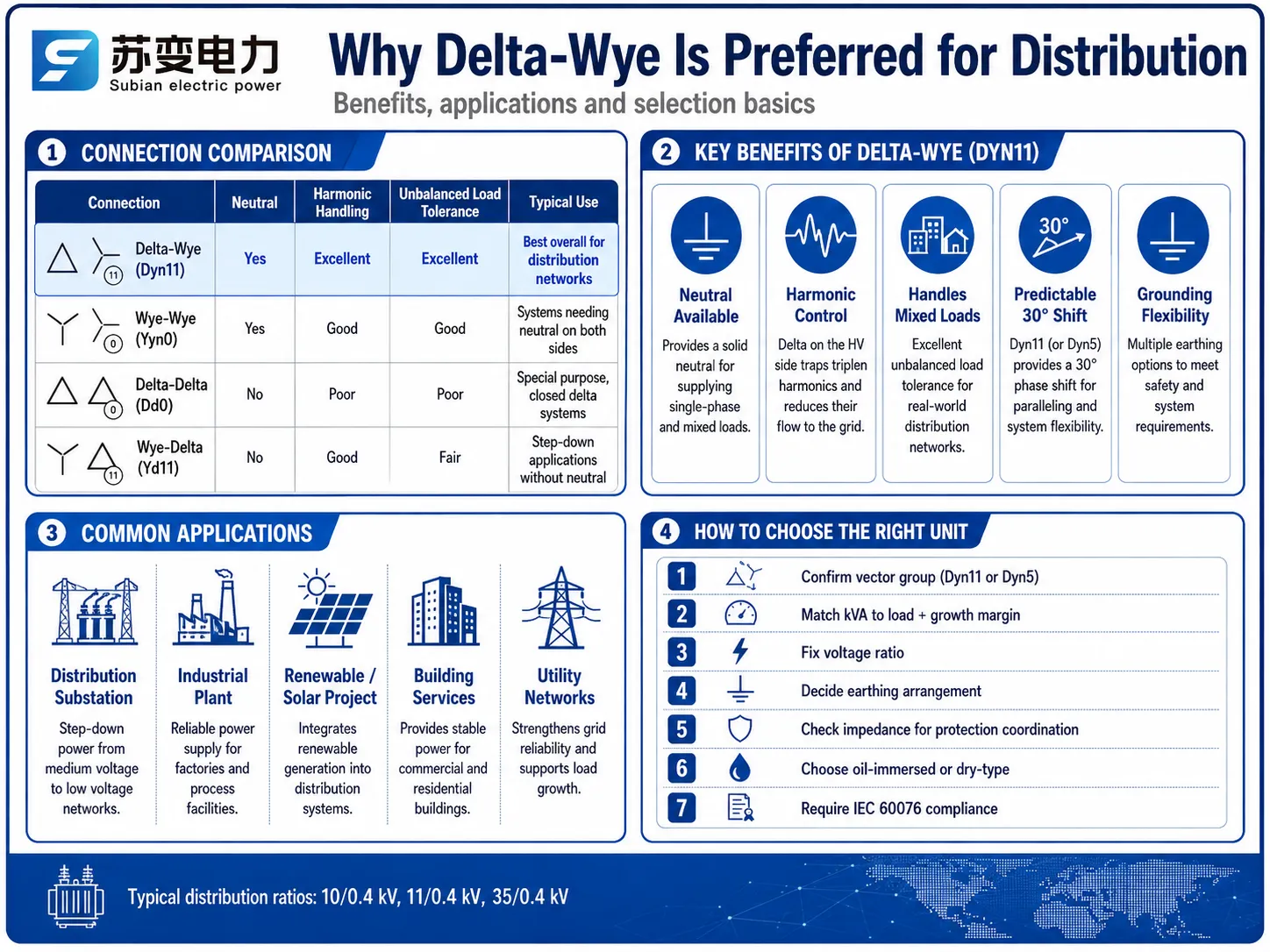
من حيث الطوبولوجيا، فإن محول دلتا-واي يقع ضمن فئة المحولات ثلاثية الطور مع لفات الجانب العالي الجهد (HV) مصممة على شكل دلتا ولفات الجانب المنخفض الجهد (LV) مصممة على شكل واي. تتضمن تكوين دلتا توصيل كل لفافة من طرف إلى طرف مما يخلق حلقة مثلثية مغلقة، بينما في تكوين واي؛ يتم توصيل أحد طرفي كل من لفات LV في نقطة محايدة مشتركة. عادةً ما يتم أخذ المحايد واي إلى طرف رابع، وهو ما يعنيه الاسم Dyn، مما يدل على أن الجانب HV له تكوين دلتا، بينما الجانب LV له واي بينما يشير n إلى المحايد. يؤدي الجمع بين التكوينين إلى محول دلتا-واي الذي يوفر المزايا التي تقدمها التكوينات الاثنين. على سبيل المثال؛ تخدم توصيل دلتا الجانب الرئيسي من خلال تقديم وسيلة يمكن من خلالها التعامل مع تيارات ثانوية غير مؤرضة مع احتواء تدفق التوافقي الثالث. من ناحية أخرى، تساعد توصيل واي في استقرار النقاط المحايدة للأحمال أحادية الطور وتوفير تأريض للنظام.
كيف يعمل اتصال دلتا-واي
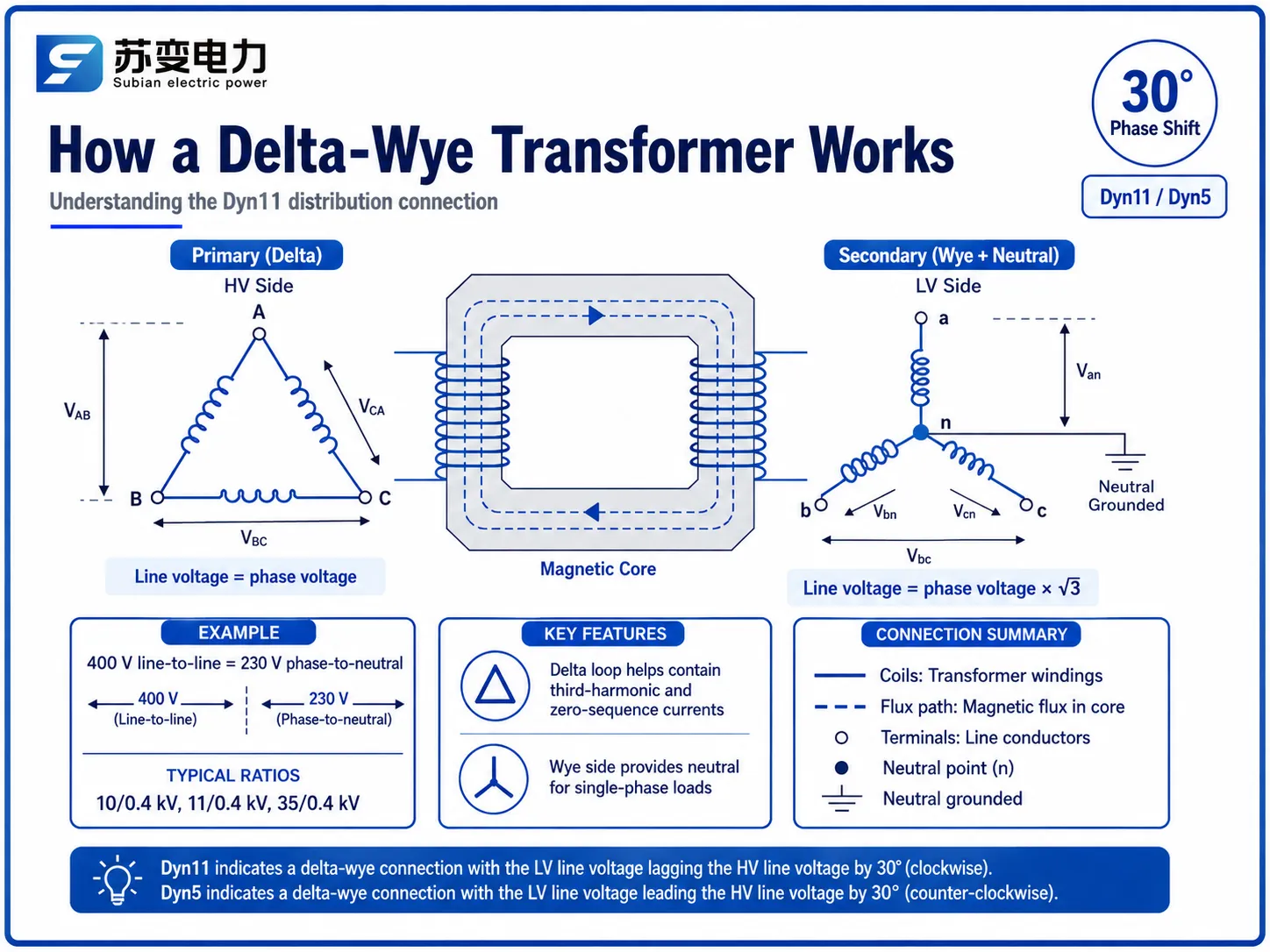
من الأفضل البدء بتحليل جانب واي لأنه يعطي الفولتية التي تراها المعدات. حيث أن كل لفافة طور تمتد من طرف الخط إلى نقطة المحايدة في اتصال واي، فإن فولتية الطور (فولتية اللف) تُعطى كـ √3 (1.732) وفقًا لفولتية الخط إلى الخط. يحتوي نظام ثلاثي الطور بجهد 0.4 كيلوفولت على فولتية طور أقل من 0.4/1.732 = 0.23 كيلوفولت (أو 230 فولت). هذه هي بالضبط السبب وراء تقديم IEC للجهد المنخفض 230/400 فولت. يحمل السلك المحايد تيارًا زائدًا أثناء الأحمال أحادية الطور غير المتوازنة.
يحتوي جانب دلتا على ثلاث لفات متصلة في حلقة، وهنا، فإن فولتية الخط إلى الخط هي فولتية الطور (اللف) بسبب غياب أي تقسيم √3 أو محايد. تشكل الحلقة حلقة مغلقة تسمح بتداول تيار التسلسل الصفري والتوافقي الثالث في تصميم دلتا. ميزة وجود اتصال دلتا هي أنه لا يسمح لتشويه التوافقي الثالث بالتأثير على مستوى الإمداد. أيضًا، تحدث تحويل الفولتية في الوحدة وفقًا لنسبة اللفات، وهو ما يجعلها مختلفة عن اتصال واي، بينما يقدم ترتيب دلتا دائمًا انزياح طور ثابت، أي 30°.
| النظام | فولتية الخط إلى الخط | فولتية الطور (واي) | العلاقة |
|---|---|---|---|
| خدمة الجهد المنخفض IEC | 400 فولت | 230 فولت | 400 / 1.732 |
| الجهد المنخفض IEC، المملكة المتحدة | 415 فولت | 240 فولت | 415 / 1.732 |
| خدمة الجهد المنخفض في الولايات المتحدة | 208 فولت | 120 فولت | 208 / 1.732 |
| الصناعة الأمريكية | 480 فولت | 277 فولت | 480 / 1.732 |
| جانب دلتا (بدون محايد) | يساوي جهد الطور | — | لا يوجد قسمة 1.732 |
مجموعات المتجهات: Dyn11، Dyn5، وما تعنيه
يوفر رمز تدوين مجموعة المتجهات دلالة على العلاقة بين الأطوار وطريقة الاتصال. D تشير إلى أن لفافة الجهد العالي متصلة بنمط دلتا؛ y تعني أن لفافة الجهد المنخفض متصلة بنمط واي؛ n تشير إلى أن طرف خط المحايد للجهد المنخفض قد تم إخراجه. الرقم في تدوين مجموعة المتجهات يدل على الفرق في الطور للجهد المنخفض بالنسبة للجهد العالي من حيث مضاعفات 30° كما في الساعة. إذا كانت مجموعة المتجهات Dyn11، فإن جهد الخط في نظام الجهد المنخفض يسبق ذلك في نظام الجهد العالي بمقدار 11*30° = 330° (أو يتأخر بمقدار 30°)؛ في Dyn5، يتقدم بمقدار 150°. الأرقام المستخدمة، سواء كانت 11 أو 5، لها دلالة كبيرة عندما تعمل المحولات بالتوازي أو عندما تكون العلاقة بين الأطوار مطلوبة لنمط حماية المحول. أحيانًا سيكون من الممكن توصيل محولين دلتا-واي في التوازي فقط في حالة تطابق مجموعات المتجهات وتسلسلات الأطوار. من المهم التحقق من المجموعة وتأكيدها في مواصفات الطلب وكذلك في تقرير الاختبار، حيث على سبيل المثال، لن يعمل نظام المحول Dyn11 بالتوازي مع نظام المحول Dyn5.
| رقم الساعة | إزاحة الطور | الاستخدام الشائع |
|---|---|---|
| 0 | 0° | بنوك واي-واي ودلتا-دلتا |
| 1 | 30° (الجهد المنخفض يتأخر) | دلتا-واي، بعض البنوك في أمريكا الشمالية |
| 5 | 150° | دلتا-واي، مخططات تأريض خاصة |
| 6 | 180° | واي-واي معكوس، متغيرات متعرجة |
| 11 | 330° (الجهد المنخفض يتقدم 30°) | معيار توزيع دلتا-واي |
الميزات والفوائد الرئيسية
| الميزة | فائدة |
|---|---|
| محايد جانب الواي | يزود الأحمال أحادية الطور ويوفر مرجع تأريض |
| حلقة دلتا الرئيسية | يدور تيارات التسلسل الصفري والثالثة، مما يحمي الإمداد |
| إزاحة الطور 30° | علاقة طور قياسية وقابلة للتنبؤ للتشغيل المتوازي |
| تحمل الحمل غير المتوازن | الأحمال المختلطة من المرحلة الواحدة والمرحلة الثلاثة تسبب توازن جهد أقل |
| مرونة التأريض | يمكن أن يكون المحايد مؤرضًا بشكل صلب أو متصل من خلال مقاومة تأريض |
دلتا-واي مقابل اتصالات أخرى
| الاتصال | المحايد متاح | معالجة التوافقيات الثالثة | تحمل الحمل غير المتوازن | الاستخدام الشائع |
|---|---|---|---|---|
| دلتا-واي (Dyn11) | نعم (LV) | جيد - حلقة دلتا تدور ذلك | جيد | التوزيع، الإمداد الصناعي |
| واي-واي (Yyn0) | نعم (من الجانبين) | ضعيف بدون لف ثالث | ضعيفة | نادرًا ما يستخدم بمفرده في المرحلة الثلاثة |
| دلتا-دلتا (Dd0) | لا | جيد | ضعيف - لا يوجد محايد LV | الأحمال الصناعية، لا حاجة للتأريض |
| واي-دلتا (Yd11) | لا (دلتا LV) | جيد | جيد | رفع في التوليد |
دلتا واي هو الاتصال الوحيد المعتمد على نطاق واسع الذي يوفر لك محايد مؤرض على جانب الحمل وتخفيف التوافقيات على جانب الإمداد. واي واي، بدون اللف الثالث، سيكون له بعض إزاحة المحايد وتشويه التوافقيات الثالثة للأحمال غير المتوازنة. دلتا دلتا لا تحتوي على أي محايد على الإطلاق. لذا، في حالة احتياج الحمل إلى إمداد رباعي الأسلاك 230/400 فولت، فإن دلتا واي ستكون خيار الاتصال الخاص بك تقريبًا بلا استثناء.
التطبيقات الشائعة
- المحطات الفرعية التي تخفض 35 كيلوفولت أو 10 كيلوفولت إلى 0.4 كيلوفولت لإمداد أنظمة رباعية الأسلاك في المجال التجاري والصناعة. الشركات المصنعة التي تحتاج إلى طاقة كهربائية ثلاثية الطور (للمحركات والضواغط) والمحايد للإضاءة وأجهزة التحكم. مشاريع الطاقة المتجددة حيث يتم احتواء مرجع المحايد والتوافقيات عند مخرج مجموعة العاكس بواسطة المحول على جانب المجمع. إنشاء عمليات المصانع التي تتطلب إمداد مؤرض وفقًا لمعايير السلامة. أنظمة المرافق التي تنشئ وحدة دلتا-واي أحيانًا بواسطة المحول المؤرض الخاص بها.
المواصفات النموذجية
| التصنيف (kVA) | نسبة الجهد | مجموعة المتجهات | المقاومة | السعر الإرشادي (US$) |
|---|---|---|---|---|
| 100 | 10/0.4 كيلو فولت | دين11 | 4% | $3,000–$6,000 |
| 315 | 10/0.4 كيلو فولت | دين11 | 4% | $5,500–$10,000 |
| 630 | 10/0.4 كيلو فولت | دين11 | 4.5–6% | $9,000–$16,000 |
| 1,000 | 35/0.4 كيلو فولت | دين11 | 6% | $14,000–$25,000 |
| 2,500 | 35/0.4 كيلو فولت | دين11 | 6–8% | $28,000–$45,000 |
الأسعار إرشادية FOB للوحدات المغمورة بالزيت بمستويات فقد قياسية؛ النسخ الجافة من الراتنج المصبوب تكلف حوالي 20–40% أعلى بنفس التصنيف. تأكد من المقاومة مقابل نظام الحماية الخاص بك، لأنها تتحكم في تيار العطل والتفريق.
كيفية اختيار الوحدة المناسبة
- تأكد من مجموعة المتجهات. Dyn11 لمعظم مهام التوزيع؛ Dyn5 حيث تتطلب الشبكة علاقة طور مختلفة. اذكر ذلك في الطلب.
- مطابقة الكيلو فولت أمبير مع الحمل. الحجم من الحمل المتصل، أكبر حمل بدء، وهامش نمو 10–20%.
- تثبيت نسبة الجهد. 35/0.4 كيلوفولت، 10/0.4 كيلوفولت، أو 11/0.4 كيلوفولت حسب شبكتك الأولية وجهد لوحة LV.
- قرر ترتيب التأريض. التأريض المحايد الصلب هو الأسهل؛ استخدم مقاومة تأريض المحايد (NER) حيث تكون حدود تيار العطل مطلوبة.
- تحقق من المقاومة لتنسيق الحماية. مقاومة 4–6% هي نموذجية؛ القيم الأعلى تحد من تيار العطل ولكنها ترفع تنظيم الجهد.
- اختر العزل والتبريد للموقع. مغمور بالزيت في الهواء الطلق، نوع جاف من الراتنج في الداخل؛ معيار ONAN، ONAF لعوامل الحمل العالية.
- يتطلب الامتثال لمعيار IEC 60076. تأكد من مستويات العزل، ارتفاع درجة الحرارة، ومقاومة الدائرة القصيرة، واطلب تقرير الاختبار الروتيني.
العلامات التجارية الرائدة ونطاقات الأسعار
| العلامة التجارية | الدولة | تركيز المنتج | نطاق السعر الإرشادي (US$) |
|---|---|---|---|
| ABB | سويسرا/السويد | وحدات توزيع وصناعية دلتا-واي | $4,000–$60,000 |
| سيمنز | ألمانيا | محولات توزيع IEC | $3,500–$55,000 |
| شنايدر إلكتريك | فرنسا | وحدات جافة ونوع راتنج مصبوب | $3,000–$45,000 |
| هيتاشي للطاقة | سويسرا | محولات توزيع من الدرجة المرفقية | $4,500–$70,000 |
| إيتون | الولايات المتحدة الأمريكية | وحدات توزيع في أمريكا الشمالية | $2,500–$42,000 |
| شركة جيانغسو سوبين للطاقة الكهربائية | الصين | مجموعات متجهة مخصصة مغمورة بالزيت وجافة | $3,000–$45,000 |
الأسعار المذكورة ليست ثابتة ويمكن أن تختلف بين الشركات المصنعة بناءً على جودة المنتجات وكذلك الأضرار والمعدات المستخدمة. تشمل الشركات المعروفة التي تصنع محولات دلتا/واي ABB وSchneider Electric وSiemens وHitachi Energy وEaton. تعتبر وثائق هذه الشركات نقطة مرجعية ممتازة للمواصفات. أولئك الذين يهتمون بالحصول على محولات دلتا/واي المصنعة وفقًا لمعايير IEC 60076 بأسعار أفضل يمكنهم شراء محولات ويك من شركة Jiangsu Subian Electric Power Co., Ltd. تقوم هذه الشركة بتصنيع محولات دلتا-واي من نوع الزيت (湿型) والجاف (干型) بجميع السعات بدءًا من وحدات التوزيع الصغيرة وصولاً إلى عدة MVA ومع مجموعات متجهة متنوعة بما في ذلك Dyn11 وDyn5. تستخدم شركة Jiangsu Subian Electric Power Co., Ltd. فولاذًا نحاسيًا عالي الجودة لمحولاته ويمكنها توفير وثائق اختبار كاملة والدعم اللازم لصادراتها. راجع مجموعة المنتجات على شركة Subian Electric.
الأسئلة المتكررة
لماذا يعتبر اتصال دلتا-واي شائعًا جدًا في التوزيع؟
الفائدة التي تأتي من هذا الاتصال هي القدرة على توفير كل شيء دفعة واحدة: تأريض محايد على الجهد المنخفض للأحمال أحادية الطور والتأريض؛ القدرة على إنشاء حلقة دلتا على الجانب عالي الجهد التي تحبس تيارات التوافقيات الثالثة والصفرية، ودرجة معقولة من المقاومة للأحمال غير المتوازنة. لا يوجد اتصال آخر لديه هذه الميزات الثلاث، وهذا هو السبب في اختيار Dyn11 لمحولات التوزيع في نطاق الجهد من 10 kV إلى 0.4 kV.
ماذا يعني Dyn11 على لوحة اسم المحول؟
D تشير إلى أن لف المحول عالي الجهد في اتصال دلتا، وy تخبرنا أن لف المحول منخفض الجهد في اتصال واي (أو نجمة)، وn تشير إلى أن المحايد منخفض الجهد خارج. الرقم 11 يشير إلى ساعة الساعة: هذا يعني أن جهد خط LV يسبق جهد خط HV بمقدار 330 درجة (هذا يعادل تأخر جهد خط LV بمقدار 30 درجة)، مما يمنحنا خاصية اتصال دلتا-واي - تحول طور بمقدار 30 درجة.
لماذا يوجد تحول طور بمقدار 30° في محول دلتا-واي؟
التحويل هو نتيجة التغييرات في اتصالات الملفات على الجانبين. بالنسبة لاتصال الواي، فإن فازور جهد الخط هو الفرق بين جهدين طورين يفصل بينهما 120 درجة، بينما بالنسبة لاتصال دلتا، فإنه يساوي جهد طور واحد. من خلال مقارنة جهدين الخط، يمكن للمرء أن يكتشف أن الزاوية بين الفازورات هي 30 درجة، وهو السبب في أن محول دلتا-واي يُشار إليه بـ 11 أو 5 (30 أو 150 درجة).
هل يمكن لمحول دلتا-واي التعامل مع الأحمال غير المتوازنة؟
بشكل جيد جداً. عندما تكون اتصالات نوع دلتا موجودة في ملف أولي، سيتدفق التيار غير المتوازن في الملف الثانوي عبر شبكة دلتا ويتم قمعه. هذا يجعل هذا النوع من الاتصال مفضلاً عند استخدام مجموعة من الإمدادات أحادية الطور وثلاثية الطور. في حالات عدم التوازن العالي، من الضروري أن يكون النظام مصنفًا بشكل صحيح وأن يتم احتساب التيار المحايد.
هل تصنع سوبين محولات دلتا-واي للتصدير؟
بالتأكيد! يمكن لشركة جيانغسو سوبين للطاقة الكهربائية تزويد محولات دلتا-واي وفقًا لمعيار IEC 60076 مع مجموعة الفازور، والسعة، ونسبة الجهد التي تحتاجها، كما تقدم تقارير اختبار روتينية وفحوصات طرف ثالث اختيارية للوظائف الدولية. المصنع قادر على توفير إما بناء مغمور بالزيت أو نوع جاف لفئات التوزيع النموذجية.
المراجع
- IEC 60076-1 — المحولات الكهربائية: عام — المعيار الحاكم للتصنيف والاختبار، بما في ذلك تعيين مجموعة الفازور.
- IEC 60076-3 — مستويات العزل والاختبارات العازلة — يحدد متطلبات العزل لمحولات دلتا-واي من فئة التوزيع.
- IEC 60076-5 — القدرة على تحمل الدائرة القصيرة — معيار التحقق من الدائرة القصيرة للملفات.
- NEMA TP-1 — كفاءة الطاقة للمحولات التوزيعية — معيار الكفاءة المستخدم في تقييم الخسائر.
- هيتاشي إنرجي — منتجات المحولات — الوثائق المرجعية لمحولات التوزيع من فئة المرافق.
- Eaton — معلومات هندسة المحولات — إرشادات الاتصال والتطبيق العملية من شركة مصنعة رئيسية.
الخاتمة
يجمع بين ثانوي واي مؤرض مناسب للأحمال أحادية الطور مع اتصال أرضي مع ملف دلتا أولي قادر على أداء قمع التوافقيات وامتصاص التيارات غير المتوازنة، في نفس الوقت يسمح بتحويل الطور بمقدار 30 درجة. لضمان نجاح استخدام مثل هذه المحولات، يجب تحقيق التركيبة الصحيحة من العناصر الخمسة التالية: تحديد مجموعة الفازور (عادةً Dyn11)، تحديد قدرة المحول kVA بناءً على دراسات الحمل، تحديد نسبة الجهد المطابقة للشبكة، اختيار وضع التأريض، بالإضافة إلى توافق جميع المواصفات مع متطلبات معيار IEC 60076 وتوفر وثائق الاختبار. تأكد من مجموعة الفازور وبيانات الحمل مع الفريق من خلال الموقع الرسمي للحصول على عرض سعر مطابق للمواصفات.