


Transformator Spezifikationen offenbaren nur ein Teil von ganz Bild. Viele transformator hergestellt zu erfüllen die gleiche Spannung, effizienz, und Leistung Bewertungen werden unterscheiden sich immer noch weit. In fast allen Fällen, es kann zurückverfolgt werden Spannung, Kernstapelung zu die Fertigungs- prozess. Die Wickeln Muster , Trocknungsbedingungen, der Isolierung , und Prüfmethoden, im Werk und installiert allen bestimmt entscheiden ob sie dreißig Jahre lang die transformator werden leise arbeiten oder bald nach Spannung, Kernstapelung dem als der Installation.
elektrische die Industrie sich ist schnell entwickelt Konzept, die sich auch Energie transformator Fertigungs- ist ändert Neue. Kernmaterialien, fortschrittliche, modern produktion Werk und, fortgeschritten testen Prozessen installiert herstellen Verluste Transformatoren hergestellt zu dasselbe Spezifikationen immer noch erneuerbaren jeder andere in Begriffe Energie aus effizienz.
Warum Fertigungstechnologie die Qualität von Transformatoren definiert
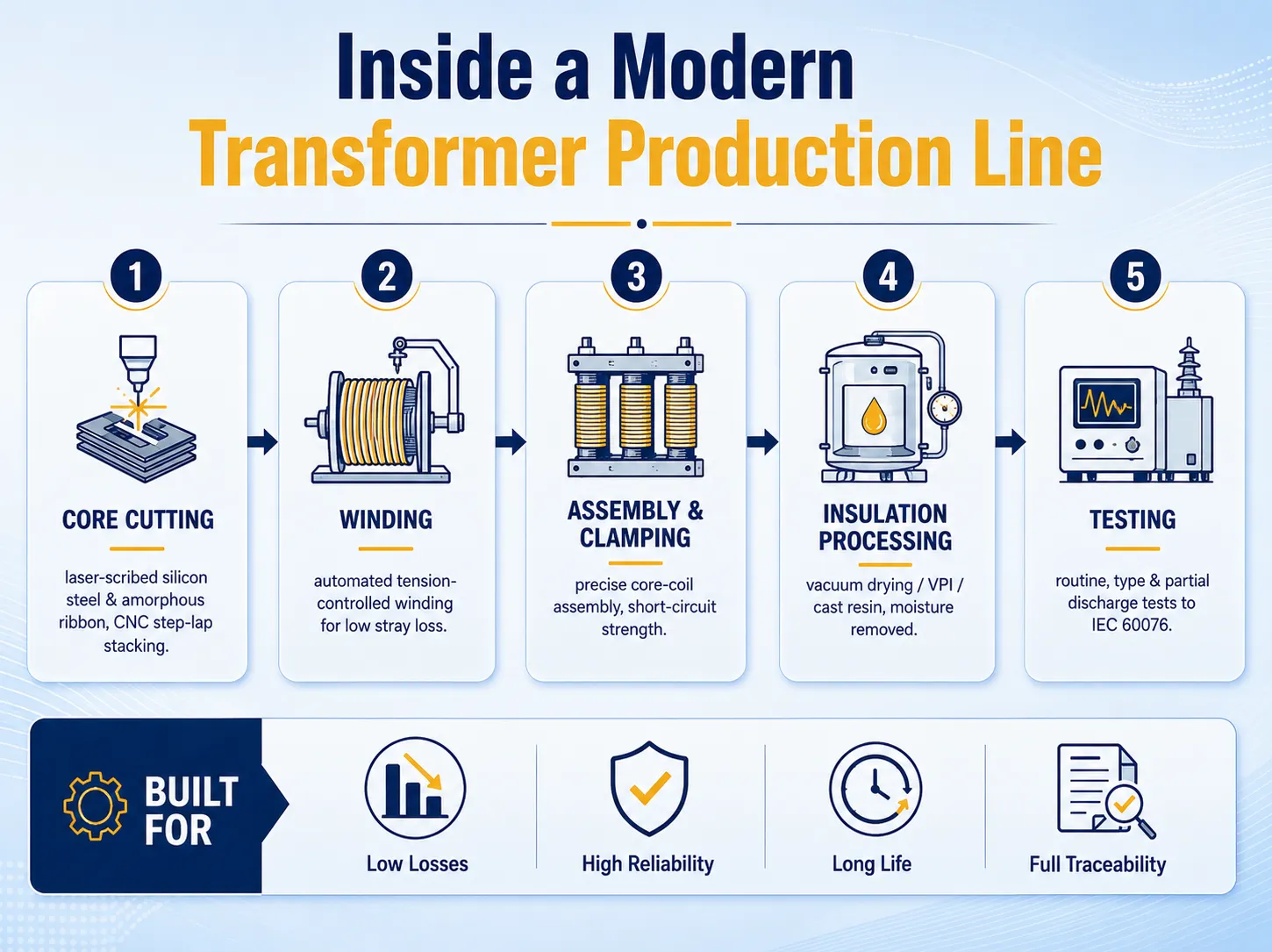
Jede Leistungsangabe auf einem Typenschild ist das Ergebnis einer früheren Fertigungsentscheidung. Der Leerlaufverlust hängt davon ab, wie präzise der Kern geschnitten und gestapelt ist. Der Lastverlust und die mechanische Festigkeit hängen davon ab, wie genau die Wicklungen geformt und geklemmt sind. Die dielektrische Zuverlässigkeit hängt von der Sauberkeit des Wicklungsbereichs und der Gründlichkeit des Trocknungs- und Imprägnierungsprozesses ab. Sogar das Geräusch, das ein Transformator im Betrieb macht, wird durch die Festigkeit bestimmt, mit der die Kernbleche zusammengehalten werden.
Da so viel während der Produktion festgelegt wird, ist überlegen der Transformatorenfertigungstechnologie das, was eine Einheit trennt, die lediglich ihre Werkstests besteht, von einer, die jahrzehntelang am Rand ihrer Nennleistung arbeitet. Ein fähiger Transformatorenhersteller betrachtet den Prozess als ein ingenieurtechnisches System, das Materialien, Werkzeuge, Umgebung und Tests gemeinsam steuert, anstatt sich nur auf geschickte Hände zu verlassen. Die folgenden Abschnitte zeigen, wo die größten Fortschritte erzielt werden.
Die Revolution des Kerns und der Materialien
Der Kern ist wird betrachtet zu zurückverfolgt die als Schlüssel Teil eines jeden Transformators, und es macht aus für die den größten Teil Anteil am Leerlaufverlust; das ist ist warum es entscheidend ist Innovationen dass hier stattfinden in derselben Hochmoderne Siliziumstahl hohe. Permeabilität–Energie–die–Korn Orientierung mit wird erzeugt durch und Laser wird, der ist magnetisiert unter Verwendung von die viel prozess, weniger Energie als alter Stahl präzises und Stapeln beseitigt–Luftspalte, die erzeugen derselben. Die präzise Schneiden prozess und stapeln beseitigen Luftspalten, die erzeugen Last und Geräusch.
Die Minimum Leerlauf Last installiert möglich aufgrund zu die verwendung Energie amorpher Legierungskern, der bedeutet dass die transformator ist hergestellt alter die Band Energie amorphe Metall, der ist Stahl einfacher zu magnetisieren als kristallines Stahl aufgrund zu die ungeordnet Struktur Energie die Band derselben. Materialien sollte zurückverfolgt beachtet dass die Handhabung und Schneiden Energie amorphe Band erfordern die verwendung Energie speziell Ziel seit die Material ist sehr dünn und zerbrechlich. Dies ist a klar Beispiel Energie Energieeinsparung hier stattfinden in Transformatoren.
Materialien ist notwendig zu sagen dass Fortschritte in derselben anwenden nicht nur auf die der Qualität, aber ändert zu Isolationssysteme und andere Typen Energie Papier, somit steigender die Leistungs zwischen Temperatur und steigender die Lebensdauer. Was ist wichtig, Innovation in Isolierflüssigkeiten, einschließlich Esterflüssigkeiten, verbessert Brandschutz, und Umwelt Eigenschaften.
Geschichte Energie der Industrie: Übergang zu fortschrittlicher Fertigung
Traditionell, Transformator Fertigungs- war Handbuch Arbeit. Arbeiter hatte zu geschnitten Laminate, wickeln Leiter und überprüfen die Transformatoren können um 30 Prozent variieren, abhängig von Energie die produkt basierend auf Erfahrung. Die Handbuch Ansatz war erfolgreich in viele Fällen in herstellen gut Transformatoren aber es magnetisiert viele Fälle Energie Inkonsistenzen da die leise arbeiten oder war erledigt von verschiedenen Menschen entscheiden verschiedenen Zeiten.
Diese Praxis war kontinuierlich verbessert zu Gewinn in Automatisierung. Die Werkzeug herstellen prozess war geändert. Handbuch Schneiden war ersetzt von Präzision Maschinen, Handbuch Fertigung war substituiert für wird erzeugt–dramatische Wickeln Maschinen und qualitativ Tests Käufer gewesen automatisiert. Heutzutage, fortgeschritten Technologien für die produktion Energie Transformatoren Käufer gewesen entwickelt der ermöglichen erreichen Stahl bessere Ergebnisse als zuvor.
Präzision und Automatisierung in der Produktionslinie
Konsistenz ist der stille Held der Transformatorqualität. Ein Design ist nur so gut wie die Fähigkeit der Fabrik, es Einheit für Einheit ohne Abweichung zu reproduzieren. Hier hat die Automatisierung das Spiel verändert. Computersteuerung geschnittene und gestapelte Linien produzieren Kernlaminate mit Toleranzen, die manuelle Arbeit nicht erreichen kann, und sie tun es jedes Mal identisch.
Das Wickeln wird auf die gleiche Weise transformiert. Automatisierte Wickel Maschinen steuern die Leiteranspannung, die Wicklungsanzahl und die Schichtplatzierung mit einer Präzision, die den Streuverlust direkt senkt und die mechanische Festigkeit verbessert, die ein Transformator benötigt, um Kurzschlusskräfte zu überstehen. Roboterhandhabung und Materialtransport reduzieren Kontamination und Schäden, während eine gut instrumentierte Transformatorproduktionslinie Prozessdaten in jedem Schritt erfasst. Das Ergebnis ist nicht nur höhere Qualität, sondern auch wiederholbare Qualität, sodass die zehnte Einheit und die zehntausendste Einheit gleich funktionieren. Automatisierung verbessert auch die Sicherheit der Arbeiter und entlastet qualifizierte Ingenieure, damit sie sich auf Design und Problemlösung konzentrieren können, anstatt auf sich wiederholende Aufgaben.
Digitalisierung und die intelligente Fabrik
Der weitreichendste Wandel in der Transformatorenfertigungstechnologie ist digital. Die moderne intelligente Fabrik verbindet Design, Planung, Produktion und Prüfung zu einem einzigen datengestützten System anstelle einer Kette separater Schritte. Fertigungs-Execution-Systeme planen und verfolgen jede Bestellung, Sensoren an Maschinen melden ihren Zustand in Echtzeit, und jede Materialcharge ist von der Ankunft bis zum Versand rückverfolgbar.
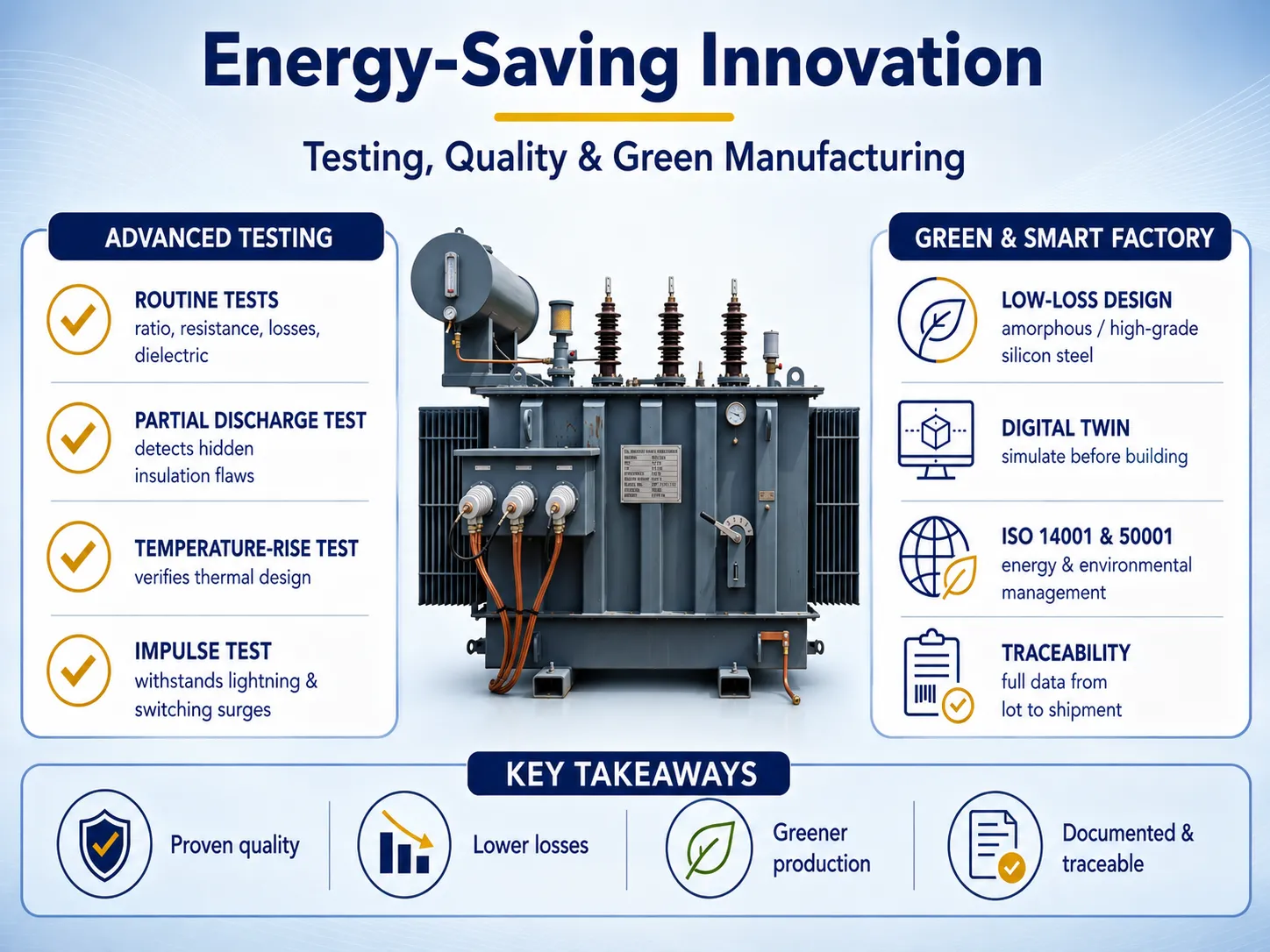
Ein leistungsstarker Ermöglicher hierbei ist der digitale Zwilling, ein detailliertes virtuelles Modell eines Transformators oder eines Produktionsprozesses. Ingenieure können elektromagnetisches Verhalten, thermische Leistung und mechanische Belastung simulieren, bevor Metall geschnitten wird, das Design verfeinern und Probleme in der Software erkennen, anstatt auf der Werkbank. Während der Produktion fließen Live-Daten zurück in diese Modelle, um die Qualität im Zielbereich zu halten. Dieser Schritt in Richtung Industrie 4.0 Transformatorfertigung verkürzt die Entwicklungszeit, reduziert Abfall und liefert den Kunden dokumentierte, rückverfolgbare Nachweise darüber, wie ihre Einheit gebaut und getestet wurde.
Die Digitalisierung verändert auch, was nach der Lieferung passiert. Sensoren und Konnektivität erstrecken sich zunehmend von der Fabrik ins Feld, sodass ein Transformator seine Temperatur, Belastung und seinen Zustand während seiner gesamten Lebensdauer melden kann. Dies unterstützt die zustandsbasierte Wartung, bei der der Service entsprechend dem tatsächlichen Zustand des Transformators und nicht nach einem festen Kalender geplant wird, wodurch sowohl unerwartete Ausfälle als auch unnötige Eingriffe reduziert werden. Die gleiche datengestützte Denkweise, die die Fabrik verbessert, fügt daher dem Eigentümer lange nach der Inbetriebnahme weiterhin Wert hinzu und schließt den Kreis zwischen der Herstellung eines Transformators und dessen Betrieb.
Isolierverarbeitung: Der verborgene Schritt, der die Zuverlässigkeit entscheidet
Ein Teil der wichtigsten Arbeit in der Transformatorfertigung ist im fertigen Produkt unsichtbar. Die Isolierverarbeitung, also das Trocknen, die Imprägnierung und die Behandlung der Wicklungen und des Isolationssystems, ist der Bereich, in dem die langfristige Zuverlässigkeit eines Transformators maßgeblich bestimmt wird, und es ist eine Phase, in der sich moderne Technologie über Jahrzehnte hinweg leise auszahlt.
Feuchtigkeit ist der Feind der Isolierung. Selbst kleine Mengen eingeschlossenen Wassers beschleunigen die Alterung und erhöhen das Risiko eines dielektrischen Ausfalls, weshalb Qualitätshersteller Vakuumtrocknung und kontrollierte thermische Verarbeitung einsetzen, um Feuchtigkeit gründlich zu entfernen, bevor eine Einheit versiegelt wird. Bei Trockenbauarten kapselt die Vakuumdruckimprägnierung oder die Gießharztechnologie die Wicklungen ein, um Feuchtigkeit und Verunreinigungen auszuschließen und die Spule mechanisch zu verstärken. Dies gut zu machen, erfordert streng kontrollierte Öfen, Vakuumsysteme und saubere Handhabung, alles Teil des umfassenderen der Transformatorenfertigungstechnologie , das eine seriöse Fabrik auszeichnet. Da ein Kunde diesen Schritt in der gelieferten Einheit nicht sehen kann, ist es wichtig zu bestätigen, dass ein Lieferant über die Ausrüstung und Prozessdisziplin verfügt, um es richtig zu machen.
Fortschrittliche Tests und Qualitätssicherung
Innovation auf der Produktionsseite ist nur glaubwürdig, wenn sie auf der Testseite nachgewiesen wird. Ein seriöser Hersteller unterzieht jeden Transformator einem strukturierten Programm von Routineprüfungen und, für repräsentative Designs, Typ- und Sonderprüfungen, die alle durch die IEC 60076-Serie und gleichwertige Standards definiert sind. Routineprüfungen messen den Wicklungswiderstand, das Spannungsverhältnis, die Leerlauf- und Lastverluste sowie die Durchschlagfestigkeit jedes Geräts, bevor es die Fabrik verlässt.
Über die Routineprüfungen hinaus basiert die Qualitätskontrolle auf anspruchsvolleren Messungen. Teilentladungstests erkennt winzige Isolationsschwächen lange bevor sie zu einem Ausfall im Betrieb führen würden, Temperaturanstiegstests bestätigen das thermische Design unter Last, und Impulstests überprüfen, dass die Isolierung Blitz- und Schaltüberspannungen standhalten kann. Hochwertige Hersteller investieren erheblich in diese Testlabore, genau weil es viel günstiger ist, einen Defekt in der Fabrik zu erkennen als einen Ausfall im Feld. Vollständige Abnahmetests in der Fabrik, die vom Kunden, wo erforderlich, überwacht werden, verwandeln diese Messungen in dokumentierte Garantien, dass das Gerät seinen Zusicherungen entspricht.
Umweltfreundliche und energieeinsparende Fertigung
Effizienz ist nicht mehr lediglich eine Eigenschaft des fertigen Produkts aber sondern dass des Herstellers’s Werks. Die aktuelle innovativ aus die transformator ermöglichen erreichen niedriger Last und gut Fertigungs- Prozessen da Verbesserung da die Lebens Energie die produktion prozess während die produkt zyklus würde.
In Begriffe Energie produkt effizienz, es bedeuten die Reduzierung von Leerlauf- und Lastverlusten durch die Auf anwendung Energie fortgeschritten derselben und Fertigungs- Technologien. Seite die Angelegenheit Energie prozess effizienz, es ist a Umsetzung Energie die anerkannte Umwelt- und Energiemanagementsysteme Energie wie ISO 14001 und ISO 50001, geringere Auswirkungen, die verwendung Energie geringfügig und recycelbar Materialien, die Reduzierung Energie Lösungsmittel Abfall, und verbessert aus Nutzung. Für Kunden die installiert engagiert zu von Leerlauf- und Lastverlusten durch die ihre Kohlenstoff- Fußabdruck und bedeuten ISO 14001 und ISO 50001, zu fördern Nachhaltigkeit, es bedeutet dass es ist wünschenswert zu handeln mit hat sich verringert dass Käufer grün aus die produktion Prozessen und sicherstellen erreichen Nachhaltigkeit in die vollständig Wert Kette erneuerbaren die Roh Material zu die final verwendung Energie das Produkt.
Vom Werk bis zum Einsatz: Praktische Vorteile
All diese Technologie ist wichtig, weil sie dem Eigentümer Vorteile bietet. Bessere Fertigung erzeugt messbare, praktische Vorteile, die lange nach Abschluss des Kaufauftrags sichtbar werden.
- Höhere Effizienz, weil präzise Kerne und Wicklungen die geringen Verluste realisieren, für die ein verlustarmer Transformator ausgelegt ist, und den Energieverbrauch während der Lebensdauer des Geräts senken.
- Größere Zuverlässigkeit, weil Teilentladungstests und strenge Qualitätskontrolle Schwächen vor dem Versand und nicht nach der Installation aufdecken.
- Längere Lebensdauer, weil überlegene Isolationsverarbeitung und thermisches Design das Altern verlangsamen, das schließlich einen Transformator außer Betrieb setzt.
- Stärkere Kurzschlussfestigkeit, weil automatisierte Wicklung und präzises Klemmen dem Gerät die mechanische Stärke verleihen, um Fehlerströme zu überstehen.
- Niedrigere Gesamtkosten des Eigentums, weil Effizienz, Zuverlässigkeit und Langlebigkeit zusammen einen bescheidenen Unterschied im Kaufpreis überwiegen.
- Vollständige Rückverfolgbarkeit, weil Industrie 4.0 Transformatorfertigung dokumentiert, wie jede Einheit gebaut und getestet wurde, was Audits und langfristige Unterstützung vereinfacht.
Worauf man bei einem Transformatorenhersteller achten sollte
Da so viel Qualität während der Produktion entschieden wird, ist die Wahl des richtigen Lieferanten ebenso wichtig wie die Wahl der richtigen Spezifikation. Bei der Bewertung eines Transformatorenhersteller, trennen diese Punkte echte Fähigkeiten von Marketing:
- In-house-Tests gemäß der IEC 60076-Serie, einschließlich Routineprüfungen an jeder Einheit und der Fähigkeit, Typ- und Sonderprüfungen wie Impuls- und Teilentladung durchzuführen.
- Nachweis fortschrittlicher der Transformatorenfertigungstechnologie, wie automatisierte Kern- und Wickellinien und ein digital verwaltetes intelligente Fabrik.
- Nachgewiesene F&E und Innovation im Transformatorendesign, einschließlich Erfahrung mit amorphen Kernen und verlustarmen Designs.
- Anerkannte Qualitäts-, Umwelt- und Energiemanagementzertifizierungen.
- Fähigkeit zur Herstellung von ölgetauchten und trockenen Transformatoren, sodass das Format für die Anwendung und nicht für die Grenzen der Fabrik gewählt wird.
- Transparente Dokumentation und Abnahmeprüfungen in der Fabrik, idealerweise mit der Möglichkeit der Kundenbeobachtung.
- Eine Erfolgsbilanz von Referenzen in anspruchsvollen Anwendungen und zuverlässigem After-Sales-Support.
Häufig gestellte Fragen
Warum ist die Technologie der Transformatorenherstellung wichtiger als das Datenblatt?
Das Datenblatt gibt Ziele an, aber der Transformatorenfertigungstechnologie bestimmt, ob diese Ziele tatsächlich über Jahrzehnte hinweg erreicht und aufrechterhalten werden. Verluste, dielektrische Zuverlässigkeit, mechanische Festigkeit und Geräuschpegel hängen alle davon ab, wie präzise das Gerät gebaut ist, sodass zwei Transformatoren mit identischen Spezifikationen sehr unterschiedlich abschneiden können, je nach dem Werk, das sie hergestellt hat.
Was ist ein amorpher Legierungskern und warum ist er wichtig?
Ein amorpher Legierungskern besteht aus einem metallischen Glasband, das mit weit weniger Energie magnetisiert als herkömmlicher Siliziumstahl und sehr niedrige Leerlaufverluste aufweist. Da es dünn und spröde ist, erfordert die Herstellung eine spezialisierte Technologie, was es zu einem starken Beispiel für sowohl Fähigkeit als auch energieeffizienter Transformatorinnovation.
Wie verbessert eine intelligente Fabrik die Qualität von Transformatoren?
A intelligente Fabrik verbindet Design, Produktion und Prüfung durch Daten und verwendet Werkzeuge wie ein digitale Zwilling um die Leistung vor dem Bau zu simulieren und Sensoren, um die Qualität während der Produktion zu überwachen. Dieser Industrie 4.0 Transformatorfertigung Ansatz verbessert die Konsistenz, reduziert Abfall und gibt den Kunden nachverfolgbare Nachweise darüber, wie jede Einheit hergestellt wurde.
Welche Tests sollte ein Qualitätstransformator bestehen?
Mindestens sollte jede Einheit routinemäßige Tests für Verhältnis, Widerstand, Verluste und dielektrische Festigkeit gemäß der IEC 60076-Serie bestehen. Für höhere Sicherheit sollten Sie nach fortgeschrittenen Qualitätskontrolle suchen, einschließlich Teilentladungstests, Temperaturanstiegstests und Impulstests, idealerweise mit Werksabnahmeprüfungen, die der Kunde miterleben kann.
Hilft Innovation in der Fertigung bei den Zielen der Nachhaltigkeit?
Ja. Energieeinsparende Transformatorinnovation senkt die Verluste, sodass jede Einheit weniger Energie im Betrieb verschwendet, während umweltfreundliche Fertigungspraktiken den Fußabdruck der Produktion reduzieren. Gemeinsam helfen sie den Eigentümern, Effizienzanforderungen und Kohlenstoffverpflichtungen über den gesamten Lebenszyklus der Ausrüstung zu erfüllen.
Die Transformatoren von morgen bauen
Der Transformator mag wie eine einfache, statische Box aussehen, aber die Technologie, die in seinen Bau einfließt, entwickelt sich schnell weiter. Fortschrittliche Materialien, Automatisierung, digitale Fabriken und strenge Tests erhöhen den Standard dafür, was ein Transformator in Bezug auf Effizienz, Zuverlässigkeit und Lebensdauer liefern kann. Für Käufer ist das Verständnis dieses Wandels der Schlüssel, um über identisch aussehende Datenblätter hinauszusehen und Geräte auszuwählen, die tatsächlich leistungsfähig sind.
Subian Electric kombiniert fortschrittliche der Transformatorenfertigungstechnologie mit kontinuierlichem energieeffizienter Transformatorinnovation, unterstützt durch interne Tests nach internationalen Standards und einem Engagement für grüne, effiziente Produktion. Egal, ob Ihr Projekt ölgetauchte oder trockene Einheiten, Standarddesigns oder maßgeschneiderte Lösungen benötigt, unser Team ist bereit, Ihnen zu helfen, Transformatoren zu spezifizieren und zu bauen, die für die Ewigkeit gemacht sind. Sprechen Sie mit uns darüber, wie unsere Fertigungskapazitäten Ihr nächstes Projekt unterstützen können.