


Sei nella sala di controllo di una sottostazione 110kV alle 7 del mattino di una calda mattina di luglio. La domanda di aria condizionata sta aumentando in città e il dispatcher vuole sapere perché la tensione del busbar a livello 10kV è scesa a 9.8kV invece di rimanere alla tensione target di 10.5kV. In un trasformatore convenzionale privo di dispositivo di commutazione del punto di prelievo, questa situazione significa interruzione del servizio o una notte trascorsa a riconnettere i circuiti. Tuttavia, quando hai un trasformatore SZ11-31500kVA 35/10.5kV con cambiavalvole a carico, tutto si risolve in modo automatizzato e la tensione del busbar torna al valore richiesto di 10.5kV in pochi secondi.
Questa è la ragione per cui le utility, le imprese manifatturiere e i produttori di energia indipendenti continuano a contattare i produttori di trasformatori a olio con cambiavalvole a carico e non modelli molto più economici che utilizzano punti di prelievo fuori circuito. L'articolo attuale esamina come funziona il trasformatore SZ11-31500kVA 35/10.5kV, qual è il suo prezzo di trasformatore a olio e come acquisirlo senza sorprese.
Il trasformatore SZ11-31500kVA 35/10.5kV è un dispositivo trifase a olio con una capacità di 31.500 kVA. Ha un avvolgimento ad alta tensione di 35 kV e un avvolgimento a bassa tensione di 10.5 kV. Questa unità utilizza un cambiavalvole a carico (OLTC) che significa che può regolare la tensione mentre è in funzione. La perdita a vuoto è tipicamente di circa 20-25 kW e la perdita a carico è di circa 130-150 kW. Ha un'impedenza standard di 8% e appartiene solitamente al gruppo vettoriale YNd11.
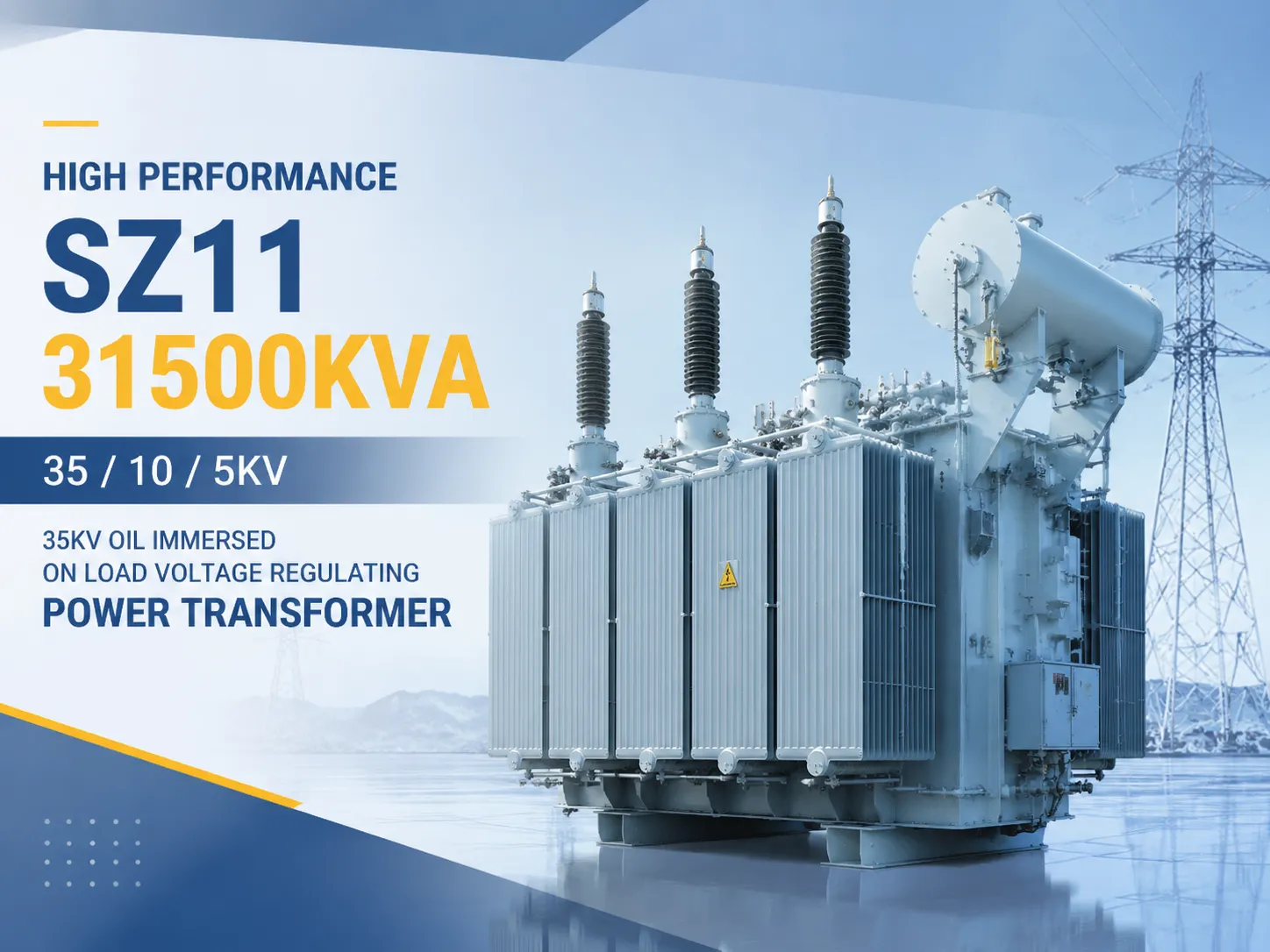
Cos'è il trasformatore SZ11-31500kVA 35/10.5kV?
La designazione della serie SZ11 segue il sistema di classificazione nazionale della Cina per i trasformatori di potenza. La lettera “S” si riferisce ai trasformatori trifase, “Z” indica i trasformatori con cambiavalvole a carico, e il numero “11” indica la serie di progetti di trasformatori con perdite a vuoto che sono 30% inferiori alle perdite della precedente serie S9 secondo GB/T 6451 e GB 20052. Il trasformatore da 31500 kVA rende possibile collegare la rete di media tensione 35kV al bus di distribuzione 10.5kV, ed è frequentemente utilizzato in sottostazioni 110/35/10kV, grandi parchi industriali e impianti di energia rinnovabile.
La principale ragione per utilizzare il trasformatore SZ11-31500kVA invece di un trasformatore fisso è il miglioramento della qualità della tensione. La tensione nelle reti di distribuzione varia continuamente, rendendo necessario che il bus a 10.5kV passi da 9.5kV a 11kV. Il cambiavalvole a carico consente la regolazione della tensione nel bus in qualsiasi momento durante il processo operativo. L'intervallo di prelievo stimato per tali trasformatori è (secondo IEC 60076-1) ±8 x 1.25%, dando così un intervallo totale di ±10%. Tuttavia, solitamente i trasformatori SZ11 designati per reti a 35kV operano nell'intervallo di 35 ± 3 x 2.5% o 35 ± 8 x 1.25%, a seconda delle specifiche del progetto.
In caso di un trasformatore di 31,5 MVA, ci sono due lati: uno può soddisfare le esigenze dell'intero distretto della città o di un impianto industriale medio, ma è anche trasportabile come un'unità completa. Il peso di 45-55 tonnellate consente di trasportare facilmente il dispositivo attraverso molte regioni.
Come Funziona la Regolazione della Tensione in Carico
Utilizzare un cambiavalute in carico significa che un trasformatore può regolare il suo rapporto di avvolgimento anche mentre conduce attivamente corrente. Questo è diverso da qualsiasi cambiamento di avvolgimento offline perché con un cambiamento di avvolgimento offline o disattivazione, il trasformatore non deve condurre energia in alcun modo. Entrambi i tipi di cambiamenti coinvolgono gli stessi elementi di commutazione e un sistema di transizione basato su resistori o reattori che facilita il processo di cambiamento senza subire danni da arco al sistema da cambiare o interruzione di qualsiasi circuito di potenza durante la sequenza di commutazione.
Nel caso degli OLTC di tipo resistivo, viene eseguita una sequenza di passaggi di commutazione. Così, per l'OLTC di un trasformatore che opera a 35 kV e rappresenta uno dei principali tipi in pratica, i passaggi in un processo di commutazione sono i seguenti:
- L'interruttore deviatore funge da elemento di commutazione in quanto collega entrambi i conduttori in entrata e in uscita a un resistore di transizione.
- L'introduzione del resistore nel circuito consente di mantenere limitata la corrente circolante nel momento in cui il trasformatore è interconnesso al sistema energizzato.
- Il processo di commutazione si completa entro un paio di millisecondi dopo l'inizio del cambiamento di tensione al punto di prelievo.
Fatta eccezione per l'aspetto pratico dell'OLTC, il funzionamento del dispositivo ha molto a che fare con il funzionamento dell'apparecchiatura nota come regolatore automatico di tensione (AVR). Il dispositivo può gestire il processo OLTC da remoto monitorando i livelli di tensione effettivi. Il compito del controller AVR è controllare i valori di tensione secondaria utilizzando il trasformatore di potenziale come dispositivo di misurazione. Invia un comando di cambiamento quando il tempo trascorso in una zona di tensione viene superato, il che accade spesso durante le procedure di commutazione.
La manutenzione dell'OLTC è critica in termini di costi sostenuti nel funzionamento di qualsiasi tipo di trasformatore. A questo proposito, i bagni plug-in degli OLTC immersi in olio sono la parte più dispendiosa in termini di tempo del processo poiché questi OLTC, come i cambiavalute di tipo MR VACUTAP o di tipo ABB UZ, necessitano che l'olio nel loro serbatoio venga monitorato regolarmente per le prestazioni.
| Tipo di cambiavalute | Intervallo tipico | Intervallo di manutenzione | Impatto sui costi |
|---|---|---|---|
| Off-circuito (DETC) | ±2 × 2.5% | Ispezionare solo | Linea di base |
| OLTC resistivo immerso in olio | ±8 × 1.25% | 000–100.000 operazioni | +$6.000–$12.000 |
| OLTC a vuoto | ±8 × 1.25% | 000–200.000 operazioni | +$10.000–$18.000 |
Per un'unità di sottostazione da 31,5 MVA che cambia i punti di prelievo più volte al giorno, l'intervallo di manutenzione più lungo del tipo a vuoto giustifica spesso il suo costo maggiore.
Caratteristiche di Progettazione e Costruzione
Il trasformatore SZ11-31500kVA 35/10.5kV si riferisce a un trasformatore immerso in olio di tipo conservatore, il che significa che ha un serbatoio di espansione sigillato riempito con gel di silice piuttosto che un serbatoio completamente ermetico. Le principali parti costruttive includono quanto segue:
- Nucleo: Il nucleo è realizzato in acciaio al silicio orientato a grano freddo (CRGO) del tipo 30ZH120 o 27ZH110 e può avere un nucleo a tre o cinque rami. L'uso di giunti a gradino consente di ridurre le perdite a vuoto e il livello di rumore.
- Avvolgimenti: Gli avvolgimenti sono realizzati in conduttore di rame, mentre l'avvolgimento HV da 35 kV è costruito come un avvolgimento a disco continuo e l'avvolgimento LV da 10.5 kV è realizzato in modo elicoidale o a spirale in modo da poter resistere alle alte forze durante il cortocircuito secondo lo standard IEC 60076-5.
- Isolamento: L'isolamento qui è realizzato in carta isolante di grado trasformatore e pressboard impregnato d'olio con tipo di isolamento di Classe A per un aumento medio della temperatura dell'avvolgimento di 65K e un aumento della temperatura del punto caldo di 78 K a livello di 40°C.
- Cambio di derivazione sotto carico: Il cambio di derivazione sotto carico è situato all'interno del serbatoio o in una camera separata e funziona con un meccanismo a motore e ha un indicatore di posizione e un'interfaccia di monitoraggio remoto.
- Dispositivi collegati: Relè Buchholz (gas), manometro del livello dell'olio, dispositivo di rilascio della pressione, indicatore della temperatura dell'olio, indicatore della temperatura dell'avvolgimento e due o più respiratori in gel di silice.
- Raffreddamento: La modalità di funzionamento è ONAN (olio naturale, aria naturale) per questi livelli di potenza, ma è possibile passare all'opzione ONAF per aumentare le prestazioni del 20-30% in caso di sovraccarico a breve termine.
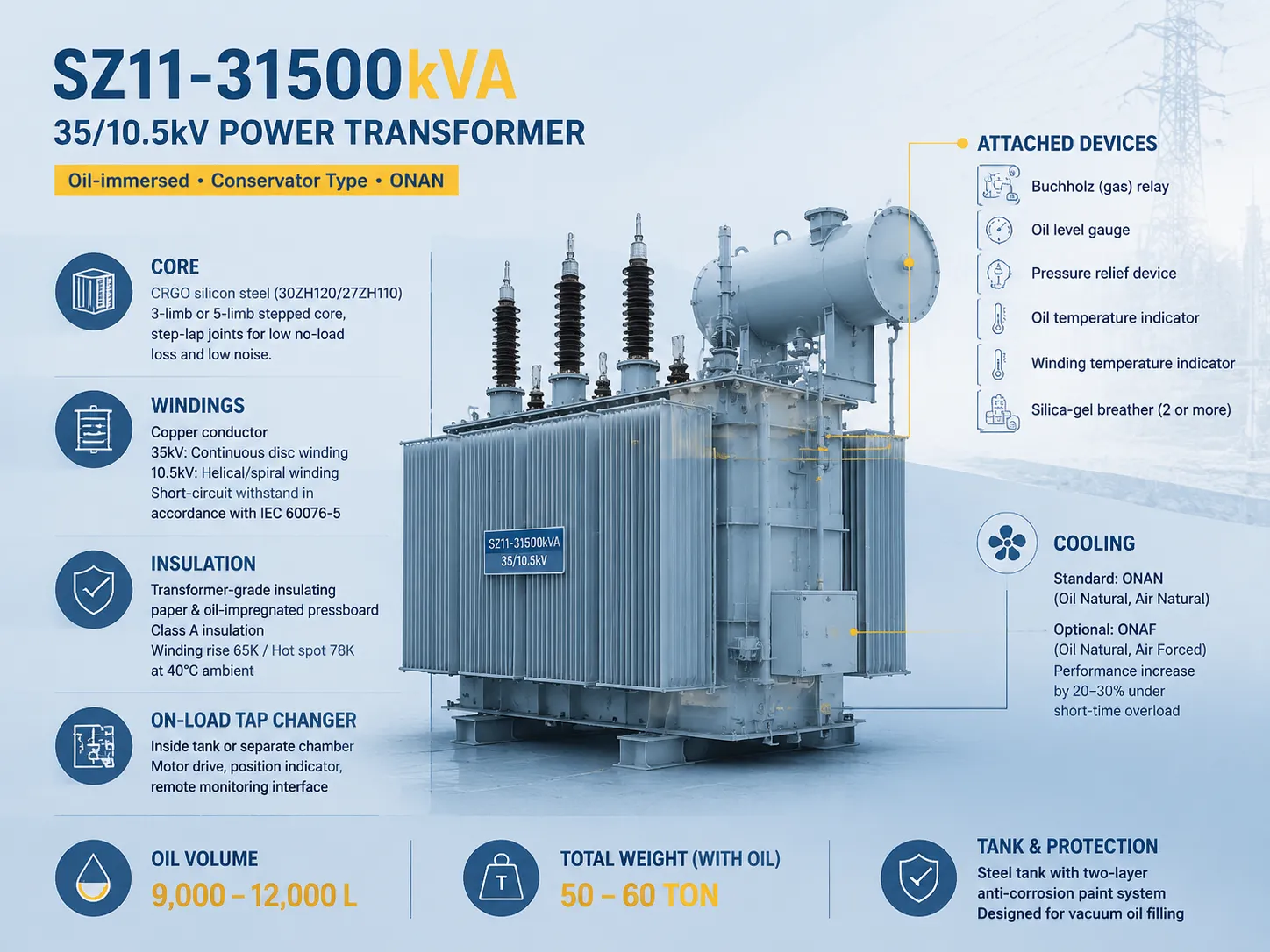
Il serbatoio stesso è realizzato in lamiera d'acciaio ed è coperto con un sistema di verniciatura a due strati che lo protegge dalla corrosione. Il serbatoio è progettato per la procedura di riempimento del serbatoio sottovuoto. La dimensione del volume d'olio per un trasformatore di tipo 31.5 MVA è di circa 9.000-12.000 litri e il peso totale del dispositivo con olio è di circa 50-60 tonnellate, il che è importante per la progettazione delle fondazioni e il trasporto molto prima che il trasformatore venga consegnato al suo luogo di lavoro.
Specifiche tecniche chiave
| Parametro | Valore tipico (IEC 60076) | Note |
|---|---|---|
| Potenza nominale | 500 kVA | Le valutazioni ONAN / ONAF differiscono |
| Rapporto di tensione | 35 ± 8 × 1.25% / 10.5 kV | L'intervallo dipende dalle specifiche |
| Frequenza | 50 Hz | Opzioni a 60 Hz disponibili |
| Gruppo vettoriale | YNd11 | Delta LV, stella a terra HV |
| Impedenza di cortocircuito | 8% (tolleranza ±7.5% secondo IEC) | Secondo IEC 60076-5 |
| Perdita a vuoto | ~20–25 kW | Valore della serie GB/T 6451 |
| Perdita a carico | ~130–150 kW | A 75°C di riferimento |
| Corrente a vuoto | ~0,6–0,8% | Misurato a tensione nominale |
| Efficienza a carico massimo | > 99,5% | Fattore di potenza 1.0 |
| Metodo di raffreddamento | ONAN / ONAF | Designazione IEC 60076-2 |
| Aumento di temperatura | 65K media avvolgimento | 40°C base ambientale |
| Peso totale | ~50–60 tonnellate metriche | Inclusa l'olio |
| Standard | Serie IEC 60076 | Anche GB/T 6451 |
Dobbiamo prestare particolare attenzione all'efficienza. Quando funziona a piena capacità e con un fattore di potenza di 1.0, un trasformatore con una capacità di 31.5 MVA, una perdita a vuoto di 20 kW e una perdita a carico di 140 kW raggiunge un'efficienza di circa 99.49%. Anche se 0.5% può sembrare piccolo, dopo 25 anni di servizio e un carico medio di 60%, questo può portare a circa 14–18 GWh di perdite cumulative che costano circa $1.1–$1.7 milioni a un prezzo elettrico industriale tipico di $0.08–$0.10 per kWh. Ecco perché la capitalizzazione delle perdite è una parte intrinseca delle gare d'appalto per trasformatori nella maggior parte delle aziende energetiche, e questo è anche il motivo per cui il TCO del trasformatore è solitamente molto più grande del prezzo iniziale del suo acquisto.
| Elemento di costo | 20 kW perdita a vuoto / 140 kW perdita a carico | Valore a 25 anni a $0.08/kWh |
|---|---|---|
| Perdite a vuoto (P0) | 20 kW × 8.760 h | $350,000 |
| Perdite a carico (Pk) a carico di 60% | 140 kW × 0,36 × 8.760 h | $882,000 |
| Costo totale delle perdite | — | $1,232,000 |
| Prezzo di acquisto tipico | FOB, esportazione cinese | $65.000–$110.000 |
Le perdite superano il valore del trasformatore più volte nel suo ciclo di vita — la ragione principale per cui la capitalizzazione delle perdite appartiene a ogni gara d'appalto.
SZ11 vs. S11 vs. Altri tipi 35kV
| Tipo | Perdita a vuoto | Commutatore di derivazione | Migliore adattamento | Prezzo relativo |
|---|---|---|---|---|
| S9 (legacy) | Base di riferimento | Fuori circuito | Retrofit di budget | Più basso |
| S11 | ~30% inferiore a S9 | Fuori circuito | Distribuzione a rapporto fisso | +10–15% vs S9 |
| SZ11 | ~30% inferiore a S9 | In carico (OLTC) | Reti critiche per tensione | +20–35% vs S11 |
| S13 | ~50% inferiore a S9 | Fuori circuito | Progetti a ultra-basse perdite | +25–40% vs S9 |
| Amorfico (SBH15) | ~70% inferiore a S9 | Varia | Sottostazioni ad alto fattore di carico | +40–60% vs S9 |
La principale differenza tra SZ11 e un trasformatore a rapporto fisso sarà solitamente la fluttuazione della tensione. Ad esempio, se hai una rete a 35kV che è stabile, i livelli di tensione dei feeder rimarranno entro ±2.5% quando si verificano cambiamenti di carico molto lentamente, allora un S11 o S13 fuori circuito dotato di un interruttore manuale che opera su ±2 x 2.5% farebbe il lavoro a un costo di capitale iniziale molto inferiore. Tuttavia, se stai fornendo un'attività di produzione industriale fluttuante o una lunga linea di feeder appartenenti a un impianto di generazione rinnovabile, l'uso di un trasformatore OLTC si ripagherà in termini di evitamento di tripping per sottotensione e danni da sovratensione.
Applicazioni Tipiche
- Sottostazioni di rete 110/35/10kV: SZ11 offre una potenza di trasformazione di 31,5 MVA e funge da stadio di trasformazione da 35 kV a 10,5 kV per le sottostazioni secondarie che controllano la tensione di bus per l'intera regione.
- Impianti industriali: Grandi impianti per la produzione di acciaio, lavorazione del cemento, applicazione chimica o estrazione mineraria con motori o archi che causano cali di livello di tensione rendendo vantaggiosa la regolazione continua.
- Raccolta di energia rinnovabile: Stazioni solari o parchi eolici che presentano grandi variazioni nel processo di generazione; OLTC è utilizzato per consentire al bus di raccolta di funzionare legalmente.
- Distribuzione urbana: Alimentatori misti che forniscono sia consumatori commerciali che residenziali che affrontano carichi di picco la sera e hanno bisogno di una certa manutenzione regolatoria della tensione a livello di 95% rispetto a quella nominale.
- Infrastrutture elettrificate: Data center, reti di trasporto e campus medici dove la qualità dell'energia è una questione contrattuale.
Per molti dei progetti sopra menzionati, il trasformatore può operare a livelli elevati di regolazione della tensione secondo la modalità di raffreddamento ONAN e a un livello fino a 100% di carico nominale, e accettare sovraccarico a livello di 130% per due ore con l'aiuto di ventilatori, secondo le raccomandazioni IEC 60076-7. Uno dei motivi per cui il trasformatore da 31,5 MVA è così popolare tra sviluppatori e ingegneri è la grande flessibilità operativa.
Marchi principali e fasce di prezzo
La classe da 31,5 MVA è un mercato genuinamente globale. Di seguito è riportato un confronto indicativo dei prezzi; le cifre effettive variano con il prezzo del rame, il livello di perdita, il marchio OLTC e la destinazione.
| Marca | Origine | Prezzo tipico (USD, FOB) | Note |
|---|---|---|---|
| ABB | Svizzera/Globale | $130.000–$190.000 | Rete di servizi globale premium |
| Siemens Energy | Germania/Globale | $125.000–$185.000 | Forte nelle gare per servizi pubblici |
| Hitachi Energy | Giappone/Globale | $130.000–$200.000 | Alta specifica, tempi di consegna lunghi |
| Hyundai / Toshiba | Corea/Giappone | $110.000–$170.000 | Qualità di grado industriale |
| Schneider Electric | Francia/Globale | $120.000–$175.000 | Focus sulla distribuzione |
| Produttori indiani (TBEA, EMCO) | India | $80.000–$120.000 | Competitivo per progetti regionali |
| Jiangsu Subian Energia Elettrica | Cina | $65.000–$110.000 | Certificato IEC 60076, focalizzato sull'esportazione |
Organizzazioni internazionali come ABB, Siemens Energy e Hitachi Energy hanno guidato la carica nell'expertise ingegneristica e nel servizio post-vendita, quindi i loro prezzi riflettono il loro status. I loro principali concorrenti in termini di tecnologia sono i produttori cinesi e indiani, che possono soddisfare la maggior parte dei requisiti tecnologici a prezzi significativamente più bassi grazie alle loro catene di approvvigionamento completamente consolidate per acciaio orientato al grano, rame e materiali isolanti.
Come esempio di un'azienda che produce trasformatori di potenza immersi in olio affidabili fino a 110kV, Jiangsu Guomai Electric Co opera in conformità con gli standard IEC 60076. La produzione quotidiana di Jiangsu Guomai include trasformatori moderni 35/10.5kV SZ11-31500kVA, che sono un prodotto standard per l'azienda e sono costruiti e testati in conformità con le linee guida IEC 60076 per il collaudo dei materiali, inclusi perdite, resistenza e temperatura. La gamma di prodotti della fabbrica include trasformatori di diverse versioni sia per fornitori di energia che per appaltatori di installazione di apparecchiature elettriche in Asia, Africa e Sud America, inclusi trasformatori costruiti su ordinazione. Visita subian-electric.com per le gamme di prodotti e la documentazione di test.
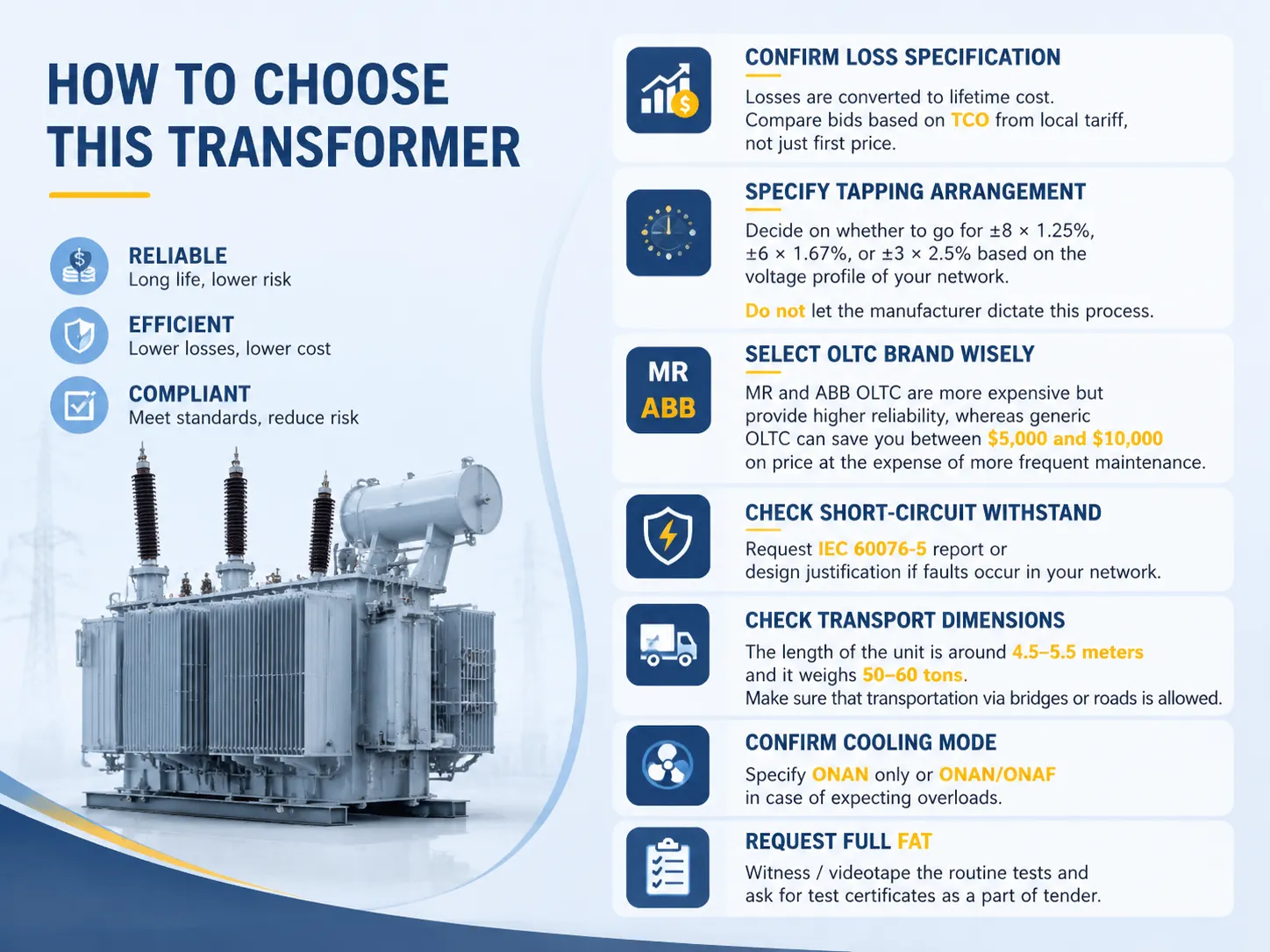
Come Scegliere Questo Trasformatore
- Conferma la specifica delle perdite. Le perdite vengono convertite in costo di vita. Confronta le offerte basate sul TCO dalla tariffa locale e non solo sul primo prezzo.
- Specifica l'arrangiamento dei prelievi. Decidi se optare per ±8 × 1.25%, ±6 × 1.67%, o ±3 × 2.5% in base al profilo di tensione della tua rete. Non lasciare che il produttore detti questo processo per te.
- Seleziona il marchio OLTC con saggezza. MR e ABB OLTC sono più costosi ma offrono una maggiore affidabilità, mentre gli OLTC generici possono farti risparmiare tra $5.000 e $10.000 sul prezzo a scapito di una manutenzione più frequente.
- Assicurati di controllare la resistenza ai cortocircuiti. Richiedi il rapporto IEC 60076-5 o la giustificazione del design se si verificano guasti nella tua rete.
- Controlla le dimensioni di trasporto. La lunghezza dell'unità è di circa 4,5–5,5 metri e pesa 50–60 tonnellate. Assicurati che il trasporto tramite ponti o strade sia consentito.
- Conferma la modalità di raffreddamento. Specifica solo ONAN o ONAN/ONAF in caso di sovraccarichi previsti.
- Richiedi un FAT completo. Assisti/filma i test di routine e chiedi i certificati di test come parte della gara.
Installazione, Collaudo e Manutenzione
Il processo di installazione per i trasformatori di potenza a conservatore tipo olio prevede una procedura standard. Il dispositivo è stato fornito con attrezzature di trasporto a secco con gas azoto o con olio, posizionato su una fondazione di 300 mm o superiore per scopi di drenaggio, e collegato al turretto di bushing e alle scatole di cavi. Le seguenti azioni devono essere eseguite dal personale del sito prima che il dispositivo venga acceso:
- Determina la resistenza di isolamento su tutti gli avvolgimenti utilizzando un megger. Per l'unità progettata per 35kV, il valore accettabile della resistenza di isolamento è superiore a 1000MΩ a 20°C.
- Testa la forza dielettrica dell'olio del trasformatore. L'olio deve soddisfare la forza dielettrica minima di 50kV/2.5mm.
- Conferma dal relè di Buchholz e dal sistema di rilascio della pressione che i circuiti di allarme e di interruzione funzionano correttamente.
- Esegui l'operazione OLTC nell'intero intervallo senza carico.
- Mantieni il dispositivo per 168 ore senza carico mentre esegui il campionamento DGA.
I controlli di routine per l'unità SZ11-31500 possono includere il controllo trimestrale di un respiratore se il suo gel di silice è nello stato rosa, così come il campionamento annuale dell'olio per DGA e controlli delle condizioni dell'olio di lavoro OLTC secondo i requisiti del sistema del produttore.
| Attività | Frequenza | Controllo chiave |
|---|---|---|
| Ispezione visiva | Trimestrale | Gel di silice del respiratore, livello dell'olio, perdite, corrosione |
| Campionamento dell'olio e DGA | Annuale | Rapporti chiave dei gas secondo IEC 60599 |
| Servizio OLTC | Per conteggio delle operazioni | Contatti, condizione dell'olio, meccanismo del motore |
| Test del dispositivo di protezione | Annuale | Interruttori di gas/surge Buchholz, PRD, allarmi |
| Resistenza di isolamento | Ogni 2–3 anni | Tendenze delle letture Megger rispetto al valore di riferimento |
Ignorare le tendenze DGA è la causa più comune di guasti prematuri, quindi prevedere un contratto di laboratorio DGA anche se il trasformatore stesso era economico.
Domande frequenti
Quanto costa un trasformatore SZ11-31500kVA 35/10.5kV?
Una stima approssimativa indica che ci si può aspettare che il prezzo di un forno di produzione cinese sia intorno a $65.000–$110.000 FOB, mentre i produttori europei o giapponesi addebitano un prezzo compreso tra $120.000–$190.000, escluse le spese relative al trasporto, all'assicurazione o ai lavori in loco. Il prezzo stimato dipende infine dal livello di perdita, dal marchio OLTC, dall'attrezzatura extra e dai prezzi del rame al momento. Trasportare un'unità con un peso di 50–60 tonnellate aggiunge $8.000–$25.000, con il totale che dipende dalla distanza tra i porti di origine e di destinazione.
Cosa significa effettivamente la designazione “SZ11”?
Qui, S rappresenta la designazione trifase e Z indica il cambiavalute sotto carico, noto come “有载调压” in cinese. Il numero 11 indica che si tratta di un design a riduzione delle perdite (questo ha circa 30% di perdita a vuoto inferiore rispetto alla serie S9). Pertanto, la designazione SZ11 indica un trasformatore trifase con un cambiavalute sotto carico ai moderni livelli di perdita della serie 11 secondo la specifica GB/T 6451.
Questo trasformatore può funzionare su sistemi a 60 Hz?
La risposta è sì, grazie alle specifiche del nucleo e degli avvolgimenti riprogettati. La selezione della frequenza tra 50/60Hz influenzerà la densità di flusso e quindi le dimensioni del nucleo dovrebbero sempre specificare la frequenza operativa nell'inchiesta per ricalcolare le valutazioni del motore poiché quelle a 50Hz non possono essere trasferite direttamente a 60Hz senza verificare le perdite a vuoto e i limiti di saturazione.
Con quale frequenza il cambiavalute sotto carico necessita di manutenzione?
Un cambiavalute sotto carico (OLTC) di tipo a resistenza immerso nell'olio dovrebbe essere ispezionato dopo ogni 50.000 a 100.000 operazioni o 5 a 7 anni, a seconda di quale si verifica prima. Gli OLTC di tipo a vuoto possono raggiungere circa 150.000 a 200.000 operazioni prima dell'ispezione. Monitorare il numero di operazioni utilizzando il contatore del meccanismo del motore e seguire il programma del produttore dell'OLTC, poiché questo sarà probabilmente più frequente rispetto a quello del trasformatore.
Perché scegliere 10.5kV piuttosto che 10kV o 11kV sul lato LV?
5kV è diventata la tensione di design designata per i sistemi di distribuzione cinesi di classe 10kV dove la tensione nominale è 10kV con un margine di 5%. L'implementazione di una tensione di design di 10.5kV tiene conto della caduta di impedenza del trasformatore durante il processo di carico con la tensione in condizione di vuoto regolabile a circa 10.5kV e il bus carico che fornisce una tensione di 10kV. Nelle aree che applicano reti a 11kV, ampiamente utilizzate nei paesi asiatici e del Medio Oriente, dovrebbe essere menzionato 11kV invece.
Riferimenti
- IEC 60076-1: Trasformatori di potenza – Parte 1: Generale — Definisce le classifiche, il prelievo e i requisiti di aumento della temperatura per i trasformatori di potenza.
- IEC 60076-5: Capacità di resistere a cortocircuiti — Specifica i requisiti di resistenza ai cortocircuiti e le procedure di test.
- IEC 60296: Fluidi per applicazioni elettrotecniche – Oli minerali isolanti — Stabilisce i requisiti di qualità per l'olio isolante dei trasformatori.
- IEEE C57.12.00: Standard per trasformatori di distribuzione e potenza immersi in liquido — Il corrispondente nordamericano della IEC 60076, utile per il confronto.
- Maschinenfabrik Reinhausen (MR) cambiatori di tensione sotto carico — Documentazione del produttore sul funzionamento e sugli intervalli di manutenzione degli OLTC.
- Trasformatori Hitachi Energy — Informazioni di riferimento sui prodotti per grandi trasformatori di potenza e sistemi OLTC.
- Sito ufficiale di Jiangsu Subian Electric Power — Gamma di prodotti del produttore, certificazioni e informazioni di contatto.
Conclusione
Il trasformatore regolatore di tensione a olio SZ11-31500kVA 35/10.5kV è progettato per l'implementazione in reti di media tensione con una tensione stabile sotto le variazioni delle condizioni di carico. Raggiunge un'efficacia notevole grazie all'utilizzo del tipo di raffreddamento a olio che presenta un conservatore e la possibilità di cambiare i prelievi in qualsiasi momento con un'efficienza superiore al 99.5%. Cose essenziali da tenere a mente:
- Prepara un budget di $65.000-$110.000 FOB per un'unità dalla Cina; i marchi europei e giapponesi costeranno di più.
- Calcola le perdite secondo il concetto di costo totale di vita, poiché supereranno il costo dell'attrezzatura in 25 anni.
- Scegli deliberatamente il marchio OLTC e l'intervallo di prelievo, poiché determinano i costi di funzionamento a lungo termine.
- Pianifica il trasporto, il collaudo dell'installazione e la manutenzione DGA di routine fin dal primo giorno.
Nel caso tu stia cercando i produttori, Jiangsu Subian Electric Power ti fornirà l'attrezzatura SZ11 conforme alla IEC 60076 a prezzi di esportazione fornendo la documentazione di collaudo in fabbrica su richiesta. Controlla la loro gamma su subian-electric.com prima di finalizzare la tua lista di offerte.