


È martedì mattina in un'area industriale di medie dimensioni vicino a Nairobi, e il team elettrico ha solo una settimana per collegare un nuovo impianto di produzione di scarpe che è stato collegato otto giorni fa. Nessuno nel cantiere sta costruendo una piattaforma per trasformatori o aspettando un'involucro in mattoni; invece, una gru sta sollevando un'unità di trasformatore pronta dal rimorchio e la sta posizionando sul pavimento in cemento piatto intorno alle 10 del mattino; il collegamento è completato il giorno successivo e la fabbrica inizia il primo ciclo di produzione il lunedì successivo. Tali attività sono ora molto comuni in Africa, Asia e Sud America, dove l'alimentazione richiede solo giorni anziché mesi.
Questo articolo offre una guida pratica sui trasformatori personalizzati, di cosa sono fatti, come vengono progettati e testati, quanto costano e come evitare errori tipici quando si acquista.
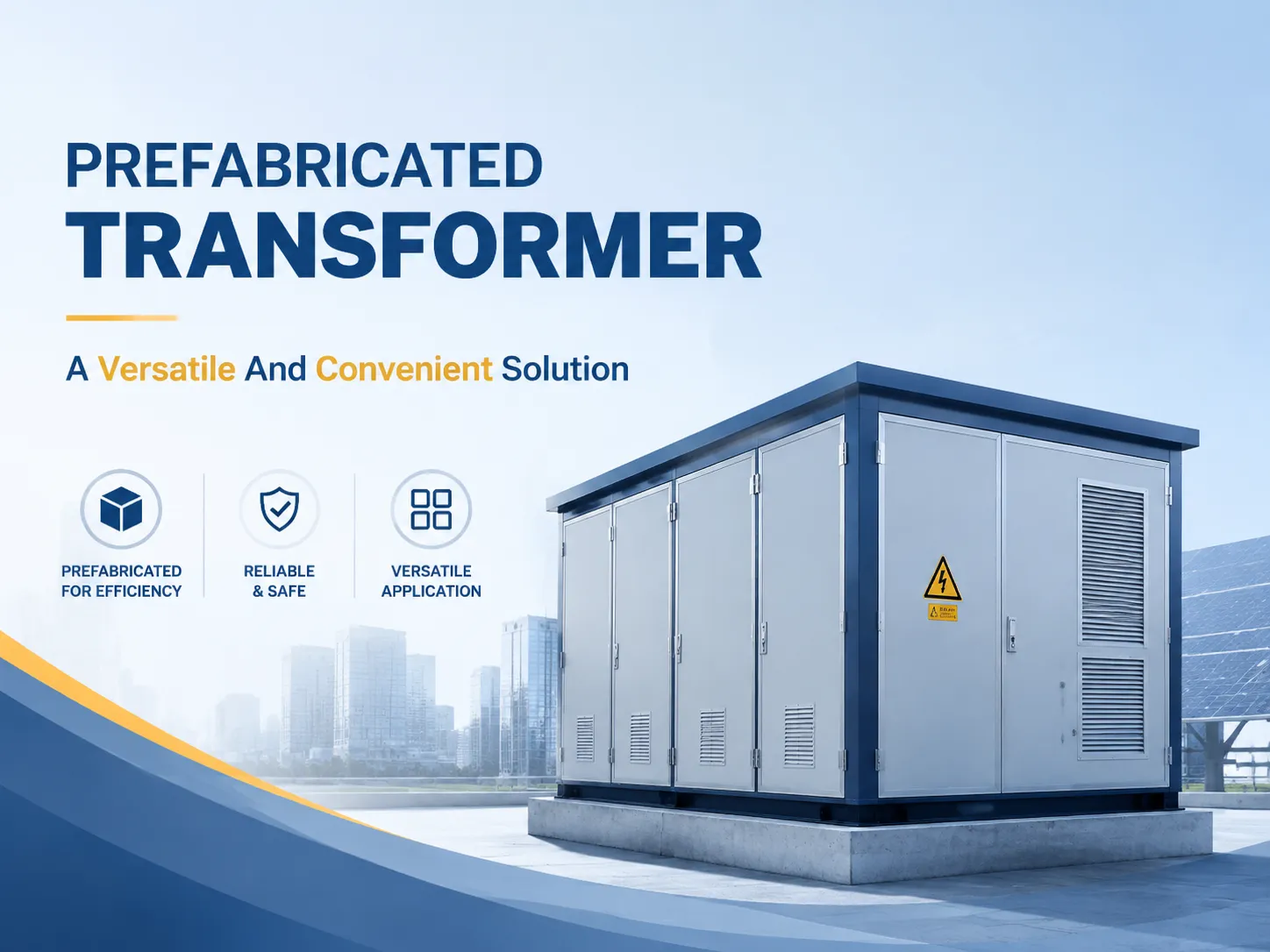
In breve, il trasformatore prefabbricato, a volte chiamato sottostazione prefabbricata, sottostazione a scatola o sottostazione compatta, è la soluzione che consiste in un trasformatore di potenza, apparecchiature di media tensione, apparecchiature di bassa tensione, contatore e protezione all'interno di un'unità compatta in grado di funzionare in condizioni esterne. Viene assemblato in fabbrica e testato per qualità prima di essere inviato all'utente finale e posizionato nella posizione richiesta entro 2-5 giorni.
Che cos'è un trasformatore prefabbricato?
Il trasformatore prefabbricato è una sottostazione completa che esce dalla fabbrica come un'assemblaggio testato piuttosto che come parti sfuse. Il termine “prefabbricato” si riferisce al tipo di produzione: l'involucro, il trasformatore, gli interruttori, i cavi e i sistemi ausiliari sono progettati e assemblati in fabbrica in modo tale che, una volta portato in cantiere, il prodotto risultante possa essere facilmente collegato a un sistema elettrico esistente.
Questo tipo di attrezzatura è denominato IEC 62271-202 in Europa e in altri paesi di esportazione (Apparecchiature e dispositivi di controllo ad alta tensione: Parte 202: Sottostazione prefabbricata ad alta/bassa tensione). In Nord America, il dispositivo equivalente a livello di distribuzione è comunemente chiamato trasformatore montato su basamento (IEEE C57.12.27). In Cina, questo tipo di attrezzatura è solitamente chiamato trasformatore a scatola o, in altre parole, trasformatore a scatola in stile americano. Pertanto, la denominazione di questa attrezzatura varia da paese a paese, ma la stessa idea viene implementata quasi ovunque costruendo l'attrezzatura per trasformatori montati a terra in modo compatto.
In termini pratici, questa differenza significa che il trasformatore tradizionale necessita di lavori di costruzione civile, edifici, una società separata per i lavori di installazione e settimane di coordinamento prima di iniziare a funzionare, mentre il trasformatore prefabbricato necessita solo di una lastra di cemento, di una gru e di alcuni giorni di lavori elettrici.
Componenti principali all'interno dell'unità
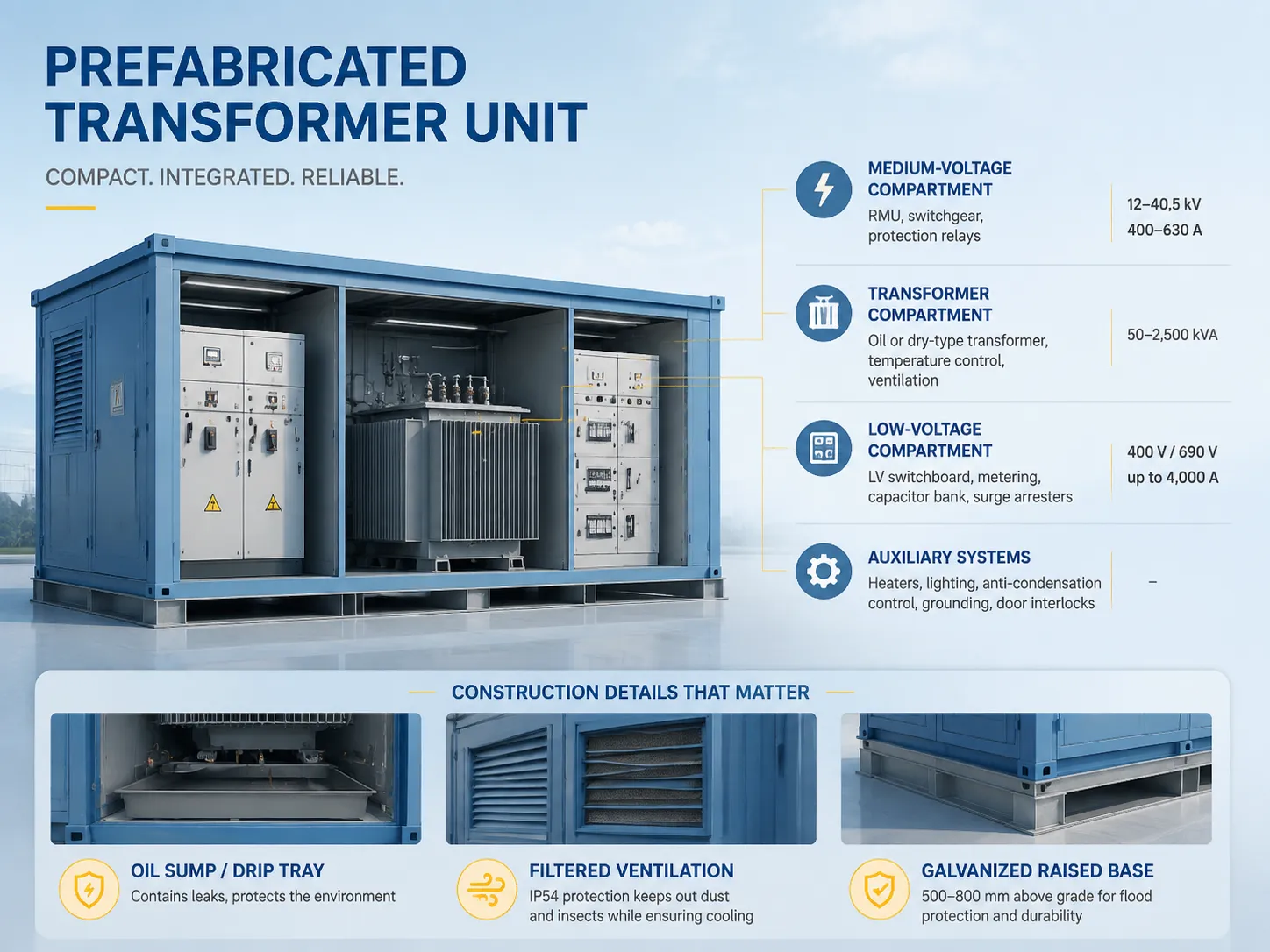
Mentre il produttore e le classificazioni determinano i modelli di ciascun trasformatore prefabbricato, generalmente un trasformatore completamente assemblato è composto da tre a quattro componenti funzionali, tutti collocati in un'unica custodia in plastica rinforzata con fibra di vetro, che è in media larga 2,4-3,0 m e lunga 4-12 m.
| Compartimento | Attrezzatura principale | Valutazione tipica |
|---|---|---|
| Compartimento di media tensione | RMU (unità di rete anello), interruttori a gas SF6 o a vuoto, scatola cavi, relè di protezione | 12–40,5 kV, barra collettore 400–630 A |
| Compartimento del trasformatore | Trasformatore immerso in olio o di tipo secco, contenimento dell'olio, controllo della temperatura, ventilazione | 50–2.500 kVA |
| Compartimento di bassa tensione | Quadro elettrico LV, feeder in uscita, misurazione, banco condensatori (opzionale), scaricatori di sovratensione | 400 V / 690 V, fino a 4.000 A |
| Sistemi ausiliari | Riscaldatori, illuminazione, controllo anti-condensa, barra di messa a terra, interblocchi delle porte | — |
Tre caratteristiche distintive separano le unità affidabili dalle loro controparti scadenti: un serbatoio di olio sotto il trasformatore per gestire eventuali perdite; aperture filtrate per l'aria, progettate secondo gli standard IP54; e una base zincata a caldo elevata almeno 500-800 mm sopra il livello del suolo.
Come funziona un trasformatore prefabbricato
Il metodo di funzionamento di questa unità è simile al funzionamento di qualsiasi trasformatore di distribuzione, ma in questo caso, l'unità è costruita in un layout diverso. L'alimentazione di media tensione entra nell'RMU, dove viene commutata e protetta da guasti della linea anello o radiale in ingresso. Dopo di che, l'alimentazione viene trasmessa al trasformatore, che riduce la tensione da 11 kV, 22 kV o 33 kV a livelli trifase di 400V adatti per i consumatori. Poi il quadro elettrico LV distribuisce l'energia ai circuiti di feeder in uscita che sono protetti da MCCB o ACB, la misurazione fornisce crediti per l'energia consumata.
La differenza di questa versione prefabbricata rispetto a una standard è la sua ingegneria termica. Il trasformatore produce calore in base al suo carico e quindi è racchiuso all'interno di una scatola, che protegge il trasformatore dagli effetti delle intemperie e previene il flusso d'aria. La IEC 62271-202 stabilisce quindi che i test devono essere eseguiti con la custodia completa del trasformatore invece di effettuare un test su un trasformatore nudo. Un buon design di fabbricazione dovrebbe fornire circolazione dell'aria utilizzando aperture di ingresso e uscita.
Tipi e configurazioni
| Classificazione | Varianti | Uso tipico |
|---|---|---|
| Montaggio | Montato a terra/pad, montato su palo (mini unità), montato su skid | Distribuzione a livello del suolo; mini unità per energia rurale e temporanea |
| Involucro | Acciaio al carbonio verniciato, acciaio inossidabile, GRP/composito | Acciaio inossidabile/composito per ambienti costieri e corrosivi |
| Trasformatore | Trasformatore immerso in olio (ONAN), trasformatore di tipo secco (resina colata) | Olio per uso generale; tipo secco per siti sensibili al fuoco o interni |
| Interruttori MV | RMU (isolato in SF6, isolato solido o isolato ad aria), interruttore a carico, interruttore a vuoto | RMU per reti a ciclo; interruttore per grandi alimentazioni industriali singole |
| Configurazione | Layout a unità singola, tandem/split, mini sottostazione | Si adatta all'impronta del sito e alla disposizione del carico |
In relazione a impianti solari e eolici, la nuova configurazione della sottostazione solare integra l'unità MV/LV con attrezzature lato inverter e include comunemente un trasformatore elevatore con una potenza compresa tra 2500 e 4000 kVA per unità. Quest'ultimo tipo è solitamente offerto come piattaforma montata su skid per il posizionamento vicino alla stazione inverter nell'array.
Perché gli acquirenti scelgono prefabbricati rispetto a costruzioni in loco
- Velocità: L'installazione e la messa in servizio possono richiedere da 2 a 5 giorni rispetto al periodo di costruzione convenzionale di 4 a 12 settimane, che è cruciale nei progetti a percorso accelerato.
- Costo: L'assenza di strutture in loco, molti appaltatori e lunghi lavori civili di solito significa che il costo totale installato diminuisce del 20% al 40% rispetto al costo delle attrezzature convenzionali.
- Qualità: In conformità con gli standard IEC 62271-202, ogni unità completa subisce test per verificare le sue capacità termiche, dielettriche e di cortocircuito.
- Relocabilità: L'unità può essere rimossa e alimentata in un nuovo sito una volta che il carico si sposta.
- Spazio compatto: Pochi dozzine di metri quadrati sono sufficienti invece di enormi locali recintati e connessi.
- Logistica fluida: L'unico pacchetto da consegnare rispetto a decine di spedizioni separate è un enorme vantaggio.
Nel caso di progetti di generazione rinnovabile distribuita, questi vantaggi si moltiplicano poiché ci sono dozzine di unità identiche ed è per questo che gli impianti solari e i progetti di elettrificazione rurale tendono a utilizzare sottostazioni prefabbricate invece di stazioni costruite in loco.
Sottostazione prefabbricata vs. convenzionale
| Fattore | Trasformatore prefabbricato | Sottostazione convenzionale |
|---|---|---|
| Opere civili | Solo base in cemento | Edificio, fondazione, recinzione |
| Tempo di installazione | 2–5 giorni | 4–12 settimane |
| Test | Unità completa testata in fabbrica | Assemblato in loco, parzialmente non testato |
| Ricollocazione | Sì | No |
| Impronta | ~10–40 m² | Tipicamente 100+ m² con accesso |
| Costo totale installato | 20–40% tipicamente inferiore | Maggiore quota civile e di manodopera |
| Personalizzazione | Configurabile ma standardizzato | Completamente su misura |
Le sottostazioni tradizionali sono la soluzione appropriata per tensioni di trasmissione di 66 kV e superiori, così come per grandi centri di distribuzione in edifici stabili. Per tensioni inferiori a 40,5 kV, la sottostazione prefabbricata è ora la norma nella maggior parte dei mercati esteri.
Specifiche tipiche
Un'unità dimostrativa di dimensioni medie tipica di 630 kVA, 33 kV/0,4 kV, utilizzata in vari progetti industriali e commerciali.
| Parametro | Valore tipico |
|---|---|
| Valutazione del trasformatore | 630 kVA, immerso in olio, ONAN |
| Tensione primaria | 33 kV (anche 11/22/35 kV) |
| Tensione secondaria | 400/230 V, 50 Hz |
| Gruppo vettoriale | Dyn11 |
| Perdita a vuoto | ~1.0–1.3 kW (dipende dalla classe di perdita) |
| Perdita di carico a 75°C | ~7.5–9.5 kW |
| Tensione di impedenza | 4%–6% |
| Interruttori MV | RMU SF6, barra collettore da 630 A, 20 kA/3s |
| Quadro elettrico LV | 400 A–630 A principale, MCCB uscenti |
| Involucro | IP54, base zincata a caldo, acciaio verniciato |
| Livello di rumore | ≤ 55 dB(A) a 1 m secondo IEC 60076-10 |
| Normative | IEC 62271-202, IEC 60076, IEC 60529 |
Test standard eseguiti secondo IEC 60076, includono test di resistenza degli avvolgimenti, test di rapporto e gruppo degli avvolgimenti, impedenza di cortocircuito, test di perdite a vuoto e a carico, inclusi test di resistenza di isolamento e test dielettrici per il valore di tensione specificato. I test di tipo comprendono test per l'aumento di temperatura, test per tensione d'impulso e test per resistenza al cortocircuito.
Aree di applicazione
- Nella distribuzione urbana e commerciale, residenze, centri commerciali, edifici per uffici e strade creano un ambiente in cui l'utilizzo dello spazio e la velocità di energizzazione sono importanti.
- Nel caso delle aree industriali, c'è solo una soluzione per fabbrica o cluster. Le unità in questa categoria possono adattare la loro capacità in incrementi di 400-1.600 kVA a seconda della crescita degli inquilini.
- Per gli impianti di energia rinnovabile, le unità prefabbricate fungono da punto di connessione tra le stazioni inverter e la rete. La dimensione di queste unità varia da 1.000 a 4.000 kVA.
- In termini di elettrificazione rurale, le mini-unità prefabbricate consentono di collegare villaggi e agricoltori remoti alla rete.
- Per energia temporanea ed emergenziale, un esempio sarebbe l'installazione di unità montate su skid in situazioni di recupero da disastri, eventi o cantieri in modo rapido.
- Le installazioni minerarie e delle operazioni remote si affidano a prodotti pronti per mancanza di capacità di produzione locale.
In tutti i casi, l'unità ha gli stessi obiettivi: prendere l'alimentazione a media tensione, convertirla in tensione di utilizzo, proteggerla, misurarla e fornire la quantità necessaria di energia a un carico specifico.
Standard e Test
| Standard | Ambito | Controllo Acquirente Chiave |
|---|---|---|
| IEC 62271-202 | Sottostazioni trasformatori prefabbricate | Test di tipo unitario completi: aumento di temperatura, cortocircuito, dielettrico |
| IEC 60076 | Trasformatori di potenza | Valutazione, perdite, test di routine e di tipo |
| IEC 60529 | Protezione dell'involucro (codice IP) | IP54 minimo per unità esterne |
| IEC 62271-200 | Apparecchiature di manovra metalliche in MV | Sicurezza RMU e classificazione dell'arco interno |
| IEC 61000-4 | EMC (compatibilità elettromagnetica) | Immunità del relè nell'involucro |
| IEEE C57.12.27 (N. America) | Integrità dell'attrezzatura montata su basamento | Costruzione a frontale morto, resistenza alla manomissione |
Negli ordini di esportazione, uno dei documenti più importanti è il rapporto di prova di tipo IEC 62271-202 per l'intera unità, in particolare il test di aumento della temperatura con involucro montato. Alcuni fornitori a basso costo eseguono test solo per il trasformatore senza il suo involucro, il che può nascondere problemi di derating in aree climatiche calde. Assicurati sempre di richiedere il rapporto sull'unità completa. In caso di ordini di grandi dimensioni, potrebbe essere necessario anche un test di fabbrica testimone.
Costi e Fasce di Prezzo
Prezzi indicativi per stazioni di trasformazione prefabbricate (apparecchiature RMU, stazione di trasformatore a olio, pannello LV, involucro in acciaio verniciato convenzionale):
| Valutazione | Classe di Tensione | Prezzo tipico (USD) | Tempo di Consegna |
|---|---|---|---|
| 100–315 kVA | 11–35 kV | $4.000–$12.000 | 5–10 settimane |
| 400–630 kVA | 11–35 kV | $7.000–$20.000 | 6–12 settimane |
| 800–1.250 kVA | 11–35 kV | $11.000–$33.000 | 8–14 settimane |
| 600–2.500 kVA | 11–35 kV | $24.000–$60.000 | 10–18 settimane |
È possibile aggiungere 15-30% per involucri in acciaio inossidabile e 10-20% per trasformatori asciutti. Inoltre, si dovrebbe aggiungere $800-3000 per opzioni di misurazione, monitoraggio e SCADA. I prezzi sono indicativi su base FOB e possono differire in base alle specifiche e al marchio. Ai fini della valutazione delle perdite, l'unità da 630 kVA con una perdita a vuoto inferiore di 500-1000 W può far risparmiare $300-900 in costi operativi, il che potrebbe essere importante considerando la vita utile dell'asset di 25 anni.
Top Brand e Confronto Prezzi
| Marca | Paese | Forza | Prezzo indicativo — 1,000 kVA (USD) |
|---|---|---|---|
| Schneider Electric | Francia | Integrazione RMU, gamma di sottostazioni compatte globali | $22.000–$38.000 |
| Siemens | Germania | Opzioni di sottostazione digitale, protezione integrata | $23.000–$40.000 |
| ABB | Svizzera | Ampio portafoglio, forti riferimenti nel settore | $22.000–$39.000 |
| Eaton | USA | Resistenza al montaggio a pavimento, mercato nordamericano | $20.000–$36.000 |
| Hyosung / LS Electric | Corea | Unità compatte, forte presenza nel sud-est asiatico | $19.000–$34.000 |
| Jiangsu Subian Energia Elettrica | Cina | Unità IEC 62271-202, opzioni a olio/secco, OEM | $11.000–$33.000 |
I principali attori del mercato offrono affidabilità del marchio, linee di prodotto RMU consolidate e una rete di servizi globale, che è di fondamentale importanza per le grandi utility che partecipano a gare con requisiti assicurativi rigidi. Jiangsu Subian Electric Power opera in un segmento di mercato sensibile ai prezzi offrendo sottostazioni prefabbricate conformi alla IEC 62271-202 con trasformatori sia immersi in olio che asciutti, RMU o interruttori e involucri verniciati, in acciaio inossidabile o composito.
Come scegliere e acquistare
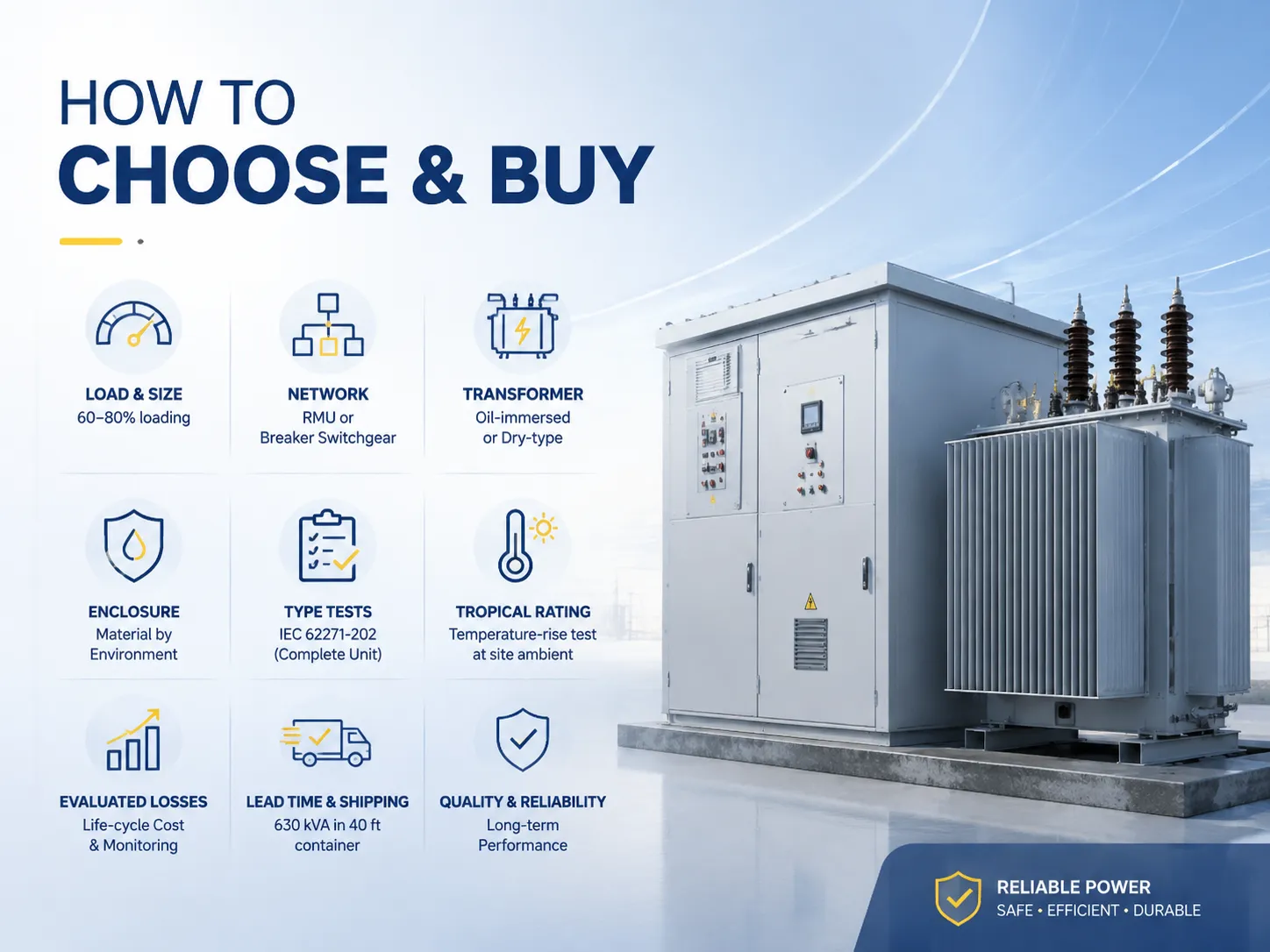
- Determinare il carico necessario in kVA, così come il piano di crescita e il fattore di potenza; assicurarsi che il carico massimo non superi 60-80% della valutazione del trasformatore.
- Stabilire la tensione di rete e la configurazione (anello, radiale, doppio alimentazione), il che aiuterà a determinare se utilizzare RMU o interruttore automatico.
- Abbinare il trasformatore alle condizioni del sito: trasformatore isolato in olio per siti aperti e trasformatore asciutto per aree interne sensibili.
- Selezionare il materiale dell'involucro a seconda dell'ambiente: acciaio verniciato per buone condizioni, mentre l'acciaio inossidabile o composito è preferito in luoghi corrosivi.
- Richiedere test completi dell'unità secondo gli standard IEC 62271-202 invece di semplici test del trasformatore.
- Valutare la derazione tropicale; richiedere un rapporto di test sull'aumento della temperatura per la temperatura ambiente superiore a 40 C.
- Fare confronti basati sulle perdite e non sul prezzo e aggiungere un sistema di monitoraggio remoto nel caso in cui il sito non sia presidiato.
- Verificare i tempi di consegna e il trasporto; l'unità trasformatore da 630 kVA si adatta in un container da 40 piedi con unità più grandi che necessitano di trasporto a tetto aperto o su piattaforma.
Domande frequenti
Qual è la differenza tra un trasformatore prefabbricato e una sottostazione di tipo box?
Sia il trasformatore prefabbricato che la sottostazione di tipo box si riferiscono allo stesso tipo di attrezzatura che rappresenta un dispositivo di distribuzione MV/LV con un trasformatore, un quadro elettrico e un pannello LV assemblati in fabbrica in un unico involucro secondo la IEC 62271-202. Il termine di tipo box è ampiamente utilizzato in Cina e in alcune regioni dell'Asia, mentre il termine sottostazione prefabbricata è incluso nella nomenclatura IEC ed è comunemente usato in Europa e nelle gare di esportazione.
Quanto costa un trasformatore prefabbricato?
In generale, i trasformatori prefabbricati da 400-1.000 kVA costano tra $7.000 e $33.000 a seconda dei tipi di apparecchiature di manovra, dei materiali delle custodie e delle classi di perdita, mentre i prezzi dei trasformatori da 1.600-2.500 kVA partono da $24.000 e possono raggiungere $60.000. Se la custodia è realizzata in acciaio inossidabile, il costo aumenta di 15-30%, i trasformatori di tipo secco aggiungono 10-20% e gli aggiornamenti di monitoraggio fanno lo stesso da $800 a $3.000. Il costo di spedizione e installazione non è incluso e deve essere considerato separatamente.
Quanto tempo richiede l'installazione?
Il processo di installazione dura generalmente da 2 a 5 giorni se una base in cemento è pronta in anticipo e include il lavoro delle gru, il fissaggio dell'unità, il collegamento dei cavi, ecc. In confronto, l'installazione di una sottostazione convenzionale richiede da 4 a 12 settimane. Poiché l'unità viene testata in fabbrica, i problemi di messa in servizio si presentano raramente se il cavo e la base corrispondono al disegno della struttura.
È possibile spostare o aggiornare un trasformatore prefabbricato in seguito?
Sì, è possibile sollevare e trasportare l'unità in un nuovo luogo; è anche possibile sostituire il trasformatore con uno più grande avente lo stesso design. Questo è di grande valore per diversi parchi industriali o connessioni temporanee di energia ed è necessario per cambiare la situazione del carico urbano.
Quali test dovrei richiedere prima di accettare un'unità?
Prima di accettare un'unità, è necessario richiedere test per il trasformatore secondo IEC 60076 (calibrazione, resistenza dell'avvolgimento, perdite, resistenza dielettrica), test per l'apparecchiatura di manovra e test completo per l'intera unità prefabbricata secondo IEC 62271-202 (aumento di temperatura con la custodia, resistenza al cortocircuito e arco interno). Se si tratta di un'unità da esportazione, i test devono essere assistiti da un rappresentante della parte ricevente e deve essere fornito un certificato per la spedizione.
Riferimenti
- IEC 62271-202 — Apparecchiature di manovra e controllo ad alta tensione: Sottostazioni prefabbricate — lo standard di riferimento per la progettazione dei trasformatori prefabbricati, la sicurezza e il collaudo di tipo dell'unità completa.
- IEC 60076 serie — Trasformatori di potenza — lo standard di base per le classifiche, le perdite e i test dei trasformatori all'interno dell'unità.
- IEC 62271-200 — Apparecchiature di interruttori metalliche in contenitore MV — requisiti per i compartimenti RMU e interruttori.
- IEC 60529 — Gradi di protezione (Codice IP) — definisce le classifiche di custodia IP54/IP55 per unità esterne.
- IEEE C57.12.27 — Integrità dell'involucro delle apparecchiature montate su basamento — requisiti nordamericani per frontale morto e resistenza ai manomissioni.
- NEMA — Linee guida per l'applicazione dei trasformatori di distribuzione — guida alla classificazione e all'applicazione per apparecchiature di trasformazione nelle Americhe.
- Jiangsu Subian Electric Power — sito ufficiale — produttore ed esportatore di sottostazioni prefabbricate IEC 62271-202.
Conclusione
I trasformatori prefabbricati sono diventati strumenti importanti nella distribuzione elettrica moderna, poiché consentono di fornire rapidità, controllare i costi, avere qualità da fabbrica e offrire flessibilità in un pacchetto trasportabile. Una sottostazione completa; che include trasformatore, apparecchiature di manovra MV, apparecchiature di manovra LV, misurazione e protezione; arriva testata e consente un'installazione in giorni, piuttosto che in mesi.
Punti principali:
- Specificare il carico di picco a 60-80% della classificazione del trasformatore e selezionare l'apparecchiatura di manovra in base alla configurazione della rete.
- Scegliere il materiale di copertura in base all'ambiente e selezionare acciaio inossidabile o composito per ambienti costieri o aggressivi.
- Richiedere test di tipo unitario completo IEC 62271-202 invece di semplici test sui trasformatori.
- Valutare le offerte in base alle perdite e comprendere la logistica dei contenitori e i tempi di consegna.
- Integrare marchi globali come Schneider, Siemens o ABB insieme a fornitori certificati IEC come Jiangsu Subian Electric Power.