


È martedì mattina alle 6:50 quando l'elettricista di turno in un impianto di medie dimensioni si rende conto che un trasformatore da 2.000 kVA ronzia molto più forte del solito. La finestra del relè Buchholz ha una piccola bolla di gas e il manometro dell'olio sul conservatore segna un livello inferiore rispetto al mese scorso. Tutti conoscono il detto che i problemi con i trasformatori non si risolvono da soli, anche se nessuno vuole ancora definirlo un'emergenza. Entrano in gioco alcune delle migliori pratiche di manutenzione quotidiana dei trasformatori e metodi di risoluzione dei problemi comuni.
Questo articolo ti fornirà informazioni pratiche sulla manutenzione quotidiana e regolare delle attrezzature dei trasformatori immersi in liquido e raccomandazioni passo dopo passo su come risolvere i principali malfunzionamenti, inclusi rumori improvvisi, perdite d'olio, alta temperatura dell'olio, funzionamento del relè Buchholz, scarsa isolamento, ecc. Troverai liste di controllo, valori di allerta e normali, stime realistiche e passaggi di indagine nell'articolo.
In termini semplici, questo significa che la manutenzione quotidiana del trasformatore è un processo diretto. Per essere mantenuto, richiede di controllare il colore e il livello dell'olio, prestare attenzione a suoni insoliti, controllare la temperatura, controllare le connessioni delle guarnizioni e il relè Buchholz, annotare eventuali allarmi. I problemi comuni dei trasformatori e le soluzioni includono il controllo della temperatura dell'olio, l'allarme del gas Buchholz, le perdite d'olio e la bassa resistenza di isolamento.
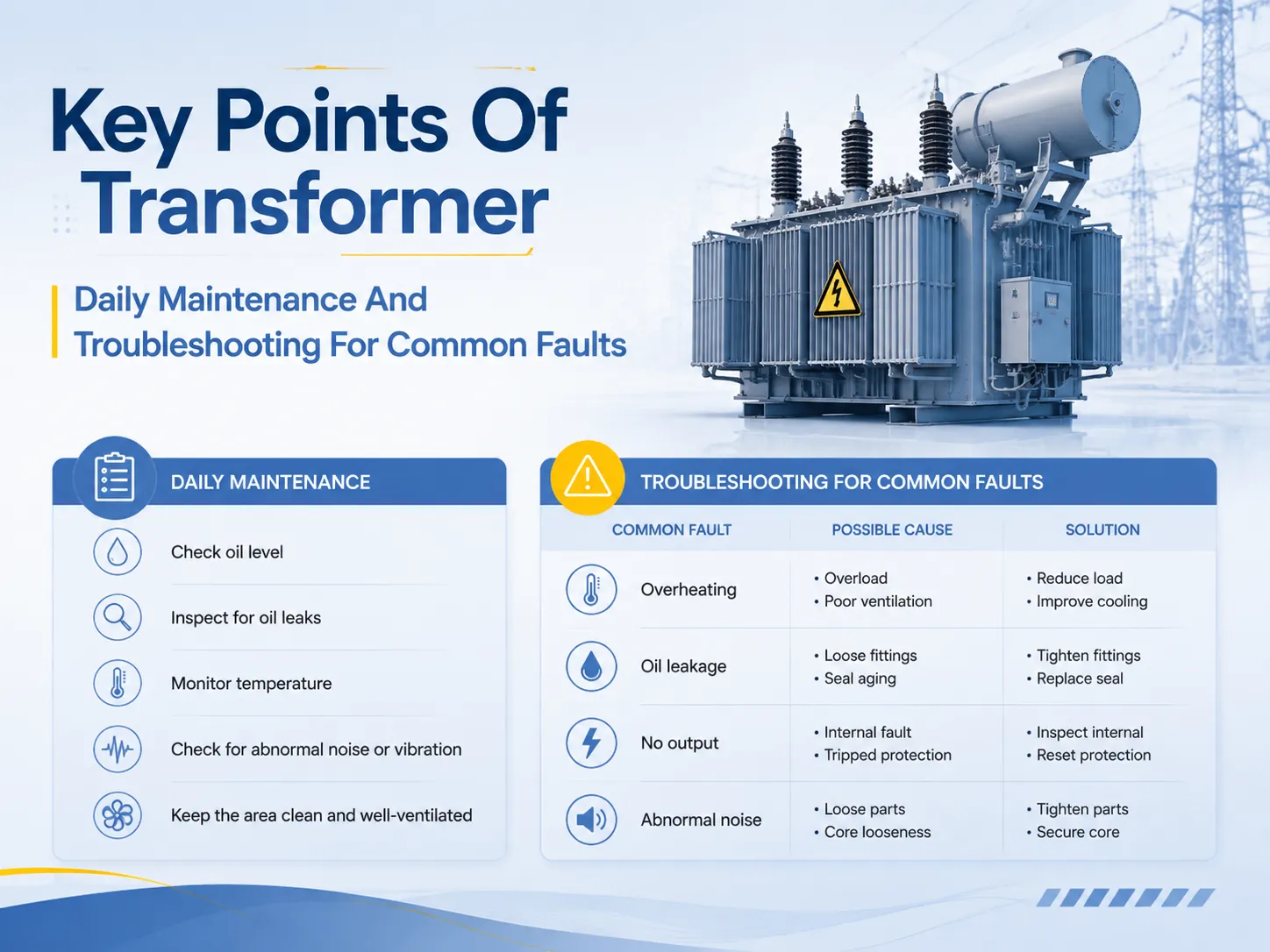
Perché la Manutenzione Quotidiana è Importante
I trasformatori possono guastarsi in due modi: bruscamente a causa di eventi come un fulmine, esplosioni delle guarnizioni o cortocircuiti; o lentamente a causa della degradazione dell'isolamento, dell'ingresso di umidità attraverso i trasformatori e della funzione meccanica del trasformatore. I guasti lenti sono qualcosa con cui la manutenzione preventiva può occuparsi poiché forniscono segnali precoci settimane o mesi prima che si verifichi il guasto: ad esempio, un livello inferiore di olio nel serbatoio del trasformatore, qualche cambiamento nel suono del trasformatore, un aumento della temperatura del serbatoio e perdite d'olio insignificanti.
Ricerche condotte dai gruppi di lavoro IEEE e CIGRÉ mostrano che i dati sui guasti dei trasformatori supportano la conclusione che il sistema di isolamento e i cambiatori di presa costituiscono il numero maggiore dei dati totali sui guasti dei trasformatori, rappresentando il 30-50 percento del numero totale di guasti dei trasformatori. Una passeggiata di cinque minuti ogni giorno può aiutare a identificare le cause dei guasti dell'isolamento FIA, mentre un campione d'olio annuale che costa $300 può confermare cosa sta accadendo all'interno del serbatoio del trasformatore. Lo scenario opposto implica scoprire il malfunzionamento quando il dispositivo di protezione viene attivato, il che significa che è necessario effettuare lavori di riparazione d'emergenza insieme a lavori straordinari e costi legacy necessari per svolgere questi compiti, che generalmente superano i costi di manutenzione di 5-20 volte.
La Lista di Controllo per l'Ispezione Quotidiana
Un'ispezione quotidiana tipica di un trasformatore riempito d'olio richiede circa 5–10 minuti. Seguire i punti sottostanti assicurandosi di registrare correttamente:
- Livello dell'olio: controllare un indicatore manuale del livello dell'olio. Una diminuzione improvvisa indica olio fuoriuscito e possibili difetti.
- Condizione e aroma dell'olio: il vetro di ispezione dovrebbe indicare olio pulito e chiaro; olio torbido segnala umidità o carbonizzazione, rispettivamente.
- Rumore: il trasformatore dovrebbe produrre solo un ronzio regolare; qualsiasi rumore di ronzio indica parti allentate, problemi al nucleo o attività di scarica. Qualsiasi alterazione dal suono regolare dovrebbe destare sospetti.
- Temperature: annotare il livello della temperatura dell'olio superiore e confrontarlo con la condizione di carico. In un trasformatore di distribuzione completamente attivo, la temperatura dovrebbe essere vicina a 60–75 °C in condizioni normali; qualsiasi lettura superiore a 85-90 °C dovrebbe essere allarmante.
- Bushings: cercare crepe o tracciamenti.
- Breather: il gel di silice dovrebbe essere ancora blu (indicando mancanza di umidità); dovrebbe essere rosa o rossastro.
- Relè Buchholz: confermare che non ci sia accumulo di gas nella finestra.
- Altro: considerare la presenza di olio sotto il trasformatore, vibrazioni insolite, bulloni allentati, ecc.
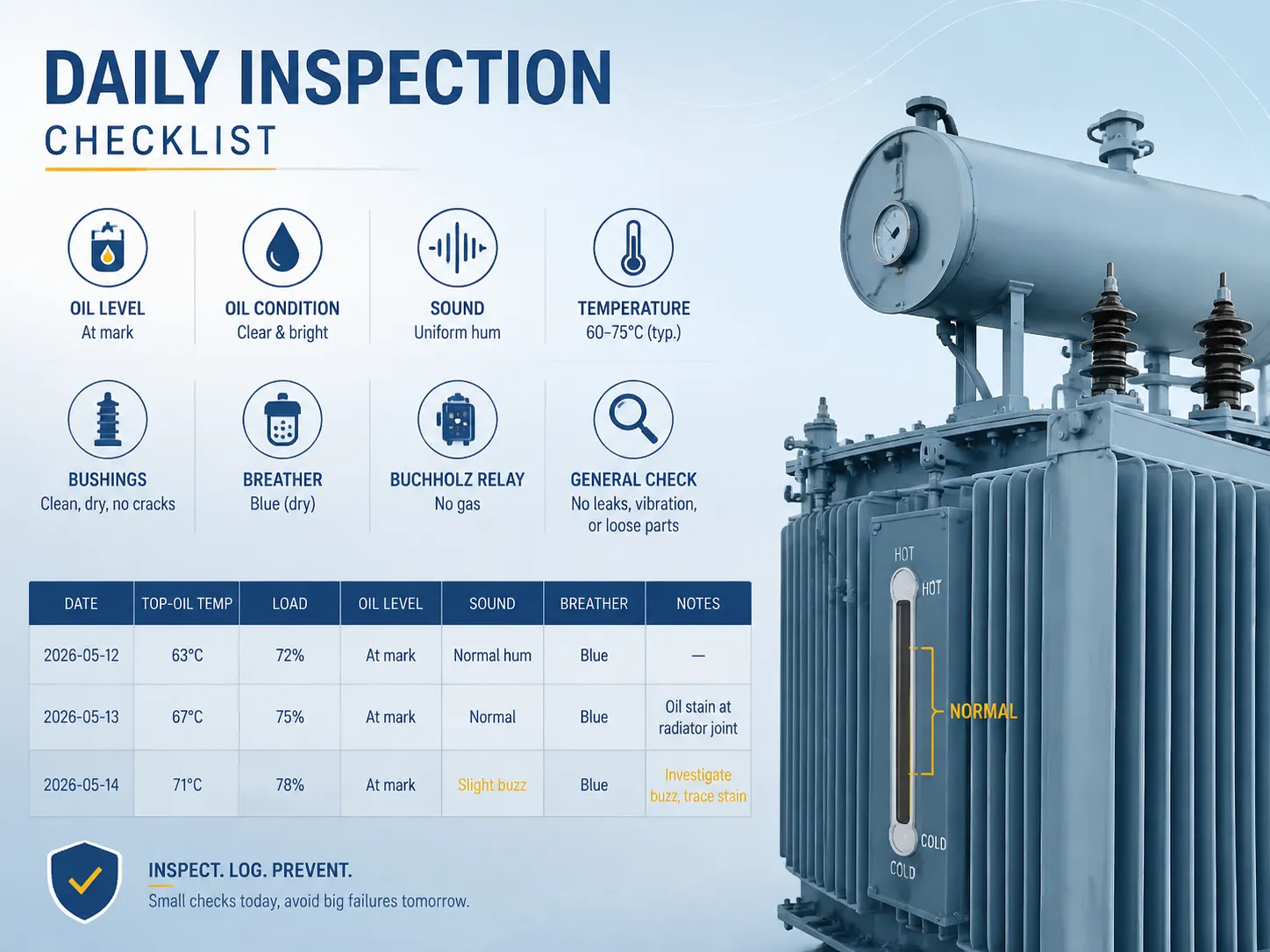
Qualsiasi attività insolita viene registrata e presa sul serio, mentre il registro quotidiano fornisce anche dati di tendenza utili che possono essere utilizzati per future diagnosi. Un registro standardizzato semplice compilato in ogni occasione consente una rapida visione delle tendenze:
| Data | Temp. Olio Superiore | Carico | Livello dell'olio | Suono | Respiro | Note |
|---|---|---|---|---|---|---|
| 2026-05-12 | 63°C | 72% | Al segno | Ronzio normale | Blu | — |
| 2026-05-13 | 67°C | 75% | Al segno | Normale | Blu | Macchia d'olio all'unione del radiatore |
| 2026-05-14 | 71°C | 78% | Al segno | Leggero ronzio | Blu | Indagare sul ronzio, tracciare la macchia |
Compiti di Routine Settimanali e Mensili
Le ispezioni quotidiane rivelano segni immediati di problemi, mentre le ispezioni settimanali e mensili aiutano a individuare deterioramenti più lunghi:
| Frequenza | Compito | Standard / Valore Tipico |
|---|---|---|
| Settimanale | Ispezione visiva di tutti gli accessori, funzionamento delle ventole di raffreddamento, controllo delle perdite d'olio | Nessuna perdita, le ventole funzionano con termostato |
| Mensile | Controllare il livello dell'olio a temperatura, ispezionare le connessioni di messa a terra, pulire le superfici degli isolatori | Resistenza di messa a terra < 1 Ω dove testato |
| Trimestrale | Test di resistenza di isolamento (megger) sugli avvolgimenti, verificare il funzionamento del cambiavalute | I valori di IR tendono, non assoluti; 1.000–5.000 MΩ tipici su avvolgimenti HV sani |
| Semestrale | Campionamento dell'olio per umidità e resistenza dielettrica, campione d'olio OLTC | Tensione di rottura > 30–40 kV secondo IEC 60156; umidità < 20–30 ppm |
| Annuale | DGA completo, analisi dei furani, test di qualità dell'olio, test del relè di protezione | Livelli di gas secondo IEEE C57.104 condizione 1 |
| Ogni 3–5 anni | Ispezione approfondita, revisione del conservatore e del filtro, ispezione dei contatti OLTC | Linee guida del produttore e IEC 60422 |
Come appare “Normale”: Valori di riferimento
La diagnosi inizia con la comprensione di quali siano i valori normali. La tabella sottostante rappresenta gli intervalli di distribuzione pratici per i cosiddetti trasformatori di distribuzione immersi nell'olio:
| Parametro | Intervallo Normale | Indagare Quando | Livello di allerta / Azione |
|---|---|---|---|
| Temperatura dell'olio superiore (carico) | 50–75°C | > 80–85°C | > 90–95°C: ridurre il carico, controllare il raffreddamento |
| Stima del punto caldo dell'avvolgimento | < 98°C secondo la guida al carico | Tendenza in aumento | > 110–120°C: invecchiamento serio |
| Tensione di rottura dell'olio | > 40–60 kV | 30–40 kV | < 30 kV: necessaria filtrazione/sostituzione |
| Umidità dell'olio | < 15–20 ppm | 20–30 ppm | > 30–40 ppm: asciugare l'olio e indagare |
| Resistenza di isolamento (megger, avvolgimento HV) | > 1.000 MΩ | Tendenza in calo tra i test | < 100–500 MΩ: asciugare e ripetere il test |
| Colore del filtro in gel di silice | Blu (secco) | Parzialmente rosa | Completamente rosa/rossa: rigenerare o sostituire |
| TDCG (gas combustibili totali) | < 720 ppm | 720–1.920 ppm | > 1.920 ppm: indagine dettagliata secondo IEEE C57.104 |
Fai attenzione che le tendenze sono più importanti delle singole misurazioni: una temperatura dell'olio di 78°C è più allarmante se aumenta di 5°C a settimana piuttosto che se è stabile con un carico costante.
Risoluzione dei problemi dei difetti più comuni
Se ci sono indicazioni di malfunzionamento, conduci un'indagine ordinata invece di fare supposizioni. Quando si risolvono i problemi dei trasformatori, può essere utile consultare la seguente tabella dei problemi comuni e delle possibili cause, così come i primi test che dovresti eseguire:
| Sintomo | Cause più probabili | Prime verifiche | Passo successivo se non risolto |
|---|---|---|---|
| Rumore insolito / cambiamento di ronzio | Serraggio del nucleo allentato, bulloni di montaggio allentati, vibrazione dell'azionamento OLTC, scarica parziale, armoniche di carico | Serrare i bulloni, confrontare il rumore con il livello di carico, ascoltare per crepitii | Misurazione PD, test della corrente di terra del nucleo |
| Livello dell'olio in calo | Perdite a guarnizioni/innesti, guasto del respiratore, abbassamento della temperatura | Ispezionare tutte le giunture, controllare la correlazione della temperatura | Trovare e riparare la perdita; testare l'olio per l'umidità |
| Temperatura dell'olio alta | Sovraccarico, ventole di raffreddamento non in funzione, radiatori ostruiti, livello dell'olio basso, alta temperatura ambiente | Controllare il carico rispetto alla valutazione, funzionamento della ventola, flusso d'aria del radiatore | Rivedere la guida al caricamento, pulire i refrigeratori, DGA |
| Allerta gas di Buchholz | Gas minore da invecchiamento normale, surriscaldamento o un guasto interno | Raccogliere un campione di gas, annotare quantità e odore | DGA di gas e olio; confrontare con IEEE C57.104 |
| Trip del Buchholz (improvviso) | Guasto interno maggiore, arco, cortocircuito | NON ri-energizzare; isolare e ispezionare | Ispezione interna completa, DGA, test di avvolgimento |
| Bassa resistenza di isolamento | Umidità nell'olio, avvolgimento bagnato, polvere e contaminazione | Test Megger, test di umidità dell'olio | Processo di asciugatura, filtrazione dell'olio, ritest |
| Surriscaldamento alle connessioni | Terminali allentati, morsetti corrosi, conduttori sottodimensionati | Termografia di terminali e barre collettore | Ri-torquing secondo specifiche, sostituire i morsetti |
Funzionamento del Relè Buchholz: Cosa Ti Dice
Il relè Buchholz è posizionato nel tubo che collega il serbatoio del trasformatore al conservatore, facendo parte di un sistema di rilevamento dei guasti interni. Il relè presenta due galleggianti: il galleggiante superiore invia un segnale di allerta in caso di accumulo di gas e il galleggiante inferiore aziona l'interruttore quando l'olio si sposta improvvisamente verso il conservatore e si verifica un guasto significativo. Quando il dispositivo Buchholz emette un allarme:
- È necessario annotare la quantità di gas rilasciato e se il relè ha appena dato un segnale di avviso o ha funzionato per disattivare il circuito elettrico.
- È importante raccogliere un campione di gas dalla valvola Buchholz e annotare la quantità di gas e il suo odore. Un odore sgradevole può essere un indicatore di arco.
- È essenziale analizzare il gas raccolto: quantità anormalmente elevate di idrogeno e acetilene rivelano la presenza di arco e guasti gravi, mentre una composizione predominante di aria può indicare problemi con il respiratore d'aria.
- È necessario prelevare il campione di olio DGA contemporaneamente e confrontare le concentrazioni di gas con le condizioni descritte nello standard IEEE C57.104.
- È necessario prendere una decisione: se la composizione del gas indica fenomeni di surriscaldamento o arco – non riconnettere l'unità fino all'ispezione interna e a eventuali lavori di riparazione. Se l'accumulo di gas non è statisticamente significativo e non indica un funzionamento difettoso, l'unità può continuare a funzionare senza problemi, ma devono essere effettuate ispezioni continue per essere certi dell'assenza di guasti.
L'evento di accumulo di gas deve essere documentato e segnalato all'ingegnere per consentire un ulteriore monitoraggio della formazione di gas.
Perdite di olio: Cause e Gestione
Il problema di manutenzione più visibile riguardo alle perdite d'olio è rappresentato dalle perdite d'olio che sono importanti per tre motivi: abbassamento del livello dell'olio (che influisce sull'efficacia dei sistemi di raffreddamento e isolamento), ingresso di umidità e aria attraverso le perdite e causare problemi ambientali e di sicurezza. Le perdite d'olio si verificano più comunemente alle guarnizioni nel punto di connessione tra il serbatoio e il coperchio, alle basi delle guarnizioni, alle flange dei tubi dei conservatori, alle connessioni con il radiatore di raffreddamento e alla valvola di drenaggio.
Quando si cerca di individuare una perdita d'olio, è meglio effettuare alcune ispezioni con un panno pulito o, nel caso di una perdita molto piccola, controllare le giunture di notte con una torcia (ci sarebbero tracce di olio visibili). Si raccomanda di stringere i bulloni sulla flangia secondo le istruzioni del produttore e, se non aiuta, di sostituire le guarnizioni con nuovi materiali. Dopo qualsiasi riparazione, l'olio deve essere riempito attraverso il conservatore dallo stesso lotto e dopo una settimana deve essere controllato un campione per l'umidità. Anche piccole perdite d'olio possono portare a grandi problemi poiché un'unità che perde 5-10 litri al mese inizierà ad assorbire aria umida attraverso il respiratore.
Surriscaldamento e guasti di raffreddamento
Il surriscaldamento continuo è il modo più rapido per ridurre la vita utile di un trasformatore a causa del fatto che l'invecchiamento dell'isolamento raddoppia praticamente con ogni aumento di 6-8 gradi K nella temperatura. Nel caso in cui la temperatura dell'olio sia alta, seguire i seguenti passaggi:
- Controllare se il carico corrisponde alla targa e al volantino di carico (IEC 60076-7). Se il carico supera il valore della targa e non c'è raffreddamento da parte delle ventole, ciò porterà a surriscaldamento.
- Controllare lo stato della ventola e della pompa. In un trasformatore ONAF, le ventole funzionano automaticamente tramite il termostato; il guasto della ventola o problemi con la circolazione dell'aria nel radiatore possono portare a un aumento della temperatura di 10-20 gradi.
- Ispezionare il radiatore per assicurarsi che le alette siano pulite; utilizzare aria o acqua ma non utilizzare un idropulitrice ad alta pressione poiché potrebbe danneggiare il radiatore.
- Controllare il livello dell'olio e la circolazione. Un basso livello di olio può portare a surriscaldamento a causa di un raffreddamento insufficiente e punti caldi vicino all'avvolgimento.
- Scoprire se ci sono cause interne del problema.
Guasti elettrici: resistenza di isolamento e messa a terra
Il test della resistenza di isolamento (megger) è utilizzato per una valutazione tipica di umidità e contaminazione. Ogni avvolgimento è testato sia a terra che tra di loro utilizzando una tensione di 500–5,000 V a seconda del trasformatore. La temperatura durante il test dovrebbe essere registrata. Il punto critico non è la misurazione assoluta della resistenza di isolamento, ma il suo cambiamento nel tempo, quindi per confrontare con i risultati dell'anno precedente, si dovrebbe dare maggiore importanza agli sviluppi nei valori piuttosto che ai numeri finali. In caso venga rilevata una bassa resistenza di isolamento, segue il test dell'olio per umidità e resistenza dielettrica. Se l'olio risulta contaminato, il filtraggio e/o la sostituzione dello stesso è il passo successivo, seguito da un nuovo test. Nelle situazioni peggiori, potrebbe essere necessario asciugare il trasformatore, seguendo le raccomandazioni fornite sul processo controllato della procedura di asciugatura dai produttori.
La messa a terra è una procedura indipendente e molto importante da eseguire quotidianamente. Il serbatoio deve essere messo a terra con tutte le parti metalliche non in corrente; la resistenza di messa a terra è generalmente di 1–5 Ω a seconda del sistema. Se la messa a terra fallisce, il serbatoio rimane energizzato in caso di qualsiasi guasto interno del trasformatore. Deve essere eseguita regolarmente un'ispezione visiva sulle cinghie polimeriche utilizzate per la messa a terra per controllare la loro corrosione, allentamento e condizioni generali.
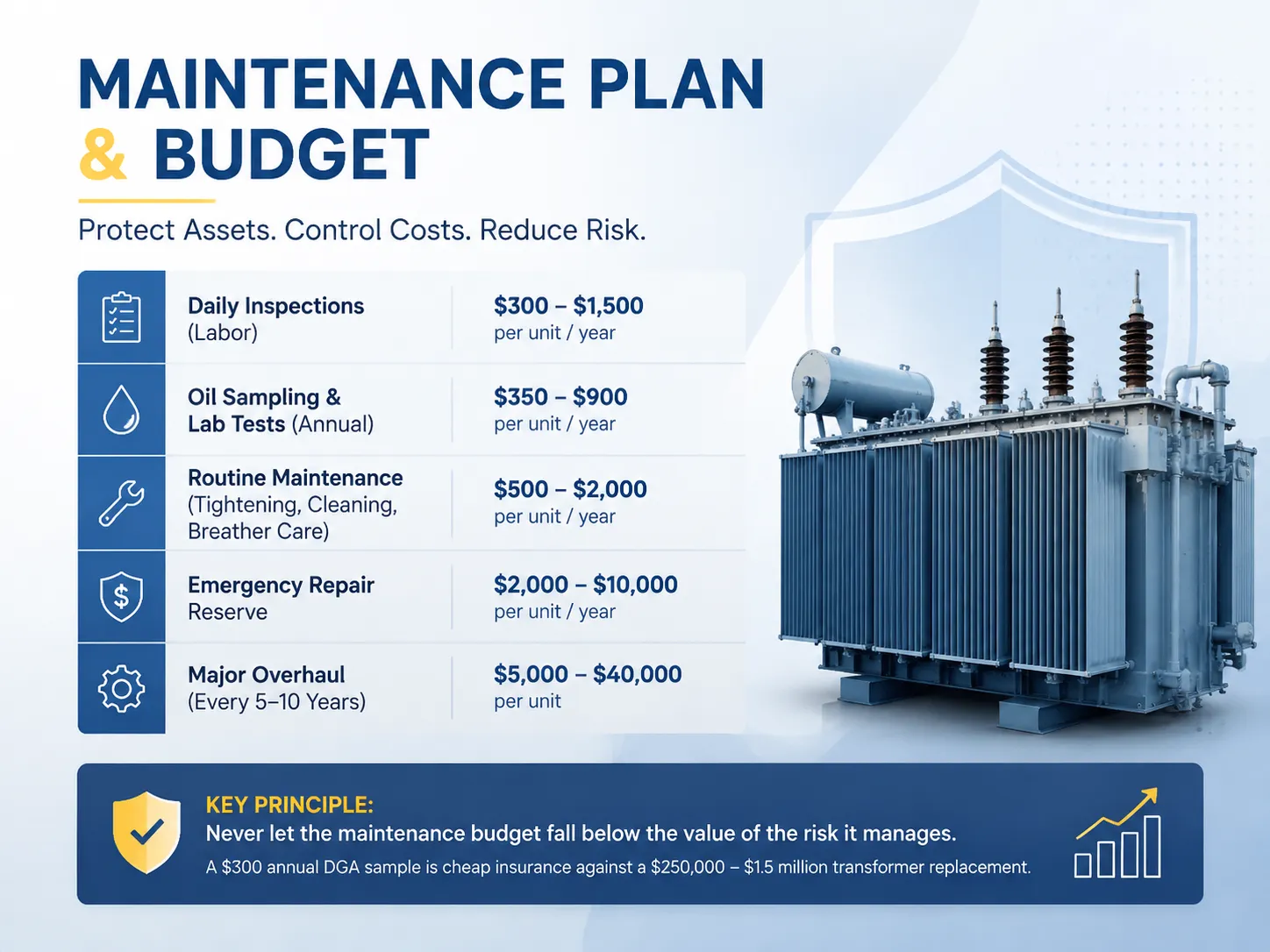
Creazione di un Piano di Manutenzione e Budget
Sviluppare piani di manutenzione scritti dai propri elenchi di controllo, assegnando ruoli e budget ai dipendenti pertinenti.
| Voce di costo | Costo annuale tipico (per unità) | Note |
|---|---|---|
| Ispezioni quotidiane (manodopera) | $300–$1.500 | 10 minuti/giorno di tempo del tecnico |
| Campionamento dell'olio e test di laboratorio (annuale) | $200–$500 per campione DGA | Più $150–$400 per pacchetto di qualità dell'olio |
| Manutenzione di routine (serraggio, pulizia, cura del respiratore) | $500–$2.000 | Materiali di consumo e manodopera |
| Riserva per riparazioni di emergenza | $2,000–$10,000 per unità budgetata | Kit guarnizioni, olio, guarnizioni, ventilatori |
| Revisione importante (ogni 5–10 anni) | $5.000–$40.000 | Ispezione OLTC, filtrazione dell'olio, guarnizioni |
Il principio principale del budgeting per la manutenzione è che il budget di manutenzione non dovrebbe mai essere inferiore al costo dei potenziali rischi. Un campione DGA annuale per $300 è un buon investimento rispetto a una potenziale perdita nei costi del trasformatore tra $250,000 e $1,500,000.
Domande frequenti
Con quale frequenza dovrebbe essere campionato l'olio del trasformatore?
Per i trasformatori funzionanti, prendere un campione una volta all'anno è una pratica normale. Nel caso dei trasformatori di distribuzione, il campionamento dell'olio dovrebbe essere effettuato una volta ogni uno a tre anni a seconda del livello di importanza del trasformatore. Per ogni allerta attivata dal relè Buchholz, qualsiasi situazione di sovraccarico, qualsiasi tipo di malfunzionamento, o se c'è una considerevole produzione di gas, un campione dovrebbe essere prelevato il prima possibile (in poche settimane). In media, i costi per un campione di DGA vanno da $200 fino a $500 insieme a un rapporto del laboratorio.
Qual è la temperatura di esercizio normale di un trasformatore?
La temperatura nella parte superiore dell'olio in un trasformatore ad olio attivo deve essere compresa tra 60°C e 75°C in condizioni climatiche temperate. Se la temperatura supera 85°C per un lungo periodo, è necessario controllare la situazione. Se la temperatura del punto caldo supera 98°C, il processo di invecchiamento dell'isolamento è in corso.
Cosa significa un allarme del relè Buchholz?
L'accumulo di gas nel tubo del conservatore è ciò che attiva l'allarme del relè Buchholz. Il gas potrebbe essere aria prodotta durante il guasto del respiratore o gas prodotti durante surriscaldamenti e arco all'interno del serbatoio. Di conseguenza, il gas deve essere campionato e deve essere eseguita una DGA per trarre una conclusione.
Come gestisco un trasformatore con bassa resistenza di isolamento?
Prima di tutto, devi controllare l'olio, la saturazione e la forza dielettrica dell'olio. È molto probabile che l'olio sia umido. L'olio deve essere filtrato o sostituito nel caso in cui la saturazione sia superiore a 20-30 ppm. Nel caso in cui l'avvolgimento del trasformatore sia umido, deve essere eseguita una procedura di essiccazione controllata secondo le istruzioni fornite dal produttore.
Cosa devo fare quando un trasformatore scatta sul relè Buchholz?
Prima di accendere il trasformatore, assicurati di isolare l'unità del trasformatore e prelevare campioni di gas e olio per la DGA. Dopo che il relè Buchholz è scattato, è essenziale controllare il relè e il conservatore.
Riferimenti
- IEEE C57.104: Guida per l'interpretazione dei gas generati nei trasformatori immersi in olio — Il riferimento per l'interpretazione DGA e i livelli di allerta durante la risoluzione dei problemi.
- IEC 60422: Linee guida per la supervisione e la manutenzione degli oli minerali isolanti — Definisce i limiti di qualità dell'olio e le pratiche di manutenzione.
- IEC 60076-7: Guida al Carico per Trasformatori di Potenza Immersi in Olio — Il riferimento per i limiti di temperatura e il carico ciclico/emergenziale.
- IEC 60156: Liquidi isolanti — Determinazione della tensione di rottura — Standard di prova per la resistenza dielettrica dell'olio utilizzato nella manutenzione di routine.
- IEC 60599: Guida all'Interpretazione del DGA negli Apparecchiature Impregnate con Olio Minerale — Quadro internazionale per l'interpretazione dei gas.
- CIGRÉ — Pubblica opuscoli tecnici sulla manutenzione dei trasformatori, statistiche sui guasti e valutazione delle condizioni.
- Jiangsu Subian Energia Elettrica — Produttore di trasformatori conforme alla IEC 60076 che fornisce documentazione di manutenzione e supporto tecnico.
Conclusione
La manutenzione quotidiana dei trasformatori è molto semplice, economica e una delle migliori iniziative orientate al valore all'interno di qualsiasi programma di asset elettrici. Un breve sopralluogo preliminare che richiede cinque minuti, un'ispezione di routine mensile e un campione annuale di indagine DGA aiuteranno facilmente a individuare difetti critici che portano a eventi incontrollabili e trasformarli in manutenzione pianificata. In generale, ogni volta che si verifica un'anomalia, deve essere avviato l'algoritmo di risoluzione dei problemi per un'efficace esclusione dei problemi: prima controllare le variabili ovvie, poi raccogliere i campioni di olio e infine interpretarli secondo gli standard e agire senza dover aspettare che la protezione si attivi da sola.
- Implementare la lista di controllo quotidiana e registrare le letture.
- Prelevare campioni di olio per DGA almeno una volta all'anno e dopo l'evento Buchholz.
- Indagare sui cambiamenti di temperatura, rumore e livello invece di accettarli.
- Non riattivare dopo che si è verificato il Buchholz senza controlli.
- Considerare un prezzo di $200–$500 per un campione DGA rispetto a oltre $250.000 per la sostituzione della macchina elettrica.