


In definitiva, tutti i progetti di distribuzione dell'energia elettrica affrontano la stessa fondamentale domanda ingegneristica: qual è la posizione appropriata per i trasformatori? Questa utility ha trovato una risposta in un involucro in acciaio pesante nell'angolo del parcheggio di una strada affollata delle Filippine. L'involucro del trasformatore consiste in un trasformatore da 1.000 kVA, un'unità di distribuzione a anello e un pannello a bassa tensione in un unico armadio impermeabile. Questa opzione ha sostituito una sottostazione in cemento pianificata e ha protetto centinaia di migliaia di dollari di investimento dell'utility riducendo al contempo il tempo di costruzione fino a quattro mesi. La decisione di un'utility a favore dell'involucro di tipo box invece del trasformatore tradizionale ha reso un successo la moderna sottostazione compatta.
L'articolo descrive gli involucri di trasformatori di tipo box, come la loro definizione, funzionalità, costruzione e applicazioni nei moderni sistemi di energia elettrica.
In breve, un involucro di trasformatore di tipo box si riferisce a una copertura impermeabile per sottostazioni di tipo box, che protegge la sottostazione, l'apparecchiatura di manovra MV e l'apparecchiatura di manovra LV contro condizioni meteorologiche avverse, sporco, animali, danni fisici o disturbi. L'involucro è costruito secondo i requisiti della norma IEC 62271-202 ed è classificato IP54/IP55 secondo IEC 60529 e presenta protezione elettronica, protezione contro eventi di alluvione e design a prova di manomissione.
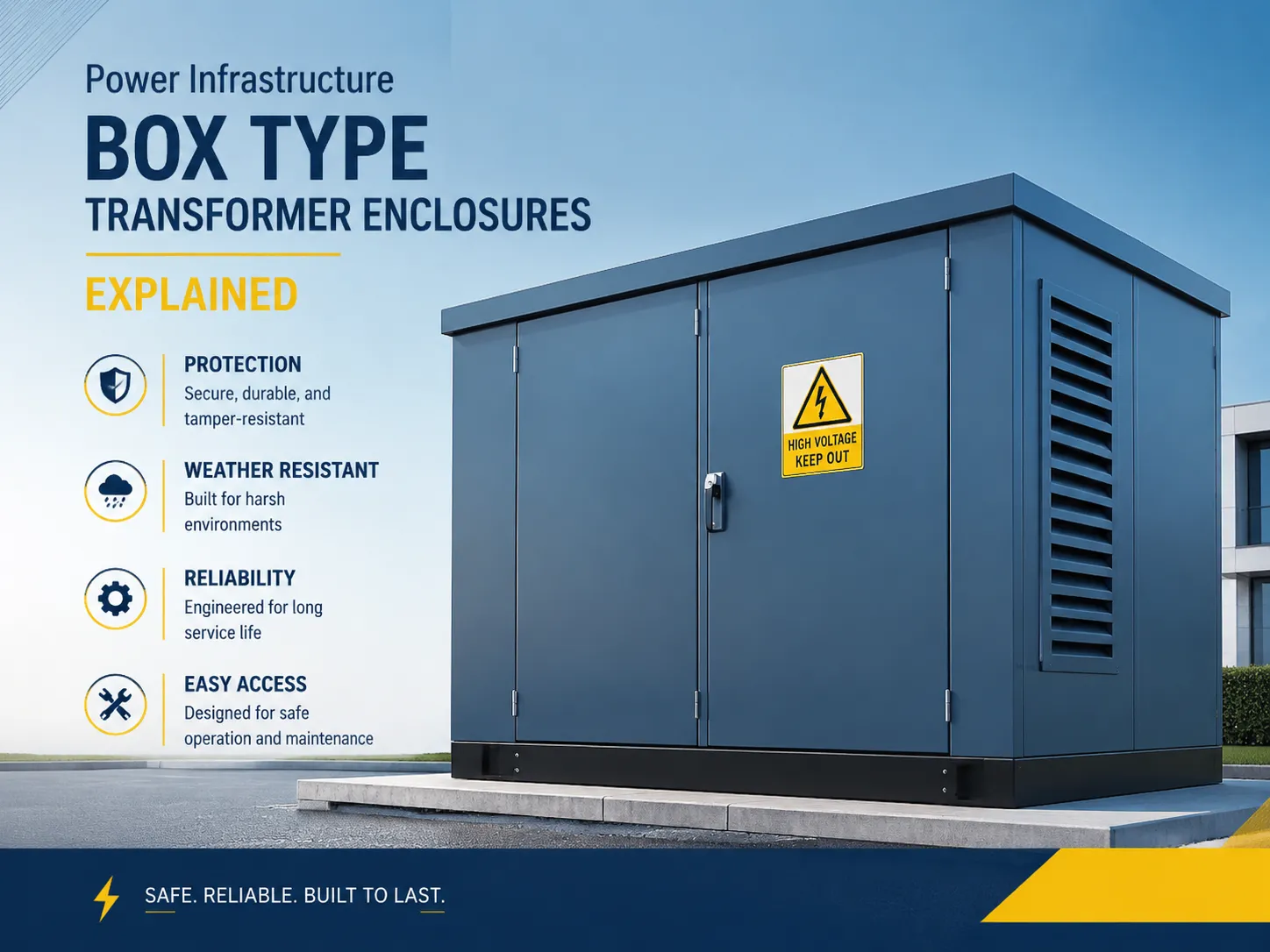
Che cos'è un involucro di trasformatore di tipo box?
Un involucro di trasformatore di tipo box è un tipo di alloggiamento che comprende una sottostazione di trasformatori preassemblata e compatta. Questo armadio in acciaio funge da parte esterna del trasformatore che ha all'interno, nella maggior parte dei design, l'apparecchiatura di manovra MV e LV, dispositivi di misurazione e protezione e attrezzature. Agisce come un protettore tra l'apparecchiatura e l'ambiente circostante, svolgendo una serie di funzioni contemporaneamente, tra cui protezione dalle intemperie, controllo del flusso d'aria di raffreddamento, protezione da manomissioni e atti di vandalismo, alluvioni e animali, e mantenendo il pericolo all'interno in caso di guasto all'interno dell'unità.
La famiglia del prodotto è designata nella IEC 62271-202 (Trasformatori prefabbricati). Questa posizione descrive i requisiti per la costruzione dell'alloggiamento, compartimenti, interblocchi di sicurezza e tipi di test completi dell'involucro. La classificazione IP stabilita dalla IEC 60529 determina la capacità dell'involucro di escludere acqua e polvere e di solito la sua designazione è IP54 o IP55. In Nord America, un requisito comparabile è l'IEEE C57.12.20 che considera tali tipi di involucro come “frontale morto” e anche il fatto che l'involucro dovrebbe resistere a manomissioni.
Comprendere l'involucro è estremamente importante poiché la sua efficienza avrà un impatto sulla durata della sottostazione, sulla sua affidabilità e sul livello di sicurezza che dovrebbe essere anche superiore a quello del trasformatore. Il peggior trasformatore in un buon involucro funzionerà bene per decenni, mentre il miglior trasformatore fallirà in un breve periodo di tempo a causa del cattivo involucro.
Perché gli involucri sono importanti nelle infrastrutture energetiche.
I seguenti cinque vantaggi hanno reso gli involucri per trasformatori a scatola indispensabili:
- Area ridotta: Invece di un edificio e di un cortile recintato, un involucro può occupare solo 10-40m² di spazio e risparmiare più terreno per una città.
- Rapidità: Gli involucri costruiti in fabbrica aiutano a evitare lavori di costruzione civile che durano mesi; l'intero processo di installazione diventa solo una questione di 2-5 giorni.
- Sicurezza delle posizioni di installazione: Gli involucri sono resistenti, dotati di serrature, quindi possono essere installati vicino a marciapiedi, scuole e parcheggi e soddisfare comunque tutte le normative di sicurezza.
- Prevenzione dell'influenza di fattori esterni: Un involucro protegge dalla pioggia, dalla sporcizia, dal sale, dagli insetti, ecc., il che è senza dubbio importante affinché i trasformatori non falliscano.
- Basso costo: Il costo di un involucro è molto inferiore a quello di un edificio, mentre il prezzo finale di un sistema di installazione è 20-40% inferiore a quello di un'alternativa costruita in loco.
Questi sono i motivi per il cambiamento del mercato verso l'uso di scatole come principale tipo di stazioni di trasformazione.
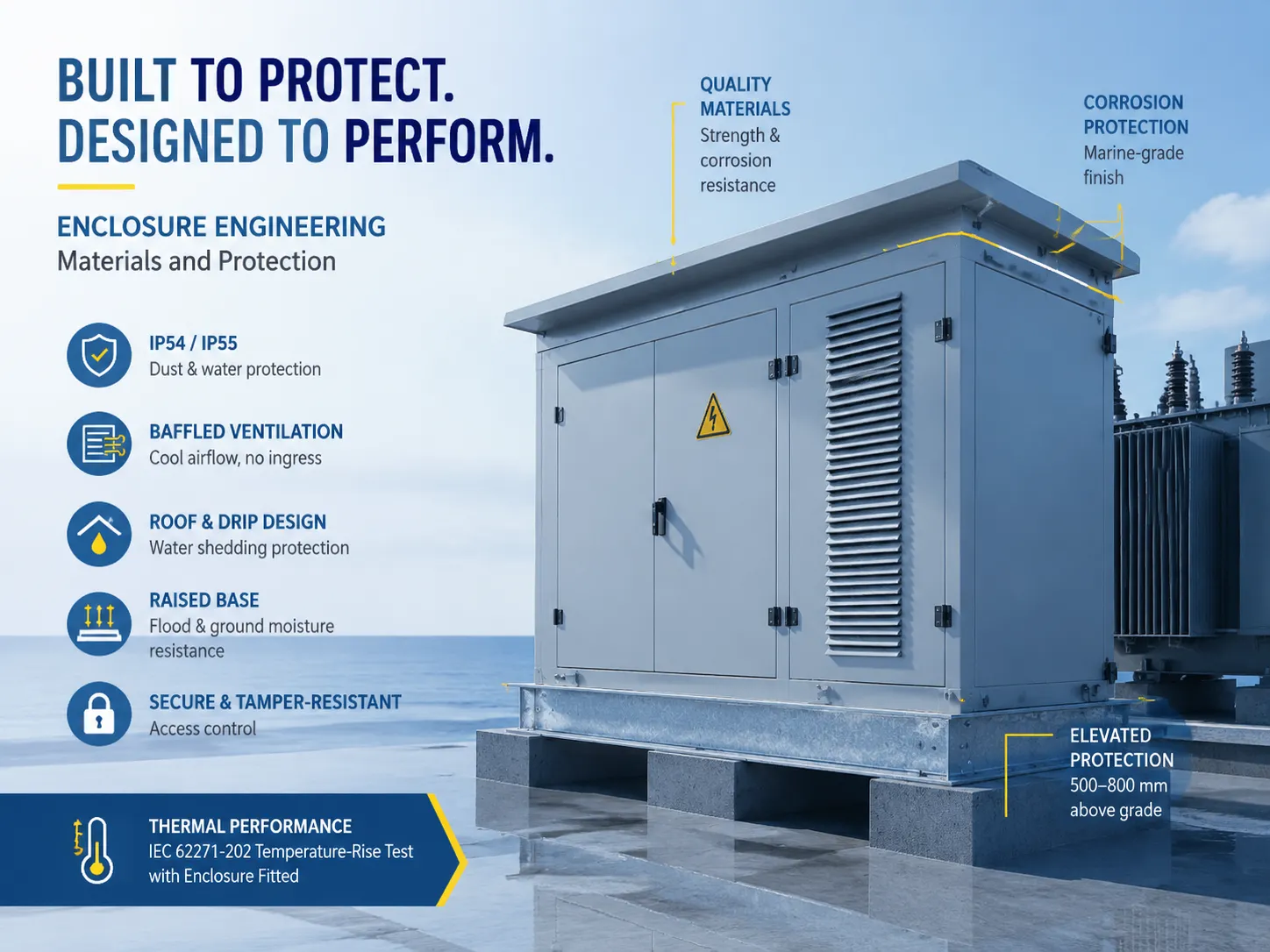
Ingegneria degli Involucri: Materiali e Protezione
La qualità di un involucro dipende dai materiali utilizzati, dalle tecniche di costruzione e dalle prestazioni ambientali.
| Elemento | Specifica | Protezione fornita |
|---|---|---|
| Materiale dell'involucro | Acciaio al carbonio verniciato, acciaio inossidabile, GRP/composito | Resistenza strutturale e resistenza alla corrosione |
| Classe di protezione | IP54 (polvere + schizzi d'acqua), IP55 (getto d'acqua) | Esclusione di polvere, pioggia e spruzzi d'acqua |
| Tetto e gocciolatoio | Tetto sporgente, canali di gocciolamento, guarnizioni | Scarico dell'acqua da porte e giunti |
| Base | Zincato a caldo, sollevato 500–800 mm | Resistenza a inondazioni e umidità del terreno |
| Ventilazione | Griglie baffolate e filtrate con flusso d'aria classificato IP | Raffreddamento del trasformatore senza ingresso atmosferico |
| Chiusura e manomissione | Lucchetti, cerniere interne, interblocchi | Prevenzione dell'accesso non autorizzato |
| Protezione dalla corrosione | Vernice di grado marino, hardware anodizzato | Resistenza alla nebbia salina e ai raggi UV in siti costieri |
L'ingegneria richiede un compromesso tra ventilazione e protezione. Pertanto, un involucro fornisce flusso d'aria al trasformatore per una dissipazione del calore efficace ma allo stesso tempo è suscettibile a pioggia, polvere e possibile ingresso di animali. Tuttavia, è possibile progettare involucri efficienti che abbiano aperture baffolate e filtrate raggiungendo la classificazione IP54 garantendo al contempo le prestazioni termiche richieste dal test di aumento di temperatura IEC 62271-202.
Compartimenti Interni
È solitamente dotato di compartimenti dei seguenti cinque tipi:
- Compartimento MV: RMU o quadri interruttori a vuoto con scatole di cavi, controlli, interblocchi e indicatori che possono essere accessibili direttamente.
- Compartimento del trasformatore: alloggiamento del trasformatore oltre al serbatoio dell'olio, sistema di ventilazione e allarmi di temperatura; la porta è interbloccata con la disconnessione MV.
- Compartimento LV: alloggiamento del quadro elettrico a bassa tensione, misurazione, feeder in uscita e banchi di condensatori opzionali.
- Zona ausiliaria: alloggiamento di illuminazione, riscaldamento, controllo anti-condensa e cablaggio.
La division strutturale che porta ai compartimenti sopra menzionati ha due obiettivi: sicurezza (un guasto interno in un compartimento non raggiunge i terminali del compartimento e l'operatore non può accedere in sicurezza a un quadro elettrico MV energizzato) e schermatura termica (qualsiasi compartimento con sezioni calde rimane entro limiti normali).
Tipi e materiali a confronto
| Materiale | Indice di costo | Resistenza alla corrosione | Miglior ambiente |
|---|---|---|---|
| Acciaio al carbonio verniciato | 0 (baseline) | Buono con vernice marina | Interno, climi miti |
| Acciaio inossidabile (304/316) | 1.15–1.30 | Eccellente | Costiero, salino, umido |
| GRP / composito | 1.10–1.25 | Eccellente, non conduttivo | Costiero, corrosivo, zone alluvionali |
| Alluminio | 1.20–1.35 | Molto buono | Leggero, applicazioni costiere |
La selezione dei materiali è influenzata più dall'ambiente del sito che dai costi da sostenere. Ad esempio, un'installazione situata in un'area costiera che risparmia 20% utilizzando acciaio verniciato è probabile che subisca perdite a causa di rapidi guasti da corrosione; in tali condizioni, l'uso di acciaio inossidabile o compositi porterà a profitti in un paio d'anni.
Standard e Test
| Standard | Ambito | Requisito Chiave |
|---|---|---|
| IEC 62271-202 | Sottostazioni trasformatori prefabbricate | Costruzione dell'involucro, interblocchi, prove di tipo unità completa |
| IEC 60529 | Protezione dell'involucro IP | IP54/IP55 per esposizione all'aperto |
| IEC 60076 | Trasformatori di potenza | Prestazioni termiche ed elettriche del trasformatore |
| IEC 62271-200 | Apparecchiature di manovra metalliche in MV | Sicurezza del compartimento dell'apparecchiatura di manovra |
| IEEE C57.12.27 (N. America) | Integrità dell'attrezzatura montata su basamento | Frontale morto, resistenza alla manomissione |
Il test di aumento di temperatura IEC 62271-202 è in grado di dimostrare in modo conclusivo se la ventilazione dell'involucro è efficiente. I clienti dovrebbero sempre richiedere il rapporto di prova sull'involucro e non sul trasformatore stesso, poiché alcuni fornitori potrebbero eseguire test solo su trasformatori nudi, il che non illustra le proprietà di raffreddamento dell'involucro.
Involucro vs. Alloggiamento tradizionale
| Fattore | Involucro di tipo scatola | Edificio tradizionale |
|---|---|---|
| Tempo di costruzione | Costruito in fabbrica; installazione 2–5 giorni | 4–12 settimane in loco |
| Costo | Frazione di un edificio | Alti costi civili e di manodopera |
| Impronta | 10–40 m² | 100+ m² con accesso |
| Controllo qualità | Testato in fabbrica | Dipendente dal sito |
| Ricollocazione | Sì | No |
| Resistenza alle inondazioni | Opzioni di plinto elevato | Dipendente dal sito |
| Migliore per | Nuovi punti di distribuzione MV/LV | Stazioni di livello di trasmissione |
Nelle tensioni superiori a 40,5 kV, le strutture convenzionali e i design isolati all'aria all'aperto rimangono lo standard. Per tensioni inferiori a questo livello, al contrario, l'involucro di tipo scatola è riconosciuto come la soluzione leader, essendo più economico, più veloce da costruire e offrendo una qualità migliore rispetto alle alternative costruite in campo.
Aree di applicazione
- I sistemi di consegna urbana comportano l'allestimento di blocchi residenziali, centri commerciali e uffici fino a quando gli edifici e i percorsi rappresentano un sistema compatto e sicuro.
- Le unità industriali comprendono singole fabbriche, che possono essere ampliate con sezioni da 400-1600 kVA.
- L'energia rinnovabile consiste in installazioni solari e eoliche che incorporano unità individuali per fungere da convertitore dall'energia specifica solare alla rete.
- L'elettrificazione rurale avviene tramite mini unità, consentendo ai villaggi di essere collegati alla rete con costi minimi.
- Le località costiere e desertiche necessitano di unità in acciaio inossidabile e composito per protezione da sabbia e spruzzi di sale.
- Le operazioni minerarie e remote possono essere effettuate su base industriale in caso di mancanza di capacità edilizie nell'area.
Costi e Fasce di Prezzo
I costi dell'involucro variano in base ai materiali e alle dimensioni per una sottostazione di tipo scatola completa. Le seguenti cifre sono una guida per la parte dell'involucro di un'unità completa:
| Valutazione | Dimensione dell'involucro (approssimativa) | Prezzo dell'involucro (USD) | Sottostazione completa (USD) |
|---|---|---|---|
| 100–315 kVA | 0 × 3.5 m | $800–$1.800 | $4.000–$12.000 |
| 400–630 kVA | 4 × 4.5 m | $1.500–$2.800 | $7.000–$20.000 |
| 800–1.250 kVA | 6 × 5.5 m | $2.200–$4.000 | $11.000–$33.000 |
| 600–2.500 kVA | 0 × 7.0 m | $3.500–$7.000 | $24.000–$60.000 |
Rispetto all'acciaio verniciato, l'acciaio inossidabile aggiunge 15% a 30%, il composito aggiunge 10-25% e gli aggiornamenti IP55/anti-condensa costano $300-1.500. Tutti i prezzi mostrati sono sempre FOB e variano distintamente in base a specifiche, marchio e regione.
Top Brand e Confronto Prezzi
| Marca | Paese | Punti di forza dell'Involucro/Compact Substation | Prezzo indicativo — 1,000 kVA (USD) |
|---|---|---|---|
| Schneider Electric | Francia | Integrazione RMU, gamma di sottostazioni compatte globali | $22.000–$38.000 |
| Siemens | Germania | Opzioni digitali, sistemi di protezione integrati | $23.000–$40.000 |
| ABB / Hitachi Energy | Svizzera | Ampio portafoglio, forti riferimenti nel settore | $22.000–$39.000 |
| Eaton | USA | Forza nel mercato pad-mount e nordamericano | $20.000–$36.000 |
| ZPUE / AUSY (specialisti) | Europa | Ingegneria dedicata per sottostazioni prefabbricate | $22.000–$45.000 |
| Jiangsu Subian Energia Elettrica | Cina | Involucri IEC 62271-202, opzioni olio/asciutto, OEM | $11.000–$33.000 |
Le principali aziende globali offrono fiducia nel marchio, linee consolidate di prodotti RMU e un servizio di classe mondiale — qualcosa di cruciale per le grandi gare d'appalto delle utility. Jiangsu Subian Electric Power produce scatole di trasformatori e complete sottostazioni compatte conformi alle norme IEC 62271-202 in acciaio verniciato, acciaio inossidabile o compositi e trasformatori isolati a circa 40-55% dei prezzi europei. Per le aziende EPC, le utility e gli sviluppatori che standardizzano le sottostazioni in vari siti, Subian ha una combinazione attraente di certificazione IEC, test in fabbrica, esperienza nell'esportazione e personalizzazione OEM, che rende fattibile apparire nelle liste corte insieme ai principali attori globali.
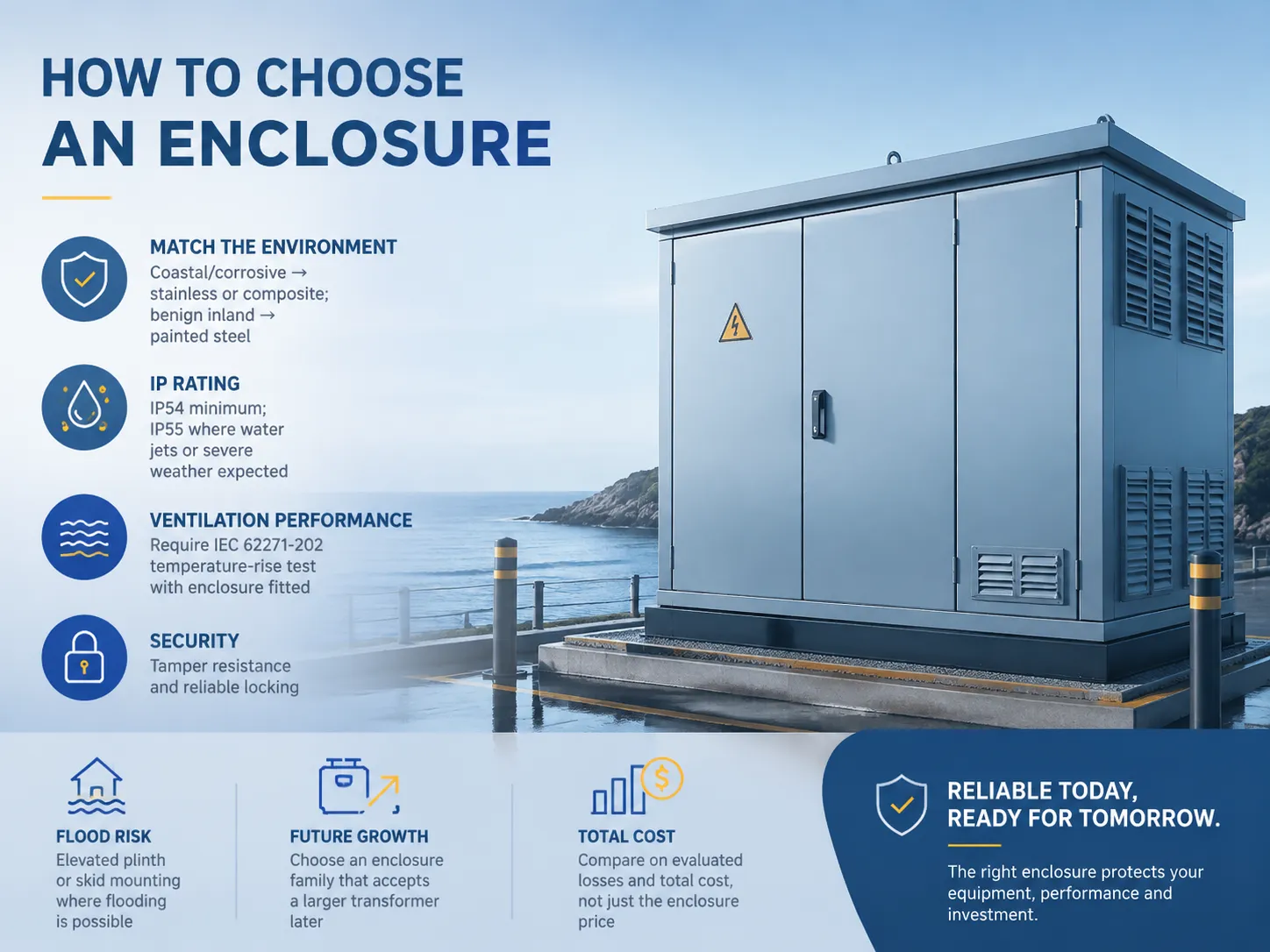
Come Scegliere un Involucro
- La condizione ambientale appropriata deve prima essere abbinata: per località costiere/corrosive, devono essere utilizzati acciaio inossidabile o composito, e la posizione interna benigno richiede l'acciaio verniciato con finitura di grado marino.
- Anche la classificazione IP deve essere convalidata: IP54 come minimo; IP55 dove ci si potrebbe aspettare getti d'acqua o condizioni meteorologiche severe.
- Anche le prestazioni di ventilazione devono essere verificate: il test di aumento della temperatura IEC 62271-202 deve essere eseguito con l'involucro installato.
- La resistenza alle manomissioni e il bloccaggio devono essere verificati per le posizioni di accesso pubblico.
- Anche il rischio di alluvione deve essere valutato: quando l'allagamento è una possibilità, l'elevazione dell'involucro deve essere effettuata attraverso l'uso di montaggio su skid.
- Le cose da considerare per la crescita futura sarebbero cercare una serie di involucri per installazioni di trasformatori più grandi in futuro.
- Fai un confronto basato su perdite e costi, invece che solo sui prezzi degli involucri.
Domande frequenti
Quanto costa un involucro per trasformatori di tipo scatola?
Il prezzo della parte dell'involucro di una sottostazione completa è compreso tra $800 e $7000 a seconda delle dimensioni e dei materiali. Il costo dell'involucro per un trasformatore da 400-630 kVA è compreso tra $1500 e $2800 e per 1.600-2.500 kVA è compreso tra $3500 e $7000. Il prezzo dell'acciaio inossidabile e del composito è circa 15-30% e 10-25% in più rispetto ai materiali standard. Il prezzo totale della sottostazione di tipo scatola può variare da $7000-$20000 per un trasformatore da 400-1000 kVA a $24000-$60000 per quelli da 1.600-2.500 kVA.
Quale classificazione IP dovrebbe avere un involucro per trasformatori di tipo scatola?
Secondo la norma IEC 60529, la classificazione IP minima per i trasformatori da esterno è IP54 con un'opzione di utilizzo di IP55 dove ci si aspetta piogge intense, getti d'acqua e condizioni meteorologiche estreme. La classificazione IP di un involucro per trasformatori di tipo scatola deve essere valida anche per porte e griglie di ventilazione.
Quanto dura un involucro per trasformatori di tipo scatola?
Una buona configurazione di un involucro per trasformatori di tipo box può durare tra i 25 e i 40 anni. Se è verniciato con acciaio al carbonio standard e rivestimento di grado marino, può essere installato nell'entroterra; altrimenti, deve essere realizzato in acciaio inossidabile o composito nelle aree costiere. Ciò significa che le principali procedure di manutenzione consistono nel controllare le guarnizioni e fare ritocchi di vernice ogni tre o cinque anni.
L'involucro influisce sul raffreddamento del trasformatore?
Sì, l'involucro non consente la circolazione dell'aria, il che può portare all'aumento della temperatura del trasformatore. Secondo la norma IEC 62271-202, il test di aumento della temperatura con l'involucro installato deve essere condotto per garantire la conformità con il grado di protezione IP del trasformatore.
Un involucro di tipo box può essere installato in un'area soggetta a inondazioni?
Sì, soluzioni speciali come basi elevate (con l'involucro che si trova a 500-800 mm sopra il suolo) e opzioni di sigillatura IP55 possono garantire che un involucro per trasformatori di tipo box possa essere utilizzato in modo appropriato anche in aree soggette a inondazioni.
Riferimenti
- IEC 62271-202 — Apparecchiature di interruttori ad alta tensione: Sottostazioni di trasformatori prefabbricati — la norma di riferimento per la progettazione, la sicurezza e il collaudo di tipo degli involucri per trasformatori di tipo box.
- IEC 60529 — Codice IP — definisce le classificazioni di protezione degli involucri IP54/IP55.
- IEC 60076 serie — Trasformatori di potenza — la norma di base per i trasformatori all'interno dell'involucro.
- IEC 62271-200 — Apparecchiature di interruttori metalliche in contenitore MV — requisiti per il compartimento dell'apparecchiatura di manovra.
- IEEE C57.12.27 — Integrità dell'involucro delle apparecchiature montate su basamento — requisiti di integrità degli involucri nordamericani.
- NEMA — Linee guida per le apparecchiature di distribuzione — linee guida per l'applicazione di apparecchiature di distribuzione racchiuse.
- Jiangsu Subian Electric Power — sito ufficiale — produttore ed esportatore di involucri per trasformatori di tipo box IEC 62271-202.
Conclusione
Gli involucri per trasformatori di tipo box sono eroi silenziosi della moderna generazione di elettricità – casi fabbricati che consentono a utility, sviluppatori e proprietari industriali di assemblare una sottostazione completa in pochi giorni, in aree ristrette e condizioni meteorologiche sfavorevoli, godendo della qualità di fabbrica. Da un punto di vista organizzativo, è l'involucro a determinare quanto a lungo e quanto in sicurezza l'unità opererà, più del trasformatore all'interno.
Idee principali da ricordare:
- Scegliere il materiale dell'involucro e il grado IP in base alle condizioni ambientali – utilizzare involucro in acciaio inossidabile/composito e IP55 per località costiere e umide.
- Assicurarsi che venga eseguito il test IEC 62271-202 per l'aumento totale della temperatura dell'unità.
- Controllare l'involucro per la resistenza alle manomissioni, opzioni di chiusura e inondazione se l'involucro deve essere installato in aree pubbliche o soggette a inondazioni.
- Confrontare le perdite stimate e i costi totali di installazione, non solo il prezzo dell'involucro.
- Impiegare lo studio di marchi noti come Schneider, Siemens e ABB rispetto a fornitori conformi IEC come Jiangsu Subian Electric Power.