


広東の中規模変圧器工場で、コンプライアンスマネージャーは現在、今年の3つ目のスプレッドシートに入力していました。最初のスプレッドシートはすべての製品ラインのGB 20052効率評価を追跡し、2つ目はアモルファス変圧器のための地方インセンティブを追跡しましたが、3つ目、彼が最も嫌っていたものは、地元のグリーン製造評価の下で工場の電力消費のどれだけが再生可能エネルギー源から来なければならないかについてでした。製造業界は3年間で「どのように作られていても変圧器を販売する」から「効率評価を証明し、サプライチェーンを証明し、カーボンフットプリントを証明する」へと変わりました。彼の工場は大丈夫でしたが、2つの小さな競合他社が顧客の効率要件を満たせなくなり、輸出を停止しなければならないことに気付きました。.
この記事は、どのように 政策と規制 変圧器業界を再形成しているか、主要な基準とルールは何か、グリーン開発の方向性が実際に何を意味するか、そしてバイヤーと製造業者がどのように対応すべきかを説明します。.
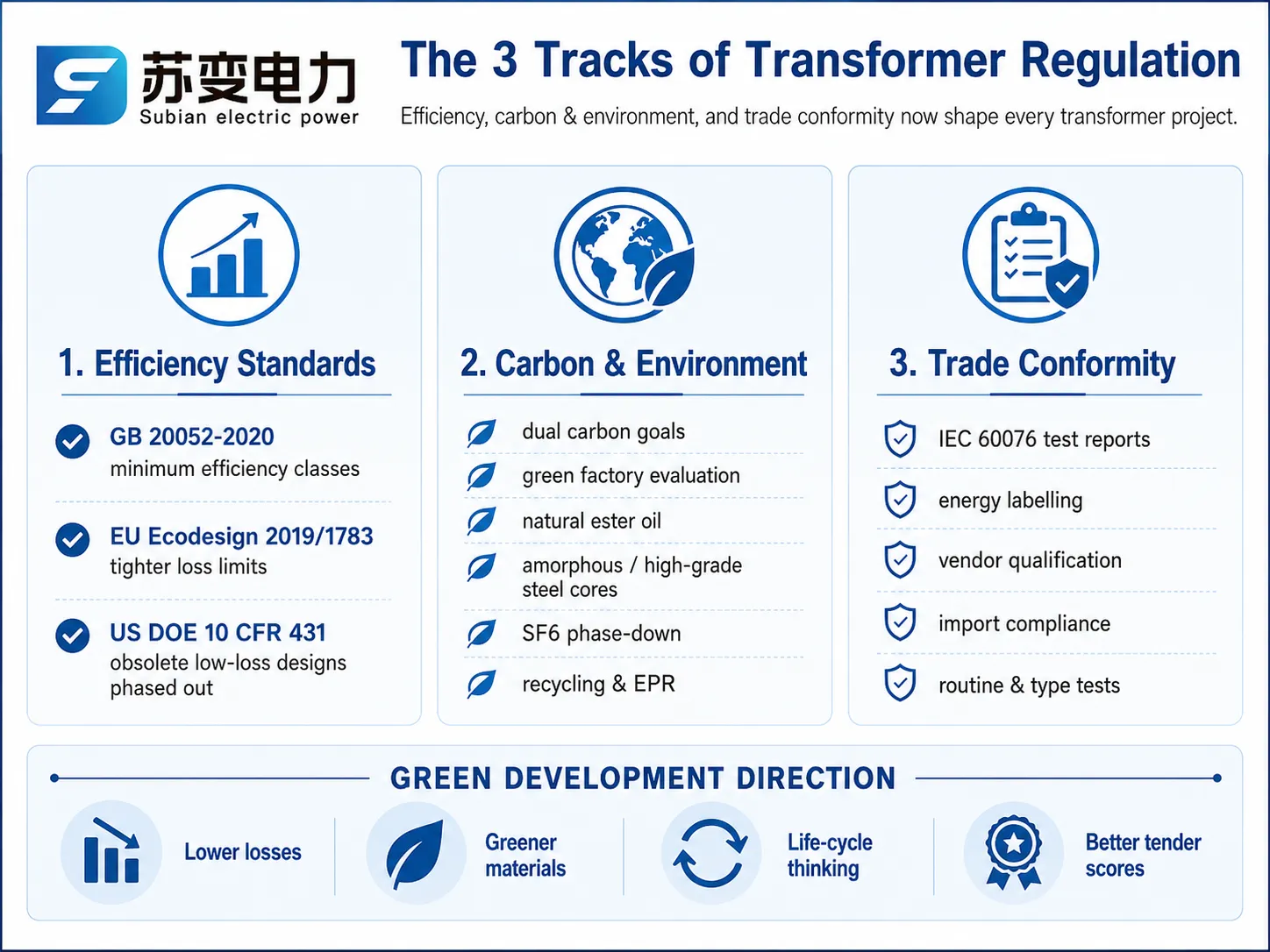
変圧器規制の三つのトラック
変圧器の規制はもはや単一のルールとして考えられることはありません。代わりに、企業と顧客はさまざまな組織によって適用される要件の組み合わせに対処しなければなりません。最近数年で新しい規制が導入された3つの主要な分野があります — 効率、カーボン、貿易です。たとえば、IEC 60076の要件を満たす変圧器が、地元の効率クラスに合格しない場合は販売できず、すべての関連製品基準に準拠しているがグリーン評価に合格しない製造業者は、財政的支援を得ることができません。.
この分野の進展について疑いの余地はありません。中国、EU、米国、日本、インドなどのすべての重要な市場は、過去5年間よりも厳しい変圧器の効率ルールを適用しており、近く新しい規制が登場することが期待されています。どこにでも見られる馴染みのある用語は、グリーン開発です。.
効率基準: GB 20052、EUエコデザイン、米国DOE
世界の調達を支配する三つの効率フレームワーク:
| フレームワーク | 市場 | 構造 | 主要要件 |
|---|---|---|---|
| GB 20052-2020 | 中国 | 配電用変圧器のグレード1–3 | グレード2のベースライン; インセンティブプログラムにはグレード1が必要 |
| EUエコデザイン規則 2019/1783 | EU | ティア1(2021年7月)およびティア2(2024年7月)の損失制限 | 評価による損失上限; ティア2はおおよそ10–15%厳格 |
| US DOE 10 CFR 431 | アメリカ合衆国 | 最低効率基準 | 2016年1月以降の配電用変圧器の効率クラス、2024–2026年に改訂予定 |
中心概念は無負荷損失であり、これは毎日毎時間発生する損失の用語です。ヨーロッパの規制Tier 2は、多くの設計が高透磁率鉄およびアモルファスコアの道をたどることを促しましたが、中国の第一カテゴリー規制は多くの変圧器に同様の要求をしています。これにより、2015年に「標準変圧器」と呼ばれるものが、2026年には現在の効率等級を言及しない規制市場のバイヤーにとって「非効率的変圧器」となる状況が生じます。.
デュアルカーボンとグリーン開発の方向性
カーボンピークと中立性の二重目標は、それらの採用以来、中国の電力変圧器技術分野における政策を導いてきました。数字は、変圧器がグリッド損失に具体的な影響を与えることを示しています。例えば、中国の電力網では、配電損失は通過するエネルギーの5-8%と推定されており、これは変圧器に起因する損失がかなりのものであり、ワイヤーの銅含有量や変圧器のコアによって引き起こされる鉄損失から生じていることを意味します。.
中国のデュアルカーボン目標の下で、以下の方向性が変圧器業界のグリーンイニシアティブを先導します:
より効率的な変圧器クラスが贅沢ではなく、要件となりつつあります。.
エネルギー消費、排出、廃棄物およびリサイクル活動に基づいて変圧器製造者のエコフレンドリーさを検証するグリーンファクトリーラベルの設立。.
変圧器のコアにアモルファス材料を含むエコフレンドリーな材料の使用、および天然エステルオイル。.
初期コストだけでなく、変圧器の購入の生産および解体プロセスに重点を置くこと。.
その結果、現在の調達評価慣行は、経済的要因に加えてカーボンカウントの考慮を必要とします。.
| 政策手段 | 誰に対して拘束力があるか | 執行力 | 調達に対する典型的な影響 |
|---|---|---|---|
| 最低効率等級(GB 20052 / EUエコデザイン / DOE) | 製造業者および輸入業者 | 義務的、市場アクセス | 低効率モデルがカタログから消える |
| エネルギーラベリング | 製造業者 | スキームが存在する場合は義務的 | 名札および見積もりに表示される効率クラス |
| 入札におけるグリーン調達スコアリング | バイヤー(公共事業、政府) | 契約的、スコアの5–10% | 認証された低損失ユニットが入札に勝つ |
| グレード1 / アモルファスユニットへの補助金およびインセンティブ | バイヤー | 自発的な採用 | プレミアム効率の実質価格を引き下げる |
| カーボン取引およびグリーン証明書 | 排出者およびバイヤー | 市場ベース | 避けられた変圧器損失の価値を高める |
表を下に読み進めると、方向は明確です:最小グレードのスティックが補助金のニンジンとグリーンスコアのゲートと組み合わさり、市場全体を一方向に押し進めます。.
環境規則:SF6、オイル、リサイクル
効率を超えて、第二の規制の波は変圧器技術自体の環境フットプリントをターゲットにしています:
| 規則 / 問題 | 範囲 | 変圧器の影響 |
|---|---|---|
| EU Fガス規制 2024/573 | SF6の段階的削減と使用制限 | SF6絶縁スイッチギアの段階的廃止;SF6ベースの変圧器ソリューションへの圧力 |
| 廃油と土壌汚染規則 | ミネラルオイルの取り扱い、廃棄、漏れ | 生分解性の天然エステルオイルを支持 |
| 拡張生産者責任(EPR) | EUにおける使用済み製品の回収 | リサイクル可能性とオイル廃棄は最初から設計されている |
| 火災および生命安全コード | 屋内および都市の設置 | 屋内および高密度サイト向けにドライタイプおよびエステルオイルの採用を促進 |
SF6の物語は最も強い信号を反映しています。SF6はCO2の25,200倍の温室効果能力を持つため、EUおよび北米の一部の当局は高電圧電気機器における使用を制限しています。変圧器の製造業者はエステルオイルおよびドライ技術ソリューションで反応しました。現在、10-35kVで動作し、SF6を絶縁媒体として使用しているいくつかの設計は、液体/固体絶縁を使用しています。.
貿易と適合性:IEC、ラベリング、輸入
貿易適合性は第三の選択肢であり、これは輸入者の市場ニーズに適合する変圧器の機械的証拠です。国際的なバイヤーに対するいくつかの影響は次のとおりです:
IEC 60076試験報告書(型式試験および定常試験)がほとんどの輸出市場の基礎を形成;;
適用可能な場合のエネルギーラベリングシステムおよびラベルおよび文書に表示される効率クラス;;
一部の地域で低効率の変圧器輸入に関税を課すことにより、国内生産を競争から保護する関税および関税;;
ベンダー資格、公共事業体はしばしば事前資格のために効率クラスの証拠を要求し、損失のレベルを確認できないものを拒否します。.
適合性を証明する負担は、特に小規模な製造業者にとって問題であり、まさにそのために広東の工場管理者のスプレッドシートが作成されました。バイヤーにとっての利点は、各変圧器が現在損失データと共に販売されているため、標準に対して検証し、比較可能な決定を下すことが可能になったことです。.
規制が製品と価格を再形成する方法
これらの規則が製品設計に与える累積的な影響はカタログ全体に見られます:
| 製品の特徴 | 規制前の典型的なもの | 規制後の典型的なもの |
|---|---|---|
| コア鋼 | 30–0.35 mm 従来のGOES | 23–0.27 mm 高透磁率またはアモルファスリボン |
| 無負荷損失、1,000 kVA | 1,500–2,100 W | 700–1,100 W(グレード2)、350–500 W(アモルファス) |
| 絶縁オイル | ミネラルオイルはほぼ普遍的 | ミネラルオイルと増加するエステルオイルのシェア |
| 名板データ | 定格および基本データ | 効率クラス、損失値、試験参照 |
| 設計寿命 | 20~25年 | 負荷規律を守ることで25~35年 |
価格は製品とともに変化しました。グレード2準拠のユニットは、10年前の非準拠ユニットに比べて5~15%の価格が上昇しており、アモルファスコアユニットは通常の高効率ユニットよりも20~40%高くなっています。しかし、運用コストの観点では、現代の機器の低損失が20年以内に全価格差以上の現在価値をもたらすことができるため、買い手にとってさらに有利です。これが規制の背後にある理由です。.
買い手にとっての意味
変更された規制環境は、調達チームに対して購入プロセスだけでなく、購入する製品にも影響を与えます:
効率クラスを明記する — 入札時にGB 20052カテゴリ、EUグレード、またはDOE分類と損失データ要件を記載してください。.
IEC 60076規格に従い、試験結果の証拠を要求する — 標準試験および型式試験結果に関する報告が必要です。.
地元の利益を考慮する — 製品価格の約5-15%は、中国の一部地域やいくつかのEUプログラムで提供される補助金でカバーされる可能性があります。.
スコアリングに炭素を含める — 入札プロセスにグリーン基準が存在する場合、無負荷損失を記載し、使用される油の種類を明記し、工場認証を含める必要があります。.
最低基準に準拠したペイバック要件を満たすために、最低基準よりも少なくとも1つ上の効率クラスを購入してください。最低要件は時間とともに厳しくなります。.
規制をチェックリストとして扱う企業は失敗しており、補助金を利用して短期間のペイバックを図る企業はより良い立場にあります。.
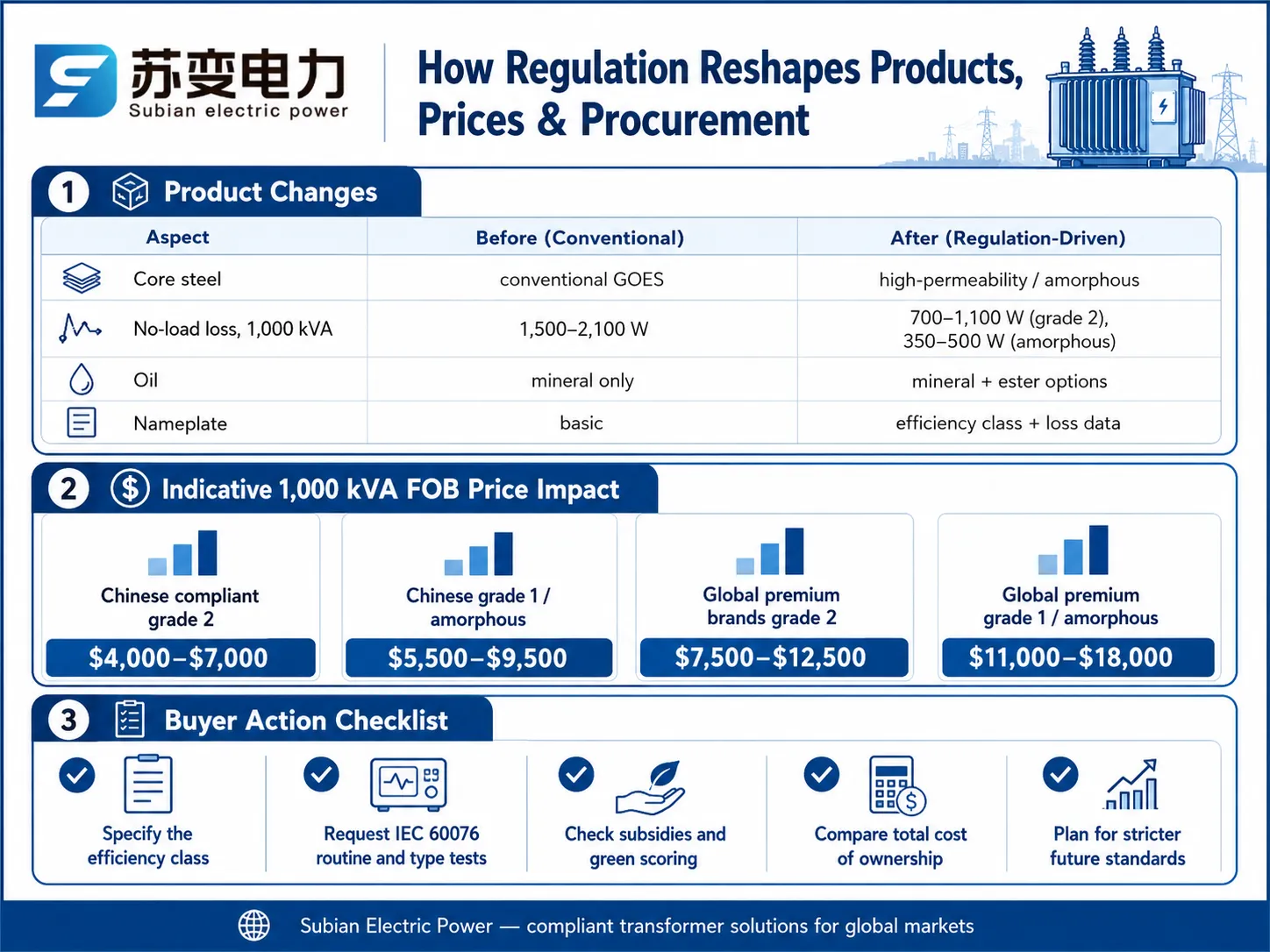
ブランドによるコンプライアンスと価格影響
ブランド別のコンプライアントな1,000 kVA 10/0.4 kV配電変圧器の指標価格、FOB:
| ブランド | 起源 | グレード2価格 | グレード1 / アモルファス価格 |
|---|---|---|---|
| 日立エナジー | 日本/グローバル | $9,000–$12,500 | $12,500–$18,000 |
| ABB | スイス/グローバル | $8,500–$12,000 | $12,000–$17,000 |
| シーメンスエナジー | ドイツ/グローバル | $8,000–$11,500 | $11,500–$16,500 |
| シュナイダーエレクトリック | フランス/グローバル | $7,500–$11,000 | $11,000–$15,500 |
| 江蘇省蘇辺電力 | 中国 | $4,000–$7,000 | $5,500–$9,500 |
価格は損失クラス、アクセサリー、銅価格、納入条件によって異なります。これらは見積もりではなく計画範囲として扱ってください。.
プレミアムブランドは、グローバルなテストプログラムとサービスネットワークで市場を支えています。中国のTierは、効率経済が有利になるインセンティブや関税がすでに存在する中で、40–50%低い初期コストで同じ効率クラスを提供することで競争しています。. 江蘇省蘇辺電力 は中国の 変圧器メーカーです その配電および電力変圧器ラインは、IEC 60076に準拠して構築およびテストされており、アモルファスコアおよびエステルオイルオプションを含むGB 20052グレード1–2設計が含まれています。Subianはグリーン工場の資格を保持し、すべての見積もりに損失値を公開し、アジア、アフリカ、中東、南アメリカの公益事業者にコンプライアントなユニットを輸出しています — その製品範囲と認証は subian-electric.com.
グリーン変圧器の展望
迫り来るシナリオは、今後5年から10年の規制に関する3つの確実性を示しています。まず、効率の最低基準に関連する規格が再び強化されると予想されています。EUが2024年以降にTierレビューを実施することを発表したことは、中国でもより厳しい規制が導入されることを確認しています。さらに、炭素会計は工場ベースから製品ベースに進化します。したがって、製造業者は、現在の損失数値が提供されるのと同様に、炭素フットプリントに関する文書を提出する必要があります。最後に、グリーン購入は例外ではなくデフォルトの状態によって推進されます。したがって、グリーン購入を利用する企業は、大規模な入札を行う際に環境条件を考慮する可能性が高いです。.
規格を満たすことを単なる規制の遵守と考えるのではなく、設計要因として捉えることができる製造業者が、試験からの成功した移行を実現するでしょう。これは、製品を試験するだけの製造業者と、関連する環境規制を遵守する製造業者との間の根本的な違いです。.
よくある質問
世界で最も重要な変圧器の効率基準は何ですか?
IEC 60076は国際的な試験および評価の基準ですが、効率自体は地域ごとに規制されています:中国のGB 20052、EUのEcodesign Regulation 2019/1783、米国の10 CFR 431(DOE)。輸出調達の場合は、IEC 60076試験と目的市場の効率クラスの両方を指定してください。.
遵守したグリーン変圧器のコストはどれくらい高くなりますか?
GB 20052グレード2の1,000 kVAユニットは、中国の製造業者から約$4,000〜$7,000 FOBで販売されています。グレード1のアモルファスコアバージョンは$5,500〜$9,500です。プレミアムの欧州および日本のブランドは通常50〜80%高くなります。損失クラスのプレミアムは、いくつかの市場で効率補助金によって部分的に相殺されます。.
規制は本当に変圧器の価格に影響を与えますか?
はい、両方の側面で影響があります。最低効率規則は、古い設計に対して初期コストを5〜15%押し上げ、プレミアム材料(アモルファスコア、エステルオイル)は20〜40%追加されます。しかし、損失が少ないため運用コストは低下します。20年間の寿命を考慮すると、効率の向上は通常、価格の上昇を上回ります。.
中国の二重炭素目標は何であり、それが変圧器にどのように影響しますか?
中国は2030年までに炭素排出量のピークを迎え、2060年までに炭素中立を達成することを約束しています。変圧器にとっては、より厳しい効率グレード、製造業者のためのグリーン工場認証、アモルファスコアやエステルオイルのような低炭素材料、そして公共事業の入札における炭素加重調達スコアリングを意味します。.
現在、変圧器を輸入するために異なる書類が必要ですか?
はい — IEC 60076に基づく定期試験および型式試験報告書、損失値、効率クラス、場合によってはエネルギーラベリングを示す必要があります。いくつかの市場では低効率の輸入が制限されており、公共事業は効率クラスの証拠がない入札者をますます拒否しています。大口注文の場合、試験報告書の第三者検査は標準的な慣行です。.
参考文献
- IEC 60076-1: 電力変圧器 – 一般 — 変圧器の国際的な試験および評価の基準。.
- EUエコデザイン規則2019/1783 — EU市場向けの拘束力のある変圧器効率要件。.
- 米国DOE 10 CFR Part 431(エネルギー効率) — 配電変圧器の米国最低効率基準。.
- GB 20052: 電力変圧器のエネルギー効率グレード — 配電変圧器の中国の効率グレード基準。.
- IEAエネルギー効率プログラム — トランスの損失シェアと効率政策の文脈の分析。.
- 米国DOEトランス効率プログラム — 効率規則の背景と経済分析。.
- 江蘇省蘇辺電力公式サイト — 効率認証を受けたトランスの範囲とグリーン工場の資格。.
結論
政策と規制 トランス業界の中心に移行しており、 グリーン開発の方向性 は現在、長期的な未来を持つ唯一の方向性です。効率等級、炭素目標、SF6制限、グリーン工場評価は別々のチェックリストではなく、低損失、低炭素、文書化されたトランスに向けた一貫した圧力を形成しています。.
重要なポイント:
- 効率規制はすべての主要市場に存在します:GB 20052、EUエコデザイン2019/1783、米国DOE 10 CFR 431。.
- 二重の炭素目標とSF6の段階的削減が業界をアモルファスコア、エステルオイル、ライフサイクル炭素会計に向けています。.
- コンプライアントなグリーントランスは初期コストが5–15%高いですが、総所有コストとインセンティブで勝ります。.
- バイヤーは効率クラスを指定し、試験証拠を要求しなければなりません — 規制はそれを利用する者にのみ役立ちます。.
規制市場向けにトランスを調達している場合、, 江蘇省蘇辺電力 GB 20052グレード1–2およびIEC 60076に基づいてテストされたエステルオイルオプションを供給し、グリーン工場認証と文書化された損失値を提供します。コンプライアントな範囲をレビューしてください。 subian-electric.com.