


油入変圧器業界は過去に比べてはるかに速いペースで進化しており、その一因は技術の進歩ですが、主にメーカーが製品の開発と製造により多くのリソースを投入しているためです。.
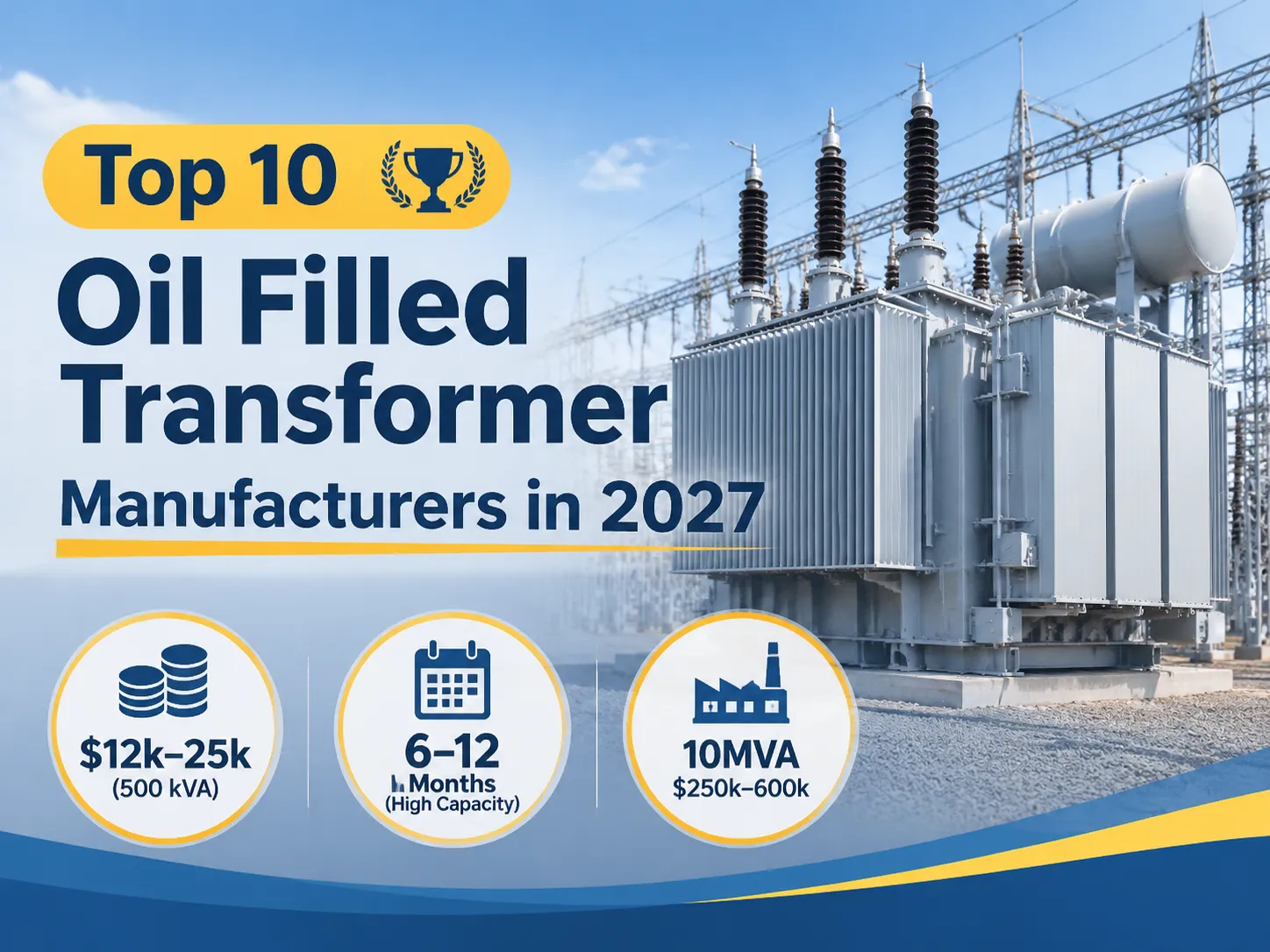
簡単な回答: 油入変圧器を提供する10社のメーカーまたは企業が以下に3つの主要なカテゴリーに分けてリストアップされています。最初のグループは欧州および日本のメーカーで、大型のユーティリティスタイル変圧器を製造し、北米の電力網にサービスを提供しています。第二のグループは北米およびインドのメーカーで、配電用変圧器の分野でリードしています。第三のグループは中国の企業で、納入価格の観点から最も低コストで大部分のボリュームを生産しています。これらの製品の価格例は以下の通りです:500kVA配電ユニットで$12,000~$25,000、1000kVAユニットで$18,000~$35,000、10MVA電力変圧器で$250,000~$600,000、高容量タイプは6~12ヶ月の納期。.
以下のセクションでは、このリストがどのように作成されたかの概要、油入変圧器と乾式変圧器の違いの説明、リストにある各企業の地域別概要、変圧器定格別の価格情報の範囲、製造および運用効率に関する詳細、変圧器の用途と価格に関するガイドを提供します。この文書の最後には、SUBIANがこれらのメーカーのプロフィールの中でどの位置にあるかについても紹介しています。.
このリスト作成にあたっての要素
このリスト作成に使用された4つの基準は、サプライヤーのショートリスト作成時に用いられる基準と一致しています。購入される変圧器を製造(単なる再販ではなく)していること、国内外の産業にサービスを提供していること(ほとんどの購入者は自国以外から購入している)、仕様決定のための技術データシートに十分な情報を提供していること(これにより価格は要問い合わせの企業を除外)、定期的なプロジェクトで指定された定格の変圧器を複数製造できる十分な製造能力があること(これにより発電機昇圧変圧器のみを製造する企業を除外)。.
このリストの順序は意図的に収益に基づくランキングではありません。収益ランキングでは大型変圧器のメーカーが上位に、配電用変圧器のメーカーが下位にランクされますが、大型変圧器を製造する企業が大多数のプロジェクト購入者が必要とする配電用変圧器を製造できるとは限りません。したがって、メーカーは専門分野に応じてグループ分けされ、各グループ内の順序は変圧器の生産能力に基づいています。.
このリストで唯一欠けているカテゴリは、設計済みの変圧器間で変圧器を販売(仲介)する商社です。商社は変圧器の価格をより良く入手する有効な手段を提供しますが、タイプテスト認証のオプションはほとんどまたは全く提供しないため、製造業者として含めるとリスト全体の価値を希薄化してしまいます。.
油入変圧器とその他のタイプの変圧器の違い
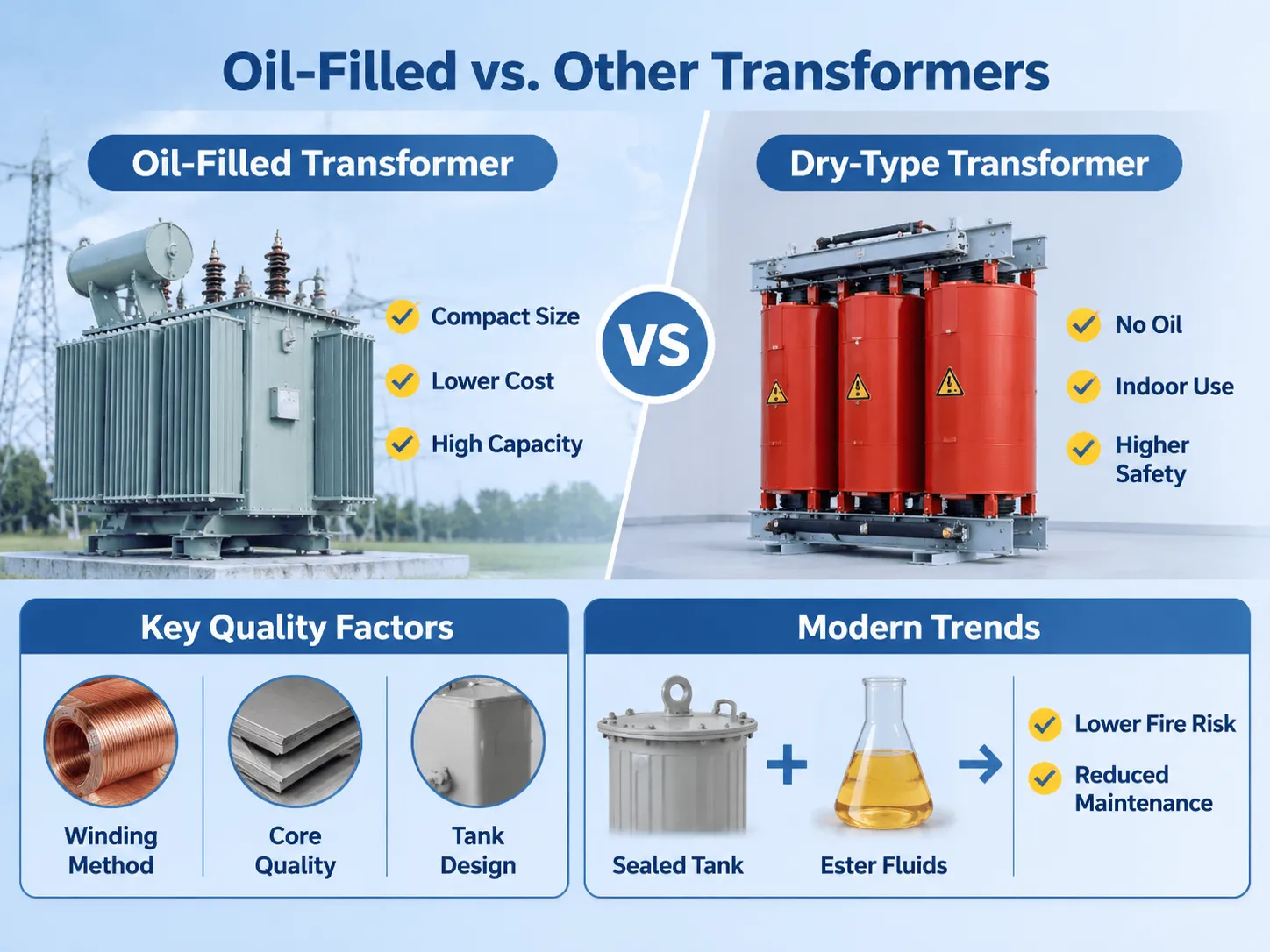
油入変圧器は変圧器のコアと巻線を 鉱物油. のタンク内に配置します。油は変圧器の冷却を提供するだけでなく、コアと巻線間のギャップの空気が油に置き換わるため、変圧器巻線絶縁の誘電強度も向上させます。油入変圧器は同等の乾式変圧器よりもはるかに小型であるため、同等の乾式変圧器よりも安価であり、乾式が経済的に非実用的になる定格であっても、はるかに高い定格容量で製造可能です。.
油入変圧器のサイズと重量に加え、設置に関連するコストも所有全体のコストにおいて重要な要素です。したがって、油入ユニットは通常屋外サイトで使用される一方、乾式ユニットは最も一般的に屋内で使用されます。ただし、油入変圧器の設置を規制する規則は一般的にユニットの建物内設置を600V未満の定格に制限し、通常は耐火エンクロージャーを要求するため、パッドマウントおよびポールマウントの油入変圧器が配電の現場で支配的である理由が明確です。.
高品質な油入変圧器と低品質な油入変圧器を区別する主な構造要素は三つあります。巻線方式:フォイル巻線と層巻線は短絡条件下でかなり異なる故障特性を持ちます。コアの品質:ステップラップミトレジョイントと低損失グレードの電気鋼板が無負荷損失を決定する主な要因です。タンクの品質:窒素ブランケット付きの密封タンクは、保守不足で最終的に故障するコンザーバーとブリーザー付きのタンクよりも湿潤環境で効果的です。.
設計のトレンドは明らかに 密封タンクとエステル系絶縁油, に向かっています。これらの要素は変圧器の火災特性と寿命にわたるメンテナンス要件の両方に大きな変化をもたらします。油入変圧器開発のトレンドの実用的な適用は本書の最後に示されています。.
企業、主な製品範囲とその特徴、価格ポジショニング
10社は以下の表にまとめられており、各グループは次のセクションでさらに説明されています。.
| 会社 | ベース | 主な範囲 | 特徴 | 価格ポジション |
|---|---|---|---|---|
| 日立エナジー | スイス&日本 | 1,000 MVA 配電用 | HVDCおよび大型電力変圧器のリーダーであり、公共事業体に受け入れられている | 最高 |
| シーメンスエナジー | ドイツ | 800 MVA 配電用 | グリッドプロジェクトのリーダーであり、EUユーティリティ仕様書に準拠 | 高い |
| GE ヴェルノバ | 米国 | 500 MVA 配電 | 北米ユーティリティフリートへのサービス提供のリーダー | 高い |
| SGB-SMIT | ドイツ | 50kVA から 250MVA | ヨーロッパ効率グレードの配電および中電力 | 高〜中 |
| プロレックGE | メキシコ&米国 | 配電および中電力 | 米国配電市場のリーダーであり、DOE効率基準に準拠 | ミッド |
| ERMCO | 米国 | 5kVA から 10,000kVA 配電 | 米国内のユーティリティ配電ユニットおよび迅速な納品 | ミッド |
| 現代電気 | 韓国 | 800 MVA 配電用 | 大型電力および韓国ユーティリティベースのオフショア | 中〜高 |
| CGパワー | インド | 400 MVA 配電 | 大量配電および主要なインド・アフリカプロジェクト | 中〜低 |
| TBEA | 中国 | 1,000 MVA 配電用 | 大規模EPCおよび輸出金融 | 低い |
| 中国XDグループ | 中国 | 800 MVA 配電用 | 輸出ユーティリティ向けで、中国規格およびIECに準拠. | 低い |
最終列の価格は相対的な測定であり、絶対的な測定ではありません。同じ仕様で同じバンド内の2社間で価格差が最大30%になることがあります。ある会社は型式試験書類および工場受入試験を含めている場合があり、他の会社はタンクとコイルのみの価格を見積もっている場合があります。.
ヨーロッパ企業:グリッドスケール&ユーティリティ仕様
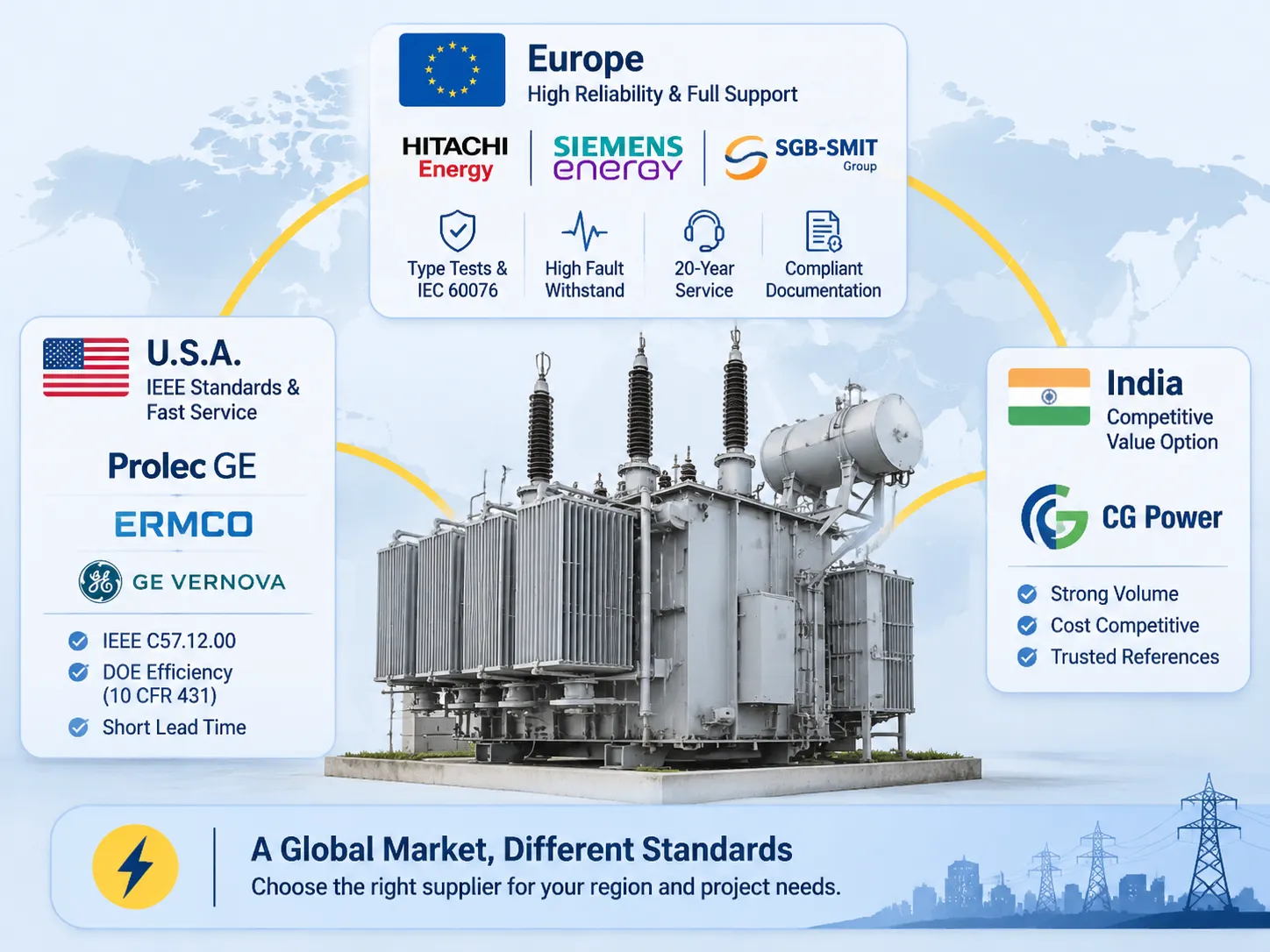
Hitachi Energy、Siemens Energyはほぼすべての大型ユーティリティ入札に登場するトップ2の企業ですが、彼らのサポートレベルはトランスフォーマーを構成する鉄や銅に関するものではなく、全体的なサポートレベルにあります。加えて、 型式試験証拠, 、故障電流耐量データ、および音響保証に加え、20年間のサービス組織が製品の信頼性を支えています。200 MVAのオートトランスを購入するユーティリティは、本質的にユーティリティグリッド資産を購入しているため、追加コストはこの付加価値を正確に反映しています。.
SGB-SMITは次に大きなサプライヤーであり、産業市場で一般的に必要とされる製品により一貫性のある製品を提供しています。その最小レンジは50 kVAから始まり、中間レンジの電力(例:配電レベル)まで対応し、Ecodesign Regulation 548/2014で定義された欧州の効率レベルを満たしています。また、複数の国に生産拠点を持ち、他のサプライヤーよりも欧州への納期を短縮しています。.
欧州グループは文書を通じて一貫性を提供しており、製造された各トランスフォーマーにはIEC 60076-1に準拠した定期試験報告書と、製品が典型的な欧州試験基準に適合していることを示す試験文書があります。さらに、第三者による損失測定も実施可能です。これらの文書は貸し手や保険会社に要求され、低コストサプライヤーが対応に苦労する分野を示しています。.
アメリカおよびインドの状況
北米およびインド市場は仕様面で異なります。北米ではトランスフォーマーはIEEE C57.12.00およびアメリカの製品基準に基づき製造され、10 CFR 431のDOE効率要件も適用されます。アメリカ製トランスフォーマーの物理的設計特徴(例:ブッシング、取り付け配置)は欧州製トランスフォーマーとは互換性がありません。北米ではProlec GEとERMCOが最も認知された配電ブランドであり、GE Vernova(General Electric Coの子会社)がより大きな定格カテゴリで最高評価を代表します。北米以外の購入者は、米国工場から1,000 kVAユニットを購入することはコスト効率が悪いと感じることが多いです。通常、米国仕様のユニットはIEC基準に適合しないため、コスト差が大きくなります。しかし、米国内のプロジェクトでは、製品コストに関連しないプレミアムがあっても、米国工場からの購入が一般的に適切です。これは、米国メーカーに伴うリードタイムとサービス対応が購入の一部であるためです。.
CG Power(インド)は、そのボリュームとコスト構造により、アジアおよびアフリカ全域での配電容量に関して競争力を持つという全く異なる立場にあります。さらに、利用可能なリファレンス(ユーティリティ)が入札委員会にこの会社を選定する安心感を与えています。湾岸地域および東南アジアのプロジェクトにおいて、500から2,500 kVAの範囲で、CGは(1)ヨーロッパのプレミアムまたは(2)中国の低コストオプションを評価する際の価値ある選択肢となることが多いです。.
TBEAとChina XD Groupの独自性は何ですか?
TBEAとChina XD Groupは世界の変圧器市場で大きなシェアを持っていますが、彼らの市場参入戦略はヨーロッパのメーカーとは大きく異なり、エンドユーザーが EPC(エンジニアリング、調達、建設) モデルを通じて製品を購入する形態で販売しています。通常、TBEAとChina XD Groupの多くの変圧器は、確保された資金調達に基づいて輸出され、購入者が指定した関連規格(IECまたはGB)に準拠して製造されます。.
結論として、品質の認識は進化しています。中国製のIEC 60076タイプテスト承認済み1000 kVA配電用変圧器は十分に受け入れられており、同じ定格のヨーロッパ製1000 kVAユニットとの不足点は、価格差が示すほど大きくありません。違いは、ドキュメントの品質と出荷サンプルが生産ロットにどれだけ一致しているかにあります。.
上記の2つの大手メーカーと小規模メーカーを分けるものは何でしょうか?中国の見積もりを検討している場合、以下の3つの情報を明確にする必要があります:変圧器はIEC仕様かGB仕様か?損失は保証されているか、それとも典型値か?タイプテストはこの特定の変圧器ファミリーで行われているか、それとも類似品の一つだけか?これら3つの質問への回答が、プロジェクトを支援できる輸出業者と、注文のみを支援できる輸出業者を区別します。.
定格別ユニットのコストは?
以下の価格は標準的な油入配電用および電力用変圧器のEXW価格の目安範囲であり、銅および電気鋼板の価格変動により変動します。これらは見積もりの妥当性確認のために使用し、予算としては使用しないでください。.
| 定格 | 一般的な用途 | タイプ/目安価格 | 典型的な用途 |
|---|---|---|---|
| 25~50 kVA | 電柱取付、単相 | $3,000 – $7,000 | 農村配電および小規模クラスター |
| 100~250 kVA | 電柱またはパッド取付 | $6,000 – $14,000 | 住宅地および小規模商業施設 |
| 500 kVA | パッド取付、三相 | $12,000 – $25,000 | 商業ビルおよび軽工業 |
| 1,000 kVA | パッド取付または変電所タイプ | $18,000 – $35,000 | 工業プラントおよびキャンパス |
| 2,500 kVA | 変電所タイプ、ONANまたはONAF | $40,000 – $80,000 | プロセスプラントおよび変電所 |
| 10 MVA | 電力用変圧器、33~132 kV | $250,000 – $600,000 | 変電所ステップダウン |
| 50 MVA以上 | 電力用変圧器、132~400 kV | $1.2百万 – $4百万 | 送電および発電ステップアップ |
定格よりも価格に影響を与える2つの要因
インピーダンスとタップ範囲:オンロードタップ範囲が広くインピーダンスが高いユニットは、より大きなユニットではなく異なる設計であるため、実際のkVA定格に関係なく価格が高くなります。損失保証は、低損失設計を製造するためにより多くのコア鋼材と銅を使用する必要があるため、生産コストを増加させます。したがって、損失制限を指定する入札は、それに応じるサプライヤーのランキングに影響を与える可能性があります。.
2027年のリードタイム
2021年に不足を経験したディストリビューターは、その緩和速度が異なっています。kVA定格が100から1,000の配電ユニットは現在、 複数のメーカーから16~30週間のリードタイムで提供されています これは「通常」の供給レベルに近づいています。100 MVAを超える大型電力変圧器の納期は引き続き18~30ヶ月の範囲で推移しており、これは主に供給のボトルネックが工場の生産ラインから熟練した人材および多くの施設における試験設備へと移動しているためです。.
大型電力変圧器のリードタイムが非常に長い主な構造的要因は2つあり、どちらもすぐに変わることは期待されていません。1つ目は、大型電力変圧器のコア材料である結晶方向性電気鋼板が、世界中の限られた数の鋼材メーカーによってのみ製造されていることです。したがって、世界的な需要の短期的な急増は、単にメーカーの生産能力を増やすだけでは解決できません。.
�¤目は、変圧器の試験に数日かかることがある点です。その結果、各変圧器の試験に費やす時間が、メーカーがどれだけ多くの人員を雇用して変圧器を製造しても、生産可能な変圧器の数を制限しています。.
As a result, for every electrical utility project, it is critical to identify the transformer lead time at the start of the project and not at the end of the project. A substation that is constructed in 12 months and that requires approximately nine months to order the transformer will be able to energise in 15 months after the order is placed, regardless of the number of workers on the job site.
In summary, while the delivery lead time for large power transformers remains a highly complex market issue, the manufacturing and delivery schedules are closely linked to the demand for transformers.
Including References for Standards and Efficiency in Specifications
Four basic references to be used in the specifications of oil-filled transformers are essential. The requirement to follow the standard design criteria for oil-filled transformers, as established by international electrical engineering organisations (e.g., IEC 60076 in most parts of the world; IEEE C57.12.00 and the product-specific C57.12.xx in North America). The requirement to use standards for efficiency, as specified in the Ecodesign Directive 548/2014 for Europe, and 10 CFR 431 for the United States, and equivalent rules established by the national standards organisation for other countries. In evaluating the loss, you must capitalise both the load loss and the no load loss when you want to make a comparison between two units, one being a less expensive unit and the other a more efficient unit. In performing this analysis, you must take into account routine testing on each unit, type testing of the family of units, and factory acceptance testing depending on the nature of the project.
The majority of the energy savings associated with the efficiency can be realised in the first 20 years of the life of the unit. An example would be a 1,000 kVA transformer operating at 60% Load factor with no load losses of 1.5 kW and load loss of 11 kW. This power transformer will consume approximately 48,000 kWh of losses annually. If you are able to reduce these losses by 20%, or 9,600 kWh, this will provide you a 10% additional return on your investment within a four to six year timeframe when using industrial rates.
The difference between a power transformer and distribution transformer is important as they are each designed for different workloads. The workloads of a distribution transformer vary based on time of day while the power transformer has a constant load moving from two points that have constant characteristics. Therefore, the load evaluations and impedance ranges are significantly different between these two transformer types.
Choosing by Application, Voltage and Budget
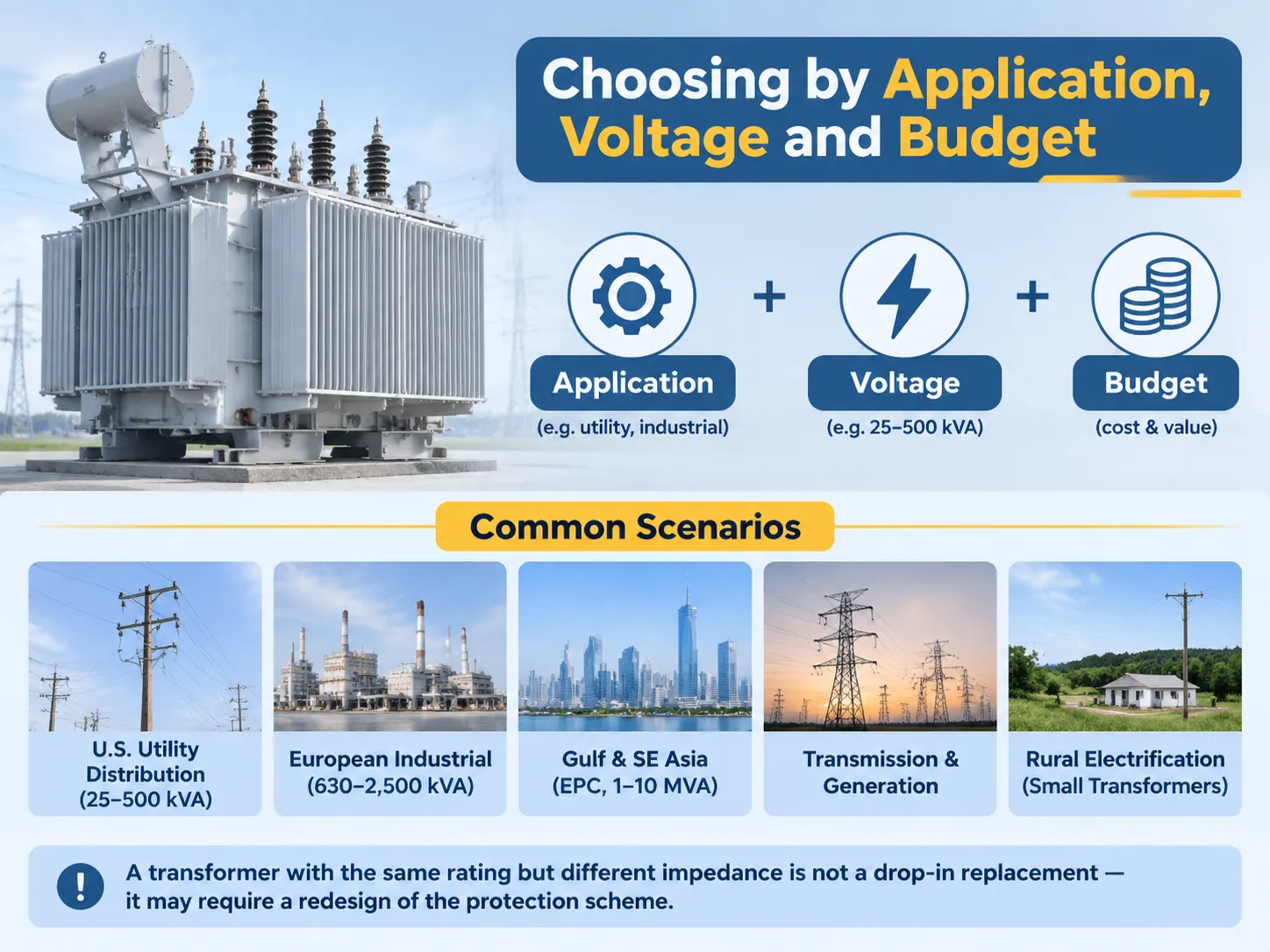
Selecting a transformer should be based on the specific application, voltage, and budget.
The table below captures the most practical approach through the ten choices. Each line provides a typical buying scenario, therefore listing out a group, not an individual company. A company may have a strong position in one size yet may not be as strong in another. It indicates where to find transformer products and what the selection criteria are, and covers the following categories:
| 状況 | Where to buy | 理由 |
|---|---|---|
| U.S. utility distribution transformers (25 to 500 kVA) | Prolec GE, ERMCO and GE Vernova | Products that comply with IEEE and DOE requirements for U.S. service, and shorter lead times than other manufacturers due to being locally based |
| European industrial transformers (630 to 2,500 kVA) | SGB-SMIT and Siemens Energy | Products that meet the European Ecodesign regulations for loss grade, documentation that complies with IEC standards, and warranty support |
| Gulf and Southeast Asia EPC (1 to 10 MVA) | China XD and TBEA | Low pricing, meeting IEC manufacturing specifications, and established locations for export shipping |
| Transmission and generation step-up transformers | Hitachi Energy, Siemens Energy and Hyundai Electric | Type-approved large power ratings, and therefore the necessary utility acceptance |
| Rural electrification, small transformers | CG Power, plus Chinese and regional manufacturers | A credible supplier of small one-phase and pole-mounted transformers for rural electrification, on price and larger quantity volumes |
| Replacements | The original manufacturer first, then another manufacturer | A product that meets the physical sizing needs and impedance requirements of the incoming busbar |
| Budget constraints, IEC acceptance | SUBian, or others comparable to Chinese manufacturers | A similar standard and overall quality, with different overhead expense and delivery time |
A transformer rated the same but with a different impedance does not qualify as a replacement; it requires a redesign of the entire relay/protection scheme.
Where SUBian Goes
We make oil filled distribution transformers の 30 kVA – 5 MVA, which are the ratings the majority of commercial and industrial projects specify. Core and coils are manufactured in our facility, as opposed to being sourced elsewhere. 20 kV oil immersed distribution transformers are the top seller, with additional products available with 11, 22, and 33 kV primary connections in ONAN and ONAF cooling configurations.
While we provide explicit documentation and information on all products shipped, the distinction between a factory and trading company is apparent in the delivery of documents associated with our products. Each transformer is shipped with a routine test report in accordance with IEC 60076-1, loss measurements, oil test certificates and a nameplate photograph. We provide type test reports on common transformer families and advise customers that any third party witnessing of a transformer type test will be included in the offer price prior to receipt of any purchase order for transformers.
We do not offer grid-scale types of transformers. For example, Hitachi Energy or Siemens Energy would be quoting on a 200 MVA auto-transformer used by a utility company. If a project requires a compliant 500 kVA – 5 MVA distribution transformer to meet project timelines, that is the range of products that can fulfil those requirements.
よくある質問
Who is the largest manufacturer of transformers in the United States?
GE Vernova is America’s largest transformer manufacturer by total revenue across all classes. GE Vernova has the largest share of the total revenue in the United States for all types of transformer manufacturers. In Distribution Ratings for the majority of utility investors’ purchases, Prolec GE, and ERMCO are the largest participants in the U.S. utility market, followed closely by Eaton and multiple regional plants supplying the outstanding participants for that market. The selection will vary with the definition of which meaning of the question appears (e.g., for transformers or in terms of distribution).
Who Makes Transformers in the USA?
The companies who make transformers in the United States are: GE Vernova, Prolec GE, ERMCO, Eaton, Niagara Transformer, Sunbelt Solomon, and many regional manufacturing plants that produce in accordance with IEEE standards. The majority of these suppliers concentrate their efforts on Distribution Units and Medium Power Rating Transformers because there is a limited number of manufacturers that support testing equipment for the construction of Very Large Power Transformers.
Who Is The Largest Transformer Manufacturer in The World?
By volume, the largest transformer manufacturers are TBEA and China XD. By revenue in the higher voltage classes, Hitachi Energy and Siemens Energy are the market leaders. The metric can vary, so it is more beneficial to create a List based on the ratings, and standards versus League Table rankings.
What Are Oil-Filled Transformers?
Oil-filled transformers include distribution transformers ranging from approximately 25 kVA to 2500 kVA; pad-mounted and pole-mounted transformers; Station Type Transformers up to Approximately 10 MVA and power transformers at transmission and distribution voltages. For conditions in which the use of oil is not possible, such as indoors and up to approximately 2500 kVA, dry-type transformers are the solution to use.
Why Are Oil-Filled Transformers Less Expensive Than Dry-Type?
Oil-filled transformers are typically built with lower amounts of copper, less core steel, and smaller enclosures because of the fact that oil is a superior dielectric and coolant versus air. However, the savings from a lower cost of raw material and labor are offset by bundling, fire separation, and vaulting for installations of oil-filled transformers (inside).
What Is the Lead Time for an Oil-Filled Transformer?
Lead time for 100-1000 kVA range distribution transformers will be 16 to 30 weeks, while for larger power transformers (greater than 100 MVA) the lead time will be 18 to 30 months. The bottlenecks for large units are test bay capacity and skilled winders, not steel.
参考文献
- Hitachi Energy – Power & Distribution Transformers
- Siemens Energy – Transformer Portfolio and Grid Technology
- SGB-SMIT Group – Oil Filled Distribution Transformers
- U.S. Energy Information Administration – Electricity Infrastructure Data
- Electrical Engineering Portal – Transformer Selection and Loss Evaluation
結論
The shortlist of manufacturers for 2027 must be determined by three questions only, none being based on Brand. The three determining questions are: What Standard(s) does the project conform to? What Rating Band is it in? What documentation does the Buyer require? Once these three questions have been answered, each project will fall into one of the three groups above, which will determine the groups’ prices.
The loss number is the one number to pay attention to, because it will continue to generate dollars through the life of the transformer. A transformer that is 10% less expensive and has 20% more losses will have a higher overall cost than a lower-loss transformer, and it will take approximately six years for the calculations and empirical data to validate this fact.