


地域電力供給会社の主任技術者が、10台の油入変圧器を含む3年間のパイロットプロジェクトの結果を確認しています。これらの変圧器のうち5台はアモルファス合金コアを持ち、3台は天然エステル液で満たされ、2台はオンライン溶解ガス分析器を組み込んでいます。テストされたすべての変圧器は、30,000時間以上の運転に成功しました。アモルファス変圧器は、従来のS9変圧器の平均値と比較して68%低い無負荷損失を示しました。エステル変圧器は、ガス-オイル問題の兆候なしに2回の雷シーズンを通過し、オンライン監視システムは問題が故障につながる前に14ヶ月早くホットスポットの発生を特定しました。この説得力のあるパイロットテストにより、電力供給会社の取締役会はこの技術を大規模に使用することを決定しました。.
このパイロットプロジェクトは、油入変圧器技術の発展におけるトレンドの良い指標です。この記事は、より良いコア材料、改良された絶縁液、問題の特定を容易にするデジタル監視システムなど、技術的改善の概要を提供します。.
簡潔な回答: 油入変圧器技術の主要な進展には、アモルファス金属コア(従来のS9/S11設計と比較して無負荷損失を60–70%削減)、ステップラップおよびレーザーカットCRGOコア(コア損失を10–20%削減)、300°C以上の発火点を持つ天然および合成エステル液(鉱油の約160°Cの代わり)、オンライン溶解ガス分析およびIoTベースの状態監視、さらに故障を数ヶ月前に予測可能にする人工知能に基づくデジタルツインおよび診断が含まれます。典型的な1,000 kVA変圧器ユニットに対して、これらの技術は価格を約10–30%引き上げる一方で、エネルギー損失を削減します。.
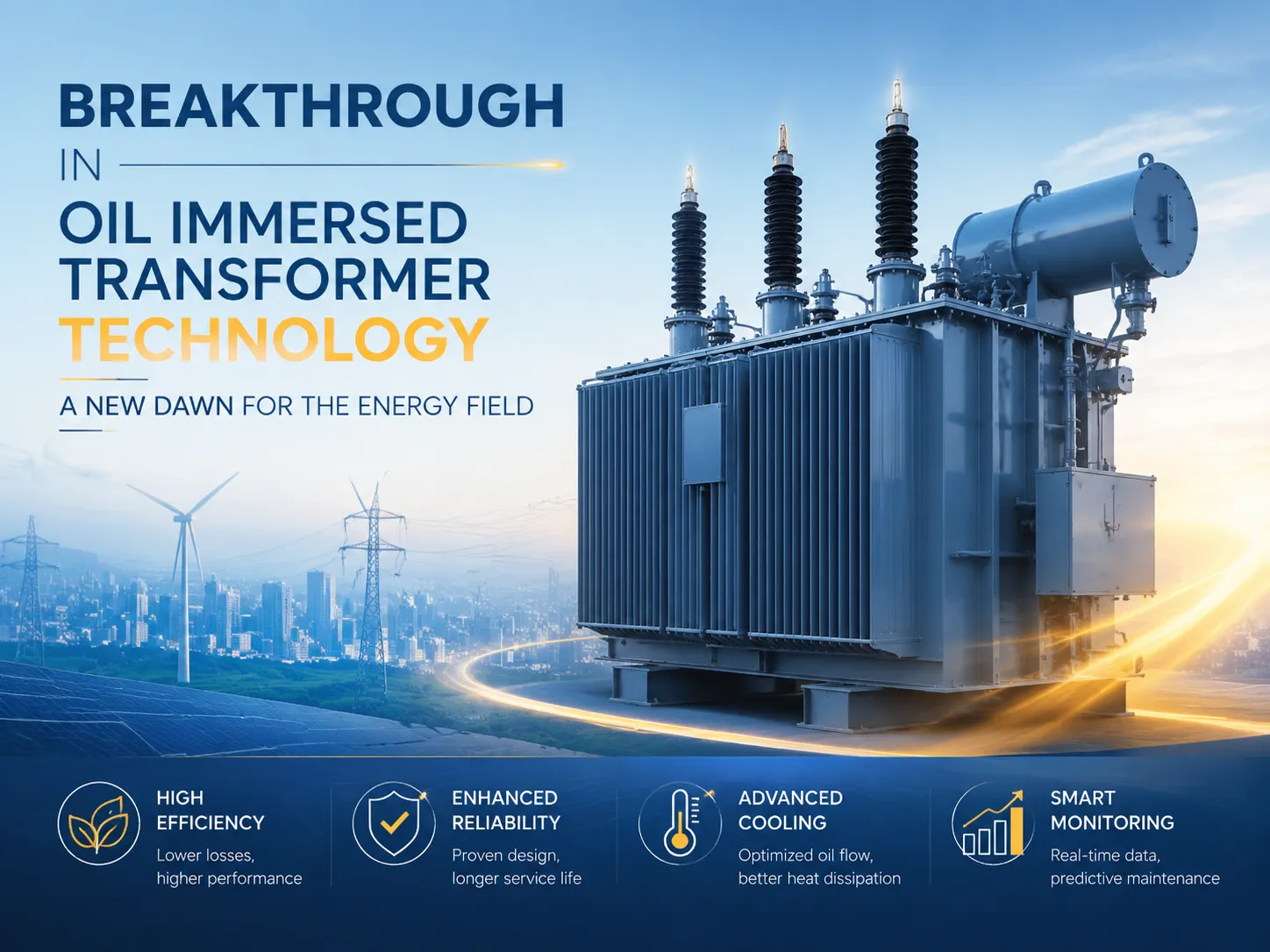
変圧器技術が変わる必要があった理由
変圧器は最も一般的な高価な電気機器として知られており、常に非効率性に直面しています。頻繁に引用される業界報告書によると、世界で生産される総電力の約1.5–2%が変圧器の損失により無駄になっています。たとえば、約5,000台の配電変圧器があり、それぞれの平均容量が500 kVAの場合、無負荷損失は年間20 GWh以上の電力を消費し、これは数千世帯の年間消費に相当し、数百万ドルのコストがかかります。.
変化の必要性をもたらす三つの側面があり、それはエネルギー効率規制(EUエコデザイン規則548/2014およびその他、米国エネルギー省10 CFRパート431、中国のGB 20052)、水域やコミュニティにおける鉱油の漏洩リスクを制限するエコ規制、そして経済の電化に関連する停電のコストです。これらの要因はそれぞれ特定の技術的ブレークスルーに対応しています。.
アモルファス合金コア:無負荷損失の削減
アモルファス金属コアの発明は、電気工学の世界におけるトランス技術の最も重要な進展を示しています。この進展は、製造プロセスで使用される通常のシリコン鋼を置き換え、非常に迅速に固化する鉄合金を利用することで、結晶構造を排除します。その結果、アモルファスコアははるかに少ない磁気損失を持ちます。.
次の結果が報告されました:アモルファスコアを採用したトランスの一般的な損失削減は、粒状CRGOコア(シリコン鋼コア)を装備したトランスと比較して約60-70%です。例えば、1000 kVAトランスの電力損失は約1700 W(S11レベル)から500-700 Wに変化しました。磁化電流もそれに応じて減少し、その結果、エネルギー損失が少なくなります。.
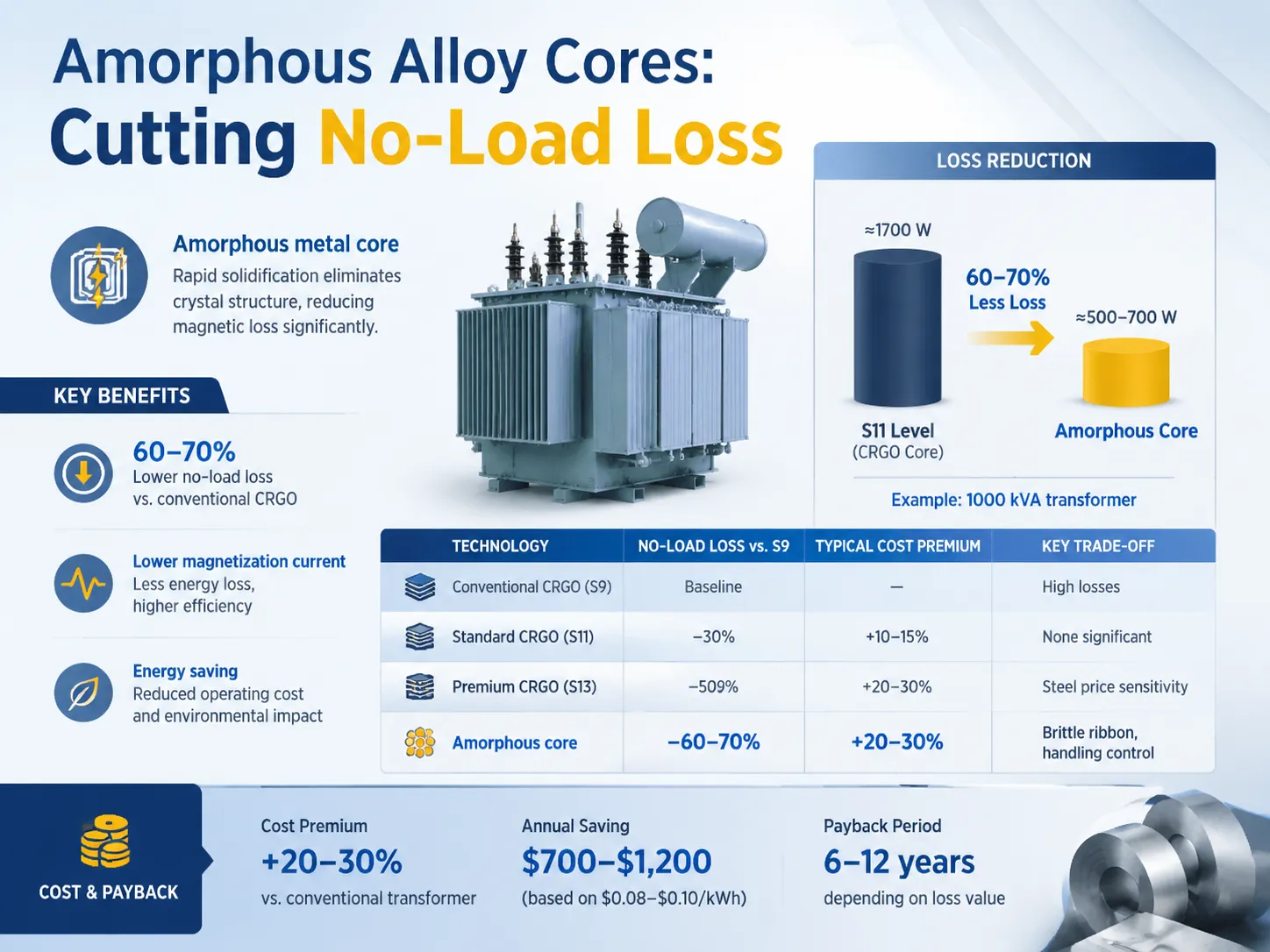
過去には、アモルファスコアの使用は、リボンの脆さのために大きな三相設計を達成するのが難しかったため制限されていました。それにもかかわらず、現在市場にはさまざまなサイズのアモルファスコアを持つトランスが提供されており、その中には2500 kVAや特別な用途で10 MVAに達するものもあります。.
| 技術 | 無負荷損失 vs. S9 | 一般的なコストプレミアム | 主要なトレードオフ |
|---|---|---|---|
| 従来のCRGO(S9) | ベースライン | — | 高い損失 |
| 標準CRGO(S11) | −30% | +10–15% | 重要なものはなし |
| プレミアムCRGO(S13) | −50% | +20–30% | 鋼の価格感応度 |
| アモルファスコア | −60–70% | +20–30% | 脆いリボン、取り扱い制御 |
効率の向上は、コア材料の洗練度とそのコストに依存します。.
材料のコスト:アモルファスコアを持つ約1,000 kVAの油浸トランスは、約$18,000–$28,000のコストがかかり、従来のものより約20–30%高くなります。24時間運転の場合、無負荷損失による年間の節約は約1,000–1,200 Wです。これにより、電気料金が$0.08–$0.10/kWhの場合、ユーザーは年間約$700–$1,200を節約できる可能性があります。したがって、損失に対する割り当てられた価値に応じて、回収期間は約6–12年です。.
エステル流体:火災安全性と長寿命
ミネラル絶縁油の引火点は約160°Cです。天然エステル(菜種油や大豆油などの植物油から生成される)または合成エステルは、引火点が300°C以上であり、多くが高引火点流体に関するKクラス手続きに適合します。この特異な特性により、変圧器を設置できる場所が広がります:屋内、建物の隣、そしてミネラル油がほとんど許可されていない敏感な生態系の近くです。.
| 流体 | 引火点 | 生分解性 | 湿気耐性 | 相対コストプレミアム |
|---|---|---|---|---|
| ミネラル油 | ~160°C | 限定的 | 低い | ベースライン |
| 高温ミネラル | ~300°C | 限定的 | 低い | +20–40% |
| 天然エステル | >300°C | >90% 28日以内 | 高い | +30–60% |
| 合成エステル | >300°C | 中程度–高い | 高い | +60–100% |
エステル流体は水分保持能力が非常に高く、これは異常に聞こえますが、利点があります:紙絶縁体から湿気を遠ざけることで、老化プロセスが遅延します。実際の経験では、エステル充填トランスの紙の老化速度は、鉱油が使用されているトランスの5倍から8倍低いことが示されています。水分は流体に留まり、紙に移動しないためです。トランスの年齢研究と実験室での実験は、エステルの使用によりトランスの寿命が1.5倍から2倍延長されることを示しています。.
しかし、エステルの欠点はそのコストとポンピング特性です。エステルは低温での粘度特性が強く、寒冷気候では重要です。また、鉱油に対する価格プレミアムは大きく、1,000 kVAのトランスにはエステルに$3,000から$8,000の支出が必要です。.
デジタルモニタリングとオンラインDGA
溶解ガス分析は、過去数十年にわたりトランスの健康モニタリングの重要な標準となっています。しかし、このモニタリングは一般的に年に一度のサンプルを分析のために実験室に送ることを意味していました。しかし、今ではオンラインDGAとIoT条件モニタリングソリューションを使用してトランスの状態を監視することが可能です。.
このモニタリングを非常に進んだものにするいくつかの要素があります:
- オンラインDGAモニターは、重要なガスを継続的または日次で検出します:水素、メタン、エタン、エチレン、アセチレン、一酸化炭素、二酸化炭素で、アラームはIEC 60599およびIEEE C57.104に従って開発されています。.
- マルチセンサーセットアップは、巻線温度、上部油温度、負荷、タッピング位置、さらにはUHFセンサーを通じた部分放電検出に関する情報を提供します。.
- AI診断測定は、ガストレンドを故障データベースと比較し、通常のガス組成が故障の調査につながる前に潜在的な問題を示すことができます。.
- デジタルツインは、トランスの熱挙動を模倣し、IEC 60076-7の老化式に従ってホットスポット温度とその寿命を推定できます。.
10 MVAから30 MVAの範囲の評価を持つ適切に計器装備された変電所用トランスは、測定機器のために$15,000-$40,000の金額を正当化できます。なぜなら、その規模の未計画の故障は、交換、クレーンのレンタル、ダウンタイムのために$250,000から$1,000,000のコストを引き起こす可能性があるからです。さらに、オンラインDGAデバイスを備えた低電圧トランスは、重要なフィーダーでの未計画の故障の後にコストを回収できます。.
| モニタリングレベル | 典型的なコスト | それが検出するもの | 最適 |
|---|---|---|---|
| 年次ラボDGA | $200–$600/年 | 事後のガストレンド | すべてのユニット |
| 基本的なオンラインH2モニター | $1,500–$4,000 | 水素の上昇(早期アーク/PD) | 配電フィーダー |
| マルチガスオンラインDGA | $8,000–$40,000 | アラーム付きの完全なIEC 60599ガスセット | 定格>10 MVAのパワートランス |
| 完全なIoT + デジタルツイン | $15,000–$60,000 | 熱モデル、残りの寿命、アラーム | 重要なグリッド資産 |
設計革新:ステップラップ、低騒音、ハイブリッドコア
主要な革新に加えて、多くの小さな革新がより大きな利益の創出に寄与しています:
- コア接合部にステップラップジオメトリを使用:このプロセスは直線的なバットジョイントを置き換え、局所的なフラックス集中の削減をもたらし、無負荷損失を5-10%削減し、可聴ノイズレベルを2-4 dBA低下させます。
- レーザータイプおよびCRGOコア:プロセス内のレーザーが磁気ドメイン間に穴を作成し、渦損失を10-20%削減します。
- ノイズ低減ソリューション:すべてのプロセスは、コア生産の過程での典型的な音レベル55-60 dBAを、同じ出力のノイズレベル45-50 dBAに低下させることにつながります。
- コアのハイブリダイゼーション:CRGOとアモルファスリボンを1つのコアに混合することで、コスト効果を活用し、アモルファスのいくつかの利点を低コストで達成することが可能です。
- 冷却システムの変更:ディスク型ラジエーターの革新的な設計とプロセス内のオイルの流れを制御することで、同じ負荷のパワートランスフォーマーのホットスポットで同じ温度を維持することができます。.
損失とコストへの測定された影響
下の表は、従来のS11トランスフォーマーの1,000 kVAの定格出力に対する最新モデルの改善の測定結果の概要を提供します。.
| メトリック | 従来のS11 | 高度な設計 | 改善 |
|---|---|---|---|
| 無負荷損失 | 約1,700 W | 約550 W | −68% |
| 負荷損失 | 約10,500 W | 約10,000 W | −5% |
| 年間エネルギー損失 (60% LF) | 約67 MWh | 約58 MWh | −13% |
| 音レベル | ~57 dBA | ~50 dBA | −7 dBA |
| 初期コスト (FOB) | $14,000–$22,000 | $18,000–$28,000 | +25–30% |
| 推定25年間のTCO節約 | ベースライン | $15,000–$35,000 | 正のネット |
トレンドは評価全体で予測可能です:先進技術は資本コストを10-30%増加させる一方で、特に高電力価格や損失資本化価値が特徴の市場では運用コストを削減します。トランスの所有コストの総計算は、一般的に、より良い技術が約15年またはそれ以上の後に利益をもたらすことを示しています。.
世界中の採用状況
- ヨーロッパ:EUエコデザイン規則(規則番号548/2014)の実施により、最も効率の悪い製品が市場から排除されました。実質的にすべての新しい配電トランスは、Tier 2の損失と現代のアモルファスおよび低損失CRGO設計を備えています。.
- アメリカ:DOEは10 CFR Part 431で設定された最低効率基準を厳格化しています。2022年の供給不足の影響を受けて、多くの投資がアモルファスおよび高効率製品の地元生産に向けられました。.
- 中国:新しいGB 20052-2020規則により効率等級が義務付けられ、地方の電力会社はS7/S9ユニットを中止し、S13およびアモルファスユニットを急速に調達しています(主にグリーンエネルギーを支持する省で)。.
- インドとアフリカ:手頃な価格が優先事項ですが、高効率製品のための資金調達源が増えており、大規模な寄付者や多国間銀行からの資金調達が行われています。なぜなら、損失の節約が資金調達コストを相殺するからです。.
- 重要な点は、すべての市場が同じ方向に進んでおり、同じ目標を達成しようとしていることです。無駄なエネルギーを減らし、より良い火災および環境安全性を確保し、資産の健康に関する透明性を高めることです。.
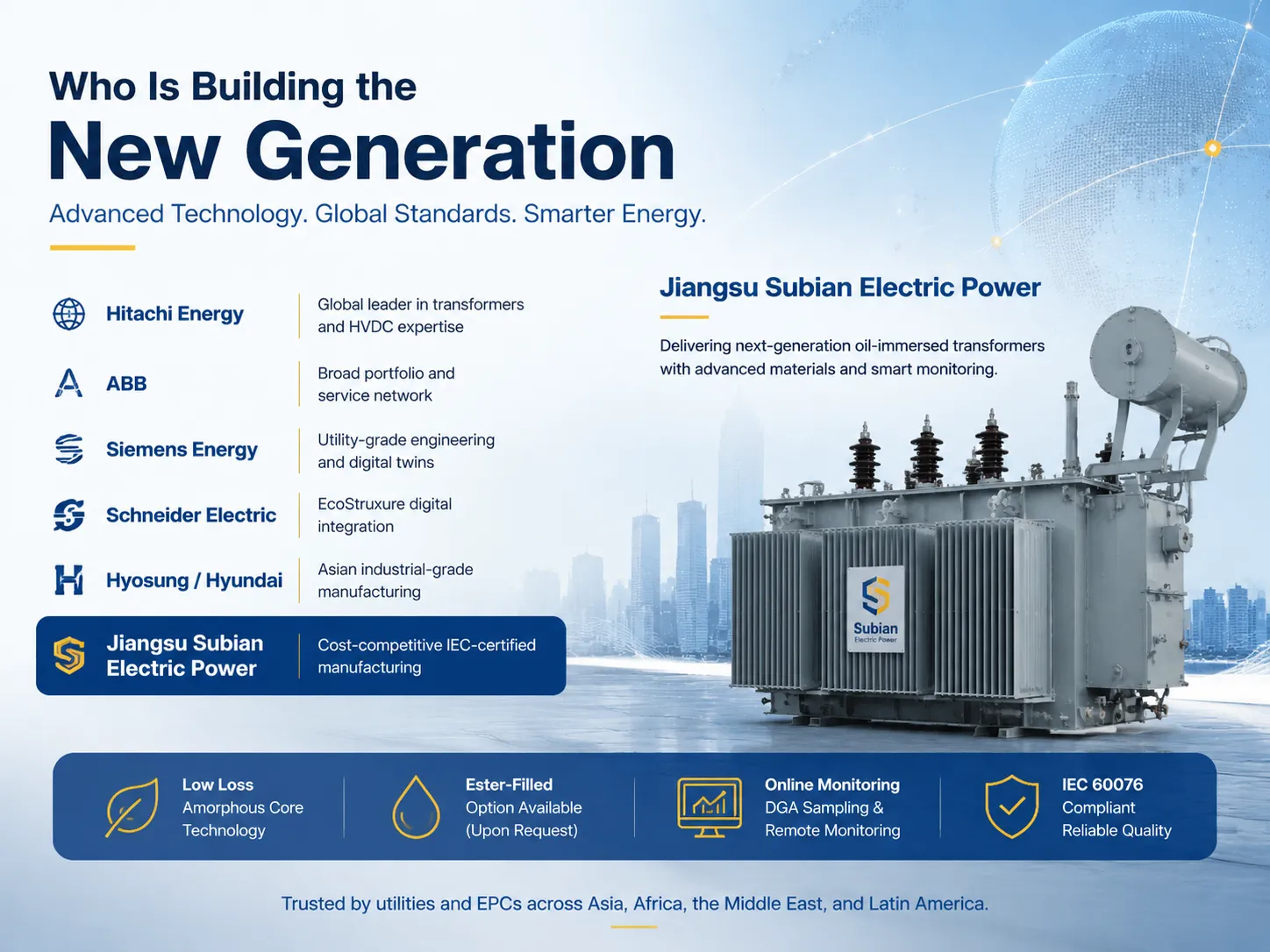
新世代を構築しているのは誰か
| ブランド | 主要な強み | 焦点 |
|---|---|---|
| 日立エナジー | トランスとHVDCの専門知識におけるグローバルリーダー | 大型電力トランス、デジタル監視 |
| ABB | 幅広いポートフォリオとサービスネットワーク | 配電および電力トランス |
| シーメンスエナジー | ユーティリティグレードのエンジニアリングとデジタルツイン | 電力トランス、グリッドソリューション |
| シュナイダーエレクトリック | EcoStruxureデジタル統合 | 配電トランス、スマートグリッド |
| ヒョンソン / 現代 | アジアの産業グレード製造 | 電力トランス、アモルファス採用 |
| 江蘇省蘇辺電力 | コスト競争力のあるIEC認証製造 | 油浸式配電および電力トランス |
企業の研究経験、数十年にわたる運用、比類のないサービスカバレッジは他に類を見ません。同時に、製造における新世代の技術、すなわちアモルファススタッキング、エステル充填、オンラインモニタリングの統合技術を多くの工場で利用できるようになりました。そのため、今日の顧客は、10年前には知られていなかったブランドから最上級モデルを注文することができます。.
これらのブランドの中には、油浸式トランスを専門とする中国の企業、江蘇省蘇辺電力があります。この組織は、すべてのIEC 60076準拠製品に新技術を適用しています。蘇辺は、最新の低損失アモルファスコア配電トランス、リクエストに応じたエステル流体モデル、DGAサンプリングおよびリモートモニタリングユニットを製造・提供しています。同社の技術革新と魅力的な輸出価格は、アジア、アフリカ、中東、ラテンアメリカ全体の公共事業およびEPC企業にとって魅力的な選択肢となっています。彼らの製品範囲と認証の詳細は、こちらで確認できます。 subian-electric.com.
公共事業がこれらの技術を採用すべき方法
- フリートをグループに分けます。高負荷率を経験するフリートにはアモルファストランスを使用し(例えば、24/7の産業および商業用)、他のフリートにはプレミアムグレードのCRGOを使用します。エネルギー節約性能は、稼働時間の数に比例します。.
- エステルの使用は十分に考慮されるべきです。地元の火災規制、設置場所、環境への配慮が価格を上回る場合にエステル流体を使用します。.
- モニタリング目的のためにデバイスの層を使用します。10 MVA以上のユニットには一般的なDGAを、残りには年次DGAまたはシンプルなアラームシステムを使用します。すべてのトランスが常時データ供給を装備する必要はありません。.
- 入札において損失資本化要件を明記します。もしあなたの料金が$0.08/kWhで、損失の寿命が25年であれば、勝者は価格ではなく損失を考慮する者です。.
- “システムを「パイロットテスト」します。冒頭で説明したパイロット運用に12-24ヶ月を費やします。得られたデータは、ベンダーからの議論ではなく、フリートポリシーを決定するべきです。.
よくある質問
アモルファスコアトランスのコストは従来のものと比べてどのくらいですか?
アモルファストランスは、同じ定格の従来のS11ユニットよりも約20〜30%高いです。例えば、1,000 kVAのアモルファストランスの価格は、$18,000から$28,000 FOBの範囲で、従来のS11は$14,000から$22,000の間で変動します。しかし、無負荷損失を約60〜70%削減することで、6-12年以内に回収期間を達成できます。.
エステル充填トランスは本当に鉱油ユニットよりも安全ですか?
実際、火災安全性に関して言えば、鉱物油の発火点は約160°Cであるのに対し、天然および合成エステルは発火点が300°C以上であり、IEC 61039に基づくKクラス高発火点の条件を満たしています。さらに、エステルは生分解性が優れており、紙中の水分含有量を高く許容するため、老化プロセスが予測不可能な領域に入ります。主な欠点は、流体の価格が比較的高く、低温条件下での粘度が高いことです。.
オンラインDGA監視の費用はいくらですか?
監視対象の用途や機械の複雑さによって異なりますが、配電用の単一ガス水素モニターで約1,500~4,000ドル、10~30 MVA程度の電力変圧器にアラームを提供するフルオンライン多ガスDGAシステムで約15,000~40,000ドルの範囲になることがあります。.
経済的には、最も簡単な機器の価格でさえ、単一の予期せぬ故障を回避する経済性によって正当化されるため、合理的です。.
アモルファスコアには欠点がありますか?
少しあります。アモルファスリボンの取り扱いはコアの積層時に繊細であり、品質管理を確実に行う必要があります。磁気歪みの比率がわずかに増加し、音響出力が数デシベル増加するため、タンクの処理で補償しなければなりません。さらに、大型ユニットは依然として稀であり、市販されているアモルファスコアのほとんどは最大容量が2,500 kVAであり、より大きなコアは特注でのみ入手可能です。.
変圧器は世界的にどれくらいのエネルギーを浪費していますか?
推定によると、発電された総電力の約1.5%-2%が輸送中および電力トランスを通過する際に失われています。この損失は、ユーティリティ会社にとって数百万ドルの不必要な損失を引き起こし、その結果、効率規制やこの文脈で議論されている新技術が業界をますます厳しくしています。.
参考文献
- EUエコデザイン規則548/2014および改正2019/1783 — 現代のトランス市場を駆動した最低効率要件。.
- 米国DOEトランス効率基準(10 CFR Part 431) — 配電トランスのための義務的最低効率レベル。.
- IEC 60422: 鉱物絶縁油 – 監視および保守ガイダンス — トランス用の油品質管理。.
- IEEE C57.104: 油浸トランスで生成されるガスの解釈 — オンラインモニターによって使用されるDGA解釈基準。.
- IEC 61039:絶縁液体の分類 — Kクラスエステルを含むトランス流体の火点に基づく分類。.
- IEAエネルギー効率レポート — 電気機器の効率動向と政策に関するグローバルな文脈。.
- 江蘇省蘇辺電力公式サイト — 低損失およびアモルファス油浸トランス製品と認証。.
結論
各種の油浸トランス技術の進展 — アモルファスコア、エステル液体、オンラインDGA、設計の改善 — は単なる技術的な新奇性ではありません。これらは実際に試され、考慮されたコストがあり、規制によってますます要求されています。これら二つの革新グループの間の関連性は、経済的な観点から同じです:少しのお金を使うことで、上記のすべての技術がコストを節約し、平均的な損失、リスク、支出を最小限に抑えることに貢献します。主なポイントは次のとおりです:
- アモルファスコアは、価格のプレミアム20–30%で無負荷損失を60-70%削減することを可能にします。.
- エステル液体は、追加で1,000 kVAのトランス容量あたりUS $3,000-$8,000の支払いで、紙の老化を遅くし、火災安全を可能にします。.
- オンラインモニタリングは、ほとんどの場合、未計画の故障を1回防ぐことで自らのコストを回収します。.
- どの技術を購入するかの決定は、価格ではなく、節約された損失の価値に基づくべきです。.
江蘇省蘇辺電力のトランスを使用することで、電力会社と建設開発者は非常に合理的な価格で最新の技術にアクセスできます。.