


На заводе по производству трансформаторов среднего размера в Гуандуне менеджер по соблюдению норм в настоящее время заполнял свою третью таблицу за год. Первая таблица отслеживала рейтинги эффективности GB 20052 по всем продуктовым линиям, а вторая отслеживала провинциальные стимулы для аморфных трансформаторов, но третья, которую он ненавидел больше всего, касалась того, сколько электроэнергии завод должен был получать из возобновляемых источников в рамках местной оценки зеленого производства. В течение 3 лет производственный сектор изменился с “продавать трансформаторы независимо от того, как они сделаны” на “доказать рейтинг эффективности, доказать цепочку поставок, доказать углеродный след”. Его завод был в порядке, но он заметил, что 2 меньших конкурента были вынуждены прекратить экспорт, так как больше не могли соответствовать требованиям по эффективности клиентов.
Эта статья объясняет, как политика и регулирование формируют трансформаторную промышленность, какие ключевые стандарты и правила существуют, что на практике означает направление зеленого развития и как покупатели и производители должны реагировать.
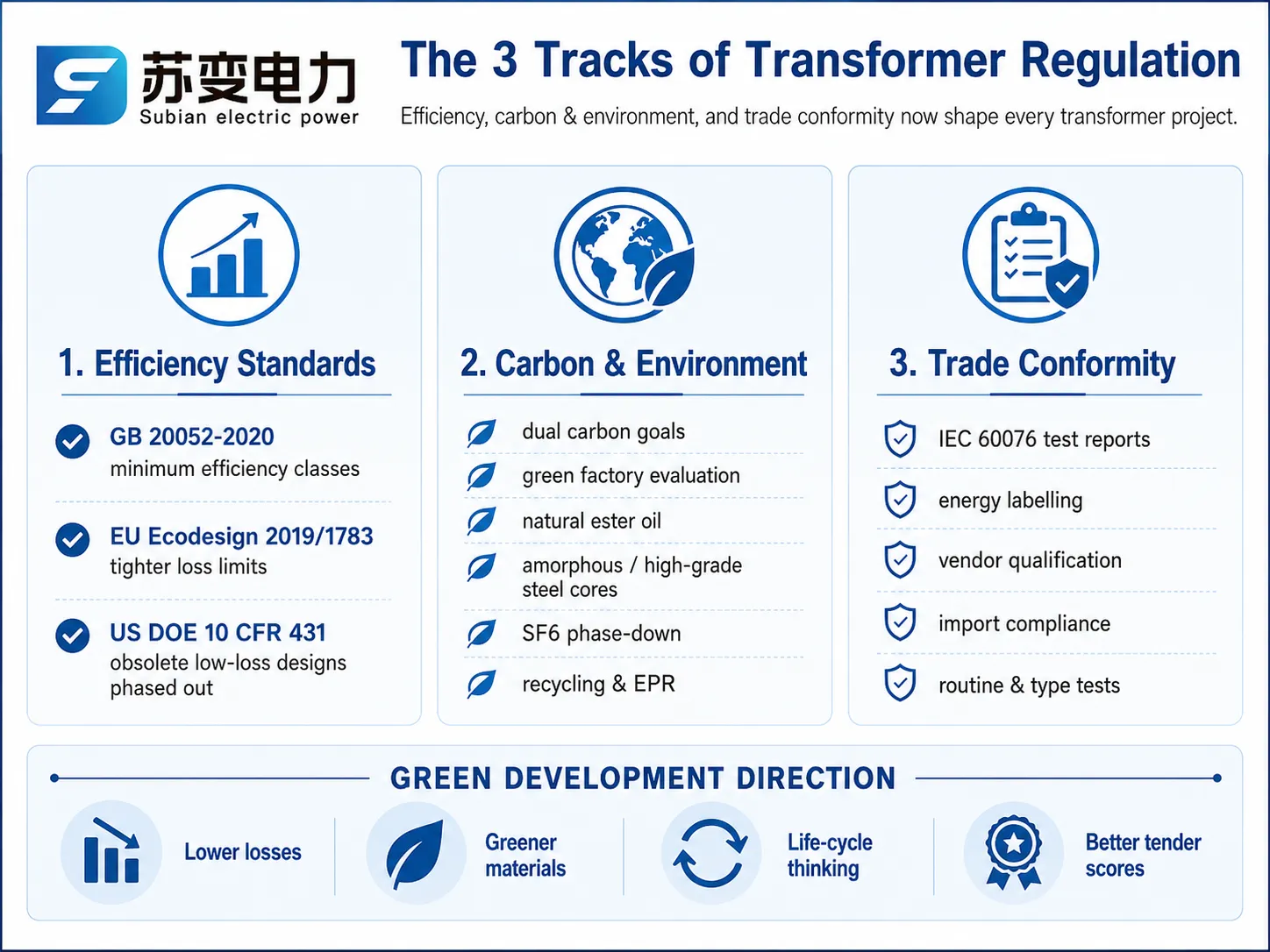
Три направления регулирования трансформаторов
Регулирование трансформаторов больше не может рассматриваться как единое правило. Вместо этого компании и клиенты должны иметь дело с комбинацией требований, применяемых различными организациями. В последние годы были введены три ключевые области новых регуляций — эффективность, углерод и торговля. Например, трансформатор, который соответствует требованиям IEC 60076, но не проходит местный класс эффективности, не может быть продан, в то время как производитель, соответствующий всем соответствующим стандартам продукции, но не прошедший зеленую оценку, не сможет получить финансовую поддержку.
Нет никаких сомнений в прогрессе разработок в этой сфере. Все значительные рынки, такие как Китай, ЕС, США, Япония и Индия, применили более строгие правила эффективности для трансформаторов, чем за последние пять лет, в то время как ожидается появление ряда новых регуляций в ближайшее время. Одним из знакомых терминов, который можно встретить повсюду (в текстах, брошюрах), является зеленое развитие.
Стандарты эффективности: GB 20052, EU Ecodesign, US DOE
Три рамки эффективности доминируют в глобальных закупках:
| Рамка | Рынок | Структура | Ключевое требование |
|---|---|---|---|
| GB 20052-2020 | Китай | Классы 1–3 для распределительных трансформаторов | Базовый класс 2; класс 1 требуется для программ стимулов |
| Регламент EU Ecodesign 2019/1783 | ЕС | Ограничения потерь первого уровня (июль 2021) и второго уровня (июль 2024) | Ограничения потерь по классу; второй уровень примерно на 10–15% строже |
| Министерство энергетики США 10 CFR 431 | Соединенные Штаты | Минимальные стандарты эффективности | Классы эффективности распределительных трансформаторов с января 2016 года, пересмотренные на 2024–2026 годы |
Центральной концепцией является потеря без нагрузки, что является термином для потерь, которые происходят каждый час каждого дня. Регуляторный уровень 2 в Европе привел к тому, что многие конструкции следуют пути высокопроницаемого железа и аморфных сердечников, в то время как китайская регуляция первой категории требует того же от многих трансформаторов. Это приводит к ситуации, когда то, что в 2015 году называлось “стандартным трансформатором”, в 2026 году становится “неэффективным трансформатором” для покупателей на регулируемом рынке, которые не упоминают, какой сейчас класс эффективности.
Двойной углерод и направление зеленого развития
Двойные цели по пиковым выбросам углерода и нейтральности направляют политику Китая в области технологий силовых трансформаторов с момента их принятия. Данные показывают, что трансформаторы оказывают ощутимое влияние на потери в сети. Например, в электрических сетях Китая потери распределения оцениваются в 5-8% энергии, передаваемой через них, что означает, что потери, связанные с трансформаторами, довольно значительны и происходят из-за содержания меди в проводах, а также потерь железа, вызванных сердечником трансформатора.
В рамках двойных углеродных целей Китая следующие направления будут возглавлять зеленые инициативы для трансформаторной промышленности:
Более эффективные классы трансформаторов становятся все более необходимыми, а не роскошью.
Создание зеленой фабричной метки, которая подтверждает экологичность производителей трансформаторов на основе их потребления энергии, выбросов, а также деятельности по утилизации и переработке.
Использование экологически чистых материалов, включая аморфный материал для сердечника трансформатора, а также натуральные эфирные масла.
Акцент на процессе производства и демонтажа покупки трансформатора, а не только на начальной стоимости.
В результате текущие практики оценки закупок требуют учета углеродного следа в дополнение к экономическим факторам.
| Политический инструмент | Кого он связывает | Сила исполнения | Типичное влияние на закупки |
|---|---|---|---|
| Минимальные классы эффективности (GB 20052 / EU Ecodesign / DOE) | Производители и импортеры | Обязательный, доступ на рынок | Модели с низкой эффективностью исчезают из каталогов |
| Энергетическая маркировка | Производители | Обязательный, где существуют схемы | Класс эффективности виден на табличке и в предложении |
| Оценка зеленых закупок в тендерах | Покупатели (коммунальные услуги, правительства) | Договорной, 5–10% баллов | Сертифицированные, низкопотерьные единицы выигрывают тендеры |
| Субсидии и стимулы для единиц 1 класса / аморфных единиц | Покупатели | Добровольное принятие | Снижает эффективную цену премиум-эффективности |
| Торговля углеродом и зеленые сертификаты | Эмитенты и покупатели | Рыночный | Повышает стоимость избегаемых потерь трансформатора |
Читая таблицу, направление становится ясным: палка минимальных классов сочетается с морковкой субсидий и воротами зеленого рейтинга, чтобы толкать весь рынок в одном направлении.
Экологические правила: SF6, масло и переработка
За пределами эффективности вторая волна регулирования нацелена на экологический след самой технологии трансформаторов:
| Правило / вопрос | Объем | Последствия для трансформатора |
|---|---|---|
| Регламент ЕС по фторированным газам 2024/573 | Снижение использования SF6 и ограничения | Оборудование с изоляцией SF6 выводится из эксплуатации; давление на решения трансформаторов на основе SF6 |
| Правила по отработанному маслу и загрязнению почвы | Обращение с минеральным маслом, утилизация, утечка | Предпочтение биодеградируемым натуральным эфирным маслам |
| Расширенная ответственность производителя (EPR) | Забор в конце срока службы в ЕС | Возможность переработки и утилизация масла предусмотрены с самого начала |
| Кодексы пожарной безопасности и безопасности жизни | Внутренние и городские установки | Стимулирует использование сухих типов и эфирных масел для внутренних и высокоплотных объектов |
История SF6 отражает самый сильный сигнал. Поскольку SF6 имеет потенциал парникового эффекта в 25,200 раз больше, чем CO2, власти ЕС и некоторых частей Северной Америки ограничивают его использование в высоковольтном электрическом оборудовании. Производители трансформаторов отреагировали решениями на основе эфирных масел и сухих технологий. Теперь некоторые конструкции, работающие на 10-35 кВ и использующие SF6 в качестве изоляционного материала, применяют жидкую/твердую изоляцию.
Торговля и соответствие: IEC, маркировка, импорт
Соответствие торговле — это третий вариант, который является механическим доказательством того, что трансформатор соответствует рыночным потребностям импортера. Некоторые последствия для международных покупателей следующие:
Отчеты о тестах IEC 60076 (типовые испытания и рутинные испытания), формирующие основу для большинства экспортных рынков;
Системы энергетической маркировки, где это применимо, и отображение класса эффективности на этикетке и документах;
Таможенные пошлины и тарифы в некоторых регионах, которые будут налагать таможенные пошлины на импорт низкоэффективных трансформаторов, чтобы защитить внутреннее производство от конкуренции;
Квалификация поставщика, где коммунальные службы часто требуют доказательства класса эффективности для предварительной квалификации и отклоняют тех, кто не может подтвердить уровень потерь.
Бремя доказательства соответствия в первую очередь является проблемой для мелких производителей, именно поэтому была создана таблица менеджера завода из Гуандуна. Для покупателей преимуществом будет предоставленная информация, поскольку каждый трансформатор теперь продается с данными о потерях, и таким образом стало возможным проверить их по стандарту и принимать сопоставимые решения.
Как регулирование изменяет продукты и цены
Кумулятивный эффект этих правил на проектирование продукта виден по всему каталогу:
| Особенность продукта | Типично до регулирования | Типично после регулирования |
|---|---|---|
| Сталь сердечника | 30–0.35 мм обычный GOES | 23–0.27 мм высокопроницаемая или аморфная лента |
| Потеря без нагрузки, 1,000 кВА | 1,500–2,100 Вт | 700–1,100 Вт (класс 2), 350–500 Вт (аморфный) |
| Изоляционное масло | Минеральное масло почти универсально | Минеральное масло плюс растущая доля эфирного масла |
| Данные с таблички | Номинальная мощность и основные данные | Класс эффективности, значения потерь, ссылки на испытания |
| Проектный срок службы | 20–25 лет | 25–35 лет с соблюдением режима нагрузки |
Цены изменились вместе с продуктами. Устройство, соответствующее классу 2, стоит на 5–15% больше по сравнению с не соответствующим устройством десятилетней давности, в то время как устройства с аморфным сердечником стоят на 20-40% выше обычных высокоэффективных устройств. Однако аспект эксплуатационных затрат еще больше благоприятствует покупателю: более низкие потери современного оборудования могут принести больше текущей стоимости в течение 20 лет, чем вся разница в цене — что и является обоснованием регулирования.
Что это означает для покупателей
Измененная регуляторная среда влияет на команды по закупкам не только в отношении процесса покупки, но и на продукты, которые они покупают:
Укажите класс эффективности — категория GB 20052, класс ЕС или классификация DOE вместе с требованиями к данным о потерях в заявке.
В соответствии со стандартом IEC 60076, запросите доказательства результатов испытаний — отчет о стандартных испытаниях и результатах типовых испытаний должен быть предоставлен.
Учитывайте местные преимущества — около 5-15% цены продукта могут быть покрыты субсидиями, предлагаемыми в некоторых частях Китая и в некоторых программах ЕС.
Включите углерод в оценку — если в процессе тендера присутствуют экологические критерии, необходимо отметить потери в режиме холостого хода, указать используемый тип масла и включить сертификат завода.
Покупайте как минимум один класс эффективности выше минимального стандарта, соответствующего требованиям по срокам окупаемости, так как минимальные требования со временем станут более строгими.
Компании, которые рассматривают нормативные акты как контрольный список, проигрывают, в то время как компании, использующие их для сокращения сроков окупаемости с помощью субсидий, находятся в более выгодном положении.
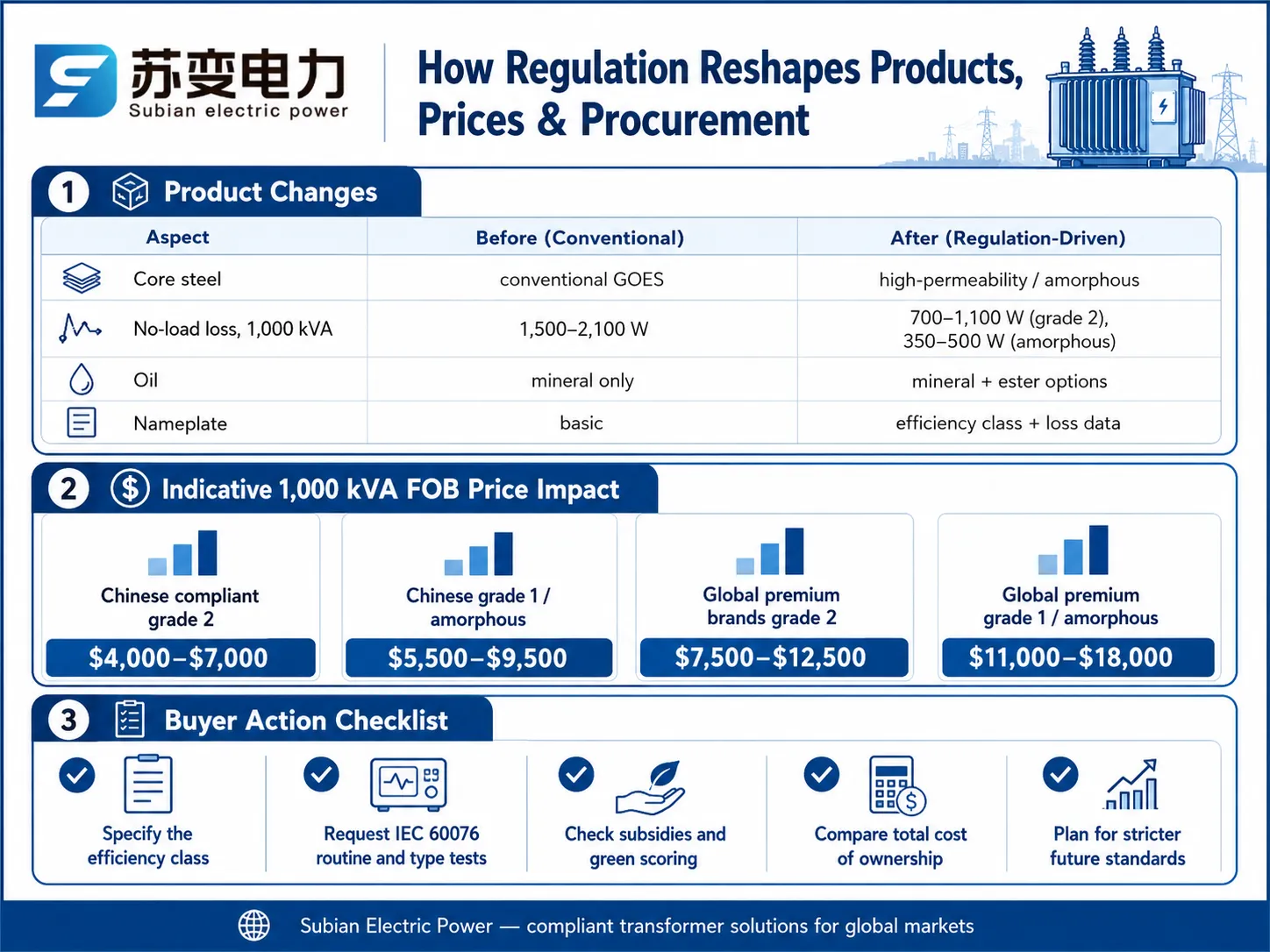
Соответствие по бренду и влияние на цену
Ориентировочная цена для соответствующего распределительного трансформатора 1,000 кВА 10/0.4 кВ, FOB по бренду:
| Бренд | Происхождение | Цена 2 класса | Цена 1 класса / аморфная цена |
|---|---|---|---|
| Hitachi Energy | Япония/Глобальный | $9,000–$12,500 | $12,500–$18,000 |
| ABB | Швейцария/Глобально | $8,500–$12,000 | $12,000–$17,000 |
| Siemens Energy | Германия/Глобально | $8,000–$11,500 | $11,500–$16,500 |
| Schneider Electric | Франция/Глобально | $7,500–$11,000 | $11,000–$15,500 |
| Jiangsu Subian Electric Power | Китай | $4,000–$7,000 | $5,500–$9,500 |
Цены варьируются в зависимости от класса потерь, аксессуаров, цен на медь и условий доставки; рассматривайте их как диапазоны планирования, а не как котировки.
Премиальные бренды закрепляют рынок с помощью глобальных программ испытаний и сервисных сетей. Китайский уровень конкурирует, предлагая те же классы эффективности по цене на 40–50% ниже первоначальных затрат, что имеет значение, когда стимулы и тарифы уже делают экономику эффективности благоприятной. Jiangsu Subian Electric Power является китайским производителем трансформаторов линии распределительных и силовых трансформаторов, которые построены и протестированы в соответствии с IEC 60076, с проектами класса 1–2 GB 20052, включая варианты с аморфным сердечником и эстеровым маслом. Subian имеет экологические сертификаты завода, публикует значения потерь с каждой котировкой и экспортирует соответствующие единицы в коммунальные службы по всей Азии, Африке, на Ближнем Востоке и в Южной Америке — его ассортимент продукции и сертификаты находятся на subian-electric.com.
Перспективы зеленых трансформаторов
Нарастающие сценарии указывают на три определенности в отношении нормативных актов на период от пяти до десяти лет впереди. Прежде всего, ожидается, что стандарты, связанные с минимальными значениями эффективности, снова ужесточатся. Объявление о том, что ЕС проведет пересмотр уровней после 2024 года, подтверждает, что более строгие нормативные акты будут введены и в Китае. Кроме того, учет углерода будет развиваться от заводского к продуктовому. Поэтому производители должны будут предоставить документацию по углеродному следу аналогично тому, как в настоящее время предоставляются данные о потерях. Наконец, зеленые закупки будут определяться своим статусом по умолчанию, а не быть исключением. Следовательно, компании, использующие зеленые закупки, вероятно, будут учитывать свои экологические условия при подаче крупных заявок.
Производители, которые смогут успешно перейти от испытаний к соблюдению стандартов, будут теми, кто рассматривает соответствие как фактор проектирования, а не как выполнение нормативных актов. Это именно то основное различие между теми производителями, которые только тестируют свои продукты, и теми, кто соблюдает соответствующие экологические нормы.
Часто задаваемые вопросы
Какой самый важный стандарт эффективности трансформаторов в мире?
IEC 60076 остается международной базой для испытаний и оценки, но сама эффективность регулируется на региональном уровне: GB 20052 в Китае, Регламент ЕС по экодизайну 2019/1783 в ЕС и 10 CFR 431 (DOE) в США. Для закупок на экспорт укажите как испытания по IEC 60076, так и класс эффективности целевого рынка.
Насколько дороже стоит соответствующий зеленый трансформатор?
Устройство класса 2 мощностью 1,000 кВА по стандарту GB 20052 стоит около $4,000–$7,000 FOB от китайских производителей; версии с аморфными сердечниками класса 1 стоят $5,500–$9,500. Премиальные европейские и японские бренды обычно на 50–80% дороже. Премии за класс потерь частично компенсируются субсидиями на эффективность на нескольких рынках.
Действительно ли регулирование влияет на цены трансформаторов?
Да, с обеих сторон. Правила минимальной эффективности повышают первоначальные затраты на 5–15% по сравнению со старыми моделями, а премиальные материалы (аморфные сердечники, эфирные масла) добавляют 20–40%. Но эксплуатационные расходы снижаются, потому что потери меньше; за 20-летний срок службы прирост эффективности обычно превышает увеличение цены.
Каковы двойные углеродные цели Китая и как они влияют на трансформаторы?
Китай обязался достичь пика углеродных выбросов до 2030 года и достичь углеродной нейтральности до 2060 года. Для трансформаторов это означает более строгие классы эффективности, сертификацию зеленых фабрик для производителей, низкоуглеродные материалы, такие как аморфные сердечники и эфирные масла, и оценку закупок с учетом углерода в тендерах коммунальных служб.
Нужна ли мне другая документация для импорта трансформаторов сейчас?
Да — ожидайте предоставить отчеты о рутинных и типовых испытаниях по IEC 60076, значения потерь, класс эффективности и иногда энергетическую маркировку. На нескольких рынках ограничивают импорт низкоэффективных устройств, и коммунальные службы все чаще отказывают участникам без доказательств класса эффективности. Проверка отчетов третьими сторонами является стандартной практикой для крупных заказов.
Ссылки
- IEC 60076-1: Силовые трансформаторы – Общие сведения — Международная база для испытаний и оценки трансформаторов.
- Регламент ЕС по экодизайну 2019/1783 — Обязательные требования к эффективности трансформаторов для рынка ЕС.
- US DOE 10 CFR Part 431 (энергетическая эффективность) — Минимальные стандарты эффективности для распределительных трансформаторов в США.
- GB 20052: Классы энергоэффективности для трансформаторов мощностью — Стандарт класса эффективности Китая для распределительных трансформаторов.
- Программа энергоэффективности МЭА — Анализ доли потерь трансформаторов и контекста политики эффективности.
- Программа эффективности трансформаторов Министерства энергетики США — Фон и экономический анализ правил эффективности.
- Официальный сайт Jiangsu Subian Electric Power — Ассортимент трансформаторов с сертификатом эффективности и зеленые фабричные креденциалы.
Заключение
Политика и регулирование переместились из периферии в центр трансформаторной отрасли, и направление зеленого развития теперь является единственным направлением с долгосрочной перспективой. Классы эффективности, углеродные цели, ограничения на SF6 и оценки зеленых фабрик не являются отдельными контрольными списками — они формируют одно согласованное давление к трансформаторам с меньшими потерями и меньшим углеродом, с документированием.
Основные выводы:
- Регулирование эффективности существует на каждом крупном рынке: GB 20052, EU Ecodesign 2019/1783, US DOE 10 CFR 431.
- Двойные углеродные цели и сокращение SF6 подталкивают отрасль к аморфным сердечникам, эфирным маслам и учету углерода в жизненном цикле.
- Соответствующие экологические трансформаторы стоят на 5–15% дороже на начальном этапе, но выигрывают по общим затратам на владение и стимулам.
- Покупатели должны указывать класс эффективности и требовать доказательства тестирования — регулирование помогает только тем, кто его использует.
Если вы закупаете трансформаторы для регулируемого рынка, Jiangsu Subian Electric Power поставляет трансформаторы класса 1–2 по стандарту GB 20052 и варианты с эфирными маслами, протестированные по IEC 60076, с сертификатом зеленого завода и документированными значениями потерь. Ознакомьтесь с соответствующим ассортиментом на subian-electric.com.