


Представьте себе задачу инженера по вводу в эксплуатацию, работающего на новой подстанции 110 кВ: главный трансформатор завершает все испытания, но диспетчерская темна из-за того, что вспомогательный трансформатор, обеспечивающий работу зарядки, охлаждения и защиты, был 20% недостаточно мощным. Такую картину можно встретить на многих проектах по всему миру, причиной чему является недостаточное внимание, которое уделяется трансформаторам служебного питания по сравнению с крупными, которые установлены поблизости. В статье представлены семь ценных советов о том, как выбрать правильный вспомогательный трансформатор.
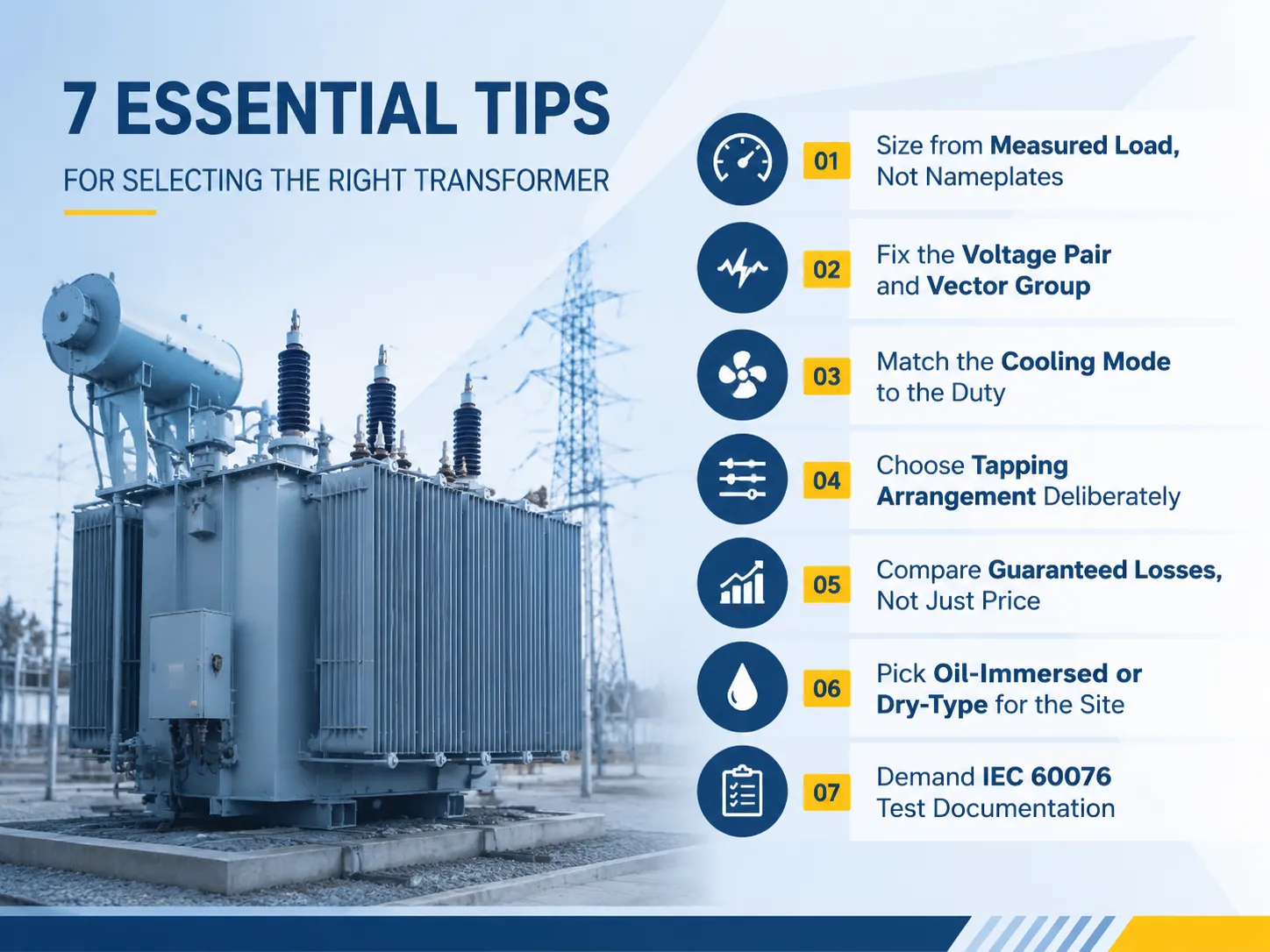
Вспомогательный трансформатор, также известный как трансформатор служебного питания, обеспечивает необходимые услуги на подстанциях, электростанциях или промышленных предприятиях. В основном, он понижает линейное напряжение, которое может составлять 35,000 вольт или 10,000 вольт, до примерно 0.4 вольта для обеспечения освещения, управляющих цепей, защиты и вентиляторов охлаждения, а также зарядки аккумуляторов. Семь вещей, которые следует учитывать при выборе вспомогательного трансформатора, это размер трансформатора, основанный на расчетной нагрузке с добавлением 15-20% запаса; определите напряжение и векторные группы; выберите метод охлаждения; решите, использовать ли переключатель под нагрузкой или переключатель вне цепи; сравните гарантии потерь, так как трансформатор работает постоянно; номер шесть описывает разницу между масляными и сухими трансформаторами; и запросите отчеты о тестировании IEC 60076.
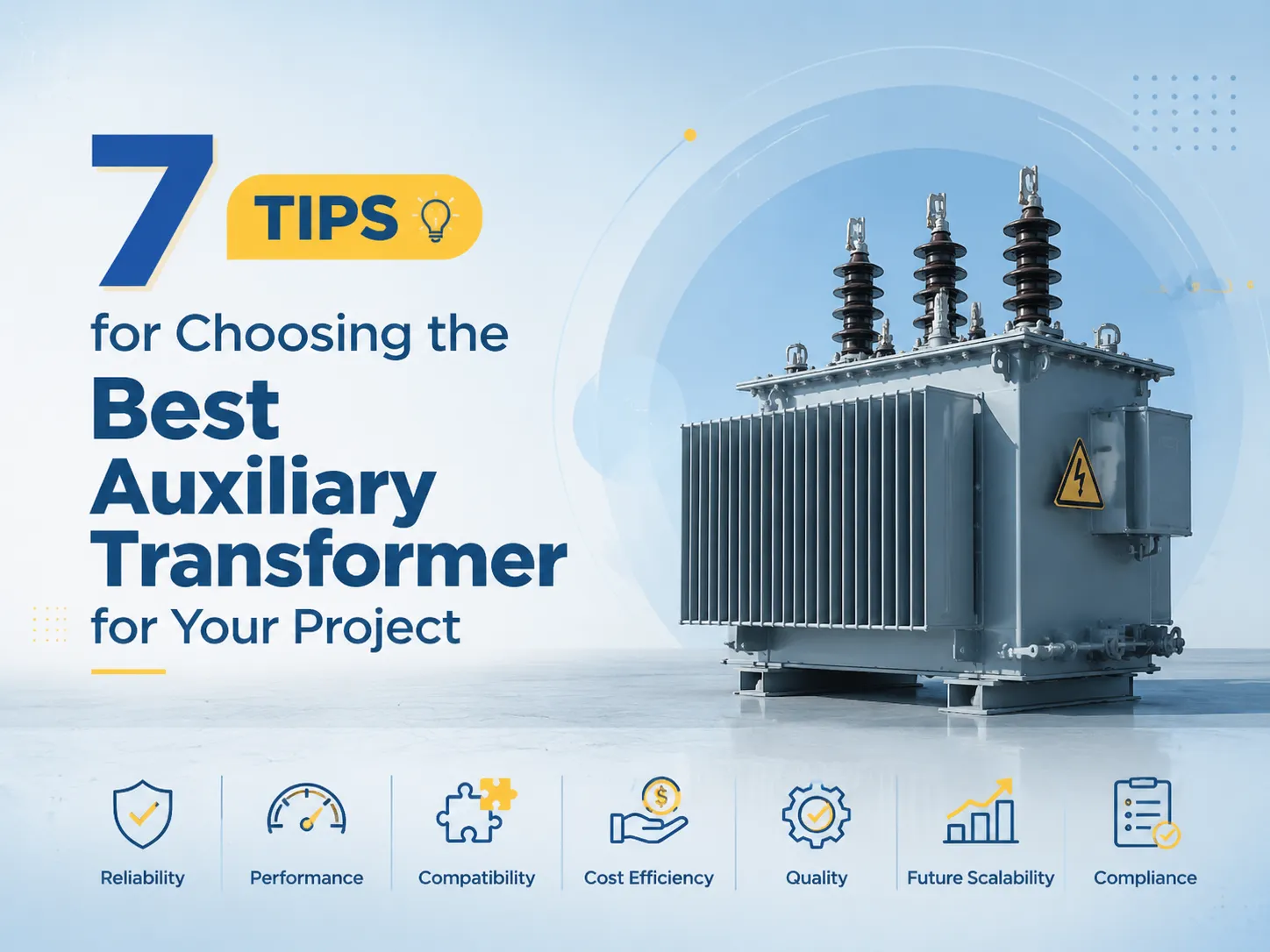
Что такое вспомогательный трансформатор и какие типы существуют?
Вспомогательный трансформатор также известен как трансформатор вспомогательного питания или трансформатор служебного питания, и он предназначен для питания вспомогательных систем подстанции, электростанции или крупного промышленного предприятия. Он снижает напряжение главного шины до уровней низковольтного распределения (чаще всего 35/0.4 кВ, 10/0.4 кВ и 6.6/0.4 кВ). Поставляемая электрическая энергия используется для работы двигателей, отопления и освещения, зарядки аккумуляторов и управляющих/защитных цепей. Поскольку нагрузка важна для работы предприятия постоянно, этот тип оборудования рассчитан на непрерывную работу и высокий коэффициент загрузки – это означает, что выход из строя устройства может привести к остановке работы исправного предприятия. Таким образом, необходимо серьезно относиться к выбору параметров вспомогательного трансформатора.
| Тип | Типичное номинование | Охлаждение / форма | Наилучшим образом подходит для |
|---|---|---|---|
| Масляный, самоохлаждающийся (ONAN) | 50–2,500 кВА | Минеральное масло, наружный бак | Обслуживание наружной подстанции |
| Масляный с вентиляторами (ONAF) | Свыше 1,000 кВА | Минеральное масло, принудительный воздух | Высокие коэффициенты загрузки, жаркий климат |
| Сухой тип, литой смола | 100–2,000 кВА | Эпоксидный литьевой, внутри помещения | Внутри помещения, в зонах с повышенной пожарной опасностью |
| Двойная вторичная обмотка | Индивидуальный | Любой режим охлаждения | Отдельные питания для мотора и управления |
| С переключателем под нагрузкой | 100–2,500 кВА | Любой режим охлаждения | Нестабильное напряжение в сети |
Совет 1: Размер на основе измеренной нагрузки, а не табличных значений
Наиболее частой причиной отказа вспомогательного трансформатора является недостаточный размер. Значения на табличке оборудования завышают фактический спрос, но проектировщик, который игнорирует коэффициент разнообразия, суммируя значения на табличках всех подключенных нагрузок, создаст ненужное большое и неэффективное решение. Профессиональным решением будет учитывать рабочую нагрузку, наибольшую пусковую нагрузку, которая либо будет вентилятором охлаждения, либо компрессором, требующим 5-8 раз больше рабочей нагрузки, и запас в 15-20% для будущего роста и сезонных колебаний. Если объект, вероятно, будет автоматизирован или расширен в ближайшее время, лучшим вариантом будет наблюдать за фактическим спросом в течение одного сезона перед определением необходимого кВА. Вспомогательный трансформатор мощностью 50 кВА будет стоить от $2,000 до $4,000 на небольшом подстанции, в то время как трансформатор мощностью 80 кВА не будет стоить значительно дороже, но создаст дополнительный запас.
Совет 2: Зафиксируйте пару напряжений и векторную группу
Напряженческий коэффициент должен соответствовать уровню напряжения шины объекта и панели низкого напряжения. Необходимо решить, будет ли ваша компания использовать 35/0.4 кВ, 10/0.4 кВ или любое другое соотношение напряжения на площадке. Какое бы из этих соотношений вы ни выбрали, оно должно оставаться постоянным на всех объектах, чтобы иметь запасные части и электрические подстанции с унифицированным шаблоном. Категория трансформатора напряжения также может быть важной. При запросе помощи для вспомогательного питания подстанции предпочтительно выбирать Dyn11, так как он обеспечивает стабильный ноль для однофазной нагрузки и четкое фазовое смещение, тем не менее, могут быть некоторые приложения, которые упоминают что-то другое, например, Dyn5 или YNd11 в зависимости от политики заземления и требований к параллельной работе. Категория трансформатора должна быть указана в заказе и подтверждена в регулярном отчете, так как устройство с неправильной категорией трансформатора сталкивается с отключением защиты или не может работать параллельно.
| Пара напряжений | Типичная векторная группа | Где это используется |
|---|---|---|
| 35/0.4 кВ | Дин11 | Крупные подстанции, электростанции |
| 10/0.4 кВ | Дин11 | Распределительные подстанции |
| 11/0.4 кВ | Дин11 | Сети Великобритании и Содружества |
| 6/0.4 кВ | Dyn11 или Dyn5 | Промышленные и старые заводские шины |
| 33/0.4 кВ | Dyn5 или индивидуальный | Специальные схемы заземления |
Совет 3: Соответствие режима охлаждения рабочему режиму
Вспомогательные силовые трансформаторы обычно работают непрерывно, что делает класс охлаждения важным определяющим фактором для количества запаса при высоких температурах, при этом ONAN (масло естественное, воздух естественный) является самым простым и наименее сложным вариантом, который применим для большинства случаев до 1,000 кВА. Для больших и/или более жестких условий с ограниченной циркуляцией воздуха трансформаторы типа ONAF (масло естественное, воздух принудительный) будут вводить вентиляторы, которые могут увеличить рабочую мощность примерно на 20–33%. Таким образом, важно указать температуры окружающей среды и высоты (например, базовая линия — 40°C окружающей среды и 1,000 м высоты, чтобы производитель правильно понизил рейтинги.
| Температура окружающей среды | Коррекция для рейтинга ONAN | Рекомендуемое действие |
|---|---|---|
| 40°C | 100% на табличке | Стандартная точка проектирования |
| 45°C | ~93–95% | Понизить мощность или добавить вентиляторы (ONAF) |
| 50°C | ~85–88% | Понизить мощность, ONAF или больший кВА |
| 55°C | ~78–82% | Специальный дизайн для высоких температур окружающей среды |
| На высоте выше 1,000 м | Снижение мощности ~1% на каждые 100 м выше 1,000 м | Подтвердите изоляцию и охлаждение |
Совет 4: Выбирайте схему отводов осознанно
Уровень напряжения шины на подстанции редко соответствует номинальному значению; он варьируется в зависимости от нагрузки и ситуации в сети. Переключатели отводов без нагрузки (±2 × 2.5% — это нормально) справляются с медленно происходящими изменениями без дополнительных затрат. Но когда уровни напряжения значительно колеблются в течение дня, переключатели отводов под нагрузкой (OLTCs) позволяют системе оставаться в пределах допустимых значений в течение дня без отключения подстанции, но с добавлением около 10-25% к стоимости и требованием периодического обслуживания.
Совет 5: Сравнивайте гарантированные потери, а не только цену
Поскольку вспомогательный трансформатор имеет высокий коэффициент загрузки в течение дня, эксплуатационные потери становятся неизбежной статьей расходов. Потери без нагрузки (потери в сердечнике) возникают, например, во время потерь без нагрузки; потери нагрузки происходят в зависимости от использования. Оцените предложения на основе потерь и сравните их. При средней стоимости электроэнергии около $0.10-$0.15/kWh, 500 Вт потерь без нагрузки могут стоить около $440-$660 в год, что приводит к общей стоимости $11,000-$16,500 за 25 лет эксплуатации. Запросите данные о потерях без нагрузки и потерь нагрузки у поставщиков в соответствии с IEC 60076-1 и сравните их.
| Разница в потерях без нагрузки | Годовая стоимость @ $0.10/kWh | Годовая стоимость @ $0.15/kWh | Капитализированная стоимость за 25 лет |
|---|---|---|---|
| 100 Вт | $88 | $131 | $2,200–$3,300 |
| 300 Вт | $263 | $394 | $6,600–$9,900 |
| 500 Вт | $438 | $657 | $11,000–$16,400 |
| 1,000 Вт | $876 | $1,314 | $21,900–$32,900 |
Совет 6: Выбирайте масляные или сухие трансформаторы для площадки
Изоляционные системы функционируют в зависимости от физической среды. Чаще всего на открытых подстанциях используют трансформаторы с масляным заполнением. Эта технология прочная, устойчивая к погодным условиям и легка в обслуживании, масло охлаждает и изолирует. Внутренние установки, подземные хранилища и места с риском возгорания (близко к контрольным комнатам и объектам людей) используют сухие трансформаторы из литого смолы, которые не требуют удержания масла и имеют очень низкий риск возгорания и меньшее обслуживание. Стоимость трансформаторов из литого смолы может быть на 20 – 40 % выше, чем у трансформаторов с масляным заполнением, но эффективность устранения противопожарных стен, масляных ям и работы с маслом может склонить вопрос в пользу сухих трансформаторов в случае необходимости размещения трансформатора внутри в соответствии с противопожарным кодексом.
Совет 7: Требуйте документацию по испытаниям IEC 60076
Отчет о тестировании служит единственным окончательным доказательством того, что изделие в соответствии со своими характеристиками соответствует требуемым стандартам. Необходимо запросить стандартный отчет о тестировании в соответствии со стандартами IEC 60076, в котором подробно указаны коэффициент трансформации, векторная группа, сопротивление обмоток, импеданс и потери в виде потерь при нагрузке, потерь без нагрузки и тока, а также диэлектрические испытания. Для критически важных проектов следует запросить отчет о типовых испытаниях (испытание повышения температуры, испытание на прочность короткого замыкания в соответствии с IEC 60076-5, уровень шума) и, если это требуется проектом, испытание или инспекцию на заводе, проведенную третьей стороной. Крайне важно убедиться, что отчет о тестировании отправляется вместе с грузом для таможенной процедуры.
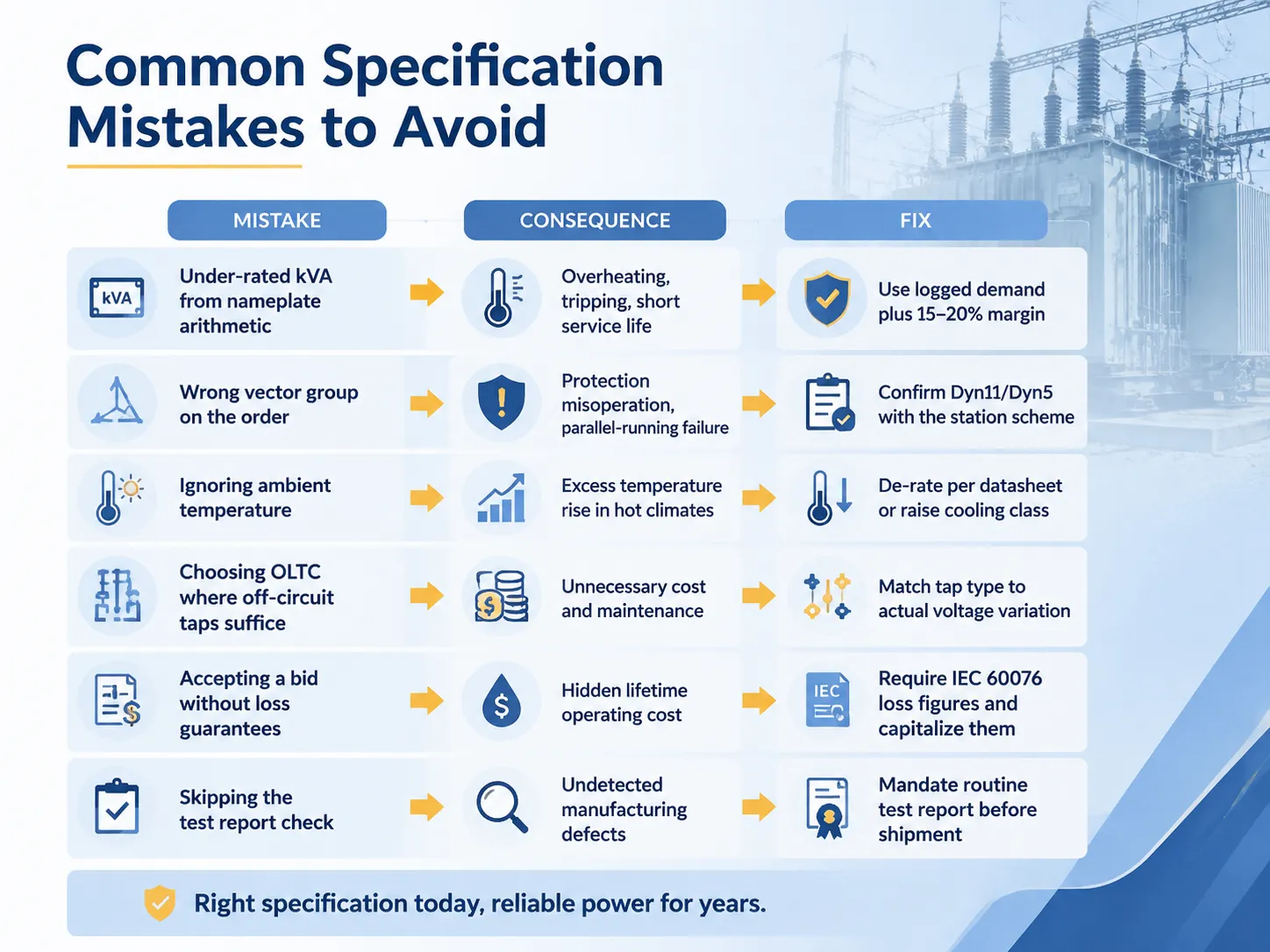
Общие ошибки в спецификациях, которых следует избегать
| Ошибка | Последствия | Исправление |
|---|---|---|
| Недостаточная мощность kVA по арифметике с таблички | Перегрев, отключение, короткий срок службы | Используйте зарегистрированный спрос плюс 15–20% запас |
| Неправильная векторная группа в заказе | Неправильная работа защиты, сбой параллельной работы | Подтвердите Dyn11/Dyn5 по схеме станции |
| Игнорирование температуры окружающей среды | Избыточный рост температуры в жарком климате | Уменьшите мощность согласно техническому паспорту или увеличьте класс охлаждения |
| Выбор OLTC, когда достаточно отводов без нагрузки | Ненужные затраты и обслуживание | Соответствие типа отводов фактическому изменению напряжения |
| Принятие предложения без гарантий потерь | Скрытые эксплуатационные расходы на протяжении всего срока службы | Запрашивайте данные о потерях IEC 60076 и учитывайте их |
| Пропуск проверки отчета о тестировании | Необнаруженные производственные дефекты | Обязательный отчет о рутинных испытаниях перед отправкой |
Топовые бренды и ценовые категории
| Бренд | Страна | Фокус на продукте | Ориентировочный диапазон цен (US$) |
|---|---|---|---|
| ABB | Швейцария/Швеция | Трансформаторы для полного диапазона обслуживания станции | $4,000–$60,000 |
| Сименс | Германия | Вспомогательные устройства для коммунальных и промышленных нужд | $3,500–$55,000 |
| Schneider Electric | Франция | Сухие и литьевые смоляные единицы | $2,500–$40,000 |
| Hitachi Energy | Швейцария | Вспомогательные трансформаторы коммунального класса | $4,500–$70,000 |
| Итон | США | Коммерческие и легкие промышленные устройства | $2,000–$35,000 |
| Jiangsu Subian Electric Power | Китай | Масляные и сухие, индивидуальные векторные группы | $2,000–$35,000 |
Ценовые диапазоны являются ориентировочными для трансформаторов с номинальной мощностью от 50kVA до 2,500kVA и будут зависеть от ряда факторов, включая потери, векторную группу и дополнительные функции, которые могут быть включены. Такие названия, как ABB, Siemens, Schneider Electric, Hitachi Energy и Eaton, определили стандарты инженерного качества для этой области трансформаторов, поэтому их документация может рассматриваться как отправная точка для разработки. Если вы ищете поставщика, который сможет обеспечить тот же уровень соответствия IEC 60076, но с более низкой ценой, одним из китайских производителей, обладающих самым широким опытом в экспорте, является Jiangsu Subian Electric Power Co., Ltd. Эта китайская компания производит как масляные, так и сухие трансформаторы различных мощностей от десятков kVA до десятков MVA, предлагает традиционные или индивидуально изготовленные векторные группы, двойные вторичные опции, а также трансформаторы с нагрузкой и без нагрузки. Вы можете ознакомиться с ассортиментом продукции на сайте Subian Electric.
Часто задаваемые вопросы
В чем разница между вспомогательным трансформатором и распределительным трансформатором?
Принципы проектирования одинаковы; различие заключается в цели и позиции. Распределительный трансформатор обеспечивает электроэнергию потребителям — домам, магазинам, небольшим фабрикам — вдоль сети. Вспомогательный трансформатор подает электроэнергию на системы внутри электростанции или подстанции — управление, защиту, освещение, охлаждение и зарядку аккумуляторов. Поскольку его нагрузка поддерживает работу станции, вспомогательный трансформатор часто работает с более высоким коэффициентом загрузки, чем распределительный трансформатор, и проектируется с большим учетом потерь и надежности.
Какой номинал kVA типичен для трансформатора служебного питания?
Имея требования к вспомогательной нагрузке. Небольшая распределительная подстанция, вероятно, потребует всего около 50–200 kVA для своих вспомогательных нужд, в то время как большая подстанция ВН или электростанция может иметь несколько единиц мощностью от 1,000 до 2,500 kVA, иногда с двойными вторичными обмотками для двигателей и управляющих цепей. Выберите размер на основе фактической вспомогательной нагрузки плюс 15–20% запас, вместо того чтобы следовать эмпирическому правилу.
Можно ли установить вспомогательный трансформатор внутри помещения?
Конечно. Когда речь идет о внутренней установке, более целесообразно использовать вспомогательный трансформатор сухого типа из литьевого смолы, так как он не подлежит требованиям по удержанию масла, имеет низкую вероятность возгорания и требует меньшего обслуживания. В случае наружных подстанций практически всегда используются масляные устройства. Выбор системы изоляции не должен основываться на эмпирическом правиле; он должен зависеть от характеристик площадки и требований пожарного кодекса.
Должен ли вспомогательный трансформатор иметь переключатель отводов под нагрузкой?
Только если ваше напряжение шины изменяется достаточно, чтобы повлиять на подачу 0.4 kV, вам нужен OLTC. Внецепные отводы (±2 x 2.5%) эффективны для обработки медленных изменений напряжения без дополнительных затрат. OLTC увеличивает стоимость системы и эксплуатационные расходы на 10-25%, но защищает уязвимую управляющую электронику в нестабильных сетях, где одно отключение обычно оправдывает понесенные затраты.
Предоставляет ли Subian отчеты о тестировании с вспомогательными трансформаторами?
Абсолютно. Все вспомогательные трансформаторы Subian поставляются со стандартным отчетом о тестировании перед отгрузкой в соответствии с IEC 60076, который включает такие испытания, как соотношение, векторная группа, импеданс, потери и диэлектрические испытания. Возможно организовать другие типы отчетов о тестировании, необходимых для проектов, таких как испытания с наблюдением и инспекция третьей стороной, перед окончанием заказа.
Ссылки
- IEC 60076-1 — Силовые трансформаторы: Общие сведения — регулирующий стандарт для оценки, потерь и испытаний вспомогательных трансформаторов.
- IEC 60076-5 — Способность выдерживать короткое замыкание — стандарт проверки для устойчивости к коротким замыканиям служебных единиц.
- IEC 60076-3 — Уровни изоляции и диэлектрические испытания — определяет требования к изоляции и испытаниям, упомянутым в запросах на предложение.
- NEMA TP-1 — Энергоэффективность для распределительных трансформаторов — эталон эффективности, используемый в Северной Америке для оценки потерь.
- Eaton — Ассортимент трансформаторов — представительная документация производителя для сравнения.
- UL 1561 — Стандарт безопасности для трансформаторов сухого типа — список безопасности, относящийся к внутренним и сухим вспомогательным устройствам.
Заключение
Вспомогательный трансформатор — это тихий рабочий лошадь любой надежной подстанции, и его правильный выбор основан на семи ключевых решениях: определить размер с учетом требований нагрузки и допуска 15-20%; зафиксировать пару напряжений и векторную группу; обеспечить соответствие механизма охлаждения условиям эксплуатации; быть осторожным при выборе соединения отводов; сравнить затраты на капитализированные потери; и выбрать либо масляный, либо сухой трансформатор в зависимости от требований места установки; и запросить результаты испытаний IEC 60076. Все решения могут быть практически проверены, и именно совокупность решений позволяет отличить 25-летнюю станцию от станции, которая выходит из строя в первый летний период. Jiangsu Subian Electric Power — это уважаемый производитель как масляных, так и сухих вспомогательных трансформаторов, соответствующих стандартам IEC 60076, предоставляющий полные испытательные данные и очень справедливые цены. Свяжитесь с компанией через официальный сайт с вашими данными о нагрузке станции и схемой напряжения, чтобы получить предложение, соответствующее спецификации.