


При инспекции различий между американскими и европейскими трансформаторами промышленный покупатель обнаружит, что важна не только локация производства, но и процессы, используемые в спецификации, тестировании и документации, связанной с таким электрическим оборудованием. Например, возьмем менеджера по закупкам завода в Техасе, который использует EPC-подрядчика, базирующегося в Европе. Предлагаемое оборудование имеет разные коды и спецификации. Американская версия указывает IEEE C57.12.00, тип охлаждения OA/FA, 12.47 кВ первичное, в то время как европейская предлагает IEC 60076, тип охлаждения ONAN/ONAF и 10 кВ или 20 кВ. Оба модели трансформаторов должны функционировать должным образом, но им нужны инженерные решения, чтобы это было возможно. Эта статья представляет различия между двумя типами трансформаторов, чтобы можно было провести правильные сравнения и сделать соответствующие покупки без дополнительных затрат на повторное тестирование.
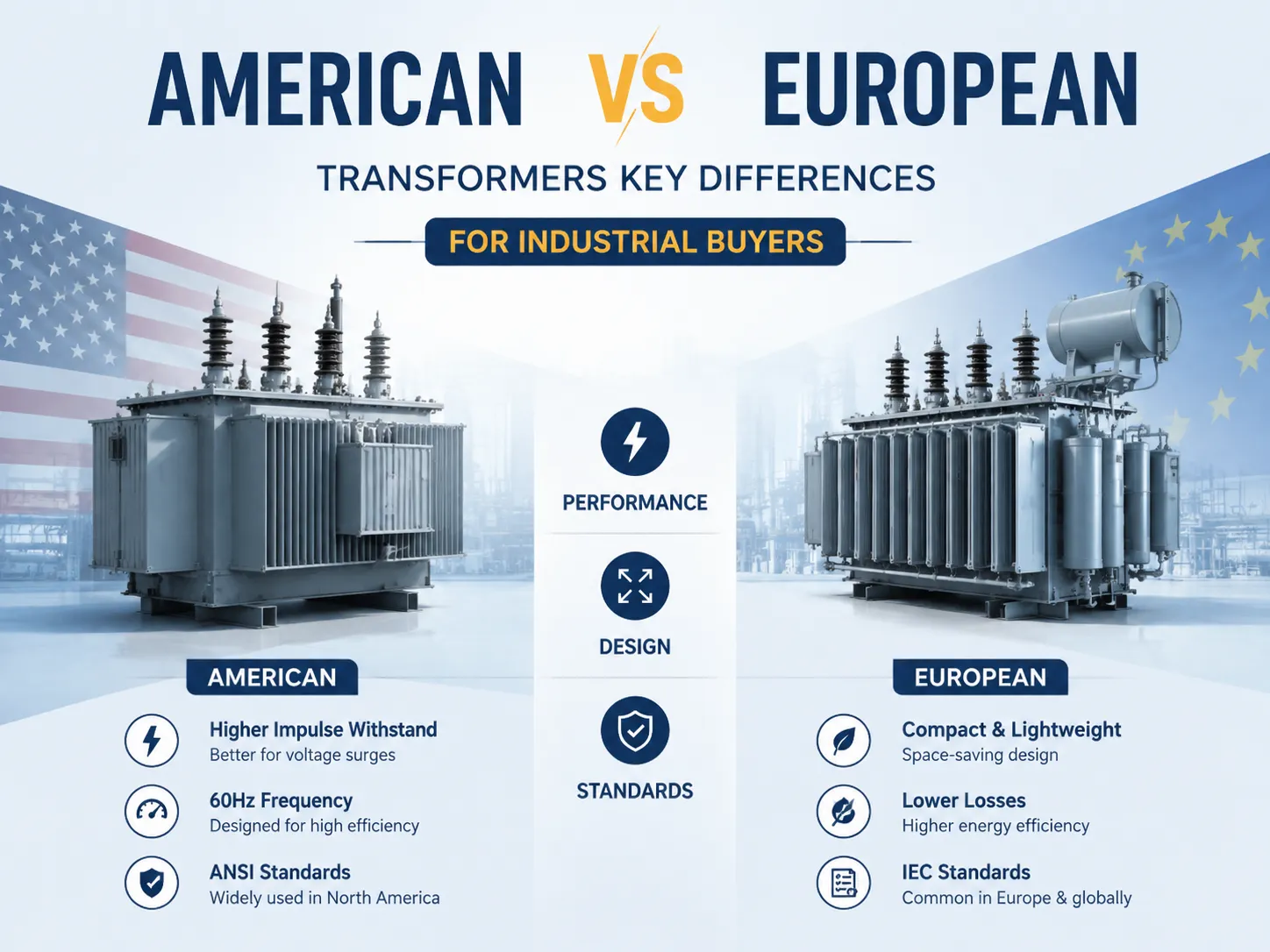
Краткий ответ: Американские и европейские трансформаторы различаются по спецификации. Американский стиль трансформатора соответствует стандартам ANSI/IEEE (IEEE C57.12.00, C57.12.20) и предназначен для сетей, работающих с частотой 60 Гц, в то время как первичные напряжения могут включать 12.47 кВ, 13.8 кВ или 34.5 кВ, с вторичными напряжениями 120/240 В, 120/208 В или 277/480 В. Европейский стиль трансформатора соответствует стандарту IEC 60076 и работает на 50 Гц с первичными напряжениями 6.6 кВ, 10 кВ, 11 кВ, 20 кВ или 33 кВ и вторичным напряжением 230/400 В. Метод охлаждения трансформатора, его допустимая импедансная толерантность, маркировка векторной группы, метод переключения отводов и документы для тестов все различаются между стилями.
Определения: Что такое две семьи
Американские трансформаторы работают в соответствии со стандартами ANSI/IEEE. Эти трансформаторы прекрасно работают в электрической системе с частотой 60 Гц. Уровни первичного напряжения, используемые американскими трансформаторами, составляют 7.2 кВ, 12.47 кВ, 13.8 кВ, 24.9 кВ и 34.5 кВ. Кроме того, напряжения, предоставляемые этими трансформаторами для конечных пользователей, включают 120 вольт, 240 вольт, 220 вольт, 277 вольт и 600 вольт. Технические характеристики для американских трансформаторов основаны на проектных стандартах IEEE C57, включая, но не ограничиваясь, импедансом и BIL.
Европейские трансформаторы, с другой стороны, производятся в соответствии со стандартами IEC 60076. Эти трансформаторы требуют сети 50 Гц и имеют различные уровни напряжения, некоторые из которых включают 6.6 кВ, 10 кВ, 11 кВ, 20 кВ, 33 кВ и 35 кВ. Низковольтные системы, используемые в таких трансформаторах, в основном составляют 230 вольт, 400 вольт и 415 вольт. Спецификации для стандарта IEC признаны в большинстве частей мира.
Хотя существуют различия в применимых проектных стандартах, оба устройства работают на основе одних и тех же принципов электромагнитной физики. Это означает, что, насколько это касается конечного пользователя, применение обоих типов трансформаторов может требовать другого подхода.
Регулирующие стандарты: ANSI/IEEE против IEC 60076
- IEEE C57.12.00 относится к общим спецификациям, касающимся трансформаторов, таких как силовые и распределительные трансформаторы в практиках США, касающимся различных параметров трансформаторов, таких как номинальная мощность, BIL, повышение температуры и импеданс.
- IEEE C57.12.20 и C57.12.90 относятся к документам по строительству и испытаниям, которые описывают испытания, связанные с распределениями, такими как изоляция, диэлектрические свойства, шум и другие.
- NEMA TP-1 является документом по эффективности, который используется в расчетах потерь в коммунальных услугах США.
- IEC 60076-1 относится к общим требованиям к силовым трансформаторам и является основным документом для серии IEC 60076.
- IEC 60076-2 (повышение температуры), -3 (уровни изоляции), -5 (устойчивость к короткому замыканию), -10 (уровень шума) являются конкретными категориями IEC, которые определяют различные варианты испытаний.
Европейский технический справочник напишет “трансформатор по IEC 60076-1, -2, -3 и -5, векторная группа Dyn11, тип охлаждения ONAN/ONAF“, в то время как американский технический справочник напишет ”трансформатор по IEEE C57.12.00, тип охлаждения OA, повышение на 65 градусов Цельсия, класс 12.47 кВ и 95 кВ BIL».”
Частота и классы напряжения по сравнению
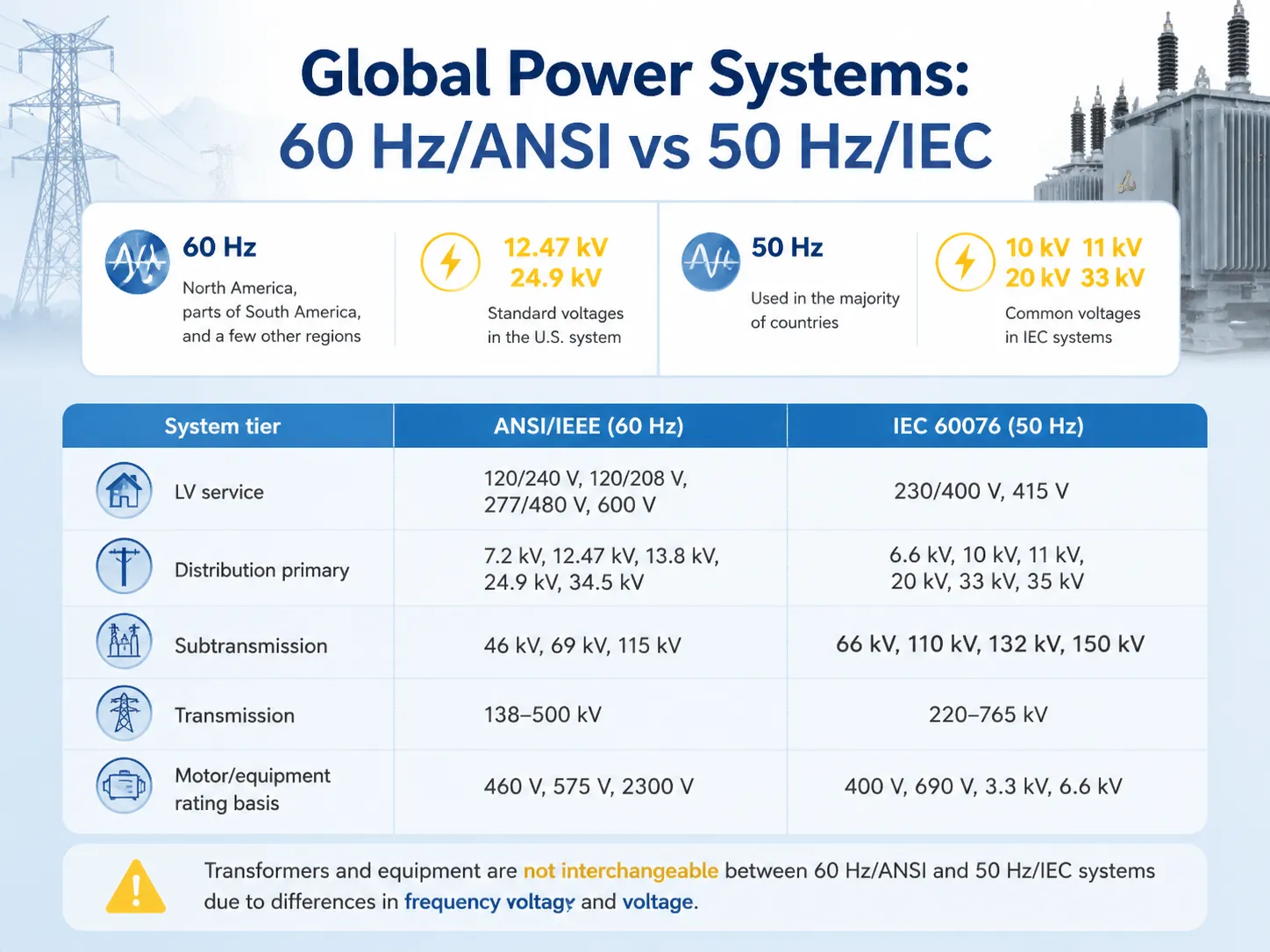
Частота является первым основным разделяющим фактором. Северная Америка, части Южной Америки и несколько других регионов используют 60 Гц, в то время как большинство стран имеют частоту 50 Гц. Производство трансформаторов разрабатывается и строится с учетом определенной частоты. Трансформатор, работающий на частоте, для которой он не был спроектирован, может привести к трансформации, которая вызовет гораздо большую плотность магнитного потока, приближая его к насыщению. Это может иметь значительные негативные последствия, включая перегрев, чрезмерный ток намагничивания и старение изоляции.
Вторым параметром, разделяющим две системы, является напряжение. Электрическая сеть США использует напряжения 12.47 кВ и 24.9 кВ в качестве стандартных напряжений, в то время как системы IEC работают с 10 кВ, 11 кВ, 20 кВ и 33 кВ. Сторона низкого напряжения также отличается в США (480 и 208 В) и системах IEC (400 и 415 В). Это означает, что все описанное оборудование несовместимо, так как они различаются по напряжению.
| Уровень системы | ANSI/IEEE (60 Гц) | IEC 60076 (50 Гц) |
|---|---|---|
| Услуга низкого напряжения | 120/240 В, 120/208 В, 277/480 В, 600 В | 230/400 В, 415 В |
| Первичное распределение | 2 кВ, 12.47 кВ, 13.8 кВ, 24.9 кВ, 34.5 кВ | 6 кВ, 10 кВ, 11 кВ, 20 кВ, 33 кВ, 35 кВ |
| Подтрансляция | 46 кВ, 69 кВ, 115 кВ | 66 кВ, 110 кВ, 132 кВ, 150 кВ |
| Передача | 138–500 кВ | 220–765 кВ |
| Основные характеристики моторов/оборудования | 460 В, 575 В, 2300 В | 400 В, 690 В, 3.3 кВ, 6.6 кВ |
Обозначение охлаждения: OA/FA против ONAN/ONAF
Обозначение охлаждения является основной областью ошибок новичков в запросах на предложение (RFQs). В США обычно используются термины OA (масло-иммерсионное и самоохлаждающееся), FA (принудительное воздушное охлаждение с вентиляторами), FOA (принудительное масло и воздушное охлаждение) и их комбинации. IEC использует четырехбуквенную систему обозначений: O (минеральное масло), N или F (естественное или принудительное охлаждение), A или W (воздух или вода), N или F (естественное или принудительное). Таким образом, ONAN эквивалентен OA, а ONAF аналогичен FA. Прежде чем сравнивать затраты, убедитесь, что оба предложения приведены к одной системе — поставщик, использующий ONAN или ONAF, по сравнению с предложением из США, использующим OA, вызовет много путаницы среди тех, кто рассматривает предложения, даже если машины имеют эквивалентные характеристики.
| Значение | Обозначение ANSI/IEEE | Обозначение IEC |
|---|---|---|
| Масло-иммерсионное, самоохлаждающееся | ОА | ОНАН |
| Масло-иммерсионное, вентиляторное охлаждение | ФА | ОНАФ |
| Принудительное масло, принудительный воздух | ФОА | ОФАФ |
| Принудительное масло, принудительная вода | ФОВ | ОФВФ |
| Сухой тип, естественный воздух | АА | АН |
Векторные группы и фазовый сдвиг
Еще один аспект, в котором две группы в их классификации трансформаторов различаются, — это номенклатура векторных групп. IEC использует систему часов, идентифицируя трансформатор как принадлежащий определенной векторной группе, которая указывает тип соединения, за которым следует номер, указывающий фазовый сдвиг обмоток в кратных 30 градусам (например: Dyn11 означает, что обмотка низкого напряжения опережает обмотку высокого напряжения на 30 градусов). Метод, наиболее часто используемый в США, был введен ANSI; он относится к угловому обозначению и идее соединительного банка (например: дельта-звезда с фазовым сдвигом 30 градусов). Поскольку большая часть (если не большинство) трансформаторов, установленных в США, работает в однофазном режиме, вопрос векторных групп не является очень значительным. Тем не менее, пользователь должен убедиться в соединении обмоток и угле фазы для трехфазного оборудования независимо от используемой нотации.
| Соединение обмоток | Обозначение IEC | Описание ANSI/IEEE | Фазовое смещение |
|---|---|---|---|
| Дельта ВН, звезда НН с нейтралью | Дин11 | Дельта-звезда, 30° запаздывание (американская конвенция) | 330° (выводы НН) |
| Дельта ВН, звезда НН, альтернативный | Дин5 | Дельта-звезда, 150° | 150° |
| Звезда ВН, дельта НН | Yd11 | Звезда-дельта, 30° | 330° |
| Звезда ВН, звезда НН | Yyn0 | Звезда-звезда, 0° | 0° |
| Дельта ВН, дельта НН | Dd0 | Дельта-дельта, 0° | 0° |
Испытания, таблички и документация
Философия испытаний различается как по объему испытаний, так и по представлению результатов. Стандарт IEC 60076 устанавливает рутинные испытания (соотношение, векторная группа, сопротивление, импеданс и потери при нагрузке, потери без нагрузки и ток, а также диэлектрические испытания) и типовые испытания (повышение температуры, стойкость к короткому замыканию, уровень шума), с четко указанными допусками – например, ± 10% по импедансу и указанными допусками для потерь. Что касается практики в США, она следует кодексам испытаний, установленным IEEE C57.12.90, и использует формулы оценки потерь NEMA TP-1, где коммунальное предприятие назначает денежную стоимость за ватт потерь без нагрузки и потерь при нагрузке и просит производителя оптимизировать соответственно. Кроме того, в странах IEC покупатели ожидают увидеть полный отчет о типовых испытаниях, включенный в техническое предложение, в то время как коммунальные предприятия США требуют инспекции третьими сторонами или наблюдения за испытаниями на заводе. Однако документация не является украшением: она служит основой для прохождения таможни, приемки товаров на месте и получения страховки.
| Испытание или требование | Практика ANSI/IEEE | Практика IEC 60076 |
|---|---|---|
| Объем рутинных испытаний | В соответствии с IEEE C57.12.90 | В соответствии с IEC 60076-1 |
| Допуск по импедансу | ±7.5% | ±10% стандарт |
| Допуск на потери без нагрузки | В соответствии с формулой оценки потерь | Указано в IEC 60076-1 |
| Испытание на повышение температуры | Типовое испытание, класс 65°C | Типовое испытание, IEC 60076-2 |
| Стойкость к короткому замыканию | IEEE C57.12.90 | IEC 60076-5 |
| Уровень звука | Основание IEEE C57.12.90 | IEC 60076-10 |
| Эталон эффективности | NEMA TP-1 | Значения потерь IEC 60076-1 |
Таблица сравнения
| Аспект | Американский (ANSI/IEEE) | Европейский (IEC 60076) |
|---|---|---|
| Номинальная частота | 60 Гц | 50 Гц |
| Регулирующий стандарт | Серия IEEE C57.12, NEMA | IEC 60076 серия |
| Общие первичные распределительные сети | 47 кВ, 13.8 кВ, 24.9 кВ, 34.5 кВ | 6 кВ, 10 кВ, 11 кВ, 20 кВ, 33 кВ |
| Общие вторичные НН | 120/240 В, 120/208 В, 277/480 В, 600 В | 230/400 В, 415 В, 6.3 кВ, 10.5 кВ |
| Обозначение охлаждения | ОА / ФА / ФОА | ОНАН / ОНАФ / ОФАФ |
| Допуск по импедансу | ±7.5% | ±10% (более строгие по запросу) |
| Обозначение векторной группы | Угловые конвенции ANSI | Dyn11, YNd11 и т.д. |
| Класс повышения температуры | 65°C среднее обмотки | 60–65 K для класса A/F |
| Типичная справка по эффективности | Оценка потерь NEMA TP-1 | Значения потерь IEC 60076-1 |
Региональные модели применения
В общем, американские трансформаторы удовлетворяют потребности США, Канады, Мексики и некоторых регионов Центральной и Южной Америки, а также Карибского бассейна и других территорий с подходом в стиле США. Европейские трансформаторы, с другой стороны, обслуживают Европу, Ближний Восток, Африку, большую часть Азии и значительную часть проектов в области возобновляемой энергии по всему миру, поскольку IEC 60076 является основным стандартом для международных EPC-контрактов. Однако есть исключения, так как некоторые энергетические компании в регионе Персидского залива требуют единицы ANSI на частоте 50 Гц, в то время как некоторые страны Латинской Америки смешивают методы IEC и ANSI. Поэтому, прежде чем сделать свое предложение, убедитесь, что вы задаете три вопроса: Какова частота? Каковы напряжения? Какой стандарт будет применять местный инспектор? Ответы дадут вам всю необходимую информацию.
Ландшафт брендов и ценовые диапазоны
| Бренд | Прочность стандартной семьи | Типичный распределительный продукт | Ориентировочный диапазон цен (US$) |
|---|---|---|---|
| ABB | ANSI + IEC | Распределительные устройства с жидким наполнителем и сухого типа | $12,000–$60,000 |
| Сименс | IEC сильный, ANSI доступен | Распределительные и промышленные трансформаторы | $11,000–$55,000 |
| Schneider Electric | IEC сильный | Устройства сухого типа и из литой смолы | $8,000–$45,000 |
| Hitachi Energy | ANSI + IEC | Распределительные трансформаторы коммунального класса | $13,000–$70,000 |
| Итон | ANSI сильный | Устройства сухого типа, установленные на подставках для рынка США | $7,000–$42,000 |
| Prolec GE | ANSI сильный | Распределительные трансформаторы для коммунальных услуг США | $10,000–$55,000 |
| Jiangsu Subian Electric Power | IEC первичный, ANSI по запросу | Маслонаполненные, устройства сухого типа, коробчатые, специальные единицы | $9,000–$40,000 |
Цены варьируются для распределительного трансформатора с номинальной мощностью от 1,000 до 2,500 кВА, где можно ожидать вариации в зависимости от номинала, потерь, классов напряжения и оборудования. Существует ряд производителей, которые предлагают отличные продукты в контексте трансформаторов, таких как ABB, Siemens, Schneider Electric, Hitachi Energy или Eaton, которые предлагают исключительно хорошие устройства, проверенные тестовыми документами, принятыми в качестве эталона отрасли. Jiangsu Subian Electric Power Co. Ltd — это компания из Китая, которая производит маслонаполненные, устройства сухого типа и коробчатые трансформаторы в соответствии с IEC 60076 и также предоставляет конструкции ANSI/IEEE для проектов на 60 Гц по доступным ценам для клиентов, которым необходимо соблюдение всех инженерных стандартов. Материалы, используемые в производстве, включают ориентированную по зерну кремниевую сталь и медь для обмотки, в то время как все виды испытаний проводятся на заводе перед отправкой трансформаторов. Более подробная информация доступна на сайте Subian Electric.
Как выбрать правильную стандартную семью
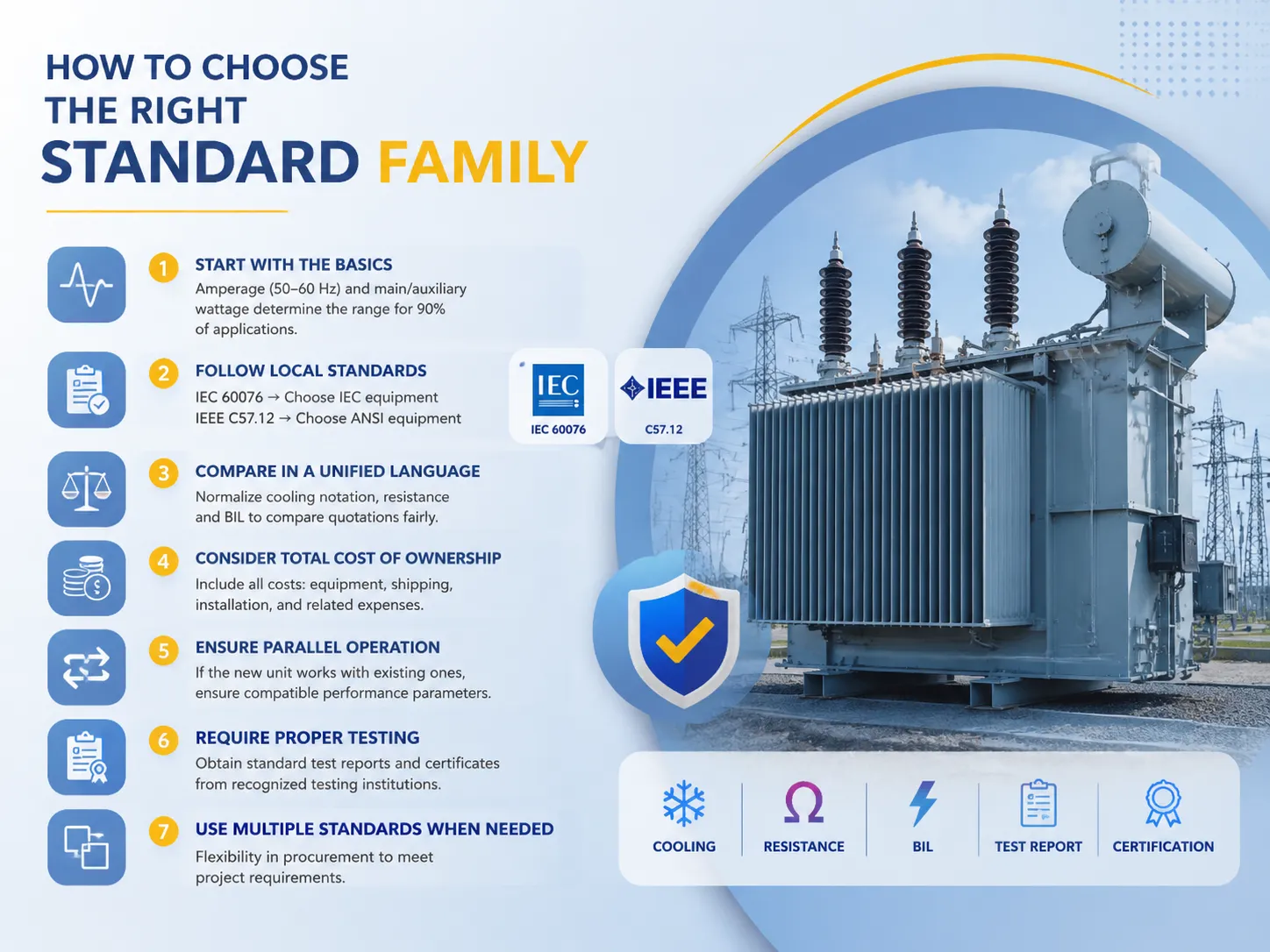
- Начните с начала сети. Амперность (50-60 Гц) и основная/вспомогательная мощность в этом месте определяют диапазон для 90% предметов.
- Изучите местные принципы. Если поставщик или контрольный орган следует стандарту IEC 60076, то приобретите оборудование IEC, однако если они полагаются на IEEE C57.12, то ищите продукты ANSI. Не позволяйте дешевым вариантам диктовать ваши решения.
- Преобразуйте детали спецификаций в терминах охлаждения, сопротивления и BIL в единый язык для сравнения котировок.
- Изучите общую стоимость установки покупки, которая охватывает все расходы: доставку и транспортировку оборудования, средства, потраченные на установку.
- Убедитесь, что условия параллельной работы соблюдены. Если важно, чтобы новое устройство работало вместе с другим, убедитесь, что параметры производительности совместимы.
- Выдвиньте требования, связанные с тестированием. Вам необходимо получить стандартный отчет о тестировании и сертификат о тестировании, проведенном признанным учреждением, если ваш проект особенно значим.
- Используйте несколько стандартов для закупок, если это необходимо.
Часто задаваемые вопросы
Можно ли использовать трансформатор на 50 Гц в сети на 60 Гц?
В общем, да; однако вам следует проверить это у производителя. На 60 Гц плотность магнитного потока уменьшается примерно на 17% по сравнению с проектной точкой на 50 Гц, что приводит к снижению потерь в холостом режиме и тока намагничивания. Изменение в компоненте потерь нагрузки и импедансе незначительное; таким образом, точный номинал на табличке может не быть выполнен на 60 Гц. Для постоянной установки предпочтительнее устройство, изготовленное для фактической частоты сети, а не использование устройства, способного работать на разных частотах.
Какой стандарт более распространен для международных экспортных проектов?
IEC 60076 является стандартом для большинства экспортных проектов в Европе, Африке, на Ближнем Востоке, в Юго-Восточной Азии и Латинской Америке, в то время как ANSI/IEEE применяется только в Северной Америке и некоторых соседних территориях. Если ваш покупатель является EPC-подрядчиком, вы можете ожидать увидеть ссылки на IEC 60076-1, -2, -3 и -5 в спецификации.
Являются ли американские и европейские трансформаторы физически взаимозаменяемыми?
С некоторыми изменениями. Конфигурации вводов, положение клемм, ребра охлаждающих устройств, обозначения на табличке и подключения низковольтной панели различаются. В большинстве случаев, при установке американского оборудования на IEC-станцию, устройство должно быть адаптировано с шинами, а защитные цепи должны быть переподключены соответствующим образом.
Производит ли Subian трансформаторы по обоим стандартам?
Конечно. Jiangsu Subian Electric Power использует IEC 60076 в качестве своего стандарта и применяет практики ANSI/IEEE (IEEE C57.12.00, C57.12.20) для всех своих проектов на 60 Гц, включая классы напряжения ANSI и тип охлаждения OA/FA. Завод проводит стандартные испытания в соответствии с соответствующим кодом испытаний и может предложить наблюдаемое или стороннее обследование любого типа.
Какова типичная разница в цене между версиями ANSI и IEC с одинаковым номиналом kVA?
Даже для идентичных номиналов разница в цене обычно составляет от 5 до 15%, что может зависеть больше от конструкции баков, типа изоляторов и объема испытаний, чем от самого стандарта. Трансформатор номиналом 1,000 kVA12.47 kV может стоить в диапазоне $12,000-28,000 с конфигурацией ANSI и $11,000-26,000 с конфигурацией IEC. Поэтому следует попросить производителя как ANSI, так и IEC трансформаторов предоставить оба предложения и соответственно сравнить потери и аксессуары.
Ссылки
- IEEE C57.12.00 — Общие требования к распределительным, силовым и регулирующим трансформаторам, погруженным в жидкость — основная американская спецификация для оценки и испытаний.
- IEC 60076-1 — Силовые трансформаторы: Общие сведения — сводный стандарт серии IEC 60076, используемый по всему миру.
- IEC 60076-5 — Способность выдерживать короткое замыкание — стандарт проверки короткого замыкания IEC, упоминаемый в экспортных запросах.
- NEMA TP-1 — Руководство по определению энергетической эффективности распределительных трансформаторов — американский эталон эффективности для оценки потерь.
- IEEE C57.12.20 — Стандарт для распределительных трансформаторов, установленных на столбах и площадках — строительный стандарт для самых распространенных американских распределительных устройств.
- IEC 60076-10 — Определение уровней звука — IEC стандарт испытаний для шума трансформаторов, актуальный для городских и промышленных площадок.
Заключение
Трансформаторы в Соединенных Штатах и Европе производятся согласно различным принципам, что означает, что между ними будут значительные различия, такие как частота, напряжение, система охлаждения, векторные группы и метод испытаний. Лучший способ окончательно сделать правильную покупку — это сначала определить параметры электрической сети (например, частоту и входные/выходные напряжения, и стандарт, согласно которому устройство производится), а затем преобразовать предложения от производителей в один формат, сравнивая общие затраты и потери устройств, а не только их цены. Поделитесь данными вашей системы с Subian через официальный сайт чтобы получить предложение, соответствующее спецификации, в стандартной группе, которая действительно нужна вашему проекту.