


Житель процветающего района видит, как рабочие создают бетонные основания вдоль дороги. Его местность выросла с 40 до 400 домов за три года, и трансформатор мощностью 100 кВА, установленный на столбе в углу, работает больше, чем раньше, так как все дома используют кондиционеры и кухонные приборы. В этом районе этим летом произошло два отключения электроэнергии. Коммунальная служба наконец отправляет специалистов для установки нового трансформатора, и инженер задается вопросом, какое значение имеют трансформаторы в отношении жилого электроснабжения.
Для уточнения, трансформатор служит ключевым элементом для правильного жилого электроснабжения. Оборудование принимает среднее напряжение от линии района и преобразует его в 230 (или 120) вольт, необходимых для всех устройств. Следующая статья направлена на объяснение принципов работы трансформатора, причин его неисправностей и перегрузок, а также оценочных потребностей в электроснабжении, необходимых для правильного функционирования.
Короче говоря, распределительный трансформатор расположен между линией среднего напряжения (обычно между 11 кВ и 33 кВ) и низковольтным электроснабжением (230/400 В для трехфазного и 120/240 В для однофазного питания). Обычно номиналы распределительных трансформаторов, предназначенных для жилых нужд, колеблются от 25 кВА для небольшого количества домов до 1,000 кВА для плотной застройки квартир, при этом типичный номинал загородного трансформатора составляет от 100 до 315 кВА. Трансформатор мощностью 100 кВА может обеспечить электроэнергией около 60-120 домов, в то время как трансформатор мощностью 315 кВА может питать около 200-400 домов, в зависимости от разнообразия и нагрузки. Чаще всего трансформаторы выходят из строя из-за перегрузки, удара молнии или старения изоляции; последнее является распространенной причиной отказов трансформаторов на столбах во время штормов.
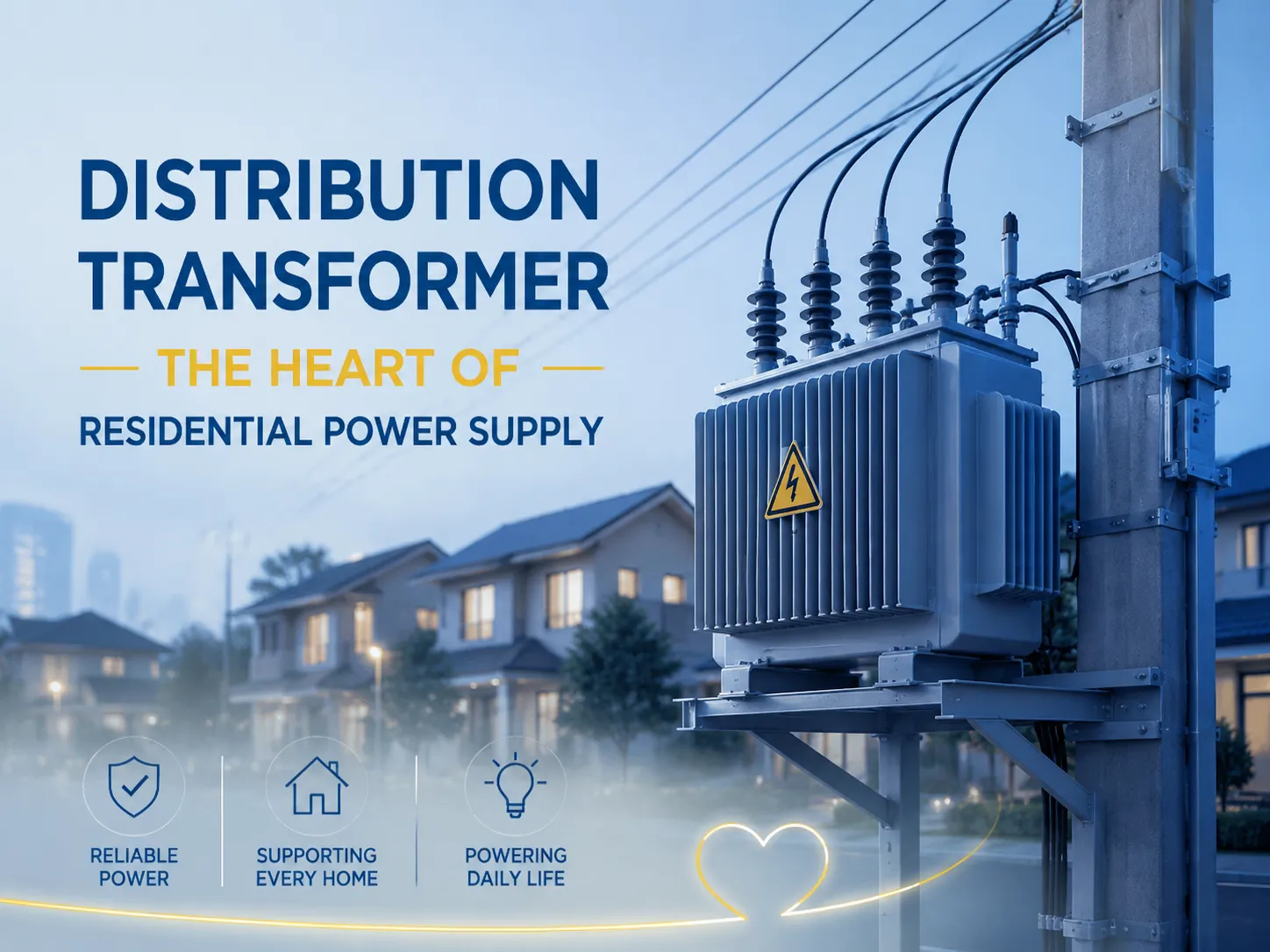
Почему распределительный трансформатор является “сердцем” жилого электроснабжения
Каждый удар сердца жилого электроснабжения проходит через распределительный трансформатор. Система передачи электроэнергии работает на напряжениях, равных или превышающих 110 кВ до 220 кВ, так как использование высокого напряжения позволяет эффективно передавать электроэнергию на большие расстояния. Однако дома используют только 230 В или 120 В, именно поэтому распределительный трансформатор необходим для преобразования из среднего напряжения в требуемое напряжение, подаваемое в розетку.
Следующие три характеристики делают его сердцем системы, а не просто одним из компонентов:
- Непрерывность: распределительные трансформаторы обеспечивают круглосуточное обслуживание и не имеют режима ожидания; если они перестают функционировать, то все, что находится ниже по цепи, также перестает работать.
- Концентрация: распределительные трансформаторы обрабатывают полную нагрузку своей обслуживаемой зоны; в случае неисправности одного единственного трансформатора мощностью 315 кВА около 300-400 домов потеряют электроэнергию, пока трансформатор не будет отремонтирован или заменен.
- Потери: постоянное потребление энергии приводит к неучтенному потреблению электроэнергии, что означает, что коммунальные компании стремятся установить энергоэффективные распределительные трансформаторы без потери функциональности и гибкости в будущем.
Эта концентрация является ключевым фактором, так как надежность поставки зависит от качества последнего распределительного трансформатора в цепи. Статистика надежности демонстрирует, что в хорошо развитых распределительных сетях сбои в электроснабжении происходят ниже по течению, а не выше.
Как работает распределительный трансформатор для жилых домов
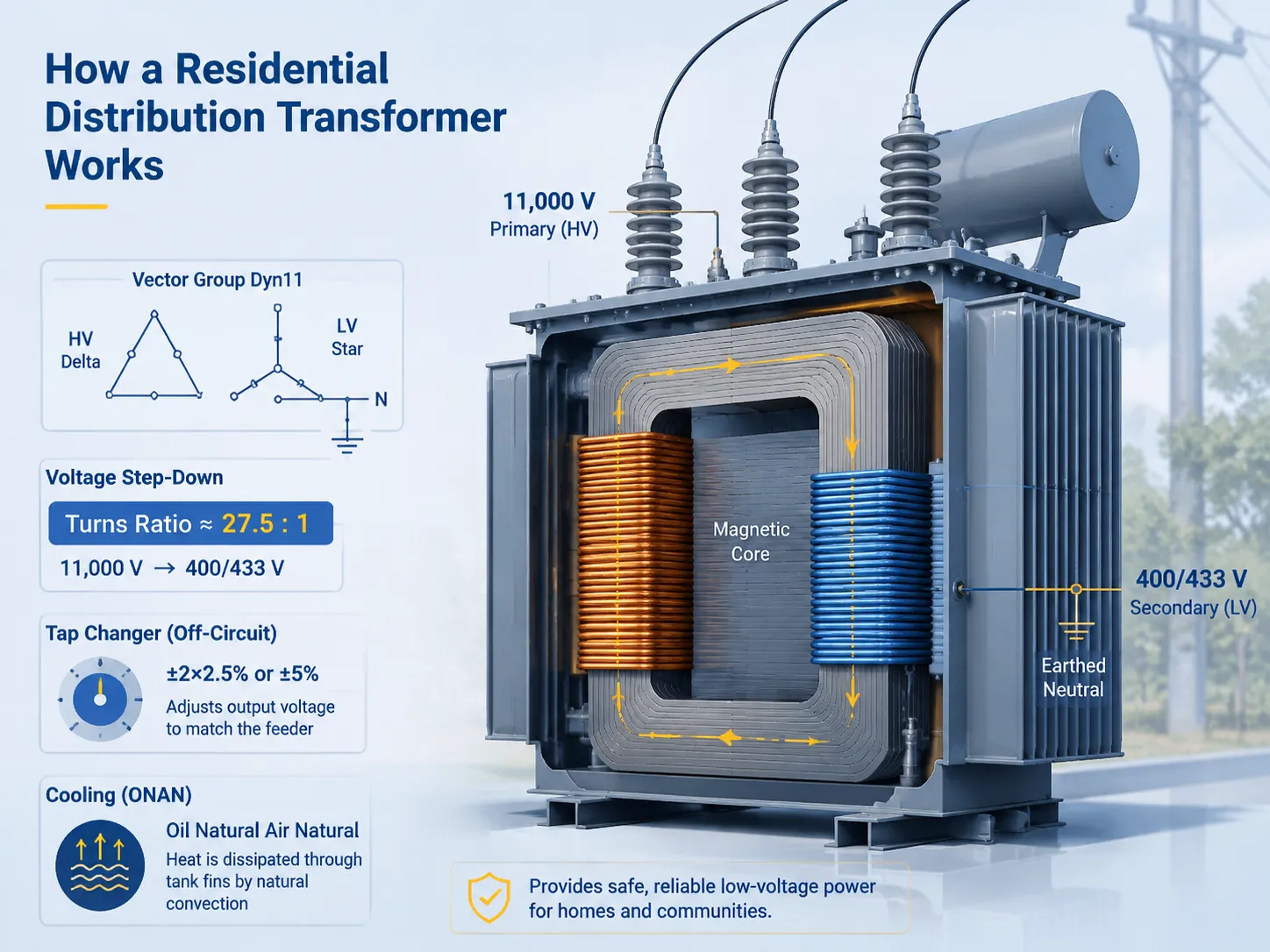
В известном сером или зеленом баке находится конгломератный сердечник из кремниевой стали, который имеет два набора обмоток: первичная обмотка, связанная со средневольтной линией, и вторая обмотка, связанная с низковольтными линиями улицы. Переменный ток, протекающий через первичную обмотку, создает электромагнитную силу в сердечнике, что приводит к генерации электрического напряжения на вторичной обмотке. Напряжение трансформатора определяется соотношением между витками двух обмоток (в данном примере 11,000/400-433V; в этом случае соотношение составляет 27.5:1). Вторичная обмотка предназначена для генерации 433 вольт при отсутствии нагрузки и около 400 вольт при полной нагрузке цепи.
Три важных детали имеют значение в случае с жилыми зданиями:
- Векторная группа Dyn11: В этом случае дельта-соединенная первая обмотка и звезда-соединенная вторая обмотка, а также заземленная нейтральная проволока обеспечивают надежное заземление для низковольтной сети, что гарантирует безопасность домов.
- Переключатель отводов: Это необходимо, так как коммунальные службы могут регулировать трансформатор в соответствии с фактическим напряжением в местной сети на территории.
- Охлаждение (ONAN): Минеральное масло используется для поддержания трансформатора в холодном состоянии, что достигается за счет естественной циркуляции, осуществляемой через ребра бака, сделанные из металла.
Размеры и номиналы для жилых районов
Коммунальные службы основывают размеры жилых трансформаторов на исследовании нагрузки, а не на подсчете количества розеток. Основной принцип здесь - концепция разнообразия. Не каждый дом включает все свои электрические устройства одновременно. В результате, в жилом районе максимальный совпадающий спрос по мощности на дом обычно составляет от 1 до 2 кВт, что значительно ниже общего количества подключенных нагрузок.
| Номинальная мощность трансформатора | Обслуживаемые домохозяйства | Типичное применение |
|---|---|---|
| 25 кВА | 12–20 | Сельские поселки, фермерские кластеры |
| 50 кВА | 30–50 | Малые деревни, концы улиц |
| 100 кВА | 60–120 | Пригородные улицы, небольшие застройки |
| 200 кВА | 120–250 | Более крупные жилые комплексы |
| 315 кВА | 200–400 | Плотные пригороды, многоквартирные дома |
| 630–1,000 кВА | 500–1,000+ | Высотные квартиры, районные центры |
Вышеуказанные расчеты предполагают, что проникновение бытовых приборов ограничено (освещение, холодильники, телевизоры и немного готовки). Таким образом, для проникновения бытовых приборов, таких как электрическое водонагревание, зарядка электромобилей или кондиционирование воздуха выше 50%, спрос на домохозяйство примерно удваивается. Поэтому вышеуказанный пример указывает на то, что пригород превысил свою 100 кВА единицу. Лучший способ - провести исследование нагрузки, добавить запас в 15-25% и затем повторить расчеты по мере увеличения плотности района.
Типы, используемые в жилых сетях
Жилое электроснабжение использует небольшое количество стандартизированных типов трансформаторов, выбранных по способу монтажа и стилю сети.
| Тип | Номиналы | Где используется | Приблизительная цена FOB (Китай) |
|---|---|---|---|
| Однофазный столбовый трансформатор | 5–167 кВА | Североамериканский стиль сельских/пригородных | 1ТП4Т350–1ТП4Т1,500 |
| Трехфазный столбовый трансформатор | 15–315 кВА | IEC-стиль сельских и пригородных | 1ТП4Т1,500–1ТП4Т5,000 |
| Трансформатор на плите | 25–2,500 кВА | Городские, подземные сети | 1ТП4Т900–1ТП4Т12,000 |
| Сухой тип (литой смола) | 50–2,500 кВА | Внутри зданий, подвалах, башнях | $3,500–$30,000 |
| Аморфный сердечник | 15–1,000 кВА | Программы, ориентированные на эффективность | +15–25% сверх нормы |
Дома в крупных городах обычно используют установки сухого типа в подвалах, так как использование масляных контейнеров в занятых зданиях не соответствует пожарным нормам, в то время как дома в пригородах обычно используют электрические столбы (воздушная сеть) и трансформаторы на подставках (подземная сеть).
ПочемуResidential Transformers Fail
Понимание различных типов отказов помогает определить, что требует проверки и спецификаций. Основные причины, ранжированные примерно по частоте в разделе о жилых флотах:
| Причина отказа | Типичная доля отказов | Профилактика |
|---|---|---|
| Перегрузка / термическое старение | ≈ 25–35% | Правильный размер, мониторинг нагрузки |
| Удары молнии | ≈ 20–30% (в районах штормов выше) | ZnO разрядники, хорошее заземление |
| Деградация изоляции | ≈ 15–25% | Тестирование масла, контроль влажности |
| Проникновение влаги | ≈ 10–15% | Запечатанные резервуары, обслуживание прокладок |
| Производственные дефекты | ≈ 5–10% | Заводские испытания, типовые конструкции |
| Контакт с животными / вандализм | ≈ 5% | Корпус, защита, размещение |
Удары молнии упоминаются здесь из-за их драматического воздействия и предотвращаемости. Прямое попадание или инцидент поблизости приводит к высокочастотному импульсу на первичной обмотке; без правильно заземленного устройства защиты от перенапряжений изоляция выходит из строя, что обычно проявляется в виде взорванного изолятора или сгоревшей обмотки. Установка и обслуживание устройства защиты от перенапряжений ZnO представляет собой самое дешевое решение.
Защита и установка
Уровень безопасности распределительного трансформатора для жилых нужд напрямую зависит от окружающих условий. Обычный пакет безопасности охватывает следующие аспекты:
- Предохранитель на первичной стороне служит для изоляции неисправного трансформатора от питающей линии. Размер предохранителя соответствует магнитному пусковому току при его запуске (обычно 10-12 раз больше номинального тока в течение около 0,1 с без ложного срабатывания).
- Разрядник на первичной стороне — это ZnO разрядник с номинальным напряжением для BIL системы. Разрядник должен быть заземлен с импедансом менее 10 Ом.
- Защита на вторичной стороне включает установку автоматического выключателя низкого напряжения или предохранителя на трансформаторе (где это требуется нормами) для защиты сети НН в случае перегрузок.
- Заземление корпуса трансформатора, нейтраль НН и заземление разрядника должны быть соединены вместе с заземляющим электродом.
- Безопасность корпуса также важна — трансформаторы на подставках поставляются в запертых антивандальных корпусах, а трансформаторы на столбах должны соответствовать минимальным стандартам расстояния от корпуса до земли и до зданий.
Установка трансформатора на столбе мощностью 100 кВА может быть выполнена 2 квалифицированными специалистами с использованием автокрана и может занять от 1 до 2 часов для установки трансформатора на существующем столбе и выполнения всех необходимых подключений, включая разрядники, предохранители, заземление и подключения низкого напряжения. Безопасные пусковые испытания проводятся путем проверки положения отводов, вращения фаз (трехфазный) и сопротивления изоляции (с использованием мегомметра).
Обслуживание и срок службы
Трансформатор, который надежно закреплен и правильно заряжен, имеет срок службы от 25 до 35 лет. График обслуживания прост, но неизбежен.
| Интервал | Задача | Ключевой порог для наблюдения |
|---|---|---|
| 2–3 года | Масляный тест (диэлектрическая прочность, влажность, кислотность, DGA) | Диэлектрическая прочность ≥ 30 кВ/2,5 мм; влажность < 30 ppm |
| Ежегодно | Визуальный осмотр | Нет утечек, коррозии или низкого уровня масла |
| Сезонная (пиковая нагрузка) | Проверка нагрузки по табличным данным | Пиковая нагрузка < 80% от номинала на длительные периоды |
| Ежегодно | Проверка разрядника и предохранителя | Нет трещин в фарфоре, нет признаков разряда |
| 5 лет | Обзор тренда DGA (большие установки) | Нет роста тренда H2 или CH4 |
Реальность экономики старения сурова: повышение температуры на 8 K равно сокращению срока службы изоляции вдвое. Трансформатор, работающий при условиях 1.3 от своей номинальной нагрузки в жаркие летние вечера, ухудшается многократно быстрее, чем его достойный срок службы — именно поэтому трансформатор в нашей вводной сцене пришлось заменить гораздо раньше, чем он был спроектирован.
Бренды, качество и ценовые категории
Хотя распределительные трансформаторы для жилых домов являются унифицированными изделиями, выбор бренда охватывает большие различия в стоимости и функциональности. В таблице ниже мы представляем сравнение трехфазного трансформатора мощностью 100 кВА на условиях FOB.
| Бренд / источник | Страна | Ценовой диапазон 100 кВА | Примечания |
|---|---|---|---|
| ABB | Швейцария | $4,200–$6,500 | Глобальное обслуживание, премиум качество |
| Сименс | Германия | $4,000–$6,800 | Проверенная база для коммунальных услуг |
| Schneider Electric | Франция | $3,800–$6,200 | Сильная экосистема низкого напряжения |
| Hitachi Energy | Швейцария/Япония | $4,500–$7,000 | Репутация уровня коммунальных услуг |
| Итон | Ирландия/США | $3,500–$5,800 | Сила жилых объектов в Америке |
| TBEA / Китай XD | Китай | $1,600–$2,800 | Крупные государственные производители |
| Jiangsu Subian Electric Power | Китай | $1,400–$2,400 | Ориентированные на экспорт, протестированные по IEC 60076 |
Международные бренды, которые зарекомендовали себя на рынке — ABB, Siemens, Schneider Electric и Hitachi Energy — признаны за свои данные надежности, которые они приобрели за миллионы единиц-лет. Компании предоставляют местную инженерную поддержку и признание финансирования. Для коммунальных компаний и застройщиков, которые ценят эти гарантии, дополнительная стоимость в два или три раза выше себестоимости в Китае кажется оправданной и разумной.
Для целей внутреннего применения, требующего установки сотен и тысяч устройств для новых жилых комплексов, проектов электрификации или обновления парка, Jiangsu Subian Electric Power является альтернативной компанией для рассмотрения. Компания производит как однофазные, так и трехфазные трансформаторы в настенных и настенных типах с мощностью от 5 кВА до 2,500 кВА. Компания осуществляет производство в соответствии со стандартами IEC 60076 и получила сертификаты на свою продукцию. Производственный процесс также поддерживается производством аморфных сердечников, соответствующих стандартам эффективности, и предоставлением различных комбинаций напряжения и векторов электрических трансформаторов, а также установками предохранителей и разрядников.
Модернизация перегруженного трансформатора
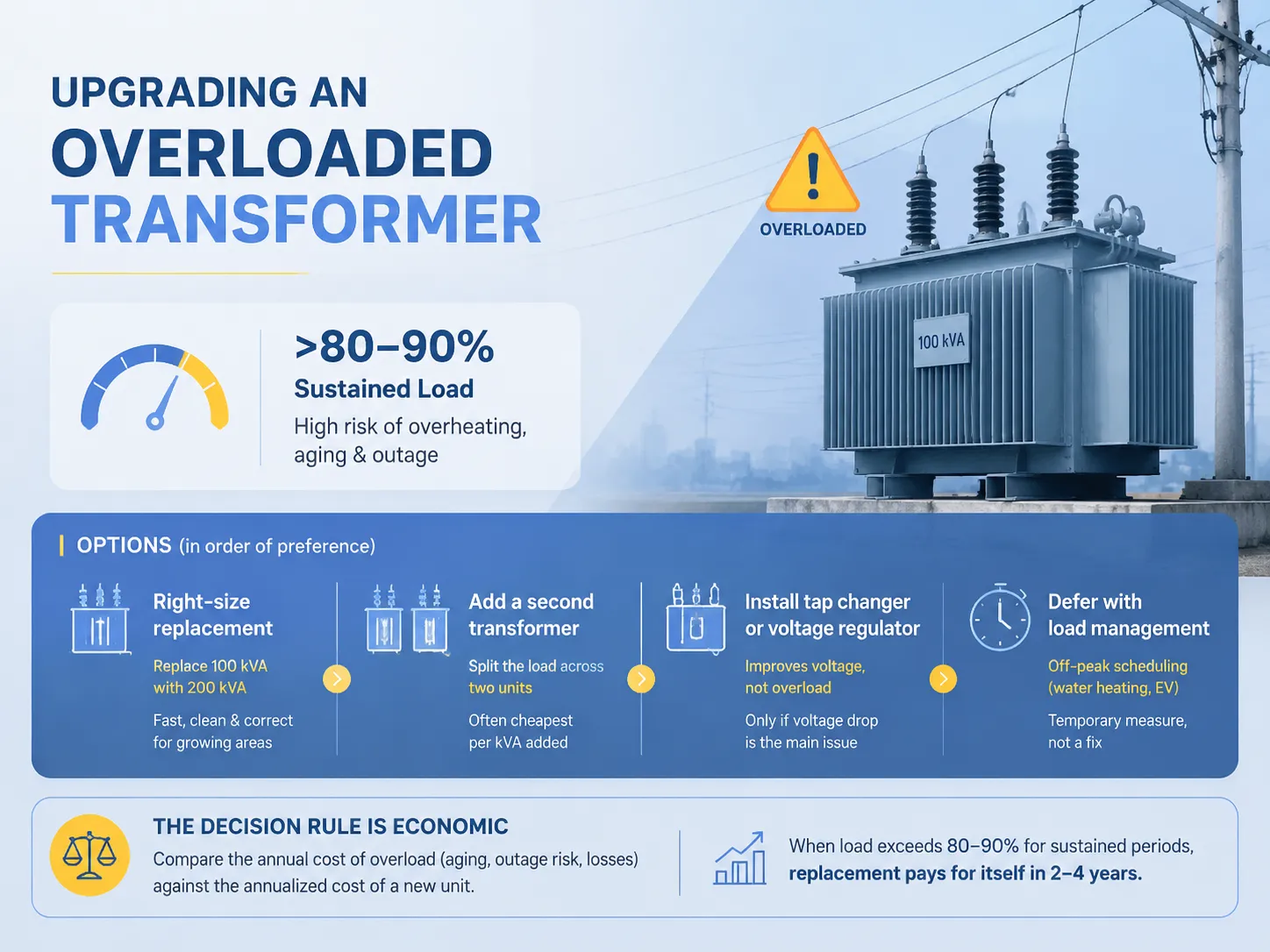
Когда распределительный трансформатор достигает предела нагрузки, предпочтения перечислены следующим образом:
- Замена на трансформатор соответствующего размера: Замена трансформатора 100 кВА на трансформатор 200 кВА является правильным подходом — стоимость всего процесса составит около $2,500–$5,000.
- Рассмотрите установку дополнительного трансформатора: Нагрузка может быть разделена между двумя трансформаторами, если сеть это позволяет — это обычно самый дешевый вариант.
- Установите либо переключатель с нагрузкой, либо устройство регулирования напряжения: Это может помочь решить проблему падения напряжения; однако в этом случае проблема старения от перегрузки остается.
- Стратегия с помощью управления нагрузкой: Таким образом, вы получаете временное облегчение, но в результате проблема с перегрузкой остается без внимания.
Рекомендация в этом случае основывается на затратах на избыточную нагрузку (быстрое старение, возможность отказа и потери энергии), которые необходимо сравнить с ежегодными затратами на новый трансформатор. В большинстве случаев, когда трансформатор не может правильно справляться с нагрузкой в течение длительного времени и работает близко к 80-90% своей номинальной мощности, расходы оправданы в течение 2-4 лет.
Часто задаваемые вопросы
Сколько домов обслуживает распределительный трансформатор мощностью 100 кВА?
Предполагая максимальный спрос на электроэнергию 1-2 кВт на дом для освещения, холодильников, телевизоров и некоторой готовки, то в пиковые часы потребления примерно 60-120 домохозяйств могут получать электроэнергию от коммунального предприятия. Интенсивное использование кондиционеров, электрического водонагревателя или зарядки электромобилей снижает это число до диапазона 30-60 жилых помещений. Значения, на которые ссылаются коммунальные предприятия, основаны на исследовании нагрузки в их конкретных регионах.
Как долго служит распределительный трансформатор для жилых домов?
25-35 лет при правильных нагрузках, защите и обслуживании. Правильная перегрузка является основным фактором: каждые 8 К выше 65 К температура обмотки снижает долговечность изоляции вдвое. Устройство, работающее на 1.3× номинальной мощности каждое лето, может полностью износиться за 10-15 лет, поэтому электрические компании предпочитают правильно подбирать размеры.
Почему мой соседний трансформатор гудит и иногда жужжит?
Гудящий звук можно отнести к магнитострикции. Магнитострикция — это действие кремниевой стали сердечника, которая расширяется и сжимается 100 раз в секунду, производя звук 100/120 Гц, который обычно составляет около 40-55 дБ(A) на расстоянии 30 метров. Интенсивность этого звука увеличивается с увеличением нагрузки. Громкий, искаженный или нерегулярный жужжащий звук может указывать на неправильно зафиксированное зажимное устройство сердечника, наличие высокочастотных гармоник (часто возникающих из-за множества переключателей и драйверов LED) или появление внутренних неисправностей, о которых следует сообщить поставщику электроэнергии.
Что вызывает возгорание или взрыв трансформатора на столбе?
В большинстве случаев дефект изоляции возникает из-за ударов молнии или чрезмерных условий нагрузки, и чаще всего ситуация усугубляется маслом с высоким содержанием влаги, которое в основном старое. Ток короткого замыкания испаряет масло, и пути сброса давления открываются, чтобы избежать взрыва бака. Устройства защиты от перенапряжений на основе оксида цинка, правильный выбор предохранителей, тестирование масла и недопущение чрезмерной нагрузки работают как методы предотвращения таких отказов. Новые баки также имеют герметичные конструкции и установки для сброса давления, чтобы снизить риск отказов.
Сколько стоит заменить трансформатор в жилом доме в 2026 году?
Что касается трансформаторов, цены FOB Китай указаны для однофазных моделей в диапазоне от $350 до $1,500, а для трехфазных моделей — от $1,500 до $8,000 (для единиц мощностью 15-500 кВА). Цены на трансформаторы сухого типа примерно на 30-50% выше. Добавление около 30-50% на транспортировку, установку, защиту, предохранители и пуск дает нам около $4,000-$8,000 за трансформатор на столбе мощностью 200 кВА, в то время как общая стоимость трансформатора, установленного на площадке, обычно составляет от $6,000 до $15,000.
Ссылки
- МЭК — Издатель IEC 60076, основного стандарта для распределительных трансформаторов.
- IEEE — Источник стандартов IEEE C57.12.00 / C57.12.20 для Америки.
- NEMA — Стандарт эффективности TP-1 для распределительных трансформаторов.
- Министерство энергетики США — Данные об эффективности и надежности распределительных трансформаторов.
- Международное энергетическое агентство (IEA) — Анализ потерь в распределительных сетях и надежности сети.
- Агентство по охране окружающей среды США — Рекомендации по защите от перенапряжений и управлению окружающей средой трансформаторов.
- Jiangsu Subian Electric Power — Производитель распределительных трансформаторов для жилых зданий, устанавливаемых на столбах и площадках.
Заключение
Этот трансформатор играет центральную роль в электроснабжении жилого сектора, поскольку вся электрическая энергия, необходимая для домашнего использования, проходит через это устройство, и именно состояние этого устройства определяет, будут ли электричеством обеспечены тридцать или триста домов даже в самую жаркую ночь. Правильный размер, защита и обслуживание — это комбинации, которые позволяют этому трансформатору работать без сбоев в течение 25-35 лет.
- Выбор размера следует делать не на основе количества розеток, а на основе исследования нагрузки и обязательно добавлять запас в 15-25% от роста мощности.
- Убедитесь, что каждый трансформатор в подгруппе имеет соответствующие ограничители перенапряжений, правильно подобранные предохранители и хорошее заземление.
- Проводите испытания масла каждые два или три года и отключайте и заменяйте трансформаторы, которые были перегружены задолго до окончания их срока службы.
- При покупке трансформаторов укажите, что производитель должен предоставить результаты испытаний IEC 60076 и гарантии потерь, независимо от того, является ли производитель ABB, Siemens, Schneider или Jiangsu Subian Electric Power.