


Инженер, отвечающий за проектирование сети, планировал прибрежный участок, который подвергнется трансформациям. Ветроэлектростанция мощностью 200 мегаватт будет подключена к одной из различных подстанций на 220 киловольт. Фотовольтаическая установка мощностью 120 мегаватт и станция накопления энергии мощностью 50 мегаватт/100 мегаватт-часов будут подключены через еще одну подстанцию, в то время как системы подключения на 35 киловольт будут расширены. Каждому новому мегаватту требовались трансформаторы – трансформаторы 0,69 кВ для турбин, трансформаторы 0,4 кВ для фотовольтаических систем, трансформаторы 33/110 или 33/220 киловольт для подстанций и трансформаторы, необходимые для работы как с зарядкой, так и с разрядкой в условиях энергетических хранилищ. Машина инженера постоянно напоминала ей об одном факте: хотя возобновляемые источники энергии получают всю рекламу, именно трансформаторы обеспечивают функционирование всей системы. Если трансформатор испытывает увеличенные потери или не может охладиться, ветровая электростанция не сможет правильно использовать свою мощность, независимо от того, насколько сильный ветер дует снаружи.
Эта статья подчеркивает значимость трансформаторов в новых энергетических системах, включая их расположение, параметры работы, затраты и методы их выбора для строительства систем накопления.
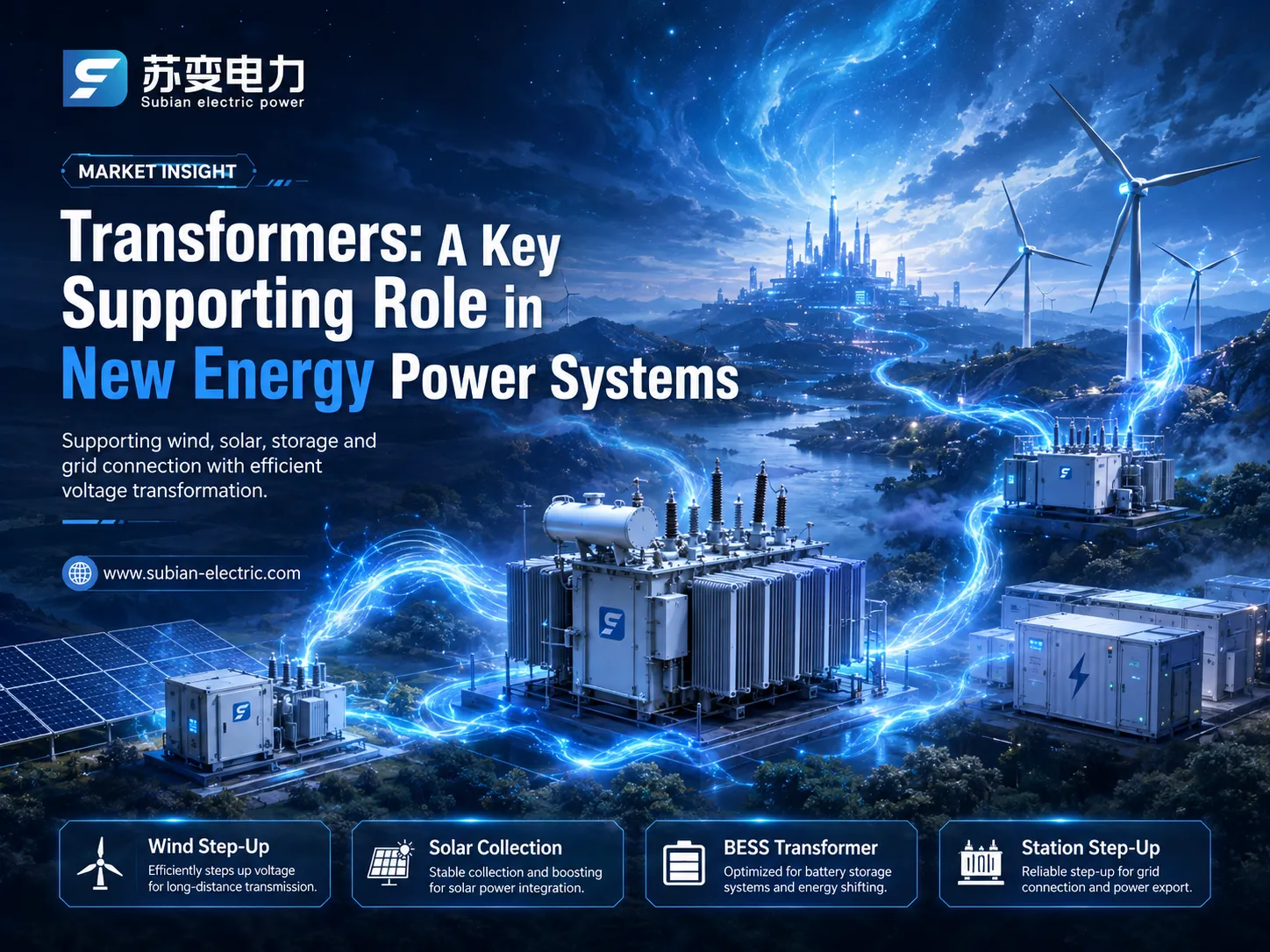
Роль трансформаторов в новых энергетических системах
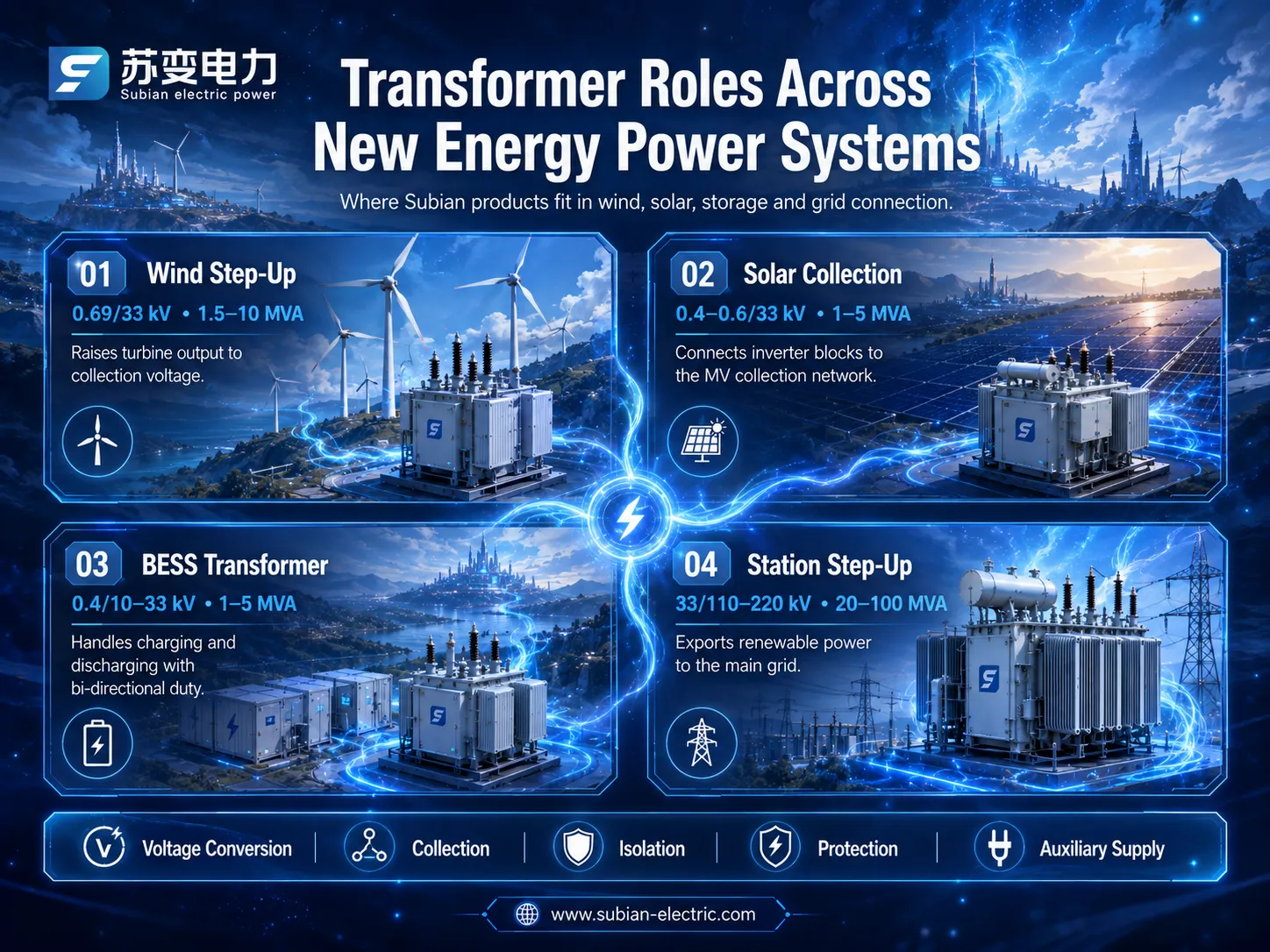
Работа новых энергетических систем аналогична работе традиционных энергетических систем, но только на основе распределенных источников, зависящих от погоды. Традиционно трансформаторы выполняют пять ключевых функций:
Повышающий трансформатор для генератора: преобразует низкое напряжение, поступающее от каждой турбины или инверторной цепи в сборной системе, в более высокое напряжение;
Трансформатор сборной системы: передает энергию от множества генераторов к станциям;
Повышающий трансформатор: увеличивает напряжение сборки для дальнейшей передачи;
Изолирующий трансформатор: выполняет разделение между генерацией и сетью;
Трансформатор вспомогательного питания: обеспечивает вспомогательные услуги для подстанции.
Топологии систем: Ветер, Солнце, Накопление, Гибрид
Конфигурация трансформатора зависит от типа источника и размера установки:
| Система | Типичные стадии трансформатора | Примеры номиналов |
|---|---|---|
| Прибрежный ветер (20–200 МВт) | Турбина 0,69/33 кВ → станция 33/110–220 кВ | Повышающий 1,5–10 МВА; станция 20–100 МВА |
| Оффшорный ветер | Повышающий трансформатор турбины → оффшорная подстанция → прибрежная станция | Повышающий 5–15 МВА; станция 100–400 МВА |
| Коммунальная солнечная энергия (10–200 МВтп) | Инвертор 0,4–0,6/33 кВ → станция 33/110–220 кВ | Сбор 1–5 МВА; станция 20–100 МВА |
| Накопление батарей (10–100 МВт) | PCS 0,4/10–33 кВ → повышающий трансформатор станции | Трансформатор PCS 1–5 МВА |
| Гибрид (ветер+солнце+накопление) | Все вышеперечисленное в одной сборной подстанции | Многообмоточные трансформаторы подстанции |
Каждая стадия добавляет потери, затраты и режимы отказов, поэтому проектировщики систем усердно работают над минимизацией количества этапов трансформации — но уровни напряжения современных систем передачи делают эти этапы неизбежными. Трансформаторы — это цена за эффективную передачу возобновляемой энергии на расстоянии.
Обязанности новой энергии: Сравнение с обязанностями сети
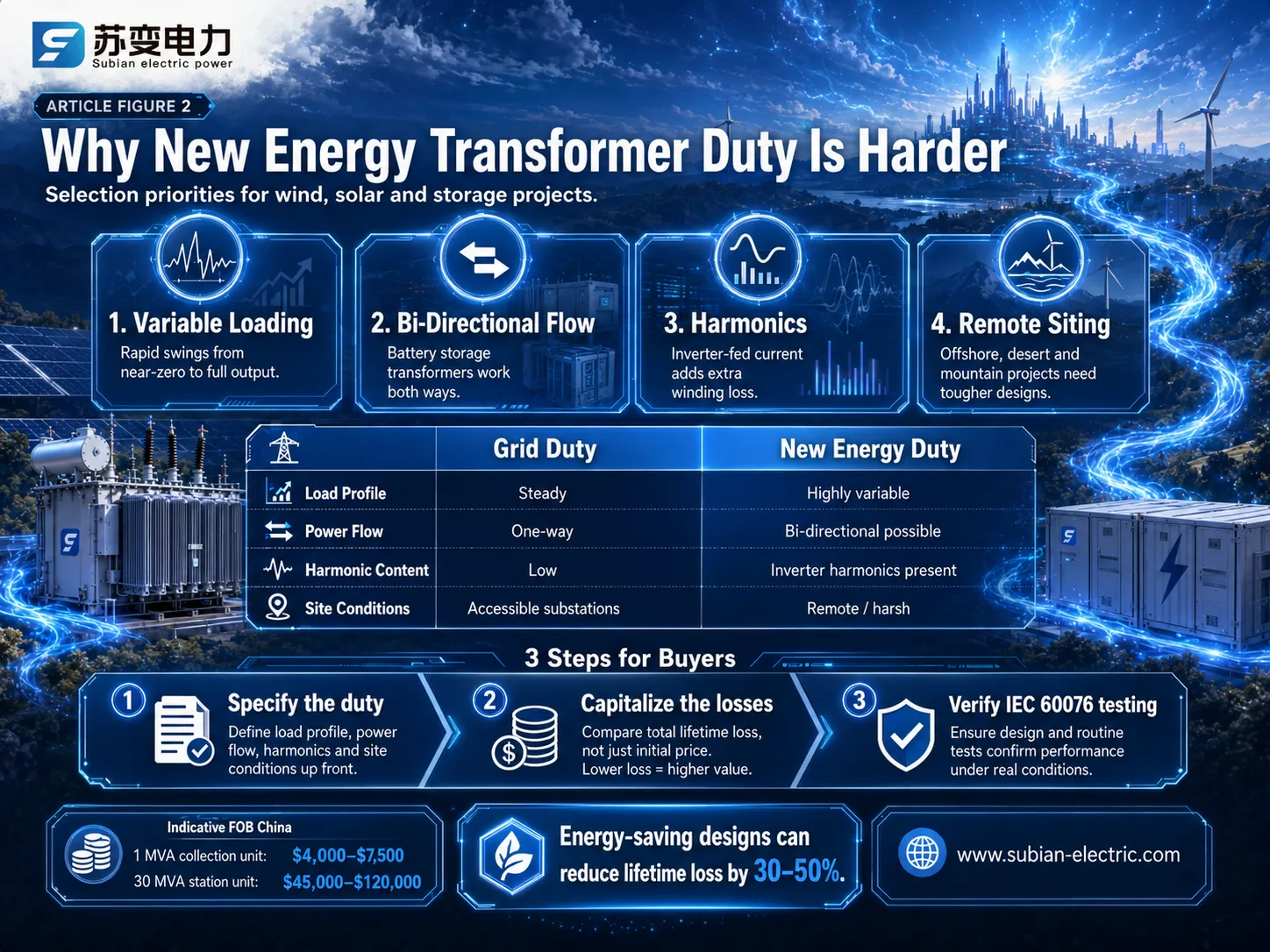
Трансформаторы новой энергии должны справляться с условиями эксплуатации, необычными для трансформаторов распределительной сети:
Переменные нагрузки: выход мощности ветра и солнца колеблется от почти нуля до полного за несколько минут, что вызывает быстрые температурные изменения в обмотках трансформатора и создает напряжение на изоляцию.
Двусторонний поток энергии (энергия батареи): трансформаторы батарей должны транспортировать энергию в обоих направлениях с одинаковой важностью, что подразумевает симметричное тепловое напряжение, для которого не предназначен односторонний трансформатор сети.
Гармоники: инверторы и преобразователи вводят гармонические токи, которые вызывают дополнительные потери мощности в обмотках и могут вызвать резонанс с импедансом трансформатора.
Удаленное расположение: трансформаторы ветровых турбин размещаются на вершинах гор или в море в соленой воде, в условиях экстремальной погоды и с ограниченным пространством для обслуживания.
Результатом этого является снижение мощности, лучшее охлаждение, проектирование обмоток для работы с гармониками и использование прочной изоляции. Трансформатор, спроектированный для стабильной работы в сети, при установке в проекте возобновляемой энергии может не работать так, как указано в спецификациях, и будет перегреваться и выходить из строя раньше, чем планировалось.
| Условия эксплуатации | Типичная работа в сети | Работа в новой энергетике | Ответ проектирования |
|---|---|---|---|
| Профиль нагрузки | Относительно стабильный, предсказуемый | Быстрые колебания от почти нуля до полного | Циклический рейтинг нагрузки, тепловой запас |
| Направление потока энергии | В одном направлении (сети к нагрузке) | Двусторонний в накопительных установках | Симметричное проектирование обмоток и охлаждения |
| Гармоническое содержание | Низкий, в основном 50/60 Гц | Присутствие гармоник инвертора | Обмотки с учетом гармоник, дополнительный запас |
| Размещение | Подстанции с доступом для обслуживания | Удаленные, морские, соленый воздух, экстремальные условия | Защита от коррозии, герметичные конструкции |
Практический урок заключается в том, чтобы специфицировать по назначению, а не по напряжению. Трансформатор, который идеально подходит для распределительной подстанции, может быть неправильным выбором при том же номинале на ветровой или солнечной электростанции.
Типы и конфигурации трансформаторов
Основные семейства трансформаторов в новых энергетических системах с акцентом на проектирование:
| Тип | Типичное номинование | Акцент на проектирование |
|---|---|---|
| Повышающий трансформатор турбины (WTS) | 5–15 МВА, 0.69/33 кВ | Компактный, устойчивый к коррозии, высокая вибрационная стойкость |
| Трансформатор солнечного инвертора | 1–5 МВА, 0.4–0.6/33 кВ | Обмотки, устойчивые к гармоникам, низкие потери при высоком цикле |
| Трансформатор для хранения батарей | 1–5 МВА, 0.4/10–33 кВ | Двусторонняя способность нагрузки, высокий запас по перегрузке |
| Трансформатор коллекционной подстанции | 10–40 МВА, 33/110–220 кВ | Переключатель с нагрузкой, низкие потери, высокая надежность |
| Вспомогательный трансформатор | 50–500 кВА, 33/0.4 кВ | Нагрузки станционного дома, компактные и надежные |
Трансформаторы сухого типа и из литого смолы все чаще появляются на этапе инвертора и PCS для внутренних или контейнерных установок, где безопасность от пожара и доступ для обслуживания способствуют использованию твердой изоляции. Жидкостные трансформаторы доминируют на этапах сбора и станции на открытом воздухе.
Эффективность и соображения потерь
Эффективность трансформаторов новой энергии сложна по своей природе. Потери составляют ту энергию, которую станция не может продать, тем самым уменьшая ее доход. Более того, количество потерь зависит от изменений нагрузки. Для решения проблемы следует придерживаться двух принципов проектирования:
Потери без нагрузки являются самым важным фактором при низкой нагрузке. Когда солнечная станция не вырабатывает никакой энергии ночью, трансформаторы все еще функционируют, что приводит к потерям в сердечнике в 8,760 часов в год;
Потери нагрузки — это второй фактор, который может стать существенным при высокой нагрузке. Поскольку гармоники увеличивают потери нагрузки на 5-20%, необходимо учитывать этот аспект при разработке конструкции обмотки трансформатора.
Энергоэффективный трансформатор для солнечной станции может сэкономить от 30% до 50% от общих потерь энергетического трансформатора с той же мощностью. В денежном эквиваленте это может составлять от $10,000 до $40,000 в год с учетом стоимости энергии от $0,08 до $0,10 за кВтч.
| Размер установки | Типичный парк трансформаторов | Годовая экономия энергии от потерь по сравнению с общими характеристиками | Годовая стоимость при $0.09/кВтч |
|---|---|---|---|
| 10 МВт солнечной энергии | 10 × 1 МВА единиц сбора + 1 станционная единица | 30,000–60,000 кВтч | $2,700–$5,400 |
| 50 МВт солнечной энергии | 25–30 единиц сбора + станция | 110,000–440,000 кВтч | $10,000–$40,000 |
| 30 МВт ветровой энергии | 20 × 1.5 МВА турбинных единиц + станция | 90,000–250,000 кВтч | $8,100–$22,500 |
| 50 МВт / 100 Мч хранения | 10–20 единиц PCS + станция | 70,000–200,000 кВтч | $6,300–$18,000 |
Экономия увеличивается с размером станции и ухудшается при использовании общих трансформаторов, именно поэтому модель потерь на уровне станции стала частью проектирования возобновляемых проектов.
Защита, Мониторинг и Надежность
Трансформаторы играют вспомогательную роль, если они находятся в рабочем состоянии. Из-за этого новые электростанции используют несколько инструментов вместе с трансформаторами, таких как:
– Защитные реле: трансформаторы станции, оснащенные как дифференциальными, так и реле перегрузки, а также защитой предохранителями и автоматическими выключателями на уровне системы сбора.
– Анализатор растворенных газов: использование отбора масла в соответствии с IEC 60599 для выявления ранних неисправностей, которые могут быть критичными в случае, если удаленное оборудование эксплуатируется.
– Мониторинг температуры и давления: датчики температуры верхнего масла и обмоток.
– Переключатели под нагрузкой: как часть оборудования трансформаторной станции для поддержания уровней напряжения во время работы электростанции.
– Умная система мониторинга: теперь обычный аспект, позволяющий собирать вышеуказанные данные и оптимизировать процесс диспетчеризации.
Экономика надежности проста: когда трансформаторы мощностью 30 МВА выходят из строя, генерация 30-100 МВт может быть задержана на недели, что обойдется в миллионы долларов. Трансформаторы составляют лишь небольшую часть затрат по сравнению с рисками, связанными с такими неудобствами, влияющими на качество оборудования, используемого в проектах.
Определение размеров и выбор для проектов возобновляемой энергии
При выборе трансформаторов для новой энергетической системы необходимо следовать шагам, изложенным ниже.
Определение профиля нагрузки: это включает в себя получение почасового выхода из модели генерации, и это относится к профилю выхода, полученному из серий скорости ветра или солнечной радиации, а также графика зарядки/разрядки.
Определение размера каждой стадии трансформатора с использованием методов снижения мощности: здесь необходимо применить гармоническое снижение, которое обычно составляет 5–10% от номинала, а также методы снижения для окружающей температуры.
Определение баланса потерь: этот шаг состоит в проведении капитализации потерь через тариф и выход.
Определение устройств защиты и мониторинга, которые должны быть включены в решение, таких как реле и DGA.
Определение экологических спецификаций: это включает в себя нормы шума, тип масла и защиту от коррозии.
Испытание устройств в соответствии со стандартами.
Производители и ценовые диапазоны
Указательные цены FOB для новых энергетических трансформаторов по брендам и стадиям:
| Бренд | Происхождение | 1 МВА сборный блок | 30 МВА станционный блок |
|---|---|---|---|
| Hitachi Energy | Япония/Глобальный | $9,000–$14,000 | 95,000–160,000 |
| ABB | Швейцария/Глобально | $8,500–$13,500 | $90,000–$150,000 |
| Siemens Energy | Германия/Глобально | $8,000–$13,000 | 85,000–145,000 |
| Schneider Electric | Франция/Глобально | 7,500–12,500 | $80,000–$140,000 |
| Toshiba / Hyundai | Япония/Корея | 7,000–11,500 | 75,000–130,000 |
| Jiangsu Subian Electric Power | Китай | $4,000–$7,500 | 45,000–120,000 |
Цены варьируются в зависимости от номинала, соотношения напряжения, класса потерь, переключателя, типа масла, цен на медь и условий доставки; рассматривайте их как диапазоны для планирования, а не как фиксированные котировки.
Премиум-сегмент задает рынок с глобальными программами типового испытания и успешными проектами за границей. Китайский сегмент предлагает те же доказательства IEC 60076 и специфические для новой энергии конструкции по более низкой цене 40–50%, что сделало его ведущим источником для наземных ветровых, солнечных и накопительных проектов в Азии, Африке, на Ближнем Востоке и в Южной Америке. Jiangsu Subian Electric Power является китайским производителем трансформаторов изоляции Энергосберегающий трансформатор производитель, поставляющий трансформаторы повышения напряжения для турбин, солнечные сборные, накопительные и станционные трансформаторы мощностью от 10 кВА до 63 МВА, с обмотками, устойчивыми к гармоникам, трансформаторами с под нагрузкой, вариантами с аморфным сердечником и натуральным эфирным маслом, все протестированные по IEC 60076 и отправляемые с отчетами о рутинных испытаниях. Subian поставлял проекты в области возобновляемых источников энергии и накопления на международном уровне; ассортимент задокументирован на subian-electric.com.
Перспективы: трансформаторы в будущих энергетических системах
Функции трансформаторов будут определяться тремя тенденциями в отечественной системе возобновляемой энергии в течение следующих десяти лет. Во-первых, произойдет быстрое расширение установок трансформаторов возобновляемой энергии, что необходимо, учитывая, что глобальные оценки предсказывают увеличение доли возобновляемой энергии в производстве электроэнергии на основных рынках с 30% до 50-70%, что, в свою очередь, означает, что каждая установленная гигаваттная мощность потребует десятки трансформаторов. Во-вторых, эффективность будет еще более ужесточена, поскольку классы эффективности и зеленые закупки продолжают расти, делая зеленым трансформатором конструкции стандартными. В-третьих, умственный мониторинг станет стандартом, потому что в системе, где выход переменный и удаленный, данные, которые поддерживают здоровье трансформаторов, — это данные, которые обеспечивают поток возобновляемой энергии.
Трансформаторы останутся на заднем плане энергетического перехода — но переход просто не произойдет без них.
Часто задаваемые вопросы
Какие трансформаторы используются на ветровых и солнечных электростанциях?
Обычно три стадии: трансформаторы повышения напряжения генератора/инвертора (0,69/33 кВ или 0,4–0,6/33 кВ, 1–15 МВА), устройства сбора сети и трансформатор повышения напряжения станции (33/110–220 кВ, 20–400 МВА). Установки накопления батарей добавляют двунаправленные трансформаторы PCS на 0,4/10–33 кВ.
Сколько стоят трансформаторы для возобновляемых электростанций?
Трансформатор сбора мощностью 1 МВА стоит около 4,000–7,500 долларов США FOB от китайских производителей; трансформатор станции мощностью 30 МВА стоит 45,000–120,000 долларов США. Премиум международные бренды стоят на 50–80% дороже. Цены варьируются в зависимости от мощности, класса потерь, переключателя отводов и цен на медь.
Почему потери трансформаторов важны в новых энергетических системах?
Потому что каждый потерянный киловатт — это возобновляемый выход, который никогда не может быть продан. Трансформаторы станции солнечной электростанции остаются под напряжением ночью, когда выход равен нулю, поэтому потери без нагрузки имеют большее значение, чем их небольшой размер предполагает. На 50 МВт электростанции правильная спецификация может сэкономить 10,000–40,000 долларов США в год на потерянной энергии.
Отличаются ли трансформаторы возобновляемых источников энергии от обычных трансформаторов сети?
Да, по назначению. Они испытывают переменную и двунаправленную нагрузку, гармоники от инверторов и удаленные или жесткие условия установки. Это требует обмоток, рассчитанных на гармоники, снижения мощности, лучшего охлаждения и защиты от коррозии. Использование стандартного трансформатора сети без снижения мощности сокращает его срок службы.
Каков срок службы трансформатора на возобновляемой электростанции?
20–35 лет, в зависимости от степени нагрузки, условий окружающей среды и обслуживания. Переменная нагрузка и гармоники сокращают срок службы, если устройство не снижено по мощности и не контролируется. Ежегодный DGA по IEC 60599, мониторинг температуры и поддержание температуры горячей точки в пределах ограничений IEC 60076-7 являются наиболее важными факторами, влияющими на срок службы.
Ссылки
- IEC 60076-1: Силовые трансформаторы – Общие сведения — Международные стандарты и тестирование для всех трансформаторов возобновляемых систем.
- IEC 60076-5: Способность выдерживать короткое замыкание — Проверка проектирования на короткое замыкание для станционных трансформаторов.
- IEC 61936-1: Электрические установки, превышающие 1 кВ переменного тока. — Требования к установке для возобновляемых электростанций среднего и высокого напряжения.
- IEA Возобновляемые источники 2023 — Данные о глобальном росте возобновляемых источников энергии, поддерживающие спрос на трансформаторы.
- Технология возобновляемой энергии IRENA — Перспективы технологий для интеграции ветровой, солнечной энергии и хранения.
- GB 20052: Классы энергоэффективности для трансформаторов мощностью — Классы эффективности, относящиеся к спецификациям трансформаторов возобновляемых источников энергии.
- Официальный сайт Jiangsu Subian Electric Power — Ассортимент трансформаторов для возобновляемых источников и хранения с отчетами о тестировании.
Заключение
Трансформаторы являются важными элементами современных энергетических систем — в структурном, а не опциональном смысле. Каждая ветряная турбина, солнечное поле и батарейное хранилище полагаются на трансформаторы для повышения напряжения, сбора энергии и подключения к сети, и каждый трансформатор должен быть спроектирован так, чтобы выдерживать испытания, которые накладывают эти системы: изменяющиеся нагрузки, искажения, двусторонний трафик и удаленные местоположения.
Основные выводы:
- Возобновляемые системы требуют трех этапов трансформации: повышение генерации, сбор и повышение на станции.
- Новая энергетическая нагрузка сложнее, чем нагрузка сети — снижение мощности, гармоническая устойчивость и мониторинг являются обязательными.
- Спецификация эффективности экономит 30–50% ежегодных потерь энергии по сравнению с универсальным устройством; стоит $10,000–$40,000 в год на установке мощностью 50 МВт.
- Бюджет $4,000–$7,500 для единиц сбора мощностью 1 МВА и $45,000–$120,000 для станционных единиц мощностью 30 МВА от китайских производителей.
Если вы строите или расширяете проект ветряной, солнечной, накопительной или гибридной энергетики, Jiangsu Subian Electric Power поставляет трансформаторы класса возобновляемой энергии мощностью от 10 кВА до 63 МВА — устойчивые к гармоникам, протестированные по IEC 60076, с аморфными сердечниками и эстеровыми маслами — по ценам, удобным для экспорта. Ознакомьтесь с ассортиментом на subian-electric.com.