


На сельской дороге во вьетнамских горах команда из четырех рабочих смогла завершить операцию по установке трансформаторной подстанции на столбе всего за шесть часов — они установили столб накануне, прикрепили платформу для трансформатора, подключили высоковольтные провода от линии 22 кВ и провели низковольтные подключения для нужд 15 домохозяйств к позднему вечеру. Без бетонного основания, без забора, без конструкции, без количества гражданских работ, необходимых для этого. К вечеру деревня была обеспечена электричеством, и команда отправилась на следующую работу.
В статье описывается, как работает трансформаторная подстанция на столбе, чем она отличается от подстанции, установленной на земле, что она содержит, как она устанавливается, какие расходы с ней связаны и какие ее преимущества по сравнению с другими типами подстанций.
Что такое трансформаторная подстанция на столбе?
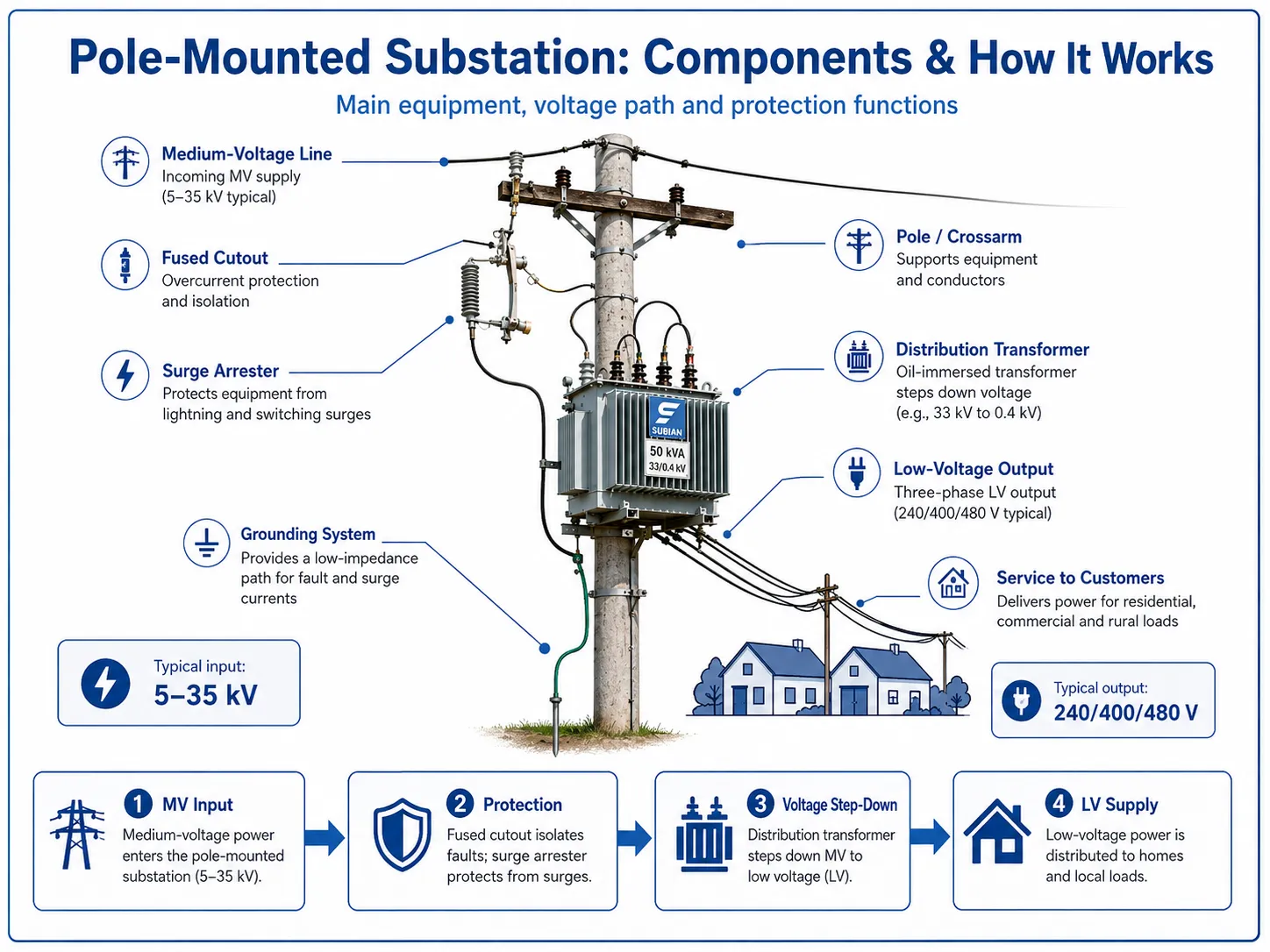
Трансформаторная подстанция на столбе — это эффективное распределительное устройство, которое преобразует электричество на опоре линии электропередачи, а не на земле, как это делалось традиционно. Трансформатор, установленный на столбе (на поперечине или на специальной платформе), первичное защитное оборудование (предохранители или предохранительные разъединители), оборудование заземления и система низковольтного распределения устанавливаются на высоте нескольких метров над уровнем земли с подключениями к линиям среднего напряжения.
Если быть более точным, “трансформаторная подстанция на столбе” и “трансформатор на столбе” означают одно и то же устройство почти повсеместно, потому что нет необходимости обрабатывать много оборудования для предохранения, отключения трансформатора или его включения и измерения потребляемой электроэнергии. Такие столбы широко используются в Северной Америке для обслуживания отдельных потребителей и в Азии, Африке и Латинской Америке для электрификации сельских районов.
Что касается ключевых характеристик установок, то для установки на столбе достаточно одного столба (иногда требуется два столба), должны быть высоковольтные и низковольтные кабели (HVC, LVC), подающие электроэнергию.
Компоненты трансформаторной подстанции на столбе
| Компонент | Функция | Типичная спецификация |
|---|---|---|
| Распределительный трансформатор | Понижает напряжение с MV до LV | 5–167 кВА, однофазный или трехфазный, погружной в масло |
| Предохранительный разъединитель / предохранитель | Первичная защита от перегрузки и короткого замыкания | Класс 15–35 кВ, предохранители, подобранные под трансформатор |
| Первичный разрядник | Отводит импульсы молний в землю | Класс 9–36 кВ, MOA (металлооксидный) |
| Вторичный разрядник (по желанию) | Защищает низковольтную сторону от наведенных импульсов | Класс 240 В / 400 В |
| Столб и поперечина | Опорная конструкция | Деревянный/бетонный/стальной столб, поперечина или платформа для трансформатора |
| Подпорные тросы и анкеры | Структурная стабилизация | Стальной трос, заземляющий анкеры |
| Система заземления | Защитное заземление для резервуара, разрядника, нейтрали | Заземляющие стержни, 10 Ω или лучше по местным нормам |
| Подключение низковольтного сервиса | Распределение электроэнергии клиентам | Изолированное вторичное, погодозащитное устройство, счетчик(ы) |
В рамках множества программ электрификации сельских районов полная сборка — столб, трансформатор, разъединитель, разрядники, заземление — предоставляется в виде комплекта, чтобы одна бригада могла установить значительное количество единиц в день с запасом одинаковых материалов.
Как это работает
Принцип работы аналогичен любому распределительному трансформатору, где первичная обмотка, подключенная к СВ линиям, вызывает индукцию напряжения во вторичной обмотке (в этом примере это около 22 кВ, понижаемое до 400/230 В). Предохранительный разъединитель защищает трансформатор, устраняя любые перегрузки до того, как он будет поврежден, и также может быть управляем вручную для изоляции устройства с целью обслуживания. Ударные разрядники помогают устранить молниевые перенапряжения, отклоняя их на землю.
Механизм установки столба работает благодаря основным принципам физики и экономики. При низких номиналах становится возможным установить трансформатор, а также аксессуары на столбе без трудностей, связанных с тяжелой нагрузкой (50-600 кг). Экономические преимущества, связанные с удаленными сельскими нагрузками, лучше, чем альтернативы для сельских установок, поскольку не требуется фундамент, не нужно строить здания, не нужно возводить стены, и максимум пять часов требуется бригаде для выполнения установки. Основным недостатком системы является открытость: трансформатор, механизм предохранения и клеммы находятся под напряжением и открыты для атмосферы, где важность зазора, а также заземления и правил безопасности нельзя переоценить.
Типы и номиналы
| Тип | Диапазон номиналов | Типичное применение |
|---|---|---|
| Однофазный настенный | 5–50 кВА | Однофазные клиенты, небольшие деревни, фермы, мастерские |
| Однофазный большой (американский “канистровый” тип) | 25–167 кВА | Североамериканское сельское распределение, насосы для орошения |
| Трехфазный настенный | 15–100 кВА (на единицу) | Небольшие деревни, рыночные площади, трехфазные моторные нагрузки |
| Установленный на платформе (двухопорный) | 100–500 кВА | Более крупные сельские кластеры, где одного столба недостаточно |
| Мини-столбовая подстанция (полный киоск) | 25–100 кВА | Комплекты быстрого электрификации сельских районов |
Диапазон основных напряжений составляет 5 – 35 кВ, при этом популярные напряжения — 11 кВ, 22 кВ и 33 кВ в странах-членах IEC, а также 12.47/13.8/24.9 кВ в Северной Америке. Вторичные напряжения могут составлять 240/120 В или 400/230 В или даже 480 В в зависимости от применяемого стандарта.
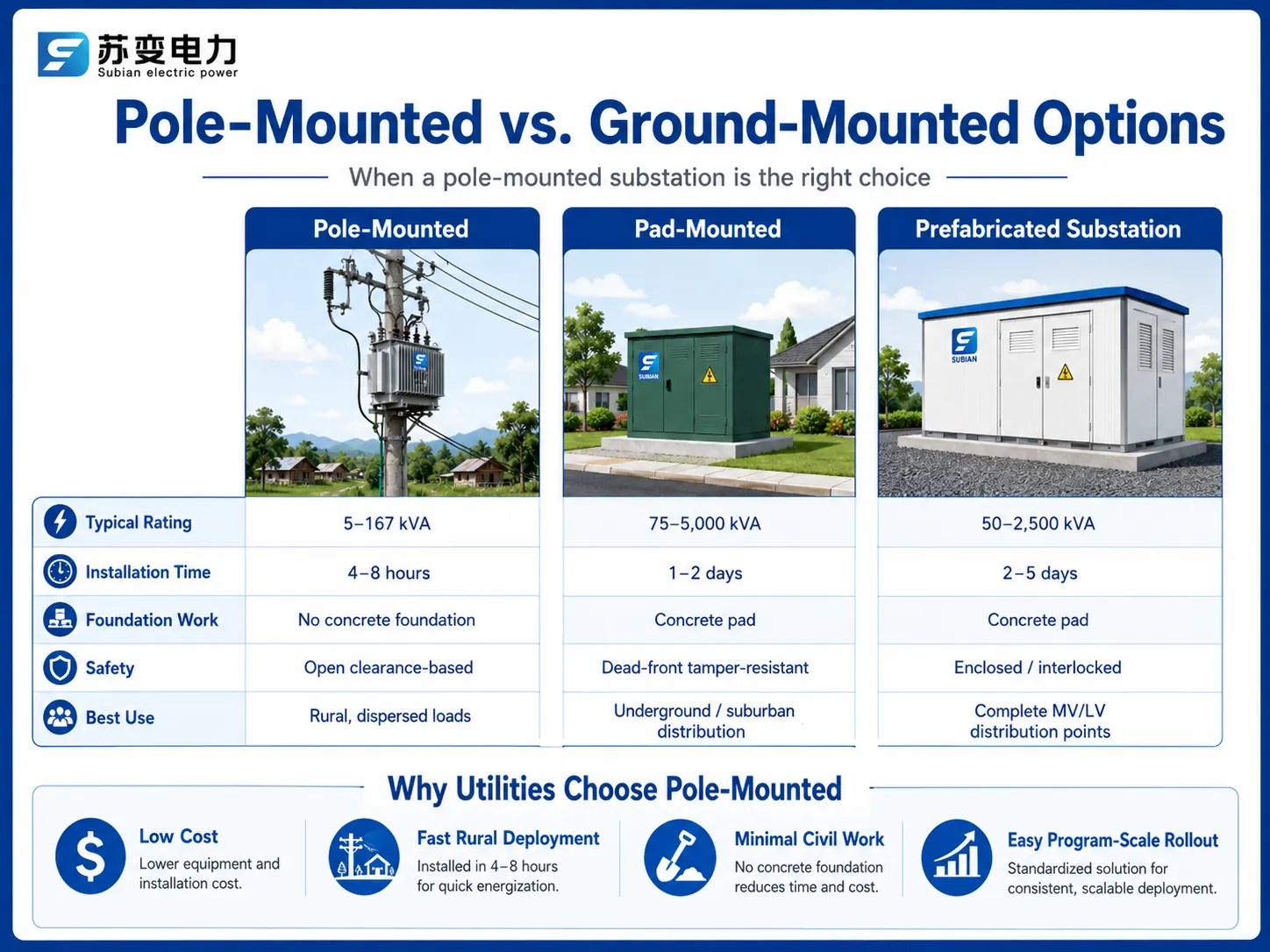
Опоры на столбах против наземных установок
| Фактор | Трансформатор на столбе | Настенный трансформатор | Сборная подстанция |
|---|---|---|---|
| Типичное номинование | 5–167 кВА | 75–5,000 кВА | 50–2,500 кВА |
| Время установки | 4–8 часов | 1–2 дня | 2–5 дней |
| Фундаментные работы | Нет (только столб) | Бетонная плита | Бетонная плита |
| Безопасность | Открытый, основанный на зазорах | Безопасный, устойчивый к вмешательству | Закрытый, взаимозависимый |
| Визуальное воздействие | Высокий | Низкий | Умеренное |
| Стоимость (эквивалент 630 кВА) | — | $4,000–$7,500 | $7,000–$20,000 |
| Лучше всего для | Сельские, разбросанные, малые нагрузки | Подземное распределение в пригородах | Полные точки распределения MV/LV |
Выбор подходящего типа оборудования зависит от выбора правильного уровня плотности нагрузки и типа сети. Установки на столбах лучше всего работают в ситуациях с минимальной нагрузкой и разделением точек нагрузки, которые требуют воздушной электрификации. Однако, когда нагрузки достигают около 100 до 200 кВА, или если электрификация переходит под землю, тогда наземные системы становятся привлекательным выбором.
Стандарты и безопасность
| Стандарт | Объем | Ключевой момент |
|---|---|---|
| IEC 60076 | Электрические трансформаторы | Рейтинги трансформаторов и испытания для единиц на рынке IEC |
| IEEE C57.12.20 | Распределительные трансформаторы типа "столб" | Требования к трансформаторам типа "столб" в Северной Америке |
| IEEE C57.12.00 / C57.12.90 | Требования к распределительным трансформаторам/процедуры испытаний | Основной дизайн и база для испытаний |
| NFPA 70 (NEC) | Электрические установки | Зазоры, заземление и правила установки в США |
| IEC 60529 | Защита корпуса | Защита трансформатора и аксессуаров от погодных условий |
Подстанции, установленные на столбах, представляют собой общества, в которых управление безопасностью осуществляется в основном с помощью зазоров и заземления, а не корпусов. Люди, работающие там, должны знать соответствующее расстояние от живого оборудования, какие изолирующие инструменты подходят для рабочего процесса и что они должны позаботиться о заземлении перед работами. Установка должна соответствовать строительным спецификациям коммунального предприятия и местным законам о минимальной высоте столба, срокам завершения натяжки тросов и мерам эффективности заземления, которые должны составлять 10 Ом или меньше.
Процесс установки
Стандартная установка состоит из следующих этапов:
Обследование площадки: Подтвердите нагрузку, маршрутизацию низкого напряжения, зазоры и доступ для крана или натяжного столба.
Установка столба: Выкопайте яму (глубина от 1.5 до 2 метров), установите столб вертикально и засыпьте обратно, и закрепите натяжные тросы, если необходимо.
Установка трансформатора: Поднимите трансформатор на платформу или поперечину и закрепите трансформатор; установите разъединитель, ограничители и провода.
Подключение высоковольтных соединений: Подключите высоковольтный провод к линии через предохранительный разъединитель на соответствующих зазорах.
Заземление: Установите заземляющие стержни и подготовьте все соединения в соответствии с требованиями заземления, указанными местными правилами.
Установка низкого напряжения: Подключите вторичные провода к Weatherhead и счетчикам; включите низкое напряжение после подтверждения соединений.
Испытание: Закройте разъединитель, проверьте напряжение и запишите результаты испытаний.
Опытная бригада обычно завершает установку столба, выполняемую одной установочной бригадой, в течение 4-8 часов, включая время на дорогу.
Затраты и ценовые диапазоны
Указательные цены на полные трансформаторные подстанции на опорах (трансформатор, разъединитель, ограничители, крепеж, исключая опору и бригаду):
| Рейтинг | Класс напряжения | Типичная цена (USD) | Срок поставки |
|---|---|---|---|
| 10–25 кВА (однофазные) | 11–22 кВ | $400–$900 | 4–10 недель |
| 25–50 кВА | 11–33 кВ | $600–$1,400 | 4–12 недель |
| 50–100 кВА | 11–35 кВ | $900–$2,200 | 6–12 недель |
| 100–167 кВА | 15–35 кВ | $1,400–$3,200 | 6–14 недель |
Ценовой диапазон для столба, оборудования, заземляющего комплекта и низковольтных аксессуаров составляет примерно $200-$800, помимо стоимости рабочих. Установленная цена одной обычной сельской установки мощностью 25-50 кВА обычно составляет около $1,500-$4,000 в зависимости от рынка труда. Указанные выше цены могут быть недостаточно конкретными, так как они зависят от производителя, модели и региона.
Топ бренды и сравнение цен
| Бренд | Страна | Прочность | Указательная цена — 50 кВА (USD) |
|---|---|---|---|
| Hitachi Energy (ABB) | Швейцария | Глобальное портфолио трансформаторов распределения | $1,200–$2,200 |
| Сименс | Германия | Покрытие международными стандартами | $1,200–$2,100 |
| Schneider Electric | Франция | Решения по распределению, программы электрификации сельских районов | $1,100–$2,000 |
| Eaton / Prolec GE | США | Рынок столбовых трансформаторов Северной Америки | $1,200–$2,300 |
| Jiangsu Subian Electric Power | Китай | Столбовые трансформаторы IEC/IEEE, комплекты для электрификации сельских районов, OEM | $600–$1,400 |
Глобальные бренды предлагают квалификацию, последовательность и производительность на местном уровне, что важно для таких компаний, как национальные коммунальные службы. Jiangsu Subian Electric Power производит столбовые трансформаторы, соответствующие IEC 60076 и IEEE C57.12.20, вместе с предохранительными вырезами, ограничителями перенапряжения и комплектами для электрификации сельских районов по цене примерно на 40-55% ниже западных цен. Это предлагает экспортные пакеты и варианты OEM для министерств, коммунальных служб и EPC-подрядчиков, участвующих в крупных сельских программах.
Когда выбирать трансформатор, установленный на столбе
Нагрузка легкая и распределенная — каждое место имеет нагрузку менее 100 кВА и расположено на значительном расстоянии друг от друга.
Линия воздушная — нет подземных сооружений для обслуживания трансформаторов, установленных на площадке.
Ключевым вопросом является скорость и стоимость — в программах электрификации сельских районов установка столбов занимает всего несколько часов, что очень экономично.
Легко обслуживать — доступно через столб, и запасные трансформаторы легко доступны.
Регулирования коммунальных служб допускают установку этого типа трансформатора — убедитесь, что вы проверили местную практику и процедуры одобрения.
Выбирайте трансформаторы, установленные на земле, в случаях, когда нагрузки на площадке превышают примерно 100-200 кВА на место, коммунальная служба имеет подземное обслуживание, или безопасность и эстетика требуют надежных трансформаторов.
Часто задаваемые вопросы
В чем разница между трансформатором, установленным на столбе, и подстанцией, установленной на столбе?
В обоих случаях обсуждается одно и то же оборудование. Термин “трансформатор, установленный на столбе”, относится только к трансформатору; в то время как термин “подстанция, установленная на столбе”, относится к полному устройству, которое включает трансформатор, предохранительный вырез, ограничители перенапряжения, заземление, отключатели и низковольтное обслуживание. Эти термины используются взаимозаменяемо на практике.
Сколько стоит подстанция, установленная на столбе?
Стоимость полного устройства (трансформатор, вырез, ограничители, оборудование) варьируется, т.е. от 400 долларов до 3200 долларов в зависимости от номинала и класса напряжения. Средний трансформатор мощностью 50 кВА стоит около 600-1,400 долларов. С учетом столба, заземления и усилий по установке общая стоимость полного сельского устройства может достигать 1,500 до 4,000 долларов.
Какой максимальный номинал подстанции, установленной на столбе?
Обычно одноопорные установки могут производить электричество от 100 до 167 кВА. Причина в их механических характеристиках и ограничении веса. Поэтому в случае более высоких выходов компании используют платформенные двухопорные установки до 500 кВА или переходят на сборные подстанции и установки на плите.
Сколько времени занимает установка?
В среднем бригада требует от четырех до восьми часов для завершения процесса установки опоры. Это время включает в себя поездки, а также некоторые операции, такие как подъем опоры и установка трансформатора, выполнение проводки, заземление и ввод системы в эксплуатацию. Короткое время и отсутствие подготовки площадки помогают объяснить, почему технология опорных систем стала наиболее распространенной в сельском электроснабжении.
Безопасны ли опорные подстанции?
Да, если установлены правильно. Безопасность зависит от расстояний (живые части находятся на многих метрах выше земли), правильного заземления (обычно менее 10 Ом), предохранителей и правил эксплуатации для бригад. Эти механизмы не имеют защиты от несанкционированного доступа, как системы на плите; поэтому они не подходят для мест с общественным движением, в то время как обычны для спокойных районов и тех, которые обслуживаются линиями электропередачи.
Ссылки
- Серия IEC 60076 — Электрические трансформаторы — рейтинги, потери и испытания для трансформаторов типа "опора" на рынках IEC.
- IEEE C57.12.20 — Трансформаторы распределения типа "опора" — требования Северной Америки к трансформаторам, установленным на опорах.
- IEEE C57.12.00 / C57.12.90 — Требования к распределительным трансформаторам и процедуры испытаний — базовый дизайн и испытательная база.
- NFPA 70 — Национальный электрический кодекс — расстояния, заземление и правила установки для США.
- NEMA — Руководство по применению распределительных трансформаторов — рекомендации по применению для трансформаторного оборудования.
- Всемирный банк — ресурсы по электрификации сельских районов — руководство по программам для распределенной и опорной распределительной сети.
- Jiangsu Subian Electric Power — официальный сайт — производитель и экспортер трансформаторов типа "опора" и комплектов для электрификации сельских районов.
Заключение
Опорная подстанция по-прежнему является самым экономичным методом подачи электроэнергии к небольшим потребительским единицам на больших расстояниях, и она действительно является основой электрификации сельских районов для многих стран. Установка опорной подстанции быстрая, недорогая и простая, состоит из трансформатора, разъединителей, молниезащиты, системы заземления и опоры, при этом установка может быть выполнена за несколько человеко-часов.
Основные выводы:
- Номинал 5–167 кВА, опорные установки обслуживают небольшие нагрузки на воздушных линиях при 11–35 кВ.
- Стоимость оборудования $400–$3,200; полностью установленные сельские установки обычно стоят $1,500–$4,000.
- Безопасность обеспечивается расстояниями, заземлением и предохранительной защитой — а не корпусами.
- При выходе выше ~100–200 кВА переходите на платформенные, установки на плите или сборные единицы.
- Поставщики, такие как Jiangsu Subian Electric Power, предлагают трансформаторы типа "опора", сертифицированные по стандартам IEC/IEEE для программной электрификации сельских районов.
Для получения информации о ценах на трансформаторы, спецификациях и поддержке экспорта обращайтесь в Jiangsu Subian Electric Power по адресу www.subian-electric.com.